Categories
Health

Oprah Winfrey Says Gayle King Is Receiving Death Threats Over That Kobe Bryant Interview


Oprah Winfrey is defending best friend Gayle King in the wake of her controversial interview about the late Kobe Bryant, who died in a helicopter crash in January.

On February 5, King received backlash from viewers for asking WNBA star Lisa Leslie about a sexual assault accusation made against Bryant in 2003. For the CBS This Morning segment on Bryant’s legacy, King asked Leslie if she felt, as a woman and a basketball player, that the case complicated his contributions. “It’s not complicated for me at all,” Leslie responded. “I have [never] seen him being the kind of person that would do something to violate a woman or be aggressive in that way. That’s just not the person that I know.

“I think the media should be more respectful at this time,” Leslie continued. “It’s like, if you had questions about it, you’ve had many years to ask him that. I don’t think it’s something that we should keep hanging out his legacy.”

[embedded content]

After an onslaught of furious reactions from fans and celebrities like Snoop Dogg and 50 Cent, King took to Instagram to explain that CBS had edited the interview in a way she did not approve of. “I know that if I had only seen the clip that you saw, I’d be extremely angry with me too,” King said on IGTV. “I am mortified, I am embarrassed, and I am very angry.

“For the network to take the most salacious part, when taken out of context, and put it online for people who didn’t see the whole interview is very upsetting to me. That’s something that I’ll have to deal with with them,” she said. “There will be a very intense discussion about that.”

On February 7, Oprah Winfrey—King’s longtime friendgave an update on the situation on the Today show.

“She is not doing well,” a tearful Winfrey revealed. “She has now death threats, has to now travel with security, and she’s feeling very much attacked. You know, Bill Cosby is tweeting from jail.

“In the context of the interview, everyone seemed fine, including Lisa Leslie,” Winfrey continued, defending King’s line of questioning. “And it was only because somebody at the network put up that clip. And I can see how people would obviously be very upset if you thought that Gayle was just trying to press to get an answer from Lisa Leslie.” Winfrey also warned against “misogynist vitriol” and online attacks.

“Obviously all things pass, she will be okay,” Winfrey said. “But she hasn’t slept in two days.”


Source link

Categories
Health

TLC’s New Show ‘Hot and Heavy’ Is Receiving Immediate Backlash


In a reality-TV landscape full of revenge bodies and weight-loss challenges, few shows capture the nuance of what it’s really like to be a fat woman in America today—even fewer if you consider dating shows. TLC’s My Big Fat Fabulous Life is one of the few that actually subverts shallow, reductive tropes, but the network just announced a new show that feels like a thousand steps backward.

I woke up this morning to the Twitter-sphere ablaze over an upcoming TLC show called Hot and Heavy. The title made me think I was getting some steamy makeout show. But as I began to read the tweets and show description, my pervy excitement quickly morphed into anger. Hot and Heavy, I learned, is a reality show about hot guys dating fat girls in what the show calls “mixed-weight” relationships.

I, like many others on the internet, immediately felt disgusted. What the hell is a mixed-weight relationship? The term itself is highly problematic. It suggests that all romantic partners are the same weight with identical body types, which is obviously absurd. Aren’t all relationships mixed-weight relationships? Why do we feel the need to specifically highlight a show about fat bodies and thin bodies? Are we as entertained by tall people dating short people? Or brunette people dating blond people? No. We don’t make television shows about the trials and tribulations of someone who is 5’5″ dating someone who is 6’1″. So why are we endlessly obsessed with the dynamic of fat women actually being loved?

I was particularly horrified by portions of the trailer featuring the characters Joy and Chris. Their relationship is introduced with Chris saying, “I love every inch of Joy,” and then quickly adding, ”There’s lot of inches to love,” while he laughs—making an expression of love a joke at her expense. She awkwardly laughs, gives him a side-eye, and under her breath says, “Ew, what?” It’s followed by a clip of Chris’s friend berating the couple asking, “Is it a sexual thing?” implying that Joy could only be loved if she was being fetishized. But the worst part was the camera crew following along as Chris’s friends bring him to a strip club to “try and persuade him to like other girls.”

“He could get any girl he wants and ends up being with Joy,” his friend says in shock.


Source link

Categories
Health

Sexting 101: Your Complete Guide to Sending and Receiving Nude Photos


Sexting with a partner can be thrilling. It can also be nerve-raking. How can you be sure they’re the only one who will see a racy pic? What if they send you a nude photo, but you don’t feel comfortable returning the favor? What’s the appropriate way to respond if you like what you see? And what if you get a nude pic that’s not appreciated?

Sending and receiving nude photos can be amazing, but only if everyone is on the same page. “In terms of pictures, consent and communication are needed as they are in all sexual interactions, off or online,” says Laurie Mintz, Ph.D., a sex therapist, psychologist, and author of Becoming Cliterate.

Here’s how to handle every sexting situation that comes your way.

Situation 1: Your partner asks for a nude photo

First things first: It’s completely up to you if you’re willing to get naked in front of the camera. (If full-on nudity isn’t your thing, you might try something more subtle like underwear or even just a t-shirt.)

Second, be aware that sending a nude photo always entails some risk, says Mintz. The question to ask yourself is, “How sure are you this would not be someone who would show these photos to someone else or post them in revenge if you break up?” she says. “You need to be aware that trust can be broken.”

To practice safer sexting, at the very least, add a passcode to your phone and have your partner do the same. Cropping your face out of any photos also helps to minimize privacy concerns. To really be protected, consider using an encrypted app like DiscKreet which adds an extra layer of protection to your peace of mind. Messages and photos sent between partners in the app require two passwords to open at any given time—in other words, you have to give your consent every time a partner wants to view your photos.

Situation 2: You want to send a nude photo to someone

You’re comfortable enough with someone to take your texting to the next level? Awesome. Just make sure they’re on board, too, since not everyone has the same comfort level.

Rule number one: Always ask before sending an unsolicited racy photo. “If they reply with enthusiasm, you’ve got the green light,” says Astroglide’s resident sexologist Jess O’Reilly, Ph.D. “If they say no or sound unsure, respect their boundaries. Sexting can be hot, but there are many other hot activities in which to engage if it’s not your partner’s cup of tea.”

Situation 3: You want your partner to send a nude photo

When you’re asking for a photo, the same rules apply: make sure your partner enthusiastically consents before engaging in any nude photo exchange. Mintz recommends a simple, clear request like “I’d love to get a picture of your XX.”

Most importantly, don’t pressure them, and don’t take it personally if they say “no,” says O’Reilly. They may be concerned about privacy or just not feel comfortable with it, but that doesn’t reflect how they feel about you.

Situation 4: You get a photo you like but aren’t sure where to take it from there

Sexting can be fantastic foreplay—it can also be a little awkward to get the hang of. Once you get a sexy photo from your partner, it’s not uncommon to draw a blank on what to say next, especially if this is a new activity for you or your partner.

Spoiler alert: “Nice!” probably won’t cut it. Taking a mental health day to binge watch Game of Thrones is nice. Scoring the last spot in your favorite SoulCycle class is nice. When someone get’s vulnerable enough to share a nude photo, you can do better than nice.


Source link

Categories
Health

Real Women Open Up About Discovering They Weren't Receiving Equal Pay


Eventually, my group’s creative director—a woman—noticed there was a huge gap between my salary and my male colleague’s. She corrected it by giving me a raise, and also adjusting both of our titles. I was happy.

After that, we hired on a male creative director who was favorable toward his male employees. He promoted the male designer to a senior level, and boosted his salary by another $20,000. He didn’t promote me—and only adjusted my salary by $8,000. I spoke with my creative director plenty of times about this pay issue during our one on one meetings, and he’d cut me off after I would say something like, “Oh, there’s stats out there that females get underpaid next to their male coworkers,” with “Well, that’s not true anymore.”

He told me that me that my male coworker spoke up more and was very vocal, whereas I’d been maintaining and making clients happy. He said he wanted me to work on pitching to clients more and then we could discuss a promotion. So I tried to pitch more, but it never happened. In fact, the one chance I had at running a meeting with a client, the male creative director took over the entire thing! He didn’t even give me a chance to speak. Eventually, I left the company and vowed to never let that happen to me again. — Karen, advertising, Tampa

My boss felt bad I was paid less, but said the company didn’t have the budget to fix it.

Salary: $70,000; Pay Gap: $20,000: I was a section editor at a magazine, and my male colleague had a similar title. The main difference, though, is that I ran a team and was in charge of producing both daily and long form content for the website, while also curating and editing an entire print section. He, on the other hand, didn’t have any print responsibilities and also didn’t run a team.

I found out that he was being paid $20,000 more than me through a coworker, who had been told firsthand. I’ve always tried to be pretty transparent about how much I make, because I think the idea that it’s “impolite” to talk about money is perpetuated by men who don’t want to be confronted with a pay gap—and therefore feel morally responsible for fixing something that they benefit from. Like, if they don’t know then it can’t really happen, right?

My first thought upon finding out was embarrassment, to be honest. I don’t know why, I just felt kind of humiliated. Like maybe I wasn’t doing a good job, even though I was doing so much work and my team seemed to really like me. But then I got pissed. I was well-regarded by my superiors and the people who reported to me, I was doing the job of two people—two actual people!—and I was making less than someone with far fewer responsibilities? That made me mad.

I brought it up at my next review, which was maybe a couple months later. I don’t recall my exact words, but I basically said that I wanted a raise and deserved one, and that I knew what my male colleague was making. The difference in our responsibilities was pretty evident, so just my knowing about it underlined the point. And my manager was aware that it was unfair, and was even sympathetic about it. But unfortunately, I was told they were on a budget freeze, and couldn’t offer to give me more until at least the end of the year. I waited a few months and when the money never materialized—and a few other issues arose—I finally quit.


Source link

Categories
Health

Christine Blasey Ford Is Still Receiving Death Threats, Unable to Return Home After Kavanaugh Confirmation


Over the weekend, Brett Kavanaugh was confirmed as an Associate Justice for the United States Supreme Court to applause from the right, many of whom celebrated his appointment with congratulatory tweets and beer (a nod to the many times he referenced the alcoholic beverage during his fiery testimony).

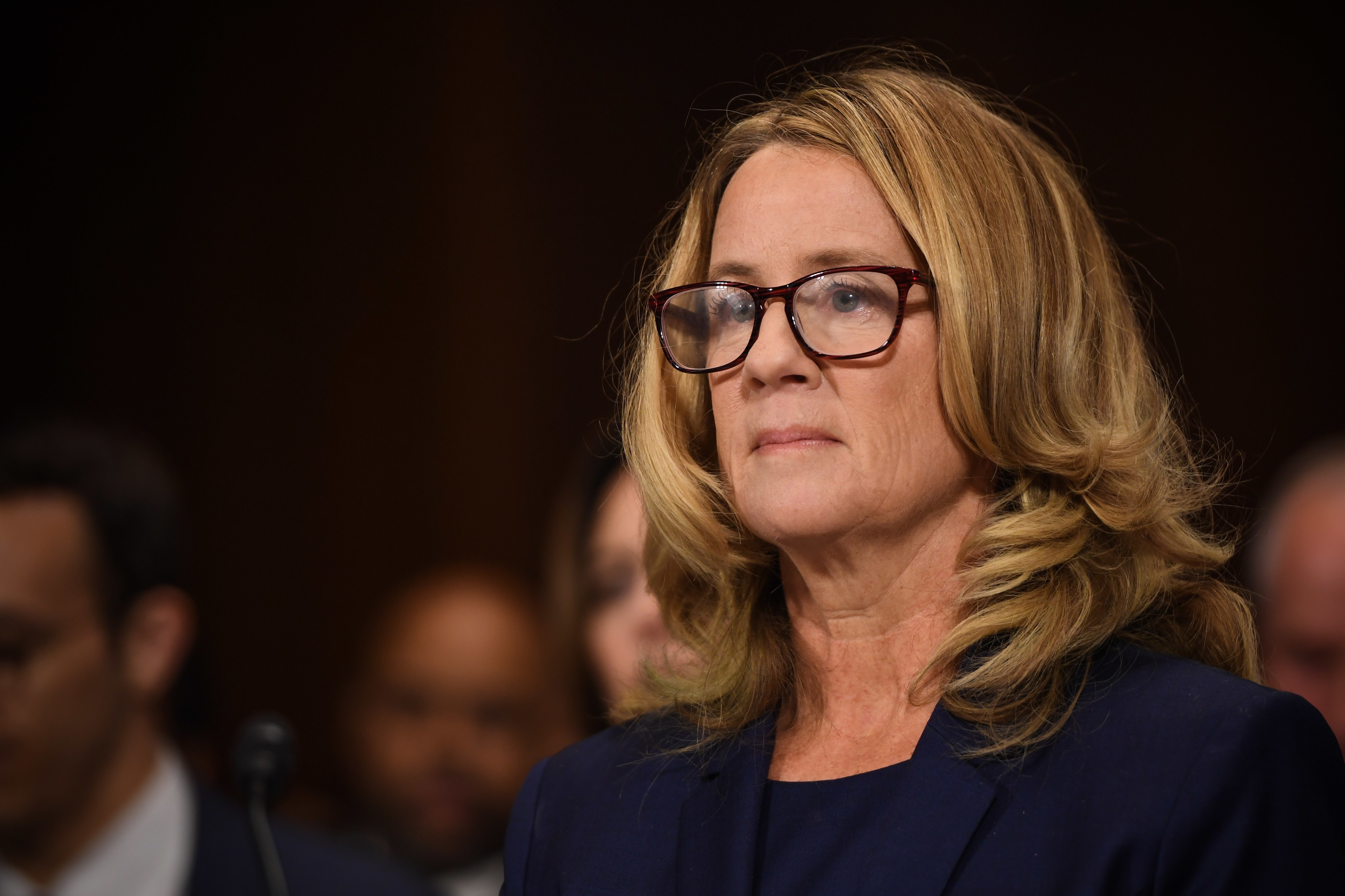
Meanwhile, Christine Blasey Ford, who testified before the Senate Judiciary Committee almost two weeks ago about her allegations of sexual assault against Kavanaugh, is still receiving “distressing” death threats and has been unable to return to her home. Ford alleged that Kavanaugh held her down and tried to remove her clothes, even covering her mouth at one point, during a 1982 party when they were both in high school.

Ford’s attorney, Debra Katz, revealed this information in an interview with MSNBC on Sunday. “This has been terrifying,” she said. “Her family has been through a lot. They are not living at home. It’s going to be quite some time before they’re able to live at home. The threats have been unending. It’s deplorable. It’s been very frightening.”

Katz said that Ford has “also received extraordinary letters of support and encouragement.”

The nomination, hearings, and confirmation vote have been one of the most divisive in history. An NPR/PBS NewsHour/Marist poll conducted after Ford and Kavanaugh’s testimonies before the Senate Judiciary Committee showed that 43 percent of those surveyed believed the California professor to be telling the truth compared to 33 percent for former DC Circuit judge.

Even still, it is Ford who continues to pay the price for coming forward with her story. That she is facing such vitriol and extreme threatening behavior is horribly sad, but not even close to shocking. It is fear of this sort of response that can frighten women into not reporting their assaults.

But not Ford, who stated in her initial written testimony, “I am here today not because I want to be. I am terrified. I am here because I believe it is my civic duty to tell you what happened to me while Brett Kavanaugh and I were in high school.”

Meanwhile, Kavanaugh is expected to hear his first case on Tuesday.

MORE: Twitter Has Very Strong Feelings About Brett Kavanaugh’s Supreme Court Confirmation


Source link

Categories
Health

Christine Blasey Ford Forced From Home and Receiving Death Threats After Publicly Accusing Brett Kavanaugh of Sexual Assault


Christine Blasey Ford. Over the past few days, you’ve likely heard her name on the news and across social media platforms. You might know that she’s a 51-year-old research psychologist and professor in California, and you’ve almost certainly heard her allegation that Supreme Court nominee Brett Kavanaugh sexually assaulted her at a party when they were both in high school. He has categorically denied her allegations, which you also may have heard.

If you’re paying attention, you’ll realize a familiar narrative emerged this week, one that tends to create an invisible line between those who believe Blasey Ford’s claims and those who attribute her coming forward as a partisan way to derail the confirmation of Donald Trump’s second SCOTUS nominee. Immediately following Ford’s decision to go public, however reluctant, doubts were raised about the veracity of the story and the motives behind it. Excuses were made about Kavanaugh’s behavior—even if he did it, he was just 17. Boys will be boys, they said. I know how honest he is, one Sen. Orrin Hatch said in defense.

In the week that the public has come to know her name, and the disturbing claims of sexual assault she unearthed, never once was Blasey Ford afforded the same benefit of the doubt. Not even now, in the age of #MeToo. In fact, a good amount of commentary about the woman who says Kavanaugh drunkenly groped her in 1982 (and placed his hand over her mouth when she tried to scream) is negative. Violent and threatening, even. This rhetoric isn’t exclusive to those on the right who hope to seat another conservative justice. A quick look at Twitter reveals that many civilians are having a difficult time recognizing the credibility of her claim—yet somehow buy into Kavanaugh’s version of the story with ease. Essentially, the situation is a boiled-down version of what it means to be a woman: the burden lies on you to prove your worth and your truth.

In this way, Ford is being re-victimized in reliving her trauma. But something else is happening as well, something insidious and dangerous. According to reports, Ford says she’s been forced from her home and is receiving death threats. In a letter to Senator Chuck Grassley (R-Iowa), the chair of the Senate Judiciary Committee, her lawyers wrote: “In the 36 hours since her name became public, Dr. Ford has received a stunning amount of support from her community and from fellow citizens across our country. At the same time, however, her worst fears have materialized. She has been the target of vicious harassment and even death threats. As a result of these kind of threats, her family was forced to relocate out of their home. Her email has been hacked, and she has been impersonated online.”

On Friday morning, the President of the United States doubled down on his support of Kavanaugh by attempting to discredit Ford even further, questioning why she didn’t report the incident when it occurred. “I have no doubt that, if the attack on Dr. Ford was as bad as she says, charges would have been immediately filed with local Law Enforcement Authorities by either her or her loving parents,” Donald Trump tweeted. “I ask that she bring those filings forward so that we can learn date, time, and place!”

The irony? While Ford is the one actually under the attack of credible death threats and violent vitriol, Kavanaugh is the person with all the protections of the government. If that’s not infuriating enough, you’re not paying attention.

But if there’s one thing that we can take from the threats against Ford, it’s a reminder that women don’t come forward for fame. No one asks for death threats. And every woman knows what’s at stake when they make the decision to speak out. Sometimes, it’s a sacrifice and a total upending of life as they knew it. According to the National Sexual Violence Resource Center, 63 percent of sexual assaults are not reported to police, and the way Ford’s situation is playing out, it’s not hard to deduce why.

To further the point, survivors are now courageously sharing their #WhyIDidntReport stories on social media.

Here are some other ways in which the treatment of Ford reinforces why women choose to remain silent with their pain.

Kavanaugh supporters claim Ford must be in it for the attention.

Frankly, this sort of nonsense is what should make you want to scream the loudest. The woman has been forced out of her own home and is living in fear for herself and her family. By her own lawyers words, she had no desire to become a public figure. “Dr. Ford sought to tell her story, in confidence, so that lawmakers would have a fuller understanding of Brett Kavanaugh’s character and history,” their letter to Grassley reads. “Only after the details of her experience were leaked did Dr. Ford make the reluctant decision to come forward publicly.”

I can think of exactly zero people in my life who would ask for that kind of attention, and yet it’s usually the first response by detractors when a woman comes forward about a powerful or famous man’s alleged bad behavior.

Ford is being treated dismissively by many of the leaders of our government.

Here’s one example: By refusing to call her by name, Senator Lindsey Graham (R-S.C.) is dismissing the courage it took for Ford to come forward, and essentially erasing her experience.

“They’ve had tons of time to do this. This has been a drive-by shooting when it comes to Kavanaugh,” Graham said. “I’ll listen to the lady, but we’re going to bring this to a close.”

The lady. As Anita Hill said in her New York Times op-ed, “Finally, refer to Christine Blasey Ford by her name. She was once anonymous, but no longer is. Dr. Blasey is not simply ‘Judge Kavanaugh’s accuser.’ Dr. Blasey is a human being with a life of her own. She deserves the respect of being addressed and treated as a whole person.”

Isn’t that the least these men could do?

Ford is being re-victimized.

Ford’s request that the FBI conduct a thorough investigation of her allegations is being twisted as some sort of stalling tactic or evidence that she isn’t telling the truth by her detractors. That, to me, is completely irrational. She is literally asking that professionals dig deeper into her story, not running from it. And she is hoping that the relevant information would be provided to the committee before she sits down to answer their inquiries under oath.

“While Dr. Ford’s life was being turned upside down, you and your staff scheduled a public hearing for her to testify at the same table as Judge Kavanaugh in front of two dozen U.S. Senators on national television to relive this traumatic and harrowing incident,” her lawyers’ letter to Grassley notes. “The hearing was scheduled for six short days from today and would include interrogation by Senators who appear to have made up their minds that she is ‘mistaken’ and ‘mixed up.’ While no sexual assault survivor should be subjected to such an ordeal, Dr. Ford wants to cooperate with the Committee and with law enforcement officials.”

Every time Ford’s character and motives are called into question, she is victimized again. It’s no wonder that Psychology Today cites “fear of consequences” as a reason that women don’t report sexual harassment and assault.

I know I’m not alone in expressing how thankful I am that Ford was brave enough to come forward, but also so desperately sorry that this predictable outcome is the reality she now faces. I am fearful about the repercussions of this situation and the way it has been handled for women all across the country. Ford’s situation is a classic case of the kind of victim-shaming that is so common in these moments. Hers is playing out on the national news, but it could just as easily be happening in your own community, no matter how big or small.

I am incredibly terrified about what it means to have (another) alleged sexual abuser or harasser on the highest court in the land, deciding on cases that affect our bodies. But I am also scared of the message this sends to young women about what happens when you bravely tell your story, whether it’s about a powerful public figure or a guy in your high school.

We’ve seen a transformational year since last October, when Tarana Burke’s #MeToo campaign went viral in the wake of Harvey Weinstein allegations. Women were supported. Women were believed. But to see a case of this magnitude be ignored and discredited by those deciding who gets to sit on the Supreme Court, well, that’s just a reminder that there is no progress without some backlash. We must continue to fight.

Related Stories:

Read This Before Asking Why Christine Blasey Ford Waited to Tell Her Brett Kavanaugh Story

In the Age of #MeToo, Will Christine Blasey Ford’s Experience Be the Same as Anita Hill’s?


Source link