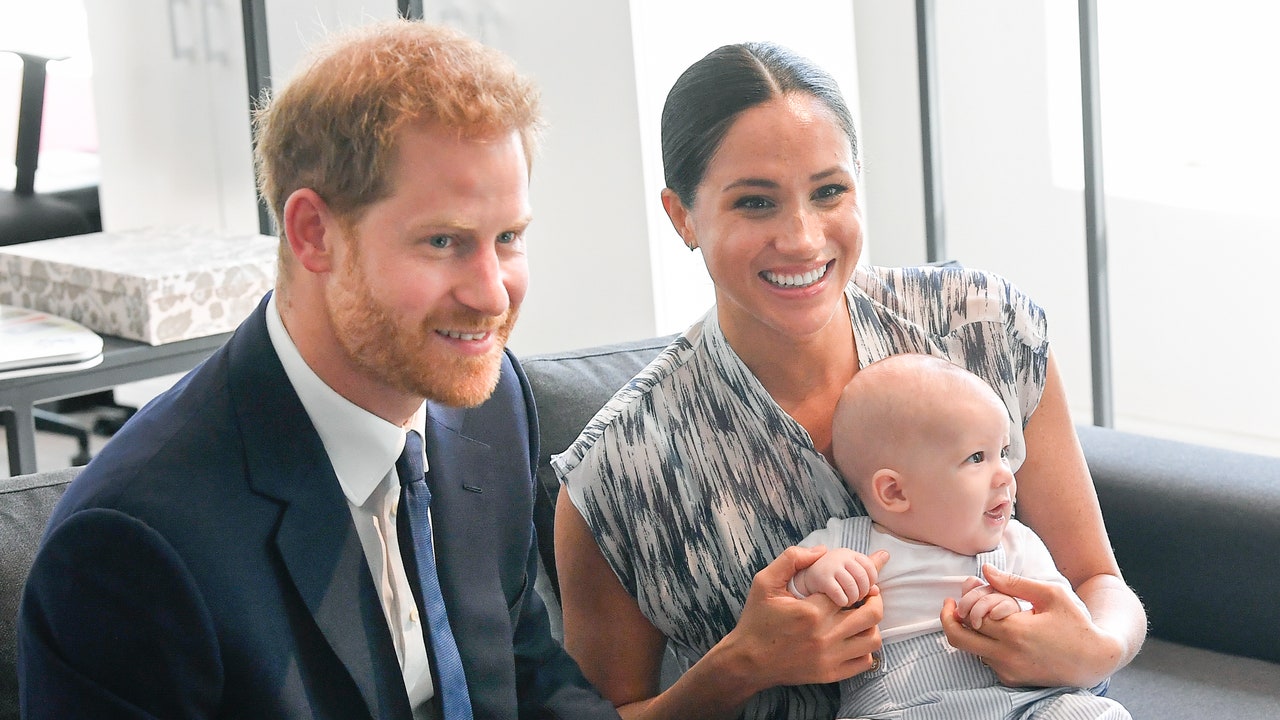
The couple reportedly already has some big plans in the works to celebrate his first birthday. An Us Weekly source says they are going to be “celebrating at Queen Elizabeth II’s Scottish estate, Balmoral … and have talked to the queen about having a picnic on the grounds.” The source goes on to say the queen is “very excited” for the celebration. It’s been previously reported that the Sussexes were set to spend some time at Balmoral with (Prince) Harry’s grandmother this summer—though with all travel plans right now, it wouldn’t be far-fetched to assume things could be on hold given the uncertain and ever-changing guidelines around the coronavirus pandemic.
Queen Elizabeth II will reportedly gift Archie with a “beautiful rocking horse,” with the Us Weekly source noting he loves the animals and “squeals with excitement” when he sees them. Markle also reportedly plans to have animal-themed cupcakes for at least one of the parties for her nature-loving son. “Archie loves being outside, and you can already tell he’s inherited [Prince] Charles’s passion for nature,” a source told Us Weekly. “He gets so excited at seeing all the trees. Now that he’s just walking, he’s into everything—he’ll often end up covered in mud!”
The outlet says there are also plans for a North American celebration. “Meghan’s mom, Doria [Ragland], and BFFs Jessica Mulroney and Abigail Spencer will be invited to stay with their families for the weekend,” a source said. The Sussexes recently relocated to Markle’s hometown of Los Angeles, where her mother also lives.
As the family hunkers down in L.A. amid the current global crisis, they’ve also had to deal with a tweet from President Donald Trump about who’s paying for their security. On March 29 he wrote, “I am a great friend and admirer of the Queen & the United Kingdom. It was reported that Harry and Meghan, who left the Kingdom, would reside permanently in Canada. Now they have left Canada for the U.S. however, the U.S. will not pay for their security protection. They must pay!”
A spokesperson for the couple quickly responded that they never had any plans to ask the U.S. government for money to cover their security detail and were paying for it privately.
It’s 10:30am on a Sunday and I’m standing in line to buy Plan B. The guy in front of me is wearing a dirty blanket like a cape, carrying a supersized Heineken and shouting. This is not how I expected my weekend to wrap.
A few months ago I decided to go off the pill. I’m 34, married and, ironically, in my day job I support increasing women’s access to birth control around the world. It wasn’t because I wanted to have a baby (I don’t) or because I think the pill is evil (see employment status above), but rather because I’d been on it since around the time I hit puberty—and I’d suffered anxiety and depression just as long. The research is still inconclusive but studies have linked the two; I thought it was about time for me to test out some non-hormonal methods, joining the 20 percent of women who quit taking their birth control because of the side effects.
I didn’t plan to be without a goalkeeper for long. Indeed I booked an appointment for a copper IUD four months ago—it’s the one long lasting non-hormonal method on the market and I’d thought “that’s perfect for me.” I’d even naively moved forward with the insertion process despite the worried looks of the doctor and her forewarning that this method was most popular with women who had already had children, that it would be “snug” in my wee little baby motel, and that the process could be “uncomfortable.”
She didn’t say: getting this forced through your tiny pre-baby cervix and into your virginal uterus will feel like fire has engulfed your abdomen, your legs will shake and you may consider passing out as you slip into cold sweats. It was the most painful experience of my life. Which is saying something—my pain threshold is so high that I once had an undiagnosed lower back fracture for three months. I had to ask the doctor to stop halfway through. Thank you to insurance for covering both insertion and removal in one go.
I realized after that appointment that I literally had one modern non-hormonal option left if I wasn’t going to use condoms, diaphragms or sponges: fertility apps. So, two years into marriage with a mundane sex life, I figured “Hell. Let’s give it a try.”
It was nice to understand my body more. But it was also highly inconvenient. By conservative measure, all women are at “high risk of pregnancy” for about half their cycle. Meaning we only get a few “in the clear days” just before our period. The “worst” days are the five before we ovulate and the day after. But ovulation can vary (my left ovary likes to activate days earlier than my right, I learned) and the signs of ovulation can be inconsistent. In my case, for the first three months off the pill I had clear ovulation cramps; they would show up like clockwork right around when the app said I was fertile. It made it easier to trust the algorithms and wait for the danger zone to pass.
But this month, my cramps decided to go on hiatus. Suddenly I was left with nothing more to go by than an app that says I have a 5.4 percent chance of getting knocked up. The Husband and I agreed to use alternative methods on those high risk days. But last night he forgot and I failed to remind him in a timely fashion. Ergo my trip to buy Plan B.
My situation is not unique. For the past 50 years women have been marketed the freedom of birth control so passionately—and we’ve had protect our right to access so vehemently—that no one has stopped to say this whole “choice” thing is a myth—there’s not one on-demand, non-hormonal contraceptive on the market. And we should all be really pissed about that.
In the past few weeks Republicans have passed some of the most extreme bans on abortion since Roe v. Wade became the law of the land in 1973. In Alabama, governor Kay Ivey signed a law that would ban abortion from the moment of conception and onward. In Georgia, a woman could be punished for a self-induced abortion with life in prison as soon as a fetal heartbeat is detectable, at around six weeks. For now, abortion is still legal (albeit sometimes hard to access) in all 50 states. But women’s lives are under threat, and presidential candidates need to have a plan to protect them.
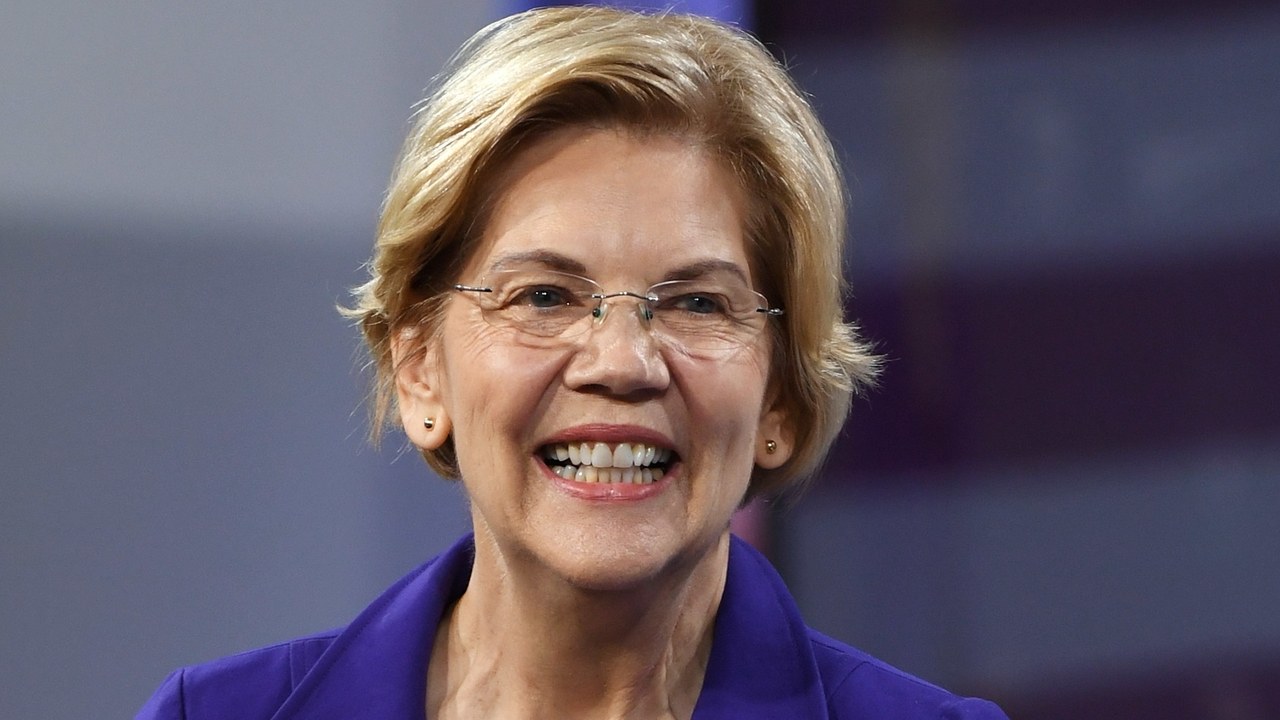
On Friday, Senator Elizabeth Warren spoke out about these abortion restrictions—and demanded that Congress pass federal laws to protect women’s reproductive rights. In a post published on Medium, the presidential candidate explained the federal laws she would like to see enacted if challenges from states like Alabama, Georgia, or Ohio were to overturn Roe v. Wade in the Supreme Court, so a woman’s right to an abortion would still be protected.
“Court challenges will continue. And the next President can begin to undo some of the damage by appointing neutral and fair judges who actually respect the law and cases like Roe instead of right-wing ideologues bent on rolling back constitutional rights,” Warren wrote. “But separate from these judicial fights, Congress has a role to play as well.”
Warren went on to outline a plan to create federal laws that parallel the rights enshrined in Roe v. Wade. “These rights would have at least two key components. First, they must prohibit states from interfering in the ability of a health care provider to provide medical care, including abortion services. Second, they must prohibit states from interfering in the ability of a patient to access medical care, including abortion services, from a provider that offers them,” Warren wrote.
The senator then detailed proposed laws that would preemptively stop state’s efforts from blocking access to reproductive health care. “States have passed countless Targeted Regulations on Abortion Providers (TRAP) laws, which are designed to functionally limit and eliminate women’s access to abortion care while not technically contravening Roe. Geographical, physical, and procedural restrictions and requirements. Restrictions on medication abortion. These kinds of restrictions are medically-unnecessary and exist for only one purpose: to functionally eliminate the ability of women to access abortion services. A bill already proposed in Congress, The Women’s Health Protection Act, would provide the mechanism to block these kinds of schemes concocted to deny women access to care. Congress should pass it,” Warren added.
Warren also proposed repealing the Hyde Amendment, which blocks abortion coverage for women under programs like Medicaid and Veterans Affairs. “All women—no matter where they live, where they’re from, how much money they make, or the color of their skin—are entitled to access the high-quality, evidence-based reproductive health care that is envisioned by Roe. Making that a reality starts with repealing the Hyde Amendment, Warren wrote. “Congress should also expand culturally- and linguistically-appropriate services and information and include immigrant women in conversations about coverage and access. Congress must also pass the EACH Woman Act, which would also prohibit abortion restrictions in private insurance. And we should ensure that all future health coverage—including Medicare for All—includes contraception and abortion coverage.”
Warren made clear this is just the beginning of her plans to help protect women’s reproductive rights. “Securing a federal right to Roe and ensuring that reproductive health care is available to every woman in America is just the beginning. We must undo the current Administration’s efforts to undermine women’s access to reproductive health care – including ending Trump’s gag rule and fully support Title X family planning funding. We must crack down on violence at abortion clinics and ensure that women are not discriminated against at work or anywhere else for the choices they made about their bodies,” she wrote.
With this plan, Warren joins Senator Kirsten Gillibrand as one of the few presidential candidates to share a comprehensive strategy for protecting the right to an abortion. Voters, it seems, are on their side. A 2018 Wall Street Journal/NBC poll found that over 70 percent of American voters believe that Roe should not be overturned, and even a majority of Republicans think the law should stand.
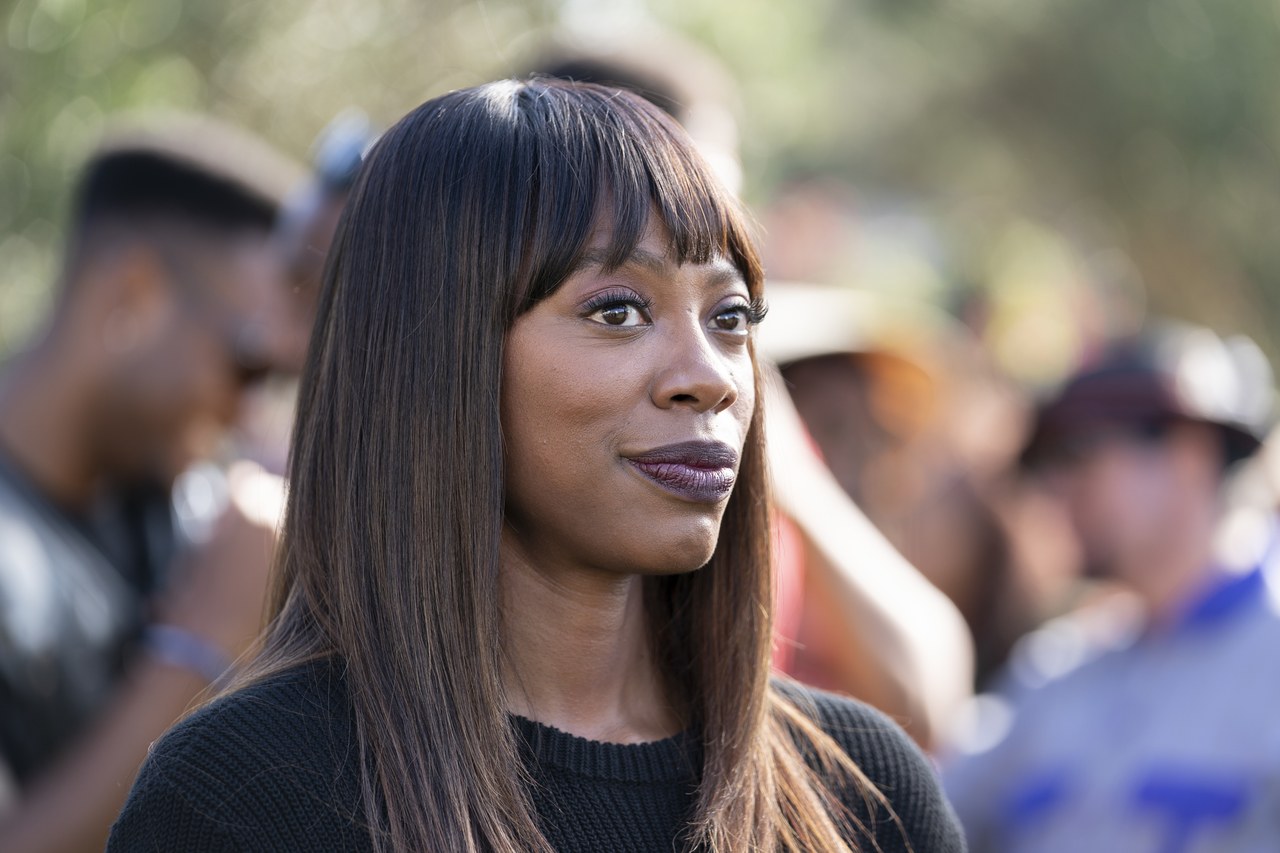
At Glamour’s 2018 Women of the Year Summit, Yvonne Orji opened up about how her faith led her to a starring role on HBO’s Insecure. Her story, below.
I’m Yvonne Orji. So some of you may know me as Issa Rae’s very messy best friend Molly on HBO’s Insecure. Thanks for watching! But what you may not know is that the journey to get there was entirely faith-led. Like, y’all, I could not have this life or anything. Nothing about the six-year-old girl who emigrated from Nigeria to America who was destined to be a doctor…if you know anything about Nigerians, you’re a doctor, lawyer or engineer. My mom is still praying, “Just one day. Maybe just one day…” It’s like, no. But nothing about my story pointed anywhere to comedy.
And that is where God comes in. Y’all that was all His idea.
I was raised as a Catholic, so God was always kind of a part of my life in a way. But as a freshman in college, I attended a Bible study that completely changed my life. That’s where I became a born-again Christian. Now, I know some of you are like, “In college?” Yes, because nothing about freshman year says Scripture, OK? Because I had a plan, so I was like, where are the boys? But I attended a bible study, and the minister there kept referring to God as, “Daddy.” I’ve never heard anybody refer to Him so intimately, and I’m really competitive—I have three older brothers—so for no reason I was like, “I want what she has.”
One night, when I was trying to figure out what was next and needed some clarity, I heard Him say, “Do comedy.”
I wanted that level of intimacy, so I said yes to the invitation—and from that, I too developed a very intimate relationship where I hear God. And one night, when I was trying to figure out what was next and needed some clarity, I heard Him say, “Do comedy.”
I’m sorry, what?
Because I wasn’t funny. I was like, nobody laughs at me. They used to laugh at me. Nobody was like, “That Yvonne is SUPER funny.” But at that point, I was on my way to becoming a doctor. I was stalling because I got my masters in public health. This is what you do when you’re the child of immigrants—you go to school to avoid going to school. And then after I got my masters, I was still not ready to be a doctor. I wanted to go to Liberia, which was just finishing a war, because it was easier for me to go to a war-torn country than tell my parents that I wasn’t going to be a doctor.
So I was wrestling. I was wrestling with God’s words. I was like, “What do you mean you want me to do comedy?” Here’s the thing, how many people have challenged God and won? You know, you can’t wrestle with Him. I’m not a fighter, look at me. So clearly I took His advice and I did comedy.
Sounds daring and fun, but pretty soon after I moved to New York I found myself with zero dollars and zero leads. Let me tell you right now: That’s not sexy. OK? Because Sallie Mae wants her money, like all of it. So one day I found myself incredibly hungry. I was in Harlem, and if you live in New York you know about 2 Bros. Pizza. It feeds the artist and the homeless, guys. It was $1 a slice of pizza, and if you’re really fancy you can get two slices and a soda for $2.75. I see some people shaking their heads. 2 Bros. Pizza is where it’s at! But here’s the kicker: I’m living in Queens at the time, and I didn’t have the $4.40 to take the subway to get there and back. Here I was, 25 years old, with two degrees, and not even the $7 to get a slice of pizza.
I was like, was this really the life I risked it all for? I have a family that loves me and cares about me, and I am broke. I am poor.
PHOTO: HBO
Orji on ‘Insecure’
But God must have sensed my doubt because, in that instant, I promise y’all I got a download from Heaven…I grabbed a pen and paper, and I wrote everything I heard as He dictated plans for my life. And in that moment, it was like, this is amazing…I took a nap, and when I woke up I was like, I’m just going to say yes.
What followed was a series of saying yes. Because if He has plans for me, then I should just go with it. So I said yes to the temp job I hated but allowed me to perform comedy at night. I said yes to taking over a stand-up show in New York City. I said yes to a residency in a college production in Richmond, Virginia, that gave me two days to get there. I said yes to being a writer in the writers room for a TV show in L.A. At the time I didn’t know what that was, but, guys, it’s pretty self-explanatory. That’s what Google is for.
Say yes. What’s the worst that could happen?
So there was a lot of hustle and there was a lot of setbacks. I’m not going to front. The road to comedy was not sexy. I make it look very sexy now, but it was hard. That show that I was writing on got canceled—but from that point forward, I just kept listening. … I put every idea I had into creating the trailer for a show called First Gen, a series about a Nigerian girl who drops out of Med School to become a comedian (sound familiar?). This was back in 2016, and the trailer for First Gen became my audition tape for Insecure. It’s what Issa was able to see and turn to the producers and say, “Give her a shot.” I didn’t have an agent, manager, anything, I had never acted. So this is HBO—Home Box Office—this is not like, a small production. And this thing that I hunkered down and accomplished was what Issa was able to be like, “Let’s try her out!”
So, I’m not a surgeon, I’m not. Don’t get sick around, I’ll probably just give you Advil. But I’m definitely fulfilling my purpose. Inside all of us exists some kind of compass—whether it’s divine or otherwise—but it’s something desperately trying to navigate you and all of us to the life we know we were destined to live. So I think the choice is pretty simple: Keep letting fear sidetrack you or take what you’ve been given, maybe even told from God above, and say yes. But whatever it is, keep going. Keep doing it. Why not? That’s what Glamour Women of the Year is all about—women who are not afraid to go after what they want.
Say yes. What’s the worst that could happen?
Find out more about Glamour‘s 2018 Women of the Year here.
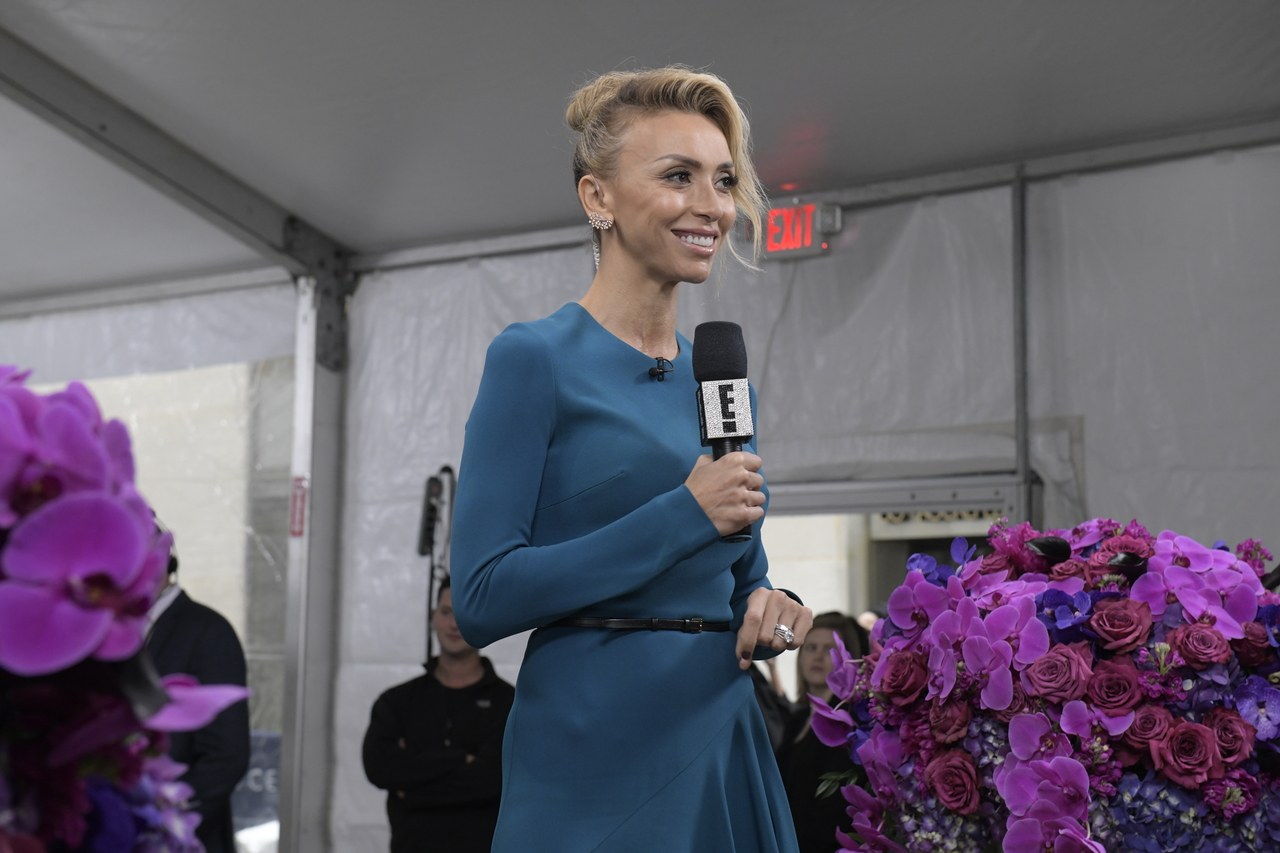
If it’s hard to believe that three full years have passed since Giuliana Rancic stepped down from her co-anchor spot on E! News, that’s because her face has still been everywhere. A consistent red carpet fixture for the better part of two decades, she was fully present for a smattering of viral moments that dominated this year’s awards shows and her Instagram has remained plenty active. Plus, she’s been out promoting other projects, including her eponymously-named Prosecco and a “judgement free” parenting app with her husband, Bill, called Pear.
So, in a way, it seems almost like she hit pause on E! News more so than walking away. But make no mistake: On September 4, Rancic returned to her reign on the nightly show, alongside co-host Jason Kennedy. And she’s got a plan for how to dig back in, at a time when Hollywood is still going through a major reckoning.
“Certainly, in the past year or so, [we’re] having more important conversations, more meaningful conversations, on the red carpet,” Rancic tells Glamour. It’s a marked change from when she began as a correspondent on the network, back in the early aughts. “There was a long period of time in the beginning, really until recently, where viewers wanted to hear about the light things: the beauty, the fashion, the projects. We would do a little bit of everything.”
“I think we’ve gotten away from keeping the focus on the people we’re talking to.”
But, in her view, what’s really changed now—more so than talking about equal pay and inclusion riders on the step and repeat—is the fact that celebrity reporters have gotten away from talking to celebrities about, well, the celebrities themselves. Whereas once the conversation was largely focused on the show, the project, or elements of their personal lives, so much of the dialogue now rests in cultural commentary, which isn’t, innately, a bad thing. But while some are more than happy to take up the role of advocate or social critic, others aren’t quite as cut out for it. Or just don’t care to do it.
And so, Rancic has a philosophy that, right now, sounds at once intuitive and a little bit rogue: “Letting someone just talk about what they want to talk about, and not making them feel like ‘Oh my gosh, I’m going to get asked to talk about something that has nothing to do with me,” she explains. “I want celebrities to feel like, when we do an interview, that it’s about them. I think we’ve gotten away from keeping the focus on the people we’re talking to.”
PHOTO: NBC
If you think this sounds simplistic, it is. You don’t have to tell Rancic, either; she’s aware of that fact. But she also thinks the time has come for us to get back to the basics. It’s a theory she cooked up while she was a consumer, instead of a creator, of celebrity news over the past few years, based on a recurring observation: “It’s like a lot of other voices [are] jumping into conversations that don’t really have anything to do with them, and they’re not necessarily voluntarily doing that.”
It’s also among the reasons she decided to come back to making the news. “That’s honestly one of the things I’ve been thinking about a lot,” she adds, “how to have more direct, honest conversations with people, about things that apply to them. I think if we do a lot of that, it’s a nice way to start getting back on track.”
Ranic isn’t the only person whose wondered whether or not we’re asking too much of red-carpet conversations that, at the end of the day, are about entertainment: Award shows and interviews don’t have to become our thunderdome for hashing out systemic issues. But it’s also not that Rancic thinks we should stick to fluff—not by a long shot. At the end of the day, like a lot of things, it’s all about balance.
“The way you handle these interviews has a lot to do with who you are as a person.”
“You can be serious, and also have fun, and a minute later say something that moves someone. That’s how I am in my life,” she says. “You just have to be able to read the moment. I think a lot of people—even the people who are using the [red carpet] platform for so much good, and putting up these meaningful messages—know that there needs to be that balance.”
In summary, and maybe to say the least: “It’s a really interesting time,” Rancic says with a laugh. “Everyone’s got to be more prepared on the red carpet, but honestly, my key is to be in the moment,” she says. “It really comes down to: The way you handle these interviews has a lot to do with who you are as a person.”
Elizabeth Kiefer is a New York–based writer and regular Glamour.com contributor.
Nearly 26 years after Virginia Kase voted in her first election, her voice still rings with the hurt and frustration she felt that day. “I [was] excited. It [was] this great rite of passage [and] I go to the table to register, and I look over and my mom’s having a problem.”
While it was the first time Kase, now 46, had ever set foot in a polling station, her foster mother—originally from Puerto Rico—was a regular voter. Still, Kase said, “Her English wasn’t perfect. Sometimes people didn’t understand her. So I went over to make sure she was okay and able to communicate… They were asking her for proof of residence. And I was horrified.”
Now, in her first interview as the incoming CEO of the League of Women Voters, Kase told Glamour that the memory of feeling powerless to intervene on behalf of her own mother brings a deeply personal dimension to her new mission: Helping as many Americans as possible exercise their right to vote.
“I never want anybody to have to go through what my mom went through,” Kase said during a phone conversation.”She was able to vote that day. She went home, she got a utility bill, she came back, she slammed it on the table, and she made sure that her vote counted… But there are a lot of women who don’t have that same comfort with going back and doing what they need to do.”
Kase comes to the League with a track record of work with organizations focused on immigrant and civil rights. Until mid-July, she’s COO of CASA and CASA in Action, where her responsibilities range from political strategy to collective bargaining. (Her tenure at the League begins July 25.) No stranger to politics, her background also includes years spent with organizations that addressed youth gang violence and fostered career training in her hometown of Hartford, Connecticut.
She joins the nonpartisan League—founded in 1920, the same year American women won the right to vote—in the sprint to November’s crucial midterm elections.
“I think that women are going to do tremendous things this year. It’s a unique time in our history,” Kase said.
“One of the things [that] drew me to the League— in addition to [the] historic significance of this amazing organization that is nearly 100 years old—is this renewed focus on diversity, equity and inclusion,” she said. “Lifting up women of color [and] also bringing more young women into the fold [are] two things that for me are extremely important.”
A wealth of research suggests requiring photo ID or even proof of citizenship can have an outsized impact on minority, young, and low-income voters. The strictest proposals, championed in the name of election integrity, have run into trouble in the courts; President Donald Trump’s own claims of widespread voter fraud remain unproven.
“It’s extraordinarily important that we make voting as easy as possible. We don’t want to create barriers,” Kase said. “It’s unjust, and something that the League will continue to fight against to ensure that everybody is able to exercise their Constitutional right to vote.”
Kase, now herself a mother of two, says her first vote back in 1992 was the moment when she “realized that my perfect English, the way that I look, was different from my mom. [It] really showed me the privilege that existed within me, and that I needed to do something about it.”
The University of Maryland graduate will bring that memory to the new job—along with the backstory of coming up in Hartford at a time when youth violence was so bad that a National Guard-run program for high school dropouts was shut down after being overrun by gangs. “I grew up in a community where people went to jail,” says Kase. That experience shaped her interest in another goal: Restoring voting rights to people who have lost them after a felony conviction.
But, with all the work of engaging women voters and helping them exercise their right ahead of her, does Kase believe American politics can really be changed by the so-called “pink wave?”
“I hope so. I think the wave has been coming for a long time. Even since before Donald Trump, women are educating themselves [more] on the issues, and you have organizations like the League [that] are focused on making sure that people have the right information,” she said. “I do hope that people turn out in record numbers this year, [just] as we [are seeing] more women run for office this year than in years before… Certainly, we’re gonna work our butts off to make that happen.”