Categories
Health

When the Coronavirus Cancels Therapy


These are anxious times. Health care systems are overwhelmed, nearly everything has been cancelled and there’s no telling when we’ll all be collectively out of our sweats. In the face of the coronavirus outbreak, mental health care is more important than ever—but it’s also disappearing.

Martha Smith, a 38-year-old in Oakland, California, who works for a global online auction company, has been dealing with the anxious effects of the coronavirus since January. “The company that I work for, just because of what we do, we’ve been experiencing the effects of the coronavirus since the first of the year,” says Smith. “So it’s actually been a really stressful and difficult time.” She’d been seeing a therapist since June of last year, which helped, but earlier this month, Smith’s therapist was forced to close her office and switch Smith’s sessions to Zoom.

“Most psychologists are suspending their office practice and will be continuing to treat their patients remotely,” says Franklin Porter, a licensed clinical psychologist based in New York City. “While that’s obviously not ideal, people can still maintain therapeutic contact with their therapists, wherever they may be located.”

Virtual therapy sessions are a solid plan B. “I slept until 15 minutes before my appointment,” says Smith. “I’m feeling much more well-rested than I usually am, and I’m in my own bed surrounded by my cats. I’m in my safe space.”

But for some, the prospect of having to DM their therapist is just one more thing to be anxious about. “My main concern in regard to online appointments is the feeling of isolation they create,” says Elizabeth Keller, a 21-year-old student at the University of Southern California. “A part of the therapy experience that I enjoy is visiting my therapist’s office, as I associate that space with a measure of peace and reassurance,” she says. “I’m afraid that I won’t feel the same way if I begin speaking to her online, as my apartment is even now beginning to make me a little stir crazy, and I anticipate that feeling will only unfortunately get worse as the quarantine situation evolves further.”

In the face of so much anxiety and uncertainty in mental health care, the experts recommend focusing on the things you can control. “Excessively worrying about unknowns outside of your control can exacerbate anxiety,” says Mimi Winsberg M.D., chief medical officer at Brightside Health in San Francisco. Here’s how to keep prioritizing your mental health:

Plan ahead and create a routine.

In the face of so much change, something as simple as a schedule can be a powerful form of self-care. “Emulate your life before COVID-19 to the best of your ability,” says Winsberg. “Follow the same schedule of when you wake up, when you eat, and when you go to sleep.”

Do the same for mental health care. If you typically see a therapist once a week, aim to keep up that same cadence virtually. Or if your therapist can’t offer virtual sessions, keep that hour blocked on your calendar for your own form of self-care such as doing some yoga, video chatting with a friend, or cooking something you love.

Limit information overload.

Being subjected to a 24-hour news cycle won’t do much good for your nerves. Sometimes it’s hard to get an escape, so it’s best to limit your exposure and be a little more intentional about how often you check for news updates.

“Try choosing two times per day to catch up on the latest developments or choose a singular news source that you trust and sign up for alerts so the latest developments come to you, rather than the other way around,” says Winsberg. You don’t have to cut yourself off completely, but just dial back.

Prioritize your physical health

You’re probably finding yourself at home a lot these days. If you’re in an environment that allows it, go for a long walk around your neighborhood or start an at-home yoga practice. Moving your body is essential in lifting your spirits. As for food, try to prioritize health. “Foods that are high in protein and potassium have shown to help calm moods,” says Winsberg. Treating your body with kindness and compassion will go a long way as you work or go to class from home.

Breathe and practice mindfulness.

Breathing sounds like such a no-brainer, but it’s important to your overall health and wellbeing. Winsberg swears by the 4-7-8 breathing technique. Also known as “relaxing breath,” it’s been proven to lower heart rate and alleviate anxiety.

Source link

Categories
Health

Is Sound Wave Therapy the Orgasm Treatment of the Future?


I haven’t been paying enough attention to my clitoris. That’s the first thought that floated into my brain as Briana Oster, M.D., a former pediatrician who now works at Revitalize Laser Care’s Denver office, talked me through a diagram of the female sexual organ as I prepared for a non-invasive med spa treatment that promised to improve my orgasms through the use of sound waves. “We’ve been focused on the top part”—the small, external bulb at the top of the vulva—she explained, pointing to an illustration. “But there’s a lot more going on.” Which brought me to my second disconcerting revelation: Have I been having sex all wrong?

Thankfully, I haven’t, you’ll be happy to know, but there’s always room for improvement. Enter Cliovana, a painless, noninvasive treatment which aims to increase arousal levels, orgasm frequency, and orgasm intensity, by stimulating the clitoris via sound waves. I had to know: Was this the future of better orgasms?

Biohacking Your Orgasm

As shocking as it may sound, the full clitoral anatomy wasn’t really known until the 1990s, and we’re still learning about it: It wasn’t until 2009 that the first 3-D image of a clitoris was created. Why’s that important? Because what many of us have long thought of as the clitoris—that external almond-sized nib Oster was talking about—is just the tip, as a fellow writer put it, of the clitoral iceberg. In fact, the clitoris extends much further, surrounding the vulva on either side like a wishbone. Meaning there are a whole bunch more nerve endings that can be aroused to stimulate orgasm than we previously thought.

Lucky for me, orgasming isn’t a routine problem, unless I’m stressed, which, I’ll admit, has been a near-constant state recently. Many women are having a different experience: A study published in the Journal of Sexual Medicine in 2014 found that just 62.9 percent of women experienced an orgasm with a familiar partner, compared to 85.1 percent of men. Researchers have dubbed this the “orgasm gap.”

At 31 years old, however, I have noticed a reduction in lubrication and that it takes longer to get aroused than it once did. When I heard that Revitalize Denver would be the first clinic in the country to offer Cliovana—I decided to give it a try. If it worked, it’d be a fun, and hopefully stimulating, early wedding present for myself and my fiancé.

At my first appointment, I settled onto the exam table, pants- and underwear-less, with a paper sheet covering my bare lower half. (A pre-appointment email recommended I “trim [my] pubic hair to facilitate better results.”) Dr. Oster had already walked me through the basics: Cliovana uses sound waves to promote the creation of new blood vessels and increase nerve sensitivity—in other words, make your whole clitoris more responsive. Patients receive the $2,000 treatment four times over a two-week period, with each appointment lasting about 10 minutes. (Full disclosure: Revitalize offered me the procedure free of charge.)

Unlike FDA-approved medications or the O-Shot, Cliovana is performed externally, and it’s solely designed to enhance female sexual satisfaction. (While the sound wave device Cliovana uses is FDA-approved, the procedure itself is what’s known as “off-label.”) “We don’t treat a condition,” said Keri Hall, Cliovana’s executive vice president of business development. “It’s for any woman who wants improved sexual satisfaction, orgasm intensity, frequency, and increased arousal levels and lubrication. It’s for any woman who feels as though she’s not completely satisfied.”

The sound wave technology behind Cliovana is relatively well-supported by science for a variety of other uses. It’s been used by urologists to break up kidney stones since the 1970s and more recently, the energy has been directed toward the penis as a potential aid for men dealing with erectile dysfunction. (So far, the clinical trials are promising.) But Cliovana is the first time this sound wave technology has been applied to women’s sexual organs. That may explain why I felt a bit like a lab rat as Oster placed a bell-shaped plastic cup over my clitoral hood, aka the part we all know about; for about three minutes, a gentle tapping ensued, meant to bring blood flow to the surface and prep the area for treatment. It was an odd sensation, but not painful or uncomfortable.


Source link

Categories
Health

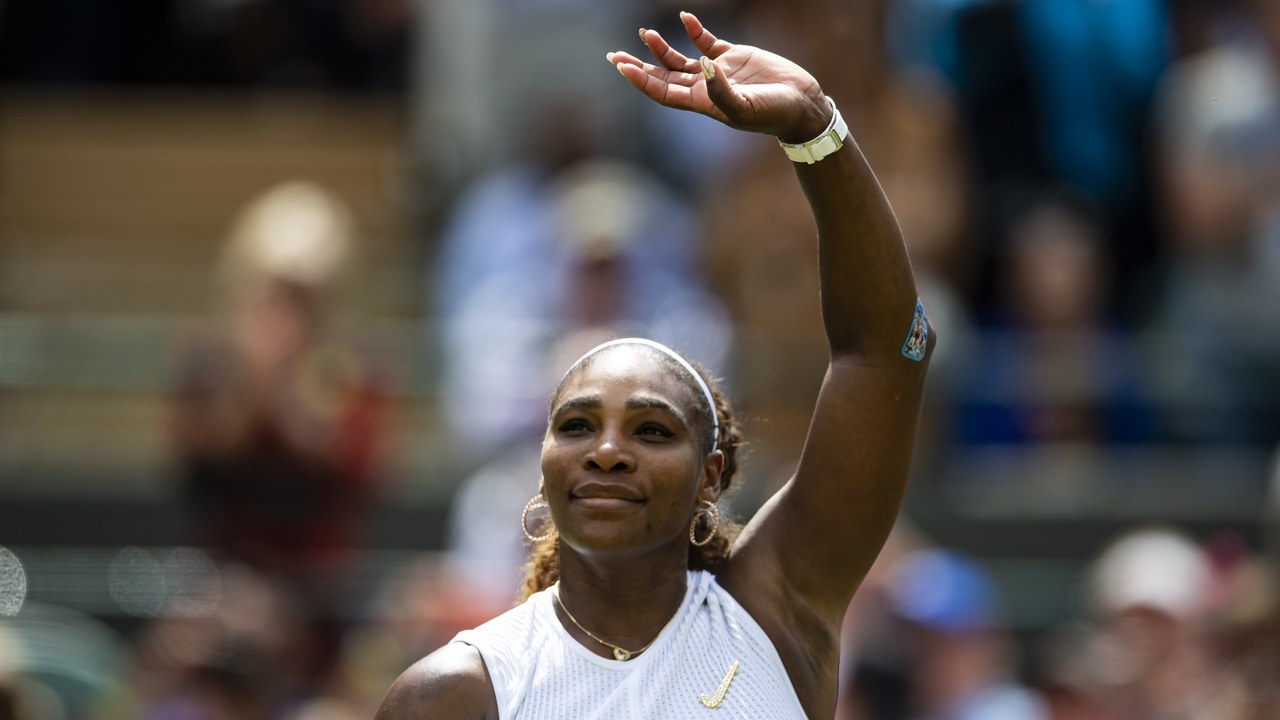
Serena Williams Opens Up About Starting Therapy After Losing the 2018 US Open


At last year’s US Open final, Serena Williams squared off against then 20-year-old Naomi Osaka. Williams was poised to win her 24th Grand Slam title, when the umpire accused Williams’ coach of giving her signals from the stands. The umpire issued a violation, but Williams was adamant that she absolutely wasn’t receiving any coaching. As she put it at the time, “I don’t cheat to win. I’d rather lose.” Then things began to spiral. Williams lost the next point, and in frustration, smashed her racket—earning her another violation. Williams stood up for herself, accusing the umpire of penalizing her for being a woman. In turn, the umpire took away a game from Williams—and she went on to lose to Osaka.

Since the finals, Williams has been quiet on the subject. But now, nearly a year later, Williams opens up about it in a first-person essay in Harper’s BAZAAR.

For a long time after the match, Williams shares she wasn’t ready to pick up a racket. She suffered many sleepless nights, replaying what happened in her mind. Eventually she knew she needed to take action. “Days passed, and I still couldn’t find peace. I started seeing a therapist,” Williams explains. “I was searching for answers, and although I felt like I was making progress, I still wasn’t ready to pick up a racket.” She realized she couldn’t move forward until she apologized to Osaka—who instead of celebrating her first US Open win, was in tears as she received her trophy, crying over the controversy that had just taken place on the court.

“Hey, Naomi! It’s Serena Williams. As I said on the court, I am so proud of you and I am truly sorry. I thought I was doing the right thing in sticking up for myself. But I had no idea the media would pit us against each other,” she wrote in an email to Osaka. ‘I would love the chance to live that moment over again. I am, was, and will always be happy for you and supportive of you. I would never, ever want the light to shine away from another female, specifically another black female athlete. I can’t wait for your future, and believe me I will always be watching as a big fan! I wish you only success today and in the future. Once again, I am so proud of you. All my love and your fan, Serena.'”

Osaka then responded with a text that brought Williams to tears. “People can misunderstand anger for strength because they can’t differentiate between the two,” she wrote. “No one has stood up for themselves the way you have and you need to continue trailblazing.”

Williams was also candid about the many other times she’s been discriminated against throughout her career, both publicly and privately. “As a teenager, I was booed by an entire stadium (I took the high road and even thanked those who didn’t want to see me win). I’ve been called every name in the book. I’ve been shamed because of my body shape. I’ve been paid unequally because of my sex. I’ve been penalized a game in the final of a major because I expressed my opinion or grunted too loudly. I’ve been blatantly cheated against to the point where the Hawk-Eye rules were introduced so that something like that would not happen again. And these are only the things that are seen by the public. In short, it’s never been easy. But then I think of the next girl who is going to come along who looks like me, and I hope, ‘Maybe, just maybe, my voice will help her,'” she writes.

And while it hasn’t been easy for Williams, she acknowledges that it’s not a pain she’s suffered alone—it’s something women face daily. “This incident—though excruciating for us to endure—exemplified how thousands of women in every area of the workforce are treated every day. We are not allowed to have emotions, we are not allowed to be passionate. We are told to sit down and be quiet, which frankly is just not something I’m okay with. It’s shameful that our society penalizes women just for being themselves,” she writes. And now, with her racket back in hand, she promises to keep fighting for a woman’s right to be herself, in all workplaces.


Source link

Categories
Health

Red Light Therapy May Actually Be the Fountain of Youth


When I first encountered red light therapy (RLT), I thought I’d found the holy grail of health treatments. It sounds like actual magic: with the flick of a switch, a dose of red light is rumored to cure everything from acne to sore muscles from the cellular level up. No chemicals, no down time. But as with most magical-sounding health cure-alls, you have to wonder: Too good to be true?

There is a lot to be excited about, according to experts, but RLT isn’t totally free of controversy, either. Here’s how red light therapy works, which of it’s claims are legit and which remain shady.

RLT works its magic by delivering safe, concentrated wavelengths of natural light into your skin (up to 10 deep millimeters, to be exact) where it’s absorbed by your cells. This “stimulates the production of collagen, elastin, and fibroblasts,” says Rhonda Klein, M.D., a board-certified dermatologist in Connecticut. That in turn enhances a little something known as ATP, the source of energy for every cell in the body (read: natural energy sans a 3 p.m. caffeine crash). “RLT also boosts circulation, bringing more oxygen and nutrients to your cells and tissues,” Dr. Klein says.

Translation? When your cells are hit with the red light wavelengths, a host of regenerative effects occur, leading to potential benefits like younger-looking skin, enhanced muscle repair, and diminished scarring.

As evidence for RLT’s benefits mounts, so do ways to soak them up. Professional wellness spots—your dermatologist’s office, local spa, or maybe even a fancy gym—offer a variety of options, from full-body panels that allow you to fully bask in the glow, to smaller devices for more targeted treatments. You can also do DIY treatments at home with a handheld device, red light face mask, or even a RLT bed, if you want to go all in.

It’s not just any red light that delivers this performance-optimizing boost, however; two wavelengths of red light in particular—660 nanometers and 850 nanometers—deliver the best biological response, explains Michael Hamblin, M.D., an associate professor at Harvard Medical School. The former, 660 nanometers, is more quickly absorbed by the skin, making it the go-to for cosmetic treatments, while 850 nanometer wavelengths penetrate deeper into your body to help with muscle recovery, joint pain, and full body health.

n other words, you can’t just pop a red light bulb into your desk lamp and expect to jumpstart a cellular time machine. When you visit a professional, you can expect a treatment utilizing one of these optimal wavelengths, but if you buy a DIY device, be sure to check that it specifies an output intensity. “With so many devices coming out online, it’s a good idea to consult a dermatologist or other skincare specialist to guide you on the most effective choice,” says Dr. Klein. (You should also be wary of tanning salons that swap out UV bulbs for red bulbs in tanning beds and bill them as “anti-aging” treatments, she adds.)

Where red light does become controversial is how many rays you actually need to soak up to see results—researchers haven’t yet nailed down the optimal dose. What they do know is that there isn’t a fear of overdoing it. “You could use RLT for 24 hours as day and wouldn’t damage the skin,” says Dr. Hamblin. “It’s almost impossible to cause any harm.”

Wound Healing

Wolverine-esque wound healing is just one of the many benefits touted by proponents of RLT—and there’s no shortage of research to confirm it really does help you heal faster. A 2014 study found red light therapy promoted “increased tissue repair and healing…[plus] beneficial effects on wrinkles, acne scars, hypertrophic scars, and healing of burns.”


Source link

Categories
Health

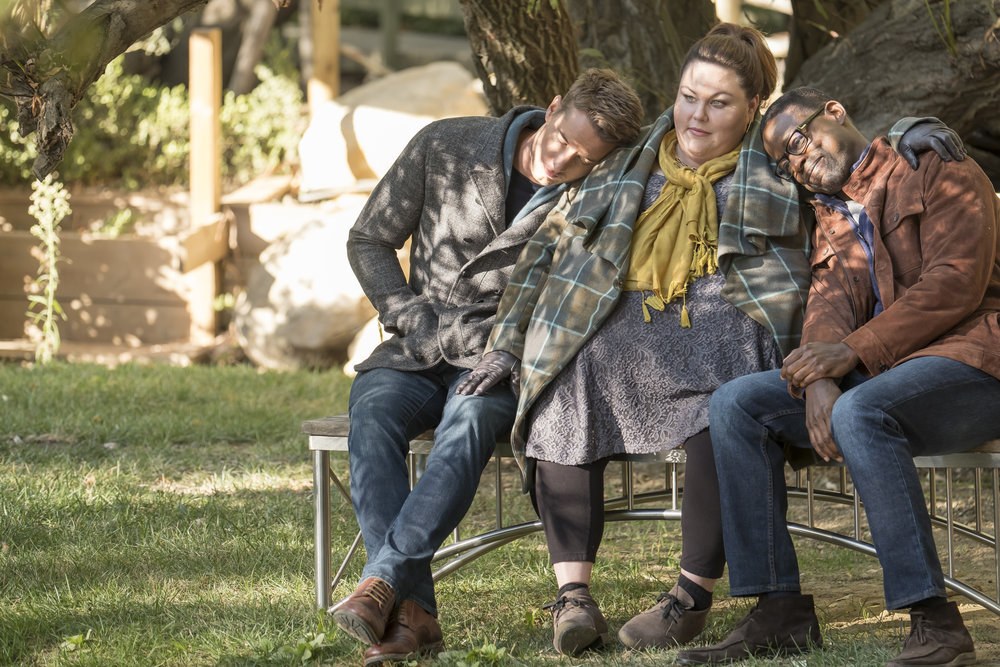
The Cast of 'This Is Us' Reveal What Happens Next After the Pearson Family's Intense Therapy Session


This Is Us rang in 2018 with quite the emotional episode—but would you expect anything less? (Read our recap here for a full breakdown.) For the actors, it was just as intense IRL. “I remember thinking, ‘Wow, these are really authentic moments,'” Justin Hartley tells us. “They’re talking about really hard things to people they love. They don’t want to hurt each other, but it’s going to hurt.”

One moment in particular—a 12-minute scene of Kevin’s family therapy session without a break in the action—is rarely done on television. “You can’t pick up that momentum [if you stop at any point when filming], so we just did take after take all the way through,” Hartley explains. “I don’t think anybody dropped a line.”

The scene—which prompted a devastated Rebecca to admit that Randall was an easier child to love than closed-off Kevin—also revealed that Kate’s addiction to food runs deeper than anyone was truly aware. “We all have struggles in our lives, and I think being honest with the people we love is the only way to face those issues,” Chris Sullivan says. “Being transparent and honest [with yourself and others is] really [the only way to] overcome something like that.”

Adds Hartley, “It’s a life-long struggle. It’s one moment at a time. It’s the same with Kevin. He knows the man he wants to be, but he just puts a lot of pressure on himself when he doesn’t need to.”

PHOTO: NBC

The episode ended on an uplifting note for the big three, but the hard work is just beginning. While it remains to be seen if Kevin has a future with ex-wife Sophie, Hartley played coy but noted that “you’ll be seeing her again.” Still, Sophie isn’t the only woman in Kevin’s life that he’ll need to work on repairing a relationship with. His sister-in-law Beth isn’t quite ready to forgive him after he unknowingly drove under the influence with her daughter in the backseat of his car. “There is going to be a tension there until [they really sit down to talk things out], Susan Kelechi Watson tells us. “It’s not like she hasn’t had tension with him before, but this was definitely a lot more serious. She’s definitely not as willing as Randall is [to take the stance that], ‘Oh, he’s getting help.’ She still feels like it’s all about Kevin in a way. There is going to have to be some kind of a stronger resolution for them.”

With only seven episodes remaining in season two, it remains to be seen if Beth and Kevin will have that opportunity, but one thing we do know is that the details about Jack’s death are closer to being revealed. “All I can say is be prepared,” Milo Ventimiglia says cryptically. “And yet, I know there is no real preparation for something like that. At the same time, we all know it’s coming. Just remember, it doesn’t mean the character is leaving or I’m leaving. It’s just one chapter in Jack’s book, and there’s a lot more to learn about the man.”

Speaking of Jack, Ventimiglia says that as vulnerable as we’ve seen the character this season, he actually has a tough time pulling back that emotion. “Jack is not one to cry, and I myself am more emotional than Jack. The hardest moments for me are where I personally have to hold my emotion in. When Jack opens up about his drinking problem [to Kate]…I’m welling up thinking about the experience, but thank God I have partners like [teen Kate] Hannah Zeile, [10-year-old Kate] Mackenzie Hancsicsak, and all the kids both ages. And Mandy, Mandy, Mandy…she’s a God send.”


Source link

Categories
Health

There's a Type of Therapy Where You Walk with Your Therapist, and It Works


When Megan Treby, 41, an art teacher who lives near Washington, D.C., first started seeing her therapist, Jen Udler of Positive Strides Therapy for her anxiety, Udler suggested that the two of them might conduct their sessions while taking walks to help release excess energy. Udler specializes in a type of therapy called “movement therapy” (in other words, walking while talking) that she thought might be helpful for Treby. The pair began meeting for sessions on a walking trail in Fallsgrove Park in Rockville, Maryland. During their sessions, Udler didn’t take notes. It wasn’t even completely private—they were in a public space, after all. But the benefits of walking side-by-side instead of sitting face-to-face are pretty profound: it really seems to make talking about difficult issues easier for people.

There’s actually research to back this type of therapy up—one study found that people with anxious tendencies felt more pleasantly about another person they were interacting with if they weren’t making eye contact. Treby noticed this effect, and also that moving through her surroundings on her walks with Udler gave them fodder for their sessions. The two walked on a path with dashed white lines, which Udler used as a metaphor for breaking up tasks little by little on the road to transformation. Over time, Treby started to her Udler’s voice in her head. Megan: think of something else. Megan: identify what you’re afraid of. Megan: is that reality or is that the anxiety talking?

Physical movement has traditionally been seen as something done outside of and in addition to talk therapy. But combining them is proving to work way better for some people. “When I have clients that prefer to sit in an office, they take a longer time to make progress,” says Clay Cockrell, a movement therapy practitioner and founder of Walk and Talk Therapy in New York City. Progress, according to Cockrell, means developing problem-solving tools and learning to make different choices outside the patterns that a patient is trying to break. “[With therapy,] there’s this very stereotypical image of Freud and a couch in people’s minds, which many find intimidating and not at all appealing,” says Amanda Stemen, a clinical social worker based in Los Angeles. “We need to broaden the understanding of what therapy actually is and all the methods in which healing and growth can occur.”

Angela*, 55, used the walk-and-talk method to get through her sadness and feelings of depression after her sons left for college. Her walking sessions were often four miles long. “It’s good to not lock in because you’re missing someone,” she says.

The addition of movement also allows therapists to observe breath, pace, gait, and posture and incorporate that information as part of their therapeutic process. For example, Stemen might notice a client walking heavily and ask them about it. “There’s usually a parallel between what they’re doing physically between how they operate their emotional life,” says Stemen.

It’s not that walking alone has some magic power to evaporate anxiety or remove sadness. Walking and talking with a counselor is just a new way of approaching mental health goals, and it can be especially for people who have had trouble finding therapy styles that work for them in the past. Through movement therapy, “I was able to see that my thoughts were just automatic negative thoughts and a product of my anxiety —not truths,” says Treby. “The simple act of walking forward literally made my mind move forward.”

*name has been changed


Source link