Categories
Health

Charlotte Tilbury Pretty Youth Glow Filter Gives You the Most Natural Glow


Following Eva Chen on Instagram is a little like enrolling in an adulting college. The only difference between a four-year university and a tap on her account’s “Follow” button is that it’s free. I’ve learned so much from tuning in to her daily diaries, and it’s all applicable to my daily life: how to pose for a mirror selfie, how to actually use a jade roller, how to distinguish a sumo orange from a heap of common citruses. No one can say that about Intro to Basketweaving.

In my favorite glimpses at her life and travels, Chen posts product-by-product makeup and skin care application stories on her account. Last season at fashion week, makeup artist Nikki Makeup joined her for a series of videos where she shared the ins and outs of perfectly-applied blush and highlighter. I foolishly forgot to write down the products they used for Chen’s glowy skin in the video, but I did remember one specific tidbit of wisdom. According to Nikki, the best blushes give you the appearance of having just come inside from a brisk walk. Translation: When applied and blended just so, blushes can give you a light, lit-from-within glow.

My prior experience with blush has come nowhere close to that precisely described look. What I wanted was the delicate flush of a Jane Austen heroine after she’s arrived at a great manor on horseback. What I often got was a garish pink or red that threw my naturally paper-white skin into sharper contrast. Granted, that’s mostly my fault. The bulk of my exposure to blush came from caking on deep pinks and orange-reds for dance performances until my mid-twenties. The look made sense under heavy stadium lighting, but it was startling and unflattering up close. Maybe my expectations were a tad dramatic, but there was nothing natural about the blushes I’d tried to wear before.

After seeing the potential for a rosy, light cheek on Chen’s Instagram, I felt compelled to give blush a second chance. I knew it would be more than re-incorporating the product back into my makeup routine, though. It’d also be a matter of tracking down a pigment that could liven my pale cheeks while avoiding clown territory. I found just that in less time than I expected, at the corner of my favorite lipstick brand, Charlotte Tilbury, and Glamour‘s latest Beauty Awards winners.

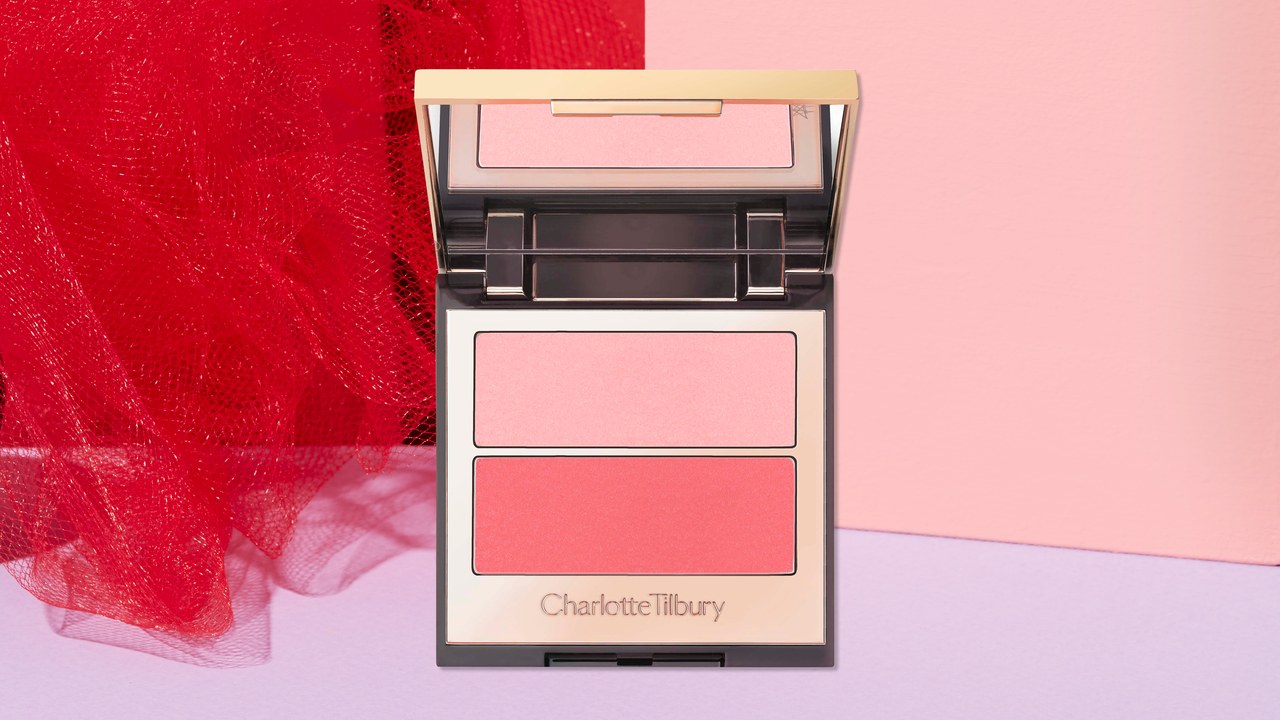
Charlotte Tilbury’s Pretty Youth Glow Filter is more low-key than its name suggests. It’s a blush-highlighter duo in two complementary, semi-sheer pink shades. There’s a natural element to the ingredients too. Instead of a powder, it’s a paraben-free cream blend. (This doesn’t mean that much for the average user, other than that it’s extra smooth to the touch and lightweight to wear.)

I followed the award-winning suggestion to try the “Pretty Fresh” shades, described online as a “coral pink” set. “Coral” sounds harsher than the blush appears. The shade looks like more light pink than pink-orange after applying. When I want the lightest of flushes, I’ll dab some of the coral color on a blush brush and swipe along my cheekbones. For days that I’d like a hint more color, I apply the blush on the apples of my cheeks with a finger before blending it with a brush.

On either occasion, my favorite part of the set is the highlighter portion. This isn’t the thousand-watt glitter bomb that you’ll find at a Fenty or an Urban Decay, but that’s why it’s great. Instead, it’s a soft gold that shines brightest under direct light. My cheeks have the slightest sparkle, but it’s not at Twilight-vampire levels.


Source link

Categories
Health

Red Light Therapy May Actually Be the Fountain of Youth


When I first encountered red light therapy (RLT), I thought I’d found the holy grail of health treatments. It sounds like actual magic: with the flick of a switch, a dose of red light is rumored to cure everything from acne to sore muscles from the cellular level up. No chemicals, no down time. But as with most magical-sounding health cure-alls, you have to wonder: Too good to be true?

There is a lot to be excited about, according to experts, but RLT isn’t totally free of controversy, either. Here’s how red light therapy works, which of it’s claims are legit and which remain shady.

RLT works its magic by delivering safe, concentrated wavelengths of natural light into your skin (up to 10 deep millimeters, to be exact) where it’s absorbed by your cells. This “stimulates the production of collagen, elastin, and fibroblasts,” says Rhonda Klein, M.D., a board-certified dermatologist in Connecticut. That in turn enhances a little something known as ATP, the source of energy for every cell in the body (read: natural energy sans a 3 p.m. caffeine crash). “RLT also boosts circulation, bringing more oxygen and nutrients to your cells and tissues,” Dr. Klein says.

Translation? When your cells are hit with the red light wavelengths, a host of regenerative effects occur, leading to potential benefits like younger-looking skin, enhanced muscle repair, and diminished scarring.

As evidence for RLT’s benefits mounts, so do ways to soak them up. Professional wellness spots—your dermatologist’s office, local spa, or maybe even a fancy gym—offer a variety of options, from full-body panels that allow you to fully bask in the glow, to smaller devices for more targeted treatments. You can also do DIY treatments at home with a handheld device, red light face mask, or even a RLT bed, if you want to go all in.

It’s not just any red light that delivers this performance-optimizing boost, however; two wavelengths of red light in particular—660 nanometers and 850 nanometers—deliver the best biological response, explains Michael Hamblin, M.D., an associate professor at Harvard Medical School. The former, 660 nanometers, is more quickly absorbed by the skin, making it the go-to for cosmetic treatments, while 850 nanometer wavelengths penetrate deeper into your body to help with muscle recovery, joint pain, and full body health.

n other words, you can’t just pop a red light bulb into your desk lamp and expect to jumpstart a cellular time machine. When you visit a professional, you can expect a treatment utilizing one of these optimal wavelengths, but if you buy a DIY device, be sure to check that it specifies an output intensity. “With so many devices coming out online, it’s a good idea to consult a dermatologist or other skincare specialist to guide you on the most effective choice,” says Dr. Klein. (You should also be wary of tanning salons that swap out UV bulbs for red bulbs in tanning beds and bill them as “anti-aging” treatments, she adds.)

Where red light does become controversial is how many rays you actually need to soak up to see results—researchers haven’t yet nailed down the optimal dose. What they do know is that there isn’t a fear of overdoing it. “You could use RLT for 24 hours as day and wouldn’t damage the skin,” says Dr. Hamblin. “It’s almost impossible to cause any harm.”

Wound Healing

Wolverine-esque wound healing is just one of the many benefits touted by proponents of RLT—and there’s no shortage of research to confirm it really does help you heal faster. A 2014 study found red light therapy promoted “increased tissue repair and healing…[plus] beneficial effects on wrinkles, acne scars, hypertrophic scars, and healing of burns.”


Source link