Categories
Health

Casper Glow Light Review: A Ticket to Deeper, Better Sleep


Picture this: You’re finally in bed after a long day of working at home, there’s 15 minutes left of Tiger King, and your eyes are starting to feel heavy. You turn over to your partner and coo, “Babe, can you please turn off the lights?” Neither of you wants to leave the soft folds of your bed sheets and perfectly fluffy pillows, but someone has to be the sacrificial lamb. Now, imagine the same scenario where neither of you has to exit the warm cocoon. Instead, a self-dimming, warm light lulls you both to sleep as the credits start to roll. The. Dream.

If you have no idea what I’m talking about, that’s totally fair. Allow me to introduce you to The Casper Glow Light. I wrote about them earlier this month, but with coronavirus precautions in full swing, they’ve quickly become a staple in my new wind-down routine. The Glow Lights quickly trick my mind into off-mode after spending hours hunched over my laptop in a dimly lit apartment (who would ever think I’d miss working under fluorescents?).

These clever night lights are about the same size as my two-year-old succulents, and they are unlike anything else I own, making them one my favorite sleep discoveries. My home is the furthest thing from “smart”—for one, I’m paranoid of having too much tech in the house and for two, I think having a Siri or Alexa can be more hassle than they’re worth. But I made an exception to bring these little cuties into my place while testing products for Sleep Month—and what first sold me was the fact that, well, you can name them.

Before the lights arrived, I felt like any expecting parent would. I had a running list of names, but it wasn’t until they were fully charged and glowing that I had my epiphany. It was like they woke up and spoke to me. They come with preset names when you first sync them to the Casper App—I believe mine were Soho and Broadway—but I quickly changed them to Lux and Lumin (Latin names, obviously, because they’re chic) and grouped them as Solaris. (PS: The more Glow Lights you have, the more groups you can create.) Maybe it sounds silly to you but these were never just lights to me. I don’t have room for pets (or kids for that matter) in my current New York City apartment, so personifying these inanimate objects is as close as it gets for me and my boyfriend. And just as my mother mixes up mine and my brother’s name, I regularly forget who Lux and Lumin are (they look so alike…) but I love them both equally.

One of the most glorious things about the Casper Glow Light is that everything is synced to an app. It’s super easy to turn them on or off with a single tap. You can manually adjust the brightness by giving the lamps a gentle twist, or if you’re like me, you can use the digital controls and call it a night. I like to play with the settings—adjusting the brightness to my mood (from ‘Not bright at all’ to ‘As bright as can be’) and setting timers (15 minutes to 90 minutes) for when I want to sleep. You can also set wake-up alarms, which slowly fill your bedroom with soft light in the morning as opposed to the stress-inducing sound of a phone alarm going off at 6:30 a.m.

Other than setting timers to lull me to sleep or slowly wake me up, another way I get to use out of the Glow Lights is by using them as reading lamps. As mentioned, the lighting situation in my apartment is kind of dark—think moody, warm light—which makes it hard to read in the evenings. Since the Glow Lights are portable, I can keep one by my side or even hold it in my hand to illuminate the pages. The lights are also great for running into the bathroom or scurrying into the kitchen in the middle of the night. I can just give them a little shake and be on my merry way. Another great thing is that they hold their charge—unlike batteries on other home tech products I’ve tested. I’ll usually leave my Glow Lights on their charging dock when not in use, so they tend to last a few days without needing a recharge.



Source link

Categories
Health

4 Light Jacket Trends for Women That Will Be Everywhere This Fall


Your jacket sets the tone of your entire outfit. So whether you go for a casual utility style or a stealth leather moto, make sure your fall jacket—or even a light winter coat if you live out West or in the Southern states—expresses your overall look.

For fall 2019, the trends might actually get you excited for the cold temperatures. There are Almost Famous statement cuffs, animal prints that’ll make you reconsider leopard, and, of course, teddy coats. We whittled down all the best light jackets available to shop right now. So go ahead and choose the one that fits your personal style.


Source link

Categories
Health

Taylor Swift Says She's Re-Recording All Her Old Music in Light of the Scooter Braun Drama


In late June, news broke that Justin Bieber’s manager, Scooter Braun, had acquired Taylor Swift’s back catalog of music as part of his purchase of Scott Borchetta’s Big Machine Label Group. (Big Machine was Swift’s old label.) Pretty much everyone, from Halsey to Todrick Hall to Justin Bieber, had something to say about the situation, and voices on social media (including Kelly Clarkson) even urged her to consider the biggest power move possible: re-recording her entire catalogue.

And it turns out that’s exactly what Swift has decided to do. A short transcript from her recent appearance on CBS Sunday Morning reveals that the pop star is planning to head back to the studio and create brand new masters of all the songs that Braun now owns. Here’s exactly what she said when correspondent Tracy Smith asked her if she was going to re-record everything.

“Might you do that?” Smith asks.

“Oh yeah,” Swift says.

“That’s a plan?” Smith asks.

“Yeah, absolutely,” Swift answers.

As a recap, the whole drama started when Big Machine Records—the Scott Borchetta-owned label that Swift was on for a bulk of her career—was acquired by Braun’s company, Ithaca Holdings. In a Tumblr post, Swift insisted that she didn’t know about the sale until it was announced and that she wasn’t given the chance to buy her music. She also expressed her frustration that the songs she’d worked so hard on were now owned by someone she says had subjected her to “incessant, manipulative bullying.”

“When I left my masters in Scott’s hands, I made peace with the fact that eventually he would sell them. Never in my worst nightmares did I imagine the buyer would be Scooter,” she wrote. “Any time Scott Borchetta has heard the words ‘Scooter Braun’ escape my lips, it was when I was either crying or trying not to. He knew what he was doing; they both did. Controlling a woman who didn’t want to be associated with them. In perpetuity. That means forever.”

It’s unclear when Taylor Swift is going to start this project, but it’s going to be a huge undertaking. It comes right as her seventh studio album, Lover, is scheduled to drop on August 23. The full CBS interview will be out on August 25.


Source link

Categories
Health

Red Light Therapy May Actually Be the Fountain of Youth


When I first encountered red light therapy (RLT), I thought I’d found the holy grail of health treatments. It sounds like actual magic: with the flick of a switch, a dose of red light is rumored to cure everything from acne to sore muscles from the cellular level up. No chemicals, no down time. But as with most magical-sounding health cure-alls, you have to wonder: Too good to be true?

There is a lot to be excited about, according to experts, but RLT isn’t totally free of controversy, either. Here’s how red light therapy works, which of it’s claims are legit and which remain shady.

RLT works its magic by delivering safe, concentrated wavelengths of natural light into your skin (up to 10 deep millimeters, to be exact) where it’s absorbed by your cells. This “stimulates the production of collagen, elastin, and fibroblasts,” says Rhonda Klein, M.D., a board-certified dermatologist in Connecticut. That in turn enhances a little something known as ATP, the source of energy for every cell in the body (read: natural energy sans a 3 p.m. caffeine crash). “RLT also boosts circulation, bringing more oxygen and nutrients to your cells and tissues,” Dr. Klein says.

Translation? When your cells are hit with the red light wavelengths, a host of regenerative effects occur, leading to potential benefits like younger-looking skin, enhanced muscle repair, and diminished scarring.

As evidence for RLT’s benefits mounts, so do ways to soak them up. Professional wellness spots—your dermatologist’s office, local spa, or maybe even a fancy gym—offer a variety of options, from full-body panels that allow you to fully bask in the glow, to smaller devices for more targeted treatments. You can also do DIY treatments at home with a handheld device, red light face mask, or even a RLT bed, if you want to go all in.

It’s not just any red light that delivers this performance-optimizing boost, however; two wavelengths of red light in particular—660 nanometers and 850 nanometers—deliver the best biological response, explains Michael Hamblin, M.D., an associate professor at Harvard Medical School. The former, 660 nanometers, is more quickly absorbed by the skin, making it the go-to for cosmetic treatments, while 850 nanometer wavelengths penetrate deeper into your body to help with muscle recovery, joint pain, and full body health.

n other words, you can’t just pop a red light bulb into your desk lamp and expect to jumpstart a cellular time machine. When you visit a professional, you can expect a treatment utilizing one of these optimal wavelengths, but if you buy a DIY device, be sure to check that it specifies an output intensity. “With so many devices coming out online, it’s a good idea to consult a dermatologist or other skincare specialist to guide you on the most effective choice,” says Dr. Klein. (You should also be wary of tanning salons that swap out UV bulbs for red bulbs in tanning beds and bill them as “anti-aging” treatments, she adds.)

Where red light does become controversial is how many rays you actually need to soak up to see results—researchers haven’t yet nailed down the optimal dose. What they do know is that there isn’t a fear of overdoing it. “You could use RLT for 24 hours as day and wouldn’t damage the skin,” says Dr. Hamblin. “It’s almost impossible to cause any harm.”

Wound Healing

Wolverine-esque wound healing is just one of the many benefits touted by proponents of RLT—and there’s no shortage of research to confirm it really does help you heal faster. A 2014 study found red light therapy promoted “increased tissue repair and healing…[plus] beneficial effects on wrinkles, acne scars, hypertrophic scars, and healing of burns.”


Source link

Categories
Health

Judith Light Has Really, Really Good Life Advice


Judith Light deserves to sit on a throne, but when I walk in to the room where she’s doing press for her new Lifetime movie, Escaping the Madhouse: The Nellie Bly Story, she is sitting on the equivalent of a foot rest. (With perfect posture, no less.) It’s the middle of January and Light has come down with a winter bug, and the foot rest is perfectly aligned with a nearby space heater. I tell her I’m happy to move somewhere more comfortable for her, but she swears she’s fine. She just wants me to be good. Down to earth, gracious, no frills—yep, Judith Light is an icon.

Light first came to mainstream attention in the late ’70s, when she played Karen Wolek on the ABC soap One Life to Live and won two Daytime Emmys. Then came the hit ’80s sitcom Who’s the Boss?, which she says is the role fans still want to talk to her about the most. As a career woman and single parent to a young son, her character was a mom not often seen on TV, while Tony Danza’s Tony Micelli took on the role of den mother/housekeeper.

In the years since, Light has won critical acclaim for every role she’s played, whether it’s Claire Meade on Ugly Betty or Shelly Pfefferman on Transparent. She’s been living her best life (and killing the red carpet game) as she makes the award circuit rounds with her fellow cast members from Ryan Murphy’s American Crime Story: The Assassination of Gianni Versace. And now, she embarks on her latest role as barbaric head nurse Matron Grady in Lifetime’s first of several true crime movies based on real women.

Escaping the Madhouse: The Nellie Bly Story introduces viewers to investigative reporter Nellie Bly (played by Christina Ricci) as she goes on a mission to expose the horrible treatment of patients at the Women’s Lunatic Asylum. While undercover as a patient, Bly encounters Light’s Grady. “[Nellie Bly] was a very courageous and inspirational woman who got herself committed to do a story, but she almost didn’t get out,” Light says. “A lot of people don’t know Nellie’s story, so that was part of the reason I wanted to do the film.” The other reason was that she wanted to continue to shed light on mental health. “We need to keep having an ongoing, consistent dialogue in this country about mental health. It’s really important for us to have that conversation.”

Mental health is just one of the many social issues that Light is passionate about. Here, she opens up about the work being done with Time’s Up, the biggest difference she’s noticed at award shows, and more.

PHOTO: Michelle Faye Fraser/Lifetime

Judith Light in Escaping the Madhouse: The Nellie Bly Story

Glamour: You’ve played such extraordinary characters throughout your career, some more dark than others. How do you let that go once you’ve immersed yourself in that mindset for so long?

Judith Light: You just stop and let it go. It’s like, “Don’t indulge yourself in this.” There’s only been one time when I had difficulty letting something go many, many years ago, but that was because something was happening in my life and it was coloring the situation. But [otherwise] it’s like, just stop, you’re a character. You don’t need to drag that around in your life.

Please tell me that the character in question was not Angela Bower from Who’s the Boss? [Laughs].

JL: No, no. [Laughs] I loved that role. And a lot of people [want the show to come back]. A lot of people do.

She flipped professional and personal norms of being a single mom in the ’80s.

JL: No question. That was ABC [who deserves the credit]. I didn’t know what that show could do [at the time]. It isn’t until now that I have these young women come up to me and say, “Angela was my role model. I knew I could do something in the world because Angela was doing something in the world.” It’s very powerful for me to see all these young women seeing life in this way. I’m very appreciative.

Is there a role you’ve yet to play that you’d love to sink your teeth into?

JL: I cannot at this moment think of anything, and I’ll tell you why that is: If I had thought about what my career should be and what I would get, I couldn’t have come up with the things that have been as glorious as the ones I’ve gotten.

Do you get anxious when you take on roles?

JL: Such a good question. Always. I think, have I done enough work? Is it going to speak to people? Will it work? How will it be? How can I make it better? I want to make sure people are responding to it. And people have really responded to me in a way that I’m so grateful for it and don’t take any of it for granted.

I have a very dear friend by the name of Mary Fisher; you may not have heard of her, but she was the first woman at the Republican National Convention in 1992 to say “I am the face of AIDS.” Mary and I have remained friends [since then]. She had gotten AIDS from her husband. He’s passed on, and she’s still alive. I would always ask Mary, “What do you say before you go make a speech? What is your devotion?” And she said, “I always say, ‘Let me say this the way they need to hear it.’” That’s my devotion.

NBC's "76th Annual Golden Globe Awards" - Arrivals

PHOTO: Kevork Djansezian/NBC

Judith Light at the 2019 Golden Globes

You were just at the Golden Globes and heard some incredible women say powerful things in their speeches. What in particular is resonating with you right now?

JL: Yes, there’s no question. We can’t forget who our sisters were who began this work, that have been unacknowledged, shoved to the side…[our] culture has not allowed for this kind of flourishing, and I am in this moment with all of my sisters in the flourishing of who we all are. All of a sudden at these award shows it’s like there’s no competition. [Everyone is] honored to be a part of it and so happy for you…and really meaning it. [They’re] really saying, “I have seen how the culture has affected the way I have related to you as my friend and my sister and the person who I have great regard for, and now I want to let you know that I am absolutely here for you.” You can see it happening absolutely everywhere. It’s really thrilling.

There’s a shift that’s happening, no doubt.

JL: In the early days of the AIDS pandemic, people were going, “What’s going on? Why are people treating other people this way?” What we saw was that it wasn’t just about AIDS or HIV, it was that homophobia lived in the culture. That’s partly why Ryan Murphy wanted to do the story of Gianni Versace. This homophobia that lives within the culture needs to be addressed and spoken to, so when that happened everybody woke up to the fact that this was happening, that it had always been there. I think the same is true with Time’s Up. It’s like, that’s right, you don’t get to do that anymore.

People who are feeling that women are taking something away from them…we’re not taking anything away from anybody. We are saying we are here. Many people don’t feel that they live in an abundance mentality. They live in a scarcity mentality. So if you live in a scarcity mentality, you can never transform yourself. The universe is either a friendly place or an unfriendly place for you. When you realize you can actually make a difference, that’s when everything begins to shift. That’s what I feel is one of the things that’s happening…there’s a shift in the wind. Something’s happening that is very different.

Escaping the Madhouse: The Nellie Bly Story, stars Christina Ricci, Judith Light, and Josh Bowman, and premieres on Lifetime this Saturday, January 19.


Source link

Categories
Health

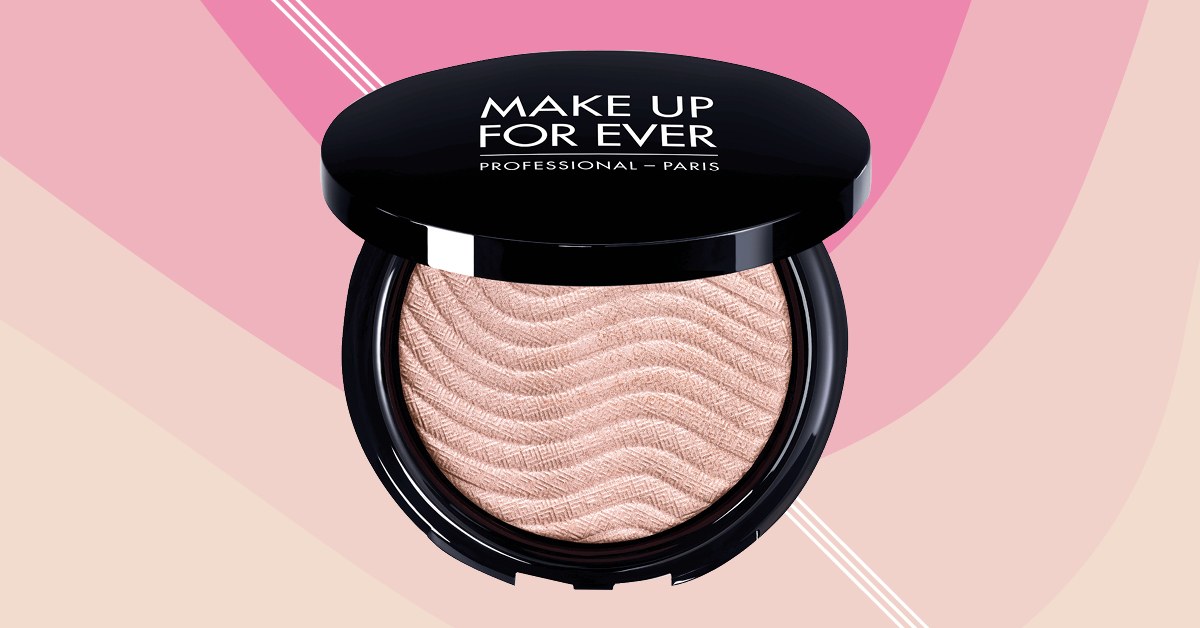
Make Up For Ever Pro Light Fusion Highlighter Is the Only Makeup I Need


My makeup philosophy distilled into a single sentence goes something like this: I will happily forgo wearing cosmetics if it means I can sleep an extra five minutes. In practice, this means swapping out all base products for an 11-step skin care routine. I spend 20 minutes marinating my face in serums and creams each evening so that when my alarm starts blaring the next day, I can splash water on my face and slather on sunscreen while running out the door.

It should come as no surprise that highlighters don’t exactly fit into this equation. When your complexion is still radiant from the mild acid peel you did the night before, why bother putting shimmer over it? I’ve tried plenty of luminizers before—from the cult classic every makeup artist seems to swear by to the geometric pans Rihanna made us all fall in love with—and yes, they’re both as magical as you’ve heard. But I’ve never felt compelled to add either one to my daily rotation. I only reach for them on the occasions when I feel like channeling a dewy nymph or iridescent mermaid.

Make Up For Ever’s Pro Light Fusion highlighter isn’t like that. It mimics the look of your skin perfectly, only picture your skin gently bathed in the warmth of a million sunbeams, the softness of a candelabra, or the angelic light of a LuMee when it cooperates. Forget everything you thought you knew about liquid formulas looking more natural. This is a powder, but it’s so finely milled that it seems to become one with your cells the second it makes contact. The brand credits this to something called “Gellyfying System technology.” I cannot tell you precisely what this means, because I have not a single clue, but it results in a powder that vanishes beneath my fingertips. It’s simultaneously dusty and creamy to the touch, and where similar formulas (particularly shiny ones) usually exaggerate any dryness on my skin, this one airbrushes whatever part of my face it makes contact with.

In true lazy fashion, I apply it with my hands. You can, of course, upgrade this step if you choose—the brand recommends sweeping their Precision Highlighter Artisan Brush #144 in a figure-eight motion for a diffused effect, or packing it on with the flat surface of the same brush for metallic cheekbones.

Having misplaced every brush I used to own, I will continue swiping my middle and ring fingers across the pan, then transferring whatever they pick up to my face. I dot it on the inner corners of my eyes and cupid’s bow, then draw a line down the center of my nose and C-shapes from my temples to my cheekbones. (To simplify, just observe wherever the light naturally hits your face and trace over it with your fingers.) Then I quickly go over those areas again with my product-free hand to blend. Start to finish, it takes no more than 15 seconds.

The product comes in two shades: Gold and Rose Gold. Gold is lovely, a soft, coppery color. I, however, only care about Rose Gold—because while it resembles the inside of a seashell in the pan, it somehow contains the ideal balance of warm and cool tones on my skin. The day I first wore it, my former boss shouted my name from the other side of the room to ask which new facial or miracle serum was responsible for my otherworldly glow. “It’s really highlighter? Are you sure?” a friend recently asked me while scrutinizing my profile by lamplight.

Occasionally I experience a moment of doubt when I pick it up and observe its high-wattage iridescent surface. I still don’t fully understand the alchemy that transforms it from what looks nothing like skin to a soft-focus filter. This is fine with me—I don’t need to understand it. I just need a lifetime supply.

Make Up For Ever Pro Light Fusion Luminizer in Rose Gold, $39, sephora.com

Related Stories:
I Tried That Viral ‘Vagina Highlighter,’ and Honestly I Don’t Hate It
Rihanna Is Here to Convince You That Blue Highlighter Actually Looks Amazing
I Don’t Wear Concealer Anymore Because of This Highlighter Trick


Source link