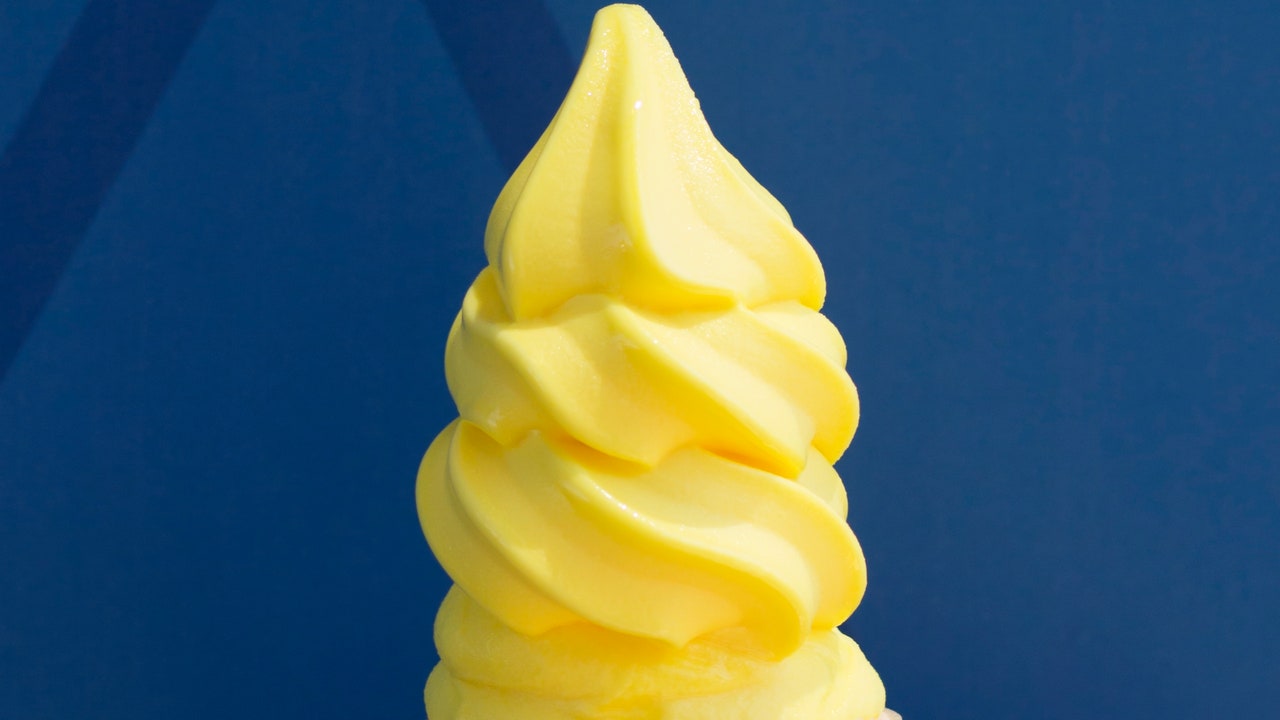
Dole Whip is a Disney theme park dessert staple, but now that the parks are closed due to the coronavirus pandemic, you won’t have official access to it for a while. But you can do the next best thing: make it from the comfort of your own home. That’s right: Disney is finally letting everyone in on how to recreate the experience from anywhere in the world.
The Dole Whip recipe was shared on the Disneyland Resort app in April—and the “frozen pineapple treat” is so easy to make and only requires three ingredients.
Here’s what you need to make a single serving:
1 big scoop of vanilla ice cream
4 oz of pineapple juice
2 cups of frozen pineapple
That’s it! Be sure to add these ingredients to your next Insta-Cart order, and don’t forget to tip well. Then, you simply add all the ingredients into a blender and blend until the mixture is totally smooth. If you want to be totally authentic to the Disney style, you’ll serve the dish in a swirl shape (though you can also just pour it into a bowl and go if you’re all about the taste, not the aesthetic). So easy, right? Just like that, you can imagine you’re at Disney. Maybe pick an old favorite movie or show to stream on Disney+ to fully complete the at-home experience. (Here are our favorite Disney movies.)
Now that Dole Whip a la Disney is in the world, will it become the new banana bread of our Instagram feeds? Disney also released its churros recipe earlier in the week if you need a little something extra to snack on while you work from home.
All we can say is “YUM!” Don’t mind us, we’ll just be dipping Disney churros into Dole Whip for the rest of the quarantine.
For Nicole Cliffe and Jasmine Guillory, it was love at first tweet. The Slate columnist and the romance novelist bonded over a love of the royals and similar social media sensibilities. Over time, their friendship progressed along a very 2019 trajectory—they went from Twitter DMs to text. Along with another friend, Samantha Powell, they formed a “Royals Group Chat,” where they dissect, celebrate, and challenge anything and everything related to the British Royal Family. (The group is so serious about their subject that they met up IRL for a weekend away to watch Meghan and Harry’s wedding.)
As Guillory began to research and write her latest novel,Royal Holiday—a Doria Ragland-inspired love story where a 50-something black woman falls for one of the Royal’s private secretaries—she called upon Cliffe and Powell for help. They brainstormed cottage names, swapped royal insight, and served as Guillory’s soundboard. So when Glamour asked Guillory to participate in our “Bodice Rippers,” series (an exploration of the $1 billion romance novel industry) we couldn’t think of anyone better to speak with her than Cliffe. Read on for their conversation about fully-formed heroines, royal research, and why so many romance novelists are lawyers.
Nicole Cliffe: Something I’ve always loved about your books is that your characters are such adults. They have jobs and friends and familial responsibilities, none of which they can just throw overboard when they meet a new romantic interest. In Royal Holiday, we get to enjoy a 50-something heroine. Why was it so important for you to portray women with rich, full lives?
Jasmine Guillory: I love writing slightly older characters, partly because they have more life experience to draw on, and partly because they’re more set in their ways. So it’s fun for me to see what and who will break them out of their patterns, and to see what they really care about. For me, the more well-rounded and complex a character is, the more interesting they are—and the more there is for someone to love about them. When I start writing a book, I usually start with one or two elements of each main character, but one of the things I think about a lot is what would make each character fall in love with someone, and so I add layers to each of them until I figure out why these two specific people would fall in love with each other. I loved writing Vivian, because she has a lot of life experience, but she’s also figured out a lot about what really matters in life, versus what she doesn’t need to bother worrying about. I need to take more lessons from her!
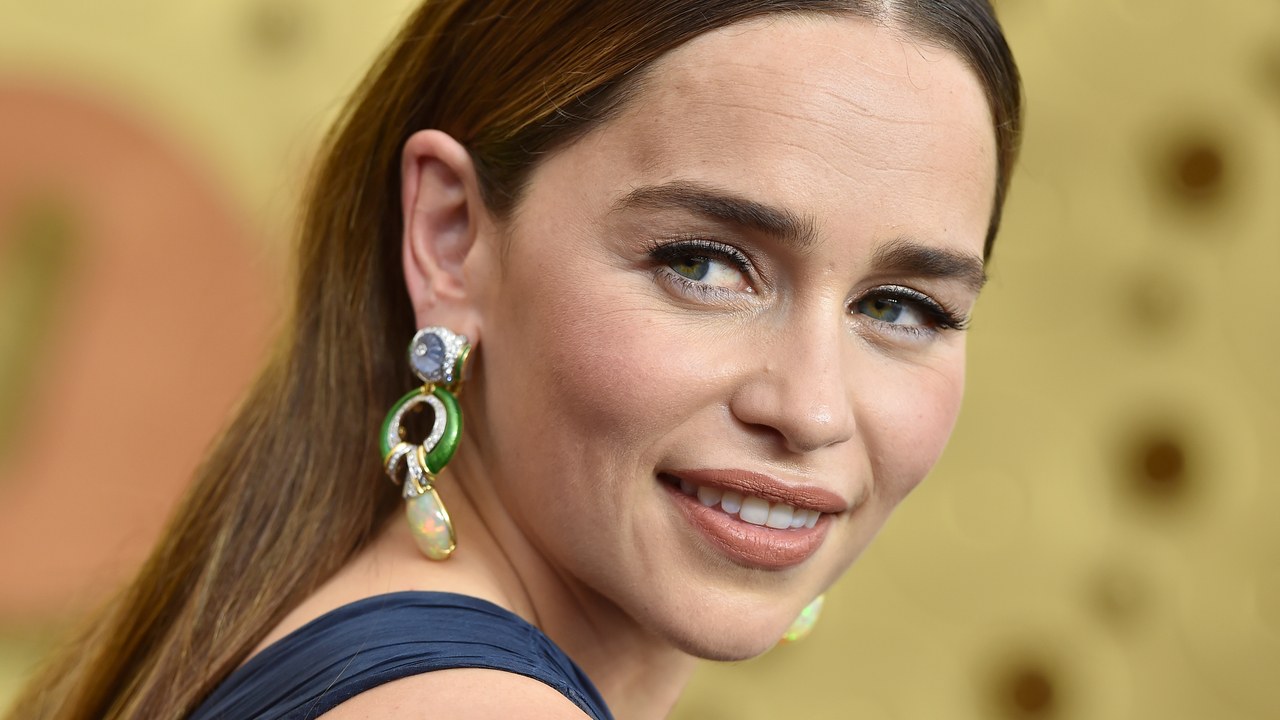
Emilia Clarke said she won’t be taking selfies with fans anymore after a traumatic experience made her reconsider how she wants to interact with people when they see her in public.
In a recent interview on the Table Manners podcast, the Game of Thrones star discussed a particular stressful incident when a fan approached her for a photo at an airport.
“I was genuinely walking through an airport and I suddenly started having what I can only believe to be a panic attack brought on by complete exhaustion,” she recalled per Time.
The actor continued, “I was on my own, I was on the phone to my mum saying, ‘I feel like I can’t breathe, I don’t know what’s going on.’ ‘I’m there and the tears are coming out. I’m crying and crying, this guy’s like, ‘Can I get a selfie?’ And I was like, ‘I can’t breathe, I’m really sorry. Just having a minute.’ It was after a few moments like that where I was like, ‘I don’t know how to do this.’”
Clarke said the encounter made her realize she wants to engage in more meaningful and “human-to-human” interactions with her fans in the future. But she said she’s still happy to sign autographs if they want to remember the moment.
“When you do that, you have to have an interaction with that person, as opposed to someone just going, ‘Oi, give us a selfie, goodbye.’,” she said. “Then you have a chat and you’re actually having a truthful human-to-human thing, as opposed to it being this other thing that probably isn’t nice for them and isn’t nice to you.”
The 33-year-old acknowledged that although she signed up for fame, she’s “been trying to navigate how I can [interact with fans] without feeling like my soul is completely empty. Because they don’t really want to talk to you.”
“When you do a signing thing, you can actually look into their eyes and have a proper real human thing,” she added.
Just like that, Clarke found a way to put an end to fleeting selfies and contribute to her own mental well-being.
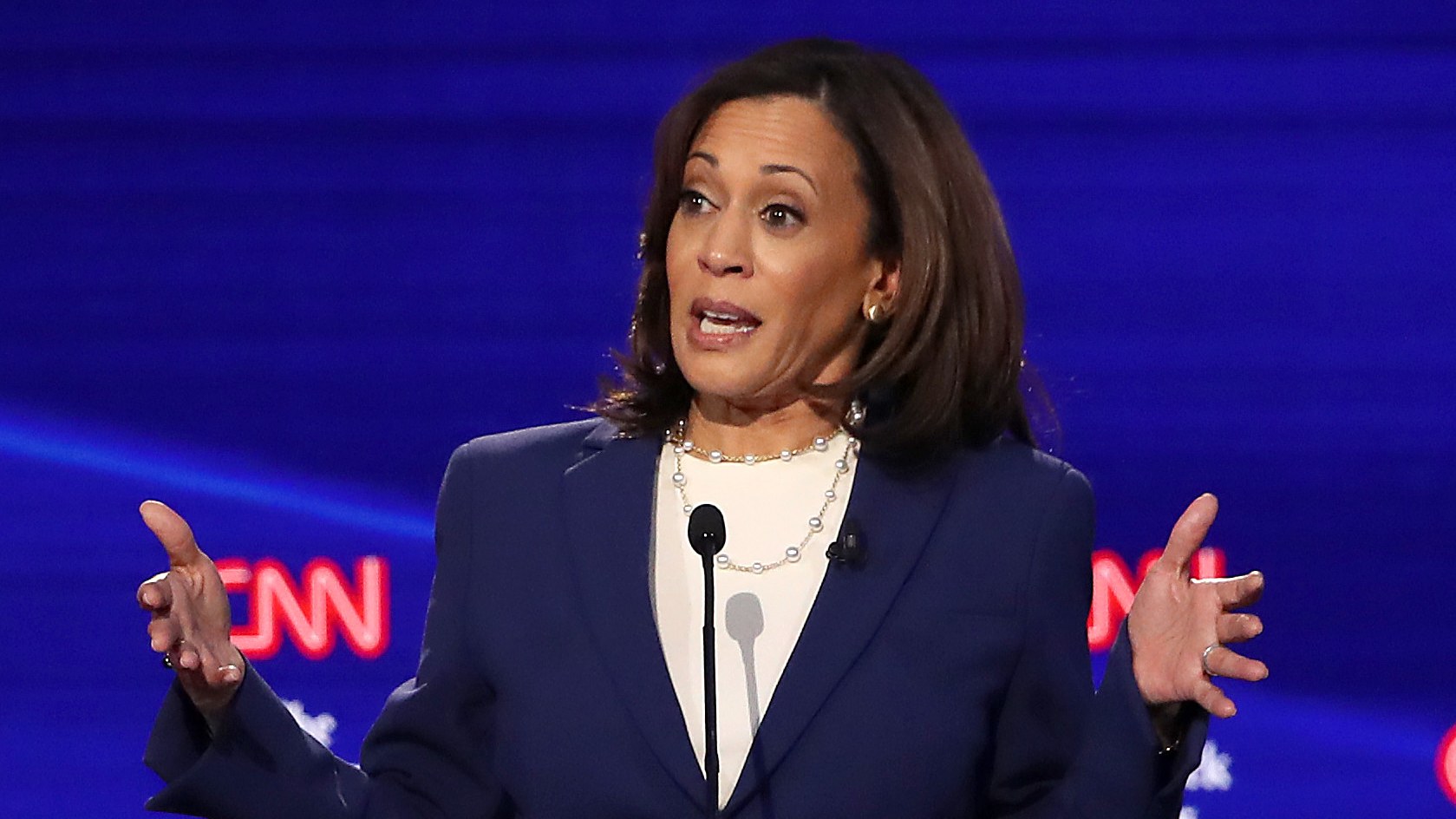
At the end of the last debate in September, Senator Kamala Harris (D-Calif.) tweeted: “The #DemDebate was three hours long and not one question about abortion or reproductive rights.”
She wasn’t about to let that happen again. At the CNN/New York Times debate, Harris didn’t wait for moderators to raise the issue of attacks on women’s reproductive freedom. When asked to respond to points other candidates had just made about health care, she pivoted. Harris noted that “not one word” about abortion had been said in previous debates, even as state legislatures continue to pursue an agenda that will make women’s health care harder to access and abortion available to fewer and fewer people.
“There are states that have passed laws that will virtually prevent women from having access to reproductive healthcare,” Harris said, to cheers. “And it is not an exaggeration to say women will die. Poor women, women of color will die because these Republican legislatures in these various states who are out of touch with America are telling women what to do with their bodies.”
To raucous applause, she added: “People need to keep their hands off of women’s bodies and let women make the decisions about their own lives.”
But it wasn’t just the audience that celebrated Harris’s sense of urgency. Up on stage, Senator Cory Booker (D-N.J.) applauded her, too. “God bless Kamala,” he said. “But you know what? Women should not be the only ones taking up this cause and this fight. It is not just because women are our voters and our friends and our wives. It’s because women are people and people deserve to control their own body.”
It shouldn’t come as such a surprise to hear presidential candidates talk about a basic, safe health care procedure—that is, abortion. It shouldn’t be a shock to hear a man defend a woman’s right to choose. When it comes to Roe v. Wade and health care access, most Americans don’t want to go back. But in our current political climate and with conservatives determined to overturn that landmark Supreme Court decision, we can’t take stands like the ones Harris and Booker made for granted.
Viewers seemed to feel the same. Social media exploded in gratitude to the candidates for their support of this essential aspect of women’s health, which, to Booker’s point, doesn’t just affect women and shouldn’t be framed as a “women’s issue.” Women are 51 percent of the population. It shouldn’t take three and a quarter debates to remind people of that inexorable fact.
Mattie Kahn is Glamour’s* senior culture editor. Follow her @mattiekahn.*
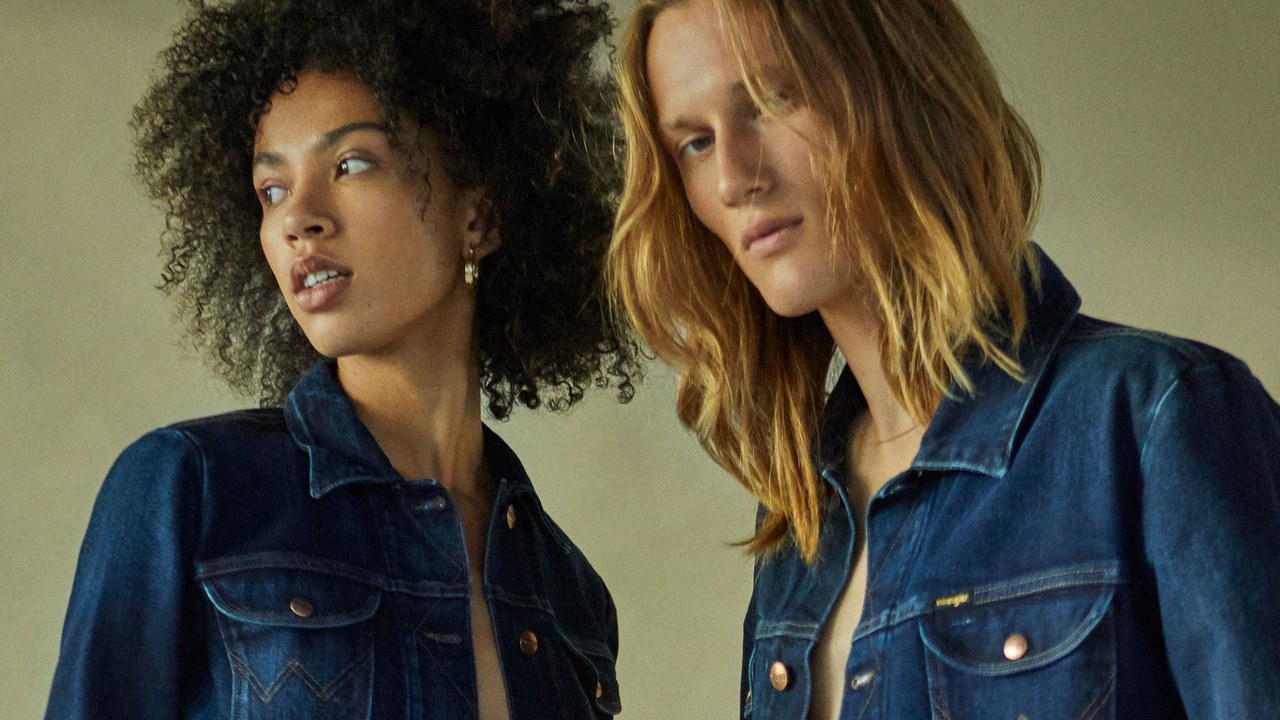
You’ve read the headlines about how polluting fashion is, how brands have been guilty of greenwashing products in their marketing, and how shoppers are demanding sustainability more than ever. It’s not just newcomers building conscious businesses, being vocal, and advocating for change in the industry. More and more, we’re seeing heritage brands course-correct, investing their resources and know-how into real innovation. The latest contribution comes from one of the most well-known American denim companies, and it’s addressing one of the most contaminating steps that goes into making a pair of jeans.
Wrangler decided to tackle indigo dyeing—“because it has the most significant visual and ecological impact on the planet,” Roian Atwood, the brand’s Senior Director of Sustainability, tells Glamour in Valencia, Spain, during a visit to the factories that are producing its new collection. (Disclosure: Wrangler paid for my travel and accommodations for the purpose of reporting this story.) “When you see a blue river ecosystem, there’s no way morally, ethically, and from a good corporate citizenship standpoint that that is okay.” Documentaries like 2016’s RiverBlue and 2018’s Fashion’s Dirty Secrets have brought attention to the issue of water waste and contamination as a direct result of clothing manufacturing at a global level. Still, when something as popular and enduring as denim requires thousands of gallons of water just to dye it its signature blue, you need more than awareness to address the problem.
“The reality is that, if we can cut it off at the source, if we can create a technology that has no waste water and that minimizes the water consumption, we’ve solved for a really big industry issue,” Atwood says. That’s what two years of research, testing, and collaboration between the iconic Americana brand, Texas Tech University, Gaston Systems, and the Spain-based fabric manufacturer Tejidos Royo hopes to be bringing to the table.
Wrangler is introducing Indigood, which it bills as its most sustainable denim to date and the first ever to use a foam dyeing technology. According to the brand, it uses 90 percent less chemicals and 60 percent less energy than the traditional dyeing method, and it creates zero water waste.
There’s a large canvas print, circa 1998, of me and my two younger brothers, Lino and Lucas, in the hallway of my mother’s house. As a proud nine-year-old, I stand in the middle in a blue sporty bathing suit. Lino stands in front of me, his legs spread wide, neon swimming goggles on his head; his arms cross over his chest as he tilts to one side like the cool four-year-old he is. Lucas, one, is in my arms in a purple oversized life jacket, squinting his eyes against the blinding sun.
I’ve come back to this picture a thousand times to admire the power in my legs, the strength of all our smiles. Like many people, I see pictures of the past and yearn for the carelessness that exudes off younger faces. Faces undaunted by tragedy.
In the summer of 2007, my father died in a drunk driving accident while we were visiting family in the Azores in Portugal. In the beginning, my brothers and I leaned on one other when no one else could hold the weight of our grief. We were a tripod—if one leg fell, we all did.
So when This Is Us first premiered on NBC almost a decade later, I cried a hundred times over. Not because the show capitalized on tear-jerky moments (as most dramas do), but because I saw my family’s suffering actualized in real time. The main characters Kevin, Kate, and Randall—the Big 3—lose their father in a house fire just months before their high school graduation. The level of intelligence and grace the writers used to create scenes that portrayed such complex layers of grief knocked me to my knees in sobs.
But now in its third season, the show has shifted. We’ve seen the growth of each character as they struggle with demons in their adult lives that may have been birthed—or at least heightened—following their father’s death. Randall’s anxiety. Kate’s complicated relationship with food. Kevin’s alcoholism. Through all of these challenges, though, the Big 3 remain strong in solidarity. As Randall once said, “As long as we stick together, everything will be OK.” Time and time again, we see his words ring true.
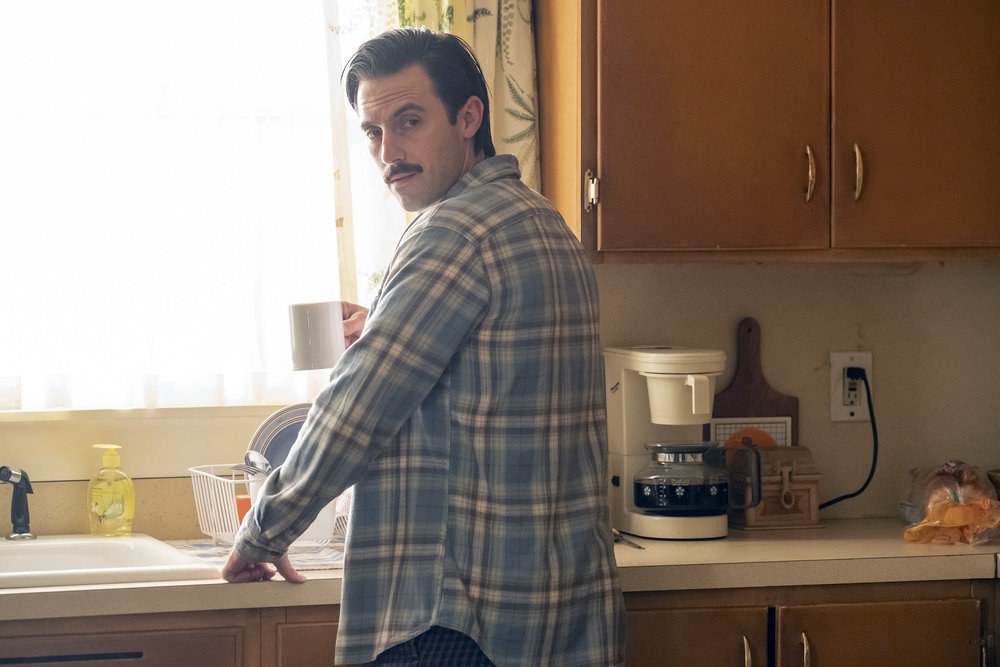
Milo Ventimiglia stars as Jack on This Is Us.
NBC
But what happens when siblings don’t stick together after a parent dies? Since my father’s death, my brothers and I have each relocated, moved back home, relocated again. We’ve experienced successful relationships—and toxic ones. We’ve furthered our education and carved out career paths completely distinct from one another. As we grew into adulthood, the legs of our tripod sank deeper, separating further and further apart. Now, with our father gone more than a decade, our individual demons are rearing their ugly heads and I’m not sure we have the strength to pull each other up anymore. I know I can barely handle my own.[TK]
Lucas is a 21-year-old art student in his last semester of college. He drowns in paint, each canvas more distorted than the last. In one of his self-portraits, he sits on a chair, his neck strained to the ceiling, his eyes masked by a virtual reality headset. His hands reach for the center of his chest, ripping it open. The wound is small, no bigger than a quarter, but there is blood and bone. After graduation, Lucas plans to travel back to the Azores to paint. I wonder if Lucas isn’t trying to disconnect, as he says, but to reconnect—to inhabit the space where his own father’s chest was ripped apart by a guardrail.
Lino, 26, is a video gaming fanatic. Unemployed, he spends the majority of his days in his bedroom. He barely leaves his cave except to walk his two-year-old dog, Bruin—the only companion he tells me he needs. I can do nothing but watch from a distance. Perhaps it’s only in the lives of his video game characters that he sees himself. Perhaps it’s in their gun-controlled grim reality that he has the courage to face his enemies. To get hit after hit after hit. To die. To live again. To keep moving forward.