Categories
Health

Simone Biles Fires Back at USA Gymnastics' Happy Birthday Tweet By Asking for An ‘Independent Investigation’


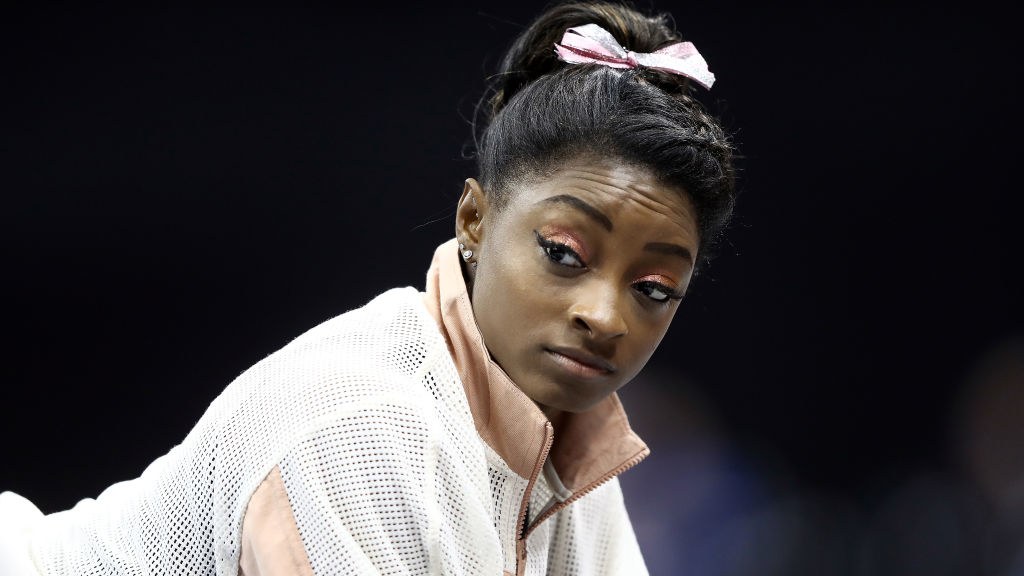
Simone Biles, one of the greatest athletes of all time, turned 23 years old this Saturday, March 14. On Instagram, Biles shared a sweet snap with fans saying she was excited and “ready for my Jordan year!”

To honor the Olympian, USA Gymnastics also sent a tweet to the star (though they tagged the wrong account) saying, “HAPPY BIRTHDAY to the most decorated gymnast of all time, @simonebiles! We know you will only continue to amaze us and make history!”

However, Biles wasn’t amused by the tribute from the organization that recently offered a settlement to athletes who have sued the organization over sexual abuse suffered at the hands of sports doctor Larry Nassar. In response to the tweet, Biles fired back with a birthday request. “How about you amaze me and do the right thing…have an independent investigation,” she tweeted.

This isn’t the first time Biles has requested the organization take further action. In February, following USA Gymnastics’ announcement that it will give $215 million to sexual assault survivors in an effort to settle lawsuits over its failure to protect them from Nassar, Biles tweeted that more needed to be done.

“Ugh at the airport,” she tweeted. “Heading to team camp. Still want answers from USAG and USOPC. Wish they BOTH wanted an independent investigation as much as the survivors & I do. Anxiety high. Hard not to think about everything that I DON’T WANT TO THINK ABOUT!!! “

As of Sunday, her tweet had more than 428,000 likes and fellow gymnastics Olympian Aly Raisman took to Instagram to praise her teammate. “This. Is. AWESOME. @simonebiles I love you!!!!” Raisman wrote in the caption of a screenshot of Biles’ tweet.

Biles, who shared that she was also abused by Nassar, isn’t alone in calling out the need for an independent investigation. In 2019, a bipartisan Senate committee announced at the conclusion of its own 18-month investigation that both USA Gymnastics and the U.S. Olympic and Paralympic Committee “knowingly concealed abuse by Larry Nassar, leading to the abuse of dozens of additional amateur athletes from summer 2015 to September 2016.” The report added, the organizations and Michigan State had a chance to stop Nassar and “failed to do so.”

Following the investigation’s rulings, and just prior to competing in the 2019 U.S. Gymnastics Championships, Biles told reporters, “They couldn’t do one damn job. You had one job. You literally had one job, and you couldn’t protect us. And it’s just really sad because every time I go to the doctor or training, I get worked on and I don’t want to get worked on, but my body hurts. I’m 22. At the end of the day, that’s my fifth rotation, and I have to go do therapy, but it’s just hard, and we try to work through it, but it’ll take some time.

She added, “I’m strong, I’ll get through it, but it’s hard.”


Source link

Categories
Health

New Report Says USA Gymnastics Did Not Talk to Simone Biles About the Larry Nassar Investigation for Years


It’s been almost two years since Larry Nassar was sentenced to 40 to 125 years in prison by a Eaton County, Michigan court on criminal sexual conduct charges, but we are still learning more details about how he was able to continue as the team doctor for USA Gymnastics for so long. (Nassar also received a 40- to 175-year sentence in Ingham County, Michigan, as well as a 60-year sentence in federal court on child pornography charges.)

A new report from the Wall Street Journal says that even though USA Gymnastics was conducting an investigation into Nassar—they didn’t tell Simone Biles until after the Rio Olympics in 2016. Per the WSJ, Biles was one of three gymnasts (along with Aly Raisman and Maggie Nichols) who had expressed discomfort about Nassar in 2015, but they say she was not interviewed by the body’s own investigator before the Nassar story went public in 2016.

Rhonda Faehn, the former director of the women’s program for USA Gymnastics, said in testimony before Congress that she was notified in June 2015 that Biles, Maggie Nichols and Aly Raisman had “concerns” about the doctor’s treatment methods. She claims that she passed that information to Steve Penny, then-President of USA Gymnastics, which he disputes. Though, per USA Today, he does admit to knowing Biles was someone they “might want to talk to about Nassar.” But that never happened and Biles then met with the FBI on the matter in the fall of 2016.

In January 2018, Biles publicly announced that she had been abused by Nassar. “I, too, am one of the many survivors that was sexually abused by Larry Nassar,” she said at the time. “There are many reasons that I have been reluctant to share my story, but I know now that it is not my fault.”

The most decorated gymnast of all-time declined to be interviewed for the WSJ story, but her parents gave the paper this statement: “We continue to struggle with how and why this happened, and every time we hear something new like this, it feels like the harshest of betrayals and it is just too painful for our family to talk about openly.”

Biles is not staying silent, however, tweeting about the story herself. “Can’t tell you how hard this is to read and process. The pain is real and doesn’t just go away…especially when new facts are still coming out,” she wrote. “What’s it going to take for a complete and independent investigation of both USOPC and USAG???” She followed it up with, “Numb is becoming a normal feeling.”

Biles also recently spoke out against a distasteful banner hanging at a University of Michigan fraternity house ahead of a football game with rival Michigan State University, where Nassar worked. “You can’t touch us @LarryNassar,” it read. Biles responded, “unbelievable….. this is the type of stuff that makes me sick to my stomach. I hope the school is taking the proper measurements in investigating this…”

The school announced it “will be pursuing corrective action with those responsible for hanging the banners and those who failed to intervene.”


Source link

Categories
Health

Gender Stereotypes Initiative Toy Cars Mercedes Benz USA and Mattel


When is the last time you saw young girls playing with toy cars on a TV commercial? If you thought, I honestly don’t know, you’re not the only one. According to the National Science Board, women represent only 29% of the current science and engineering workforce, a figure that influences what young girls are exposed to in their formative years. While social stereotypes are changing, the majority of the world still assigns pink and dolls to girls and blue and cars to boys. That’s why Mercedes-Benz USA and Mattel decided they needed to do their part to not only challenge outdated tropes but also empower girls to realize the opportunities available to them.

Earlier this year the car company released a video on gender stereotypes (see below) that racked up millions of views almost instantly. In the two-minute clip, first-grade girls are given various toys to play with and asked why they didn’t choose a toy car. From “that’s for boys, not for girls” to “that’s a boy toy,” the young girls explain why they didn’t give certain toys a second thought. Only when they are introduced to Ewy Rosqvist, a Swedish racing champion who made history for being the first woman to enter and win one of the toughest rallies in the world—the Argentinian Grand Prix—did they realize how they were limiting their choices—and future. Watch (and warning, expect emotions):

[embedded content]

Mercedes-Benz partnered with Matchbox to make Ewy’s car into a toy version and gift it to girls all over the country. Now, on National STEM/STEAM Day, both companies have announced that 50,000 young girls across the nation will not only get toy cars, but also engage in programs tied to science, technology, engineering, and math to challenge gender stereotypes.

Mercedes-Benz also released an updated version of the widely shared video and announced that its No Limits program will launch special workshops in Atlanta, Los Angeles, and New York City. With help from more than 100 organizations, from now until February 2020, girls across the U.S. will engineer toy racetracks, design cars, engage with female role models, and attend STEM workshops designed to expand how they see their future.

[embedded content]

“Whatever they aspire to be, we want all children to dream big, dream bold, and never give up on that dream,” says Mark Aikman, general manager of marketing services for Mercedes-Benz USA. “We’ve seen that stories like Ewy’s—championing women trailblazers and achievers—can have a big impact by calling into question the gender stereotypes that children may inadvertently adopt.”

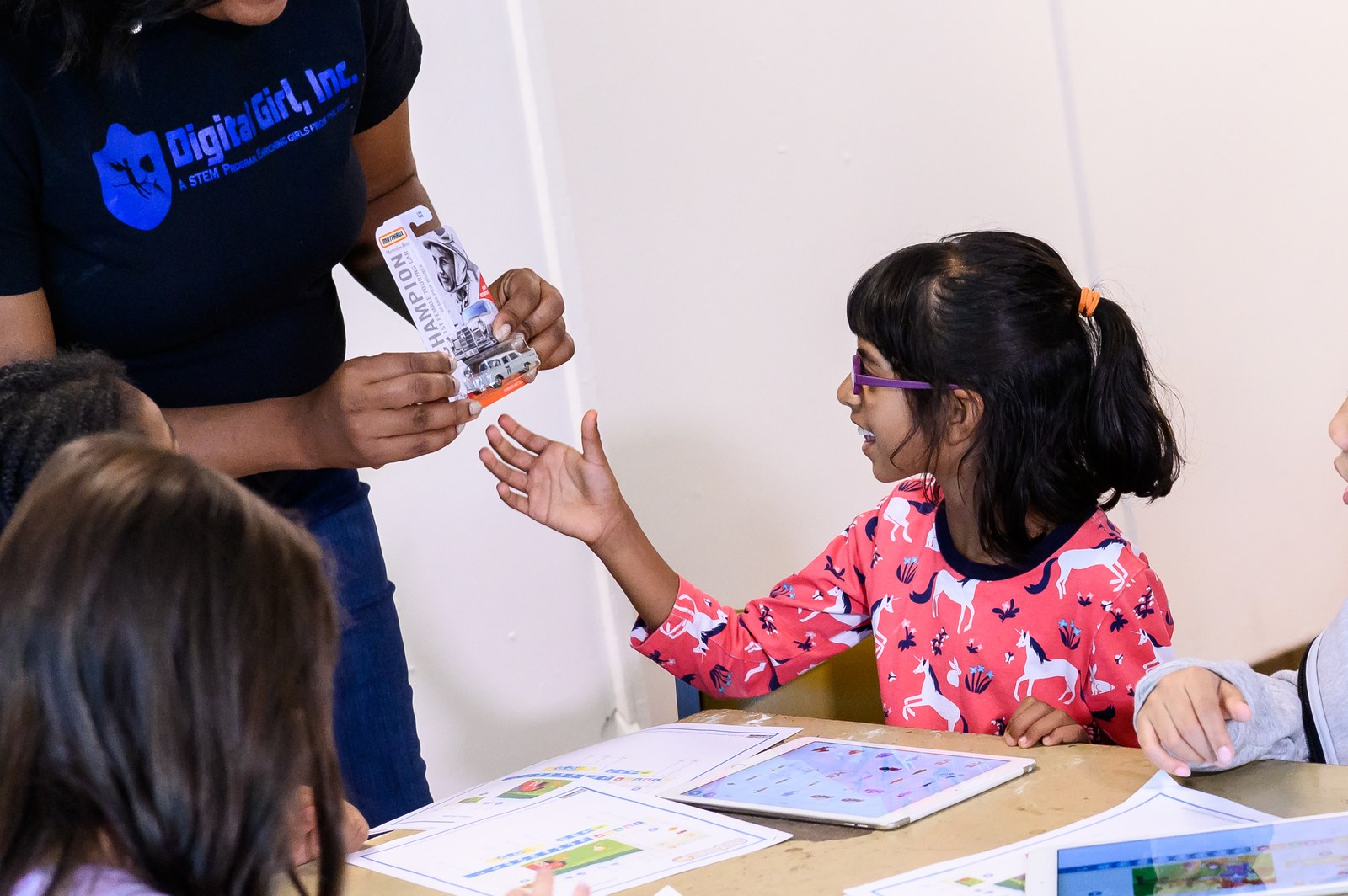
NEW YORK, NEW YORK – OCTOBER 26: Young girls from Brooklyn’s Digital Girl Inc. were the first of 50,000 children across the U.S. to receive new Matchbox cars by Mercedes-Benz and Mattel celebrating “No Limits” in honor of November’s STEM Day on October 26, 2019 in New York City. (Photo by Mike Pont/Getty Images for Mercedes-Benz)Mike Pont/Getty Images for Mercedes-Benz

The Ewy Rosqvist Matchbox replica will be sold in stores nationwide beginning in December. For more information and a list of organizations participating in the No Limits campaign, click here.


Source link

Categories
Health

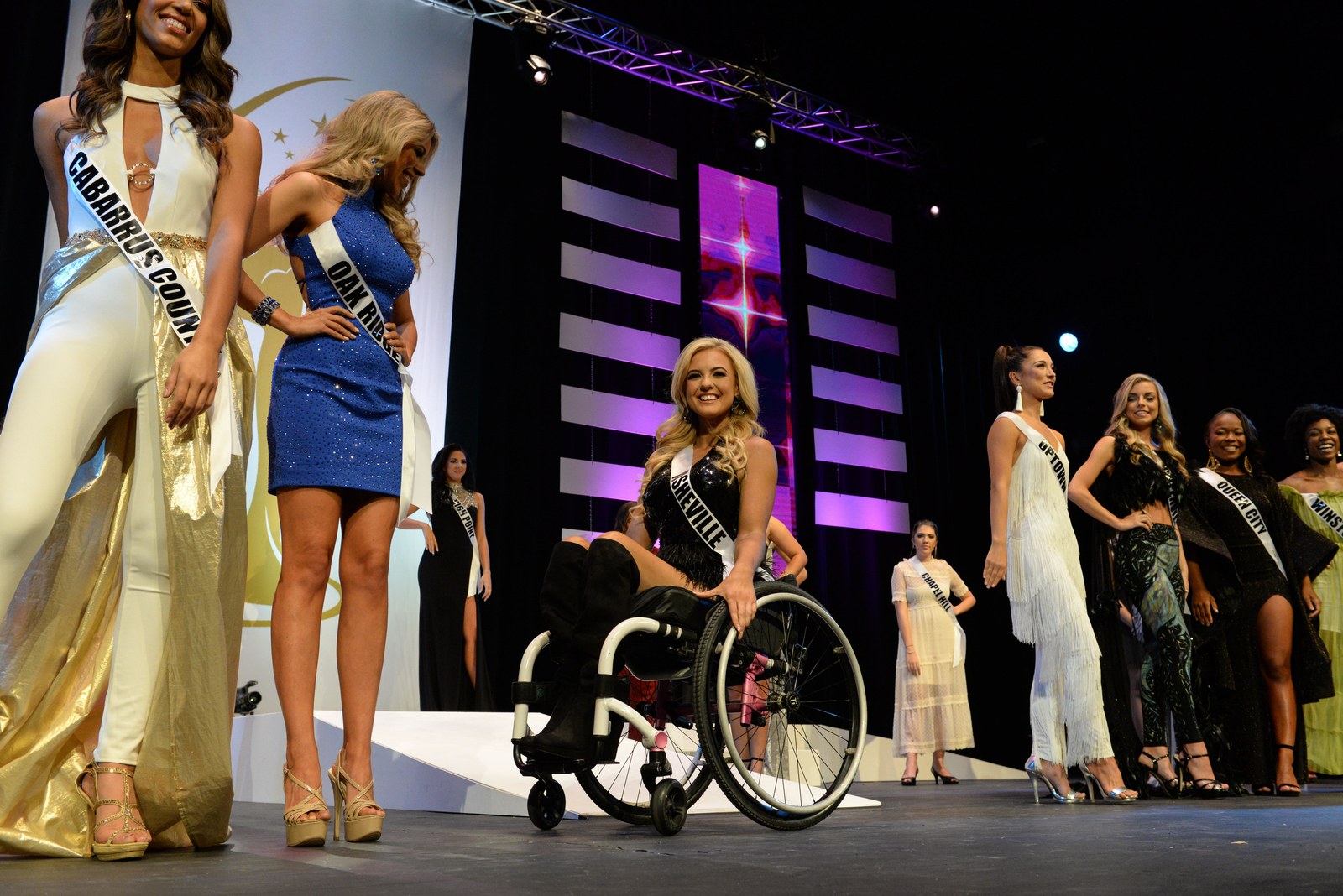
Miss USA 2020: Madeline Delp Is Out to Become the First Wheelchair Contestant


At a speaking event, a little girl in a wheelchair, no more than seven, asked me: “Do you think someone who looks like us could ever be considered pretty enough to compete in Miss USA?” That comment hit me hard. What should I tell her? That of course a girl in a wheelchair could be Miss USA—even if I wasn’t sure I believed it? I realized that up to that point, I honestly hadn’t thought that was possible. I was competing in pageants for women in wheelchairs. As much as they’d been new to me, I didn’t have to worry about being completely different.

Still, I wanted to prove to that little girl—and myself—that people like us can be Miss USA. That I can be an example.

Last year, I entered Miss North Carolina USA—the first woman to ever compete in a wheelchair in that pageant—and it was one of the most difficult and uncomfortable, experiences that I’ve ever had. But it was also amazing. Picture being backstage with girls who are towering above you, with legs for days. I felt so insecure. I truly had to overcome a lot of that to be able to go out on stage. I didn’t win but I did make the top 15 and I left determined to come back for the crown.

Ryan Miles / Sage Media Group

That’s exactly what I’m hoping to do this weekend—my second go-around at the Miss North Carolina USA pageant. During the past year, I’ve been prepping to earn the title. I’ve been working with a designer on a gown that incorporates my wheelchair. (It has a long train but won’t get caught in my wheels—a true fashion miracle!) I’ve been working with a trainer to feel strong and confident. (This is the first time in my life I feel comfortable enough to wear a bikini in public—a shift that’s not so much about where my body is as where my mind is.) And I’m working to manage my incontinence. (I can’t be sitting in a $3,000 dress on stage and have something happen so I’ve been working with Aeroflow Urology, a company that supplies catheters and pads, to make sure I have all the right products.)

But the most important thing I’ve done to prepare for the pageant is to work on my mental game. I have to believe 100% that I am worthy, I am deserving. That’s the hardest thing for me. It’s a challenge not to compare yourself to others, especially when you’re surrounded by some of the most beautiful women in the world. But if there’s one thing my disability and living with incontinence has taught me, it’s that no matter how hard we try to be perfect, it’s our “flaws” that really connect us. For me, it might be that I pee in my pants every once in a while. For you, it might be something else. So we’re imperfect—that doesn’t make us any less worthy. Right now, I’m working my hardest to go into the pageant with the knowledge that I deserve to be there, that I’ll shine on stage, and that regardless of outcome, something good will come out of this.

If I win Miss North Carolina USA and advance to Miss USA, I will be the first girl in a wheelchair to ever make it to that stage. And if I don’t win this year, it’s my full intention to go back next year and give it another try—I’m in it to win it. I know it’s a challenge, but I think it would change a lot of people’s minds about how someone who looks different—particularly someone who uses a wheelchair—is beautiful and strong.

Madeline will compete for the title of Miss North Carolina USA this weekend. Cast your vote for the pageants people’s choice award here.


Source link

Categories
Health

Simone Biles Gets Emotional Talking About How USA Gymnastics Failed Athletes


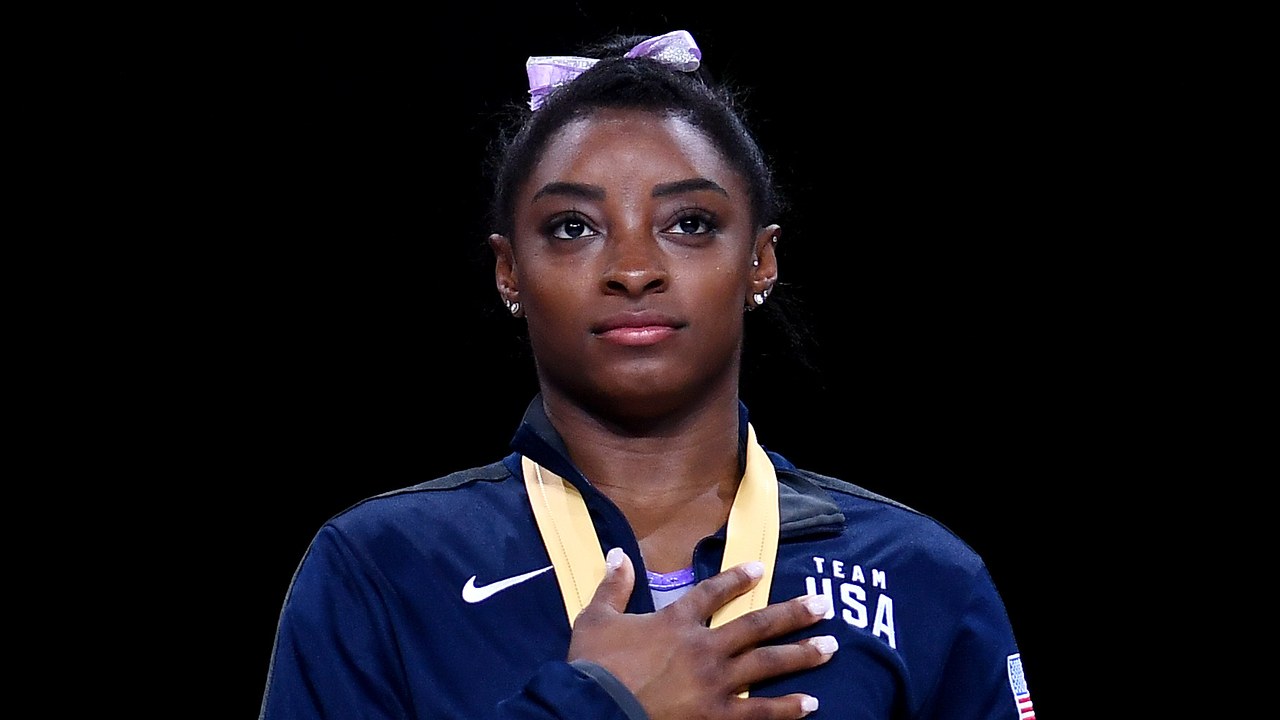
Simone Biles made history twice in a row this week during the U.S. Gymnastics Championships: First she nailed a triple-double during a floor routine and then she pulled off a perfect double-double dismount, making her the first female athlete to land both moves in competition. She ended up winning her sixth all-around title, a massive milestone for the 22-year-old athlete.

Biles has been busy celebrating her legendary performances. On Monday she posted an image on Instagram that shows her looking absolutely overjoyed and captioned it, “That feeling when you make history…twice.”

But her victories weren’t the only powerful thing she did last week. In an interview before she competed, Biles addressed reports that USA Gymnastics and the U.S. Olympic and Paralympic Committee failed to protect athletes like herself from former physician and team trainer Larry Nassar, who is serving multiple lifetime sentences after being convicted of criminal sexual conduct.

After an 18-month investigation, a bipartisan Senate committee announced that both organizations “knowingly concealed abuse by Larry Nassar, leading to the abuse of dozens of additional amateur athletes from summer 2015 to September 2016,” according to a report from the Washington Post.

Before competing, she told reporters, “They couldn’t do one damn job. You had one job. You literally had one job, and you couldn’t protect us,” she said. “And it’s just really sad because every time I go to the doctor or training, I get worked on and I don’t want to get worked on, but my body hurts. I’m 22. At the end of the day, that’s my fifth rotation, and I have to go do therapy, but it’s just hard, and we try to work through it, but it’ll take some time. I’m strong, I’ll get through it, but it’s hard.”
Biles has been committed to shining light on abuses in the gymnastics world, and she’s supported other victims of assault. Last year she wore a leotard specifically to honor survivors. As she explained, “I stand with all of them, and I think it’s kind of special to unite.”


Source link

Categories
Health

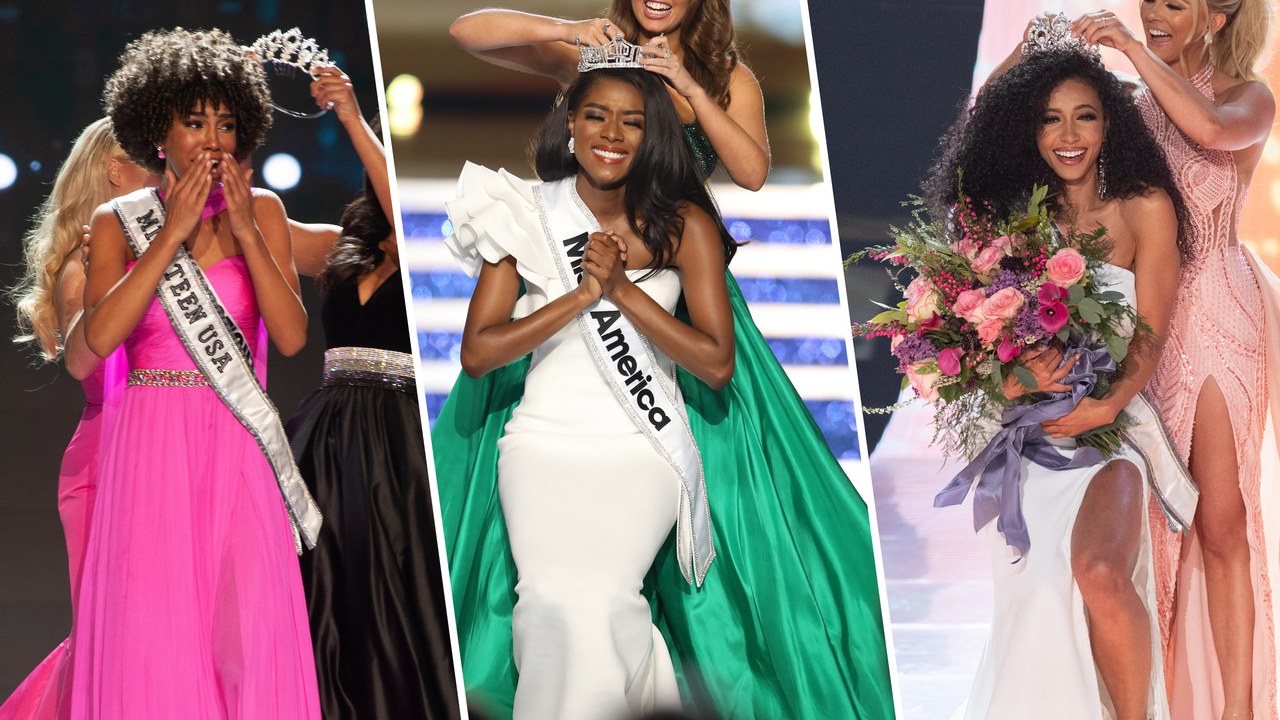
Miss America, Miss Teen USA, and Miss USA Are All Black Women for the First Time Ever


For the 14 years I spent competing in pageants, the preparation leading up to a competition weekend was always the same: Go to the hairdresser to get my sewn-in weave uninstalled, my hairline relaxed, and then the weave sewn right back in. The routine took anywhere from six to eight hours and cost hundreds of dollars.

After, I would fret with my mom and aunt about how limited I was with the hairstyles I could do because I had a full weave; if I could just wear my natural hair, this wouldn’t be so complicated. But the idea that I would walk out with my own hair for competition was ludicrous: Years of weaves, relaxers, and just simply not caring for my hair properly left it breaking and my edges thin. But more than that, what was really stopping me from embracing my natural kinks and curls was a truth over which I had no control: I had never seen a Black girl with my hair texture wear her natural hair for competition, let alone win or place with it.

There’s a rule in pageantry that most competitors and coaches know about but never speak out loud: The default beauty standard is white. Although Miss America, Miss USA, Miss Teen USA, and Miss Universe have crowned a handful non-white women, most of these women wear “pageant hair”—flowing weaves and extensions with bouncy waves and curls. As a competitor, I wasn’t one to rock the boat. Even with an “acceptable” look, I had to listen to photographers and hairstylists make backhanded comments about my hair, how difficult it was to style and blend with extensions. Pageants did help me feel empowered, but they could also make me feel dejected, especially when it came to my hair.

When a Black girl wins, comments on Instagram and message boards show the darker side of our experience. “The pageant is no longer about beauty,” one person wrote on Instagram after Kaleigh Garris—an 18-year-old who wore her natural curly hair for competition—won Miss Teen USA last week. “It’s all about political correctness.” In other words, Garris didn’t win because she deserved the crown, the user felt, but because she’s Black. I saw dozens of similar comments when Cheslie Kyrst, a 27-year-old attorney from North Carolina, won Miss USA over apparent fan favorite, Alejandra Gonzalez of New Mexico. Like Garris, Kyrst is Black and wore her natural hair. (The current Miss America, Nia Franklin, is also a Black woman, marking the first time all three title-holders are Black, but chose to wear a more traditional pageant look for competition.) When you’re a Black woman in pageants—or just a Black woman who succeeds, period—the dominant culture will do its best to communicate to you that your win was not earned, but handed to you to fulfill a quota. Your achievements are not your own; they’re a box for someone else to check.

Former Miss USA Deshauna Barber, who won in 2016, has spoken about the racism she faced during her reign and her decision to wear her 4c hair for her final walk. She’s also addressed how hard it can be to push an institution like this one into the future when pockets of it seem stuck determinedly in the past. “When you’re crowned with a look, then that’s the look you’re expected to maintain. A lot of people in the pageant world are still very old school. They believe in a traditional look, a traditional Miss USA. [The organization] is trying to, in my opinion, open up that world,” Barber wrote in an essay for Refinery29 in 2017. “So, when I said I wanted to wear my natural hair, they were jumping for joy. I appreciate them for that—[but] I didn’t want to stretch it too much. I wanted to take baby steps. If I take a small one by showing my natural 4c hair, the next girl will take one, and then we’ll ease our natural hairstyles into the pageant community.”


Source link