Categories
Health

Miscarriage Is Getting More Common on TV—But That Still Didn’t Prepare Me for the Reality


Experiences of infertility always have one thing in common: uncertainty. The countless visits to doctors, the months (or years) of planning, the tens of thousands of dollars, never add up to a guarantee. Even under the best of circumstances, there’s only so much about a pregnancy you can plan, and in the midst of a pandemic, the idea of planning anything seems foolish. For National Infertility Awareness Week, we’re exploring the uncertainty—and the hope.


All of my medical knowledge comes from watching Grey’s Anatomy. The hours, (months really, when lined up altogether), I’ve spent with the doctors of Grey Sloan Memorial, née Seattle Grace, have helped me in so many situations—like how to know if a fish has swum into someone’s penis or that you can be pregnant with two different men’s babies at once IF you have the super rare condition of having a double uterus. Unfortunately, the show (and TV in general) didn’t prepare me for my miscarriage.

It’s not that Grey’s didn’t try. Over the show’s 16-and-counting seasons, there have been plenty of memorable, failed gestations. Since the show premiered in 2005, the taboo surrounding miscarriage has slowly begun to crumble, and miscarriages—which occur in an estimated 10% of clinically recognized pregnancies—have started showing up more frequently in pop culture.

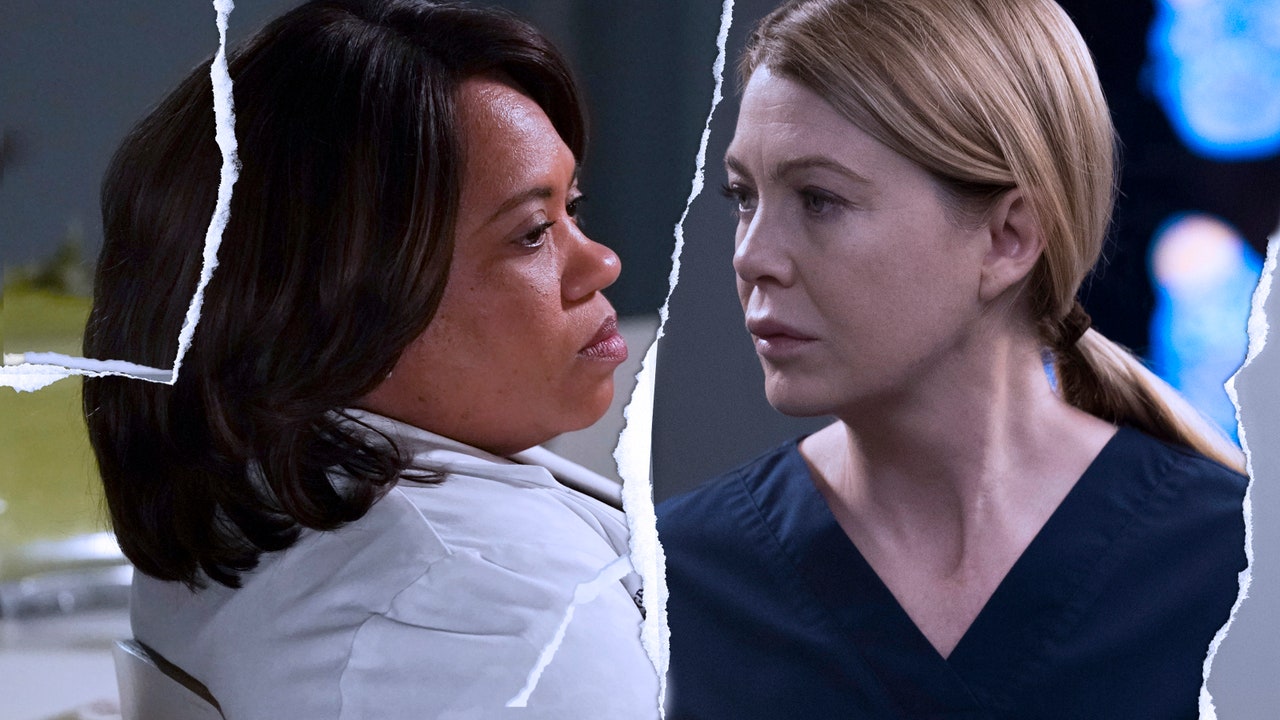
Remember way back in season two when Cristina’s fallopian tube burst, avoiding the abortion she had planned? She collapsed in the operating room and had to tell her medical team (and colleagues) about her hitherto-hidden pregnancy. In season six, Meredith lost her nascent pregnancy from the stress of an active shooter in the hospital. Blood visibly spread down her thighs while she had to simultaneously operate on her best friend’s partner. Then there was this season’s winter finale when a patient noticed blood dripping from Bailey’s skirt. She’d been surprised and then enamored by this pregnancy, finally brutalized by its loss.

My experience wasn’t like any of these. There was no blood, no drama. I can’t even tell you when exactly it happened. Excited and scared, I’d felt the whole earth turn when I’d found out I was pregnant. I waited the weeks you’re supposed to and went to the doctor. They did an intervaginal ultrasound (that’s science speak for “put a wand up my vagina”) and heard the fetal heartbeat. Bump bump. I didn’t know to be worried when they told me to come back in two weeks and not four. When I went back, it was gone.

Just gone. Nothing to see with the wand up my vagina, no heartbeat to hear. I’d had what they called a “missed miscarriage,” where the pregnancy ends without any discernible symptoms. It happens in about 3% of known pregnancies, according to one study, or a third of miscarriages but I’d had no idea that it was even a possibility. I thought I’d know if anything was wrong—that there’d be blood or cramps or drama or something. I’d felt nothing, didn’t have so much as an inkling.

I waited for the earth to turn back but it didn’t. The doctor, using the sad eyes I’m sure they taught her in medical school, told me I had options: I could wait for it to pass on its own, take Misoprostol, a pill to induce cramping and bleeding, or get a procedure called “dilation and curettage” aka D&C. Misoprostol is half the cocktail they give you to have a medicine-induced abortion while a D&C is the surgical option to end a pregnancy. I chose to wait. I wanted it to pass “naturally,” to feel the shock and dreaded wetness that my TV heroines experienced.

It turns out that waiting to miscarry is terrible and eerily quiet. I went to the bathroom constantly, disappointed by not seeing red. At work, I remember sitting on the toilet in our square little beige room, looking at the shelf with the tampons and pads. I wanted desperately to need one. But day after day, I didn’t. In a meeting that week, someone asked me when I was going to have kids. I laughed it off. Inexplicably, we also had the one and only office-wide discussion I’ve ever witnessed about miscarriages. My colleagues shared their experiences and I slunk off to the bathroom, unwilling to open up. Still no blood.
Source link

Categories
Health

Netflix’s ‘Too Hot to Handle’ Review: This Is the Funniest, Least Sexy Reality Show About Sex


If I found myself cringing every time some shirtless and bikini-clad contestant on Too Hot to Handle kissed, it wasn’t because of their awkward “banter” or even the fact that they were throwing away thousands of dollars for the privilege. It was undoubtedly because I watched the Netflix reality dating series deep into quarantine, where even the idea of shaking someone’s hand was already out of the question.

Despite the almost other-worldly effect this had on my viewing experience, there’s something inherently now and inevitable about this show. Centered around a group of 20-something hots, the Too Hot to Handle retreat is governed by an A.I. cone named LANA who puts the contestants through various challenges, sends them on dates, and punishes them if they fail to remain chaste: that means no kissing, no sex, and no masturbating if they want to win $100,000 at the end of the retreat. When any of the contestants breaks the rules (and yes, they do…a lot) she calls them out in front of everyone and brings the pot down based on the infraction.

“[A.I.] is literally everywhere around us. It’s kind of governing us, it’s taking over,” showrunner and executive producer Viki Kolar tells me over the phone on a group call with Jonno Richards, the show’s executive producer and managing director of Talkback, the production company behind Too Hot To Handle.

“You’re used to hearing A.I. in terms of algorithms and research and listening and advice,” Richards agrees. “It just sort of all kind of fitted together.”

[embedded content]

However, despite the LANA of it all, there’s actually not a lot of proven psychology behind the Too Hot to Handle method of building stronger, healthier relationships by abstaining from sex…but that was never really the main point of the series. In fact, the idea for this social experiment, as Richards repeatedly calls it, started from an episode of Seinfeld called “The Bet,” where each character competes to see if they can avoid masturbating. Spoiler alert: They all fail, not unlike some of Too Hot to Handle’s contestants.

“We wanted to do something that was funny while it was a reality show,” Richards says. “You put obstacles in people’s way and push their buttons in a way that could be comedic, but at the same time are trying to help them come together through that. A sort of romantic comedy, I guess, is what we’re trying to get to.” They definitely got the comedy part down. Aside from the relationships and friendships that form between this group of players—and there is at least one couple that becomes genuinely ship-worthy—this show is just damn funny.

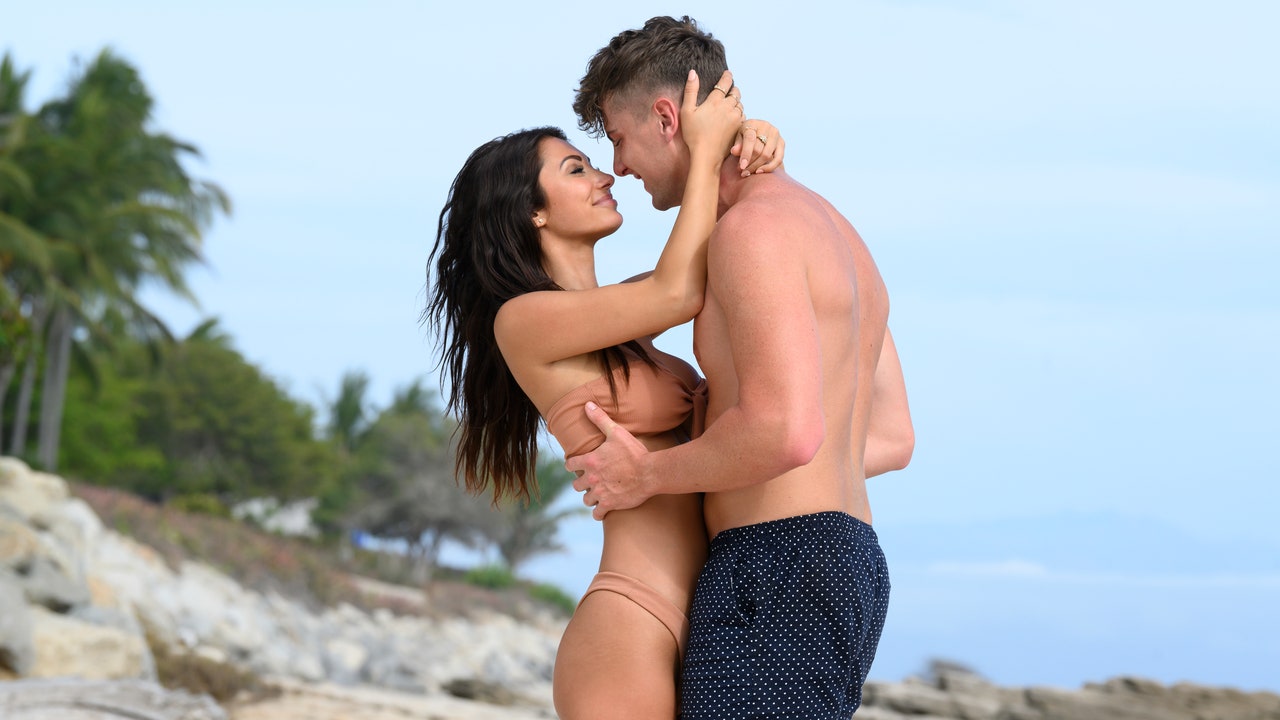
I don’t know if it’s the number of times the word horny was said within each episode, the blinking, judgmental robot, or the socially stunted contestants that make the show so gleefully addictive. Every single confessional with Francesca, Harry, Haley, Matthew, Sharron, Rhonda, Chloe, Kelz, Nicole, and David borders on parody, making it clear they’re at least somewhat in on the joke and it’s okay to laugh. For example, Kolar tells me that Sharron wore a brace on his leg on the flight over to Mexico just to get through security faster. “He’s that type of person that comes up with insane kind of ways of just getting through life,” she says. “I was like, ‘I love him even more.’” Shockingly, you might find yourself rooting for these people too.

Still, maybe it’s narrator Desiree Burch that sets the show apart from similar reality TV series on Netflix and beyond. The voice-over non-host who seems to serve as the audience, chatting throughout the series as if she’s next to you on the couch, is honestly a great perk in the time of social distancing. She’s not always nice about the singles, but she’s always on point.

All I can truly say with conviction is that if Netflix has been using its own algorithm and data to build the most hilarious, binge-able reality dating show, they’ve succeeded with Too Hot to Handle and should probably stop now before they truly go off the rails.

Stream Too Hot to Handle on Netflix, here.

Emily Tannenbaum is a contributing writer and weekend editor at Glamour. Follow her on Twitter.


Source link

Categories
Health

The Brutal Reality of Getting an Abortion During a Pandemic


Many states, such as Texas, require women to make two trips to a clinic to access medication abortion. “These restrictions are medically unnecessary all the time, but now put patients and providers at risk unnecessarily through additional and medically unnecessary face-to-face contact,” says Smith. That’s become another claim states are using in their fight to restrict abortions. “It is clear that Texas is using the COVID-19 pandemic as cover to further its goal of prohibiting abortion.”

There are glimmers of hope: federal judges in Alabama and Ohio recently blocked orders banning nonessential medical procedures from limiting abortion access during the coronavirus outbreak. However, these blocks are only temporary, with Ohio’s order lasting until April 13, giving women only a short timeframe to get the access they need. In the case of Texas, federal judges also tried blocking orders limiting abortion, but their efforts had been overturned by an appeals court as of March 31st.

Even for women who can access abortion care during the coronavirus outbreak, the procedure can be expensive. Like many health insurance providers, mine does not cover abortion, which forced me to shell out $550 of my paycheck. I’m privileged to be able to work from home during this time, but millions of women have lost their jobs, making the financial burden of an abortion too much to shoulder.

By many accounts, I faced the “best” possible situation: abortion clinics in my state were still operational, I was able to access a clinic while following social distancing guidelines, there were no mandatory waiting periods that forced me to visit more than once, and I remain employed with a steady stream of income.

Still, I can’t ignore the trauma I faced in order to get an abortion in the middle of a pandemic.

Like many women during the best of times, I had to call gynecologist after gynecologist to find someone who took my health insurance (a form of Medicaid that isn’t accepted by many doctors) and could squeeze me into their schedule as soon as possible. And when I finally found one who would see me, the whole process was put into hyper-speed since no one knew if the federal government would force clinics nationwide to shut down. There was no time to process what was going on. Some nurses seemed to treat me more as a walking germ to be cautiously handled than a patient. One turned to me and said, “I really wouldn’t want to be you right now.”

The comment stung, but in a way she was right: I really didn’t want to be me at that moment.

I wanted to opt for a dilation and curettage procedure, also known as a D&C or “surgical abortion.” But with the future of access to care in the age of COVID-19 so uncertain, the clinic suggested I have a medication abortion so I could have same-day access, rather than taking a risk and scheduling a future appointment for the procedure. I was lucky to even have an option—I was still in the early stages of my pregnancy, so either method was feasible, but I preferred the D&C procedure because the abortion pill can have more side effects and a somewhat lower success rate.

The abortion pill was not easy on my body: I spent days throwing up, heavily bleeding and experiencing “labor-like” cramps, all possible side effects of the medication. At one point I fainted in my bathroom from the pain. This isn’t necessarily common, but in my case, the cramps and nausea proved too much for my body to handle all at once. [Editor’s note: Experience of side effects may vary but if you experience nausea, vomiting or a fever for more than 24 hours, you should call your doctor, according to Planned Parenthood.] The physical complications mixed with the emotional toll and burden of trying to keep my abortion a secret as I quarantined with my family felt like mental torture. I felt so alone, and while I had a small group of friends as close as a click of a button on my phone, I wish I was able to have someone physically hold my hand during this time.

It’s been almost two weeks since I had my abortion, and even with the trauma I’m left to live with, I don’t regret a single step I took. Yes, it was the hardest thing I’ve ever had to go through, and having to navigate this journey while the world—and me—is in a state of valid paranoia made it that much harder. To have gotten the procedure I needed, when so many women cannot, and to be able to sit still and take this time to heal in the comfort of my childhood home is the only silver lining in this situation. After going through all of this, I’m a little more hopeful that everything will, eventually, be okay. Maybe not soon, but one day I’ll be able to fully heal from the trauma of my abortion, and the world will heal from this pandemic.

But for now, all we can do is take it one day—and one Lysol wipe—at a time.

At the author’s request, we’ve omitted her last name to protect her privacy.


Source link

Categories
Health

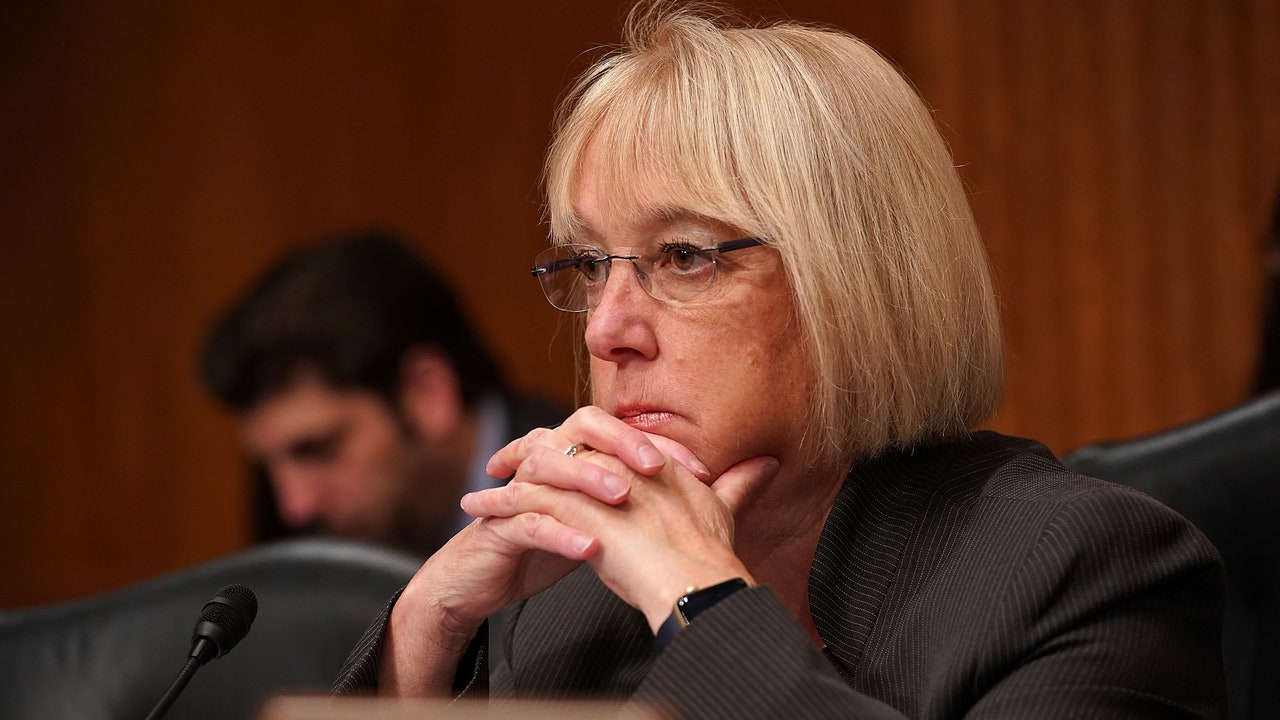
Paid Sick Leave Is Finally Becoming a Reality. Patty Murray Wishes It Hadn't Taken a Pandemic to Get It There


Well, I’m sorry it’s come to a pandemic for them to see the reality. It is my hope that this has finally sunk in and that we move forward in a smart way. I remember talking to a Safeway employee six or seven years ago who was working in the deli department and was obviously, visibly sick. I said, “Are you okay?”

And she said, “I can’t stay home. I don’t have any sick leave.”

I remember thinking, “Oh my god, she’s sitting here in a deli.” Everybody should think of that—workers at delis, grocery stores, hotels. Wouldn’t you rather they were home getting paid sick leave than here risking spreading it to everyone else?

One of the things that’s striking to me, as a citizen, is how disadvantaged we are here in the United States—in terms of dealing with this crisis—because we don’t have some of the things, like paid sick leave, that other developed countries have. We’re suffering now because of legislation we didn’t get passed decades ago.

Without a doubt. Without a doubt. All of these things that we have been told cost too much or are too radical are now coming home to roost with this pandemic.

Do you think that’s registering, especially with your Republican colleagues who have been resistant to these kinds of federal programs?

I think it is sinking in. People used to think, “Oh, that’s someone else’s problem.” But in a pandemic like this, they realize that someone else affects them. If that person is sick, they’re making other people sick. If a business can’t function, that has an impact. These kinds of social programs and policies are good for businesses, so that we don’t end up in the situation we’re in now.

Have any of those Republicans or even Democrats who resisted this said, “You were right”?

Well, no one here is very good at saying, “Oh my gosh, you were right.” Which is fine; I can take it! But they are all of a sudden sensing the need for this. It becomes personal for every single person in this country. It’s well and good for the mandate to be out there—“stay home if you’re sick.” But too many workers know it doesn’t apply to them because they can’t afford it.

You were a preschool teacher. Other women who serve in Congress, and in particular women elected in 2018, don’t come from traditional political backgrounds. Several I can think of are former nurses or are activists or veterans. At a time like this, how valuable is it to have those voices in Washington?

I was just talking with someone about the fact that women work in professions with their mother hat on. We’re thinking about other people. This conversation happened to be in the context of our own workplace in the Senate; I find a lot of the senators are thinking about themselves, but she and I were thinking about the staffers and workers in the Senate who have to be there because we are here. These are people who themselves have families. I said to her, “You sound like a mom.” And she said, “That’s just how we operate.”

But I think overall, women do see things in terms of communities and have experiences that inform that. Women tend to be the people in their families who take kids or parents to the doctor. It’s intuitive to us to think about these things on a personal level.

After we get through this, do you think America will be ready to have a fundamentally different conversation about programs like paid leave and universal health care?

I think so. We obviously live in a country that is very dependent on private companies and profits. We all benefit from that. But the question we have to ask ourselves now is: How do we develop an infrastructure that makes sure all Americans are safe?

This interview has been edited and condensed.

Mattie Kahn is the culture director at Glamour.


Source link

Categories
Health

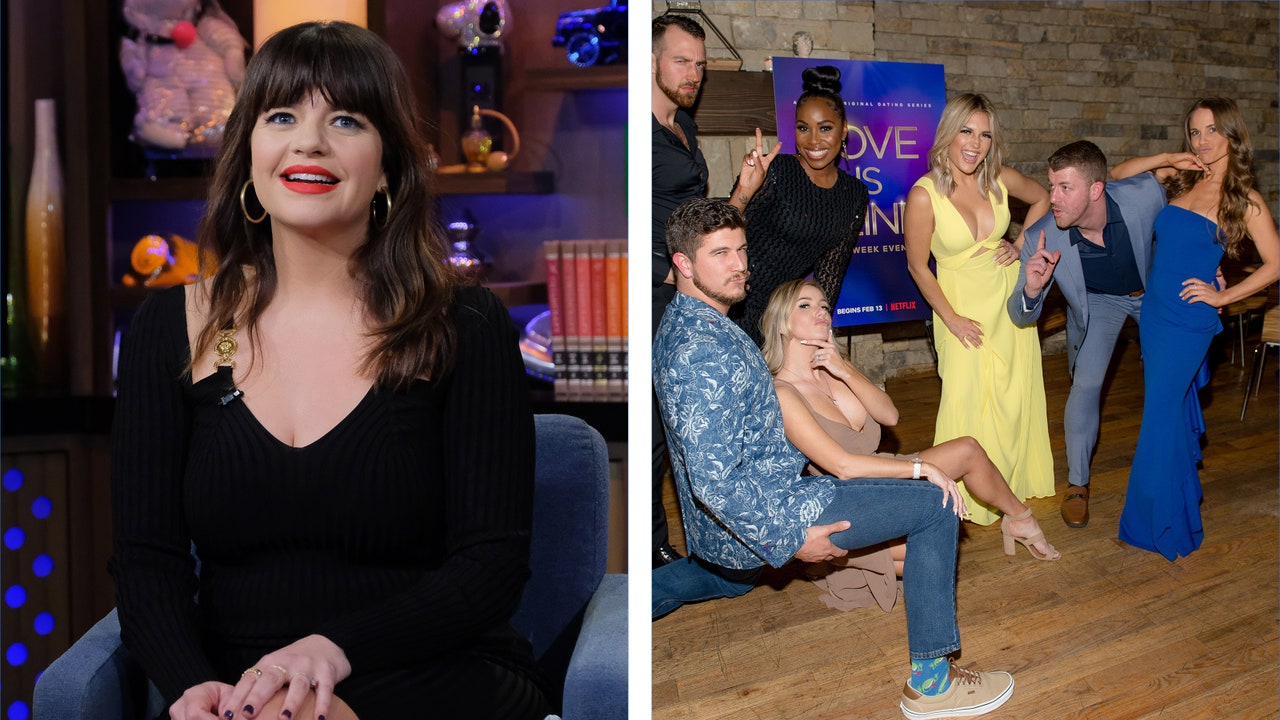
Casey Wilson: In Times Like These, We Need More Reality Garbage Like Love Is Blind


It’s a stressful time right now. There’s a lot going on in the world that is problematic and troublesome. Not to mention the global pandemic. Everything is moving fast. We all feel busy and overwhelmed. Sometimes, life just feels like a series of uncomfortable moments strung together.

And yes, we all need to resist and work hard to make the world better. But there’s so much expected of us these days—especially women. So after a full day, I want nothing more than to relax into the loving arms of screaming women on reality TV. Watching these monstrous, majestic creatures yell at each other is soothing. Really.

I’ll always consider Bravo’s Real Housewives my form of self-care, but I’ve also gotten deeply involved with Love Is Blind on Netflix. I can’t even tell you what’s going on between that show and me lately. It’s too much. For someone else, it might be Love After Lock Up, 90 Day Fiancé, or The Bachelor. Whatever reality show you prefer, I don’t think you should be ashamed if that’s your outlet to recharge. Would I love it if meditation and journaling helped me de-stress? Sure. But in reality, I’m putting my kids to bed, settling in with a glass of wine, and turning on reality garbage.

It’s fun to care so passionately and deeply about something so meaningless and silly! I’ve been watching Real Housewives for decades. I know their full histories, and it feels like I’m a part of their families. I call them my weird drunk aunts.

There’s a bonding process that happens when you meet other fans, too. My friend and Bitch Sesh podcast co-host Danielle Schneider and I love the community our listeners have built. Major, major lifelong friendships have been developed over talking about women we don’t know. We post memes. We send each other information about what’s going on. Well, information is a strong word. It’s more like, “I saw Dorinda Medley walking down the street.” That’s it. It’s frivolous, sure, but it’s all we need to get a lift for the day.

Look at sports fanatics and nerd culture—it’s no different whatsoever. The reunions are my Superbowl, and I’m not going to be a reality TV apologist about it. It’s a way to connect with people when you might not have much to talk about beyond the weather. You can have a heated, passionate debate about Jessica from Love Is Blind and know there’s nothing behind it.


Source link

Categories
Health

Shows Like The Bachelor: Stream These Reality TV Series While You Wait for The Bachelorette Premiere


In the mood to watch shows like The Bachelor now that Peter Weber’s season has ended? I mean, we do have several weeks before Clare Crawley’s season of The Bachelorette airs. You have a reality-TV itch that needs scratching. And not just any kind of reality show: You need one that perfectly blends romance, drama, hot people, and gorgeous locations. A show that’s equal parts sappy and salacious. One during which you’re laughing hysterically in one scene but then oddly sentimental the next.

The Bachelorette and The Bachelor are masters of this craft, of course, but there are other reality shows that do it too—and they’ll save you during this rose ceremony drought.

Take Love Island, the British dating series that, on the surface, is completely bonkers. But by episode three you’re emotionally attached to all the contestants. Or how about Netflix’s Love Is Blind, which will have you shouting at your screen within minutes? Bottom line is there’s plenty out there to keep you occupied until that first rose ceremony.

Here are our recommendations for shows like The Bachelor and Bachelorette, but be warned: Once you start any of these shows, you won’t stop.


Source link