Categories
Health

Miscarriage Is Getting More Common on TV—But That Still Didn’t Prepare Me for the Reality


Experiences of infertility always have one thing in common: uncertainty. The countless visits to doctors, the months (or years) of planning, the tens of thousands of dollars, never add up to a guarantee. Even under the best of circumstances, there’s only so much about a pregnancy you can plan, and in the midst of a pandemic, the idea of planning anything seems foolish. For National Infertility Awareness Week, we’re exploring the uncertainty—and the hope.


All of my medical knowledge comes from watching Grey’s Anatomy. The hours, (months really, when lined up altogether), I’ve spent with the doctors of Grey Sloan Memorial, née Seattle Grace, have helped me in so many situations—like how to know if a fish has swum into someone’s penis or that you can be pregnant with two different men’s babies at once IF you have the super rare condition of having a double uterus. Unfortunately, the show (and TV in general) didn’t prepare me for my miscarriage.

It’s not that Grey’s didn’t try. Over the show’s 16-and-counting seasons, there have been plenty of memorable, failed gestations. Since the show premiered in 2005, the taboo surrounding miscarriage has slowly begun to crumble, and miscarriages—which occur in an estimated 10% of clinically recognized pregnancies—have started showing up more frequently in pop culture.

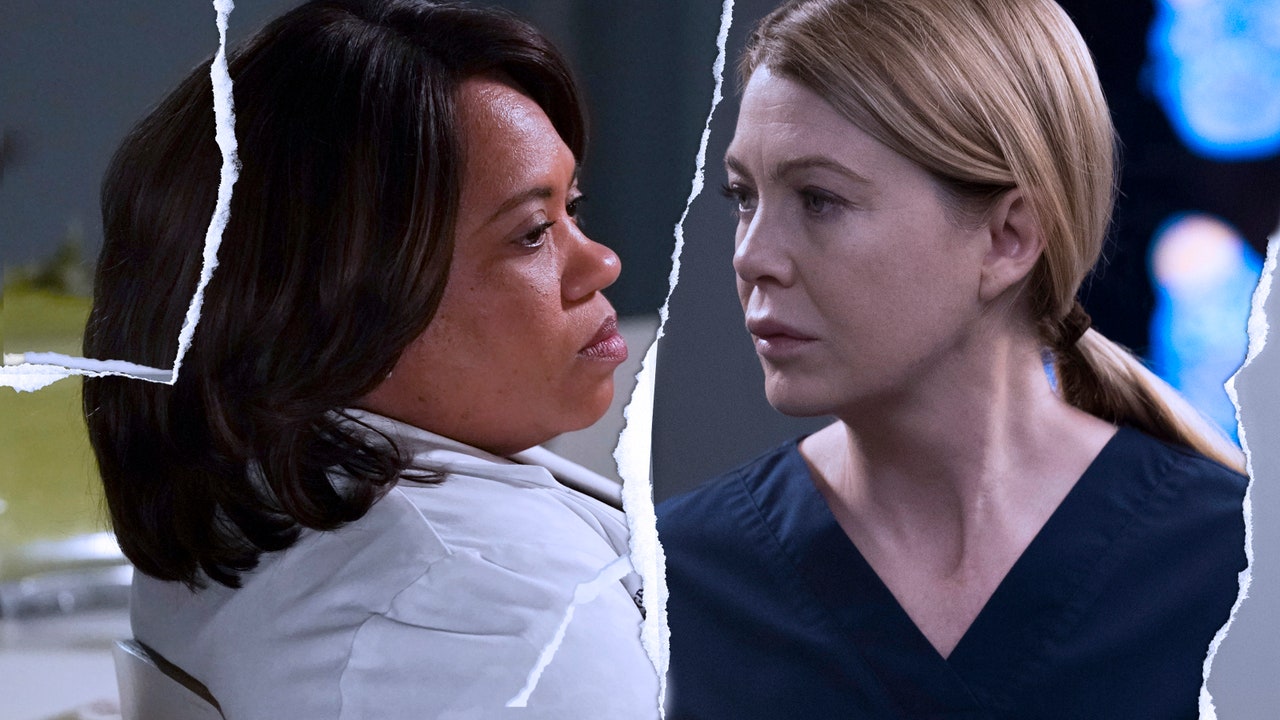
Remember way back in season two when Cristina’s fallopian tube burst, avoiding the abortion she had planned? She collapsed in the operating room and had to tell her medical team (and colleagues) about her hitherto-hidden pregnancy. In season six, Meredith lost her nascent pregnancy from the stress of an active shooter in the hospital. Blood visibly spread down her thighs while she had to simultaneously operate on her best friend’s partner. Then there was this season’s winter finale when a patient noticed blood dripping from Bailey’s skirt. She’d been surprised and then enamored by this pregnancy, finally brutalized by its loss.

My experience wasn’t like any of these. There was no blood, no drama. I can’t even tell you when exactly it happened. Excited and scared, I’d felt the whole earth turn when I’d found out I was pregnant. I waited the weeks you’re supposed to and went to the doctor. They did an intervaginal ultrasound (that’s science speak for “put a wand up my vagina”) and heard the fetal heartbeat. Bump bump. I didn’t know to be worried when they told me to come back in two weeks and not four. When I went back, it was gone.

Just gone. Nothing to see with the wand up my vagina, no heartbeat to hear. I’d had what they called a “missed miscarriage,” where the pregnancy ends without any discernible symptoms. It happens in about 3% of known pregnancies, according to one study, or a third of miscarriages but I’d had no idea that it was even a possibility. I thought I’d know if anything was wrong—that there’d be blood or cramps or drama or something. I’d felt nothing, didn’t have so much as an inkling.

I waited for the earth to turn back but it didn’t. The doctor, using the sad eyes I’m sure they taught her in medical school, told me I had options: I could wait for it to pass on its own, take Misoprostol, a pill to induce cramping and bleeding, or get a procedure called “dilation and curettage” aka D&C. Misoprostol is half the cocktail they give you to have a medicine-induced abortion while a D&C is the surgical option to end a pregnancy. I chose to wait. I wanted it to pass “naturally,” to feel the shock and dreaded wetness that my TV heroines experienced.

It turns out that waiting to miscarry is terrible and eerily quiet. I went to the bathroom constantly, disappointed by not seeing red. At work, I remember sitting on the toilet in our square little beige room, looking at the shelf with the tampons and pads. I wanted desperately to need one. But day after day, I didn’t. In a meeting that week, someone asked me when I was going to have kids. I laughed it off. Inexplicably, we also had the one and only office-wide discussion I’ve ever witnessed about miscarriages. My colleagues shared their experiences and I slunk off to the bathroom, unwilling to open up. Still no blood.
Source link

Categories
Health

Miscarriage Has Always Been Isolating—Then Came the Pandemic


Experiences of infertility always have one thing in common: uncertainty. The countless visits to doctors, the months (or years) of planning, the tens of thousands of dollars, never add up to a guarantee. Even under the best of circumstances, there’s only so much about a pregnancy you can plan, and in the midst of a global pandemic, the idea of planning anything seems foolish. For National Infertility Awareness Week, we’re exploring the uncertainty—and the hope.


Nine weeks into her first pregnancy, Kourtney, a 26-year-old in Tennessee, found her nausea intensifying. Cautious about exposure to the coronavirus and because she had been having an overall healthy pregnancy so far, she skipped her four-to-six-week early-pregnancy appointment, hoping to wait until she was further along. She was vomiting frequently, but since that’s common with many early pregnancies, she wasn’t concerned. In late March she went to the ob-gyn—her first official doctor’s visit during the pregnancy—to ask for medication to alleviate her nausea. During the ultrasound, the doctor couldn’t detect a heartbeat.

According to the Mayo Clinic, about 10% to 20% of pregnancies end in miscarriage. Pregnancy loss is difficult in the best of times, but the restrictions that come in the face of a pandemic—like social isolation and diminished access to health care—can heighten the emotional devastation. “I don’t think anyone realizes how hard a miscarriage can be until it happens to them. You can feel guilt, brokenness, and isolation no matter what outside circumstances surround you,” says Kourtney. “But during a pandemic, you’re stuck in your house alone, unable to distract yourself from the emotional pain and physical trauma from the loss.”

After a miscarriage, the uterus undergoes a shedding process to expel the remaining fetal tissue and uterine lining from the pregnancy. Sometimes doctors manually assist this process via a dilation and curettage, more commonly known as a D&C. Kourtney’s doctor told her that in her case a D&C would be considered elective, she says, and would therefore be difficult to schedule during the pandemic, so she’s waiting to miscarry naturally. Three weeks after she was diagnosed, she still hasn’t started bleeding or cramping yet. “Not being able to hug my family, or even shop for supplies I might need during this process, has been extremely difficult,” she says. “I’ve never felt so isolated or alone, and I’m so scared.”

Rachael L., a 28-year-old in Michigan, miscarried around 11 weeks in mid-March. She was able to get a D&C in the hospital two days after her doctor couldn’t detect a heartbeat, but hospital social-distancing restrictions allowed only one visitor, which was upsetting because she wanted both her mom and partner with her. Thankfully, the medical staff was comforting and compassionate during the surgery. “I felt well taken care of, like the doctors really cared about my well-being,” she says.

But out of the operating room and back in her home, Rachael has found it difficult to deal with people’s reactions to social distancing. She’s tired of hearing complaints of boredom, working from home, and missing out on vacations people had planned because of shelter-in-place. She says, “I wanted to scream at society and say, ‘If only you knew what it’s like to grieve the loss of a baby, of a life that was never brought to fruition.’ I thought to myself, What a life it would be if all I had to worry about was feeling bored, or losing out on a trip to Mexico.”

For those who have had previous miscarriages, it doesn’t get any easier, especially under these new circumstances. Stephanie B., 29, from New Jersey, recently had her second miscarriage in seven months. She’s taking a medication used to stimulate the shedding process, which can cause heavy bleeding. To make a bad situation even worse, she’s had difficulty finding pads due to people stocking up. “Pads were completely wiped off the shelves because of this panic,” she says.

Lucinda B., a 36-year-old in England, started bleeding around 10 weeks on the fourth day of the lockdown in the UK. “The bleeding gradually got heavier and redder so I knew what was happening,” she says. Grieving her miscarriage is challenging enough, she says, but she’s also caring for her three-year-old during shelter-in-place. “I felt so sorry for my son. He was already dealing with his whole life being turned upside down, and now he had a mum who hid away, cried all the time, and had zero patience,” she says. “I felt, and still feel, like I’m failing my son by not giving him a sibling. I’m so anxious around him being an only child, and this is just compounded with the lockdown and my fear of his loneliness.”


Source link

Categories
Health

Halsey Opens Up About Feeling ‘Inadequate’ After Experiencing a Miscarriage


Halsey is ready to talk about her miscarriage, an experience she recently described as “demoralizing.”

In a new interview with The Guardian, the 25-year-old pop star said she regrets sharing this part of her personal journey in the past after some now-deleted social media posts were the target of online abuse.

“It’s the most inadequate I’ve ever felt,” she explained. “Here I am achieving this out-of-control life, and I can’t do the one thing I’m biologically put on this earth to do. Then I have to go onstage and be this sex symbol of femininity and empowerment? It is demoralizing.”

In the past, the singer has been open about her struggles with endometriosis—a condition that causes the tissue that normally lines the uterus to grow outside of it and can lead to infertility in up to half of the women with the diagnosis.

During a 2018 episode of The Doctors, Halsey explained her miscarriage happened while she was on tour.

“Before I could really figure out what that meant to me and what that meant for my future, for my career, for my life, for my relationship, the next thing I knew I was on stage miscarrying in the middle of my concert,” she said. “And the sensation of looking a couple hundred teenagers in the face while you’re bleeding through your clothes and still having to do the show, and realizing in that moment that I never want to make that choice ever again of doing what I love or not being able to because of this disease.”

[embedded content]

Thankfully, she told The Guardian that her latest prognosis is positive and motherhood is “looking like something that’s gonna happen for me. That’s a miracle.”

In January, while promoting her Manic album, Halsey also told Apple Music’s Zane Lowe that she wrote the lyrics to her song “More”—which is about her deep desire to have a baby—after doctors informed her that her treatments and healthier lifestyle have made it possible for her to have a healthy pregnancy.

“It was a moment where I felt like I had leveled up in life. It was this like, ascension into a different kind of womanhood,” she said. “I wrote the lyrics to ‘More’ in like, four minutes or less. It just spilled out of me.”


Source link

Categories
Health

Hilaria Baldwin: ‘There’s No Right Way to Deal With a Miscarriage’


Hilaria Baldwin, author, yoga instructor, and cohost of the Mom Brain podcast, suffered two miscarriages last year—one around 10 weeks and the other at four months. Throughout both, Baldwin was radically open about her experience, sharing her losses in real time and inviting the women in her 700k-strong Instagram community to share their stories too.

In a Glamour exclusive, Baldwin opens up about the experience of hearing thousands of women’s miscarriage stories, the common threads of shame, and the power of speaking out.


Last April, I had a miscarriage at around 10 weeks. I have had a couple of chemical pregnancies in the past, but this was my first miscarriage after hearing a heartbeat. The first time my husband Alec and I heard that baby’s heartbeat, it was weak and became weaker and weaker with each ultrasound. Eventually it stopped. I knew that the weak heartbeat was not a good sign, but I was still incredibly sad when, at that final ultrasound, the heartbeat went silent.

Some estimates say 1 in 5 pregnancies end in miscarriage. I had 4 babies and now a loss—I was the perfect statistic. We tried again and I got pregnant a few months later. We found out the baby was a girl—a little sister for our six-year-old daughter, Carmen. I was so excited to be a mom again.

In contrast to my spring pregnancy, this baby had a strong heartbeat. We were excitedly making plans—Carmen was setting aside her old clothes, and Alec and I dreamed about what it would be like to have a girl again after so many boys.

At four months (16 weeks), I went in for my regularly scheduled scan. As soon as the sonogram image appeared on the screen, I saw that my baby had died. There was no movement, no heartbeat. She was crumpled up, lifeless in my womb.

I began to cry. The doctor told me to hold still as she tried to figure out what had happened. I couldn’t stop sobbing. I can’t remember much except that I got dressed, thanked everyone for their care, and asked for permission to go. I just began walking. I got in a cab at some point, making calls, scheduling a follow-up D&E, and canceling work accordingly. I felt like I was in shock. I went into this appointment excited to see her and share pictures with my family and friends—I left needing to tell them all that she had died. It was a surreal turn of events.

Even though I’d had a miscarriage before, I don’t think I could have fathomed how bad it could feel to have a miscarriage at 16 weeks. I had to go home and sleep with my dead baby inside of me. I felt sick, sour in my belly, and so devastated. I kept waking up and thinking it must have all been a very vivid bad dream. I cried so much that my eyes were nearly swollen shut. I didn’t know the body could make so many tears. This was a pain that I had never experienced before, and it felt suffocating.

Through this pain, I knew that I needed to feel better. I needed to heal. I had to—for my babies, my husband, my loved ones, and myself.

When you feel so sad, you just want to crumble, and it is hard to be your own advocate—but you must be. I had to tell myself that I deserved to heal and to be happy again. This lesson became my mantra. Processing and going through grieving was important, but I didn’t have to be condemned to a life of emotional punishment and suffering.

As a woman, in charge of housing and growing a baby, it’s easy to feel guilty—as if you did something wrong to cause the miscarriage, no matter how many doctors tell you that’s not the case. Sometimes it’s easier to make ourselves the enemy, to blame ourselves, than it is to accept support and care.


Source link

Categories
Health

Dr. Bailey's Monologue About Miscarriage on Grey's Anatomy Has People Talking


Grey’s Anatomy returned last night (January 23) after a brief hiatus—and it was an incredibly emotional episode.

The action picked up after the midseason cliffhanger that saw a car crashing into Joe’s Bar, the regular hangout for the doctors at Grey-Sloan. While we didn’t really get any new information about Alex Karev and how the show will handle Justin Chambers’s permanent departure, fans did get some very emotional scenes between the three remaining OG doctors: Miranda Bailey (Chandra Wilson), Richard Webber (James Pickens Jr.), and Meredith Grey (Ellen Pompeo).

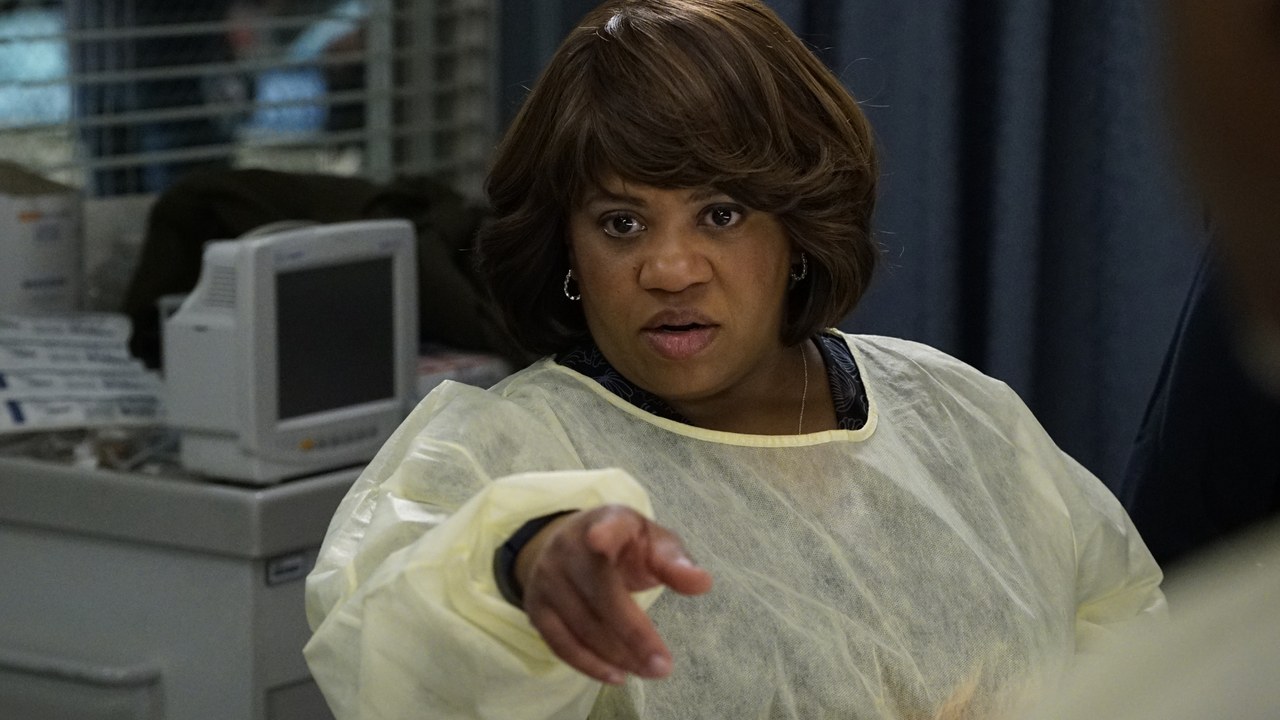
In the midseason finale, we learned that Bailey suffered a miscarriage. When we last saw her, she was definitely trying to bottle up her emotions and carry on with her job. In the face of some of her interns hurt in the Joe’s Bar accident, she continued to do just that—and saved lives in the process. But when all was said and done, Bailey needed a release and broke down in a powerful conversation about her loss with Dr. Webber.

“Everyone I touched today, everyone I held in my hands or gave to another surgeon to put back together again — fine,” Bailey said. “But I made that fine. I made that work. This…this…This, I…I am not fine.”

“She [her baby] isn’t fine. And I can’t even hold her in my hands. Or put her in someone else’s hands who can put her back together again,” Bailey cried. “She just was! And now she isn’t. And I can’t do anything but just stand here—stand here and lose her.” Bailey collapses into Webber’s arms and sobs—as did I. Later, he brings Meredith in to comfort her friend with a box of tissues and a box of donuts. Meredith holds Bailey’s hand and says, “I had a miscarriage once. I never felt so lonely.” (Longtime fans will remember Meredith suffered a miscarriage back in season six, when a shooter went on a rampage in the hospital, injuring Derek and leaving Meredith and Cristina to operate on him at gunpoint.)

These are the emotional moments that Grey’s Anatomy has done so well since it premiered in 2005. People on Twitter had strong reactions to Bailey’s monologue:

We’ll surely see more of how Dr. Bailey copes with this devastating loss in future episodes. Prep your tear ducts accordingly.


Source link

Categories
Health

Hilaria Baldwin Responds to ‘Cruel’ Trolls Who Shamed Her After a Recent Miscarriage


Hilaria Baldwin is opening up about the “cruel” trolls who have been attacking her following a miscarriage she experienced earlier this month. Taking to Instagram Stories, the yoga instructor spoke out about the backlash and defended herself against accusing her of publicizing the recent loss of her pregnancy for attention.

“All of a sudden I started getting negative comments about my miscarriage,” Baldwin said on social media on November 26, per People, adding that some of remarks included “attention seeker,” “too old,” and “disgusting.”

Baldwin, who is married to actor Alec Baldwin, responded to the harsh words saying there aren’t any comments that could ever compare to the pain of losing a baby.

“Losing a baby at any stage is hitting rock bottom,” Baldwin said. “Rock bottom sucks. But rock bottom is also eye opening. Because you understand and have experienced true pain. It makes the trolls seem even smaller than they usually are. Because no words they can use can ever compare to what you have lost.”

“Those of you who bully women who suffer as I have are bringing a cruelty to the world that is so wrong,” she continued. “You are contributing to feelings of shame, fear, insufferable pain. It is for this reason that I have stepped forward and shared as I have. Not for attention, but because it is my life story and I decided to open up.”

“You think I wanted this???” Baldwin asked. “I have experienced this pain that countless women before and with me have and we should make their…OUR…lives…easier, not more difficult.”

She ended her message by urging women to lift each other up. “Our system is broken,” Baldwin said. “Time to support and stop the shaming of women simply trying to create family and love.”

“Just to know we are not ‘broken’,” she added. “We are just opening ourselves up to love. And we should never be ashamed of this..even when it doesn’t go as planned.”

The mother-of-four experienced two pregnancy losses in 2019—one this month after previously revealing she was expecting a baby girl. She also miscarried in April, an experience which she candidly shared with the world in real-time.

At the time, she explained to Glamour why shared her loss as it happened, saying she hoped opening up about the private moments would help put an end to the stigma surrounding miscarriage.

“I understand why some women choose to keep this pain private, but it’s such a personal thing—some people need to process the loss on their own, and others need to process it more publicly,” she said. “Women deserve to have the option to do whatever they need to heal.”


Source link