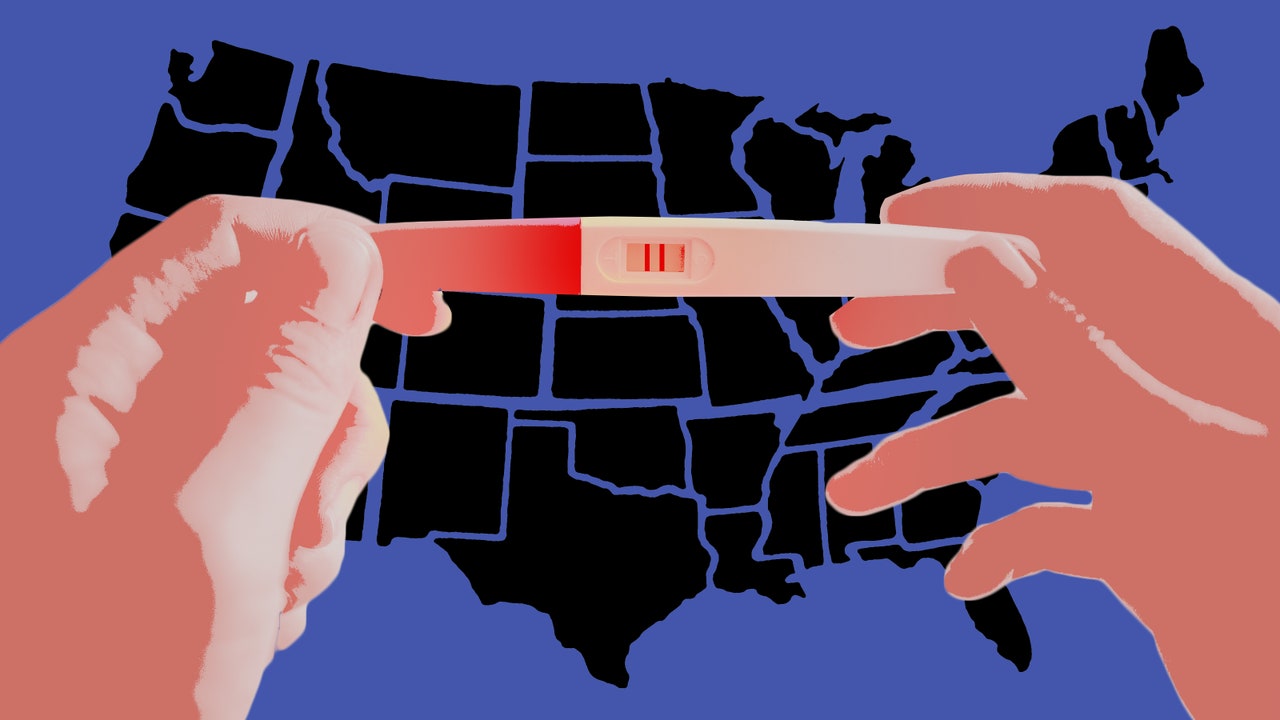
Many states, such as Texas, require women to make two trips to a clinic to access medication abortion. “These restrictions are medically unnecessary all the time, but now put patients and providers at risk unnecessarily through additional and medically unnecessary face-to-face contact,” says Smith. That’s become another claim states are using in their fight to restrict abortions. “It is clear that Texas is using the COVID-19 pandemic as cover to further its goal of prohibiting abortion.”
There are glimmers of hope: federal judges in Alabama and Ohio recently blocked orders banning nonessential medical procedures from limiting abortion access during the coronavirus outbreak. However, these blocks are only temporary, with Ohio’s order lasting until April 13, giving women only a short timeframe to get the access they need. In the case of Texas, federal judges also tried blocking orders limiting abortion, but their efforts had been overturned by an appeals court as of March 31st.
Even for women who can access abortion care during the coronavirus outbreak, the procedure can be expensive. Like many health insurance providers, mine does not cover abortion, which forced me to shell out $550 of my paycheck. I’m privileged to be able to work from home during this time, but millions of women have lost their jobs, making the financial burden of an abortion too much to shoulder.
By many accounts, I faced the “best” possible situation: abortion clinics in my state were still operational, I was able to access a clinic while following social distancing guidelines, there were no mandatory waiting periods that forced me to visit more than once, and I remain employed with a steady stream of income.
Still, I can’t ignore the trauma I faced in order to get an abortion in the middle of a pandemic.
Like many women during the best of times, I had to call gynecologist after gynecologist to find someone who took my health insurance (a form of Medicaid that isn’t accepted by many doctors) and could squeeze me into their schedule as soon as possible. And when I finally found one who would see me, the whole process was put into hyper-speed since no one knew if the federal government would force clinics nationwide to shut down. There was no time to process what was going on. Some nurses seemed to treat me more as a walking germ to be cautiously handled than a patient. One turned to me and said, “I really wouldn’t want to be you right now.”
The comment stung, but in a way she was right: I really didn’t want to be me at that moment.
I wanted to opt for a dilation and curettage procedure, also known as a D&C or “surgical abortion.” But with the future of access to care in the age of COVID-19 so uncertain, the clinic suggested I have a medication abortion so I could have same-day access, rather than taking a risk and scheduling a future appointment for the procedure. I was lucky to even have an option—I was still in the early stages of my pregnancy, so either method was feasible, but I preferred the D&C procedure because the abortion pill can have more side effects and a somewhat lower success rate.
The abortion pill was not easy on my body: I spent days throwing up, heavily bleeding and experiencing “labor-like” cramps, all possible side effects of the medication. At one point I fainted in my bathroom from the pain. This isn’t necessarily common, but in my case, the cramps and nausea proved too much for my body to handle all at once. [Editor’s note: Experience of side effects may vary but if you experience nausea, vomiting or a fever for more than 24 hours, you should call your doctor, according to Planned Parenthood.] The physical complications mixed with the emotional toll and burden of trying to keep my abortion a secret as I quarantined with my family felt like mental torture. I felt so alone, and while I had a small group of friends as close as a click of a button on my phone, I wish I was able to have someone physically hold my hand during this time.
It’s been almost two weeks since I had my abortion, and even with the trauma I’m left to live with, I don’t regret a single step I took. Yes, it was the hardest thing I’ve ever had to go through, and having to navigate this journey while the world—and me—is in a state of valid paranoia made it that much harder. To have gotten the procedure I needed, when so many women cannot, and to be able to sit still and take this time to heal in the comfort of my childhood home is the only silver lining in this situation. After going through all of this, I’m a little more hopeful that everything will, eventually, be okay. Maybe not soon, but one day I’ll be able to fully heal from the trauma of my abortion, and the world will heal from this pandemic.
But for now, all we can do is take it one day—and one Lysol wipe—at a time.
At the author’s request, we’ve omitted her last name to protect her privacy.