Categories
Health

Miscarriage Is Getting More Common on TV—But That Still Didn’t Prepare Me for the Reality


Experiences of infertility always have one thing in common: uncertainty. The countless visits to doctors, the months (or years) of planning, the tens of thousands of dollars, never add up to a guarantee. Even under the best of circumstances, there’s only so much about a pregnancy you can plan, and in the midst of a pandemic, the idea of planning anything seems foolish. For National Infertility Awareness Week, we’re exploring the uncertainty—and the hope.


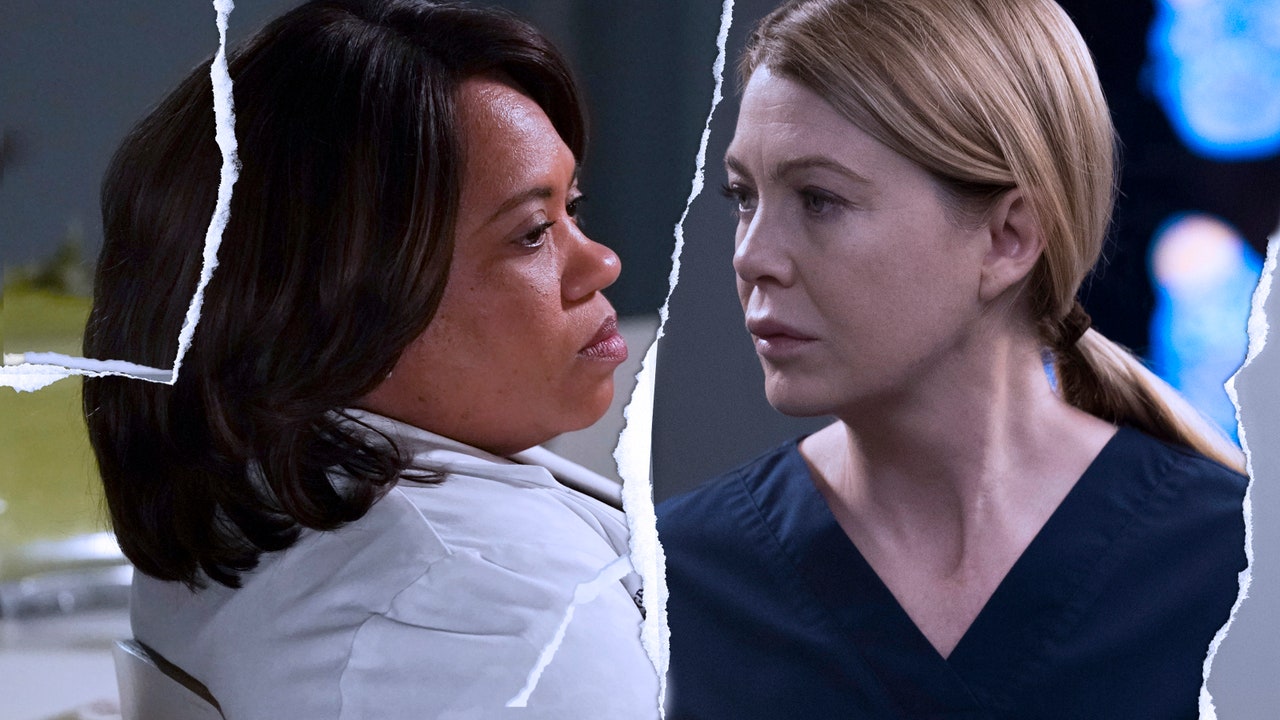
All of my medical knowledge comes from watching Grey’s Anatomy. The hours, (months really, when lined up altogether), I’ve spent with the doctors of Grey Sloan Memorial, née Seattle Grace, have helped me in so many situations—like how to know if a fish has swum into someone’s penis or that you can be pregnant with two different men’s babies at once IF you have the super rare condition of having a double uterus. Unfortunately, the show (and TV in general) didn’t prepare me for my miscarriage.

It’s not that Grey’s didn’t try. Over the show’s 16-and-counting seasons, there have been plenty of memorable, failed gestations. Since the show premiered in 2005, the taboo surrounding miscarriage has slowly begun to crumble, and miscarriages—which occur in an estimated 10% of clinically recognized pregnancies—have started showing up more frequently in pop culture.

Remember way back in season two when Cristina’s fallopian tube burst, avoiding the abortion she had planned? She collapsed in the operating room and had to tell her medical team (and colleagues) about her hitherto-hidden pregnancy. In season six, Meredith lost her nascent pregnancy from the stress of an active shooter in the hospital. Blood visibly spread down her thighs while she had to simultaneously operate on her best friend’s partner. Then there was this season’s winter finale when a patient noticed blood dripping from Bailey’s skirt. She’d been surprised and then enamored by this pregnancy, finally brutalized by its loss.

My experience wasn’t like any of these. There was no blood, no drama. I can’t even tell you when exactly it happened. Excited and scared, I’d felt the whole earth turn when I’d found out I was pregnant. I waited the weeks you’re supposed to and went to the doctor. They did an intervaginal ultrasound (that’s science speak for “put a wand up my vagina”) and heard the fetal heartbeat. Bump bump. I didn’t know to be worried when they told me to come back in two weeks and not four. When I went back, it was gone.

Just gone. Nothing to see with the wand up my vagina, no heartbeat to hear. I’d had what they called a “missed miscarriage,” where the pregnancy ends without any discernible symptoms. It happens in about 3% of known pregnancies, according to one study, or a third of miscarriages but I’d had no idea that it was even a possibility. I thought I’d know if anything was wrong—that there’d be blood or cramps or drama or something. I’d felt nothing, didn’t have so much as an inkling.

I waited for the earth to turn back but it didn’t. The doctor, using the sad eyes I’m sure they taught her in medical school, told me I had options: I could wait for it to pass on its own, take Misoprostol, a pill to induce cramping and bleeding, or get a procedure called “dilation and curettage” aka D&C. Misoprostol is half the cocktail they give you to have a medicine-induced abortion while a D&C is the surgical option to end a pregnancy. I chose to wait. I wanted it to pass “naturally,” to feel the shock and dreaded wetness that my TV heroines experienced.

It turns out that waiting to miscarry is terrible and eerily quiet. I went to the bathroom constantly, disappointed by not seeing red. At work, I remember sitting on the toilet in our square little beige room, looking at the shelf with the tampons and pads. I wanted desperately to need one. But day after day, I didn’t. In a meeting that week, someone asked me when I was going to have kids. I laughed it off. Inexplicably, we also had the one and only office-wide discussion I’ve ever witnessed about miscarriages. My colleagues shared their experiences and I slunk off to the bathroom, unwilling to open up. Still no blood.




Source link

Categories
Health

The Situation Room Didn’t Prepare Me for a Life Confined to My Living Room


I know what it’s like to make big decisions in small rooms, separated from the rest of the world, alone with the weight of your choices.

It seems, in fact, that such acts defined my government career. For six years, I was an official in the Obama administration, advising secretaries of state and ambassadors, spending my days in secure rooms at the State Department, the White House, and the U.S. Mission to the United Nations.

I frequented gilded conference rooms behind key-carded hallways where men—it was so often me and a room full of men—considered the direction of U.S. foreign policy. I’d glance at the portraits of former Secretaries—Marshall, Kissinger, Albright, Powell—and feel the privilege and responsibility of my presence. There among the dark suits in stiff chairs. Bright lights shining above. Heavy doors that locked with a click and left you to answer: Will aid prevent a humanitarian crisis? Is our counterterrorism policy working? How can America lead?

I spent hours alone in Sensitive Compartmented Information Facilities, or SCIFs, the rooms where you go to read classified intelligence. The briefings always warned of potential crises, and my job was to help keep not-yet-disasters from becoming full-blown conflagrations.

By myself at a plain table, I’d open coded folders concealing stories from distant places: infectious diseases ravaging populations, ethnic tensions simmering, and protests that might birth democracies or ignite civil wars. Every day the reading was different, but, in a way, the messages were all the same: plain type, small print, huge consequences.

When the stakes were highest, I would, on occasion, be invited to the Situation Room, which looks in real life like it does on TV, digital clocks lined up on the wall, one always displaying the local time of the President. I’d check my electronics at the door, see the expansive mahogany table, and then stop to catch my breath, understanding that America has the power to start wars or forge peace, to ignore suffering or to end it, to live our values or to breach them.

The rooms I inhabit now are more ordinary and unassuming, living as I do in a two-bedroom apartment, sheltering in place with my wife and young child in the age of COVID-19.

There’s my bedroom, where the light peeks through the shutters in the morning, and for a brief moment before I rise, I can almost forget that things are not normal. The laundry is piled in the corner undone, and my business suits hang in the closet unworn. There’s a stack of serious books on my nightstand, but I reach most often for my phone which alerts! (of a market crash), and alerts! (of school closings) and alerts! (of death tolls, rising, rising).

There’s my daughter’s room, with its soft pastel colors and shelves lined with books; they tell stories of dragons and monsters, but not an invisible virus more powerful than any imagined villain. From the toddler bed, she looks up at me with plaintive eyes and asks, “Is tomorrow going to be a school day?” From the doorway, I stand and answer, “Not tomorrow, baby, but maybe soon.”

There’s our living room—our everything room—where we cook, and eat, and build a fort, and chase the toddler, and Zoom with grandparents, and collapse at the end of the day, bleary-eyed and exhausted, but grateful that we are healthy and safe when so many others are not.

When I was in government, I would try to keep my personal life out of the rooms I inhabited. But sometimes it snuck in.

That day when I went to the SCIF, heavy with labor, rushing to read the intel before I went to the hospital, needing to provide advice just one more time.

That day when the Supreme Court struck down the Defense of Marriage Act, and my eyes filled with tears outside my boss’s office, knowing that my upcoming marriage would be recognized under U.S. law.


Source link

Categories
Health

Parenthood Is Expensive: Here's How to Prepare Your Budget


She Makes Money Moves is a new podcast from Glamour and iHeartRadio. Hosted by Glamour editor in chief Samantha Barry, the podcast shares intimate, unscripted stories from women across the country along with advice from financial experts to help guide those women—and women everywhere—forward. Download a new episode every Tuesday, then visit glamour.com/money for an article like this, with more insights from that week’s expert.


It’s no secret that having children is expensive. But the actual numbers can still come as a shock. On average, middle-income parents in America will spend more than $230,000 to raise a child, from birth to age 18. And that number doesn’t include the expense of college (which typically costs more than $100,000 over four years). It’s a tremendous undertaking.

Of course, cost alone shouldn’t stop you from having children. It just means that you’ll want to think strategically about how becoming a parent will affect your finances and plan accordingly. This week’s guest on She Makes Money Moves is the mother of a one-year-old son. She and her husband would like to have more children, but they’d also like to purchase a home and save for retirement. To help her figure out how to do that—without going broke—Barry welcomed Shannon McLay, founder & CEO of the Financial Gym, onto the podcast. Here, McLay breaks down how you should prepare to pivot to parenthood.

Plan as far ahead as possible

When Financial Gym clients first start working with us, we’ll ask them what their short-term, medium-term, and long-term goals are. Most people have a really clear idea of what their short-term goals are (stop living paycheck-to-paycheck, build up savings and pay down consumer debt) and even have a vague idea of their long-term goals (retire some day). But medium-term goals are often very gray and murky. Especially when it comes to working with single women in their 20s and 30s. We’ll ask them if they intend to get married and have a family in the future. They usually respond with “I’m not even dating anyone…but yes, eventually.”

We often forget that life goals equal financial goals, and making the decision to become a parent comes with some serious financial implications. Do you think you’ll want to freeze your eggs? Do you work in an industry that could offer maternity leave, or are you self-employed and would need to fund it on your own? If you ran into infertility problems would it be important for you to take further measures like IVF to have a baby or would you want to adopt? The sooner you start thinking about the possible routes you may want to take, the more prepared you’ll be mentally and financially when the expenses come up. (Of course there are many cases where parenthood is impossible to plan for far in advance. So in those instances, we recommend sitting down and mapping out a budget early into your pregnancy.)

Decide on childcare options

The next step is to consider what types of childcare options you have available to you and how you’ll afford them. We always suggest that future parents calculate the monthly expense of having a child and set that amount aside, depositing it in a baby fund. This helps them save up the upfront costs of becoming a parent and gives them time to incorporate the cost into their budget so it’s not so much of a shock when the child arrives. For example, infant daycare is about $1,000 a month. You can feel confident that you can afford daycare if you can effectively save $1,000 a month towards your baby fund.


Source link

Categories
Health

How to Prepare for Divorce


After divorce rates peaked during the 1970s and 1980s, much has been made of the fact that they are now on the decline, especially among millennials. Still, if you’re thinking about splitting with your spouse, or you’ve already been through a divorce, sunny statistics aren’t exactly useful. Throughout this weeklong series, Glamour.com explores what it means to uncouple in a modern world

・・・・・

If you’re a consumer of any kind of pop culture—or really, just a watcher of human existence—chances are you know a lot about divorce, even if you haven’t been through one yourself. In particular, you’re probably familiar with the bitter acrimony that can often accompany the fallout and the kind of drama that can make for riveting television or devastating real life.

What’s on display less often, though, are narratives around what people should do when figuring out how to prepare for a divorce: Before you call the marriage off, or maybe even before you decide to call the marriage off, it’s hard to know what kind of game plan to deploy. How should you be protecting yourself? Who should you tell? What’s the social media strategy? There’s a lot to consider before you ever walk into a lawyer’s office—if, in fact, a lawyer is the right person to handle your split at all.

There’s no blueprint that works for everyone, of course. But Glamour.com did get some go-to guidance from experts in the business of breakups, on both the emotional health front as well as the financial side. Here’s what they had to say about things that the soon-to-single should be thinking about before embarking on divorce proceedings.

Start paying closer attention to your money…

Often enough, when someone approaches New York City–based divorce attorney Jacqueline Newman about getting divorced, the first thing she tells them to do is start familiarizing themselves with financial assets. Even today, she says, “a lot of women still leave this stuff to their husbands, and they live in what I call the ‘financial dark.’” Start paying attention to bank statements, documenting account numbers, and looking at tax returns—and don’t sign anything without reading it first. What happens very soon after you file for divorce is that both parties will be required to fill out a statement of net worth, explains Newman, and you want to make sure that all of your assets and accounts are accounted for, which starts with knowing what those are.

…but don’t necessarily stop spending.

This advice can differ depending on financial circumstances and the couple themselves, says Newman, but if you’re someone who hopes to receive spousal support to maintain your lifestyle, it’s something to consider. Say that, during the good times of your marriage, you went out to dinner together often, took vacations, and generally got used to a certain kind of existence. But when things went south, or the process of divorce started, you might think that it’s time to tighten your financial belt. Newman says that sometimes maintaining your lifestyle is actually the best move in the lead-up to a divorce, because the court may create a budget that looks back on the lifestyle you maintained during the last year of your marriage. “Sometimes that’s not really reflective of what you lived on—it’s just reflective of the status at the point the family wasn’t doing well,” says Newman. “So I say to people: Live your lifestyle.”

Start opening credit cards.

“A lot of women, and people in general, do not have credit cards under their own names,” says Newman. That’s because they share the card account with their spouse. They have access to a card, but the card might not belong to them, which can get tricky depending on the circumstances. “God forbid [you] get cut off, but you want to be in a situation where you have access to money,” she adds. She also adds that it can be helpful to “start filling your mattress” a lit bit, pocketing some cash just in case.

Start writing everything down.

If you haven’t journaled in years—now might be the time to pick it up again, says Newman. “I tell people to keep a diary: when who is going away, who is going to what, like parent-teacher conferences or play dates; if there are certain fights or occurrences that you want to document.” The idea is, if you ever have to draft motion papers and tell the court your story, it can be tough to remember the details during such a stressful, emotional time, and it’ll help to have documentation.

Consider going to see a marriage counselor.

While Newman says that her first question to potential clients is whether or not they really are sure they want to get divorced, Chicago-based clinical psychologist Rebecca Bergen, Ph.D., says that even if you are sure, you might want to consider therapy à deux. It can help prep the lines of communication, she explains, which will help you later on. “It’s going to be a process of grieving, and that grieving can start prior to the actual separation or the actual divorce,” says Bergen.

Settle on a social media game plan.

Hopefully, you and your partner have an arrangement in place for how you’re going to share the news—a little like coming up with a PR approach, says Bergen. But when it comes to social, the important questions to answer, alone or together, are how much information you want to share and whether or not you feel like you’ve already told everyone you think you should in a more personal format. Of course, adds Bergen, “this totally depends on how the relationship is ending.” But a plan of action for how you’ll approach it with your in-laws, how to take the news to your shared friends, and, of course, what you’re going to say to your kids can make things go more smoothly.

Reflect on how you want to be seen.

Bergen is a big fan of using visualization and imagery to decide how you want to behave, and be perceived, and then use that to keep your emotions in control. “Maybe it’s a mantra or a phrase you go back to when you want to go off at your partner but you don’t want it to get to that point,” she says. She also encourages visualizing what your life will look like, in the home where you live or more generally, once your partner no longer occupies that space. “Imagining what that will be like is a way of prepping your emotions.”


Source link

Categories
Health

The Queer Eye Season 2 Trailer Is Here, So Prepare to Cry


Get your tissues and avocado toast ingredients ready, because the second season of Queer Eye premieres on Netflix June 15. And just one week before the premiere, Netflix dropped the trailer for it.

The teaser, which is set to the recently-released Betty Who version of the show’s theme song, shows our Fab Five—Bobby Berk, Karamo Brown, Tan France, Antoni Porowski, and Jonathan Van Ness—driving around Georgia in their trademark black truck and casually changing lives. If you recall, the first season featured subjects who weren’t just straight men, departing from the show’s original Queer Eye for the Straight Guy format. The second season does this, too, and even pushes forward by featuring a female contestant as well as a trans man named Skyler.

Check out the trailer, in full, for yourself, below:

[embedded content]

Last month, the Fab Five spoke to Entertainment Weekly about including more than just straight men on the show. Of Skyler’s episode, which was reportedly filmed just a few weeks after his gender confirmation surgery, Van Ness said, “One of my closest friends is a trans man who is incredible. And a lot of my clients are trans women. So I am really hoping that we can do right by our trans brothers and sisters.” He continued, “[Skyler] is going through so much, so [it was important to be] gentle and respectful and not to be a queenie know-it-all dum-dum when you’re trying to be a loving person.”

Brown added, “I think, as a culture, people need to get away from the bathroom stuff and realize that these are just human beings trying to live their lives, and it’s something that we all take for granted. Hearing Skyler, the first time I got to talk to him, say, ‘I tried to get my license several times’ — think about if you were just trying to go to the airport, and you could not get on [the plane] because your license said something different. It’s just about people living a comfortable, protected, respected life.”

Is it June 15 yet?

Related Stories:

19 TV Shows Everyone’s Talking About Right Now


Source link

Categories
Health

'This Is Us' Just Released a New Scene From Season 2, So Prepare to Ugly Cry


This Is Us was the breakout smash of the fall 2016 TV season. People seriously couldn’t stop watching—and crying over—the time-jumping family drama, which stars Mandy Moore, Milo Ventimiglia, Sterling K. Brown, Chrissy Metz, and Justin Hartley. So it wasn’t surprising when news broke a few months ago the show was renewed for a second season—and a third!

NBC has done a very good job at keeping season two details on the DL; frankly, we don’t know anything for sure except that we’ll finally learn how Jack (Ventimiglia) passed away. (Cheers to that. Can you imagine enduring another season of ridiculous death fan theories?)

But what’s in store for the Pearson family just became a little clearer. NBC dropped the first clip from This Is Us season two on Facebook Wednesday (August 23), and, no surprise, it’s a total tear-jerker.

The scene, which NBC teased for journalists during a Television Critics Association panel last month, takes place in the present-day between Randall (Brown) and his mother, Rebecca (Moore). If you remember from last season, Randall told his wife, Beth (Susan Kelechi Watson), that he wanted to adopt a third child. It seemed like Beth was cool with the idea, but Randall tells Rebecca in this scene that she’s now “struggling.”

This whole situation is very familiar because Rebecca adopted Randall 37 years ago after she miscarried one of her triplets. Randall asks Rebecca how she originally felt about adopting him, and her answer’s pretty heartbreaking. It turns out she wasn’t on board with it at first. Jack had to persuade her.

“Your father was so sure. I was tired and grieving and he just kept pushing me,” Rebecca tells Randall in the scene, which we included, below. “He was so determined that you were meant to be…meant to be ours. Sometimes in marriage, someone has to be the one to push the big moves—and yes, it was your father. He pushed a stranger on me and that stranger became my child. And that child became my life. He became you.”

Looks like it’s time to get a new keyboard because this one’s now covered in tears. Watch the full scene:

This Is Us season two premieres September 26 on NBC


Source link