Categories
Health

As a Germaphobe, I Thought I’d Be Prepared for a Pandemic


Panic-buying cases of Clorox wipes and washing your hands until they crack is something most people have only recently become acquainted with, thanks to the COVID-19 outbreak. Welcome to my world.

I live with something called mysophobia. It’s essentially a fear of germs—an extreme fear. I see germs everywhere. When I take the bus, for instance (before the coronavirus prevented us from actually going anywhere), I’d come home hyper-aware that the clothes I sat in on the bus seat with could not be the clothes I’d sit on my bed with. They were contaminated, crawling with who only knows what. When friends are kind enough to do a few dishes after coming over for dinner, I pull them straight out of the cabinet and plunge them back into the sink for a proper disinfecting that’s up to my extreme standards as soon as they leave. I can’t go to bed without showering most nights, because if I do, I’m acutely aware of the fact my head touched the backrest of a taxi, and that same hair would be touching my pillow.

I’ve always pretended my germaphobia was within socially acceptable bounds. It was “funny,” a type-A personality quirk, never an over-the-top, wow-that-girl-has-issues problem. Only three people in my life knew the truthful extent of my condition and how it derailed my daily routines and spiked my anxiety—my therapist was one of them.

Before the world began falling apart, things were on the mend a little. I knew my phobia was linked to anxiety that resulted from childhood trauma. But adopting a cat named Holly, of all things, helped me start to cope. I can’t pinpoint whether it was having the unconditional love of a fur ball or just realizing that expecting a cat to uphold my clean-freak standards was ridiculous, but either way, I came to accept that she would shed and get dirty and bring germs into my perfectly sanitized bubble. I made peace with wiping her paws every time she returned from being outside and washing my hands after touching her. It wasn’t that my mysophobia had suddenly been cured, rather that I wasn’t so constantly anxious about germs.

Then COVID-19 hit. I saw it creeping up on the world when news about a potential pandemic first made headlines in late December. When the first case was reported in Singapore—where my younger sister lives—in January, I remember obsessively quarantining gifts she’d sent me in a cupboard after I’d sanitized them, feeling guilty that I was relapsing into my old ways and terrified about what an outbreak in my own city would do to my phobia. “I always sanitize things that come into the house from outside,” I told myself. “I always cough into my elbow. I always sanitize my devices, remote controls, switches, and door handles. I microwave my dish sponges between dishwashing sessions, for gosh sakes! I’m safe, and overreacting, and this’ll all probably blow over.”

It didn’t.

Fast-forward to three months into a full-fledged pandemic. Being a germaphobe in the midst of a viral outbreak is a visceral experience—as if my phobia were jumping out of my brain and into daily headlines on CNN. My germ anxiety suddenly feels validated—now everyone sees the germs I see everywhere. I don’t need to hide the fact that I sleep with a bottle of sanitizer by my bedside or that I spray down the soles of my shoes before entering the house. Suddenly the fact that I shower and change after grocery runs doesn’t seem strange. Nor does my habit of washing my hands like a surgeon on a medical drama.
Source link

Categories
Health

Miscarriage Has Always Been Isolating—Then Came the Pandemic


Experiences of infertility always have one thing in common: uncertainty. The countless visits to doctors, the months (or years) of planning, the tens of thousands of dollars, never add up to a guarantee. Even under the best of circumstances, there’s only so much about a pregnancy you can plan, and in the midst of a global pandemic, the idea of planning anything seems foolish. For National Infertility Awareness Week, we’re exploring the uncertainty—and the hope.


Nine weeks into her first pregnancy, Kourtney, a 26-year-old in Tennessee, found her nausea intensifying. Cautious about exposure to the coronavirus and because she had been having an overall healthy pregnancy so far, she skipped her four-to-six-week early-pregnancy appointment, hoping to wait until she was further along. She was vomiting frequently, but since that’s common with many early pregnancies, she wasn’t concerned. In late March she went to the ob-gyn—her first official doctor’s visit during the pregnancy—to ask for medication to alleviate her nausea. During the ultrasound, the doctor couldn’t detect a heartbeat.

According to the Mayo Clinic, about 10% to 20% of pregnancies end in miscarriage. Pregnancy loss is difficult in the best of times, but the restrictions that come in the face of a pandemic—like social isolation and diminished access to health care—can heighten the emotional devastation. “I don’t think anyone realizes how hard a miscarriage can be until it happens to them. You can feel guilt, brokenness, and isolation no matter what outside circumstances surround you,” says Kourtney. “But during a pandemic, you’re stuck in your house alone, unable to distract yourself from the emotional pain and physical trauma from the loss.”

After a miscarriage, the uterus undergoes a shedding process to expel the remaining fetal tissue and uterine lining from the pregnancy. Sometimes doctors manually assist this process via a dilation and curettage, more commonly known as a D&C. Kourtney’s doctor told her that in her case a D&C would be considered elective, she says, and would therefore be difficult to schedule during the pandemic, so she’s waiting to miscarry naturally. Three weeks after she was diagnosed, she still hasn’t started bleeding or cramping yet. “Not being able to hug my family, or even shop for supplies I might need during this process, has been extremely difficult,” she says. “I’ve never felt so isolated or alone, and I’m so scared.”

Rachael L., a 28-year-old in Michigan, miscarried around 11 weeks in mid-March. She was able to get a D&C in the hospital two days after her doctor couldn’t detect a heartbeat, but hospital social-distancing restrictions allowed only one visitor, which was upsetting because she wanted both her mom and partner with her. Thankfully, the medical staff was comforting and compassionate during the surgery. “I felt well taken care of, like the doctors really cared about my well-being,” she says.

But out of the operating room and back in her home, Rachael has found it difficult to deal with people’s reactions to social distancing. She’s tired of hearing complaints of boredom, working from home, and missing out on vacations people had planned because of shelter-in-place. She says, “I wanted to scream at society and say, ‘If only you knew what it’s like to grieve the loss of a baby, of a life that was never brought to fruition.’ I thought to myself, What a life it would be if all I had to worry about was feeling bored, or losing out on a trip to Mexico.”

For those who have had previous miscarriages, it doesn’t get any easier, especially under these new circumstances. Stephanie B., 29, from New Jersey, recently had her second miscarriage in seven months. She’s taking a medication used to stimulate the shedding process, which can cause heavy bleeding. To make a bad situation even worse, she’s had difficulty finding pads due to people stocking up. “Pads were completely wiped off the shelves because of this panic,” she says.

Lucinda B., a 36-year-old in England, started bleeding around 10 weeks on the fourth day of the lockdown in the UK. “The bleeding gradually got heavier and redder so I knew what was happening,” she says. Grieving her miscarriage is challenging enough, she says, but she’s also caring for her three-year-old during shelter-in-place. “I felt so sorry for my son. He was already dealing with his whole life being turned upside down, and now he had a mum who hid away, cried all the time, and had zero patience,” she says. “I felt, and still feel, like I’m failing my son by not giving him a sibling. I’m so anxious around him being an only child, and this is just compounded with the lockdown and my fear of his loneliness.”


Source link

Categories
Health

Coronavirus: All the Celebrities That Had to Postpone Their Weddings Due to the Pandemic


Left and right, it seems every highly anticipated movie, TV show, and live event (miss you, Coachella) has been put on hold amid the coronavirus pandemic. Still, bride and grooms scheduled to tie the knot within the next few months have been wrestling with a big decision since March: do they continue as planned without guests and a safe distance away from their officiant like one viral New York couple, or do they cancel the whole thing until the global health crisis subsides?

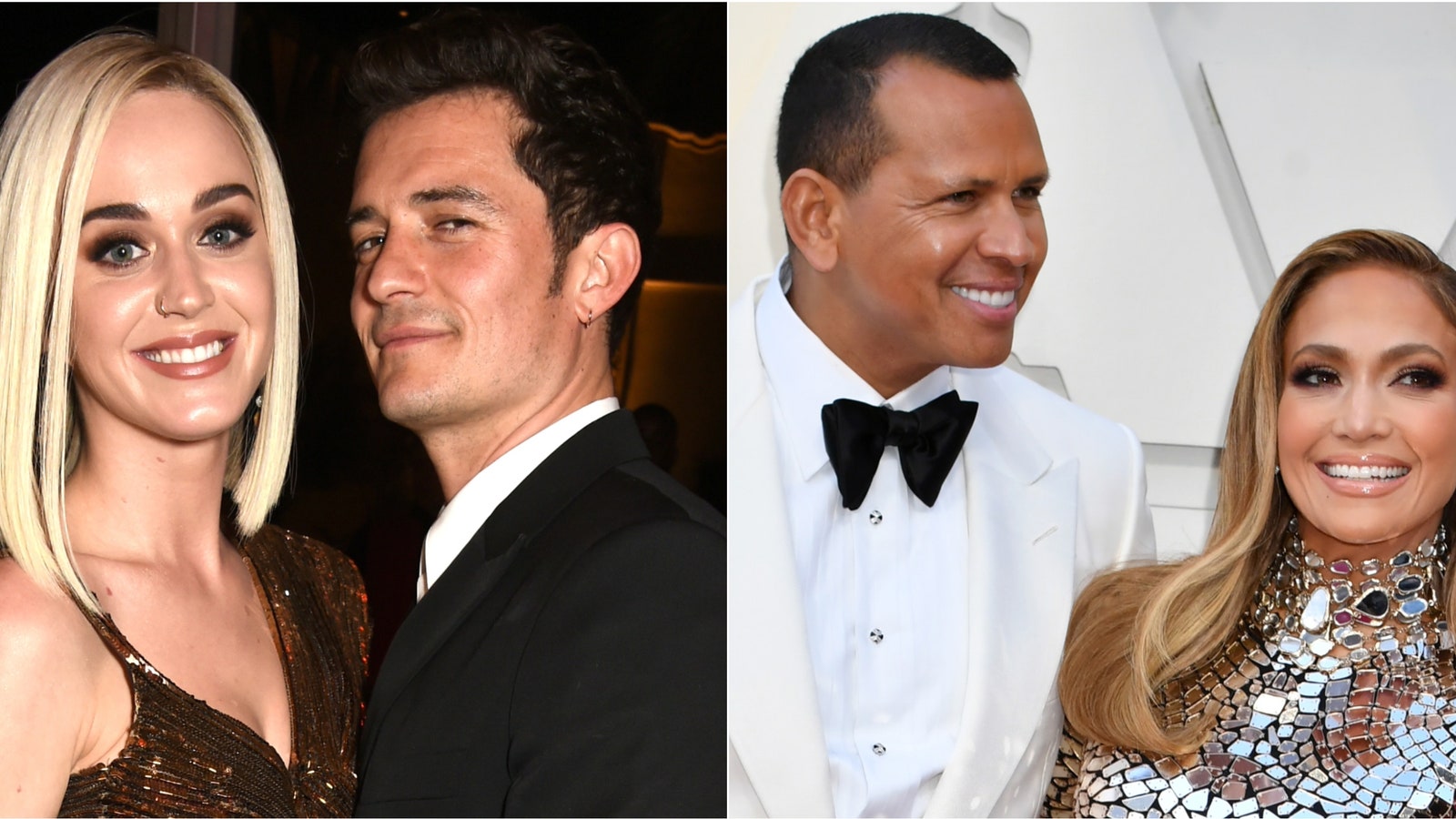
Ah, celebrities…most of the time they’re not just like us, but this is one scenario even A-list couples like Jennifer Lopez and Alex Rodriguez or royal fiancés like Princess Beatrice and Edoardo Mapelli Mozzi can’t avoid. Here is an ongoing list of famous lovebirds who will be postponing their luxurious wedding festivities until a later date.


Source link

Categories
Health

‘Will My New Relationship Survive the Pandemic?’


The last time I went out with Nick*, it was clear that things were not right. I don’t mean between us—although yes, there too, if I’m being honest. I mean in the world.

It was Tuesday, March 10, and the only reason I was even free to see him that night was because a gathering I’d planned had been postponed due to fears of the coronavirus. (At the time, the decision to delay had still felt a touch hysterical.) Earlier that day I’d told my boss that I was no longer totally comfortable taking the subway at rush hour and so would prefer to work from home “for the next little while.” But as a longtime freelancer, I’ve always preferred to work from home. It didn’t exactly feel like a sacrifice.

I had a vague idea that we weren’t really supposed to go out to eat. But because my daughter would soon be returning to our apartment with her sitter, and Nick lives in a relatively distant part of Brooklyn, we couldn’t really think of a good alternative. We squabbled, briefly, over whether it would be safer to visit a small restaurant (fewer people) or a big one (better ventilation) before settling on sitting in the backyard of a medium-size place in my neighborhood.

Nick is the first person I’ve dated since I decided to end my marriage, a little over a year ago. I waited six months before signing up for Bumble and then proceeded to go out with, on average, one man a month. Nick was the only one that I wanted to see a second time.

We are very different people—he is a Latino social worker from the Bronx with longstanding interests in Eastern religions and martial arts, while I am a Jewish writer from the Virginia suburbs with longstanding interests in literary fiction and popular culture—but I was drawn to him right away. He’s easy to talk to, and kind, and very, very handsome. He’s also extremely emotionally astute, which I suppose makes sense given his profession.

He told me early on that he’s looking for something “long-term,” and in theory, so am I. But I guess maybe I’m in less of a hurry to find it. I’m still healing from the dissolution of my decade-long marriage (a dissolution that is still ongoing, and leaving me with new psychic injuries at irregular intervals), and I’m the primary caretaker of a five-year-old, whom I feel comfortable leaving with a sitter two nights a week, max. The basic conditions of my life are suboptimal for falling in love, and that was before people started getting sick.

So I was fine with ignoring the things about Nick that I didn’t enjoy as much. Many of them were superficial, like the dad-ish leather jacket that he wore on several of our early dates. Some of them were not, like when he started texting me too often for my taste and with too much familiarity, before we’d been seeing each other for even two months. In that case, I pushed back: I felt as though he was trying to force, or perhaps fast-forward to, a level of intimacy that simply hadn’t been earned. Maybe I’m a little gun-shy because of my situation. But I also wanted to enjoy our limited time together for what it was. I didn’t want to feel I’d suddenly been plunged into a long-distance relationship. Mostly, though, the question I asked myself with regard to Nick was, “Do I want to see him again?” And the answer was always yes.

Now, though, that’s not an option. Even if we thought it was worth the risk—and it’s not clear to me whether either of us do, given that we are both carrying not only our own germs but those of our kids and, via them, our exes—I’m with my daughter nearly 24/7. Like lots of couples who hadn’t yet reached the move-in stage (and can’t, or won’t, jump ahead to it now), the only relationship that’s going to be available to us for the foreseeable future is one that’s socially distanced. And I’m not sure that’s going to work for us.

Our physical connection was immediate and, frankly, kind of intense—it’s been one of my most consistent sources of happiness over the last few months. And I think we’ve really relied on it to smooth over our conflicts; the last time we saw each other, on March 15, we stayed a responsible six feet apart while we ran the stairs in Fort Greene Park and, perhaps not coincidentally, were slightly less than thrilled with each other when we said goodbye. I was irritated that he’d disbelieved me about the cost and necessity of a decent pair of haircutting scissors, an utterly insignificant fact of which he has no personal knowledge, and he was hurt that I’d ended a discussion about something his ex-wife was doing by noting that it really didn’t sound like his problem, and it definitely didn’t sound like mine.


Source link

Categories
Health

Can We Please Stop Talking About Weight Loss During a Pandemic?


“Due to coronavirus, my summer body will be postponed until 2021.” Usually this kind of garbage only hits my feed when Jameela Jamil is ranting about #teatox. I’ve worked hard to unfollow any content that’s generally annoying or makes me feel like shit. But since the government issued its guidelines to shelter in place, there’s been a particularly insidious undertone to the posts popping up that I just can’t shake.

Despite the fact we’re going through an unprecedented health crisis, the prevailing message on social media right now is that we’re somehow supposed to be “making the most” of our time spent indoors. Write that novel! Organize your closet! Bake bread! Get quarantine fit!

Now, I don’t blame anyone for taking up a new hobby in order to distract themselves. You can only have so many conversations with your cat until you begin to feel completely deranged. But that last one—the idea that we should be using all this “extra time” to lose weight, or at least not gain any—moves beyond feeling productive and gives into a societal fear I thought we were moving past: Getting “fat.”

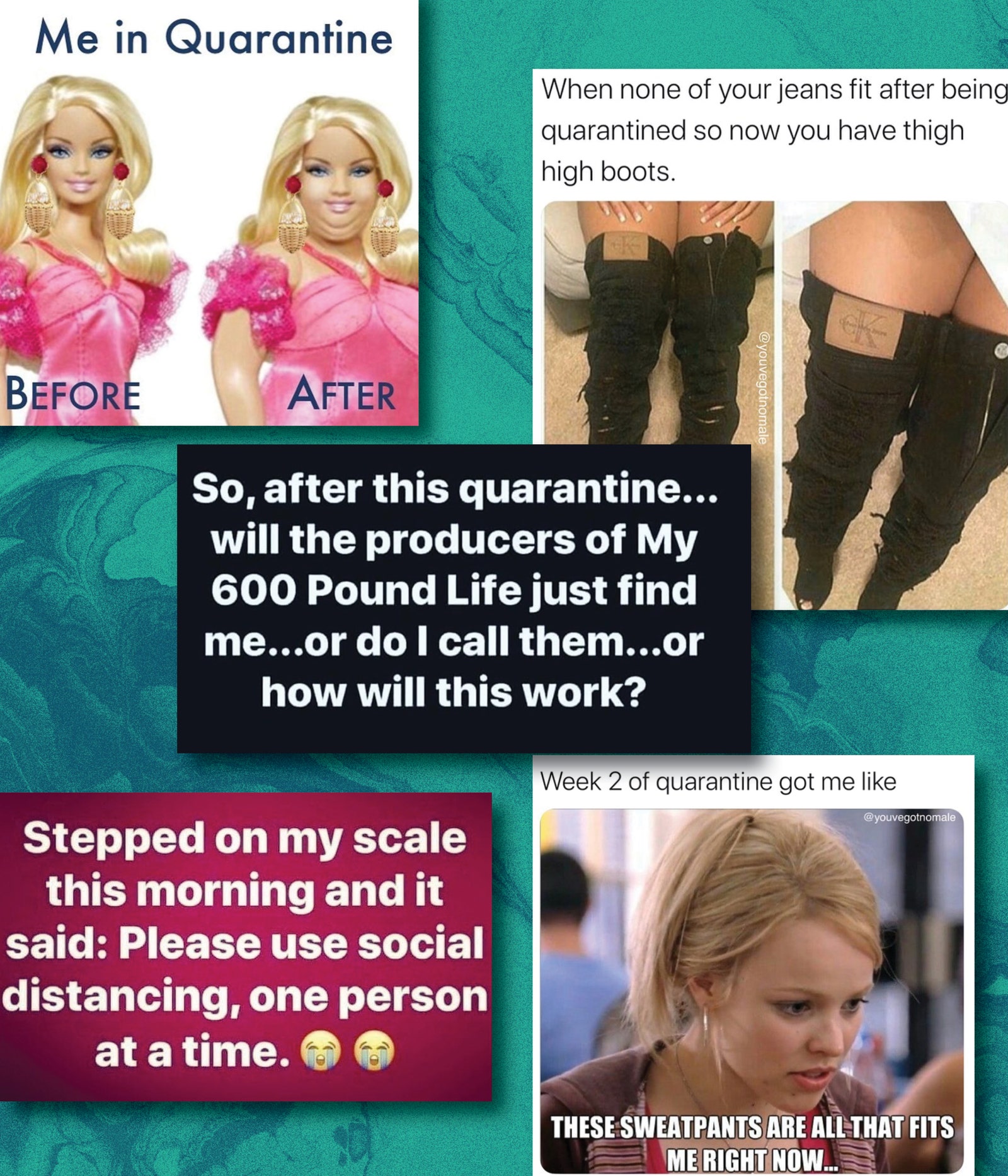
The collective fat panic I’ve seen as I scroll through social media is, frankly, appalling. “So will the producers of 600-Pound Life just find me or…” reads one meme that’s surfaced more times than I can count. A photo of Barbie next to a heavier “Carbie” (get it? She ate too much during quarantine? LOL!) has more than 120,000 likes on @girlwithnojob.

But it’s not just the obviously offensive fat jokes that meme accounts and out-of-touch influencers are posting. What’s more shocking are the dozens of frantic weight gain comments—almost all masked in sarcasm or wry self-deprecation—I’ve seen close acquaintances post. These are smart women—the ones who usually rally against diet-talk and fatphobia—that are sharing photos of cookies with captions like, “Going to have to buy a size up after this” or “Looks like I won’t be wearing jeans ever again.” Eating the pasta is what you’re worried about? OK.

A small sampling of the memes going around on social media right now.

Instagram

It’s not just within my circle of friends either. An alarming amount of people, it appears, are publicly broadcasting their fear that this time indoors will cause them to gain weight.

“I’m seeing so many memes that show before COVID-19 body and after COVID-19 body, or jokes comparing ‘COVID-15’ to the Freshman 15,” says Elizabeth Denton, an L.A.-based writer. “At first I chuckled, but then I thought about what that means. Whoever posted that thinks ‘fat’ bodies are funny or something to be ridiculed.”


Source link

Categories
Health

Why Is My Ex Texting Me During the COVID-19 Pandemic?


Like most of us, I’ve been sheltering in place since mid-March because of the Covid-19 pandemic. As I try to make sense of my new reality—balancing my indoor free time while working from home, constantly binging social and news media, managing mini midday anxiety attacks, debating whether a wine run is worth it—I’ve been relieved to discover a few acquaintances coming out of the woodwork to check in. What a small mercy it is to receive a kind message or hilarious meme from a friend. However, with the good, also came the unexpected—and uncomfortable. The welcome wave of old friends also washed in a few of my exes.

During the best of times, most of us could be called guilty of silently checking in on an ex on social media. During a time of global crisis, though, lurking seems to be on the rise. I occasionally take a moment to observe the list of instagram accounts that watch my stories. Mostly because I think it’s only fair to watch the stories of those who watch mine—simple reciprocity, you know? But last week, I was surprised to see a few ghosts from my past. In a way it’s flattering to know that an ex would want to keep track of my movements, although in reality it always seems to be the bad eggs that insist on lurking.

I’m not the only one with exes coming out of the woodwork in quarantine. I did a small survey among several women in their thirties and found that they too were indeed experiencing an uptick in outreach from exes and ex-lovers—some more cringe-worthy than others.

One friend of mine had an ex reach out who seemingly wanted nothing more than to strike up an idle conversation about his problems, which seems kind of nice. And also a little annoying. Emotional labor is a large part of being in a relationship—being someone’s rock, hearing them out, helping them process their feelings—but once the relationship is severed, that is no longer the ex’s responsibility. We’re all sympathetic to the fact that this is an incredibly complex and rough experience, but that’s what therapists and friends are for—not the ex-girlfriend you never appreciated.

There are apparently also some exes who feel a pandemic is the right time to absolve themselves of their relationship sins. Be weary of ex partners, reaching out now to apologize for all their wrongs in a time where there are almost no social consequences and reduced expectations. One friend I spoke to shared with me that her ex-husband emailed her to ask for financial forgiveness. When they were married they failed to pay taxes, and as a result jointly owe the IRS a fairly large sum of money. But since “the world is ending” he requested permission to stop paying his share. No, sorry, the world is not ending. It may feel that way, but it’s atrocious to think you can take advantage of a former partner, and put her in financial health in jeopardy.

Then of course there are the always awkward sexts from the ex. A friend shared with me that several of her ex lovers had reached out to flirt and she received a few botched sexting attempts. It’s a lonely time if you’re single, I get it. But that’s what the apps are for (apparently they’re thriving), leave your exes be.

Still, the impulse to reach out can be normal: “In times of stress and crisis our attachment style—the ways we relate to others in order to have our emotional needs met—can become activated leading us to reach out,” says Letizia Rossi, a licensed clinical social worker, based in New York. It’s a way to seek comfort and connection, she says, and “also to replay dynamics, helpful or otherwise, from our past that feel familiar to us.” That certainly explains the “how you doing?” text from the ex I haven’t spoken to in years and the sudden influx of “likes” on my Instagram posts from another ex I haven’t heard from in months.

And seeing an ex’s name light up your phone isn’t always bad. One of my dearest exes sent me such a heartfelt message inquiring about my safety and my family’s health that I nearly cried when I read it. It was a golden example of how beneficial it can be to treat former partners with tenderness and respect. Kudos to all the sensitive ex-lovers out there, that remember the names of all your family members and friends, and are genuinely concerned about their wellbeing.

At the end of the day, we’re all experiencing an extremely stressful and anxiety amplifying global event, it’s only natural to want closure or satisfaction. Maybe it’s actually the most healthy thing a person could do in this situation. After I spent some time mulling this over, I couldn’t resist reaching out to a couple exes myself. What’s wrong with letting people know that you’re thinking about them? As long as it’s tasteful—and doesn’t involve sexting.


Source link