Categories
Health

The ERA Passes in Virginia, Paving the Way for Its Passage Nationwide


Watching that decision on TV, hearing friends and classmates debate what the precise restrictions on her rights should be—that was the moment when Foy decided to go to the Virginia Military Institute. “I had a friend,” she said in an interview, “who told me he wanted to go with me to the VMI to watch me fail. He bet me a dollar I wouldn’t graduate.”

She didn’t fail. She graduated, even when all the men from her JROTC had dropped out. “I did everything those men did,” she said. “I put on that uniform. I fought with them. I graduated with them.”

Foy understands a battle. She’s worked as a public defender, and she campaigned for her seat in the Virginia House of Delegates pregnant with twins. She’s also a black woman in a world where black women are disadvantaged not just compared with white men but with white women—earning 50 cents to the white man’s dollar (less than white women do) and suffering from maternal deaths at a higher rate than white women.

The stakes of the Equal Rights Amendment are real to her, and so she took the fight to the House of Delegates. To pass a constitutional amendment, the effort needs to be ratified in 38 states. The ERA was first proposed in 1923, and the battle to see it implemented has taken every single one of the years since. Some states have rescinded their ratification. Others have pushed off the debate around it. Congress set an initial deadline for 1979 for ratification for the ERA. The deadline was extended to 1982. Of course, even that deadline has since passed, but whether those deadlines are enforceable or not is still a question. (The 27th Amendment, for example, was ratified almost two centuries after it was first passed.)

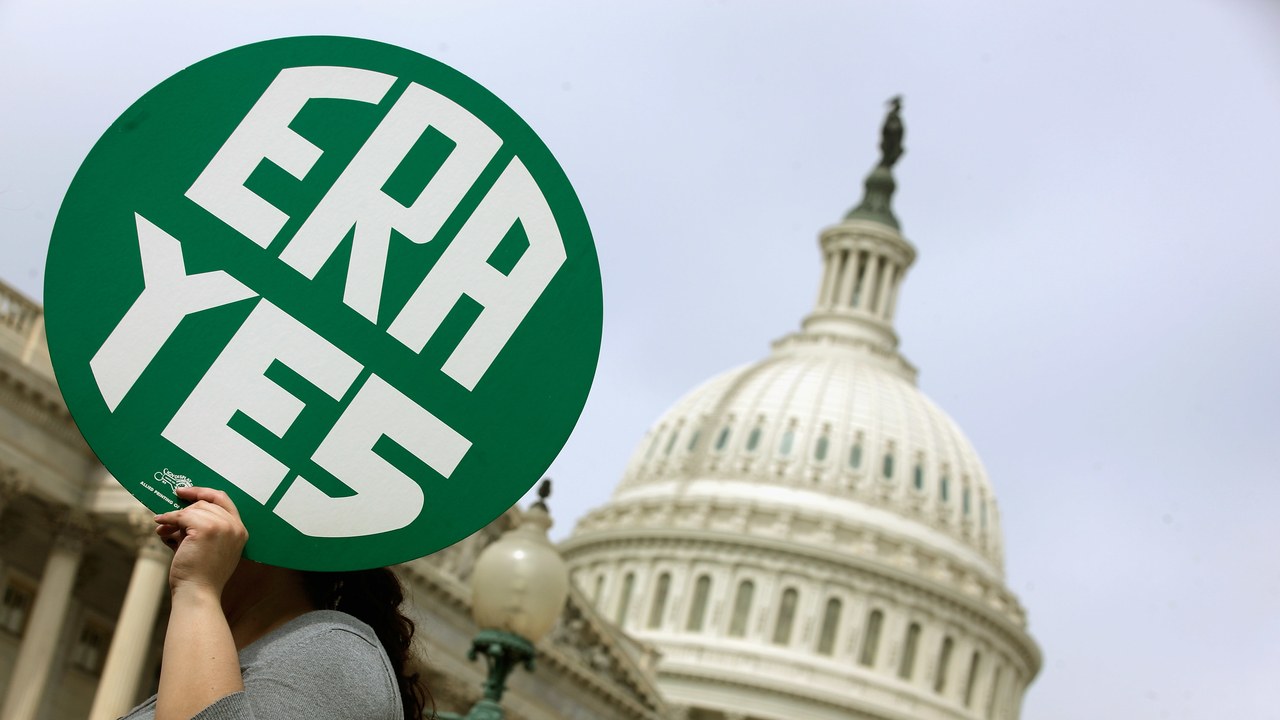
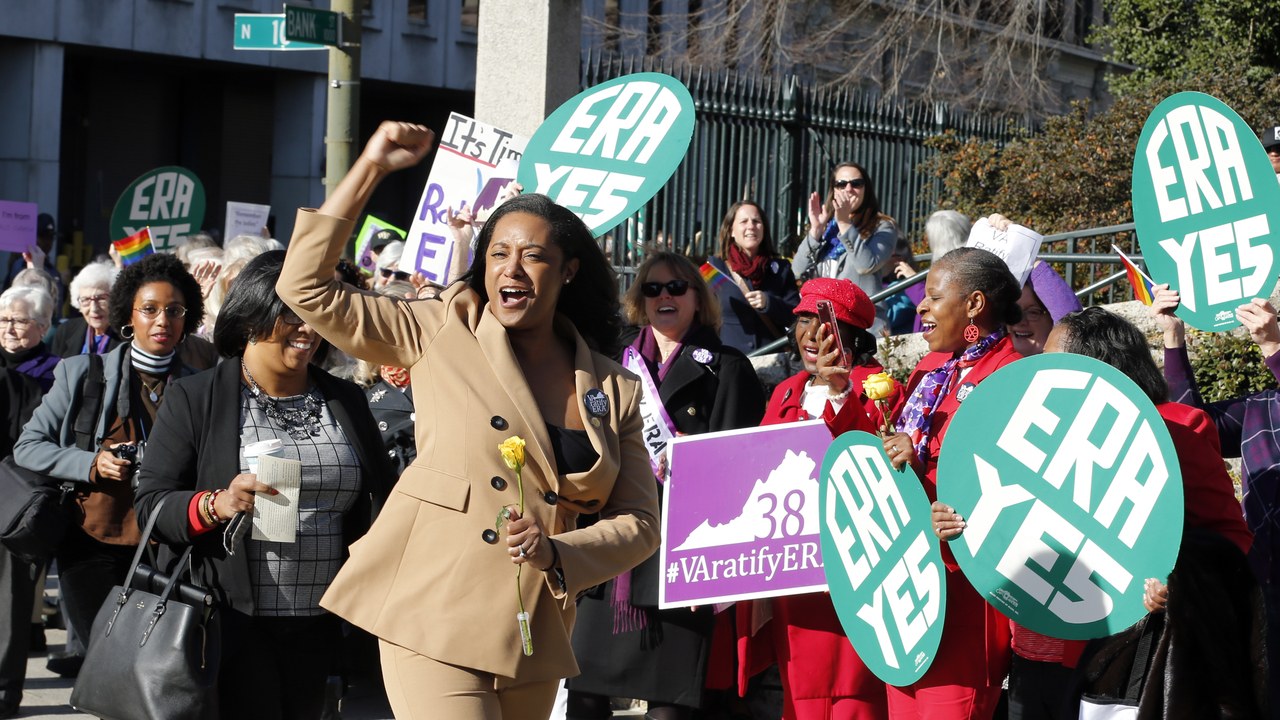
Even in the face of such headwinds, Virginia is now the 38th state to back the ERA, securing its ratification on January 15, 2020. The amendment states: “Equality of rights under the law shall not be denied or abridged by the United States or by any State on account of sex.”

With an unclear road ahead to formalize this much anticipated development, the passage of the ERA in Virginia is at the moment a symbolic victory. But it’s not an empty one.

The erosion of equal rights is happening under this administration. Recently, 207 Republican lawmakers signed an amicus brief asking the Supreme Court to reconsider Roe v. Wade, the decision that legalized abortion nationwide. In some cases, Roe is all that stands between women and regressive laws like fetal-heartbeat bills and the continued effort to defund Planned Parenthood clinics. In Iowa, where I live, the governor announced her intention to pass an amendment to the state constitution that would prohibit abortion. There are also laws in Iowa that bar trans women from access to medically necessary surgery covered under Medicaid.

“Our rights,” said Foy, “should not hinge on an election.”

I don’t need to imagine a world in which women are not treated like equal citizens. I live in it. And it’s not hard to picture how it could get worse. Because it used to be worse. Last year my mother sent me a copy of the divorce decree from one of my relatives who dissolved her marriage in the 1940s. The decree forbade her to get remarried without the consent of a judge. My mom can remember a time when women couldn’t get home loans or open up lines of credit without their husband’s consent. In The Handmaid’s Tale, Margaret Atwood warned us of a near future in which women have no rights to their bodies at all. I can see that world too.


Source link

Categories
Health

Virginia Delegate Jennifer Carroll Foy Addresses Statewide Controversies


I do believe that forgiveness is possible. I believe it’s possible to be remorseful. I believe in due process, of course. But I don’t know if apologies or denials are enough for Virginia at this moment. Most of us have, I think, reached the point where we have enough information. At least in the cases of Gov. Northam and Lt. Gov. Fairfax, these men are not in a position to continue to lead.

As a black woman, this is a hard situation. You feel betrayed. When a white woman who was the victim of sexual violence came forward against Brett Kavanaugh, it was kind of like a unanimous call for him to withdraw from consideration. He was confirmed, but the Democrats were pretty unified. But when it was a black woman who came forward with allegations against Justin Fairfax, the call has not been as resounding. Some African American women take great offense to that.

At the same time, this is where I see real possibilities for change, because conversations about that dynamic are happening at a magnitude that I cannot remember here in Virginia. Earlier this week a person called me and she said, “Jen, I just want to apologize.” And I said, “Why?” And she said, “As a white woman, I now understand that racism is still here. Some people believe that because we had Barack Obama as president and we have Cory Booker and Kamala Harris in the race for president, we have reached a pivotal point, the worst is over.” And she said, “Now I know we have not. I also suffer from some prejudice, I’m sure. I’ve had conversations about it and I am working to do better.” That she apologized—that’s never happened to me before. So if we can use this as a real opportunity to have candid discussions about race and gender and sexual violence and racism and white privilege, I think that can benefit us when we do come out of this.

We have worked as Democrats to acknowledge the hurt that casual racism can cause. But it’s not just about offensiveness or these racist tropes. We have to connect it back to how racism can hurt our constituents, how sexism harms people. These are not “interpersonal issues.” To me, the best way I can address these scandals is to introduce legislation that works to end some of the structural racism and sexism that holds us back. That’s the role I want to step into.

I talk about the need for Equal Rights Amendment, which is about the end of sex discrimination. It’s about equal pay for equal work. It’s about the wage gap. When I talk about legislation to address black women maternal mortality rates, which are higher in the United States than in most other developed countries, that’s about racism. And that racism is killing black mothers. Wage disparity, protections for the LGBTQ community, programs for the poor, for veterans, and on and on. We call out blackface and discrimination and hate because it affects people’s lives. And the antidote is not just statements, but legislation.

That is my job. That’s what I’m charged to do. That’s my passion. When I see unfairness, inequalities, and injustice, that’s what motivates me.

I have seen some conversation around whether I should have a role in statewide leadership. I feel flattered that people have taken notice of the work I do. It reassures me that I’m doing a good job. Bottom line, I’m here to do whatever Virginia needs to move forward. Whatever the party needs or requires of me, then that’s exactly what I will do.


Source link

Categories
Health

Virginia Prisons Are Banning Female Visitors From Using Tampons


A new policy brought forward by the Virginia Department of Corrections, which says women cannot wear tampons if they are visiting an inmate, is raising eyebrows of many who believe it to be a violation of privacy and health rights.

Beginning next month, any woman visiting an inmate at one of the state’s prisons will be barred from wearing a tampon or a menstrual cup. Instead, they will be offered menstrual pads.

The department says that the rule is necessary in an attempt to cut down on contraband entering the prison. “If someone chooses to visit a Virginia Department of Corrections inmate, he or she cannot have anything hidden inside a body cavity,” Department of Corrections spokesperson Lisa Kinney told the Richmond Times-Dispatch. “There have been many instances in which visitors have attempted to smuggle drugs into our prisons by concealing those drugs in a body cavity, including the vagina.”

Female staff members and prisoners’ attorneys are exempt from the policy.

In a letter sent to visitors and inmates at the Nottoway Correctional Center last week, Warden David Call said the policy stems from concerns that feminine hygiene products could be “an ideal way to conceal contraband.”

Opponents of the policy fear that it will further complicate the visiting process for families of inmates. And just think about how a young woman would feel in this situation, having her privacy violated over a natural bodily function.

Claire Guthrie Gastañaga, executive director of the ACLU of Virginia, said in a statement that “a policy like this one that requires those who wish to visit people who are incarcerated to set aside their dignity and health is simply unacceptable.”

“We call upon Department of Corrections Director Harold Clarke to immediately clarify DOC policy for visitors at all state prisons and to direct wardens at the Nottoway Correctional Center and other facilities to reverse any policy or practice that limits the visitation rights of visitors who are menstruating without regard to which hygiene product they choose to use,” the statement continued.

“That’s such a violation,” Jana White, a co-founder of the Virginia Coalition for the Fair Sentencing of Youth told the AP. “I can’t understand why we, the loved ones, have to go through this.”

Related Stories:

Inside a Radical Experiment to Transform the Lives of Incarcerated Women

Alice Johnson Is Free, But Is the Trump Administration Actually Committed to Criminal Justice Reform?


Source link

Categories
Health

Virginia Kase's Midterm Plan: Make It Easier for Women to Vote


Nearly 26 years after Virginia Kase voted in her first election, her voice still rings with the hurt and frustration she felt that day. “I [was] excited. It [was] this great rite of passage [and] I go to the table to register, and I look over and my mom’s having a problem.”

While it was the first time Kase, now 46, had ever set foot in a polling station, her foster mother—originally from Puerto Rico—was a regular voter. Still, Kase said, “Her English wasn’t perfect. Sometimes people didn’t understand her. So I went over to make sure she was okay and able to communicate… They were asking her for proof of residence. And I was horrified.”

Now, in her first interview as the incoming CEO of the League of Women Voters, Kase told Glamour that the memory of feeling powerless to intervene on behalf of her own mother brings a deeply personal dimension to her new mission: Helping as many Americans as possible exercise their right to vote.

“I never want anybody to have to go through what my mom went through,” Kase said during a phone conversation.”She was able to vote that day. She went home, she got a utility bill, she came back, she slammed it on the table, and she made sure that her vote counted… But there are a lot of women who don’t have that same comfort with going back and doing what they need to do.”

Kase comes to the League with a track record of work with organizations focused on immigrant and civil rights. Until mid-July, she’s COO of CASA and CASA in Action, where her responsibilities range from political strategy to collective bargaining. (Her tenure at the League begins July 25.) No stranger to politics, her background also includes years spent with organizations that addressed youth gang violence and fostered career training in her hometown of Hartford, Connecticut.

She joins the nonpartisan League—founded in 1920, the same year American women won the right to vote—in the sprint to November’s crucial midterm elections.

“I think that women are going to do tremendous things this year. It’s a unique time in our history,” Kase said.

The League claims more than 300,000 members and supporters spanning all 50 states. It promotes voter registration and education, opposes policies it identifies as voter suppression, and supports reforming campaign finance and gun laws.

“One of the things [that] drew me to the League— in addition to [the] historic significance of this amazing organization that is nearly 100 years old—is this renewed focus on diversity, equity and inclusion,” she said. “Lifting up women of color [and] also bringing more young women into the fold [are] two things that for me are extremely important.”

A wealth of research suggests requiring photo ID or even proof of citizenship can have an outsized impact on minority, young, and low-income voters. The strictest proposals, championed in the name of election integrity, have run into trouble in the courts; President Donald Trump’s own claims of widespread voter fraud remain unproven.

“It’s extraordinarily important that we make voting as easy as possible. We don’t want to create barriers,” Kase said. “It’s unjust, and something that the League will continue to fight against to ensure that everybody is able to exercise their Constitutional right to vote.”

Kase, now herself a mother of two, says her first vote back in 1992 was the moment when she “realized that my perfect English, the way that I look, was different from my mom. [It] really showed me the privilege that existed within me, and that I needed to do something about it.”

The University of Maryland graduate will bring that memory to the new job—along with the backstory of coming up in Hartford at a time when youth violence was so bad that a National Guard-run program for high school dropouts was shut down after being overrun by gangs. “I grew up in a community where people went to jail,” says Kase. That experience shaped her interest in another goal: Restoring voting rights to people who have lost them after a felony conviction.

But, with all the work of engaging women voters and helping them exercise their right ahead of her, does Kase believe American politics can really be changed by the so-called “pink wave?”

“I hope so. I think the wave has been coming for a long time. Even since before Donald Trump, women are educating themselves [more] on the issues, and you have organizations like the League [that] are focused on making sure that people have the right information,” she said. “I do hope that people turn out in record numbers this year, [just] as we [are seeing] more women run for office this year than in years before… Certainly, we’re gonna work our butts off to make that happen.”


Source link

Categories
Health

Primary Takeaways: A Big Win for Democratic Women in Virginia and a Sexist Narrative in North Dakota


Another round of primary elections meant more big wins for women this week, notably in the commonwealth of Virginia where there are no Democratic women in Congress currently.

But Tuesday night may have changed that, come November.

Democratic women won three House primaries in Virginia last night. This is just the latest example of the party’s surging female demographic in the Trump era.

  • Democrat Jennifer Wexton, a state senator, now goes up against vulnerable incumbent Republican Rep. Barbara Comstock in VA-10.

  • Democrat Abigail Spanberger, formerly of the CIA, will challenge Tea Party sensation Dave Brat, who famously won his VA-7 seat by knocking out former House Majority Leader Eric Cantor.

  • Democrat Elaine Luria’s primary win gives her a shot at unseating GOP Rep. Scott Taylor in a VA-2 general election battle between two Navy veterans. (Another Democratic woman, Leslie Cockburn, previously locked up the VA-5 nomination at the party convention; a book she wrote with her husband years ago on US-Israeli relations has led to questions about whether she is anti-Semitic.)

Also in Virginia, former Hillary Clinton running mate, Tim Kaine, will compete for re-election to the U.S. Senate against controversial GOP nominee Corey Stewart, who’s best known for things like defending Confederate monuments and appearing with Jason Kessler, organizer of the Charlottesville white nationalist rally during which counter protester Heather Heyer was hit by a car and killed.

There’s a sexist narrative brewing in North Dakota:

In another notable win, North Dakota Democratic Senator Heidi Heitkamp will now go on to face GOP Rep. Kevin Cramer in a bid for another term. Heitkamp is already in a tense situation just based on the numbers, given that Donald Trump won her state by 36 points and she’s trying to keep her job while balancing her relationships with both her president and her party.

But there’s an added layer to the story framed around Heitkamp’s interactions with Trump—and the fact that she’s a woman. Per a Washington Post report, Cramer is upset that the president gave Heitkamp a shout-out and a handshake at the recent banking bill signing. He also accused her of being “insecure” and trying to stand as close to Trump as possible during the event.

“Have you ever watched the video? It’s obscene,” Cramer told the Post.

Taking it a (sexist) step further, he insinuated that the President’s treatment of Heitkamp is based on the fact that she is a woman. “I do think there’s a little difference in that she’s a woman,” Cramer said. “That’s probably part of it — that she’s a, you know, a female. He doesn’t want to be that aggressive, maybe. I don’t know.” Bear in mind, Trump has had no qualms getting politically aggressive with women in the past. Just ask Hillary Clinton, Elizabeth Warren, and Kirsten Gillibrand.

Or Claire McCaskill, as Heitkamp herself points out. “Well, that wouldn’t explain Claire. I think she’s a woman, right?” Heitkamp said of the Missouri Democratic Senator, whom Trump has criticized. “That theory falls apart almost immediately.”

Needless to say, this race will be an interesting one to watch over the next few months.

Here are the other primary results you might have missed from around the country:

In South Carolina, Rep. Mark Sanford conceded a close GOP primary in which Trump had endorsed his challenger, Katie Arrington. Trump hate-tweeted against Sanford while the polls were still open, reminding SC-1 voters of the weird scandal in which Sanford (then the married governor of South Carolina) went off the grid and lied about being on a hiking trip when he was really hanging with his girlfriend in Buenos Aires. Arguably, it was an ironic line of attack for a president who has been married three times and repeatedly called to task for infidelities, but the Sanford upset might also highlight the price Republicans can pay in the 2018 midterms for being critical of Trump.

Also in South Carolina, Democrat Archie Parnell won a four-way primary for the chance to go up against GOP Rep. Ralph Norman in November. This is all despite his admission that he abused his ex-wife 45 years ago in an incident she said made her fear for her life and which led to their 1974 divorce. The Democratic Party and Parnell’s campaign staff shunned him after his history came to light, but he says his SC-5 win shows people believe, “You don’t have to be defined by your worst mistake. You don’t have to be cast aside. You are not alone. You can be better. And, together, we can be better.”

In Maine, Janet Mills is currently leading in the Democratic primary for governor. Mills is the first female attorney general of Maine and, if elected governor in November, would be the first woman to hold that office. However, Maine is trying out ranked-choice voting for the first time in this race, and a winner hasn’t been called yet. (Under this setup, also known as the instant runoff system, voters pick a first choice, a second choice, and so on. If no candidate wins an outright 50% of the vote, they distribute the votes of the candidates at the bottom of the list until someone gets a majority and is declared victor.) Elsewhere, the mayor of Waterville, Maine survived a recall vote after having tweeted “Eat it” at Florida student David Hogg while sticking up for Laura Ingraham amid the ad pullouts generated by her post-Parkland remarks about guns.

In Nevada, Democratic philanthropist Susie Lee will go up against GOP businessman and repeat candidate Danny Tarkanian to fill the NV-3 House seat of Democratic Rep. Jacky Rosen, who is now her party’s nominee to topple incumbent GOP Senator Dean Heller. That could be a tough race for Heller, who is seeking re-election as a Republican in a state that went for Hillary Clinton in 2016.

And so, the march to the November mid-terms continues.


Source link