Categories
Health

The Brutal Reality of Getting an Abortion During a Pandemic


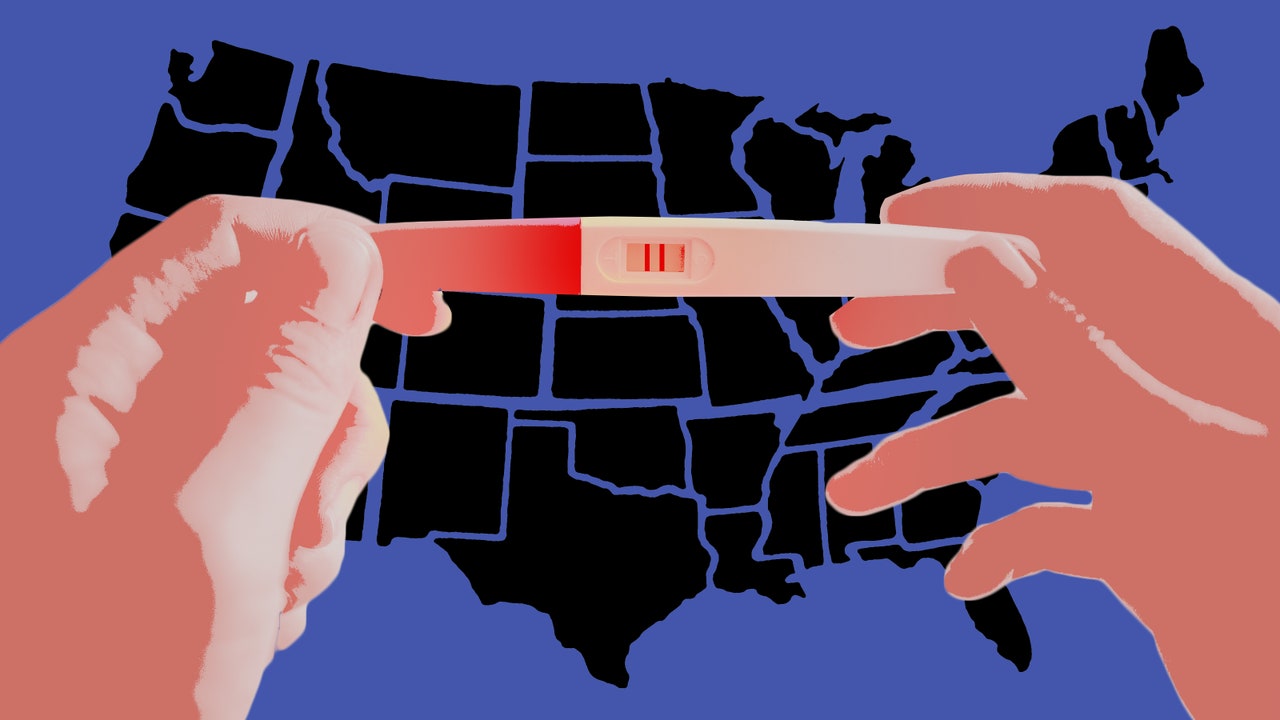
Many states, such as Texas, require women to make two trips to a clinic to access medication abortion. “These restrictions are medically unnecessary all the time, but now put patients and providers at risk unnecessarily through additional and medically unnecessary face-to-face contact,” says Smith. That’s become another claim states are using in their fight to restrict abortions. “It is clear that Texas is using the COVID-19 pandemic as cover to further its goal of prohibiting abortion.”

There are glimmers of hope: federal judges in Alabama and Ohio recently blocked orders banning nonessential medical procedures from limiting abortion access during the coronavirus outbreak. However, these blocks are only temporary, with Ohio’s order lasting until April 13, giving women only a short timeframe to get the access they need. In the case of Texas, federal judges also tried blocking orders limiting abortion, but their efforts had been overturned by an appeals court as of March 31st.

Even for women who can access abortion care during the coronavirus outbreak, the procedure can be expensive. Like many health insurance providers, mine does not cover abortion, which forced me to shell out $550 of my paycheck. I’m privileged to be able to work from home during this time, but millions of women have lost their jobs, making the financial burden of an abortion too much to shoulder.

By many accounts, I faced the “best” possible situation: abortion clinics in my state were still operational, I was able to access a clinic while following social distancing guidelines, there were no mandatory waiting periods that forced me to visit more than once, and I remain employed with a steady stream of income.

Still, I can’t ignore the trauma I faced in order to get an abortion in the middle of a pandemic.

Like many women during the best of times, I had to call gynecologist after gynecologist to find someone who took my health insurance (a form of Medicaid that isn’t accepted by many doctors) and could squeeze me into their schedule as soon as possible. And when I finally found one who would see me, the whole process was put into hyper-speed since no one knew if the federal government would force clinics nationwide to shut down. There was no time to process what was going on. Some nurses seemed to treat me more as a walking germ to be cautiously handled than a patient. One turned to me and said, “I really wouldn’t want to be you right now.”

The comment stung, but in a way she was right: I really didn’t want to be me at that moment.

I wanted to opt for a dilation and curettage procedure, also known as a D&C or “surgical abortion.” But with the future of access to care in the age of COVID-19 so uncertain, the clinic suggested I have a medication abortion so I could have same-day access, rather than taking a risk and scheduling a future appointment for the procedure. I was lucky to even have an option—I was still in the early stages of my pregnancy, so either method was feasible, but I preferred the D&C procedure because the abortion pill can have more side effects and a somewhat lower success rate.

The abortion pill was not easy on my body: I spent days throwing up, heavily bleeding and experiencing “labor-like” cramps, all possible side effects of the medication. At one point I fainted in my bathroom from the pain. This isn’t necessarily common, but in my case, the cramps and nausea proved too much for my body to handle all at once. [Editor’s note: Experience of side effects may vary but if you experience nausea, vomiting or a fever for more than 24 hours, you should call your doctor, according to Planned Parenthood.] The physical complications mixed with the emotional toll and burden of trying to keep my abortion a secret as I quarantined with my family felt like mental torture. I felt so alone, and while I had a small group of friends as close as a click of a button on my phone, I wish I was able to have someone physically hold my hand during this time.

It’s been almost two weeks since I had my abortion, and even with the trauma I’m left to live with, I don’t regret a single step I took. Yes, it was the hardest thing I’ve ever had to go through, and having to navigate this journey while the world—and me—is in a state of valid paranoia made it that much harder. To have gotten the procedure I needed, when so many women cannot, and to be able to sit still and take this time to heal in the comfort of my childhood home is the only silver lining in this situation. After going through all of this, I’m a little more hopeful that everything will, eventually, be okay. Maybe not soon, but one day I’ll be able to fully heal from the trauma of my abortion, and the world will heal from this pandemic.

But for now, all we can do is take it one day—and one Lysol wipe—at a time.

At the author’s request, we’ve omitted her last name to protect her privacy.


Source link

Categories
Health

How Beauty Brands Are Giving Back During the Coronavirus Pandemic


The coronavirus pandemic has altered pretty much every facet of American life. We’re all working from home, schooling from home, and washing our hands like never before. Across the country, citizens and businesses are doing what they can to help—including many of the major beauty brands that have started using their facilities and factories to produce much-needed hand sanitizer, and even ventilators in the case of Dyson.

Here’s a list of all the beauty companies lending a hand during the coronavirus crisis:

Kylie Cosmetics

On March 31, the company announced that in addition to the $1 million Kylie Jenner donated to health care professionals on the front lines, she and Kris Jenner have partnered with Coty—a beauty conglomerate that owns a major stake in Kylie Cosmetics—to manufacture hand sanitizers for hospitals in Southern California. “The hand sanitizers will be donated to the emergency and health care workers caring for patients on the front lines of the current COVID-19 public health crisis,” a representative said in a statement. “The custom hand sanitizer includes a special message for recipients: ‘Dedicated to first responders working to support our communities.’ Both Jenners have shown support and been outspoken with guidance on social media since the start of the COVID-19 pandemic. With this donation to Southern California health care workers, Kris and Kylie are taking extra steps to provide help directly to those who need it most on the ground.”

Avon

The beauty brand is donating personal care boxes to Feed the Children, which will go to families in need. “As a response to the spread of COVID-19, this month, Avon is sending $2 million worth of essential personal care and hygiene products like soap, body wash, and skin care, to Feed the Children to ensure that we’re doing our part to support the community during this unprecedented time,” a representative for the brand said in an email. “Feed the Children works closely with community partners who serve the most vulnerable of populations. Through that network we are intimately aware of the needs of the community. Feed the Children’s goal is to provide vital resources to keep these families consistently afloat.”

Tan-Luxe

The self-tanner brand is pivoting its production to focus on 10,000 bottles of hand sanitizer housed in the brand’s existing packaging. The hand sanitizer will be donated to those on the front lines, and the brand turned to social media on Friday to ask its followers to nominate those in need. “As a business, we have been deeply moved by the devastating impact the ongoing situation is having on the world,” the brand’s founder, Marc Elrick, said in a statement. “I want to ensure that we are doing all we can to help the front line–it’s more important than ever that we work together to overcome during what is set to be an extremely difficult time. I am proud to announce we have created Hand Luxe exclusively for those who continue to work hard to protect us during this period. These are not available to buy at this time–they are being donated free of charge to health workers and the NHS in tribute to the phenomenal work they are doing for the country.”

Estée Lauder

The company announced on March 24 that it will reopen a manufacturing company in Melville, New York, to produce hand sanitizer for health care personnel. “The Estée Lauder Companies is proud to contribute to the broader COVID-19 relief efforts by reopening our Melville manufacturing facility this week to produce hand sanitizer for high-need groups and populations, including front-line medical staff,” a spokesperson for the company told WWD. “We are grateful to our employees who have worked tirelessly to make this possible. Compensated, employee volunteers will support this vital, meaningful effort.”

L’Oréal

The beauty brand is using its factories to produce hand sanitizer and hydroalcoholic gel to distribute throughout Europe. “In this exceptional crisis situation it is our responsibility to contribute in every possible way to the collective effort,” Jean-Paul Agon, L’Oréal chairman and chief executive officer, said in a statement to WWD. “Through these gestures, L’Oréal wishes to express its appreciation, support, and solidarity with all those who mobilize with extraordinary courage and abnegation to fight against this pandemic.” The Foundation L’Oréal is also donating 1 million euros to the associations working to help those most disadvantaged during the crisis.

LVMH

The beauty and fashion giant, which owns brands like Dior and Givenchy, was one of the first major companies to announce it was switching gears in its production lines to start making hydroalcoholic gel. “Through this initiative, LVMH intends to help address the risk of a lack of product in France and enable a greater number of people to continue to take the right action to protect themselves from the spread of the virus,” the company said in a statement. “LVMH will continue to honor this commitment for as long as necessary, in connection with the French health authorities.”

Unilever

On March 25, Unilever (the parent company of brands including Dove and Tresemmé) announced its “United for America” initiative, which will include donations of food, soap, and personal-hygiene and home-cleaning products, a partnership with Feeding for America, the donatio of more than 200,000 masks to New Jersey hospitals, and a National Day of Service on May 21 to provide an estimated $12 million of support for Americans in need. The company is also offering $540 million of cash flow relief “to support livelihoods across its extended value chain through: early payment for its most vulnerable small- and medium-sized suppliers, to help them with financial liquidity; and extending credit to selected small-scale retail customers whose business relies on Unilever, to help them manage and protect jobs.”

Dyson

The company behind the mega-popular hair-dryers and vacuum cleaners has pledged to produce 10,000 ventilators to aid patients battling the coronavirus in the U.K. “A ventilator supports a patient who is no longer able to maintain their own airways, but sadly there is currently a significant shortage, both in the U.K. and other countries around the world,” James Dyson said in a statement. “Since I received a call from Boris Johnson 10 days ago, we have refocused resources at Dyson, and worked with TTP, The Technology Partnership, to design and build an entirely new ventilator, The CoVent.”

This new device is a box that attaches to a hospital gurney and is built using the technology of the brand’s digital motor. There are also plans to contribute 5,000 donated CoVents to “the international effort.”

Orly International

The nail polish and nail-care brand announced its Los Angeles factory will make 75% -alcohol hand sanitizer. “As a family-owned brand, we’re very lucky that we have our manufacturing plant right here in Los Angeles, so we can reconfigure to produce large quantities of hand sanitizers at this time of need,” founder and CEO Jeff Pink said in a statement. “For 45 years, our company has always created products based on our community’s needs, and right now, hand sanitizers are vital to helping reduce the spread of this devastating pandemic and to help keep everyone safe.”

Coty Inc.

The beauty conglomerate (which is the manufacturer behind makeup and fragrance brands such as CoverGirl and Gucci perfumes) is the latest to dedicate its manufacturing services to the production of hydroalcoholic gel for medical and emergency services personnel. “As a responsible beauty company, we make our resources and facilities available to help the communities we are operating in during these exceptionally challenging times,” CEO Pierre Laubies said in a statement. “We are proud to support the brave professionals fighting on the front lines against COVID-19 by providing hand sanitizer where it is needed.” The first batches should start being produced by April.


Source link

Categories
Health

Can You Have Sex During the Coronavirus Pandemic? An Investigation


Living during an international health crisis brings up unexpected quandaries: Should you Lysol your bean cans? Is air safe? Can you have sex during the coronavirus pandemic?

The unprecedented health crisis has, in a few short weeks, upended life as we know it. For Americans, it started as just a few disturbing headlines, which quickly turned into handwashing guidelines, which escalated into the proliferation of the phrase “social distancing.” Now 23 states as well as many additional towns and counties—covering about 6 in 10 Americans, the New York Times estimates—have instructed people not to leave their homes, except for solo exercise and absolute necessities. On Thursday, March 27, officials reported that the United States has the highest number of confirmed cases of COVID-19—the disease caused by coronavirus—of any country.

Naturally, with all the time cooped up indoors, people are wondering, Can we still have sex? Well, let’s look at the facts:

Scientists know—and have told us repeatedly—that coronavirus is spread mostly person to person, mostly through respiratory droplets. That means: The fine mist that surrounds you when a tall person sneezes, the cool spritz of your fellow subway rider’s cough, the tiny drop of your spit that accidentally, horrifically, lands on the chin of the person you’re talking to at a cocktail party, that you both heroically try to ignore. Even if you don’t have a cough—or even if you have one but you’re really good at covering it!—when humans come into contact, we get spit and snot on each other. We have a habit of breathing on each other. And sadly, this is how scientists believe coronavirus is spread.

“You should avoid close contact—including sex—with anyone outside your household,” the New York Health Department wrote in recently released guidelines. “Kissing can easily pass COVID-19.”

Listen. Nothing pains me more than reporting that health officials are warning people off sweaty, spitty, in-person sex—or anything, sexual or otherwise, that brings people within feet of each other. One day, sex gods willing, the number of COVID-19 cases will significantly abate, and people will consensually spit, lick, and sensually cough on each other once again. Face touching will be foreplay. Sloppy kissing will become tinged with a feeling of erotic risk. Until that time, insofar as sex traditionally involves a person being less than six feet away from you, it may have to wait.

But what if the person in question is your partner, who perhaps sleeps in your bed, shares your meals, and sits less than one sneeze-length’s away from you throughout your eight daily Zoom calls? Or what if they’re a roommate who’s been giving you confusing need-to-pee feelings, and hasn’t been sick lately? Or what if you’re planning to break the six-feet rule and just need to know the safest way to do it? The New York Department of Health released an informative—and unintentionally, darkly funny—guideline on this topic.


Source link

Categories
Health

Guilty Pleasure? In the Middle of a Pandemic, Can't We Retire the Term for Good?


Romance novels, associated with women, are derided as formulaic and predictable—the ultimate guilty pleasure. Mysteries and thrillers have a set structure, too, but remain popular with men so those are spared the designation. Soap operas and dating shows are coded female, so those are worthless; professional wrestling, although sometimes just as scripted, reads as male. Junk food or fast food, which anyone with a few bucks can buy, is a guilty pleasure. Haute cuisine at a Michelin-starred restaurant—even if it clocks in at triple the calories, with more grams of fat and sugar than a Value Meal—is not.

Through it all, our guilty pleasures have endured. They’re profitable—romance novels, for example, account for almost a quarter percent of the fiction market; 36 percent of adults eat fast food on any given day, The Bachelor has, for decades, been one of ABC’s top-rated prime-time shows. And yet even though they’re money-makers, guilty pleasures are always shameful. I ate a bag of Bugles before noon! I binge-watched an entire season of Love Island. I ordered Popeyes for lunch! I put ice cream on my ice cream, and crushed-up Double Stuf Oreos on top of that!

But at least on Twitter, which is the only way I can still find out what’s going on outside my own front door, it feels like things could change. As we sit at home on our couches, we are presented with a new option—the chance to uncouple harmless, social-distancing-adherent pleasure from shame, the chance to realize that rest and leisure has an important place in the rhythms of a week or a day. With two dozen or so states now under some version of a shelter-in-place mandate, the same hobbies for which we were once shunned are now model behaviors! If there were ever a time to stop beating ourselves up for loving that bad show, for following those celebrities on Instagram, for calling a bowl of cereal dinner, this is it.

Now that our couch potato-ing gleams with the patina of responsible citizenship, now that we’re home (if we can be), soothing ourselves with the same packaged snacks and globs of unbaked cookie dough, binging the same trashy shows or losing ourselves in the same YA dystopias, can our guilty pleasures just be pleasures? With a global pandemic breathing down our necks, with our healthcare workers making unimaginable sacrifices so that we can remain in our living rooms, with some much real inequality to get angry about, can we just agree not to feel bad about Nabisco?

As someone who has seen her novels categorized first as “chick lit” then as “women’s fiction” and now as “beach reads,” I’d be delighted if, when we do emerge from our quarantine, food is just food; books—some heavy and some light—are just books; television shows are just mindless, diverting fun, without the pejorative of guilt.

And if nothing else, this experience of quarantine and social isolation should leave us with the conviction that pleasure matters; that pleasure is not optional, but essential to a full life. “The goal of pleasure to me—is it allowing me to feel deep joy, satisfaction, and fulfillment rather than [giving me] a way to escape or numb?” says Dr. Schalk. “Pleasure,” she says, “makes us more alive.”

I’m taking her advice, and doing my best to embrace the fleeting joys of this moment. (Yes, even this one.) I’m letting go of the guilt. Instead of performing self-flagellation (for whom?)—I can’t believe I ate all of that—I’m choosing to savor. The news has our bodies on high alert, and the indulgences we crave—the bubble baths, the cookie dough, the naps, the long afternoons with Grey’s Anatomy—are some of the best and most responsible methods of self-soothing available to us right now. Instead of beating ourselves up, says Dr. Schalk, we should instead tell ourselves, “I accept what is happening and I am making purposeful, self-loving choices.” Doesn’t that sound nice?

Jennifer Weiner is a contributing opinion writer to The New York Times, and the author of 14 novels, including Good in Bed, Mrs. Everything, and the upcoming Big Summer.


Source link

Categories
Health

Camila Cabello and Shawn Mendes Confirm They're Social Distancing Together During the Coronavirus Pandemic


In case you were wondering how Camila Cabello and Shawn Mendes were spending time during the coronavirus outbreak, they’re social distancing together.

On Friday, March 20, The couple took to Instagram Live to perform for fans, joining the ranks of John Legend, Chris Martin, and Mandy Moore—all of whom have put on virtual shows to entertain the masses during this tough time. Cabello and Mendes sang some tunes for fans as part of Global Citizen’s “Together At Home” concert series, kicking off their set with a rendition of Ed Sheeran’s “Kiss Me”.

They also took questions from commenters and made some suggestions about how people should be spending time while we’re all stuck at home. “I think everybody should start Harry Potter from top to end,” Mendes said. “That’s the way to go.”

“We started watching it yesterday. I knew everything about it, of course,” Cabello joked before admitting, “I didn’t really know much. He knows a lot about it.” This led to a conversation about which Hogwarts house they think the other would be assigned to. Mendes told his girlfriend he believed she would absolutely be Gryffindor. “Really? That’s the nicest thing you’ve ever said to me,” she replied and revealed she thinks he would be assigned to the same house by the sorting hat.

The couple performed for about 24 minutes and did a number of their hits like “Havana”, “Lost in Japan”, and, of course, “Senorita.”

Cabello and Mendes have been friends for years, but only got romantically involved last year. “It’s so funny because when we first started going out it’s so weird… [dating] somebody who was your friend for a really long time,” Cabello told Jimmy Fallon on The Tonight Show back in December. “The people around you already know them because you’ve known them for a long time, so it’s just like, ‘Now we kiss and hold hands.'”


Source link

Categories
Health

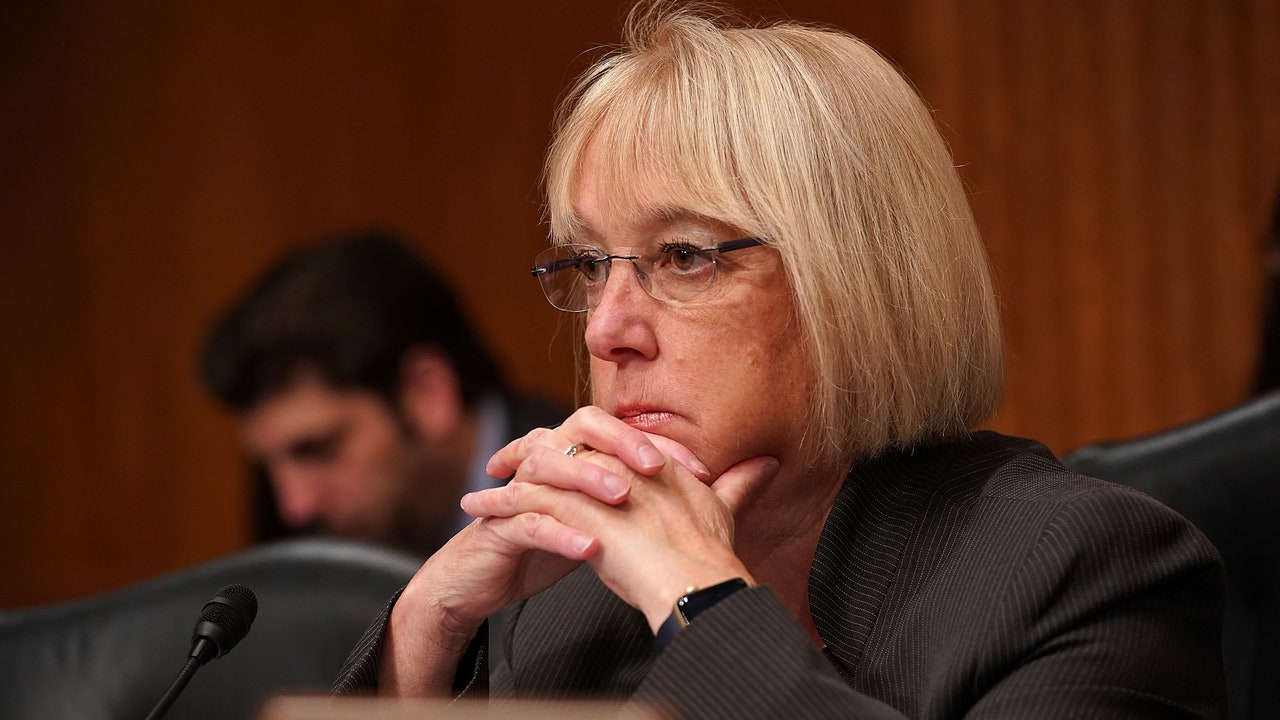
Paid Sick Leave Is Finally Becoming a Reality. Patty Murray Wishes It Hadn't Taken a Pandemic to Get It There


Well, I’m sorry it’s come to a pandemic for them to see the reality. It is my hope that this has finally sunk in and that we move forward in a smart way. I remember talking to a Safeway employee six or seven years ago who was working in the deli department and was obviously, visibly sick. I said, “Are you okay?”

And she said, “I can’t stay home. I don’t have any sick leave.”

I remember thinking, “Oh my god, she’s sitting here in a deli.” Everybody should think of that—workers at delis, grocery stores, hotels. Wouldn’t you rather they were home getting paid sick leave than here risking spreading it to everyone else?

One of the things that’s striking to me, as a citizen, is how disadvantaged we are here in the United States—in terms of dealing with this crisis—because we don’t have some of the things, like paid sick leave, that other developed countries have. We’re suffering now because of legislation we didn’t get passed decades ago.

Without a doubt. Without a doubt. All of these things that we have been told cost too much or are too radical are now coming home to roost with this pandemic.

Do you think that’s registering, especially with your Republican colleagues who have been resistant to these kinds of federal programs?

I think it is sinking in. People used to think, “Oh, that’s someone else’s problem.” But in a pandemic like this, they realize that someone else affects them. If that person is sick, they’re making other people sick. If a business can’t function, that has an impact. These kinds of social programs and policies are good for businesses, so that we don’t end up in the situation we’re in now.

Have any of those Republicans or even Democrats who resisted this said, “You were right”?

Well, no one here is very good at saying, “Oh my gosh, you were right.” Which is fine; I can take it! But they are all of a sudden sensing the need for this. It becomes personal for every single person in this country. It’s well and good for the mandate to be out there—“stay home if you’re sick.” But too many workers know it doesn’t apply to them because they can’t afford it.

You were a preschool teacher. Other women who serve in Congress, and in particular women elected in 2018, don’t come from traditional political backgrounds. Several I can think of are former nurses or are activists or veterans. At a time like this, how valuable is it to have those voices in Washington?

I was just talking with someone about the fact that women work in professions with their mother hat on. We’re thinking about other people. This conversation happened to be in the context of our own workplace in the Senate; I find a lot of the senators are thinking about themselves, but she and I were thinking about the staffers and workers in the Senate who have to be there because we are here. These are people who themselves have families. I said to her, “You sound like a mom.” And she said, “That’s just how we operate.”

But I think overall, women do see things in terms of communities and have experiences that inform that. Women tend to be the people in their families who take kids or parents to the doctor. It’s intuitive to us to think about these things on a personal level.

After we get through this, do you think America will be ready to have a fundamentally different conversation about programs like paid leave and universal health care?

I think so. We obviously live in a country that is very dependent on private companies and profits. We all benefit from that. But the question we have to ask ourselves now is: How do we develop an infrastructure that makes sure all Americans are safe?

This interview has been edited and condensed.

Mattie Kahn is the culture director at Glamour.


Source link