Categories
Health

Guilty Pleasure? In the Middle of a Pandemic, Can't We Retire the Term for Good?


Romance novels, associated with women, are derided as formulaic and predictable—the ultimate guilty pleasure. Mysteries and thrillers have a set structure, too, but remain popular with men so those are spared the designation. Soap operas and dating shows are coded female, so those are worthless; professional wrestling, although sometimes just as scripted, reads as male. Junk food or fast food, which anyone with a few bucks can buy, is a guilty pleasure. Haute cuisine at a Michelin-starred restaurant—even if it clocks in at triple the calories, with more grams of fat and sugar than a Value Meal—is not.

Through it all, our guilty pleasures have endured. They’re profitable—romance novels, for example, account for almost a quarter percent of the fiction market; 36 percent of adults eat fast food on any given day, The Bachelor has, for decades, been one of ABC’s top-rated prime-time shows. And yet even though they’re money-makers, guilty pleasures are always shameful. I ate a bag of Bugles before noon! I binge-watched an entire season of Love Island. I ordered Popeyes for lunch! I put ice cream on my ice cream, and crushed-up Double Stuf Oreos on top of that!

But at least on Twitter, which is the only way I can still find out what’s going on outside my own front door, it feels like things could change. As we sit at home on our couches, we are presented with a new option—the chance to uncouple harmless, social-distancing-adherent pleasure from shame, the chance to realize that rest and leisure has an important place in the rhythms of a week or a day. With two dozen or so states now under some version of a shelter-in-place mandate, the same hobbies for which we were once shunned are now model behaviors! If there were ever a time to stop beating ourselves up for loving that bad show, for following those celebrities on Instagram, for calling a bowl of cereal dinner, this is it.

Now that our couch potato-ing gleams with the patina of responsible citizenship, now that we’re home (if we can be), soothing ourselves with the same packaged snacks and globs of unbaked cookie dough, binging the same trashy shows or losing ourselves in the same YA dystopias, can our guilty pleasures just be pleasures? With a global pandemic breathing down our necks, with our healthcare workers making unimaginable sacrifices so that we can remain in our living rooms, with some much real inequality to get angry about, can we just agree not to feel bad about Nabisco?

As someone who has seen her novels categorized first as “chick lit” then as “women’s fiction” and now as “beach reads,” I’d be delighted if, when we do emerge from our quarantine, food is just food; books—some heavy and some light—are just books; television shows are just mindless, diverting fun, without the pejorative of guilt.

And if nothing else, this experience of quarantine and social isolation should leave us with the conviction that pleasure matters; that pleasure is not optional, but essential to a full life. “The goal of pleasure to me—is it allowing me to feel deep joy, satisfaction, and fulfillment rather than [giving me] a way to escape or numb?” says Dr. Schalk. “Pleasure,” she says, “makes us more alive.”

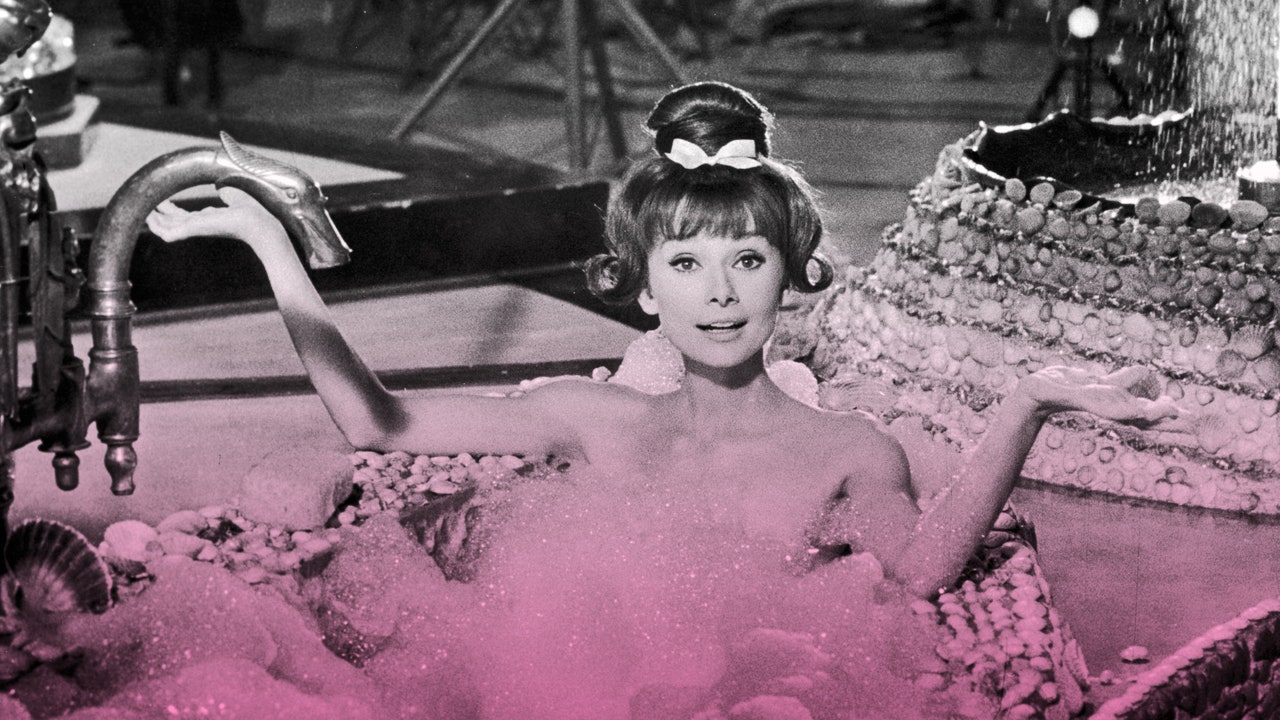
I’m taking her advice, and doing my best to embrace the fleeting joys of this moment. (Yes, even this one.) I’m letting go of the guilt. Instead of performing self-flagellation (for whom?)—I can’t believe I ate all of that—I’m choosing to savor. The news has our bodies on high alert, and the indulgences we crave—the bubble baths, the cookie dough, the naps, the long afternoons with Grey’s Anatomy—are some of the best and most responsible methods of self-soothing available to us right now. Instead of beating ourselves up, says Dr. Schalk, we should instead tell ourselves, “I accept what is happening and I am making purposeful, self-loving choices.” Doesn’t that sound nice?

Jennifer Weiner is a contributing opinion writer to The New York Times, and the author of 14 novels, including Good in Bed, Mrs. Everything, and the upcoming Big Summer.


Source link

Categories
Health

It's Time to Retire the 'Hairstreak Asian' Trope


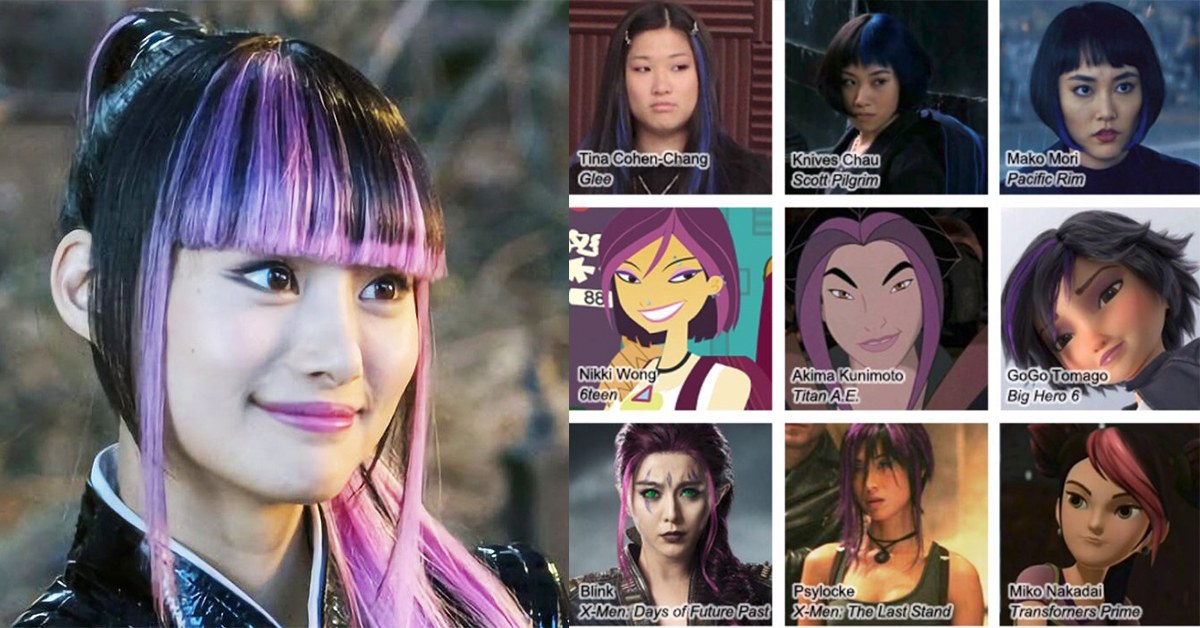
It’s no secret that Asians get short shrift in Hollywood. Up until quite recently, any Asian character who didn’t do kung-fu, play a nerd, or wear a kimono felt like a win. But even with the progress that’s brought more nuanced, realistic Asian representation on-screen, there are still seedy stereotypes making their way into films, particularly when it comes to Asian women. Take Deadpool 2‘s Yukio, the Asian girlfriend of X-Men member Negasonic Teenage Warhead. While the relationship itself is a big step in the right direction for queer Asian visibility, Yukio’s pink-streaked hair still upholds a cheap trope—that is, that all an Asian woman needs to be subversive or bold is a colorful chunk of hair.

For years, Asian women have been stereotyped as quiet, passive, and compliant. They’re often powerless. And racially-charged terms like “China Doll” and “Geisha Girl” only stand to support this stereotype, as though Asian women are meant to be visually appealing and—well, that’s about it. (Not to mention “Dragon Lady,” which is tied to the other stereotype of hyper-sexualized and fetishized Asian women.) This streak of color in otherwise jet-black hair is a newer extension, one intended to indicate that the woman is rebellious, a badass, or both. It’s particularly insidious because it’s so a) pervasive and b) subtle.

But every time an Asian woman with a streak of color in her hair appears on the screen, the same meme makes the rounds calling out the film or TV show in question, as Racked pointed out in late 2017. It seems things haven’t changed since then, and Twitter is mad.

I personally find this problematic, but not to the degree where I’d descend into a dizzying rage spiral, as I did with Nicki Minaj’s Chun Lee shtick. Other Asians and Asian-Americans seem to have similarly mixed feelings on social media—so I asked a few of my (Asian) friends for their take on the matter.

“I’m of two minds about this,” says my friend Mallory, 29, a data scientist in San Francisco. “I have noticed this before. But since Asian characters [who have it] usually show up in comic book movies, or some form of the genre, it didn’t seem super out of place. I always wanted to color my hair growing up because of Rogue from X-Men.” Comics, video games, and anime do lend themselves more to bold hair colors. (Though it’s worth noting that in the Marvel comics, Yukio’s hair is jet-black and streak-free.) And hair color is a popular, easy way for Asian women to express themselves. “When I first started working, I wanted to stand out, so my hair stylist suggested that I dye my hair,” says Yun, 30, a publicist in New York City. “I wasn’t ready to go completely blue or what-not, so we settled on a streak and that sort of became my signature.”

Of course, hair color can be a fun, effective symbol of rebellion—and frankly, you’re free to do whatever you want with your hair. The more recent, real-life trend of Asian women coloring or bleaching their hair in order to subvert stereotypes is undoubtedly a good thing. But in movies and shows, hair streaks have become a crutch for higher-ups who can’t otherwise develop complex Asian characters. Instead of fleshing out a three-dimensional character—too much work, maybe—it’s a cheap, lazy way of making certain Asian characters stand out from the so-called demure crowd. All she needs is a few streaks of purple hair, a leather jacket, and an attitude.

Although sometimes, you don’t even get that. “I would like to see [Yukio] talk more,” said Shioli Kutsuna, the actress who played her, in a recent interview. “I would just like to see her character more. It would be great to see her fighting and really show her strength in that aspect.” Her pink streaks could only do so much.

Which takes us back to square one. In the same way historical stereotypes like quiet “China Dolls” and wily “Dragon Ladies” reduce Asian women, putting a streak of color in an Asian character’s hair to designate her as “rebellious” excuses her development as a truly powerful, complex character. Now, she’s still minimized, but this time as the visual, exoticized version of the Manic Pixie Dream Girl—a whole new stereotype of its own.

One solution would be to include Asians in more non-race-specific roles. “For the film industry, I think this hair streak thing would not exist if Asian actors were just in more stuff,” explains Mallory. “I.e., you’re not going to see a Chinese character in Wolf of Wall Street with a hair streak—hopefully.” We’re guessing that that may take awhile. But there’s one small consolation: At least we have Crazy Rich Asians to look forward to.

Related Stories:
At the Korean Spa, $40 Gets Me a Body Scrub and Self-Acceptance
For Women of Color, Hotel Shampoo Isn’t Just Meh—It’s Literally Unusable
‘Cool Blond Asians’ Are Giving Me an Identity Crisis


Source link