Categories
Health

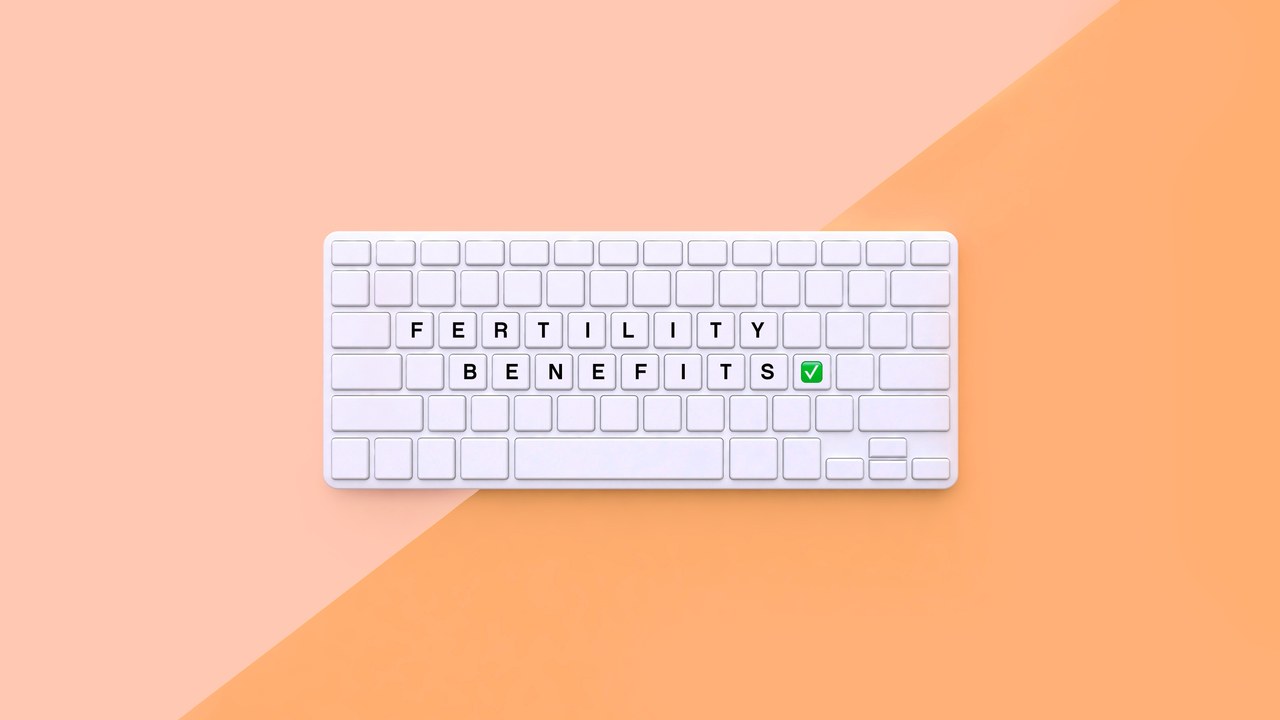
Fertility Insurance Is the Workplace Benefit Women Deserve


Not all fertility treatments result in pregnancy. According to the European Society for Human Reproduction and Embryology, 77 percent of assisted reproductive cycles performed globally every year fail. Without coverage, women are left to cope with the bitter combination of not having a baby and the tremendous costs of trying for one. “IVF has helped a lot of people, but there is a silent majority of people who haven’t been helped by it and don’t talk about it,” says Miriam Zoll, author of Cracked Open: Liberty, Fertility, and the Pursuit of High-Tech Babies, and a health and human rights advocate.

Kati, 32, from Columbia, Maryland, strategically maneuvered her career based on insurance coverage. “I was willing to downgrade what I was doing,” she says. “I was willing to do office work or work as an administrative assistant or do whatever I needed to do just to have that insurance.” She got lucky though, eventually landing a dream job with dream fertility benefits: 100 percent coverage for IVF up to three attempts per live birth.

But after three IVF retrievals and six embryo transfers, she hasn’t had a successful pregnancy. “I’ve had seven miscarriages. We’re exploring surrogacy or thinking about living child-free—it’s heartbreaking at this point,” she says. “I didn’t think we’d be here, but at the same time, I feel grateful for our insurance coverage. If I didn’t have it, we couldn’t even consider surrogacy—all of my money would have gone to one IVF cycle and that would be it.”

Fertility insurance does have its restrictions: Insurers require a medical diagnosis of infertility, which is defined as an inability for a heterosexual couple to conceive within 12 months. That excludes same-sex couples and single women who want to pursue IVF with donor sperm.

But some Silicon Valley companies are setting a new standard for fertility coverage. Female-founded benefits company Carrot works with companies like Foursquare and Coinbase to provide fertility benefits regardless of an employee’s diagnosis or treatment needed. Companies choose how much coverage they want to provide each employee (which could range from $10,000 to $50,000 or more per person) giving them full access to fertility testing, IUI (intrauterine insemination), IVF, egg freezing, sperm freezing, donor eggs, donor sperm, gestational carriers (surrogates), and adoption—regardless of age, gender, or sexual orientation.

A woman’s family planning goals should be respected just as much as her career goals, says Tammy Sun, CEO and co-founder of Carrot. She suggests that if you’re already in a role you love but your company doesn’t offer fertility benefits, advocate for them: “Go to leadership at your company or to your HR or benefits team and say, ‘Hey, here is the problem that we see with the lack of fertility coverage at work—we see fertility as a fundamental part of healthcare.’” If you’re job hunting, Fertility IQ, Glassdoor, and Monster compile lists of companies that offer remarkable fertility benefits. And when you’re in the negotiation phase for a new job, ask if fertility coverage is on the table. “We have many companies come to us and say that they have a candidate and she’s asking for fertility benefits but they have nothing, so they want to set something up right away,” Sun says. “Just by asking, you could get what you want.”

Fertility benefits should be considered as standard as any health insurance—treating infertility shouldn’t leave women broke or forced to derail their careers to find coverage, advocates say. “We are not choosing to be infertile, we’re not choosing to need this treatment,” Kati says. “The body is not working in the way it should be—that should be covered just like heart disease, diabetes, or any other illness.”

Minhae Shim Roth is an essayist, journalist, and academic. Follow her on Instagram @by_minhaeshimroth and on twitter @minhaeshimroth.


Source link

Categories
Health

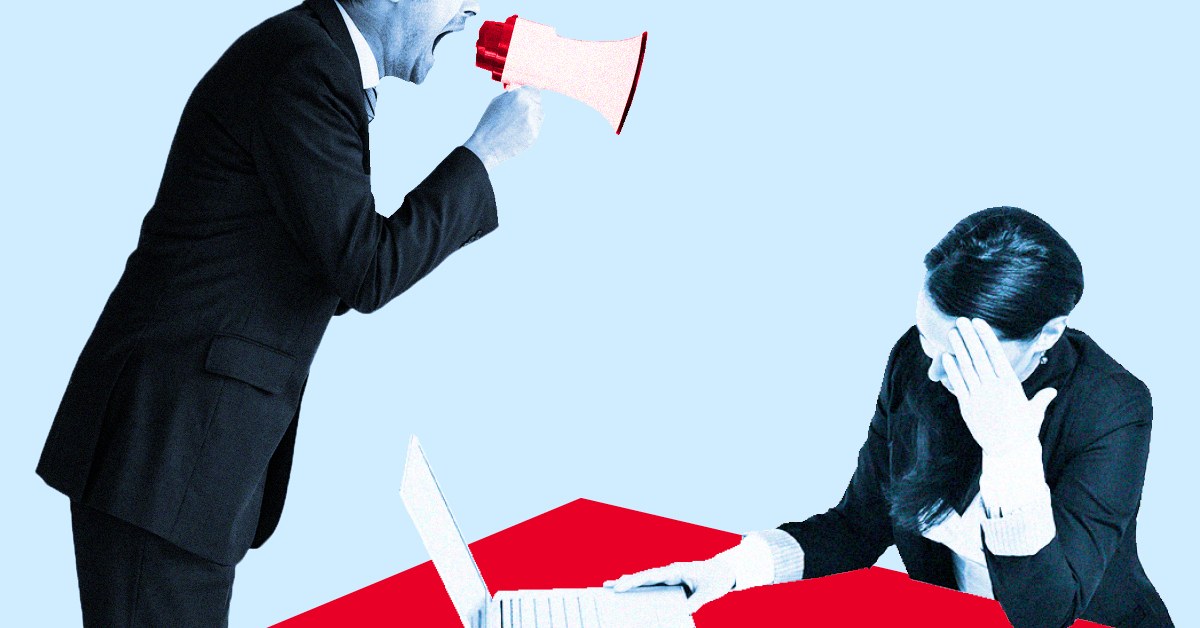
Verbal Abuse Is Hurting Women in the Workplace


At first, it seemed funny.

“Temper tantrum” was how I described his behavior to my friends. Michael (not his real name) would raise his voice at me, then flounce out of the room in a huff. At first, his outbursts seemed innocuous, if unprofessional: Can you believe he did that?

We worked together, and I’d read enough books about office culture to believe I could handle the situation, so I spoke to Michael about his outbursts. Because he seemed to feel bad about it, I wrote it off.

But the behavior escalated. One afternoon, he didn’t like the direction of a project. In front of another woman, he criticized the work I’d done, declared it a waste of his time, and stormed out of the conference room. As with all of his outbursts, I felt undermined, humiliated, and frustrated that preventing another temper tantrum—or trying to—had become part of my responsibilities. I raised the issue with higher-ups, and everyone believed (it seemed to me) that I was good at my job and that his immature lashouts needed to stop.

That isn’t what happened. And a few weeks later, I was out of a job.

The experience was awful, but others have it much worse. Verbal abuse in the workplace doesn’t take just one form. It can involve screaming, humiliation, sexist, homophobic or racist slurs, aggressive behavior like pounding tables or slamming phones, and intimidation, like blocking doors or stairs. Some of these behaviors fit the legal definition of assault and harassment. But some don’t.

Even now in our post #MeToo world, many kinds of verbal abuse—and the toxic environment that abuse fosters—doesn’t violate the law.

I no longer have to deal with Michael, but I still feel his effect. As someone who considers herself a hard worker and a resilient woman, I wince now at how his words made me feel and the extent to which I wondered whether I was “too sensitive” to cut it in our office. The experience made me question future coworkers, too. Who would be next to lash out? And would other coworkers let it happen?

Even now in our post-#MeToo world, many kinds of verbal abuse—and the toxic environment that abuse fosters—doesn’t violate the law. Worse still, the behavior tends to be dismissed as natural, if somewhat unpleasant in competitive, achievement-oriented work environments. In May, the New York Times published a roundtable with the cast of Arrested Development, kicking off an overdue public conversation about the phenomenon. In it, actress Jessica Walter cried as she described her co-star Jeffrey Tambor’s verbal abuse. “[In] almost 60 years of working, I’ve never had anybody yell at me like that on a set and it’s hard to deal with,” Walter said. But some of her male co-stars seemed to make excuses for such behavior, with Jason Bateman opining, “[I]n the entertainment industry, it’s incredibly common to have people who are, in quotes, ‘difficult.’”

I was incensed not only at Walter’s mistreatment, but by some of her male colleagues’ minimization of it. The “that’s just the way it is” excuses sound hollower than ever as movements like #MeToo readjust our cultural response to sexual harassment and assault. The power structures that compel women to be silent in the face of misconduct have been exposed. Some have crumbled. But the work is not done.

Verbal abuse is rampant. I had experienced it. Jessica Walter had experienced it. How many women like us were there?

In the months since I tweeted this very question out, over 2,000 women shared that they had been yelled and screamed at, “shushed” and called names like “bitch” and “cunt.” It came from male bosses, colleagues, subordinates—even interns. It has happened one-on-one, in meetings, on conference calls and in front of customers. Women have been screamed at for refusing to pay men a day early, not serving expired food, and enforcing potentially life-saving safety rules. (“Hell hath no fury like a dad whose kid is too short to ride a slide safely,” tweeted one ex-amusement park employee.) In other words, women have been verbally abused by men just for doing their jobs.

The volume of responses surprised me. So I decided to dig deeper into how and why this debasement came to be so widespread and normalized in our workplaces. Who is committing it and why? If so many of us think it is wrong, why doesn’t it stop? How does it impact the women who are harmed? And what should we do about it?


The first hurdle to get over may be acknowledging that workplace verbal abuse is actual abuse.

Verbal abuse can be “any spoken comments that are made to criticize, demoralize, insult, hurt [or] manipulate somebody,” says Lena Derhally, a licensed psychotherapist in Washington, D.C. “The intention is to hurt, control, manipulate, shame, humiliate.” And it has consequences for both our mental and physical health. While much of the existing research on verbal abuse focuses on intimate partners, or parents and children, studies have shown that the long-term effects of severe emotional abuse can have consequences akin to physical abuse.

“When women are the victims of this kind of aggression … [it can lead to] post-traumatic stress disorder,” Kathleen Shea, Ph.D., a licensed clinical psychologist on the North Shore near Chicago tells me, adding that verbal abuse has a “seriously negative” effect on our self-esteem.

Trauma can activate the “fight or flight response,” says Derhally. One way the flight response manifests itself is with “freeze mode,” or shut-down and disengagement—say, no longer contributing ideas in meetings or diminished productivity.

All-too-frequently, it is a “him” who is committing the bad behavior. A 2017 survey by the Workplace Bullying Institute looked at bullying behavior (not just verbal abuse) and found men targeted women in 65 percent of incidents related to “repeated abusive mistreatment at work.” Among all bullying behavior, 70 percent of the perpetrators were men. While men and women are supposedly “equals” in a workplace, too many women don’t experience it that way.

The experience “destroys you mentally,” says Ashley (not her real name), a 23-year-old in Las Vegas.

Ashley’s first job out of school was a position at an entertainment company that began with a 90-day probationary period, during which her manager Brad (not his real name) yelled at her when she struggled with mathematical equations.

“I used to drive to work and think, ‘I wonder if today will be the day that he was gonna fire me,’” she recalls. “That would consume my thoughts every day.” She didn’t feel she was in a position to speak up then, because trainees could be let go for any reason.

Once her 90-day probation finished, Ashley informed the company’s HR department about Brad’s behavior. She didn’t want to “ruffle any feathers,” she says, but confidantes urged her to say something. Not long after speaking to HR, Brad took Ashley aside and she was “yelled at for kind of ratting him out.” Instead of apologizing, he upbraided her further. Shocked, she recalled that she “nodded and said ‘OK.’”

Not long after speaking to HR, Brad took Ashley aside and she was “yelled at for kind of ratting him out.” Instead of apologizing, he upbraided her further.

The abuse took an obvious toll: “I went to the bathroom and cried,” she says. And the outbursts continued in the weeks and months that followed. “I became a shell of the person that I was,” Ashley says, “And the personality traits I like about myself were not really coming through anymore.”

One day in January, Brad was fired. Ashley quit about two weeks later, a move she says “proved to be much better for me [and] for my own mental health, for my own physical health.”

She had been at the company for six months.


It might seem like Michael or Brad are just bad apples. But toxic work environments are more complicated than that—an interplay between how an individual functions unhealthfully and how the organization as a whole functions unhealthfully.

First, it helps to understand that verbal abuse is usually brandished by “very insecure people as a way of having control,” says Derhally. “Secure, happy, confident people do not abuse. … [Verbal abuse is] a way to take control, to have power, to manipulate, to compensate for deeper insecurities.”

Abusive work environments typically adhere to one of three patterns, according to feminist legal scholar Joan C. Williams, professor of law at University of California, Hastings College of the Law San Francisco and founding director of the Center for WorkLife Law. In one scenario, abuse is the norm. “In some workplaces, screamers are valued and, at some level, informally encouraged,” Williams says.

Other workplaces claim not to tolerate abuse, and generally don’t, but some people—“almost always men who hold power in the organization,” says Williams—get a pass. Often these exceptions-to-the-rule make a lot of money for the company, or lend it prestige. (Think: Would an extra who yelled at Jessica Walter get the same treatment as Jeffrey Tambor?)

In the third scenario, abuse is a way of establishing loyalties. In these environments “if you want to not be bullied, you have to kind of take part in the bullying,” says Williams. Instead of one individual inflicting abuse, a group gangs up on her together.

In addition to these scenarios, abusive behaviors at work can be classified as either overt—direct acts of hostility in front of customers, in meetings, in group Slack channels—or covert, behind-the-scenes passive aggressiveness or undermining.

Women, of course, can also behave abusively at work. However, sexist double standards mean that women may pay a price for behaviors which are excused, even rewarded, in men. A recent study out of Arizona State University found male attorneys who displayed aggressive behavior, such as yelling and pounding their fist against the lectern, during identical closing arguments were “commanding, powerful, competent and hirable.” Women attorneys who exhibited the exact same behaviors were seen as “shrill, hysterical, grating and ineffective.”

In other words, when women act aggressively, they are seen as loose cannons, while men look passionate and continue to get work. Men are socially conditioned to show they are “in charge”—even when they are not actually in charge—and this entitled behavior is validated as a show of “authority” or “leadership.”

Of course, abusiveness is not necessarily a personality trait—it’s a widespread problem within our cultural instruction of masculinity. Boys are raised seek the upper hand to avoid humiliation, explains Shea. “In order for men to ‘be men,’ they have to dominate” and the code they live by is “‘humiliate before you’re humiliated,” she says.

So when abusive men feel insecure about themselves and how others perceive them, Shea adds, they overcompensate with displays of power and control—throwing a stapler, screaming at an intern. It’s a performance of what “being a man” or “being a success” looks like. Masculinity needs to be witnessed.

Kate (not her real name), 41, who lives in Southern California, learned that more than a decade ago when someone on her team at the radio station where she worked was verbally abusive. Steve (not his real name) gave her an assignment. Kate recorded a piece that was three minutes long, but Steve had needed it to be five minutes. Maybe he assumed she knew how long the piece should be, she concedes, but she doesn’t recall him giving her those instructions. And while she was out in the field reporting, Steve called her phone and began to yell.

“He freaked out,” Kate remembers. “He was bugging out because I did it wrong: ‘You don’t know what the fuck you’re doing! You’re a fucking idiot! What the fuck is the matter with you?’”

So she hung up on him—“because I don’t have time for this shit,” she says—and continued working. Steve called her phone more than a dozen times, according to Kate.

Kate reached out to management for help, eventually meeting with Steve and someone from Human Resources. At first, he denied verbally abusing her. Eventually he admitted, “‘I suppose it’s possible that I may have said something to you.’”

“HR [was] looking at him and nodding,” Kate recalls. “I’m, like, I have no chance here!’” At the end of the meeting with Steve and HR, she says, “They ordered us to shake hands.”

Kate was dismissed a few weeks later. She says she was told it was due to performance issues.

Women, of course, can also behave abusively at work. However, sexist double standards mean that women may pay a price for behaviors which are excused, even rewarded, in men.


Federal employment law lacks teeth for the nuances of verbal abuse, and not a single state has passed a complete version of the Healthy Workplace Bill—meant to address verbal abuse and other behaviors not covered under federal law—despite its introduction in more than 25 states. The best course of action, it seems, is to identify this behavior when it occurs and stop making excuses for it. As The Cut reported in June, the fashion industry—infamously portrayed in The Devil Wears Prada—is already undergoing its own reckoning. And one important change would be to stop penalizing women who stand up for their rights. Asserting oneself at work should not be a lose-lose situation.

“Unfortunately women should realize that by the fact that they are encountering this dynamic, their careers are already at risk,” Williams says. She adds, jokingly, “One of the things I always say [is] one of the worst career moves a woman can make is being the subject of gender discrimination.”

Men, of course, need to do the lion’s share of work here. “This is a deficit that men are finding in terms of being able to communicate professionally when anger, frustration, [and] passion are all in the mix,” says Emilie Aries, the founder and CEO of Bossed Up, a personal and professional training organization for women.

Verbal abuse should not be dismissed as the price of admission for women in the workforce. “It’s not about being treated equal [to men],” says Derhally. “When men have that response—‘Suck it up and deal with it!”—that’s toxic male culture, that we can treat people like they’re scum and then expect them to tolerate it. To me, that’s bullshit.”

Ultimately, the more we speak up about this type of abuse and demand the behavior stop, the easier for everyone else to speak up, too.

As Aries puts it, “Women have been taking the brunt of abuse in workplaces for so long without significant justice being served … I think there’s a very righteous sense of resentment that’s bubbling up about it all.”


Jessica Wakeman is a writer in Brooklyn. Her work has appeared in Glamour, Rolling Stone, Bitch, Bust and many other publications.


Source link

Categories
Health

Hundreds Turn Out for Take Back the Workplace, #MeToo Demonstrations in Hollywood


The #MeToo and “Take Back the Workplace” movements joined forces offline on Sunday as sexual assault, harassment, and abuse survivors took to Los Angeles’ streets in support of each other and the ever-growing list of those coming forward to bring this horrible behavior to light.

According to the Los Angeles Times, the day’s demonstrations began at the Dolby Theatre, which is where the Oscars have been held since 2002. From its location in the Hollywood & Highland Center, marchers wearing “pussy hats” and Wonder Woman T-shirts made their way to the CNN Building on Sunset Boulevard. Later, they headed back toward Hollywood Boulevard and Highland Avenue, passing the Walk of Fame—and the stars of alleged assaulters Kevin Spacey and President Donald Trump—along the way.

The day also saw a movement leaders powerfully sharing stories and calling for change.

“We will no longer be intimidated, we will no longer be dismissed, we will no longer be silenced, we will no longer feel alone,” said comedian Tess Rafferty, who co-organized the Take Back the Workplace March. “And if you try and silence or intimidate or discredit one of us, you’re going to have to deal with all of us. We are no longer the ones who have to fear for their jobs, you are.

Tarana Burke, the originator of the #MeToo hashtag a decade ago and an organizer of the #MeToo march, told the crowd, “I don’t want to spend a moment of my time calling names of folks who don’t deserve breath with me. This day is not for them. This day is for us.”

Lauren Sivan, one of Harvey Weinstein’s accusers also spoke: “This is 2017, the time is ripe for a reckoning, for a reordering of power. Today we’re here to tell you that you will no longer keep us quiet, you will no longer label us gold-diggers or psychos. That ends now, because we want our daughters and sons to go to a workplace where they will never have to take a meeting with a dude in a bathrobe.”

And, of course, there were signs.

Burke also gave those listening a call to action as she spoke, making the point that Hollywood and the movie industry aren’t islands when it comes to sexual harassment and assault.

“For every Harvey Weinstein, there’s a hundred more men in the neighborhood who are doing the exact same thing,” Burke said. “The conversation around harassment in Hollywood will broaden to include other industries if we force it to. It’s not going to do it on its own.”

Related Stories:
Activist Tarana Burke Started the ‘Me Too’ Movement 10 Years Ago
These Are the Women Who Have Accused Harvey Weinstein of Sexual Harassment or Assault
Gabrielle Union Claps Back at Sexual Assault Victim Shamers


Source link

Categories
Health

I'm an Autistic Woman, and This Is How I Navigate the Workplace


What started out as a civil conversation between me and my former department chair quickly escalated into a heated argument. I stormed out of her office yelling some poorly chosen and insulting words that no one should ever say to a supervisor. I was a professor in the middle of an autistic meltdown, and I wasn’t about to stick around for what I knew would come next, an uncontrollable crying fit.

Imagine a switch turning on in your head that is completely out of your control. An explosive burst of emotions makes it impossible for you to control your impulses because your brain can no longer handle any rational thoughts. You can barely say anything at all, but you somehow manage to lash out at your boss, gutturally screaming insulting words. The fact that your job could be on the line or that you’re overreacting doesn’t even cross your mind until the volcano stops erupting.

Usually, the inciting incident that sets a meltdown in motion doesn’t seem significant enough to cause an intense emotional reaction. For example, any unexpected disruption to my routine like a change to my teaching schedule can be the straw that breaks the camel’s back.

While anyone pushed hard enough at work can have an emotional breakdown, an autistic meltdown is usually much more intense. Once the fight or flight response is fully engaged, very little can be done to stop it. The crying fit I avoided in my former department head’s office ended up happening in my own office, which continued to a lesser extent on my drive home, and even after I got home.

Imagine a switch turning on in your head that is completely out of your control.

I didn’t always know I was autistic, but I knew that I was different. I was a selectively mute child who rarely spoke in the classroom, but I didn’t stand out because I wasn’t disruptive. Most girls from my generation weren’t diagnosed unless they had an extreme form of autism. Even now, many girls who have autism spectrum diagnosis (ASD) go undiagnosed or are misdiagnosed. Only 1 girl for every 4.5 boys has an ASD diagnosis, according to the Centers for Disease Control and Prevention. Recent studies have found gender differences with autism, which could explain the skewed gender ratio. I wasn’t diagnosed with ASD until my late thirties.

If you know an autistic woman at work, she may seem calm and friendly one moment and argumentative and angry the next. I sometimes feel like Dr. Jekyll and Mr. Hyde. But I don’t hold a grudge against any of my colleagues, even when we’ve had heated arguments in meetings.

An autistic woman may also have trouble working in teams because she has trouble with empathy, as I do. I often belabor points in meetings even when I have no chance of convincing others of my viewpoint. If you work with an autistic woman, try to be patient, knowing that she will likely have difficulty with communication even when she has a lot of valid points to share.

Luckily, I didn’t get fired over those insulting words I said to my former department chair. She never brought up the incident after that, at least not in a direct way. One day, she offhandedly said, “I feel like there’s always been some tension between us.” My response was simply to agree and leave it at that.

She didn’t know I was autistic until a year later. She was in the audience at a creative writing festival when I read a personal essay I wrote for Glamour revealing I’m autistic. She later approached me in the hallway outside my office to say, “Thank you for sharing your…condition.” She struggled with the last word, not sure exactly what to call it.

Another reason I have difficulty interacting with students and colleagues in the workplace is my prosopagnosia, commonly known as face blindness. I have trouble recognizing faces with this condition, which two thirds of autistic people have, according to one study.

It’s especially hard for me to take class attendance when I can’t match the names on my rosters to faces. I often hide this embarrassing weakness by pretending that I know more names than I do. I ask students who come late to class to tell me their last names so I can find them easier on my roster. This helps me to cover up the fact that I don’t know their first names. It’s also difficult for me to talk to my colleagues that I don’t see often because I can’t recognize them in a crowd. This is especially difficult to do if I see them out of context, such as a chance encounter off campus.

I have trouble looking people in the eye. I have to make a conscious effort to do it. Sometimes, I end up losing my train of thought while trying to divide my attention between engaging in a conversation and making eye contact. But having a job that requires me to interact with a lot of people, I’ve trained myself to look toward, if not directly at, faces. Not focusing directly on faces certainly plays a part in my bad memory for them. I usually have good face recognition, though, for students who frequently meet me one-on-one in office hours or colleagues who have offices in my hallway.

I have trouble looking people in the eye. I have to make a conscious effort to do it.

If you know someone who is autistic at work, don’t assume that she doesn’t want to socialize even if she rarely initiates conversations. She might keep her office door closed most of the time because it’s easy to get distracted by any sort of noise, but this doesn’t mean she doesn’t want to interact with her coworkers. Most of my attempts at socializing happen in awkward moments in the doorways of my colleagues’ offices. I want to be more social, but I have a lot difficulty having a conversation that doesn’t have a defined purpose.

My ASD diagnosis helped me take better control of my autism in the workplace. I still have more than a few disagreements with colleagues and supervisors, including the occasional autistic meltdown, but normally, I know my limits and remove myself from places and situations that threaten sensory overload.

My teaching evaluations are generally good, other than occasional comments about not smiling enough. I’ve improved my social deficits by using scripted language and recognizing my difficulty with empathy. I’ve also found ways to be more flexible with my routines and maintain better control over my sensory issues. I regulate my emotions with exercise, especially by practicing yoga and Taekwondo.

Despite the challenges in the workplace, I’ve managed to have a very successful career as an autistic professor and writer. My intense interest in literature led me to become an expert with a doctorate in my field. My excellent long term memory and ability to record memories as videos in my imagination has helped me to write vivid scenes as a creative writer. I’ve also mentored and taught thousands of students and collaborated with many colleagues and administrators over the past eighteen years.

We would all benefit from more awareness and acceptance of neurodiversity in the workforce. I might not walk around campus telling everyone that I’m autistic, but I’m not ashamed to talk about it either. One time a student came up to me after class to tell me she was surprised to learn that I was autistic. She had come across my articles about autism by chance when she did an internet search to find my contact information. She has an autistic brother, so we ended up sharing our stories.

Jennifer Malia, who runs the Facebook page Mom With Autism, is an English professor at Norfolk State University. She is currently working on a book about autism and gender.


Source link

Categories
Health

3 Women Who Quit Their Jobs at Google Share Stories of Workplace Racism and Sexism


Google has had a lot going on lately, and some of its most high-profile news doesn’t look great for women—especially those of color. There’s the fallout of a former engineer’s 10-page anti-diversity manifesto, the threat of a class-action lawsuit by 60 women alleging workplace sexism, and a Department of Labor investigation alleging “extreme” pay discrimination based on gender. Now, a Guardian report has detailed the day-to-day experiences of three women who quit their jobs at Google due to racial and gender discrimination.

In the Guardian article, which was published on Friday, former technical specialist Qichen Zhang; a black female former specialist who spoke out under anonymity; and former engineer Lashmi Parthasarthy shared their harrowing accounts of racial and gender discrimination at the tech giant. All three were in the minority at Google: the company is predominantly white and male, at 56 percent and 69 percent respectively, according to its website.

“I didn’t see a lot of women, especially Asian women, black women or other women of color in the executive ranks,” Zhang told the Guardian.

One pivotal moment Zhang recalled during her one year at Google was a conversation with a white male colleague. “He said, ‘It must’ve been really easy for you to get your job because you’re an Asian woman, and people assume you’re good at math,'” Zhang, a Harvard graduate, said. “It was absolutely stunning. I remember me just emotionally shutting down.”

Zhang ultimately chose to left in 2014 after more incidents that left her feeling isolated—and like there was no future for her at the company. “It’s just these little daily aggressions that really add up over time,” she said. “Having a lack of people who look like you in general is demoralizing.”

“People had this broad concept of ‘racism doesn’t exist at Google and sexism doesn’t exist at Google,'” she added*. “Just because your officemates aren’t saying racial slurs out loud doesn’t mean they’re not racist.”

The former specialist, who is black and asked to remain anonymous, experienced similar moments of discrimination. She told the Guardian that she was frequently asked for her ID on campus when coworkers weren’t; that she overheard racist jokes; and that she was negatively judged for trying to be an advocate for people of color, despite Google’s official interest in the positive PR that diversity initiatives bring to the company.

“They didn’t like the way you’re prioritizing diversity, because that’s not your role,” she said about the company. Like Zhang, she left the company for the sake of her mental health, adding that “there were times I cried at my desk.”

Zhang and the anonymous specialist quit due to their experiences with racism at work—but gender-based discrimination was a factor in another woman leaving her job. Parthasarthy, a former solutions engineer, left was because she lacked a supportive female mentor and manager. Comparing Google to a boys club, she said “it’s difficult for women to see paths for themselves at Google in tech.”

Responding in the Guardian article to these women’s experiences, Google’s director of global diversity and inclusion, Yolanda Mangolini, told the newspaper that she’s “always disappointed” hearing these stories. “We know that it’s not just about recruiting a diverse workforce. It’s about creating an environment where they want to stay.” She added: “Change takes time.”

Of course, racism and sexism are hardly limited to Google, and these experiences—as indicative of a larger problem as they might be—belong to these individual women. But when Google regularly tops the lists of best places to work, and when complimentary articles are devoted to recreating its “great” workplace culture, hearing stories like should prompt Google and other tech companies to do some deep soul-searching—and take swift, effective action.

Related Stories:
Dozens of Women Are Considering Suing Google Over Workplace Sexism
Google Fires Engineer Who Wrote Antidiversity Memo, Internet Rejoices
This Viral Antidiversity Memo by a Google Employee Just Got Shut Down


Source link