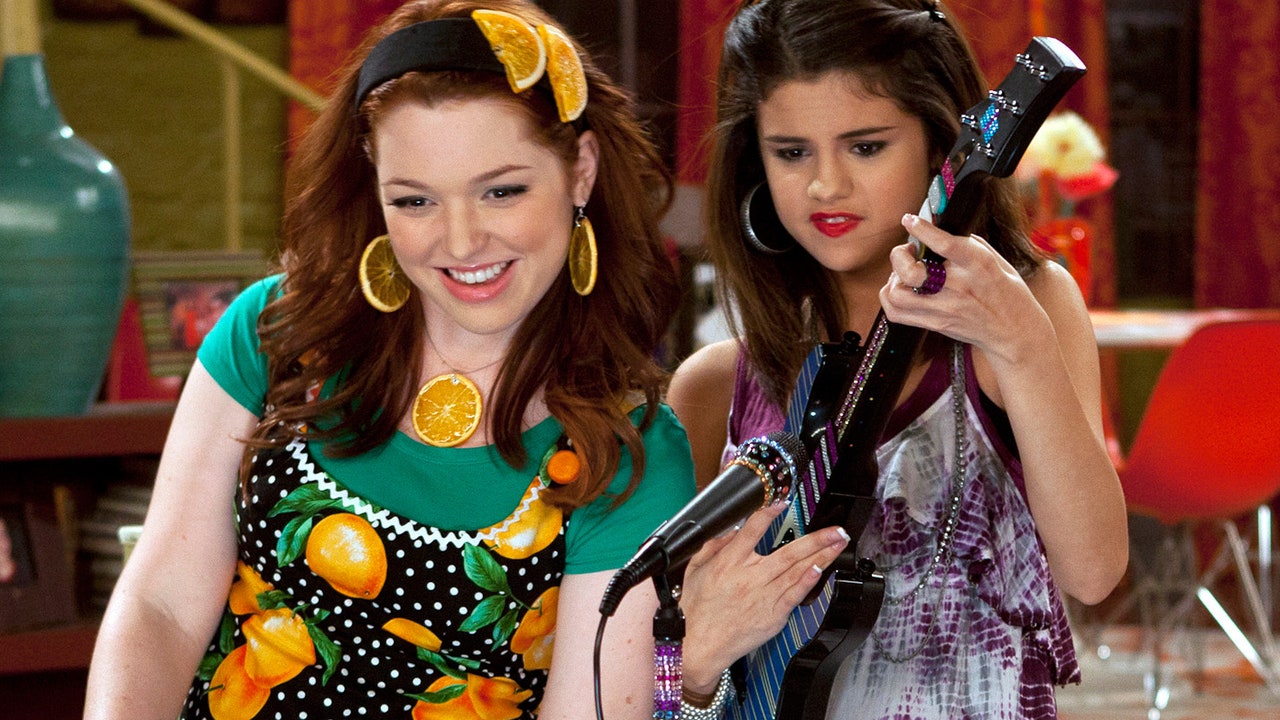
You may remember Harper Finkle from Disney Channel’s Wizards of Waverly Place, Alex’s (Selena Gomez’s) smart best friend who’d often act as the witch’s conscience. It turns out the actor behind Harper, Jennifer Stone, also has a heart of gold. Stone, who grew up to become a nurse, is now preparing to save lives on the front lines of the coronavirus pandemic.
After appearing on the Wizards of Waverly Place series finale in 2012 and some additional projects, Stone took a break from acting to go to college. Right before this, she was diagnosed with Type 1 diabetes. “More than learning the semantics of beta-cells and autoimmune disorders, I wanted to understand my body and the impact of Type 1,” she said in a 2016 interview with Beyond Type 1, a nonprofit organization that provides resources to those living with diabetes. So she switched from her psychology major to nursing.
Last year she shared an Instagram post celebrating receiving her degree. “It’s been a long road of blood (mostly other people’s), sweat, and tears (those were mine), but I can finally call myself a nursing grad,” she wrote.
And now she says she’s “ready to join” those on the front lines of the fight against COVID-19.
“A very good friend of mine (@maiarawalsh ) pointed out to me that today is #worldhealthday. It is also the day I went from a volunteer, then a student nurse, and now an RN resident,” she wrote in a new post showing off her new resident badge.
She continued, “I just hope to live up to all of the amazing healthcare providers on the front lines now as I get ready to join them. #worldhealthorganization #supportnurses #westayhereforyou❤️pleasestayhomeforus #covid2020.”
After receiving a ton of positive feedback on her post (including some from WOWP fans, of course), Stone shared another image on Wednesday, April 8, encouraging her followers to wear nonsurgical masks like she does when she’s not working. “I’m wearing a mask to flatten the curve,” she wrote in the caption. “You can’t see me smiling out of gratitude for hitting 300,000 followers! Thank you guys for all of your love and support.”
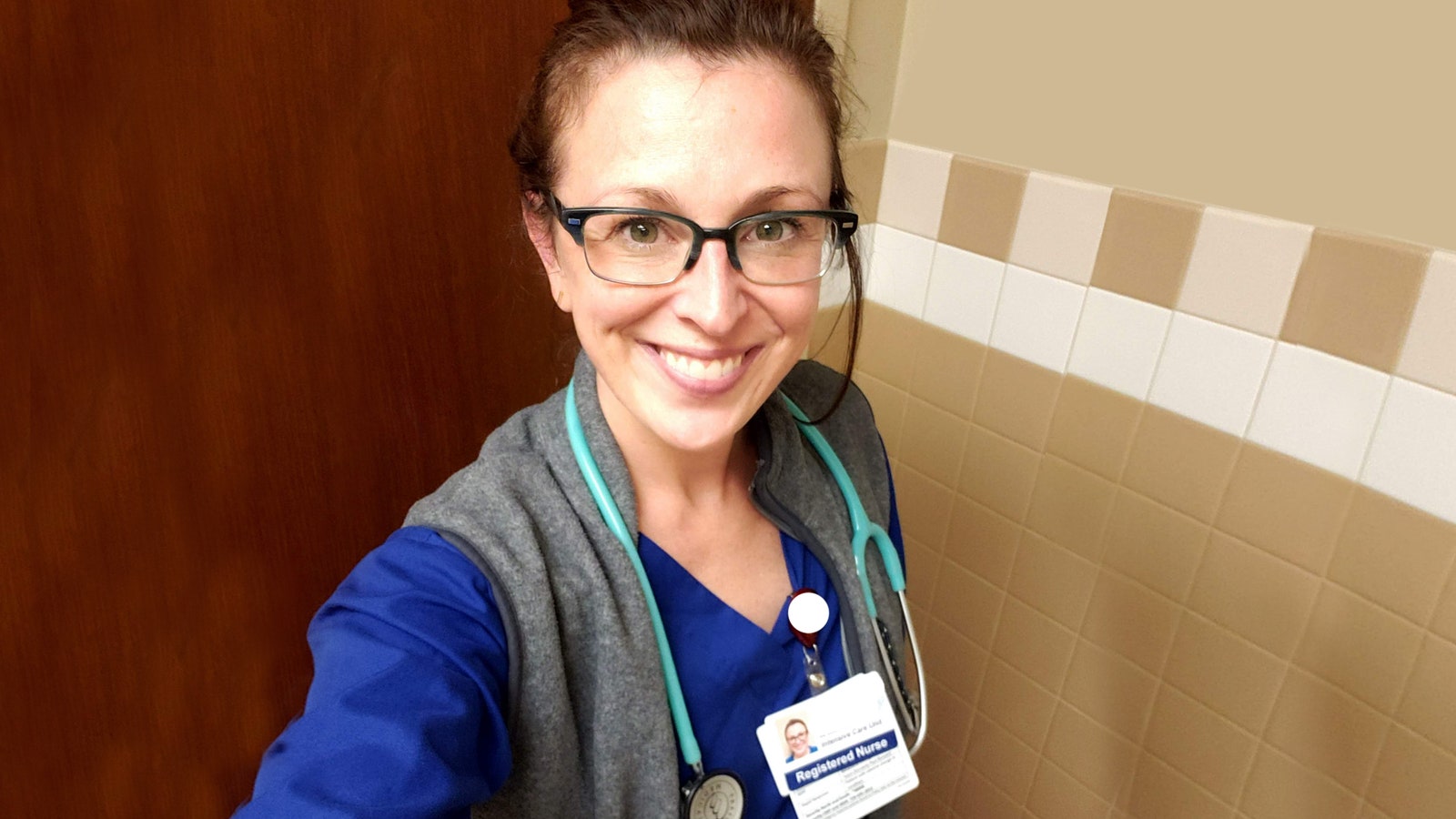
I have been a nurse for 13 years—I specialize in critical care and even worked as a medevac flight nurse—and this pandemic is by far the worst thing I’ve experienced in my career.
I arrive at work at 6:45 each morning and count the confirmed positive COVID-19 patients listed on our staffing board. Currently our 30-bed ICU unit is full of these patients, and we have opened up off-site ICUs where we have 4 patients so far. Almost all of our patients are on mechanical ventilation and are extremely ill, and in need of very high levels of critical care. The number of admissions to the ICU is almost double what we would see on a normal day.
Staffing at our hospital has survived so far, but as we open additional ICU beds in off-site areas, many questions are being asked about who is going to take care of those patients. Our doctors are running nonstop, trying to care for the rapidly declining COVID-19 patients and also trying to care for the other patients in our unit. Even during a pandemic, we still have to take care of the heart attacks, strokes, and all of the other patients that we would see on a normal daily basis.
Hospitals have been running lean for years with barely enough staff and equipment. But now we’re in a famine. COVID-19 patients admitted to the ICU require serious resources—staff, equipment, medication. Nurses are asking, Do we have enough ventilators? Enough IV pumps? Enough medication to keep these patients comfortable and alive throughout their illness? There are no good answers.
Soon we will not have enough supplies to save lives—that’s when we start making life-or-death decisions.
Nurses enter into the health care field to help people. We know that we cannot heal everyone, but we can do our damned best to promote survival. But during the coronavirus pandemic, we may not have the luxury of being able to do everything possible to save a life. There may come a time when we have to send the least likely to survive home to self-quarantine because we just don’t have the equipment to try to save them. It’s a traumatic, brutal reality. I’ve never seen nurses as anxious and fearful as they are right now.
This is beyond stress—this is a war. We are about to confront a situation that most of us have never encountered. We signed up to help people, not risk our lives due to poor planning and supply shortages. I’ve spoken with nurses from all over the country and the general sentiment is: “I am terrified.” I foresee many health care providers with some form of PTSD when this is over.
When I’m not in the ICU, I’m trying to take care of myself. But I am not sleeping well. I’m up every few hours with racing thoughts about what may or may not happen at work. I am self-isolating. I am not seeing my family. I can’t physically or morally leave my job at this moment.
I am lucky enough to live with another travel nurse that works in the same unit as me. I have known her for over 10 years. She is like a sister to me. Coming home and being able to talk to someone that actually understands what I am saying and can relate to it is invaluable. In the last few days, we have had moments of trying to laugh it off and preserve our ICU bravado, but these usually end with some tears and us confessing to each other how afraid we are of what is happening and what the coronavirus situation could evolve into.
There are moments of hope. When my roommate went to the grocery store the other day, the store employees thanked her, handed her flowers, and applauded. I am so grateful to everyone who has sent food to our hospital and made generous contributions to first responders and health care professionals around the world.
The latest reports I’ve read estimate coronavirus lasts “in the air for up to three hours, on copper for up to four hours, on cardboard for up to 24 hours, and on plastic for up to 72 hours.” But no one seems to have studied a critical metric—how long Covid-19 is planning to live on in our brains.
Best guesses put it at: forever.
I remember the week that I realized coronavirus had become the only thing I was capable of thinking about. It was around March 8. I had received a notice from the American Conservative Union informing me that an attendee at its annual conference had tested positive for the virus. CPAC, for the unaware, is a gathering of devoted Trumpists; I’d attended as a journalist and been exposed—both to the president’s delusional followers and to a pandemic. March 8 was also when I started keeping my kids home from school (our school nurses had requested). After that it happened fast—a steep slide into a world that contained nothing but coronavirus. As soon as March 13, coronavirus was all I was reading about, although it still felt unreal. I remember a particular piece on the NPR website about South Korea’s drive-through coronavirus testing, and it seemed like something out of a science fiction movie, with people dressed in hazmat suits standing around cars sticking swabs up people’s noses. Now I’m just jealous of their access to reliable testing, and the image is one of several dozen that I mentally flip through over and over, like a montage on repeat.
I live in New York, the Wuhan of America, so it makes sense that I can think of nothing but coronavirus right now. The death toll has climbed into the thousands. Our streets are empty except for the occasional ambulance. Our restaurants have been closed since March 17; our schools have been closed since March 15. The things that used to make our lives great—good food, great music and theater, our local bodegas—now arrive via delivery or streaming. Our stores have a limit on how much toilet paper we can purchase at once. My building in Manhattan has been abandoned, five families out of around 80 still here. The skeleton crew of New Yorkers who have remained behind consist of essential workers, patients, and the holdouts. Here, of course we’re attuned to coronavirus all the time. What else is there?
But even outside of our ground zero, coronavirus is eclipsing whatever else would otherwise have our attention. Social media is full of people documenting their experiences with it, sharing obituaries, even recommending the best shows to binge under quarantine. It seems like nine out of 10 headlines begin or end with, “In the Era of Coronavirus.” We can stream an infinite number of series, games, and specials, but our brains are turned to a single channel: pandemic.
For all but a handful of centenarians, the coronavirus is unlike anything we have ever lived through. The closest similar outbreak of mass disease was the influenza pandemic of 1918, which was 102 years ago and in an age before it was possible to refresh Twitter. Most of the people who lived through it are dead. Until now, the biggest disaster I had lived through was 9/11, which was 20 years ago. And even that was different. We refer to it as 9/11 because it happened on a single day; the effects are still being felt, but no one talks about 9/12 or 9/13. Coronavirus will never have a day on the calendar. We have no idea when it will end.
When Queen Elizabeth II addressed the British public about the coronavirus pandemic on Sunday, April 5, she did so wearing a meaningful piece of jewelry.
According to Harper’s Bazaar Australia, experts suggest the turquoise and diamond brooch was chosen because of the color’s correlation with love, protection, and emotional balance, while “enhancing leadership powers.” The piece apparently belonged to Her Majesty’s grandmother, Queen Mary.
Per Town & Country, the brooch was gifted to Queen Mary on the day of her wedding in 1893 by the Duke of York, the future King George V. The publication suggests Queen Elizabeth II could have chosen the turquoise pin to “link” herself to her grandmother, who helped support the king during the First World War.
“I am speaking to you at what I know is an increasingly challenging time,” the queen said in a televised address to the nation on Sunday. “A time of disruption in the life of our country; a disruption that has brought grief to some, financial difficulties to many, and enormous changes to the daily lives of us all.
“Together we are tackling this disease, and I want to reassure you that if we remain united and resolute, then we will overcome it. I hope in the years to come everyone will be able to take pride in how they responded to this challenge,” she added before thanking essential workers on the front lines and those practicing self-isolation and social distancing at home.
“We can take comfort that while we may have more still to endure, better days will return,” she concluded. “We will be with our friends again. We will be with our families again. We will meet again.”
According to a source who spoke to Harpers Bazaar, the two “were both moved” by the address. “They described it as not just a demonstration of experienced leadership, but also warmth, reassurance, and comfort,” the source added.
Across the world, people are expressing their gratitude to health care workers on the front lines of the fight against the coronavirus, cheering from their balconies and porches and posting on social media—and Jennifer Aniston is no different.
The Friends star appeared on Jimmy Kimmel Live on April 2 (remotely, of course) to surprise a cardiovascular nurse from Utah, Kimball Fairbanks, who tested positive for COVID-19 and is currently in quarantine, away from her young daughters and unable to work. Fairbanks was chatting with Kimmel about how she’s feeling (her symptoms are on the mild side) and what work was like before she started feeling ill. He then told her he had a surprise for her. “We wanted to cheer you up a little bit. So I’d like you to meet somebody. Her name is Jennifer,” Kimmel said.
Enter Aniston, who brought a big smile to Fairbanks’s face. “Jen, I don’t know if you can see how much more excited Kimball was to see you than she was to see me,” the talk show host said. “It’s remarkable.”
“Hi, honey, it’s so good to meet you,” Aniston said. “I just have to say, God bless you and all of you that are out there doing what you’re doing. I just, I don’t even know how to express my gratitude to everything that you guys are doing, putting your health at risk and all of that. You’re just phenomenal.” They also surprised Fairbanks, who has been ordering in food while in isolation, with a $10,000 gift certificate for Postmates. Kimmel added that the delivery service would also be sending gift cards to all the nurses on her floor.
[embedded content]
Jennifer Aniston says she’s been home for three weeks. “The most challenging thing is watching news and trying to digest all that’s going on out there,” she said. “I allow a check-in in the morning, and then I’ll do a check-in in the evening, and that is it, because basically it’s regurgitating the exact same thing.” But like so many of us, she’s been doing a lot of cleaning, organizing, puzzles, and buying random stuff on Amazon. “Doing dishes is now my new favorite, favorite thing in the world, because not only are you doing your dishes but you’re washing your hands,” she said. “[And] organizing. I was a crazy person the first week and then I realized I had to pull back because I was going to run out of closets. [We’ve got] 30 more days. I’ve got to pace myself.”
The coronavirus pandemic has altered pretty much every facet of American life. We’re all working from home, schooling from home, and washing our hands like never before. Across the country, citizens and businesses are doing what they can to help—including many of the major beauty brands that have started using their facilities and factories to produce much-needed hand sanitizer, and even ventilators in the case of Dyson.
Here’s a list of all the beauty companies lending a hand during the coronavirus crisis:
Kylie Cosmetics
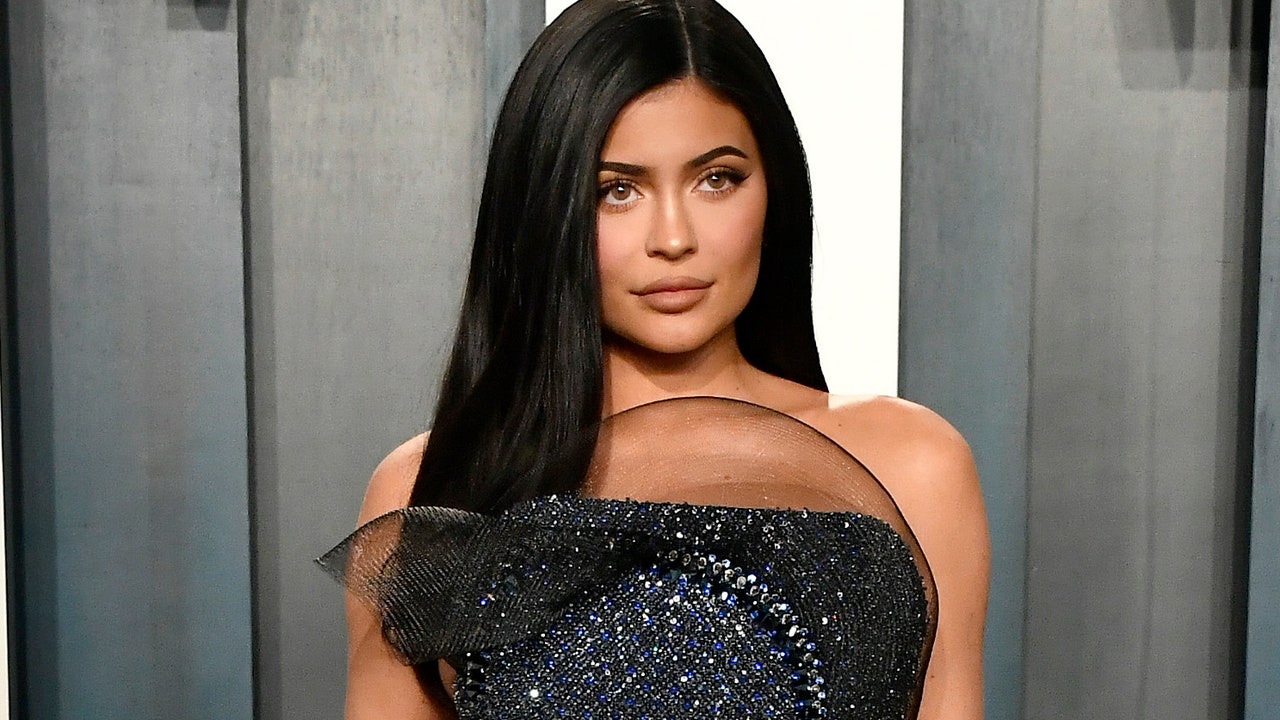
On March 31, the company announced that in addition to the $1 million Kylie Jenner donated to health care professionals on the front lines, she and Kris Jenner have partnered with Coty—a beauty conglomerate that owns a major stake in Kylie Cosmetics—to manufacture hand sanitizers for hospitals in Southern California. “The hand sanitizers will be donated to the emergency and health care workers caring for patients on the front lines of the current COVID-19 public health crisis,” a representative said in a statement. “The custom hand sanitizer includes a special message for recipients: ‘Dedicated to first responders working to support our communities.’ Both Jenners have shown support and been outspoken with guidance on social media since the start of the COVID-19 pandemic. With this donation to Southern California health care workers, Kris and Kylie are taking extra steps to provide help directly to those who need it most on the ground.”
Avon
The beauty brand is donating personal care boxes to Feed the Children, which will go to families in need. “As a response to the spread of COVID-19, this month, Avon is sending $2 million worth of essential personal care and hygiene products like soap, body wash, and skin care, to Feed the Children to ensure that we’re doing our part to support the community during this unprecedented time,” a representative for the brand said in an email. “Feed the Children works closely with community partners who serve the most vulnerable of populations. Through that network we are intimately aware of the needs of the community. Feed the Children’s goal is to provide vital resources to keep these families consistently afloat.”
Tan-Luxe
The self-tanner brand is pivoting its production to focus on 10,000 bottles of hand sanitizer housed in the brand’s existing packaging. The hand sanitizer will be donated to those on the front lines, and the brand turned to social media on Friday to ask its followers to nominate those in need. “As a business, we have been deeply moved by the devastating impact the ongoing situation is having on the world,” the brand’s founder, Marc Elrick, said in a statement. “I want to ensure that we are doing all we can to help the front line–it’s more important than ever that we work together to overcome during what is set to be an extremely difficult time. I am proud to announce we have created Hand Luxe exclusively for those who continue to work hard to protect us during this period. These are not available to buy at this time–they are being donated free of charge to health workers and the NHS in tribute to the phenomenal work they are doing for the country.”
Estée Lauder
The company announced on March 24 that it will reopen a manufacturing company in Melville, New York, to produce hand sanitizer for health care personnel. “The Estée Lauder Companies is proud to contribute to the broader COVID-19 relief efforts by reopening our Melville manufacturing facility this week to produce hand sanitizer for high-need groups and populations, including front-line medical staff,” a spokesperson for the company told WWD. “We are grateful to our employees who have worked tirelessly to make this possible. Compensated, employee volunteers will support this vital, meaningful effort.”
L’Oréal
The beauty brand is using its factories to produce hand sanitizer and hydroalcoholic gel to distribute throughout Europe. “In this exceptional crisis situation it is our responsibility to contribute in every possible way to the collective effort,” Jean-Paul Agon, L’Oréal chairman and chief executive officer, said in a statement to WWD. “Through these gestures, L’Oréal wishes to express its appreciation, support, and solidarity with all those who mobilize with extraordinary courage and abnegation to fight against this pandemic.” The Foundation L’Oréal is also donating 1 million euros to the associations working to help those most disadvantaged during the crisis.
LVMH
The beauty and fashion giant, which owns brands like Dior and Givenchy, was one of the first major companies to announce it was switching gears in its production lines to start making hydroalcoholic gel. “Through this initiative, LVMH intends to help address the risk of a lack of product in France and enable a greater number of people to continue to take the right action to protect themselves from the spread of the virus,” the company said in a statement. “LVMH will continue to honor this commitment for as long as necessary, in connection with the French health authorities.”
Unilever
On March 25, Unilever (the parent company of brands including Dove and Tresemmé) announced its “United for America” initiative, which will include donations of food, soap, and personal-hygiene and home-cleaning products, a partnership with Feeding for America, the donatio of more than 200,000 masks to New Jersey hospitals, and a National Day of Service on May 21 to provide an estimated $12 million of support for Americans in need. The company is also offering $540 million of cash flow relief “to support livelihoods across its extended value chain through: early payment for its most vulnerable small- and medium-sized suppliers, to help them with financial liquidity; and extending credit to selected small-scale retail customers whose business relies on Unilever, to help them manage and protect jobs.”
Dyson
The company behind the mega-popular hair-dryers and vacuum cleaners has pledged to produce 10,000 ventilators to aid patients battling the coronavirus in the U.K. “A ventilator supports a patient who is no longer able to maintain their own airways, but sadly there is currently a significant shortage, both in the U.K. and other countries around the world,” James Dyson said in a statement. “Since I received a call from Boris Johnson 10 days ago, we have refocused resources at Dyson, and worked with TTP, The Technology Partnership, to design and build an entirely new ventilator, The CoVent.”
This new device is a box that attaches to a hospital gurney and is built using the technology of the brand’s digital motor. There are also plans to contribute 5,000 donated CoVents to “the international effort.”
Orly International
The nail polish and nail-care brand announced its Los Angeles factory will make 75% -alcohol hand sanitizer. “As a family-owned brand, we’re very lucky that we have our manufacturing plant right here in Los Angeles, so we can reconfigure to produce large quantities of hand sanitizers at this time of need,” founder and CEO Jeff Pink said in a statement. “For 45 years, our company has always created products based on our community’s needs, and right now, hand sanitizers are vital to helping reduce the spread of this devastating pandemic and to help keep everyone safe.”
Coty Inc.
The beauty conglomerate (which is the manufacturer behind makeup and fragrance brands such as CoverGirl and Gucci perfumes) is the latest to dedicate its manufacturing services to the production of hydroalcoholic gel for medical and emergency services personnel. “As a responsible beauty company, we make our resources and facilities available to help the communities we are operating in during these exceptionally challenging times,” CEO Pierre Laubies said in a statement. “We are proud to support the brave professionals fighting on the front lines against COVID-19 by providing hand sanitizer where it is needed.” The first batches should start being produced by April.