Categories
Health

Here's How You Can Help Women in States With Extreme Abortion Bans


On Tuesday, the Alabama Senate approved a bill that would outlaw almost all abortions in the state. The new legislation would ban abortions at every stage of pregnancy—with only an exception for when the mother’s life is at serious risk, but not in instances of rape or incest. It’s not just women who would be penalized under the ban. Doctors who perform the procedure would be charged with felonies, and could face up to 99 years in prison.

Alabama’s abortion ban comes just after four other states—Georgia and Ohio, included—passed so-called “heartbeat” laws, which ban abortions at about six weeks gestation. But this bill is the most extreme measure we’ve seen so far.

While none of these bills have been enacted—and all are likely be blocked in the lower courts—they’re indicative of a larger fight to control women’s bodies and potentially to overturn Roe v. Wade. Here, we’ve outlined how to help fight against these bans—and the overall effort to limit women’s reproductive rights.

Donate to organizations on the front lines

In addition to supporting national organizations leading the fight to protect women’s reproductive rights—like Planned Parenthood—there are many grassroots organizations helping women on the ground. Here are a few organizations to consider that are providing resources and access to local women looking to obtain abortions:

  • The Yellowhammer Fund: Located in Alabama, the Yellowhammer Fund offers funding for women seeking treatment at one of Alabama’s three remaining abortion clinics. The fund will also help with other barriers to access, such as travel or lodging.

  • National Network of Abortion Funds: NNAF is a network of funds—including the Yellowhammer Fund—across 38 states that helps eliminate economic for low-income women looking to obtain an abortion. They work with funds everywhere from Georgia to Texas to Ohio.

  • Magnolia Fund: A Georgia-based organization that provides resources to support the reproductive choices of women in the South, as well as to help defray the cost of abortion fees for women in Georgia.

  • Access Reproductive Care—Southeast: ARC helps people in the South—in states like Alabama, Florida, Georgia, South Carolina, or Tennessee—receive access to safe and affordable reproductive care by offering financial and logistical support.

Work to elect progressive local leaders

25 men voted to pass Alabama’s abortion ban. And the other extreme abortion bans in states like Georgia have also succeeded in local legislature, thanks to conservative, mostly male politicians. In other words, one of the most effective ways to put a stop the bans is by ousting these men from office. To do that, we have to support—and help elect—their progressive opponents. Here’s a few places determined to do just that:

  • She Should Run: A nonpartisan nonprofit working across the country to get more women elected to office, at all levels.

  • Emerge America: An organization that trains progressive women to run for elected office in 25 states, such as Georgia, Alabama, Wisconsin, Virginia, and more.

  • Higher Heights for America: A national membership-based organization dedicated to electing black women to office across the country.

  • EMILY’s List: An organization dedicated to electing pro-choice Democratic women to office by guiding women through their campaigns from start to finish, with trainings, webinars, and volunteer support.

  • Run for Something: An organization that recruits young progressives to run in down-ballot races.

Volunteer on the ground

If you live in a state with an extreme abortion ban, or close enough to one to travel there, you can volunteer to be a clinic escort. As an escort you’ll accompany women as they enter an abortion clinic, and oftentimes have to walk past protesters. Connect with Planned Parenthood to look for opportunities, or use their Health Center guide to get in touch with local clinics to see how you can best be of service.


Source link

Categories
Health

With the Alabama Abortion Ban, Republicans Push to Challenge Roe v. Wade and Strip Women of Their Rights


“If we are arguing personhood,” said Eric Johnston, the president of the Alabama Pro-Life Coalition, “then it does not matter how a child is conceived.” Late last night, Alabama passed a total abortion ban passed in the state after an amendment that would have made an exemption to the law in cases of rape or incest failed. (The ban does have an exemption for cases in which a woman’s life is in danger.) Johnston had helped draft the bill. If it’s signed into law and allowed to take effect, doctors who perform abortions on women at any stage of pregnancy could face 99 years in prison.

In the lead up to the vote, Republican Rep. Terri Collins was even clearer, arguing that “[o]ur bill says that a baby in the womb is a person.” Collins is a cosponsor on the bill, which she hopes will help overturn Roe v. Wade. In Alabama, as in Georgia and Ohio, which both passed extreme abortion bills earlier this month, a clump of cells now has more rights than an adult woman—or, as CBS News pointed out, an sixth grader. Under the Ohio law, for example, a pregnant 11-year-old rape victim would no longer be allowed to have an abortion.

Yes, ICYMI: Republicans want to overturn Roe. They want to take away the right to have a safe abortion. They want to send us right back to America pre-1973. But it’s not just about Roe. Under Donald Trump, a man who’s had a lot of sexual relationships with a lot of women who aren’t his wife, the GOP has declared an open war on women’s reproductive health. It seems we can’t reach the end of a week without a new crisis, some gruesome legislative nightmare explicitly crafted to rein in our rights. It’s 2019, and Republicans have an unquenchable thirst for the Handmaid’s Tale agenda.

Lately, the crusade has taken the form of “heartbeat bills,” which ban abortion before most women even know they’re pregnant at around six weeks. (That’s a little after one late period, although presumably most of the men who wrote these bills are unfamiliar with how menstruation works.) Other efforts have attempted to defund Planned Parenthood, which provides life-saving mammograms and pap smears to millions of people, using a sneaky Title X “Gag Rule.” But inevitably, there’s more to come. The GOP has one goal when it comes to women—strip us of our rights to reproductive health care and the freedom to live the lives we choose.

Since the appointment of Supreme Court Justices Brett Kavanaugh and Neil Gorsuch, state and local Republicans have doubled down on their plan to regulate women’s bodies. And why not? For the first time since Roe v. Wade was decided in 1973, the makeup of the court is so conservative that it’s entirely possible the decision will soon be struck from the books.

We could scream ourselves hoarse, calling out how highly strange and deeply hypocritical it is that the supposed party of small government wants to squeeze itself inside women’s uteruses. Or we could acknowledge what’s really going on here: It’s not a set of ideological principles that motivates the Republican Party. It’s a desire to control women, to limit our possibilities and our potential, to beat back the gains of feminism and civil rights, and to do all that on a platform of coercion, intimidation, and misinformation. Of course, there are some good actors in the Republican Party (likely Catholics) who truly believe that life begins at conception. I don’t believe that, but at least I understand where those people are coming from. Most anti-choice sentiment isn’t that.


Source link

Categories
Health

Jameela Jamil Calls Her Abortion 'The Best Decision I Have Ever Made'


Last week, Georgia Gov. Brian Kemp, a Republican, signed a six-week abortion ban in the state, prompting widespread condemnation nationwide. Now, actress Jameela Jamil has taken to Twitter to reveal that she once had an abortion—and that she doesn’t regret it.

“I had an abortion when I was young, and it was the best decision I have ever made,” Jamil wrote on Twitter. “Both for me, and for the baby I didn’t want, and wasn’t ready for, emotionally, psychologically and financially. So many children will end up in foster homes. So many lives ruined. So very cruel,” she said of the bill, which is due to take effect in January 2020 but will likely be challenged in court.

“This anti-abortion law in Georgia is so upsetting, inhumane, and blatantly demonstrative of a hatred of women, a disregard for our rights, bodies, mental health, and essentially a punishment for rape victims, forcing to carry the baby of their rapist,” she wrote in the thread. Jamil also went on to make clear that she wasn’t criticizing foster care, but rather the burden the abortion ban would place on the overwhelmed foster care system. “Ps.. this isn’t any diss at ALL to foster homes. I’m in awe of people who take in children in need of a family and a home: but if Georgia becomes inundated with children who are unwanted or unable to be cared for, it will be hard to find great fostering for them all.”

As Glamour has reported, under the abortion ban—the most extreme abortion ban nationwide—women who get the procedure could face life in prison and even be sentenced to death. If a woman travels to another state to have an abortion, she could be charged with conspiracy to commit murder and could face a decade behind bars. In a follow-up tweet, Jamil wrote that “the anti-abortion law is also especially targeted at those without the means/ability to move state[s]. Women who are marginalized, poor or disabled will, as ever, be the ones to suffer the most. The wealthy will have so much more freedom.”

Other stars have been quick to come out against the bill. On her talk show, Busy Tonight, Busy Philips shared her own abortion story. “I had an abortion when I was 15-years-old. I’m telling you this because I’m genuinely really scared for women and girls all over this country,” Philips said. And activist and actress Alyssa Milano proposed a now-controversial sex strike to fight all anti-abortion laws.

“Our reproductive rights are being erased. Until women have legal control over our own bodies we just cannot risk pregnancy. JOIN ME by not having sex until we get bodily autonomy back. I’m calling for a #SexStrike. Pass it on,” she tweeted.


Source link

Categories
Health

This Bridesmaid Says the Bride Suggested She Get an Abortion So Her Dress Fit Better


We’ve heard some wild tales of bad behavior by brides over the years, but this latest story may just be the most out-there (and frankly unbelievable) yet.

The Sun first reported the story, which was originally posted in a Facebook group about wedding shaming. In the post, a bridesmaid claims that her then-best friend (the bride whom she calls “Kate”) did not take the news of the bridesmaid’s pregnancy well—at all.

“About a year before the wedding, I found out I was pregnant. I was always told I couldn’t have kids and so obviously my daughter was not planned but I was over the moon,” she says, per The Sun. “So I told Kate, expecting excitement, right? Nope. She immediately told me that I was going to be so stressed trying to get my bridesmaid dress fitting on my own since I’d have to do it after everyone already had theirs (I was due in April, wedding was in June).”

The bridesmaid continued: “She reminded me that it was a kid free wedding, and then after thoroughly explaining how difficult her wedding would be for me, she said (verbatim) ‘so don’t you think it might be better for you to have an abortion?’ I had to read that one a few times.”

Wow. Just wow.

“I asked if she seriously just suggested I get an abortion to make her wedding go more smoothly?” she wrote. “She told me I was ruining my life and then called her mom to tell me to have an abortion … So (obviously) I didn’t speak to her again, got a wedding invite and never sent the RSVP back, and her eight months pregnant future SIL took my place as bridesmaid, she ended up with dresses that easily would’ve accommodated my postpartum body.”

We would agree that ending this relationship is for the best. And can someone tell this bride there are plenty of ways to throw a child-free wedding that don’t involve telling your bridesmaid what to do with her body?

See more: This Bride Thinks Her Pregnant Bridesmaid Owes Her a New Wedding for Upstaging Her


Source link

Categories
Health

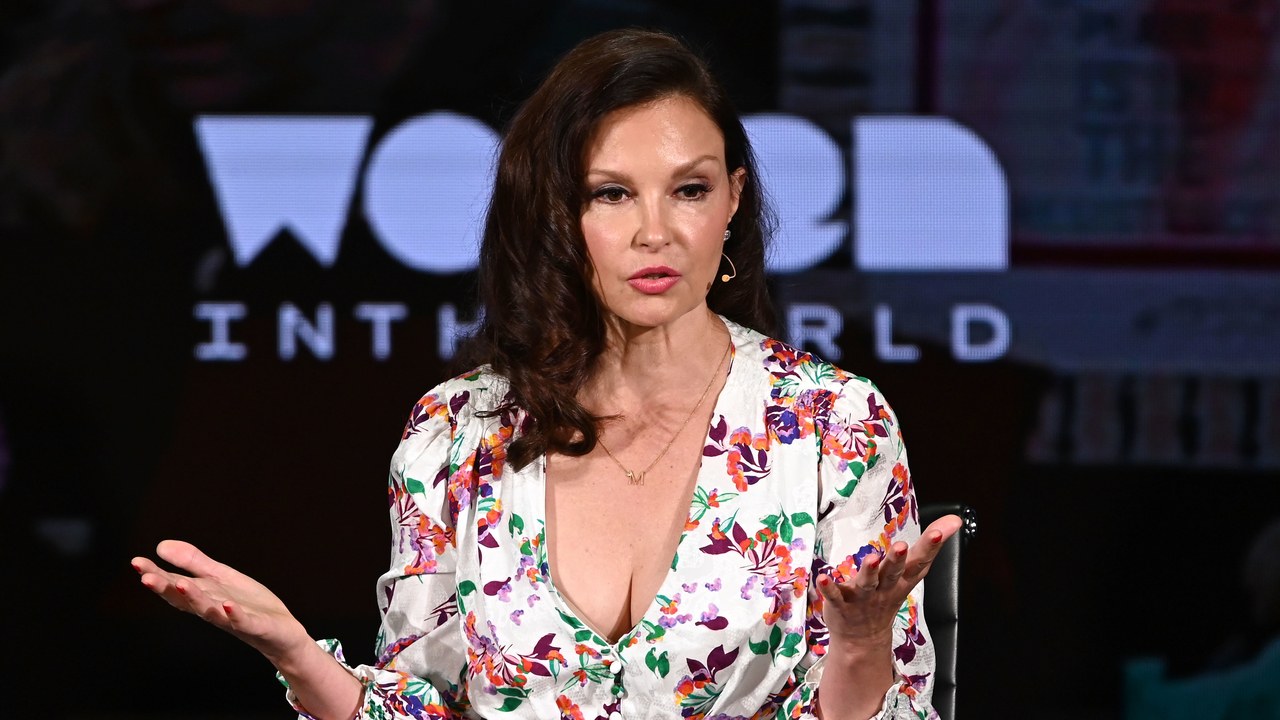
Ashley Judd Opposes Georgia's Abortion Ban as a Rape Survivor


Ashley Judd may have begun her career as an actress, but over the years she has become an outspoken public advocate and activist for women’s rights around the world. She was one of the first women to go on the record with her allegations against Harvey Weinstein, has spoken passionately at the Women’s March, and is well-known for her global humanitarian work.

This week, Judd spoke at the Women in the World Summit about another cause close to her heart: abortion rights. The conversation between Judd and moderator Katie Couric turned to Georgia’s controversial “heartbeat bill” which, if passed, would prohibit abortions after a heartbeat is detected which is typically five to six weeks into a woman’s pregnancy. At that point, many women don’t yet realize they’re pregnant.

“As everyone knows, and I’m very open about it, I’m a three-time rape survivor. And one of the times I was raped, there was conception,” Judd said, per People. “And I’m very thankful I was able to access safe and legal abortion. Because the rapist, who is a Kentuckian…has paternity rights in Kentucky and Tennessee. I would’ve had to co-parent with my rapist.” (Judd resides in Tennessee.)

“So having safe access to abortion was personally important to me and, as I said earlier, democracy starts with our skin. We’re not supposed to regulate what we choose to do with our insides,” she continued.

People notes that it is unclear whether the rape that Judd speaks of resulted in a conviction because that could have nullified parental rights for the man, but Judd’s point is clear nonetheless. And it’s yet another chilling reminder of what is at stake for women when it comes to passing anti-choice legislation. There can be lifelong consequences to legislating what women can and cannot do with their own bodies.

Judd, along with other high-profile people in Hollywood like Alyssa Milano and Mandy Moore, have circulated a petition that promises to pull production from the state if the bill is signed into law.

There could be a serious economic impact for the state if Hollywood productions stop filming there though it’s still unclear at this point whether Georgia Governor Brian Kemp will sign the bill into law—in which case it will surely be challenged in the courts. He has until May 12 to make that decision.


Source link

Categories
Health

Planned Parenthood President Leana Wen: Abortion Bans Are a Call to Action—Not a Reason to Give Up


Just now, politicians in Georgia voted to ban abortion after six weeks. Georgia is now the third state to pass this harmful restriction this month. (Fifteen states have filed similar bans in this legislative session alone.) You don’t have to look far to understand just how these introduced abortion bans—up by 63 percent in states in 2019—affect real people.

Jennifer, a Planned Parenthood patient in Georgia in her early forties, told us that after she’d missed a period, she knew immediately she was pregnant. Jennifer didn’t wait. She called a nearby health center to schedule her abortion. But the medically unnecessary restrictions that limited the number of providers and available appointment times delayed her care by weeks. Despite knowing she was pregnant just after a missed period and deciding she wanted an abortion immediately, by the time Jennifer received care, she was eight weeks pregnant.

Imagine if this were any other aspect of medicine. Imagine if your ability to receive treatment was limited by when you were diagnosed with the condition. Chances are you wouldn’t even know you had the condition by the time it was too late to receive the treatment that you wanted. And if you did get diagnosed in time, you might still have to travel hundreds of miles, find child care, get time off from work, and face protesters—just to receive that medical care.

That’s what happens to women in need of abortion access in places like Georgia. These six-week abortion bans affect many women before they know they’re pregnant. Even if they are one of the rare few—like Jennifer—who know earlier than six weeks, these women still find it almost impossible to access an abortion within that time frame. These bans fundamentally infringe upon a person’s right to bodily autonomy.

We’re less than three months into the 2019 state legislative session, and at least one disturbing trend has emerged: Anti-women’s-health politicians have doubled down on their efforts to take away the right to safe, legal abortion. Already, more than 250 bills have been filed that directly restrict abortion access, and nearly half of those restrictions have been abortion bans—outright attempts to prohibit people from making their own health care decisions.

Politicians are directly interfering with medical practice and endangering women’s lives. We know this statistic, but it bears a repeat mention: Abortion is a safe, legal medical procedure that nearly one in four women will have in their lifetime, and it’s part of the full spectrum of reproductive health care. We are at an all-time low for unintended pregnancies because of birth control and evidence-based sex education. Politicians wishing to reduce unintended pregnancies and the need for abortion should invest in women’s health. Instead, their actions directly go against public health and public will. We know the cost: It’s women’s lives.

At Planned Parenthood we see the effects of these attacks firsthand. In the last eight years, there have been more than 420 laws passed that directly restrict abortion access. These harmful laws have shuttered health centers and turned entire regions of the country into abortion deserts. Women are forced to travel hundreds of miles for health care, and those who cannot—women who can’t afford the travel, who can’t find child care and time off from work, who live in rural communities without access, who are often people of color—will just go without. In fact, people in six states have only one abortion provider left, exacerbating an already challenging landscape for reproductive health care.

We know what happens when politicians cut access to vital health care services: Patients delay care or go without it. When Texas eliminated Planned Parenthood from its family planning program, 30,000 fewer women accessed health care. In Iowa, when four health centers closed, 12,000 people went without care and the rates of STIs skyrocketed. A recent study from Texas showed when the state enacted abortion restrictions, it didn’t end abortion care in the state. The restrictions just meant delayed care and increased the number of second-trimester abortions.


Source link