Categories
Health

Ashley Judd Opposes Georgia's Abortion Ban as a Rape Survivor


Ashley Judd may have begun her career as an actress, but over the years she has become an outspoken public advocate and activist for women’s rights around the world. She was one of the first women to go on the record with her allegations against Harvey Weinstein, has spoken passionately at the Women’s March, and is well-known for her global humanitarian work.

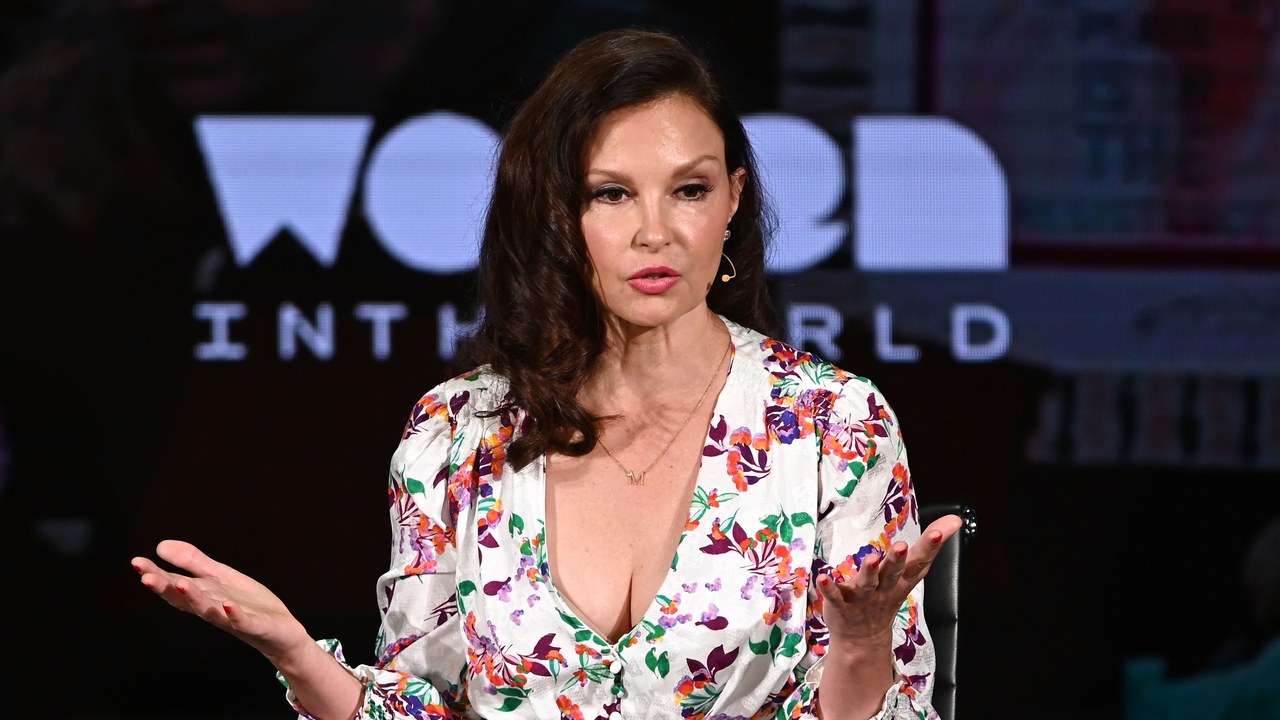
This week, Judd spoke at the Women in the World Summit about another cause close to her heart: abortion rights. The conversation between Judd and moderator Katie Couric turned to Georgia’s controversial “heartbeat bill” which, if passed, would prohibit abortions after a heartbeat is detected which is typically five to six weeks into a woman’s pregnancy. At that point, many women don’t yet realize they’re pregnant.

“As everyone knows, and I’m very open about it, I’m a three-time rape survivor. And one of the times I was raped, there was conception,” Judd said, per People. “And I’m very thankful I was able to access safe and legal abortion. Because the rapist, who is a Kentuckian…has paternity rights in Kentucky and Tennessee. I would’ve had to co-parent with my rapist.” (Judd resides in Tennessee.)

“So having safe access to abortion was personally important to me and, as I said earlier, democracy starts with our skin. We’re not supposed to regulate what we choose to do with our insides,” she continued.

People notes that it is unclear whether the rape that Judd speaks of resulted in a conviction because that could have nullified parental rights for the man, but Judd’s point is clear nonetheless. And it’s yet another chilling reminder of what is at stake for women when it comes to passing anti-choice legislation. There can be lifelong consequences to legislating what women can and cannot do with their own bodies.

Judd, along with other high-profile people in Hollywood like Alyssa Milano and Mandy Moore, have circulated a petition that promises to pull production from the state if the bill is signed into law.

There could be a serious economic impact for the state if Hollywood productions stop filming there though it’s still unclear at this point whether Georgia Governor Brian Kemp will sign the bill into law—in which case it will surely be challenged in the courts. He has until May 12 to make that decision.


Source link

Categories
Health

Ashley Judd: What Harvey Weinstein's Arrest Means for #MeToo


Harvey Weinstein, the disgraced Hollywood producer accused of numerous incidents of sexual assault and misconduct, turned himself into authorities on Friday after facing charges of of first- and third-degree rape and committing a criminal sexual act in the first degree. The news was met with an outpouring of emotion from women who had spoken out against Weinstein in the past—and on Saturday, actress and Weinstein accuser Ashley Judd penned a powerful op-ed for Time about what his arrest means for the future of #MeToo.

“When the news broke that Harvey Weinstein would be surrendering himself on rape and sexual assault charges, I didn’t have a reaction,” she wrote. “As I spoke with others for whom the ground was shaking I realized my feeling was that a sexual predator being legally accountable for criminal behavior is and should be normal, routine and not particularly newsworthy. And I also understood why it is thunderous news.”

Judd continued by writing that Weinstein’s arrest—his turning-in of himself—marked a significant turning point in how society and the criminal justice system addresses the alleged crimes of powerful men, who have often used their own power to make themselves immune to consequences.

“And in this moment, in this era, that a powerful man who thrived and flourished in a culture of impunity was arrested and charged is resoundingly significant. It is a watershed event, an irreversible pivot away from tacit and explicit license to exploit to a ground of firmer boundaries and clarity about intolerable behavior no longer being tolerated,” she wrote.

Still, she expressed disappointment about Weinstein’s own approach to the charges: He had an opportunity to take accountability for his years of allegedly damaging and hurting women but has instead chosen to plead not guilty.

“I was hopeful Harvey would plead guilty, that his surrender was volitional, so that in addition to carving out a singular position of disgrace, he could come forward as the predator who walks out of shame onto a new path of humility, introspection, accountability and amends, thereby leading our men and country in the necessary and inexorable trajectory of restorative justice,” she wrote. “It seems that Harvey, though, will not be the person to do that, as he is pleading not guilty and still maintains, in the face of so many accusations, that all sex was consensual. Denial can stand for ‘I don’t even know I am lying,’ and it appears that is where Harvey still lives.”

Judd ended her piece saying that the movement will have to continue waiting for an “accused who can and will embody what the #MeToo movement and our society needs and wants: someone who can navigate the duality of having aggressed and address their abuse of power with culpability and integrity.”

She concluded that “restorative justice is also dual; in order for survivor-victims and society to embrace and restore the reformed, the reformed must have been genuinely transformed, shedding layers of toxic masculinity, exiting the denial/apology tour and standing in a new and collective space where both the person is and the narrative are made whole and unified.”

Her point touches on an important part of the #MeToo discussion: Many people wonder if there should be a path forward for the scores of accused predators, abusers, and harassers.

Where #MeToo goes from here, as those accused begin to plan their comebacks, is a critical question that powerful figures in the movement are beginning to address. For more, read how #MeToo founder Tarana Burke outlines the next steps for the movement—and lays out how you can participate.

Related Stories

#MeToo Founder Tarana Burke Just Laid Out the Movement’s Next Steps

Anita Hill: Ignoring Suffering Exposed by #MeToo Won’t Make It Go Away

What TV Will Look Like After #MeToo


Source link

Categories
Health

Ashley Judd Sues Harvey Weinstein for Allegedly Damaging Her Career


Yesterday, actress Ashley Judd filed a lawsuit against former movie mogul Harvey Weinstein alleging that her career was damaged by lies he spread against her in the Hollywood community after she rejected his sexual advances. Judd was one of the first women to come forward with her story about the producer. In October, she told the New York Times she remembered thinking of an encounter with Weinstein, “How do I get out of the room as fast as possible without alienating Harvey Weinstein?”

The Times notes that it is rare for people to recover damages in suits such as this, as they can be hard to prove. But Judd appears to have a corroborating witness on her side, Lord of the Rings‘ director Peter Jackson. Judd claims that she was being for a prominent role in the film franchise when suddenly, the talks came to an abrupt halt. She told ABC News that she went from being invited to consider two roles to “poof,” nothing. “We never heard anything back and I remember calling my agent multiple times,” Judd said.

Her lawsuit alleges that Weinstein “torpedoed Ms. Judd’s incredible professional opportunity” by falsely telling Mr. Jackson that Ms. Judd was a “nightmare” who should be avoided “at all costs.” Jackson appears to back this up in a December interview with Stuff. “I recall Miramax telling us they [Judd and Mira Sorvino] were a nightmare to work with and we should avoid them at all costs. This was probably in 1998,” Jackson said. “At the time, we had no reason to question what these guys were telling us – but in hindsight, I realize that this was very likely the Miramax smear campaign in full swing. I now suspect we were fed false information about both of these talented women – and as a direct result their names were removed from our casting list.”

According to the Times, Judd is suing Weinstein for defamation and sexual harassment and for violating California’s broadly written Unfair Competition law, which prohibits “unlawful, unfair and fraudulent business acts and practices.” Her lawyer, Theodore Boutrou Jr says, “Ashley is fighting back, but she also wants to point the way for others” and that “if this isn’t an example of unfair business practice then I don’t know what is.” Judd says that any money won in the suit will be donated to the Time’s Up Legal Defense Fund.

Weinstein issued a statement denying Judd’s claims: “The most basic investigation of the facts will reveal that Mr. Weinstein neither defamed Ms. Judd nor ever interfered with Ms. Judd’s career, and instead not only championed her work but also repeatedly approved her casting for two of his movies over the next decade. The actual facts will show that Mr. Weinstein was widely known for having fought for Ms. Judd as his first choice for the lead role in Good Will Hunting and, in fact, arranged for Ms. Judd to fly to New York to be considered for the role. Thereafter, Ms. Judd was hired for not one, but two of Mr. Weinstein’s movies, ‘Frida’ in 2002 and ‘Crossing Over’ with Harrison Ford in 2009. We look forward to a vigorous defense of these claims.”


Source link

Categories
Health

Ashley Judd Just Shared Her Go-To Way to Respond to Sexual Harassment


Ashley Judd—like many women—is no stranger to instances of sexual harassment. The actress was one of those on record in the bombshell New York Times investigation that revealed decades of alleged sexual harassment and assault by former Hollywood producer Harvey Weinstein. This week, she opened up on Good Morning America about the encounter she had with him early in her career, saying that “there has to be a real profound understanding on the part of the sexual predator that what he was doing was wrong and criminal.” She also accepted the “Speaking Truth to Power” award at the Women’s Media Awards on Thursday.

Now, in a Teen Vogue interview published Saturday, Judd shared how she responds to sexual harassment—particularly the sort encountered on the street. Yelling, “Stop! That is inappropriate and unwelcome,” Judd “holds her hands up like catcher’s mitts, telling her potential harasser to stop what they’re doing and, at the same time, making her hands like a shield between her and the hurtful comments.”

Judd adds that expecting to be harassed isn’t something we should have to do, but “disrupting the structures” that allow it to occur is really important. So practicing what to do when it happens—getting comfortable with making the gestures and speaking loudly, in her case—is important for her to be able to respond in a way that she’s comfortable with and feels empowering.

For those who don’t feel like they can respond, Judd says, just being able to extricate themselves from the situation—in whatever way is safe—is important.

“Feeling safe is everything,” she told Teen Vogue. “That’s essentially what is taken from us when we experience sexual harassment and microaggressions.”

She added that two things that can’t be taken away are your power and instinct. “You are ineffably powerful,” she told Teen Vogue. “If it feels wrong, it is wrong.” And it’s more than OK to make that known.

Related Stories:
Ashley Judd Thinks There’s Still ‘Help’ for Someone Like Harvey Weinstein


Source link