Categories
Health

Ashley Judd Opposes Georgia's Abortion Ban as a Rape Survivor


Ashley Judd may have begun her career as an actress, but over the years she has become an outspoken public advocate and activist for women’s rights around the world. She was one of the first women to go on the record with her allegations against Harvey Weinstein, has spoken passionately at the Women’s March, and is well-known for her global humanitarian work.

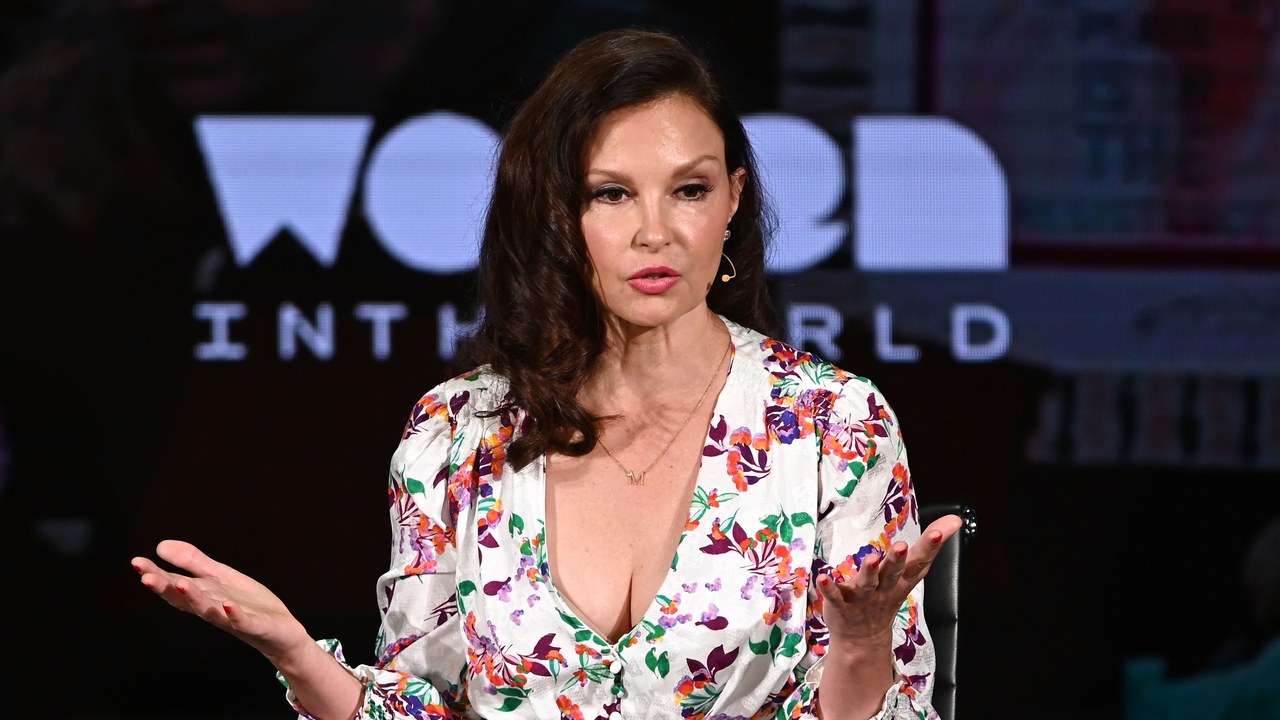
This week, Judd spoke at the Women in the World Summit about another cause close to her heart: abortion rights. The conversation between Judd and moderator Katie Couric turned to Georgia’s controversial “heartbeat bill” which, if passed, would prohibit abortions after a heartbeat is detected which is typically five to six weeks into a woman’s pregnancy. At that point, many women don’t yet realize they’re pregnant.

“As everyone knows, and I’m very open about it, I’m a three-time rape survivor. And one of the times I was raped, there was conception,” Judd said, per People. “And I’m very thankful I was able to access safe and legal abortion. Because the rapist, who is a Kentuckian…has paternity rights in Kentucky and Tennessee. I would’ve had to co-parent with my rapist.” (Judd resides in Tennessee.)

“So having safe access to abortion was personally important to me and, as I said earlier, democracy starts with our skin. We’re not supposed to regulate what we choose to do with our insides,” she continued.

People notes that it is unclear whether the rape that Judd speaks of resulted in a conviction because that could have nullified parental rights for the man, but Judd’s point is clear nonetheless. And it’s yet another chilling reminder of what is at stake for women when it comes to passing anti-choice legislation. There can be lifelong consequences to legislating what women can and cannot do with their own bodies.

Judd, along with other high-profile people in Hollywood like Alyssa Milano and Mandy Moore, have circulated a petition that promises to pull production from the state if the bill is signed into law.

There could be a serious economic impact for the state if Hollywood productions stop filming there though it’s still unclear at this point whether Georgia Governor Brian Kemp will sign the bill into law—in which case it will surely be challenged in the courts. He has until May 12 to make that decision.


Source link

Categories
Health

As a Parkland Shooting Survivor, This Is What I Want Brett Kavanaugh to Know About Gun Violence


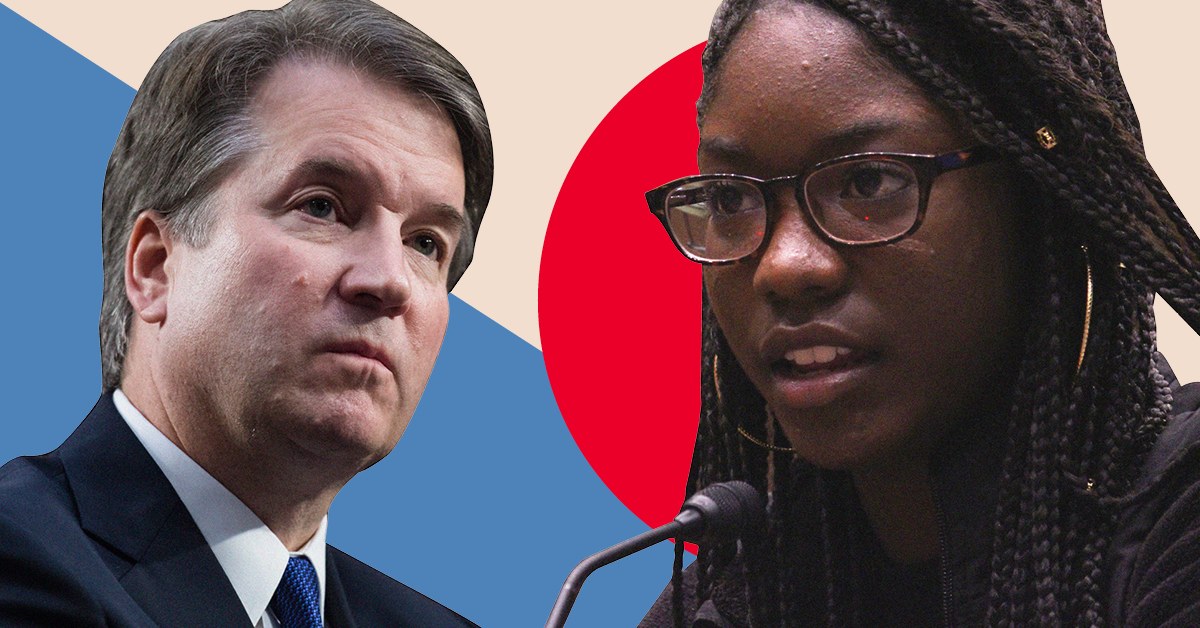
A stark image stood out in a tumultuous week of Supreme Court confirmation hearings for Trump nominee Brett Kavanaugh: The judge declining to shake hands with a man who lost a child in the tragic Parkland, Florida school shooting in February.

Kavanaugh walked away from the father of Jaime Guttenberg, who was among 17 people murdered in the Valentine’s Day rampage at Marjory Stoneman Douglas High School. The encounter sparked a range of responses from Twitter users, with many suggesting that it was a visual representation of where conservatives stand on gun control reform.

But on Friday, the issue of gun violence was upon Kavanaugh again when the Senate Judiciary Committee heard an emotional testimony from Stoneman Douglas survivor Aalayah Eastmond.

Kavanaugh has defended his dissent in a case related to a ban on semi-automatic rifles—the weapon of choice in the Parkland slayings. Still, the judge, whose two daughters joined him (for a time) at the hearings, says he knows the U.S. must address gun violence.

Not convinced: Eastmond, who spoke at the March For Our Lives rally and became a youth advocate with the Brady Campaign to Prevent Gun Violence and student-led Team ENOUGH.

Eastmond was appalled by the judge’s refusal to engage with Jaime’s dad at the hearing: “The amount of disrespect is unimaginable, and this is who, ‘so-called President’ nominated,” tweeted the Parkland senior. “See you Friday Kavanaugh.”

At the hearing, she used the horror she had seen at her own school (she hid under the body of a dead classmate to survive the shooting), and also the loss of an uncle to a shooting in Brooklyn, New York, to raise questions about Kavanaugh’s views on gun control: “As you make your final decision, think about it as if you had to justify and defend your choice to those who we lost to gun violence,” she urged the committee in her prepared remarks.

On the eve of her Senate testimony, Eastmond talked to Glamour about her decision to speak against Kavanaugh’s confirmation. Here are the highlights, in her own words.


I’m here to testify at Kavanaugh’s hearing [so] people can understand that gun violence is an everyday problem… Lives are being taken every day. And not only that, but lives in urban communities, every day.

I was there on February 14th. And I was in Room 1214, which was the third classroom the shooter shot into, and I had to hide underneath one of my deceased classmate’s bodies to survive. That is the story that I’m sharing [so] people can understand that it’s not, you know, normal. And it shouldn’t be normalized.

I saw things that nobody should have seen and that nobody should have to see in their lifetime. Being in school, [a] place where you should feel safe and you’re learning—in fact, I was in Holocaust History [class], learning about hate and terror. And just to experience that right after going over [a] hate groups project was just unimaginable, and a coincidence.

Hearing gunshots and not knowing what gunshots sound like. Not knowing what to do and then just thinking in a survival-mode type of way to do what I did, which was hide underneath a body. Smelling the gunpowder and seeing the smoke, and seeing the red on the floor and having flesh and body matter in my hair. At the age of 17 in school — [well] I was 16 at the time — that shouldn’t be.

I shouldn’t have to be talking about this, and I’m not the only one that has this story. There’s people all over the country that share similar stories.

It’s something that nobody wants to talk about — and it’s something that I am forced to talk about every day. [It’s] not only just what I experienced, but the fact that black and brown youth are disproportionately impacted by gun violence every day.

I don’t think [Kavanaugh] should be [a] Supreme Court judge. Period. [If] we’re gonna have a judge on the highest court of the land, they need to be a judge that recognizes the issue of gun violence and the epidemic that the youth is experiencing every day, and he doesn’t recognize that it’s a problem, so I don’t think he should be getting that seat.

[Based on] his comments towards the Second Amendment, he doesn’t believe it should be altered or changed at all because it’s “a well-regulated militia” and everybody deserves the right to own a gun. But I disagree, because your freedom to own a gun is not more important than my freedom to live.

If he doesn’t have the decency to shake a hand of a father of a victim, he definitely will not have the decency to make changes and decisions that will impact the lives of people every day… I honestly just think we need a different nominee. I think we’ve seen enough of Kavanaugh, and I don’t think we should wait any longer for him to say anything else, because we clearly know what his stance is on the Second Amendment and other things as well.

I’m sure Fred Guttenberg [father of Parkland student Jaime Guttenberg] would have loved to bring his daughter.

Fred had a daughter, too, that lost her life on February 14. And I don’t appreciate Kavanaugh not addressing that. I feel like he will [not] recognize that it’s an issue until he loses one of his kids, or until he loses a family member, so he understands the pain and the way that it impacts you and that it’s senseless.

So that’s how I look at it: [Kavanaugh] can bring his kids wherever, but don’t wait until your kids are gone for you to care.

I have faith that he will not [be confirmed]. I hope he doesn’t, but I can’t tell the future. All I know is that we’re [going] to share our stories and our views and opinions on him, and hopefully they hear us out and they take action.

At times, it’s frustrating, because I shouldn’t have this story and I shouldn’t have had to experienced that. But it is important that I share my story, so people can again get a different perspective and understand that it is an issue that impacts everybody — no matter the color of their skin or where they live. It is a problem in America, and it needs to be fixed.

Right now, I’m okay, because I have my fellow Team ENOUGH members supporting me here. So I’m not worried, and I know that we are stronger than Kavanaugh and any of his views, and I know that we can take him down, no matter what.

You can watch Eastmond’s full testimony, here.


Celeste Katz is senior politics reporter for Glamour. Send news tips, questions, and comments to celeste_katz@condenast.com.

MORE: Piper Perabo: ‘It Was a Privilege’ to Get Arrested for Protesting Brett Kavanaugh Hearings


Source link
Categories
Health

A Holocaust Survivor Reflects on the Lasting Impact of Family Separation and Deportation


Last week, President Donald Trump reversed a practice that separated migrant children from their parents, a move that came after many American citizens expressed outrage over the humanitarian crisis.

Since May, more than 2,000 children have been separated from parents crossing the US border, with some kept in facilities like the enclosed tent camp in Tornillo, outside of El Paso, Texas. The children have no idea if or when they will ever see their families again. The issue has transcended partisanship: according to a Quinnipiac poll released last week, two-thirds of American voters oppose these separations, and the administration has scrambled to explain whether it will reunite thousands of families and house them at family detention centers.

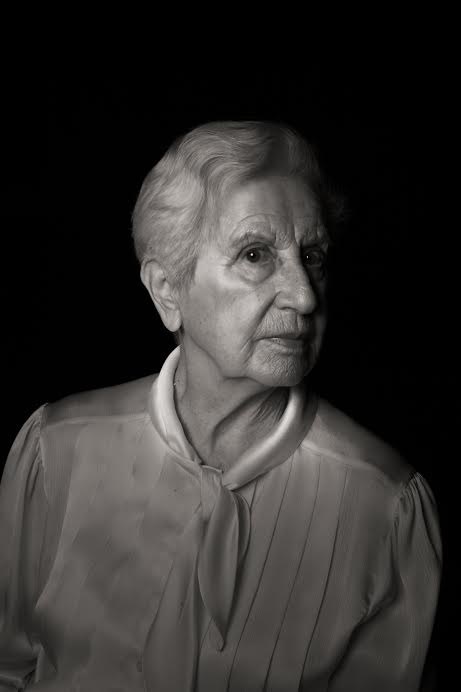
“I don’t believe it,” says Ruth Pagirsky, a 92-year-old Holocaust survivor. “There is too much going on that is reminiscent to me of how it all started in Europe. But I was a kid and I didn’t know, I didn’t understand the whole extent of it.”

Pagirsky and her family were forced to leave Berlin for Poland in 1936, after Germany passed a series of laws between 1933 and 1935 that pushed Jews out of professional life. The aim was to establish a pure Aryan utopia. At the time, Pagirsky was almost 10, and says her family’s effective expulsion introduced her to the capacity of human cruelty.

“I had a favorite ring my aunt had given to me, she always gave me something like jewelry and the S.S. man who came saw the ring on my ring holder and he just picked it up and took it. I just couldn’t believe this! I looked at my mother and she just put her finger to her mouth. It was the most frightening thing. Soon after, we left Germany and we went to Poland.”

The family moved to Katowice, where they had relatives. For three years, they survived in relative quiet. “Then we stayed in Poland, and the horror began.”

PHOTO: Photographer: John J. Nicastro and B.A. Van Sise

Ruth Pagirsky

In 1939, the Nazis invaded Poland, and in Katowice, S.S. officers came to round up Jews to take to concentration camps like Auschwitz. In 1942, two of Pagirsky’s cousins were playing in front of the house and thrown onto a truck. Her aunt rushed outside with her son (Pagirsky’s cousin), Joshua. He was almost two.

“They were crying, and screaming, everyone was screaming, and the little boy was screaming, and my aunt was trying to calm them down,” Pagirsky remembers. Her aunt offered to go to the camp with the children to help calm them, but the S.S. officer headed her off.

“The children are going to a very beautiful camp and they’ll be taught and they’ll be fine,” he insisted.

Pagirsky’s aunt continued to plead while Joshua sobbed in her arms.

“He was laughing and little Joshua was still crying. He walked over, and he took him out of her arms. Grabbed him and pulled him out of her arms. He walked over to the building and started banging his head on the stone. Can you imagine this?”

Pagirsky, then 16, recalls that all she could think about was whether that S.S. soldier would go home that night to play with his own children.

Soon, Pagirsky was also separated from her family. Her brother was taken to Auschwitz. Her father was sent to another concentration camp. Holocaust scholars would later estimate that over one million people were murdered at Auschwitz, a number that includes Jews, Catholic Poles, Roma and Sinti people, members of the LGBTQ community, and anyone else who stood in the way of the Nazis. (Six million Jews were murdered between 1933 and 1945.)

“My father’s last words to me were, ‘You, my child will live. You will live to tell it all’,” says Pagirsky. He spoke those words and Pagirsky never saw her father again. “And that’s what pushed me to survive, the story. My father said I will live to tell it all, I had a purpose. There were years when I was separated from my mother and it was terrible. I was alone and scared. And I would think about what my father said—that I will live—and that helped me. It gave me that impetus to survive.”

Pagirsky and her mother hid in the forest. Eventually, Pagirsky obtained false identification papers that allowed her to work on a farm in Germany, where she remained until 1945 when the area was liberated by Americans.

In 1946, Pagirsky made it to New York. She met her husband, with whom she would spend 63 years. Despite the fact that she immigrated with just a fifth-grade education, because the Nazis had barred Jewish children from public schools, she earned her high school degree and later became a dental hygienist. She had three children, and now has several grandchildren and great grandchildren.

The rhetoric that the current administration has relied on—words like “infest,” “animals,” and “invade”—to defend its attitudes toward the undocumented reminds Pagirsky of tactics used in Nazi propaganda. And some supporters, like Fox News host Laura Ingraham, have tried to wave off horrific reports. On television, she referred to the tents and chain-link enclosures in which immigrant children have been held to as “essentially summer camps.” But the Texas Tribune and Reveal surfaced federal court documents which came to light as part of a class action lawsuit in which children and adolescents held at Shiloh Treatment Center outside of Houston, Texas, alleged that staff held them down and even injected them with psychotropic drugs without consent or proper medical evaluations. (In a legal response, Shiloh representatives said that Texas monitors the center for compliance with state laws and guidelines, according to CNN.)

The news has made Pagirsky wonder whether America has learned from Europe’s mistakes. “I watch it on television and I am so upset with that! I see it, I lived through this! It is so cruel, never forget that.” And efforts to dehumanize those in detention centers or who want to come to America from other countries are causes of particular concern: “I tell people not to fall into the trap where you think it is okay and that [these people must] deserve it. We are not the judge to say who deserves what.”

“We cannot be apathetic,” Pagirsky concludes. “We have to be aware and cannot be afraid to speak up. In Europe people were afraid to speak up. This is what we can do here, we can speak up. And we have to speak up. If we stand by and do nothing, we are guilty.”

Related Stories:

All Your Questions About Trump’s Executive Order on Family Separation, Answered

At the Border, Parents Seeking Asylum Are Willing to Risk Separation Rather Than Go Back to Danger


Source link

Categories
Health

Bella Thorne Opened Up About Being a Survivor of Molestation


Bella Thorne is now one of the more recent woman to step forward to open up about sexual violation. In a heartbreaking exchange on Twitter on Friday, she opened up about experiencing sexual molestation as a child. The conversation was prompted in a beyond inappropriate way, with a Twitter user callously joking about molestation and Thorne coming back to reply with her own experience. (That being said, it’s important to note that no one ever—ever—owes anyone else an explanation or disclosure about past traumas, nor should they ever feel pressured to do so.)

Thorne posted a photo of herself wearing a plum-colored suit jacket sans shirt, which she playfully enhanced with some neon and white starburst-type lines and what look like red antennas or devil horns. In a reply to the picture, one user commented, “What did Disney do to this girl?! I think she was molested.” It was a pretty cruel thing to say—and a reminder of just how often randoms on Twitter forget that the recipient of the comment might just be a real person.

Thorne replied with, “Yeah I was. So it wasn’t Disney” before adding another, seemingly related, tweet.

Fans and friends immediately took to the platform to share their support.

Thorne has had to deal with her fair share of trolls—from this heartbreaking example on Friday to the Hollywood backlash she received after coming out as bisexual to flamers who tell her to shave her legs. But this should be a huge reminder that the person behind the tweets—celebrity or normal!—is human, with a personal history, and absolutely zero obligation to explain their past traumas to anyone.

Related Stories:
Bella Thorne Gave an Epic Response to a Troll Who Told Her to Shave Her Legs
Hollywood’s Response to Bella Thorne’s Bisexuality Proves Homophobia Is Alive and Well
So, Bella Thorne Wore a Suit Covered in Porn


Source link