Categories
Health

Here's How You Can Help Women in States With Extreme Abortion Bans


On Tuesday, the Alabama Senate approved a bill that would outlaw almost all abortions in the state. The new legislation would ban abortions at every stage of pregnancy—with only an exception for when the mother’s life is at serious risk, but not in instances of rape or incest. It’s not just women who would be penalized under the ban. Doctors who perform the procedure would be charged with felonies, and could face up to 99 years in prison.

Alabama’s abortion ban comes just after four other statesGeorgia and Ohio, included—passed so-called “heartbeat” laws, which ban abortions at about six weeks gestation. But this bill is the most extreme measure we’ve seen so far.

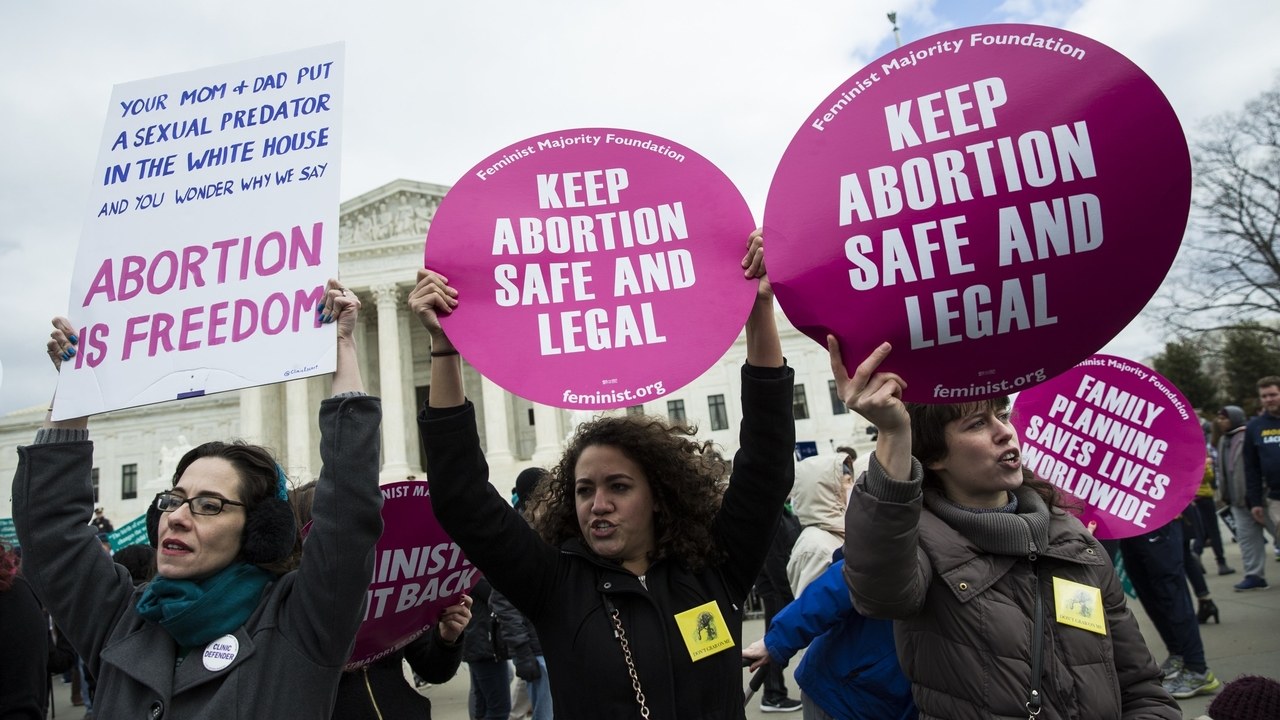
While none of these bills have been enacted—and all are likely be blocked in the lower courts—they’re indicative of a larger fight to control women’s bodies and potentially to overturn Roe v. Wade. Here, we’ve outlined how to help fight against these bans—and the overall effort to limit women’s reproductive rights.

Donate to organizations on the front lines

In addition to supporting national organizations leading the fight to protect women’s reproductive rights—like Planned Parenthood—there are many grassroots organizations helping women on the ground. Here are a few organizations to consider that are providing resources and access to local women looking to obtain abortions:

  • The Yellowhammer Fund: Located in Alabama, the Yellowhammer Fund offers funding for women seeking treatment at one of Alabama’s three remaining abortion clinics. The fund will also help with other barriers to access, such as travel or lodging.

  • National Network of Abortion Funds: NNAF is a network of funds—including the Yellowhammer Fund—across 38 states that helps eliminate economic for low-income women looking to obtain an abortion. They work with funds everywhere from Georgia to Texas to Ohio.

  • Magnolia Fund: A Georgia-based organization that provides resources to support the reproductive choices of women in the South, as well as to help defray the cost of abortion fees for women in Georgia.

  • Access Reproductive Care—Southeast: ARC helps people in the South—in states like Alabama, Florida, Georgia, South Carolina, or Tennessee—receive access to safe and affordable reproductive care by offering financial and logistical support.

Work to elect progressive local leaders

25 men voted to pass Alabama’s abortion ban. And the other extreme abortion bans in states like Georgia have also succeeded in local legislature, thanks to conservative, mostly male politicians. In other words, one of the most effective ways to put a stop the bans is by ousting these men from office. To do that, we have to support—and help elect—their progressive opponents. Here’s a few places determined to do just that:

  • She Should Run: A nonpartisan nonprofit working across the country to get more women elected to office, at all levels.

  • Emerge America: An organization that trains progressive women to run for elected office in 25 states, such as Georgia, Alabama, Wisconsin, Virginia, and more.

  • Higher Heights for America: A national membership-based organization dedicated to electing black women to office across the country.

  • EMILY’s List: An organization dedicated to electing pro-choice Democratic women to office by guiding women through their campaigns from start to finish, with trainings, webinars, and volunteer support.

  • Run for Something: An organization that recruits young progressives to run in down-ballot races.

Volunteer on the ground

If you live in a state with an extreme abortion ban, or close enough to one to travel there, you can volunteer to be a clinic escort. As an escort you’ll accompany women as they enter an abortion clinic, and oftentimes have to walk past protesters. Connect with Planned Parenthood to look for opportunities, or use their Health Center guide to get in touch with local clinics to see how you can best be of service.

Source link

Categories
Health

Planned Parenthood President Leana Wen: Abortion Bans Are a Call to Action—Not a Reason to Give Up


Just now, politicians in Georgia voted to ban abortion after six weeks. Georgia is now the third state to pass this harmful restriction this month. (Fifteen states have filed similar bans in this legislative session alone.) You don’t have to look far to understand just how these introduced abortion bans—up by 63 percent in states in 2019—affect real people.

Jennifer, a Planned Parenthood patient in Georgia in her early forties, told us that after she’d missed a period, she knew immediately she was pregnant. Jennifer didn’t wait. She called a nearby health center to schedule her abortion. But the medically unnecessary restrictions that limited the number of providers and available appointment times delayed her care by weeks. Despite knowing she was pregnant just after a missed period and deciding she wanted an abortion immediately, by the time Jennifer received care, she was eight weeks pregnant.

Imagine if this were any other aspect of medicine. Imagine if your ability to receive treatment was limited by when you were diagnosed with the condition. Chances are you wouldn’t even know you had the condition by the time it was too late to receive the treatment that you wanted. And if you did get diagnosed in time, you might still have to travel hundreds of miles, find child care, get time off from work, and face protesters—just to receive that medical care.

That’s what happens to women in need of abortion access in places like Georgia. These six-week abortion bans affect many women before they know they’re pregnant. Even if they are one of the rare few—like Jennifer—who know earlier than six weeks, these women still find it almost impossible to access an abortion within that time frame. These bans fundamentally infringe upon a person’s right to bodily autonomy.

We’re less than three months into the 2019 state legislative session, and at least one disturbing trend has emerged: Anti-women’s-health politicians have doubled down on their efforts to take away the right to safe, legal abortion. Already, more than 250 bills have been filed that directly restrict abortion access, and nearly half of those restrictions have been abortion bans—outright attempts to prohibit people from making their own health care decisions.

Politicians are directly interfering with medical practice and endangering women’s lives. We know this statistic, but it bears a repeat mention: Abortion is a safe, legal medical procedure that nearly one in four women will have in their lifetime, and it’s part of the full spectrum of reproductive health care. We are at an all-time low for unintended pregnancies because of birth control and evidence-based sex education. Politicians wishing to reduce unintended pregnancies and the need for abortion should invest in women’s health. Instead, their actions directly go against public health and public will. We know the cost: It’s women’s lives.

At Planned Parenthood we see the effects of these attacks firsthand. In the last eight years, there have been more than 420 laws passed that directly restrict abortion access. These harmful laws have shuttered health centers and turned entire regions of the country into abortion deserts. Women are forced to travel hundreds of miles for health care, and those who cannot—women who can’t afford the travel, who can’t find child care and time off from work, who live in rural communities without access, who are often people of color—will just go without. In fact, people in six states have only one abortion provider left, exacerbating an already challenging landscape for reproductive health care.

We know what happens when politicians cut access to vital health care services: Patients delay care or go without it. When Texas eliminated Planned Parenthood from its family planning program, 30,000 fewer women accessed health care. In Iowa, when four health centers closed, 12,000 people went without care and the rates of STIs skyrocketed. A recent study from Texas showed when the state enacted abortion restrictions, it didn’t end abortion care in the state. The restrictions just meant delayed care and increased the number of second-trimester abortions.


Source link

Categories
Health

New Zealand Bans Assault Weapons in Wake of Mosque Shootings


It has been less than a week since a lone gunman opened fire in two Christchurch, New Zealand mosques, killing 50 people and injuring dozens more, and the country’s elected officials have already taken steps to change its gun control laws.

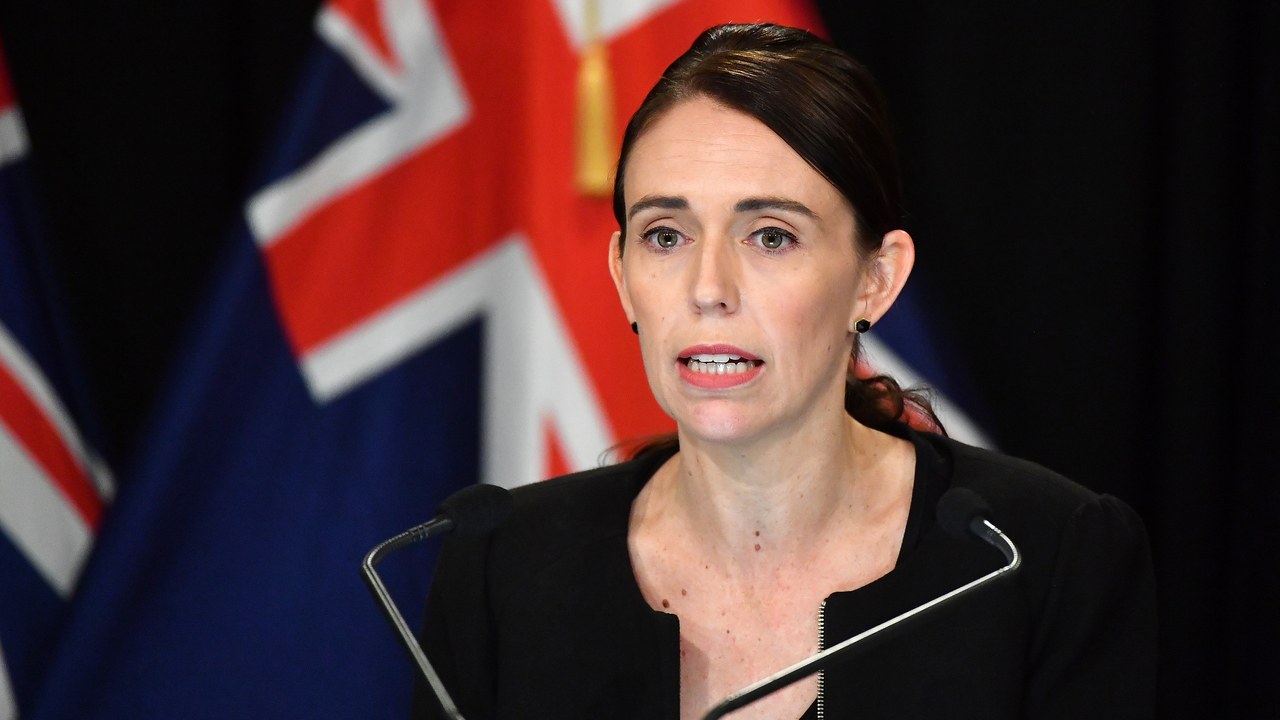
Prime Minister Jacinda Ardern announced that all military-style semi-automatic weapons, assault rifles and high-capacity magazines will be banned in New Zealand. “On 15 March our history changed forever,” she said during a press conference. “Now our laws will too. We are announcing action today on behalf of all New Zealanders to strengthen our gun laws and make our country a safer place.”

“Six days after this attack, we are announcing a ban on all military style semi-automatics (MSSA) and assault rifles in New Zealand,” she said. “Related parts used to convert these guns into MSSAs are also being banned, along with all high-capacity magazines.” Even the leader of the country’s opposition party, Simon Bridges, is supportive of the ban, signaling widespread support. He said it was “imperative in the national interest [that] we keep New Zealanders safe.”

“Every semi-automatic weapon used in the terror attack on Friday will be banned,” Ardern continued. “This legislation will be drafted and introduced in urgency.” According to CNN, this announcement comes after New Zealand’s cabinet agreed to overhaul its laws just 72 hours after the attacks. The country is planning to offer an amnesty period for those owning firearms that will now be reclassified as illegal and a buyback program may be part of the new legislation, as well. According to the BBC, the buyback program could cost New Zealand up to $200 million (in NZ currency) but “that is the price that we must pay to ensure the safety of our communities,” says Ardern.

The swift action in the wake of a mass shooting drew praise from many progressives stateside. “Sandy Hook happened 6 years ago and we can’t even get the Senate to hold a vote on universal background checks w/ #HR8,” Rep. Alexandria Ocasio-Cortez (D-N.Y.) tweeted. Christchurch happened, and within days New Zealand acted to get weapons of war out of the consumer market. This is what leadership looks like.”

“This is what real action to stop gun violence looks like. We must follow New Zealand’s lead, take on the NRA and ban the sale and distribution of assault weapons in the United States,” Sen. Bernie Sanders (D-Vt.) wrote.

“See. It’s not that hard,” tweeted Sen. Chris Murphy (D-Conn.), who has been particularly active on gun issues since the Sandy Hook massacre in his state.

NRA spokeswoman Dana Loesch responded to Sanders’ tweet: ” First, define ‘assault weapon.’ Words are important and certain laws come into play depending on which words are used, so define this. Secondly, the US isn’t NZ. While they do not have an inalienable right to bear arms and to self defense, we do.”

Ardern says New Zealand’s new gun regulations may be in place as soon as April 11. She also says another round of amendments will be forthcoming—and could include changes to gun registration laws.


Source link