Categories
Health

Sex Education Season 3: Everything We Know So Far


When Sex Education season two dropped on Netflix in January, Twitter was just as excited as a year ago when the charming British coming-of-age story first debuted.

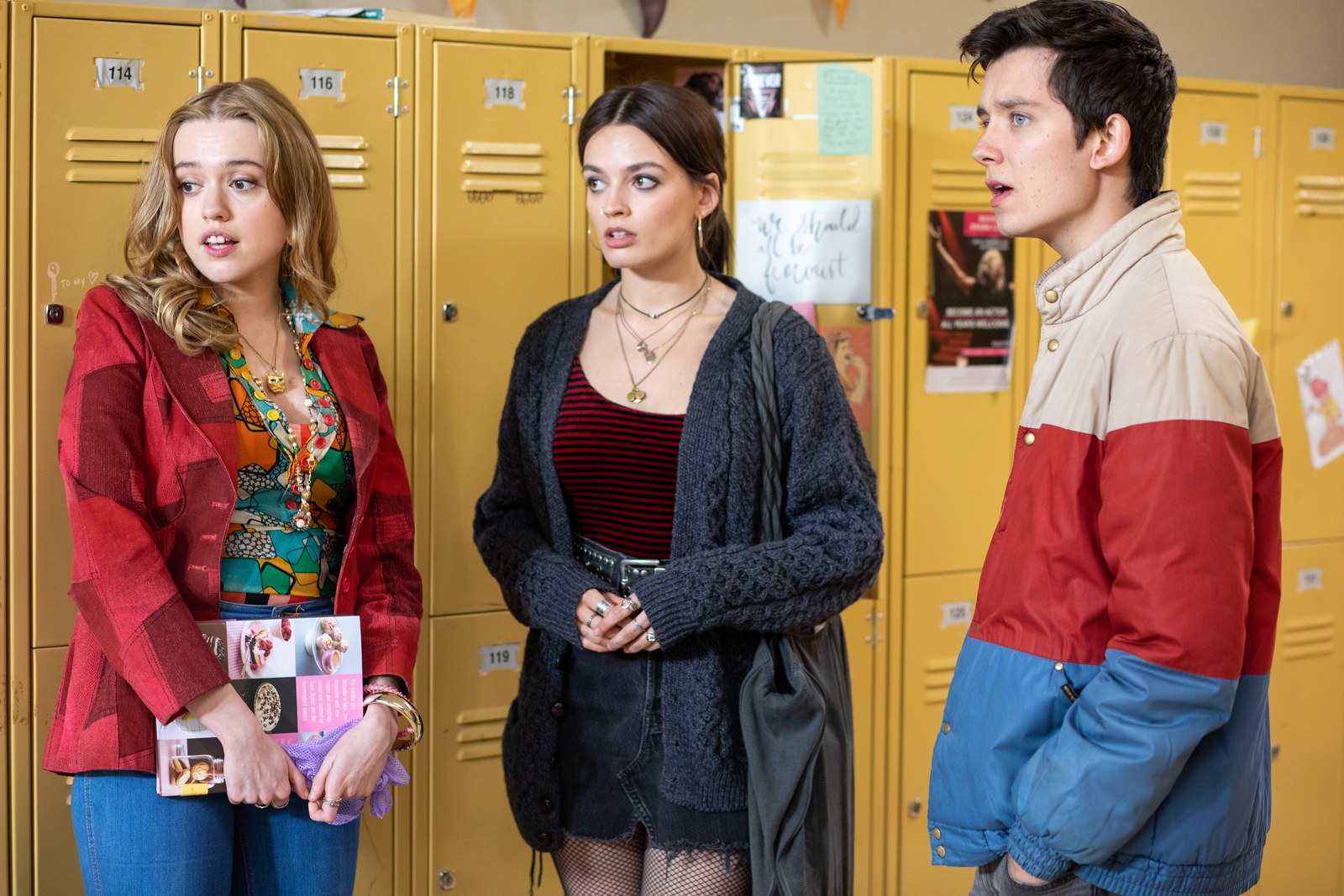
More of Gillian Anderson and Asa Butterfield’s chemistry as mother-son duo Jean and Otis Milburn is obviously always welcome, but it was some of the characters outside the sex therapists’ home that were given a chance to shine brighter this season, in particular Aimee Gibbs (Aimee Lou Wood), who goes through an achingly relatable #MeToo ordeal on a public bus that Glamour‘s Jessica Radloff describes as the series’ “most crucial” moment to watch.

Meanwhile, Maeve (Emma Mackey) and Otis’ never-ending drama goes on, Maeve makes a heartbreaking decision regarding her mom, and Adam (Connor Swindells) had a declaration for Eric (Ncuti Gatwa). One of the greatest things about Sex Education is its unflinching forays into topics often ignored on other “high school” series, which is why season three can’t come soon enough. Here’s everything we know so far.

Netflix

It’s happening. Netflix just announced with a lofty monologue from Principle Groff (Alistair Petrie).

Not a lot is revealed in the one-minute clip, but it does look like we’ll be delving further into the relationship between “cherubs” Adam and Eric. Who else can’t wait?

I’m guessing we’ll have to wait until January 2021. It stands to reason that since seasons one and two launched almost exactly one year apart in January, season three will continue the trend. At least a couple of members of the cast have other projects going on at the moment. Anderson will be taking on the role of Margaret Thatcher in The Crown season four. Emma Mackey, on the other hand, will be interrogated by Kenneth Branagh in Death on the Nile.

Fans are freaking out. Let’s just say, the folks on Twitter approve.

Unfortunately, that’s literally all we can say with confidence for now. Make sure to check back here for updates.


Source link

Categories
Health

Sex Education Season Two: We've Seen Sexual Assault on TV Before—But Never Like This


She continues, “Unless it is rape, [many of us] feel like we can’t really talk about it or that we have to take it in our stride and even laugh about it. We’ve turned them into little funny anecdotes rather than actually dealing with the fact that might have traumatized us on some level.” It’s like society has given us a hierarchy of sexual assault, she explains. “If you’re somewhere near the top then it’s like, ‘Oh, that’s OK. You’re allowed to be upset by this one.’ But anything lower you feel like maybe you’re a bit of a drama queen.”

TV shows have shown sexual assault before, of course, but this Sex Education storyline is new: Rarely does a series take an incident that isn’t rape and spend so much time over the course of a season unraveling the emotional layers that follow. Aimee’s experience isn’t relegated to a one-episode arc. Instead, the whole rest of the season checks in on her well-being and healing after the incident. It sends a clear message: Whatever the circumstances, any sexual assault is traumatic.

“It’s about what happens when you suppress that trauma and you don’t deal with it,” Wood says. “And it’s about women coming together and being that support system as Maeve, Ola, and many of the others do for Aimee at the end. Sometimes you need people to give weight to your problems and to give you permission to feel the damage of something. Sometimes you just need someone to go, ‘You’re allowed to feel shit about this.'”

Sam Taylor/Netflix

The way that Aimee’s boyfriend, Steve, responds is also key. She has trouble being intimate with him—even cuddling is hard—but he never pressures her and invites her to open up when she’s ready, on her terms. That support only makes their relationship stronger, Wood says.

“Even though it’s such an unfortunate way to grow, it’s a huge turning point in her life,” she explains. “Much like what she learnt in season one by taking ownership of her body and that masturbation montage, this does the same, even though it stems from an awful situation. She becomes so much more empowered because of it…but it takes a long time.”

After season one, Wood says women would often come up to her to talk about the female orgasm and masturbation. Now, she’s ready to hear from women who have buried their own trauma. “I’m so grateful we’re telling this story,” she says. “The conversations that I’ve had with young women is just so incredible. I’ve had so many conversations, even with my friends, that I would never have had if not for this show. We never spoke about [these things]. And now we do.”

Season two of Sex Education is now streaming on Netflix. Jessica Radloff is the Glamour West Coast editor.


Source link

Categories
Health

Sex Education Season 2 Review: The Netflix Series Is Even Better


When Sex Education—Netflix’s highly binge-worthy comedy about, you guessed it, sex and relationships—premiered last year, it was such a hit that the streaming service says more than 40 million households watched it within the first four weeks. Naturally, a season two had to happen, and it finally premieres today, January 17. Yes, Sex Education is back for an eight-episode run that’s even funnier and more awkward than the last.

“There were a lot of elements for season one that we loved, but when we came into season two, we really tried to empower all the different departments across the show—from wardrobe to the script department—to be as bold as possible,” executive producer Jaime Campbell tells Glamour. “I think that’s reflected.”

Jean Milburn (Gillian Anderson)

Sam Taylor/Netflix

Campbell points to more air time for the adults as one way the show will be expanded this season. You’ll see more of Jean Milburn (Gillian Anderson) and her relationship with Jakob (Mikael Persbrandt), and Mr. and Mrs. Groff’s relationship (Alistair Petrie, Samantha Spiro) will “come under more scrutiny,” according to Campbell. That’s a good thing, the producer adds, because “in a show like this, you can often forget the adults and how incompetent they are. We’re really doubling down on their incompetence this season.”

It’s a development the younger cast is happy about, too. Patricia Allison, who plays Ola, Otis’s girlfriend, thinks it’s important to feature the sex lives of the parents. “I don’t think we get to see enough of that,” she says. “Older women who get to actually be like, ‘This is what I want.'” One example of how that plays out: Mrs. Groff, the headmaster’s wife and Adam’s mother, will start her own journey of self-discovery. “She’s in this kind of loveless marriage and feels like she doesn’t have a voice in it,” Allison says, “but then she forms a really lovely friendship with Jean and goes to a vagina workshop which allows her to explore her own sexuality.”

While we loved season one of Sex Education for shedding a light on topics that are usually glossed over on other shows (masturbation and the female orgasm, just to start), season two will go even further. “Our creator and writer, Laurie Nunn, came up with an explosive storyline that has two particular female characters intersect, and I think fans are going to absolutely love it,” Campbell says. As to which two characters Campbell is talking about, Netflix has that plot development on its do-not-spoil list, so mum’s the word for now.


Source link

Categories
Health

Meghan Markle Just Wrote a Powerful Letter About Access to Higher Education


“I am proud to be patron of the ACU and all that it stands for, as we champion those seeking a higher education and commit to making this world a better place – together,” Markle wrote.

Education access has been an important cause for the Duchess of Sussex, who graduated from Northwestern University in 2003 with a double major in theater and international relations, since well before she became a royal. She has spoken publicly about it on a number of occasions since marrying Prince Harry in 2018. In January, she met with students from one of the ACU’s 500 university members:

“As a university graduate, I know the personal feeling of pride and excitement that comes with attending university,” she said in a speech during the couple’s royal tour in Fiji. “From the moment you receive your acceptance letter to the exams you spend countless late nights studying for, the lifelong friendships you make with your fellow alumni to the moment that you receive your diploma, the journey of higher education is an incredible, impactful, and pivotal one. I am also fully aware of the challenges of being able to afford this level of schooling for many people around the world, myself included.”

You can read Meghan Markle’s entire letter here.


Source link

Categories
Health

Department of Education Releases New Guidelines for Sexual Assault on Campus


“You know you are not on trial,” said Senator Kamala Harris (D–Calif.). “You are not on trial.” It was September, and Sen. Harris was addressing Christine Blasey Ford, who’d come before the Senate Judiciary Committee to testify against then nominee (now Supreme Court Justice) Brett Kavanaugh.

It had already been a heartbreaking few hours—few weeks, really. So much of it blurs together, like a horror movie. But I’ll never forget the relief and pain I saw on Blasey Ford’s face when Sen. Harris reminded us all that holding people to account should never mean putting a survivor on trial. Just as the Senate Judiciary Committee shifted so much of the burden, shame, and scrutiny onto Blasey Ford, systems that are supposed to be created to help survivors seek justice often instead shift a massive burden to the survivor. Doing so keeps survivors from reporting and can retraumatize them in the process.

That’s just one reason I’m raising the alarm about the new regulation on Title IX that Secretary of Education Betsy DeVos released last week. If it becomes law, these rules could force millions of student survivors of sexual assault and harassment to endure the same kind of cruel process Blasey Ford did. It’s a sham procedure, not to mention one that puts the survivor on trial and gives the benefit of the doubt to the perpetrator, instead of seeking the truth.

Schools would not be required to investigate assaults that take place in several off-campus locations, shutting out the thousands of survivors who are assaulted at parties, bars, or online.

While Kavanaugh apologists waved off the accusations of misconduct against him, suggesting that violence committed in high school is either somehow irrelevant or outside the jurisdiction of the Senate committee, the new regulation intends to give schools similar latitude, claiming that these institutions should not be responsible for investigating and intervening in many instances of sexual violence that affect their students.

According to the regulation, schools would not be required to investigate assaults that take place in several off-campus locations, shutting out the thousands of survivors who are assaulted at parties, bars, or online. Schools would now be required to investigate only complaints made to individuals who are empowered “to institute corrective measures” like a Title IX coordinator. What does that mean? In short, that schools would have zero obligation to start the formal complaint process if claims of assault are raised with coaches or resident advisers. If it’s hard to picture what an impact that could have, let me put it like this: Under the new rule, Michigan State University may not have been required to intervene in the case of Larry Nassar, because reports of his sexual abuse were made to coaches and athletic trainers. Further, the definition of sexual harassment that schools can now investigate is so limited and narrow that survivors could have to endure severe and repeated harassment before their treatment would “count” toward a Title IX complaint.

This proposed regulation from the Department of Education has been written in a manner that could prevent survivors from reporting their assaults and let schools avoid investigating Title IX complaints (and the bad press and expense that comes with it). Make no mistake: This will not make campuses safer, nor will it end sexual violence. What it will do is cause a huge decrease in reports of sexual violence at schools.

If it takes effect, this rule could make reporting and investigation procedures for survivors cruel, degrading, and difficult to access, in the hopes perhaps that survivors will give up on reporting if the process retraumatizes or marginalizes them enough.

Moreover, the regulation would disproportionately affect students of color, LGBTQ students, students living with disabilities, and low-income students by creating additional traumatic barriers to healing and justice. And in a flagrant misapplication of Title IX, which was implemented to protect and expand opportunities for women in education, the rule allows named harassers to claim sex discrimination if the school opens an investigation into their conduct.

It’s not enough to claim that we “support survivors” if we don’t commit to policies and proposed action that would do just that.

Thanks to the Me Too movement, we’ve all become more attuned to the needs of survivors, and millions of us are committed to ending sexual violence. We have made believing survivors (and seeking justice) a powerful moral imperative for all. But I fear that people in power—like school administrators, senators, and DeVos herself—continue to pay lip service to the importance of taking survivors seriously, while simultaneously making it almost impossible for them to be heard. It’s not enough to claim that we “support survivors” if we don’t commit to policies and proposed action that would do just that.

Everyone who was disturbed by the treatment of Blasey Ford before the Senate should be concerned now. This regulation will make schools more dangerous and, at the height of the Me Too movement, could take us backward.

While these provisions are horrific, this rule is not a foregone conclusion. Unlike our senators who ignored their moral and democratic duties to heed our calls to believe survivors, the Department of Education is obligated to listen to our critique of its rule through the notice-and-comment process. This rule can be stopped if all of us who were outraged on behalf of Blasey Ford submitted a comment that expressed our opposition to this regulation. Submitting a comment that the federal government will “count” must meet certain requirements—but End Rape on Campus and Know Your IX have built tools to ensure that your voice can be heard. Learn more at HandsOffIX.org.


Jess Davidson is a survivor of sexual assault, and the executive director of End Rape on Campus, a national nonprofit dedicated to ending campus sexual assault through direct support, education, and policy reform.


Source link

Categories
Health

Meghan Markle's First Speech on Her Royal Tour Was All About Women's Education


Before Meghan Markle became the Duchess of Sussex or even Meghan Markle, lifestyle blogger and Suits star, she was a determined little girl who fought for gender equality after seeing a sexist soap ad. Her letter-writing campaign got the ad changed, and an activist was born.

Later in life, as her profile and platform grew, Markle became an “Advocate for Political Participation and Leadership” for United Nations Women. Now, with the entire world tracking her every move, Duchess Meghan is continuing her mission to empower women. As a feminist and a royal lover, I couldn’t be happier to see that her lifelong passion for women’s rights and education is now a central focus of her work as a member of the royal family.

That came into play during her first speech of her royal tour with Prince Harry this week. Markle spoke to students at the University of the South Pacific in Fiji about the importance of education for girls. “As a university graduate, I know the personal feeling of pride and excitement that comes with attending university,” she said. “From the moment you receive your acceptance letter to the exams you spend countless late nights studying for, the lifelong friendships you make with your fellow alumni to the moment that you receive your diploma, the journey of higher education is an incredible, impactful and pivotal one. I am also fully aware of the challenges of being able to afford this level of schooling for many people around the world, myself included.”

Markle went on to speak about the struggle to pay for that higher education—something that’s incredibly relatable for most, but not what you usually hear from a royal. “It was through scholarships, financial aid programs and work-study where my earnings from a job on campus went directly towards my tuition, that I was able to attend university,” she continued. “And, without question, it was worth every effort.” Markle then announced two grants that would be used to aid women’s educational programs, while Harry (who his wife has confirmed is also a feminist) beamed with pride from the audience.

Kensington Palace has yet to announce any of Duchess Meghan’s official patronages, but it’s not hard to deduce that a large share of her work will continue to focus on females.

PHOTO: Pool/Samir Hussein

The signs were there from her first interview with Prince Harry after their engagement was announced. When asked about the causes, like UN Women, she had already been involved with, Markle replied, “I think what’s been really exciting as we talk about the transition of this out of my career but into the role is that, as you said, the causes that have been very important to me, I can focus even more energy on.”

“Because very early out of the gate, I think you realize once you have access or a voice that people are willing to listen to with that comes a lot of responsibility, which I take seriously,” she continued. “And at the same time I think in these beginning few months and now being boots on the ground in the U.K. I’m excited to just really get to know more about the different communities here, smaller organizations we’re working on the same causes that I’ve always been passionate about under this umbrella.”

She certainly hit the ground running. While simultaneously planning the wedding of the year, Markle quietly worked on her first big project: a cookbook celebrating the women of the Hubb Community Kitchen. At an event for the cookbook, she spoke about being embraced by the women—who had all been victims of the tragic Grenfell Tower fire—when she first moved to London. She even brought the most influential woman in her life—mom, Doria Ragland—along for the big day.

“The kitchen was opened after the Grenfell tragedy, offering women who had been displaced and the community around them a space to cook food for their families,” she wrote in the forward to Together. “Their roles as matriarchs united them across their cultures; the kitchen provided an opportunity to cook what they knew and to taste the memory of home, albeit homes some had recently lost.”

But beyond the big moments and speeches that are defining how Markle is helping women, there are the smaller ones that might be just as impactful. When she stops to tell a little girl wearing a “Girls Can Do Anything” shirt that she reminds Markle of herself as a child, for example, she changes not only that child’s vision of what her future might look like, but every girl who hears about the moment on one of the million outlets that covers it.

I can’t wait to see how the Duchess will continue to use her global platform. Perhaps a partnership with Michelle Obama’s new Global Girls Alliance? Just a suggestion…


Source link