Categories
Health

The Sexiest Thing on TV Right Now: Women Ignoring Men


Netflix’s Dead to Me and GLOW also focus on female friendships over a major will-they-or-won’t-they romance. There are relationships with men, sure, but they’re not at the center. Even Dead to Me’s James Marsden—who has a face created for the longing glances that define will-they-or-won’t-they couples—is mostly there to get in the way of Christina Applegate’s and Linda Cardellini’s characters. He’s simply an instrument used to create tension between the women.

Both Crazy Ex-Girlfriend and Broad City came to an end this year without the culmination of a will-they-or-won’t-they couple finally getting together. Crazy Ex-Girlfriend especially seemed like it might end with a romantic climax—the show did begin with a woman moving across the country for her ex-boyfriend, after all—but Rebecca’s romantic pursuits were in truth a reflection of her mental health, and that was the note on which the show ended. Meanwhile, Broad City expertly subverted the trope throughout its run: First with Abbi’s flirtation with her neighbor, which culminated in a single night, and later through her relationship with her former coworker, which ends with a rejected marriage proposal.

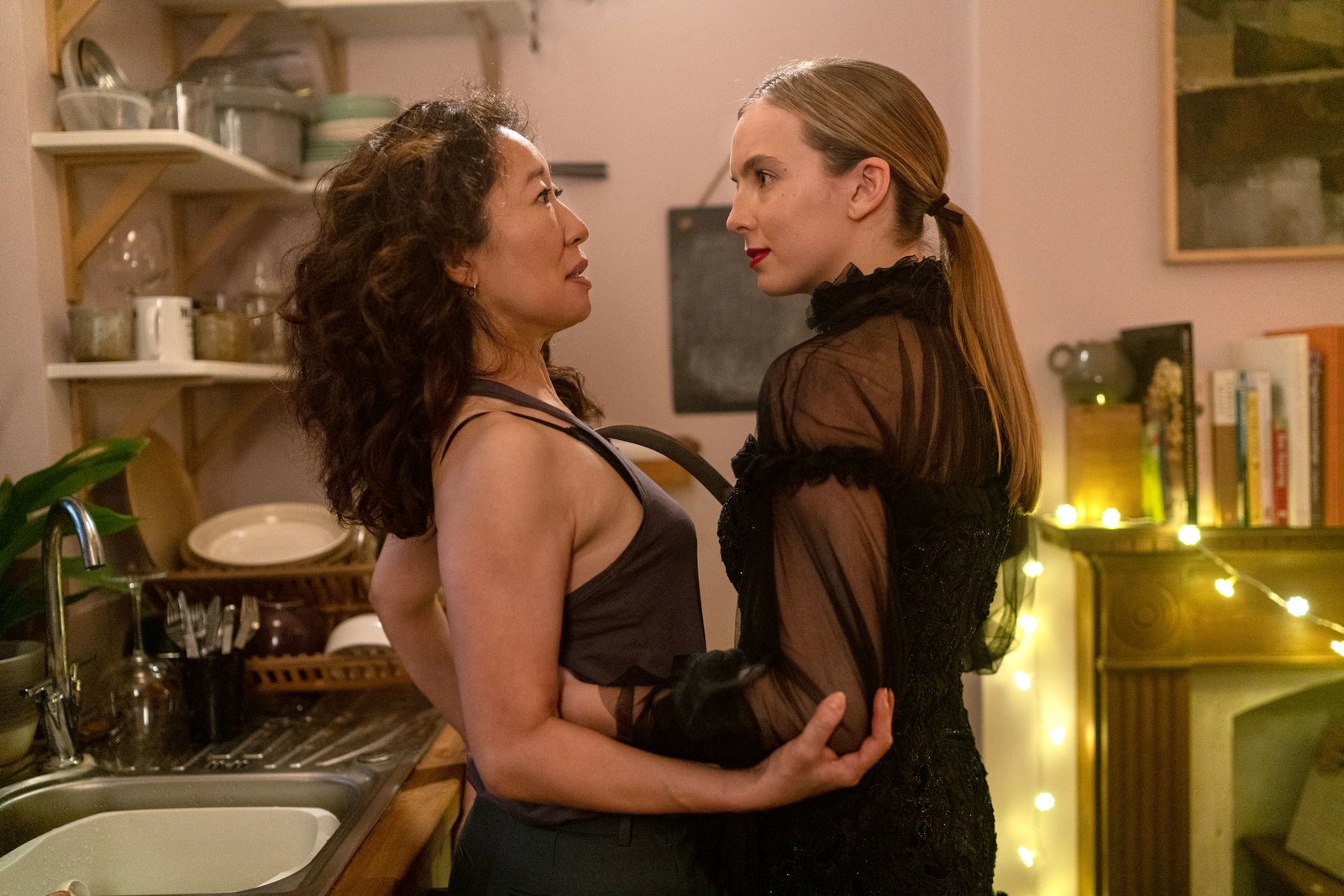
The will-they-or-won’t-they trope isn’t totally dead, though—it’s just evolving. There’s no better example of this than Killing Eve. If the Big Little Lies formula is about female characters finding deeper intimacy among their friends than their romantic partners, Killing Eve takes that and turns it up 10 notches. The show’s central will-they-or-won’t-they couple is a pair of female friends. That is, if Eve and Villanelle are friends? Or are they in love with each other? Or both? Whatever the case, Sandra Oh’s Eve, a British intelligent investigator with amazing hair, and Jodie Comer’s Villanelle, an assassin with whom Eve becomes obsessed, are one of television’s steamiest couples, with the question being: Will they get together? And, Won’t they end up killing each other?

Name a sexier duo than Sandra Oh’s Eve and Jodie Comer’s Villanelle.

Robert Viglasky / ©BBCAmerica / Courtesy Everett Collection

Phoebe Waller-Bridge’s Fleabag also found a fresh way to execute the trope. In season two, Fleabag’s love interest is the Hot Priest. (Oh, his beautiful neck.) Of the two, the Hot Priest is the softer, more sensitive, vulnerable character. He essentially takes on the characteristics of how female characters are traditionally been written, as he shyly flirts with Fleabag, torn between his infatuation with her and his religious obligations. Fleabag, on the other hand, is the pursuant. The flipping of the traditional roles, which in turn flipped the power structure, made for a thoroughly engaging dynamic.

Source link

Categories
Health

Donald Trump's Attacks on Congresswomen Are Racist and Sexist. Ignoring That Is a Mistake We Can’t Afford


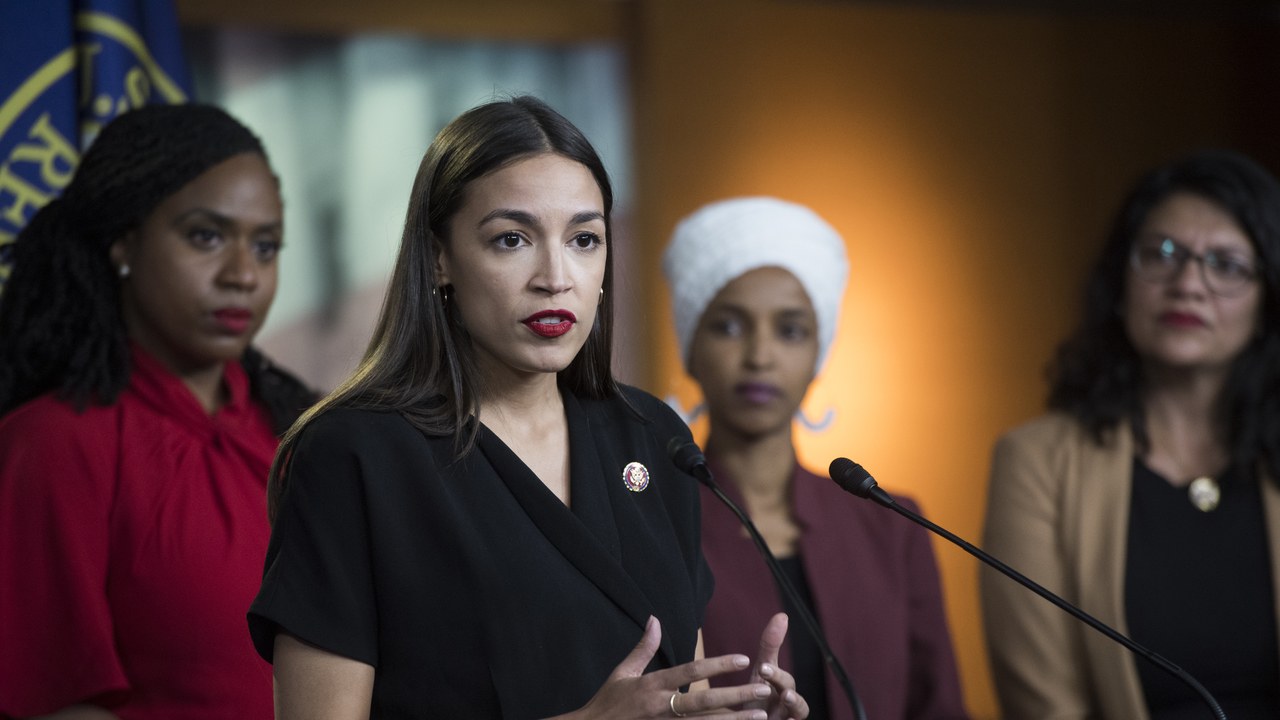
Donald Trump is spending his week doubling down on his racist suggestion that four Democratic lawmakers—Reps. Alexandria Ocasio-Cortez of New York, Ilhan Omar of Minnesota, Ayanna Pressley of Massachusetts and Rashida Tlaib of Michigan—should “go back” where “they came” from. Last night, he presided over a crowd in North Carolina that at one point chanted “Send her back!” in reference to Omar. At times, when Trump mentioned the women, people in his audience shouted “Treason!” and “Traitors!”

It’s utterly irrelevant to Trump and his supporters that three of four of the women were born in the United States and that the fourth, Omar, immigrated from Somalia as a child and has spent more than half her life as a citizen. In focusing attention on these particular women, Trump activates the well-documented passions and fears of his supporters, people demonstrably threatened by the browning of America. But, he also activates the disgust and repugnance that too many people feel about women claiming power and authority, particularly the power and authority to decide what America is and should be. It would be a foolish and dangerous mistake, particularly as we move towards a presidential election in which more women than ever are candidates, to ignore the confluence of these prejudices.

Trump’s “go back” dictate makes an assumption about who “real Americans” are, and research shows he’s not alone in his warped thinking. For most of our history, the notions of “citizenship” and “manhood” have been as inextricably linked in most people’s minds as “American” and “white” are. Only in our recent past have minorities and women been extended rights, like the freedom to vote, to run for office, to bear arms, to serve in juries, and to work, as elite white man have since independence. Studies show even now, in the words of one social science researcher, that “to be American is implicitly synonymous with being White.” In the same vein, many people’s explicit, and implicit, belief systems continue to support the notion that men are “natural” leaders, but that women are not; that men serve in public capacities, and women private ones. Trump appeals to the specific combination of these beliefs to undermine women as not only incapable of self-governance, but as unfit to govern others. That’s the hateful core of this latest diatribe; people like them aren’t suited to tell people like us what to do.

Trump’s casual “go back” is a dogwhistle to racists and xenophobes but it also reinforces age-old biases against the rise of a “feminized elite.” Women who are educated and progressive, the old chestnut goes, are dangerous to men and to the nation. This tired equation allows Trump’s most extreme supporters to rationalize threats against women as legitimate act of patriotism and renders violence against them a form of twisted self-defense. Trump’s campaign rallies were frenzied carnivals of this misogynistic idea, with thousands of mostly white Americans chanting “lock her up” and parading around effigies of a caged Hillary Clinton. It’s how a West Virginia Republican lawmaker tweeted, “she should be ’hung’,” and another proclaimed, “Hillary Clinton should be put in the firing line and shot for treason.” One of Trump’s supporters was particularly clear when he explained, during the 2016 race that “Hillary needs to be taken out“ and that he was prepared to do it himself. “[I[f I have to be a patriot, I will,“ he said. The same ideas were more subtly conveyed when, earlier this year, a video was aired during a Memorial Day Fresno-Grizzlies game in which Ocasio-Cortez was depicted as an “enemy of freedom“ alongside Kim Jong Un and Fidel Castro.

But Trump isn’t just content to question women’s patriotism. He also impugns their expertise and knowledge. The charge that people of color and women “don’t understand” the complicated affairs that animate our national discourse is a popular right-wing talking point drawn from racist and sexist science. It suggests that people of color and women lack the intellectual capabilities and emotional wherewithal to lead. Of course, that means that women of color who work in the public sphere are special targets of these attacks. A Media Matters supercut of Fox News’s coverage of AOC, for example, demonstrates the network’s near-obsession with portraying her—a woman with a degree in economics and the recipient of a fellowship awarded to high academic achievers—as “ignorant,” “idiotic,” and someone who “doesn’t know what she is talking about.” She is, the hosts emphasize, a “pompous little twit,” who “makes no sense.” In a similar vein, Trump has referred to black athletes, politicians, and media representatives as “low IQ individual[s]” and “dumb.”


Source link

Categories
Health

Male Bosses Are Ignoring Women Colleagues After #MeToo. This Is a Problem.


One of my first jobs out of college had me assisting a publisher who frequently shared sensitive company information with me as I drafted memos and reports, which meant we often had to close the door to his office. He’d dictate what he needed to, and we’d move on with our day. Occasionally we’d do it over lunch. I never once felt uncomfortable and I’m pretty sure he didn’t either. Because I was good at my job, the publisher eventually promoted me.

This was almost two decades ago and much has changed for women—and men—at work. The most pervasive shift, of course, has been spurred by the #MeToo movement, which not only has managed to hold power-abusing men accountable for their actions but has also changed the norms so many women have silently faced in workplaces that range from farming to fashion.

But with any movement—especially one that exists to empower women—there has been a backlash and one particular facet is the idea that #MeToo has scared some men away from interacting with junior-level female colleagues.

According to new research released today by LeanIn.Org and SurveyMonkey, 60 percent of male managers say they’re uncomfortable participating in common workplace activities with a woman—a 32 percent increase from research done last year on the topic. The data found that senior-level men are 12 times more likely to hesitate before having one-on-one meetings, nine times more likely to hesitate to travel with a junior woman for business, and six times more likely to hesitate to go to a work dinner with a junior woman. Thirty-six percent of men also say they’ve avoided mentoring or socializing with a female co-worker because they were nervous about how it might look.

The problem: Most managers are male and their fear is prohibiting women from proving themselves and moving up at work.

“I don’t know of anyone who’s been promoted who hasn’t had one-on-one conversations [with a superior]” LeanIn.org founder and Facebook chief operating officer Sheryl Sandberg told me by phone. “Women need that one-on-one time to get the mentorship and sponsorship they need to succeed.”

Sandberg knows this well. “[Facebook CEO] Mark Zuckerberg and I spend an enormous amount of time together and we spend an enormous amount of time one-on-one,” she said. “That one-on-one time has been where he’s given me the feedback that helps me do my job, [has] told me what I need to do better, [and] I’ve been able to give him feedback. That is not happening in a group setting.”

Sandberg also said her first meeting of the week Monday morning and the last meeting of the week [on] Friday afternoon is with Zuckerberg and nobody else. “That is our partnership and without that, I don’t know where we’d be.”

As far as a solution goes, LeanIn.Org is encouraging men to do more to actively support women at work, from increasing amounts of informal one-on-one time to participating in more official initiatives like sponsorships and mentoring—something Sandberg thinks will benefit men just as much as women.
“[It isn’t] just the right thing to do to mentor and sponsor women It’s actually a good thing to do for your career [as a man] because if you’re the most senior CEO or most junior person, if you can work better with half the population, you are going to outperform.”

Being more or less invisible to a male superior is better than being uncomfortable, right? In theory, sure, but considering the vast majority of managers and leaders are men across most fields, the fact that women aren’t getting the attention they need to succeed because men are afraid isn’t doing anyone any favors, “Ultimately, this is about closing the gender gap at work, from the entry-level all the way to the top,” said Rachel Thomas, president of LeanIn.Org, in a statement. “When companies employ more women, sexual harassment is less prevalent. And when women hold more leadership roles, company profits are higher and workplace policies are more generous. Supporting women makes companies stronger and safer. To get there, we need men to be part of the solution.”


Source link

Categories
Health

This Video of Khloé Kardashian Ignoring Tristan Thompson at True's Birthday Is So Awkward


Khloé Kardashian threw her daughter, True, an epic first birthday party over the weekend. The pastel-colored bash was extravagant, to say the least—filled with balloons, cotton candy vendors, butterfly decorations, and actual ponies (dressed as unicorns, of course).

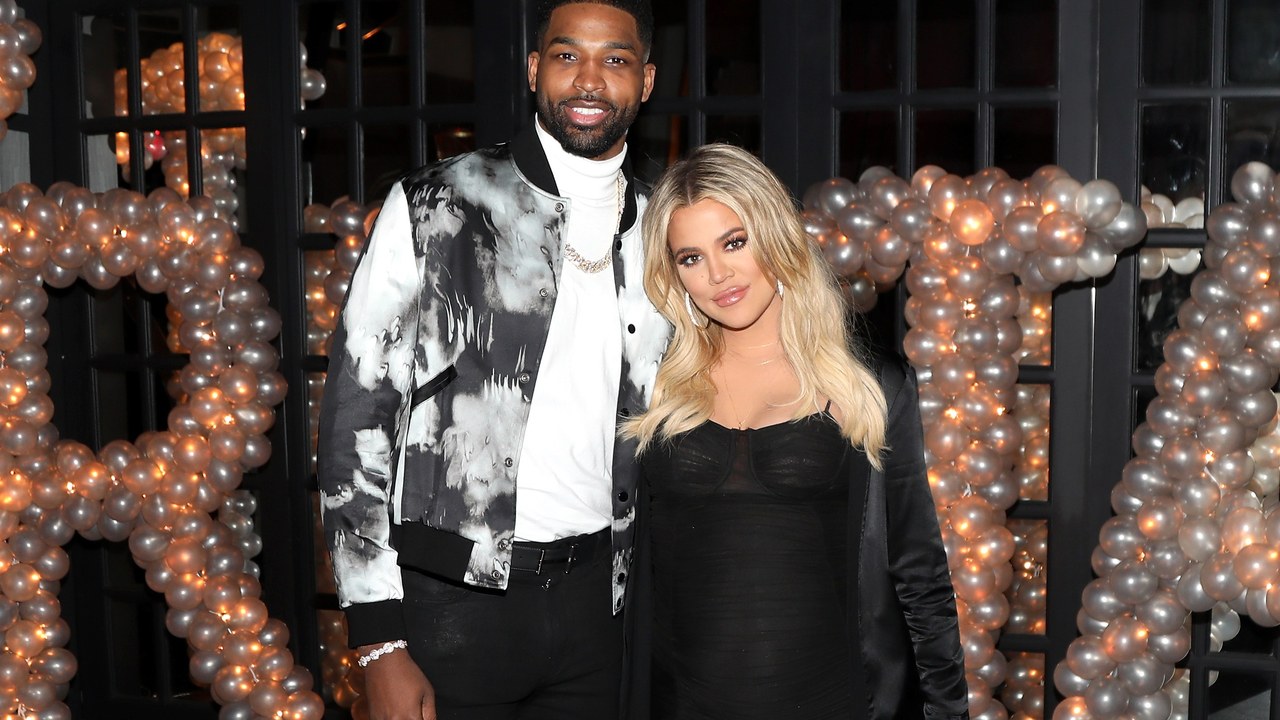
But the moment getting everyone’s attention isn’t exactly a happy one. True’s father and Kardashian’s estranged boyfriend, Tristan Thompson, attended the party as well, and in one Snapchat post it appears she completely gives him the cold shoulder.

It happened while Kardashian was posing for a video selfie with True. Thompson attempts to cut in, but Kardashian doesn’t speak to him or even look in his direction. Instead, she just walks away and starts talking to someone else at the party.

It’s unclear if this is the first time Khloé Kardashian and Tristan Thompson have seen each other since the cheating scandal with Jordyn Woods broke in February. (Click here for a refresh on that ordeal.)

Check out the moment from True’s party for yourself, below.

To play devil’s advocate, this is a brief snippet from what looked like an hours-long party. We can’t really deduce anything about Kardashian and Thompson’s relationship from a 30-second video. And this moment aside, everyone seemed to be in great spirits the whole day. Thompson eventually got his video with True:

“My princess❤️❤️ I love you soo much,” the NBA star posted to his Instagram.

Kardashian also published a tribute on her IG. “Happy birthday my sweet True,” she wrote. “You are my ultimate True love! I am honored and so thankful to be your mommy! Today and until the end of time, I love you!! We have forever.”

The Good American designer hasn’t directly said much about the situation involving Woods and Thompson, but in early March she tweeted, “This has been an awful week & I know everyone is sick of hearing about it all (as am I). I’m a rollercoaster of emotions & have said things I shouldn’t have. Honestly, Tristan cheating on me & humiliating me, wasn’t such a shock as the first time. What’s been harder & more painful is being hurt by someone so close to me. Someone whom I love & treat like a little sister. But Jordyn is not to be blamed for the breakup of my family. This was Tristan’s fault.”


Source link