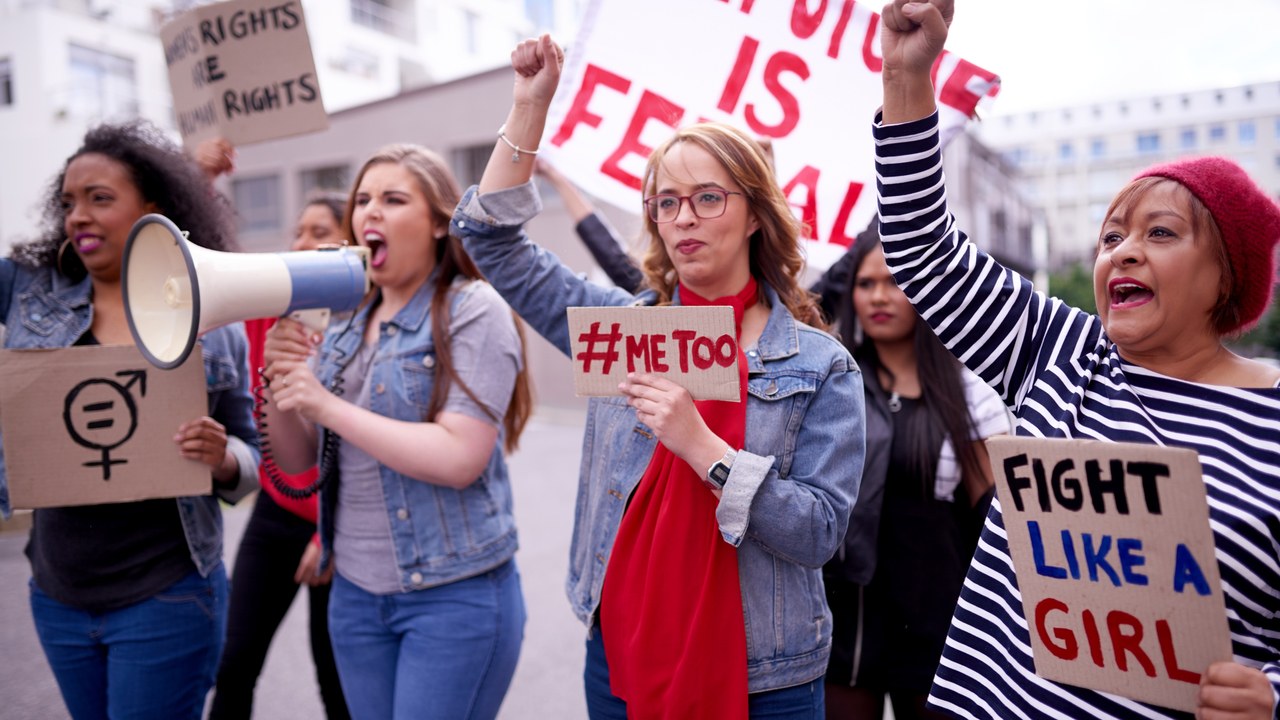
The #MeToo movement shook Hollywood, the media, and high-powered corporations across America, but questions remain about its ramifications in other industries and professional work spaces. Now, new research published in the scientific journal Plos One indicates there might be some measurable changes in the workplace as a result of #MeToo: In the group interviewed, reports of sexual coercion and unwanted sexual attention in professional settings decreased since the movement took off. But not without some other (perhaps related) side-effects.
Researchers first talked to 250 working women in the U.S. in 2016 and asked questions about the gender harassment, unwanted sexual attention, and sexual coercion faced at their jobs. The researchers conducted a second survey in September 2018, reconnecting with women from the first group to see how their experiences had changed as conversations around #MeToo evolved. The researchers found that 25 percent of women reported being sexually coerced at work in 2016, but that number declined to 16 percent in 2018. Unwanted sexual attention also dropped, with 66 percent of women reporting instances in 2016 and 25 percent in 2018.
While these data points do seem like progress, one troubling stat stands out. In this study, there was an increase in reports of gender harassment, with numbers rising from 76 percent of women in 2016 to 92 percent in 2018. The researchers attribute this to what they call a “backlash effect,” or an an increase in hostility toward women following the #MeToo moment.
“Organizations should also pay attention to gender harassment, including bullying and sexist comments about women,” the researchers wrote in the Harvard Business Review. “One woman told us she believes that women who have been empowered by #MeToo to call out inappropriate behavior have faced more hostility among coworkers. It is important that organizations are aware of this, as constant exposure to gender harassment can be just as damaging to women as the most egregious forms of sexual harassment.”
An uptick in gender harassment is even more worrisome, given research that LeanIn.Org and SurveyMonkey released a few months ago that found 60 percent of male managers admitted to feeling uncomfortable participating in common workplace activities with a woman. Those fears could affect mentorship and support for women at work, barring their opportunities to prove themselves and move up if their managers are male. Between that and the gender-based harassment that this report illuminates, it’s clear that there are still post-#MeToo hurdles to navigate, and plenty of work to be done on the part of employers and work organizations.
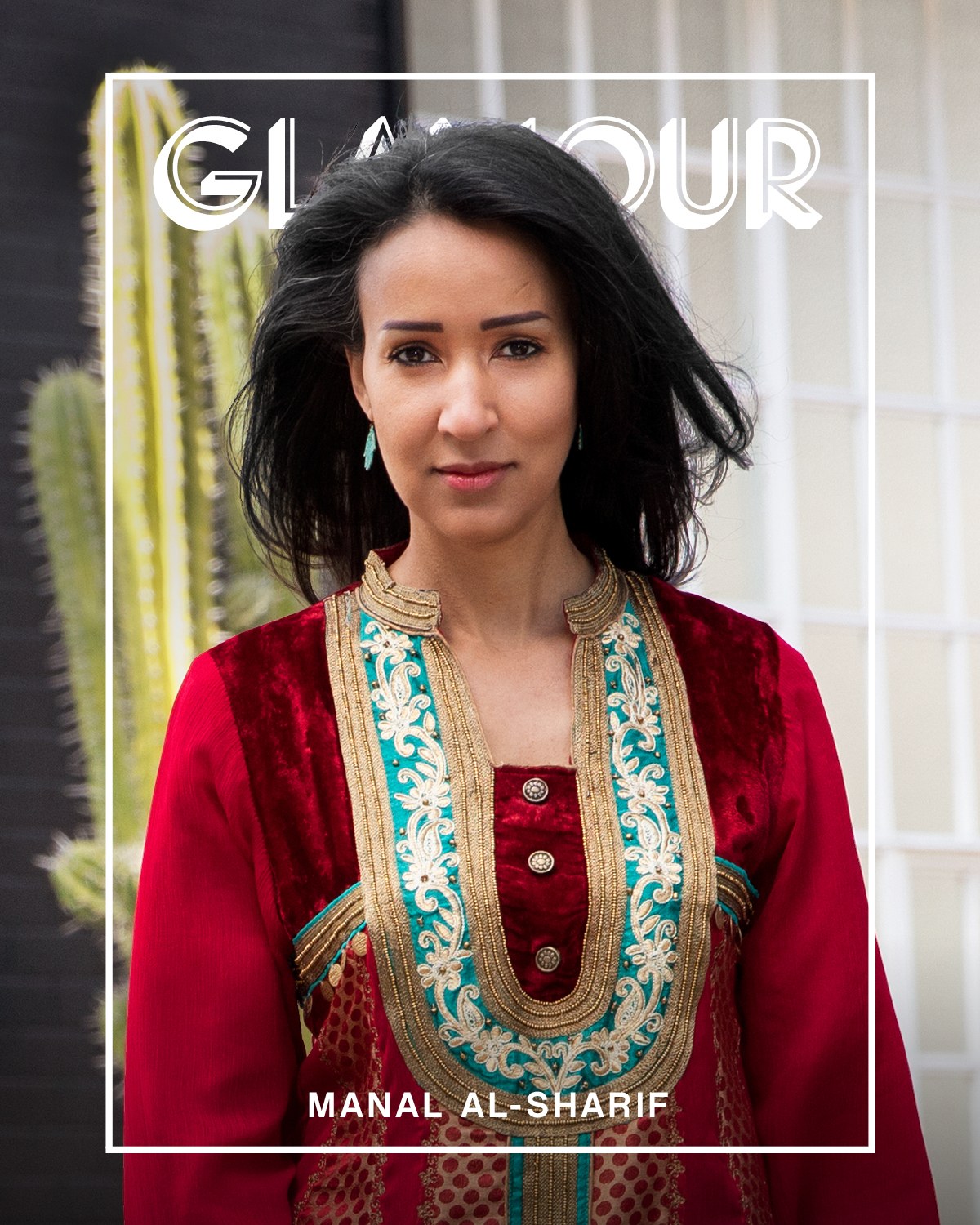
It was the painting of two Saudi women weavers on the wall in my apartment that Manal al-Sharif noticed first. During our FaceTime call, the breathtaking view of Sydney’s Parramatta River playing peekaboo in the background, she shared her own still-life drawings—two sets of meticulously sketched eyes and a realistic still-life of pumpkins. This is the only art that remains after she burned select pieces some years ago, believing images of humans and animals to be unholy in her birthplace of Saudi Arabia.
“I am back to art, finally,” she tells me later. It’s a remarkable liberty she now enjoys in her home in Australia, where she can race off in her Nissan on a moment’s notice. These are things al-Sharif, 39, does not take for granted. Thanks to her efforts, and those of her fellow activists, Saudi Arabia is no longer the last country on earth where women aren’t allowed to drive; on June 24, the nation declared women could get behind the wheel without a male guardian. But it’s a bittersweet victory for al-Sharif: She remains in self-imposed exile, one of many Saudi women activists to leave the country after the ban was lifted for fear of imprisonment. Out of nine of her compatriots, several are still behind bars. Nevertheless, her resolve to push against the status quo remains.
PHOTO: MICHELE ABOUD. HAIR: MAX PINNELL AT RELOAD AGENCY; MAKEUP: DESIREE WISE AT NETWORK AGENCY; SITTINGS EDITOR: LUCIA ARIAS-MARTINEZ
Al-Sharif grew up in Mecca with Muslim parents. She tells me she was always curious as a girl. “When they told me I can’t do this, I can’t read that, I would ask, ‘Why?’” she says. “I was always questioning: Why are there no women leaders? We were invisible in my society, and that bothered me so much. They say to us: ‘A woman leaves her house twice—once to her husband’s house, and the second to her grave.’ That is just so sad. I wanted to be me.”
In 2011 the computer scientist was a divorced single mother with her own house and money. “I made decisions in my life,” she says. She had her own car too, but couldn’t drive it without a male guardian. When she complained to a coworker about the unjustness, he told her there was no formal law against driving—women just couldn’t get a driver’s license. That’s when al-Sharif helped launch the Women2Drive campaign. Several activists got behind the wheel, but to galvanize support, al-Sharif videotaped her drive and posted it on YouTube. The clip went viral.
The authorities, unsurprisingly, did not rally behind al-Sharif the way women did; she was detained twice and imprisoned for nine days. Even when she was released, she was sequestered in her own country. “I was threatened, cornered, harassed,” she says. Her brother had to flee the country with his family. But most painful? The day her son Abdalla came to her bruised from a beating at school. “One of the kids had asked, ‘What do you think of Manal al-Sharif?’ and the teacher said, ‘She is crazy and should be under arrest,’” she recalls. “And he said, ‘Mom, jail is for bad people.’” After that she began shielding her son from her work, but didn’t give up.
“I was always questioning: Why are there no women leaders? We were invisible in my society, and that bothered me so much.”
Her activism cost her her job. When she tried to remarry, the government refused to grant her permission. She and her Brazilian husband wed anyway—which cost her custody of Abdalla. He must remain in Saudi Arabia with his father; he cannot visit her in Australia or meet his new brother, Daniel. Similarly, she cannot visit him without risking imprisonment. She feels tremendous sorrow that they are apart; for now she’s compiling every news clipping about her work and awards alongside a copy of her memoir, Daring to Drive, in a box for Abdalla. She hopes that one day she can tell him her own narrative, a different one from that of those who maligned her for challenging tradition and patriarchy. “Eventually,” she says, “he will know.”
Then there’s the frustration that her compatriots are not free. “Loujain Hathloul, Eman al-Nafjan, Aziz al-Yousef,” she says. “Samar Badawi and Nassima al-Sadah—I met every single one of these women…. I broke bread with them. We have been together from day one.” So she continues to fight for autonomy from existing guardianship laws. “I’m not free until we all are free,” she says.
She has to go now, to drive to pick up Daniel—an everyday act of freedom for mothers around the world. I have to know: Who inspires her? “Saudi women,” she says without pause. A woman there, she continues, “is stripped away from all her rights, her face, name, and identity. And yet she is there. She is a survivor; she’s a fighter. She makes it against all the odds.”
Jamia Wilson grew up as an American expat in Saudi Arabia and is executive director and publisher of the Feminist Press.
HAIR: MAX PINNELL AT RELOAD AGENCY; MAKEUP: DESIREE WISE AT NETWORK AGENCY; SITTINGS EDITOR: LUCIA ARIAS-MARTINEZ
Sandra Diaz wasn’t expecting to find the courage to come forward with her story of sexual assault. But, over the years, as she watched security officers, janitors and airport workers coming together to protest against the sexual misconduct they often face on the job, everything seemed to change. These women were members of the labor union which she co-leads, and in them, she found an unexpected strength stand firm in her own power.
“I saw the sacred wounds that, like me, they had held inside of them with shame” she says. “But I also saw the relief in their eyes to finally let it out.” In union meetings, as they fought back against gender violence at work, their stories rang out: Yes, I was raped while I was working. I didn’t say anything to the union. I kept silent for one year … 10 years.
“As a survivor, I understood the burden of silence and the relief and uncertainty when silence is broken,” Diaz, the Vice President and Political Director for SEIU United Service Workers West, says.
Feeling safe within a sisterhood of women reclaiming their power, she was finally able to feel what many have taken to social media to say in the past year: Me too.
Like so many others, Diaz and the women she serves have kept their stories of abuse and misogyny to private conversations, group chats, and whisper networks. In late 2017 however, it seemed as though a critical turning point was reached; a turning point that cued up all women to stop whispering in order to let their stories be heard. And yet, it hasn’t exactly played out that way.
It’s been a year since the #MeToo Movement became part of the national discourse online, having been kicked off by reports from the New York Times and the *New Yorker*which featured multiple women alleging that Harvey Weinstein—the burly, bullish Hollywood executive—had sexually harassed or assaulted them. (This summer, Weinstein pleaded not guilty to six felony sex crimes, including two counts of rape and two counts of predatory sexual assault.) Following the accusations, actress Alyssa Milano retweeted something she found online that encouraged women to share their own stories of abuse. The hashtag was #MeToo, and it went viral shortly after, but the criticism about who started it—and who it served—would dot headlines for the next 12 months.
What Milano didn’t know at the time was that #MeToo had been created in 2006 by activist Tarana Burke to advocate for women and girls of color who had been sexually abused. The 2017 iteration, by default, was intended to belong to the everywoman, thousands of whom responded to Milano in a deluge of tweets and status updates. And yet, it still felt as though the movement was most talked-about when familiar Hollywood stars joined in. And why not? Their stories were salacious, empowering, and captivating—a lurid peek into the darker side of the industry.
But that was only part of the story—of course, there were other women who had been trying to get their voices heard for years. And as the star power behind #MeToo grew, so did the opinion that it was owned by liberal women. Republican and conservative women who have #MeToo stories have reportedly felt left behind, like their experiences were being ignored by their party, and the movement.
One woman’s narrative crushes the criticism that #MeToo is strictly left-leaning. When Gretchen Carlson, formerly a face at Fox News, sued the conservative network’s chief in 2016, she was one of few women associated with that world to publicly come forward. Carlson’s lawsuit alleges that the late Roger Ailessabotaged her career when she rejected his sexual advances. Like Weinstein, Ailes was a larger-than-life executive whose misogynistic tycoon persona seemed to emanate from an old Hollywood playbook. According to reports, Ailes told her they should have had a “sexual relationship a long time ago and then you’d be good and better and I’d be good and better.”
Eventually, she decided enough was enough.
“It was the most excruciating decision of my life,” Carlson tells Glamour of coming forward. “Before there was a [Hollywood] #MeToo movement, before there was Time’s Up, before there was anything, it was me taking on one of the most powerful men in the world by myself.” Stepping forward a year before the hashtag’s meteoric rise gave her a new purpose and birthed her best-selling book, Be Fierce: Stop Harassment and Take Your Power Back, which was released just days after the Weinstein allegations were made public.
A year later, other women who identify as conservatives have come forward, but the movement on the right is slow to pick up, Vox points out. But it’s not about party lines for Carlson. More importantly, it’s about “every socioeconomic line” having access.
“It’s important to me that the every woman story is also heard,” the author, who recently defended herself against accusations of bullying, says. “Because this … pervasive epidemic, as I call it, it’s not just famous, rich people.”
The struggle to gain access to the movement goes beyond class lines, cash or politics. There’s also the elephant in the room when it comes to #MeToo: The racial disparity and how underreported the narratives of black, brown and gender nonconforming women are.
“White women have always had dominion over the narrative concerning sexual violence and gender-based empowerment.”
This was on the minds of Kenyette Barnes and Oronike Odeleye, who together created the #MuteRKelly movement, which seeks to put the alleged victims of the accused predator, musician R. Kelly, at the forefront. According to several accounts, Kelly has spent decades hunting for teenage “pets,” who, according to a recent documentary, he groomed to be sex slaves. (Kelly has denied the accusations.) Barnes and Odeleye, who began the organization to stand up for these young black women, both credit Burke and #MeToo as being extremely integral in their quest to bring Kelly to justice. And yet, their push is often overshadowed by high-profile alleged predators like Weinstein, Ailes or Bill Cosby, men whose alleged victims are often white.
“White women have always had dominion over the narrative concerning sexual violence and gender-based empowerment,” Barnes tells Glamour. “There’s a tendency to marginalize the unique experiences of black and brown women. This is no different in the attempted appropriation of #MeToo.”
It’s not like everyone in Hollywood completely ignored Burke’s original standard for #MeToo. Celebrity women who have engaged with the hashtag seem well-intentioned enough. But lip service is different from inclusion, and over the last year, actresses like Rose McGowan—whose outspoken participation seems to exclude black, brown and gender nonconforming victims, at least to some accounts—has been called out for her lack of it. She’s been criticized for dismissing the experiences of women of color and trans women, and yet, is hailed as one of the movement’s strongest heroines. She’s even earned an E! reality show—which aired in May—while most of the activists at the center of the movement, who organize marches and protests or offer support for victims, continue to move in the margins.
To be clear, McGowan is hardly an outlier. Often praised for her feminist ideals, actress and writer Lena Dunham drew criticism for dismissing a woman of color, actress Aurora Perrineau, who came forward with accusations against Dunham’s friend, writer Murray Miller, last year. And in the midst of Weinstein’s wave of accusers coming forward last year, the mogul was radio silent until actress Lupita Nyong’o shared her own account of his alleged misconduct towards her. Only then, after a black woman accused him, did he feel the need to publicly defend himself.
“There is no one coming to rescue black women,” Odeleye says of the struggle. “We have to save ourselves.”
One of the biggest culprits in pushing the false idea that the fight to end sexual abuse is the same for all women and men has been the media, Odeleye and Barnes note, which often fails to center varied identities in their coverage. Even Burke herself, who was unavailable for comment on the story as she organized and prepared protests against Supreme Court Justice nominee Brett Kavanaugh, addressed this in a recent op-ed for Variety.
“I launched the #MeToo movement because I wanted to find ways to bring healing into the lives of black women and girls,” she wrote. “But those same women and girls, along with other people of color, queer people and disabled people, have not felt seen this year.”
This is especially evident in the coverage of the sexual degradation of female victims over the last few years like Chikesia Clemons, whose breasts were exposed in her violent arrest at a Waffle House in Alabama earlier this year or Daniel Holtzclaw, the police officer convicted in 2015 of assaulting 13 women and raping eight in Oklahoma City. His victims, all of whom are black and many of whom had criminal records, remain ghosts lost in the coverage. We do not know many of their names. We do not speak of their immeasurable trauma.
It’s a similar story for the staggering number of trans women who have been murdered in the past two years alone. The National Center for Transgender Equality estimates that 2018 could be ‘the deadliest year on record’ for violence against trans women. (As of September 2018, 27 trans women have been reportedly murdered). And yet, a year later, as dozens of cisgendered women are given magazine covers and major platforms to discuss their trauma, there has been little to no coverage of the clear and present dangers our trans sisters face.
These challenges for women of color or varied identities can be, in part, attributed to the unique set of consequences that they face, both from society and their own cultural norms.
“We have to challenge our biases and ask ourselves, ‘Why don’t we see the power in women of color and in immigrant women?'”
“Often black women and girls are shamed into pushing aside their need for gender justice,” Barnes explained. Instead, it is often seen as “of little importance [when] viewed within the larger system of White Supremacy.”
This is also prominent in the Latinx community, according to Lilia Garcia-Brower, executive director of the watchdog group, Maintenance Cooperation Trust Fund, who advocates for janitorial workers in California. For these women, many of whom are undocumented, work is synonymous with sexual violence, intimidation and wage theft.
“If [these women] don’t believe that they are more valuable than the violence that they’re confronting every day, they’re not going to denounce what’s happening to them,” Garcia-Brower says. “ We’ve spent a lot of time unpeeling the gender socialization that tells [women] that we are less than a man … that we cannot defend ourselves.”
For both the unions and the watchdog groups, it was clear that the women would have to be the ones in charge of empowering themselves since they could not trust the industry to do it. As Diaz adds: “How do you hold an industry accountable for training their workers on sexual violence when we can’t even hold them accountable for paying them?”
These workers, whose struggles were chronicled in the Frontline documentary aired on PBS, “Rape on the Night Shift,” teamed up with the SEIU-USWW labor union and Garcia-Brower’s group to form the YA BASTA! COALITION. Through hunger fasts, protests and community training of “promotoras, (who educate their peers on self defense), the women of Ya Basta, which means ‘Enough Is Enough,’ are taking back their lives.
At the end of a recent march, a group of the janitors took off their shirts to call attention to the power dynamics at play in sexual violence—an action that was meant to reject the shame that survivors feel and to denounce that idea that sexual misconduct is about sex.
There, standing in their bras with their resolve at an all time high, they shouted: “Quien es dueña de tu cuerpo. Yo soy dueña de mi cuerpo.” Translated, it means, “tell me who owns your body. I own my body!” It was a simple declaration, but an immensely profound one in a society that, as Odeleye notes, “does not value a women’s ownership of her body.”
Still, the question remains: what does protection look like? And who has access to the new #MeToo as it reaches its first birthday?
“As a society, we have to challenge our biases and ask ourselves, why don’t we see the power in women of color and in immigrant women,” Diaz says. Shifting that power back to them, she says, “is at the center of eradicating sexual violence.
“But first we have to recognize the humanity in them.”
Allison McGevna is an editor and writer based in New York City. You can follow her @AllieMcGev on Twitter.
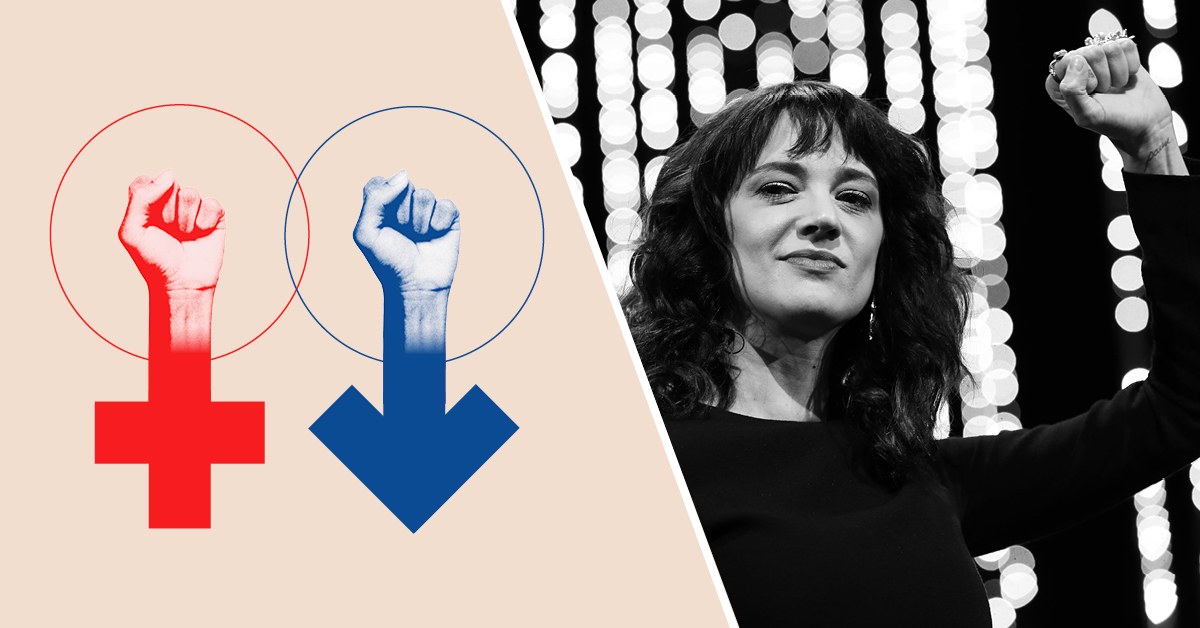
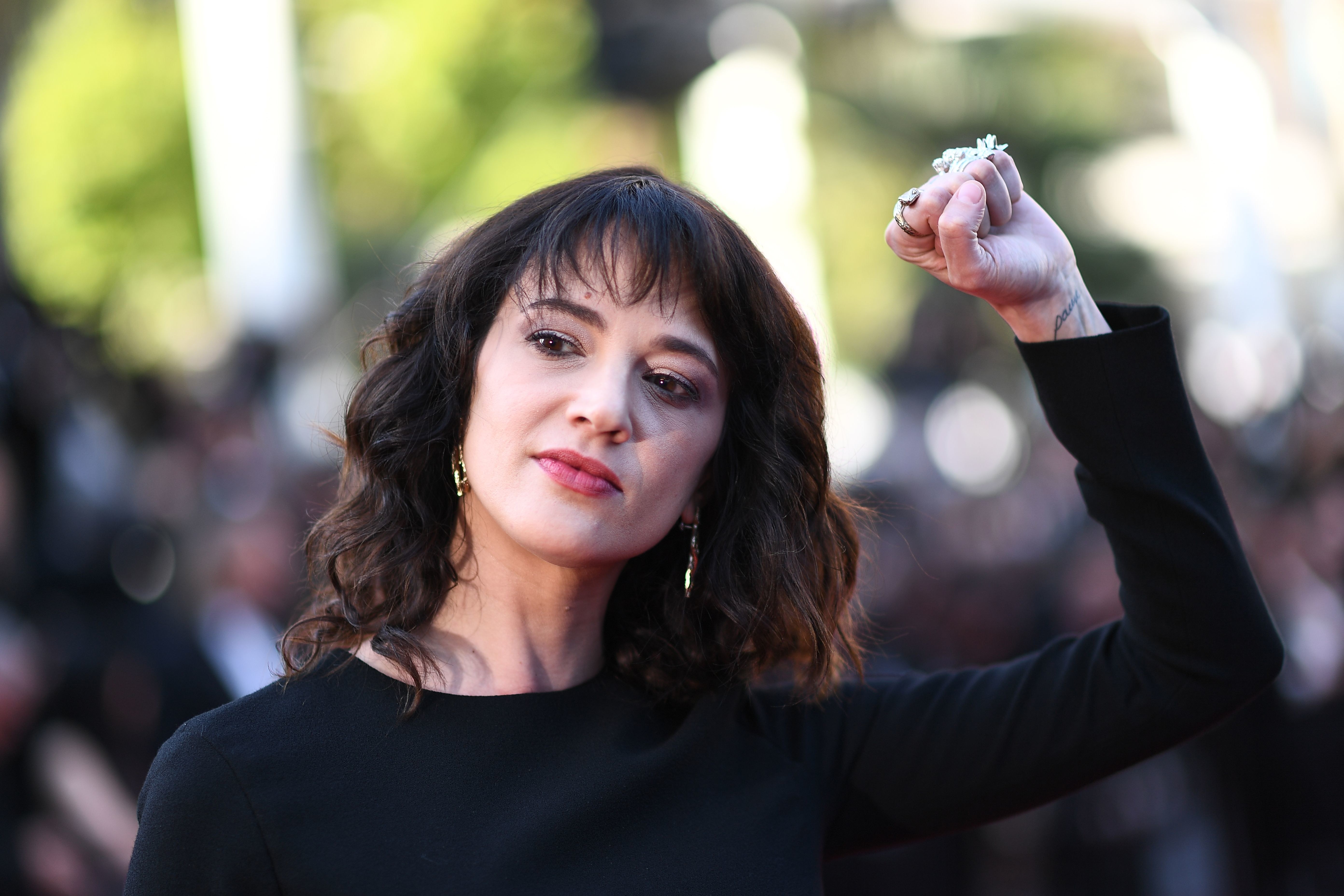
In May, director and actress Asia Argento took the podium at the 71st Cannes Film Festival to shake the table. “In 1997, I was raped by Harvey Weinstein here at Cannes. I was 21 years old. This festival was his hunting ground,” she explained. To anyone in attendance who had mistreated women, Argento declared, “You know who you are, but, most importantly, we know who you are, and we are not going to allow you to get away with it any longer.”
Argento, who six month’s earlier had detailed her experience with Weinstein in a bombshell story in The New Yorker, was a well-established voice in the #MeToo movement. But now she’s joined the list of the accused; The New York Times reported that the actress “quietly arranged to pay $380,000 to her own accuser: Jimmy Bennett” and quoted documents that alleged that Argento sexually assaulted Bennett, an actor and musician, in a California hotel years ago. Bennett was only two months past his 17th birthday at the time; Argento was 37. (The age of consent in the state of California is 18.)
Bennett declined to be interviewed by the Times, but in a statement to CNNafterward, he acknowledged that he delayed speaking out about the incident in hopes to handle it privately. The truth is, most men are forced to handle assault or harassment “privately”—men are not allowed to be victims. In fact, men praise boys when they are sexually assaulted by older women. It’s embedded in our slang (cougar, MILF), and our pop culture influencers. It’s why Chris Brown, in a 2013 interview with The Guardian, proudly declared that he lost his virginity at age 8. (“It’s different in the country,” the Virginia-native said to justify the actions of the teen girl. “So, at 8, being able to do it, it kind of preps you for the long run, so you can be a beast at it. You can be the best at it.”)
If we want men to be a part of the #MeToo movement, we need to acknowledge that they, too, can be victims.
It’s why Terry Crews, who came forward in October and publicly accused a Hollywood executive of groping him, was mercilessly mocked by rapper 50 Cent on Instagram. (In front of a Senate Judiciary Committee hearing for the Sexual Assault Survivors’ Bill of Rights in June, Crews discussed this toxic masculinity, saying manhood “tends to be cultish,” and denouncing the “complicit system” that encourages men to protect one another and shame those who speak out.)
“I have never had any sexual relationship with Bennett,” Argento said in a statement sent to journalist Yashar Ali. “Bennett — who was then undergoing severe economic problems and who had previously undertaken legal actions against his own family requesting millions in damages — unexpectedly made an exorbitant request of money from me.”
Argento went on to say that her then-boyfriend, Anthony Bourdain, “decided to deal compassionately with Bennett’s demand for help and give it to him.”
The actress was immediately, and rightly in my view, criticized. Argento’s decision to portray her accuser as a grifter or gold digger is a familiar trope employed by powerful men when women accuse them of sexual assault and misconduct. The kind that makes other victims not want to speak out over fears of their character or their work will be slandered. Considering Argento’s role in the #MeToo movement, she knows better than anyone why such a line of defense is troubling. It’s one thing to defend yourself, but why do so in a manner that mirrors the kind of men who have caused so many women pain?
Thankfully, leaders like #MeToo creator Tarana Burke reiterated what I felt had long been made clear: men have a space in the movement, too.
Taking to Twitter, Burke wrote: “I’ve said repeatedly that the #metooMVMT is for all of us, including these brave young men who are now coming forward. It will continue to be jarring when we hear the names of some of our faves connected to sexual violence unless we shift from talking about individuals and begin to talk about power.”
We all need to absorb this truth: Although men commit most acts of sexual assault and rape, men are sexually assaulted and raped, too. Their assailants can be men or women. #MeToo is not about gender, it’s about power.
Our culture, and the toxicities of masculinity and patriarchy, lead some men to believe they are entitled to do what they want with women’s bodies. To leer, grope, force, no matter what age, profession, protestation. Some women end up repeating the mistakes of these men. If we truly want to move forward together, we have to recognize—I’ll say it again—that sexual assault and rape are about power, and that this despicable behavior impacts all of us.
A new report from the New York Times claims Asia Argento, the Italian actress who was among one of the first women to accuse producer Harvey Weinstein of sexual assault, secretly agreed to pay a young male actor who accused her of sexual misconduct following her own admissions about Weinstein.
The Times reported that it obtained documents containing allegations that the actor, identified as Jimmy Bennett, was sexually assaulted by Argento in 2013 when he was 17. (The age of consent in California is 18.) The two had acted together in a 2004 movie, The Heart Is Deceitful Above All Things, playing mother and son.
The paper reports that seeing Argento emerge publicly as a sexual assault victim brought back memories for Bennett, citing an intent to sue document in which his lawyer wrote, “His feelings about that day were brought to the forefront recently when Ms. Argento took the spotlight as one of the many victims of Harvey Weinstein.”
Argento was one of the first women to publicly accuse Weinstein of assault, and subsequently became one of the movement’s most vocal voices. She described an incident to the New Yorker where she said she was led to Weinstein’s hotel believing it to be a studio party, but instead found the movie mogul alone in the room. She says he asked her for a massage, which she reluctantly agreed to do. According to Argento, Weinstein “pulled her skirt up, forced her legs apart, and performed oral sex on her as she repeatedly told him to stop.”
Argento also gave a rousing speech at this year’s Cannes Film Festival where she described the event as “hunting grounds” for Weinstein. (While Weinstein has pleaded not guilty to six felony sexual assault counts in New York, including first-degree rape, none are related to Argento. He has denied all of her claims about their encounters.)
According to the intent to sue document cited by the Times, the two were “intermittently” in contact afterward starring in the 2004 film together. “Jimmy’s impression of this situation was that a mother-son relationship had blossomed from their experience on set together,” his lawyer wrote. According to Bennett’s account of what occurred in May of 2013, the young actor met up with Argento in her Ritz-Carlton hotel room in Marina del Rey, California with a family member.
The Times reports that the account states that Argento asked the family member to leave and that she then served Bennett alcohol and kissed him before performing oral sex and engaging in intercourse with him. Argento also reportedly took a number of photos with Bennett, some with the two semi-clothed, which were included in the intent to sue document.
But others, including #MeToo leaders, are taking to Twitter to sort out their feelings amidst these new allegations. It’s a complex and nuanced discussion, to say the least.
These are incredibly serious allegations and should be treated as such. But what they should not do is take down or negate all the work that the #MeToo movement has done over the past year. It’s almost becoming cliche to say, but two things can be true at the same time. Argento’s alleged behavior does not mean that what happened to her and many other women at the hands of predatory men like Weinstein didn’t occur or that the issues surrounding women in the workplace are not still valid and important.
Nude photos were posted of Leah Juliett on the Internet without their consent when they were 15. As #MeToo has cemented itself in the conversation around sexual safety, Juliett is calling for revenge porn to have a reckoning of its own.
I remember straddling the bathroom counter, attempting to capture the perfect shot of my young body to appease the boy I wanted to like me. I was gay. I was 14. I was in the closet. I was depressed. I wanted to be loved. At first, I refused his request for nude photos, but I felt an overwhelming pressure to satisfy his needs. After almost a year of being asked on and off—I caved. I sent him four nude photos. My life has never been the same.
Quickly after sending those photos, he lost interest in me. I started to come out as gay to my close friends, and I moved on with my life. But several months later, I was in science class when my lab partner pulled out his phone. “Everyone has seen your pictures,” he said—I thought he was attempting to be sympathetic. On his screen was my naked body. He told me that the photos had circulated within a group of boys who traded and collected naked photos of girls in the community, and were posted on a website called Anon-IB, which was seized in April by the Dutch police.
At the time, I was unaware that I had been victimized by revenge porn, the practice of strategically distributing sexual images with the intent to shame, humiliate, or harm a victim. In that moment, ownership of my body was stolen from me—and I feared I would never get it back. Despite attempts to have the images removed, they were consistently reposted. If there was a national movement that fought against the cyber-violence that I was enduring at the time, I would have felt far less alone in my experience. I would have never believed that my silence could be used as a bargaining chip against my shame.
In the past year, we’ve seen the moral arc of the universe of sexual violence slowly bend toward justice. The Me Too movement has created a platform for millions of survivors to tell their stories and seek retribution. Most recently, sexual predator Bill Cosby was convicted of three counts of aggravated indecent assault against Andrea Constand. And we can’t forget the wealth of other accounts coming out of Hollywood and other industries.
But the work is far from over and the conversation must continue to become more intersectional. As a survivor of revenge porn, I’ve felt left out of #MeToo: We’ve celebrated victim stories, but it still feels like we shame imperfect narratives of victimhood. Photos of my bare breasts and face reached the screens of boys at my high school and across the state, with the intent of exposing my nudity and shaming my body. Does that not make me worthy of justice like any other victim?
I’m not alone: Revenge porn is a form of sexual abuse that has exploited more than an estimated 10 million Internet users in the United States, per the Data & Research Institute. But still, victims are not protected under federal law. And we are certainly not protected in a culture that demands that we “don’t take nude photos in the first place.” Few of us have had our day in court.
“Photos of my bare breasts and face reached the screens of boys at my high school and across the state, with the intent of exposing my nudity and shaming my body. Does that not make me worthy of justice like any other victim?”
Relatedly, in 2014, there was a short-lived uproar after nude photos of Jennifer Lawrence, Kate Upton, and other celebrities surfaced on the Internet without their consent. The man who hacked their accounts, Edward Majerczyk, took a plea deal and was sentenced to nine months in prison and paid $5,700 in restitution. But I don’t think that was enough. The effects of such an invasion of privacy can last a lifetime. Just like with #MeToo, we need the same continued outspoken public advocacy for revenge porn—otherwise, we risk leaving out millions of victims of cyber sexual violence worldwide. It’s time to say #MeToo to revenge porn.
I graduated from my high school, but my nude photos remained online. I realized that this experience would either kill me or drive me into action. I started telling my story in public and made the decision to save my own life. In college, I came out as non-binary, and started using they/them/their pronouns. At the time, #MeToo did not exist to encourage me to speak up and fight against revenge porn. Perhaps if it had been, I would have spoken up earlier. Nevertheless, taking back my life on my own terms has allowed me to start my own movement—one that is intersectional and inclusive for all who have been victimized by cyber-harassment.
Two years ago, I started the March Against Revenge Porn, an internationally-acclaimed grass roots organization dedicated to combating revenge porn through federal lobbying, cyber-sex education, and a series of national protest marches. On April 1, 2017, we marched across the Brooklyn Bridge to protest New York City’s lack of comprehensive revenge porn legislation.
We march on. This month, we will march in the Boston Pride Parade to shed light on the disproportionate victimization of LGBTQ+ communities by revenge porn. Research from the Data & Research Institute says that 17 percent of all lesbian, gay, and bisexual Americans have been victimized by revenge porn—in comparison to only 3 percent of all heterosexual people.
And at the end of June, we will march in Pittsburgh, alongside anti-revenge porn groups BADASS and 50 Shades of Silence, to fight for federal revenge porn legislation protecting victims nationwide. Later this year, we plan to march at the University of Hawaii and hope to bring a march to Orlando.
The Me Too movement was born from the strength and courage of those who society has historically refused to hear. Since telling my story, I’ve been told that what happened to me was my fault. It’s easier for society to blame and silence me than to allow me to take up space. I am not a perfect victim. My story is tough to digest. I sent the photos that would eventually be used to exploit me. But I did not consent to be harassed, exposed, or publicly shamed. I refuse to silence the story of my suffering and hope that others will come forward and speak about their own experiences. We belong in this movement. We refuse to be invisible any longer. Through marching; through movement; through saying #MeToo: we demand to be seen.
Leah Juliett is a senior at Western Connecticut State University and a 2018 Glamour College Woman of the Year.