Categories
Health

Prince Harry Reportedly ‘Feels Terrible’ For Hurting Queen Elizabeth II


While Prince Harry stands by his decision to step back from his royal duties, he reportedly feels terrible for hurting Queen Elizabeth II in the process.

According to a source with Us Weekly, the ensuing drama and quarrels were never a part of his plan. “He feels terrible about hurting his grandmother, whom he adores,” the source says.

The same source also claims that the decision may have been more about his wife, Megan Markle, than himself. If the source is to be believed, Harry (who’s just going by his first name now) is feeling “a bit isolated” in Canada. “He misses nights out with his boys, polo matches and rugby, and he’s really been craving a decent pint,” the source claims. “He had to put his wife first, end of story. Even if it’s left him feeling a bit isolated.”

Back in January, the royal couple announced their decision to step back. “After many months of reflection and internal discussions, we have chosen to make a transition this year in starting to carve out a progressive new role within this institution,” the duke and duchess wrote on Instagram. “We intend to step back as ‘senior’ members of the Royal Family and work to become financially independent, while continuing to fully support Her Majesty The Queen.” Was this really only two months ago? It feels like this has been going on for years.

Fast-forward to February, royal historian Robert Lacey told People that the queen may feel particularly in tune with Prince Harry’s feelings. “She has a particular sensitivity to what Harry has been going through because of her closeness to Margaret and seeing the same dramas and tensions played out two generations ago,” Lacey said. He added, “The younger-sibling syndrome is an enduring problem. The system has not found a way of giving them the recognition that they need.”

Through it all, the queen plans to be there for her grandson. “She won’t dwell on the exit,” royal biographer Ingrid Seward also told People. “She is very pragmatic. She has left the door open for Harry especially.”

So basically, no hard feelings all around.


Source link

Categories
Health

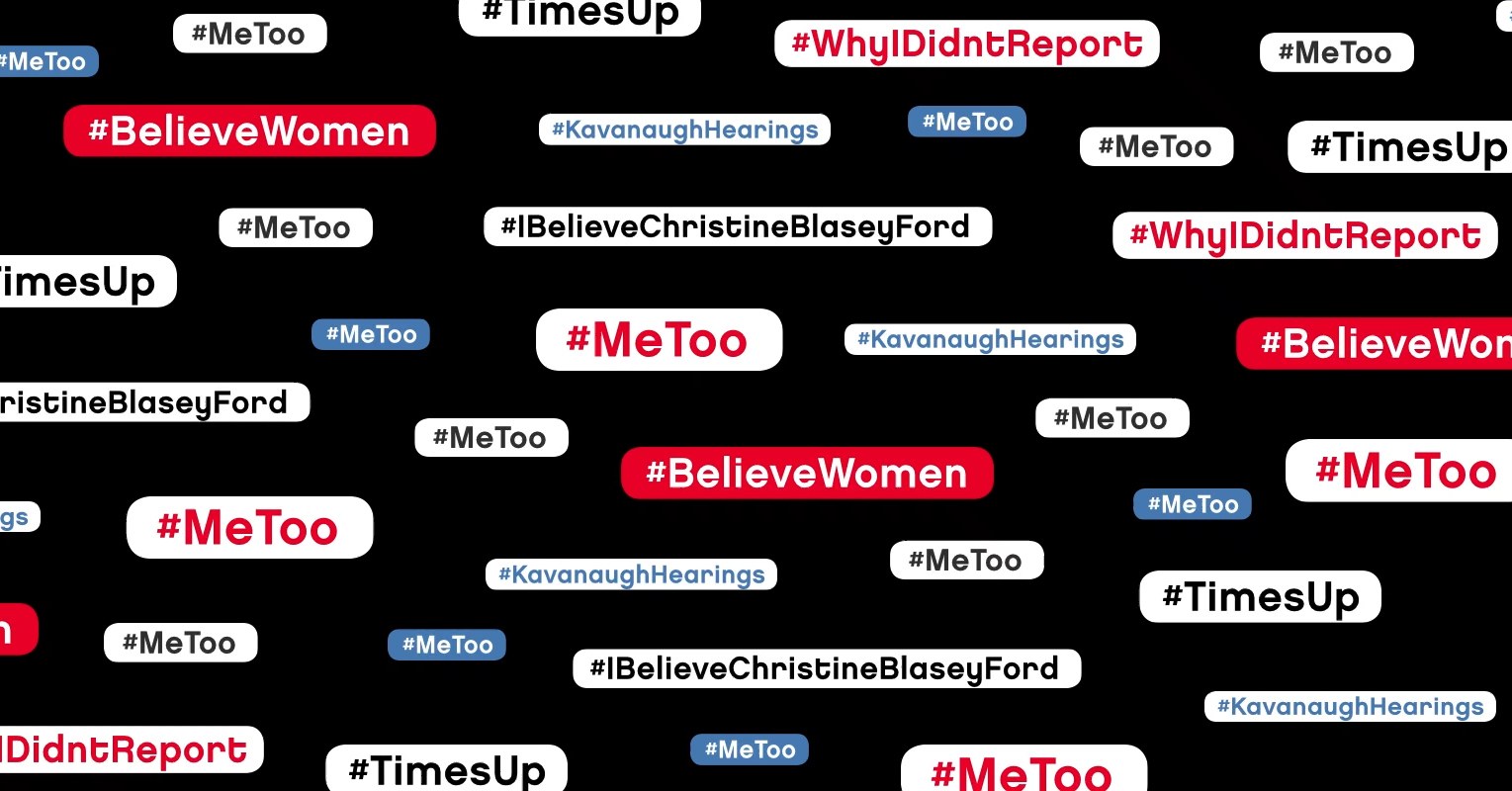
Are Hashtags Like #MeToo and #BelieveWomen Hurting or Helping Survivors?


When friends and former colleagues started sharing #MeToo stories, or, in those first furtive days of virality simply dropped the hashtag and left the details opaque, it was palpable: Something was shifting right before our eyes and the power of women speaking, typing, screaming what had for generations mostly been whispered or not said at all, was weighty in the air.

The way we grappled with, identified and discussed sexual assault would never be the same, it seemed.

MeToo—the hashtag that took off after Alyssa Milano, using activist Tarana Burke’s decade-old campaign, put a pound sign in front of the rallying cry—prompted a tsunami of stories and a national intervention on sexual harassment and assault.

It was an eye-opener. Many women I know, myself included, began digging through moments that we’d waved off—the unwanted hands, the inappropriate boss, the ass-slap at work, the boys who’d been boys—and wondered how we’d become conditioned to accept it. Many men voiced surprise and shock at such pervasive harassment and assault. Women described groping , a constant flow of harassment, molestation and even rape. Powerful names started to emerge with accusations attached: Larry Nassar, Kevin Spacey, Roy Moore, Louis C.K., Charlie Rose, Matt Lauer, Russell Simmons, Al Franken, Woody Allen (again), Mario Batali. “The Silence Breakers” were Time Magazine’s People of the Year. The language had changed. Posting #MeToo stories was a part of a national movement to decondition our society. Doing so was both brave and necessary.

But this necessity, unsurprisingly, came with a cost. Survivors gave a piece of themselves, their stories, in exchange for a movement that was supposed to create a wave of change. The burden, it seemed, was on women to free our culture of abuse and assault. Unfortunately, the burden was also on them to endure the very specific and unique abuse that survivors face when they come forward—the insidious shaming that puts the onus on victims instead of their attackers and aggressors.

A year later, in the same month as #MeToo’s internet anniversary, we find ourselves in more of the same. Now-Supreme Court Justice Brett Kavanaugh was confirmed and sworn-in to serve on the highest court in the land despite the sexual assault allegations brought forth by three women, including Christine Blasey Ford, and a belligerent show of defense during his Senate Judiciary Committee hearings. Ford, who says the judge attacked her more than 30 years ago when they were in high school, has been mocked by the president for coming forward. She is unable to return home due to death threats. Women—and some men—reported mentally reliving their own attacks after Ford’s testimony, and took deeply personal umbrage at the suggestion that Ford’s delay in reporting somehow indicated she’d fabricated her story. And the vitriol against Ford is not unlike the kind those who shared their stories using the hashtag #WhyIDidntReport, experienced. It might be easy to wonder, is hashtag reporting to eradicate and illuminate our society’s ills all worth it?

Given the historical response to survivors of sexual assault, especially in the age of Twitter, I asked Karestan Chase Koenen, PhD, licensed psychologist and professor at Harvard’s T.H. Chan School of Public Health, what can prompt survivors to voice an incident they held inside, for years or decades. Often, there are spikes in reports “anytime there’s a really high-profile sexual assault case,” says Koenen. This was true during the Clarence Thomas hearings. It was true with Kavanaugh.

“Assault takes a person’s control and power away, and it should be in someone’s own power and control to tell their story.”

Moral obligation also has an incredible power to draw out the truth: Survivors tend to report after their attacker faces other allegations. Koenen herself went public with her own experience: “It was this public thing where I had a purpose for speaking out,” explains Koenen. “For some people, speaking out now has a purpose.”

Then there’s control: “Assault takes a person’s control and power away, and it should be in someone’s own power and control to tell their story, and I don’t think they’re under any obligation,” says Koenen. Your story, once on the internet, is always there, she warns. She’s known women whose new dates Googled them and knew about their assaults before their first dinner. Sharing the story, no matter how important, cedes some control over it and how it will later be revealed to others.

I certainly do not fault anyone for sharing their #MeToo or #WhyIDidntReport stories; it shows staggering courage. For some, it is empowering to finally say it. That shouldn’t get lost. But I worry about so many people who carried a gnawing hurt and fear around for years, who never wanted to speak the words. Early on, I didn’t pause to see how making a disclosure in such a public way also leaves one open to trolling and further harassment, or in Ford’s case, ongoing death treats. Such is the cost of the truth. I’m at once awed by the survivors’ courage, and mourn that this moment again required it of them—and repaid them with so much cruelty. There’s a burden in being a bearer of truth; there’s punishment meted out for telling it.

I wonder how Ford feels now. How ought outspoken survivors all feel, having aired indignities and pain publicly and across generations, to receive lip service from politicians, but ultimately see justice evaporate again?

There’s an unbearable lightness in telling a difficult truth, a freefall sense, a burden cast-off—perhaps traded eventually for new burdens—but in the moment of truth-telling, there’s power in choosing the words. We saw that astonishing power in Ford. She may not have been taken as seriously as she should have been by those seeking other forms of power for themselves, but she changed lives.

There are millions of stories still held in silence.

When truths are told for a higher good, one hopes the teller will be rewarded with seeing some justice. In a good, fair world, that’s how things would work. We don’t yet live in that good, fair world. But we do live in a country where now, the fight is more deeply shared. Losing a battle but ending up with more soldiers isn’t exactly a loss.

For a year, we’ve heard the tallies of the millions of dollars powerful men lose when their “scandals” surface. But I continue dwelling on what’s been sacrificed by so many women who exposed their hardest memories at the cost of waking up the rest of society, the cost of reliving and opening up stories—because the cost could be exponential a moment that never ends.

Unless, because of their courage, eventually, it does end.


Sarah Stankorb is a writer whose work has appeared in The New York Times, Washington Post, Vogue, Marie Claire, Longreads, Catapult, and Slate, among others. @sarahstankorb

MORE: A Year Later, Is the #MeToo Movement Stuck in Hollywood?


Source link

Categories
Health

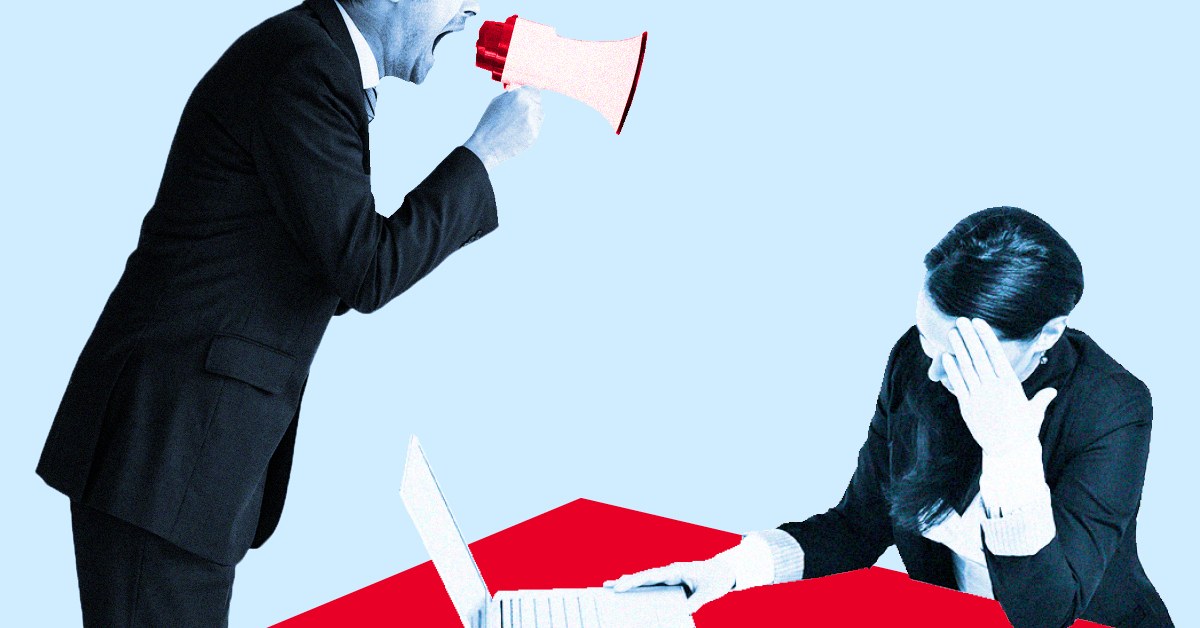
Verbal Abuse Is Hurting Women in the Workplace


At first, it seemed funny.

“Temper tantrum” was how I described his behavior to my friends. Michael (not his real name) would raise his voice at me, then flounce out of the room in a huff. At first, his outbursts seemed innocuous, if unprofessional: Can you believe he did that?

We worked together, and I’d read enough books about office culture to believe I could handle the situation, so I spoke to Michael about his outbursts. Because he seemed to feel bad about it, I wrote it off.

But the behavior escalated. One afternoon, he didn’t like the direction of a project. In front of another woman, he criticized the work I’d done, declared it a waste of his time, and stormed out of the conference room. As with all of his outbursts, I felt undermined, humiliated, and frustrated that preventing another temper tantrum—or trying to—had become part of my responsibilities. I raised the issue with higher-ups, and everyone believed (it seemed to me) that I was good at my job and that his immature lashouts needed to stop.

That isn’t what happened. And a few weeks later, I was out of a job.

The experience was awful, but others have it much worse. Verbal abuse in the workplace doesn’t take just one form. It can involve screaming, humiliation, sexist, homophobic or racist slurs, aggressive behavior like pounding tables or slamming phones, and intimidation, like blocking doors or stairs. Some of these behaviors fit the legal definition of assault and harassment. But some don’t.

Even now in our post #MeToo world, many kinds of verbal abuse—and the toxic environment that abuse fosters—doesn’t violate the law.

I no longer have to deal with Michael, but I still feel his effect. As someone who considers herself a hard worker and a resilient woman, I wince now at how his words made me feel and the extent to which I wondered whether I was “too sensitive” to cut it in our office. The experience made me question future coworkers, too. Who would be next to lash out? And would other coworkers let it happen?

Even now in our post-#MeToo world, many kinds of verbal abuse—and the toxic environment that abuse fosters—doesn’t violate the law. Worse still, the behavior tends to be dismissed as natural, if somewhat unpleasant in competitive, achievement-oriented work environments. In May, the New York Times published a roundtable with the cast of Arrested Development, kicking off an overdue public conversation about the phenomenon. In it, actress Jessica Walter cried as she described her co-star Jeffrey Tambor’s verbal abuse. “[In] almost 60 years of working, I’ve never had anybody yell at me like that on a set and it’s hard to deal with,” Walter said. But some of her male co-stars seemed to make excuses for such behavior, with Jason Bateman opining, “[I]n the entertainment industry, it’s incredibly common to have people who are, in quotes, ‘difficult.’”

I was incensed not only at Walter’s mistreatment, but by some of her male colleagues’ minimization of it. The “that’s just the way it is” excuses sound hollower than ever as movements like #MeToo readjust our cultural response to sexual harassment and assault. The power structures that compel women to be silent in the face of misconduct have been exposed. Some have crumbled. But the work is not done.

Verbal abuse is rampant. I had experienced it. Jessica Walter had experienced it. How many women like us were there?

In the months since I tweeted this very question out, over 2,000 women shared that they had been yelled and screamed at, “shushed” and called names like “bitch” and “cunt.” It came from male bosses, colleagues, subordinates—even interns. It has happened one-on-one, in meetings, on conference calls and in front of customers. Women have been screamed at for refusing to pay men a day early, not serving expired food, and enforcing potentially life-saving safety rules. (“Hell hath no fury like a dad whose kid is too short to ride a slide safely,” tweeted one ex-amusement park employee.) In other words, women have been verbally abused by men just for doing their jobs.

The volume of responses surprised me. So I decided to dig deeper into how and why this debasement came to be so widespread and normalized in our workplaces. Who is committing it and why? If so many of us think it is wrong, why doesn’t it stop? How does it impact the women who are harmed? And what should we do about it?


The first hurdle to get over may be acknowledging that workplace verbal abuse is actual abuse.

Verbal abuse can be “any spoken comments that are made to criticize, demoralize, insult, hurt [or] manipulate somebody,” says Lena Derhally, a licensed psychotherapist in Washington, D.C. “The intention is to hurt, control, manipulate, shame, humiliate.” And it has consequences for both our mental and physical health. While much of the existing research on verbal abuse focuses on intimate partners, or parents and children, studies have shown that the long-term effects of severe emotional abuse can have consequences akin to physical abuse.

“When women are the victims of this kind of aggression … [it can lead to] post-traumatic stress disorder,” Kathleen Shea, Ph.D., a licensed clinical psychologist on the North Shore near Chicago tells me, adding that verbal abuse has a “seriously negative” effect on our self-esteem.

Trauma can activate the “fight or flight response,” says Derhally. One way the flight response manifests itself is with “freeze mode,” or shut-down and disengagement—say, no longer contributing ideas in meetings or diminished productivity.

All-too-frequently, it is a “him” who is committing the bad behavior. A 2017 survey by the Workplace Bullying Institute looked at bullying behavior (not just verbal abuse) and found men targeted women in 65 percent of incidents related to “repeated abusive mistreatment at work.” Among all bullying behavior, 70 percent of the perpetrators were men. While men and women are supposedly “equals” in a workplace, too many women don’t experience it that way.

The experience “destroys you mentally,” says Ashley (not her real name), a 23-year-old in Las Vegas.

Ashley’s first job out of school was a position at an entertainment company that began with a 90-day probationary period, during which her manager Brad (not his real name) yelled at her when she struggled with mathematical equations.

“I used to drive to work and think, ‘I wonder if today will be the day that he was gonna fire me,’” she recalls. “That would consume my thoughts every day.” She didn’t feel she was in a position to speak up then, because trainees could be let go for any reason.

Once her 90-day probation finished, Ashley informed the company’s HR department about Brad’s behavior. She didn’t want to “ruffle any feathers,” she says, but confidantes urged her to say something. Not long after speaking to HR, Brad took Ashley aside and she was “yelled at for kind of ratting him out.” Instead of apologizing, he upbraided her further. Shocked, she recalled that she “nodded and said ‘OK.’”

Not long after speaking to HR, Brad took Ashley aside and she was “yelled at for kind of ratting him out.” Instead of apologizing, he upbraided her further.

The abuse took an obvious toll: “I went to the bathroom and cried,” she says. And the outbursts continued in the weeks and months that followed. “I became a shell of the person that I was,” Ashley says, “And the personality traits I like about myself were not really coming through anymore.”

One day in January, Brad was fired. Ashley quit about two weeks later, a move she says “proved to be much better for me [and] for my own mental health, for my own physical health.”

She had been at the company for six months.


It might seem like Michael or Brad are just bad apples. But toxic work environments are more complicated than that—an interplay between how an individual functions unhealthfully and how the organization as a whole functions unhealthfully.

First, it helps to understand that verbal abuse is usually brandished by “very insecure people as a way of having control,” says Derhally. “Secure, happy, confident people do not abuse. … [Verbal abuse is] a way to take control, to have power, to manipulate, to compensate for deeper insecurities.”

Abusive work environments typically adhere to one of three patterns, according to feminist legal scholar Joan C. Williams, professor of law at University of California, Hastings College of the Law San Francisco and founding director of the Center for WorkLife Law. In one scenario, abuse is the norm. “In some workplaces, screamers are valued and, at some level, informally encouraged,” Williams says.

Other workplaces claim not to tolerate abuse, and generally don’t, but some people—“almost always men who hold power in the organization,” says Williams—get a pass. Often these exceptions-to-the-rule make a lot of money for the company, or lend it prestige. (Think: Would an extra who yelled at Jessica Walter get the same treatment as Jeffrey Tambor?)

In the third scenario, abuse is a way of establishing loyalties. In these environments “if you want to not be bullied, you have to kind of take part in the bullying,” says Williams. Instead of one individual inflicting abuse, a group gangs up on her together.

In addition to these scenarios, abusive behaviors at work can be classified as either overt—direct acts of hostility in front of customers, in meetings, in group Slack channels—or covert, behind-the-scenes passive aggressiveness or undermining.

Women, of course, can also behave abusively at work. However, sexist double standards mean that women may pay a price for behaviors which are excused, even rewarded, in men. A recent study out of Arizona State University found male attorneys who displayed aggressive behavior, such as yelling and pounding their fist against the lectern, during identical closing arguments were “commanding, powerful, competent and hirable.” Women attorneys who exhibited the exact same behaviors were seen as “shrill, hysterical, grating and ineffective.”

In other words, when women act aggressively, they are seen as loose cannons, while men look passionate and continue to get work. Men are socially conditioned to show they are “in charge”—even when they are not actually in charge—and this entitled behavior is validated as a show of “authority” or “leadership.”

Of course, abusiveness is not necessarily a personality trait—it’s a widespread problem within our cultural instruction of masculinity. Boys are raised seek the upper hand to avoid humiliation, explains Shea. “In order for men to ‘be men,’ they have to dominate” and the code they live by is “‘humiliate before you’re humiliated,” she says.

So when abusive men feel insecure about themselves and how others perceive them, Shea adds, they overcompensate with displays of power and control—throwing a stapler, screaming at an intern. It’s a performance of what “being a man” or “being a success” looks like. Masculinity needs to be witnessed.

Kate (not her real name), 41, who lives in Southern California, learned that more than a decade ago when someone on her team at the radio station where she worked was verbally abusive. Steve (not his real name) gave her an assignment. Kate recorded a piece that was three minutes long, but Steve had needed it to be five minutes. Maybe he assumed she knew how long the piece should be, she concedes, but she doesn’t recall him giving her those instructions. And while she was out in the field reporting, Steve called her phone and began to yell.

“He freaked out,” Kate remembers. “He was bugging out because I did it wrong: ‘You don’t know what the fuck you’re doing! You’re a fucking idiot! What the fuck is the matter with you?’”

So she hung up on him—“because I don’t have time for this shit,” she says—and continued working. Steve called her phone more than a dozen times, according to Kate.

Kate reached out to management for help, eventually meeting with Steve and someone from Human Resources. At first, he denied verbally abusing her. Eventually he admitted, “‘I suppose it’s possible that I may have said something to you.’”

“HR [was] looking at him and nodding,” Kate recalls. “I’m, like, I have no chance here!’” At the end of the meeting with Steve and HR, she says, “They ordered us to shake hands.”

Kate was dismissed a few weeks later. She says she was told it was due to performance issues.

Women, of course, can also behave abusively at work. However, sexist double standards mean that women may pay a price for behaviors which are excused, even rewarded, in men.


Federal employment law lacks teeth for the nuances of verbal abuse, and not a single state has passed a complete version of the Healthy Workplace Bill—meant to address verbal abuse and other behaviors not covered under federal law—despite its introduction in more than 25 states. The best course of action, it seems, is to identify this behavior when it occurs and stop making excuses for it. As The Cut reported in June, the fashion industry—infamously portrayed in The Devil Wears Prada—is already undergoing its own reckoning. And one important change would be to stop penalizing women who stand up for their rights. Asserting oneself at work should not be a lose-lose situation.

“Unfortunately women should realize that by the fact that they are encountering this dynamic, their careers are already at risk,” Williams says. She adds, jokingly, “One of the things I always say [is] one of the worst career moves a woman can make is being the subject of gender discrimination.”

Men, of course, need to do the lion’s share of work here. “This is a deficit that men are finding in terms of being able to communicate professionally when anger, frustration, [and] passion are all in the mix,” says Emilie Aries, the founder and CEO of Bossed Up, a personal and professional training organization for women.

Verbal abuse should not be dismissed as the price of admission for women in the workforce. “It’s not about being treated equal [to men],” says Derhally. “When men have that response—‘Suck it up and deal with it!”—that’s toxic male culture, that we can treat people like they’re scum and then expect them to tolerate it. To me, that’s bullshit.”

Ultimately, the more we speak up about this type of abuse and demand the behavior stop, the easier for everyone else to speak up, too.

As Aries puts it, “Women have been taking the brunt of abuse in workplaces for so long without significant justice being served … I think there’s a very righteous sense of resentment that’s bubbling up about it all.”


Jessica Wakeman is a writer in Brooklyn. Her work has appeared in Glamour, Rolling Stone, Bitch, Bust and many other publications.


Source link

Categories
Health

Is Your Tribe Helping Or Hurting Your Mental Health?


I spent my twenties going to clubs that had mean bouncers and sports bars where I drank too much beer. I felt aimless and uninspired (and lonely and a little drunk). When I turned 30, I looked around at my drinking buddies and realized I just didn’t belong. As they stared zombielike into their phones, I could tell they weren’t exactly feeling their best either. Maybe we just weren’t meant to be together.

Research has shown that when we’re connected to other people, our health thrives. Brigham Young University researchers found social isolation is as much of a threat to longevity as obesity is, and loneliness is about as risky as alcoholism or smoking 15 cigarettes a day. To me, not having a core group of friends who cared about me and whom I cared about, respected, and felt inspired by was an emotional drain. I wasn’t getting much out of my social group. (I wasn’t giving, either, which turns out to be pretty necessary.) I had to make some changes.

“Feeling a sense of belonging is a fundamental human need,” says William Chopik, Ph.D., assistant professor of psychology at Michigan State University. “Throughout all of human history, social groups are what helped us survive. They give us psychological benefits, like the sense that there are others we can depend on and turn to when we need it. That security translates to all sorts of good outcomes, including higher self-esteem and better relationships. The benefits are seemingly endless.”

Yet we busy ourselves rounding up followers and likes and pretending we’re just fine going it alone, rather than focusing on the depths of our connections. We have more ways to connect with one another than ever (virtually, at least), but somehow we’re still leaving each other hanging. And it’s hurting us. Research at the University of California, Berkeley, found that twenty-somethings report feeling lonely twice as often as people in their fifties and sixties, despite having large social networks. Perhaps worse: We’ve forgotten about the importance of the collective we, as if belonging was just the icing on the cake.

Experts have recognized this. The Mayo Clinic lists friendship as part of an adult’s healthy lifestyle; it reports that friendships can boost happiness and reduce stress, improve self-confidence and self-worth, encourage people to change or avoid unhealthy habits, and help them cope with trauma—from job loss to illness. That sounds pretty crucial to mental well-being.

If you’re feeling lonely or unfulfilled, I challenge you to shake up your social circle and see what else changes.

After my epiphany at the bar, I felt more alone than ever, but also more determined to be intentional about my friendships and what I had to offer a community. I wanted friends who were adventurous, who shared ideas; I wanted to be a better listener and not such a workaholic. So I started being proactive: I went to Burning Man as well as entrepreneurship conferences; I’d meet people and then actually make plans. In time, I cultivated a group where I am truly able to be myself.

The strength and courage that gave me saved my life. So to share that feeling, I started Daybreaker, an early-morning dance party that reimagines the fun of a nightclub as something before work and with green juice, yoga, and hugs—all the wildness and joy, no judgment or hangovers. This tribe has fueled and healed me (and a lot of others; it’s now in 23 cities). Now I serve my community, and they serve me. I give them energy. They give me energy. When I’m feeling down, they pick me up. When they’re feeling down, I pick them up. Happiness, given and received.

I may have built my community around 6:00 A.M. dance parties, but yours could be less extra—maybe it’s two really solid friends. To find those connections, you need to know what you care about and what you have to offer; you have to make yourself vulnerable and communicate. Start with a few simple questions: What do I value in life? What are the qualities I’m looking for in a friend or ones I’d like to avoid? What can I contribute? We do this kind of audit for our careers and our love interests but rarely for our friendships. It takes effort, but the rewards are big.

I didn’t launch a global business by swearing, “I’m good! I’ve got this on my own!” I wasn’t able to envision my personal and professional goals—much less achieve them—until I started seeking out people who are as invested in my whole well-being as I am in theirs. And sure, making friends won’t cure anxiety or depression, but it can help you grow. If you’re feeling lonely or unfulfilled, I challenge you to shake up your social circle and see what else changes.

Today we can get wrapped up in self-care and the notion that to unwind we have to prioritize ourselves over others. There’s nothing wrong with a long run or a sheet mask after a tough day. But there are a lot of forces keeping us alone, especially those shiny little pocket computers we can’t put down. It’s up to us to take a break, look up, and make time for other living, breathing humans. Because the best way to feel happy and whole, I believe, is being in the presence of others.

Radha Agrawal is the cofounder of Daybreaker and Thinx, and author of Belong: Find Your People, Create Community & Live a More Connected Life, out September 2018.


Source link