In just a matter of days, the coronavirus pandemic has drastically altered the American way of life. Many schools and restaurants are closed, along with museums, aquariums, and movie theaters.
On the positive side, we live in an age where technology offers us opportunities to virtually tour many of these spots from the Met to the Royal Opera House in London. Channeling our anxiety and pent-up energy into more productive and educational activities is never a bad thing, right?
To that end, here’s a running list of way to get your culture fix while you’re stuck at home, socially distance from the world.
Museums
The Metropolitan Museum of Art, the Musée d’Orsay, the Museum of Modern Art (MoMA), the National Gallery in Washington, D.C., the Tate, and the Art Institute of Chicago—those are just a handful of the museums who have online galleries available for viewing. Check out Google’s handy arts and culture home page for an easy guide. Or check out their social media pages for some art history lessons.
Art Experiences
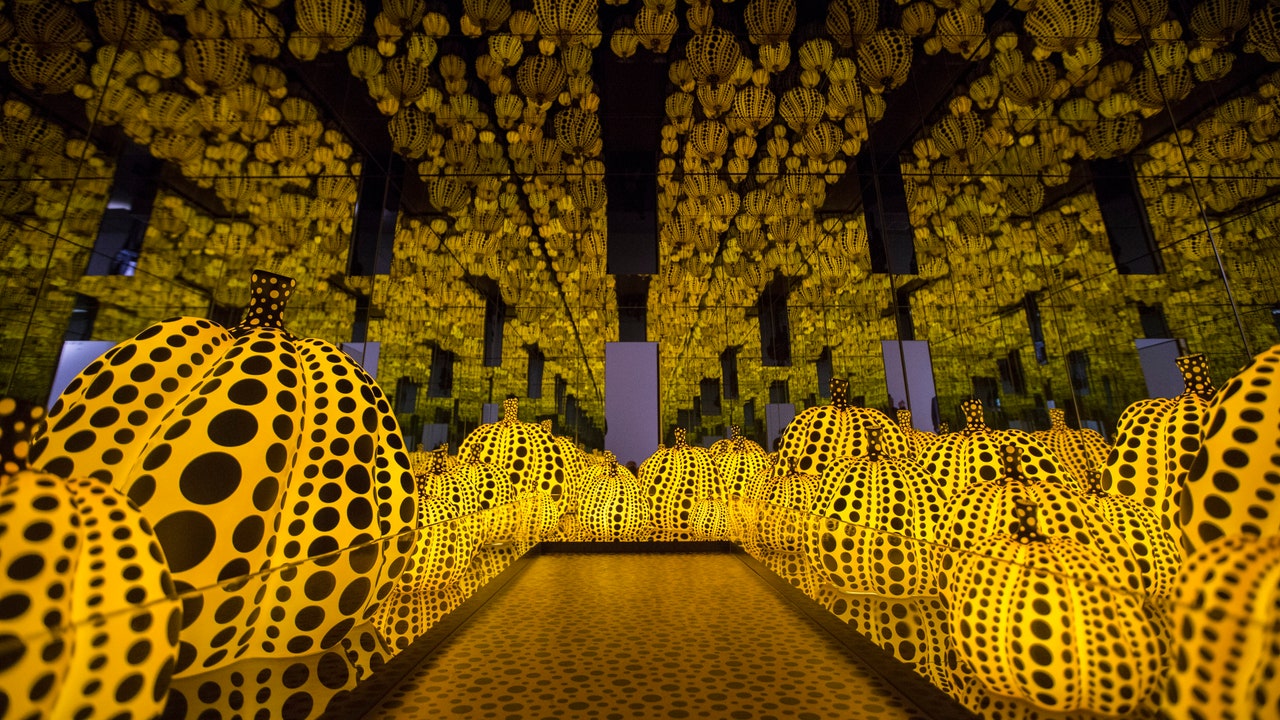
Yayoi Kusama: Infinity Mirrors: The Japanese artist’s exhibit has been traveling the country, but you can get a taste of what it’s like now via video.
[embedded content]
Banksy murals: Check out the street work of the mysterious artist from the comfort of your couch.
Symphonies, Plays, and Ballets
Vancouver Symphony: The orchestra’s final live performance (for a while) on March 15 was live-streamed and is still available for viewing here.
Sandra Diaz wasn’t expecting to find the courage to come forward with her story of sexual assault. But, over the years, as she watched security officers, janitors and airport workers coming together to protest against the sexual misconduct they often face on the job, everything seemed to change. These women were members of the labor union which she co-leads, and in them, she found an unexpected strength stand firm in her own power.
“I saw the sacred wounds that, like me, they had held inside of them with shame” she says. “But I also saw the relief in their eyes to finally let it out.” In union meetings, as they fought back against gender violence at work, their stories rang out: Yes, I was raped while I was working. I didn’t say anything to the union. I kept silent for one year … 10 years.
“As a survivor, I understood the burden of silence and the relief and uncertainty when silence is broken,” Diaz, the Vice President and Political Director for SEIU United Service Workers West, says.
Feeling safe within a sisterhood of women reclaiming their power, she was finally able to feel what many have taken to social media to say in the past year: Me too.
Like so many others, Diaz and the women she serves have kept their stories of abuse and misogyny to private conversations, group chats, and whisper networks. In late 2017 however, it seemed as though a critical turning point was reached; a turning point that cued up all women to stop whispering in order to let their stories be heard. And yet, it hasn’t exactly played out that way.
It’s been a year since the #MeToo Movement became part of the national discourse online, having been kicked off by reports from the New York Times and the *New Yorker*which featured multiple women alleging that Harvey Weinstein—the burly, bullish Hollywood executive—had sexually harassed or assaulted them. (This summer, Weinstein pleaded not guilty to six felony sex crimes, including two counts of rape and two counts of predatory sexual assault.) Following the accusations, actress Alyssa Milano retweeted something she found online that encouraged women to share their own stories of abuse. The hashtag was #MeToo, and it went viral shortly after, but the criticism about who started it—and who it served—would dot headlines for the next 12 months.
What Milano didn’t know at the time was that #MeToo had been created in 2006 by activist Tarana Burke to advocate for women and girls of color who had been sexually abused. The 2017 iteration, by default, was intended to belong to the everywoman, thousands of whom responded to Milano in a deluge of tweets and status updates. And yet, it still felt as though the movement was most talked-about when familiar Hollywood stars joined in. And why not? Their stories were salacious, empowering, and captivating—a lurid peek into the darker side of the industry.
But that was only part of the story—of course, there were other women who had been trying to get their voices heard for years. And as the star power behind #MeToo grew, so did the opinion that it was owned by liberal women. Republican and conservative women who have #MeToo stories have reportedly felt left behind, like their experiences were being ignored by their party, and the movement.
One woman’s narrative crushes the criticism that #MeToo is strictly left-leaning. When Gretchen Carlson, formerly a face at Fox News, sued the conservative network’s chief in 2016, she was one of few women associated with that world to publicly come forward. Carlson’s lawsuit alleges that the late Roger Ailessabotaged her career when she rejected his sexual advances. Like Weinstein, Ailes was a larger-than-life executive whose misogynistic tycoon persona seemed to emanate from an old Hollywood playbook. According to reports, Ailes told her they should have had a “sexual relationship a long time ago and then you’d be good and better and I’d be good and better.”
Eventually, she decided enough was enough.
“It was the most excruciating decision of my life,” Carlson tells Glamour of coming forward. “Before there was a [Hollywood] #MeToo movement, before there was Time’s Up, before there was anything, it was me taking on one of the most powerful men in the world by myself.” Stepping forward a year before the hashtag’s meteoric rise gave her a new purpose and birthed her best-selling book, Be Fierce: Stop Harassment and Take Your Power Back, which was released just days after the Weinstein allegations were made public.
A year later, other women who identify as conservatives have come forward, but the movement on the right is slow to pick up, Vox points out. But it’s not about party lines for Carlson. More importantly, it’s about “every socioeconomic line” having access.
“It’s important to me that the every woman story is also heard,” the author, who recently defended herself against accusations of bullying, says. “Because this … pervasive epidemic, as I call it, it’s not just famous, rich people.”
The struggle to gain access to the movement goes beyond class lines, cash or politics. There’s also the elephant in the room when it comes to #MeToo: The racial disparity and how underreported the narratives of black, brown and gender nonconforming women are.
“White women have always had dominion over the narrative concerning sexual violence and gender-based empowerment.”
This was on the minds of Kenyette Barnes and Oronike Odeleye, who together created the #MuteRKelly movement, which seeks to put the alleged victims of the accused predator, musician R. Kelly, at the forefront. According to several accounts, Kelly has spent decades hunting for teenage “pets,” who, according to a recent documentary, he groomed to be sex slaves. (Kelly has denied the accusations.) Barnes and Odeleye, who began the organization to stand up for these young black women, both credit Burke and #MeToo as being extremely integral in their quest to bring Kelly to justice. And yet, their push is often overshadowed by high-profile alleged predators like Weinstein, Ailes or Bill Cosby, men whose alleged victims are often white.
“White women have always had dominion over the narrative concerning sexual violence and gender-based empowerment,” Barnes tells Glamour. “There’s a tendency to marginalize the unique experiences of black and brown women. This is no different in the attempted appropriation of #MeToo.”
It’s not like everyone in Hollywood completely ignored Burke’s original standard for #MeToo. Celebrity women who have engaged with the hashtag seem well-intentioned enough. But lip service is different from inclusion, and over the last year, actresses like Rose McGowan—whose outspoken participation seems to exclude black, brown and gender nonconforming victims, at least to some accounts—has been called out for her lack of it. She’s been criticized for dismissing the experiences of women of color and trans women, and yet, is hailed as one of the movement’s strongest heroines. She’s even earned an E! reality show—which aired in May—while most of the activists at the center of the movement, who organize marches and protests or offer support for victims, continue to move in the margins.
To be clear, McGowan is hardly an outlier. Often praised for her feminist ideals, actress and writer Lena Dunham drew criticism for dismissing a woman of color, actress Aurora Perrineau, who came forward with accusations against Dunham’s friend, writer Murray Miller, last year. And in the midst of Weinstein’s wave of accusers coming forward last year, the mogul was radio silent until actress Lupita Nyong’o shared her own account of his alleged misconduct towards her. Only then, after a black woman accused him, did he feel the need to publicly defend himself.
“There is no one coming to rescue black women,” Odeleye says of the struggle. “We have to save ourselves.”
One of the biggest culprits in pushing the false idea that the fight to end sexual abuse is the same for all women and men has been the media, Odeleye and Barnes note, which often fails to center varied identities in their coverage. Even Burke herself, who was unavailable for comment on the story as she organized and prepared protests against Supreme Court Justice nominee Brett Kavanaugh, addressed this in a recent op-ed for Variety.
“I launched the #MeToo movement because I wanted to find ways to bring healing into the lives of black women and girls,” she wrote. “But those same women and girls, along with other people of color, queer people and disabled people, have not felt seen this year.”
This is especially evident in the coverage of the sexual degradation of female victims over the last few years like Chikesia Clemons, whose breasts were exposed in her violent arrest at a Waffle House in Alabama earlier this year or Daniel Holtzclaw, the police officer convicted in 2015 of assaulting 13 women and raping eight in Oklahoma City. His victims, all of whom are black and many of whom had criminal records, remain ghosts lost in the coverage. We do not know many of their names. We do not speak of their immeasurable trauma.
It’s a similar story for the staggering number of trans women who have been murdered in the past two years alone. The National Center for Transgender Equality estimates that 2018 could be ‘the deadliest year on record’ for violence against trans women. (As of September 2018, 27 trans women have been reportedly murdered). And yet, a year later, as dozens of cisgendered women are given magazine covers and major platforms to discuss their trauma, there has been little to no coverage of the clear and present dangers our trans sisters face.
These challenges for women of color or varied identities can be, in part, attributed to the unique set of consequences that they face, both from society and their own cultural norms.
“We have to challenge our biases and ask ourselves, ‘Why don’t we see the power in women of color and in immigrant women?'”
“Often black women and girls are shamed into pushing aside their need for gender justice,” Barnes explained. Instead, it is often seen as “of little importance [when] viewed within the larger system of White Supremacy.”
This is also prominent in the Latinx community, according to Lilia Garcia-Brower, executive director of the watchdog group, Maintenance Cooperation Trust Fund, who advocates for janitorial workers in California. For these women, many of whom are undocumented, work is synonymous with sexual violence, intimidation and wage theft.
“If [these women] don’t believe that they are more valuable than the violence that they’re confronting every day, they’re not going to denounce what’s happening to them,” Garcia-Brower says. “ We’ve spent a lot of time unpeeling the gender socialization that tells [women] that we are less than a man … that we cannot defend ourselves.”
For both the unions and the watchdog groups, it was clear that the women would have to be the ones in charge of empowering themselves since they could not trust the industry to do it. As Diaz adds: “How do you hold an industry accountable for training their workers on sexual violence when we can’t even hold them accountable for paying them?”
These workers, whose struggles were chronicled in the Frontline documentary aired on PBS, “Rape on the Night Shift,” teamed up with the SEIU-USWW labor union and Garcia-Brower’s group to form the YA BASTA! COALITION. Through hunger fasts, protests and community training of “promotoras, (who educate their peers on self defense), the women of Ya Basta, which means ‘Enough Is Enough,’ are taking back their lives.
At the end of a recent march, a group of the janitors took off their shirts to call attention to the power dynamics at play in sexual violence—an action that was meant to reject the shame that survivors feel and to denounce that idea that sexual misconduct is about sex.
There, standing in their bras with their resolve at an all time high, they shouted: “Quien es dueña de tu cuerpo. Yo soy dueña de mi cuerpo.” Translated, it means, “tell me who owns your body. I own my body!” It was a simple declaration, but an immensely profound one in a society that, as Odeleye notes, “does not value a women’s ownership of her body.”
Still, the question remains: what does protection look like? And who has access to the new #MeToo as it reaches its first birthday?
“As a society, we have to challenge our biases and ask ourselves, why don’t we see the power in women of color and in immigrant women,” Diaz says. Shifting that power back to them, she says, “is at the center of eradicating sexual violence.
“But first we have to recognize the humanity in them.”
Allison McGevna is an editor and writer based in New York City. You can follow her @AllieMcGev on Twitter.
Despite the prominence of social media, maintaining a private life is something that’s incredibly important—even more so if you’re a celebrity or a public figure, who to be in the spotlight way more than the rest of us. But everyone need spaces to make their own decisions—especially if they’re someone like Malia Obama, who spent eight incredibly formative years in the White House because her dad was leading the world. Now on her own—and on her own as a private citizen—the 19-year-old Harvard freshman has been the subject of a few articles lately after two videos of the former President’s daughter circulated around the Internet.
In one, she was kissing a young man who seemed to be a fellow student at a tailgate party; in another she appeared to be blowing smoke rings. Neither of those are entirely unusual behaviors for a college student—but she’s not getting the same kind of slack as those of us who weren’t raised by the former commander-in-chief. Instead, gossip sites rushed to post the videos.
Luckily, she’s had a few people stick up for her—and one of the more suprising duos have been Ivanka Trump and Chelsea Clinton. Despite coming from opposite sides of the aisle, they also had to contend with growing up under the spotlight thanks to famous parents—a position none of these three women ever asked for. Trump and Clinton took to Twitter on Friday to defend Obama’s right to choose to live as a private citizen—and enjoy college!—now that she’s out of the White House.
Ivanka Trump tweeted: “Malia Obama should be allowed the same privacy as her school aged peers. She is a young adult and private citizen, and should be OFF limits.”
Chelsea Clinton also spoke out against those sharing the videos: “Malia Obama’s private life, as a young woman, a college student, a private citizen, should not be your clickbait. Be better.”
Clinton also tweeted earlier this year asking the public to give Barron Trump his privacy as well. She said, “It’s high time the media & everyone leave Barron Trump alone & let him have the private childhood he deserves.”
Jennifer Lawrence has had it with the “difficult” moniker placed on women who choose to speak their mind.
The actress shared her views on what she sees as an unfair double standard placed on women when she spoke as part of The Hollywood Reporter‘s annual Actress Roundtable alongside Allison Janney, Mary J. Blige, Emma Stone, and Saoirse Ronan.
During the wide-ranging discussion, the women spoke at length about the current climate of sexual harassment in Hollywood, but noted that even with all of the women coming forward to share their #MeToo stories there are still more who are staying silent out of fear of being labeled and losing out on future work.
“We have to recognize that there are so many who haven’t told their stories yet, who aren’t comfortable to share,” Stone said. “I feel so much compassion for those who are still getting up and going to work every day with their abuser or have had abuse in their past and who are not ready to say anything.” Stone added that it’s equally unfair that women are also feeling the pressure to come forward with their stories of assault and misconduct because, “If you’re not saying it now, then you’re complicit in this evil that’s occurring.”
Lawrence, replying to Stone’s comments, said you’re damned if you do and you’re damned if you don’t when it comes to standing against misconduct. “I finally made the decision to stand up for myself, and then I went to go to the bathroom at work and one of the producers stopped me and was like, ‘You know, we can hear you on the microphone, you’ve been really unruly,'” she said. “Which was not true, but basically my job was threatened because the director said something fucked up to me and I said, ‘That’s sick, you can’t talk to me like that,’ and then I was punished, and I got afraid that I wasn’t going to be hired again.”
Stone added that actions like that will get you labeled as “difficult,” to which Lawrence agreed, explaining that she too has become known as “difficult” and “a nightmare” simply for protecting herself at work. “I think a lot of people aren’t coming forward because they’re afraid they’re not going to work again,” she said. “You need to be able to say, ‘This is wrong’ and have somebody do something about it instead of saying, ‘Oh, it’s wrong? Well, you’re fired.'”
Lawrence is well aware that Hollywood isn’t in a bubble when it comes to the way women are treated in the workforce. However, she does see an opportunity as a high-profile actress to make change in not only entertainment but for all women everywhere. “We’re in the industry, everybody is looking at us,” she said. “If we’re going through this, every woman in the world is going through this.”