Categories
Health

Donald Trump and His Son Think the #MeToo Era Is 'a Very Scary Time' for Men in America


As women rally and mobilize around survivors of sexual assault, and coming in a week that will see the one-year anniversary of the #MeToo Harvey Weinstein allegations, President Donald Trump said Tuesday that he’s highly concerned for the safety of America’s young men as he answered questions about the FBI inquiry into his Supreme Court pick, Brett Kavanaugh.

While en route to board Marine One, NBC National Correspondent Peter Alexander asked the president what message he had for both young men and women in America right now.

“Well, I’d say that it’s a very scary time for young men in America when you can be guilty of something you may not be guilty of,” Trump very quickly replied. “This is a very difficult time. What’s happening here has much more to do than even the appointment of a Supreme Court Justice. You could be somebody who was perfect your entire life and somebody could accuse you of something. Doesn’t necessarily have to be a woman, as everybody says, but somebody could accuse you of something and you’re automatically guilty. But in this realm, you’re truly guilty until proven innocent. That’s one of the very very bad things that’s taking place right now.”

According to a White House pool report, filed by Hunter Walker of Yahoo! News, Trump was then asked if he had a message for young women. Trump reportedly replied, “Women are doing great.”

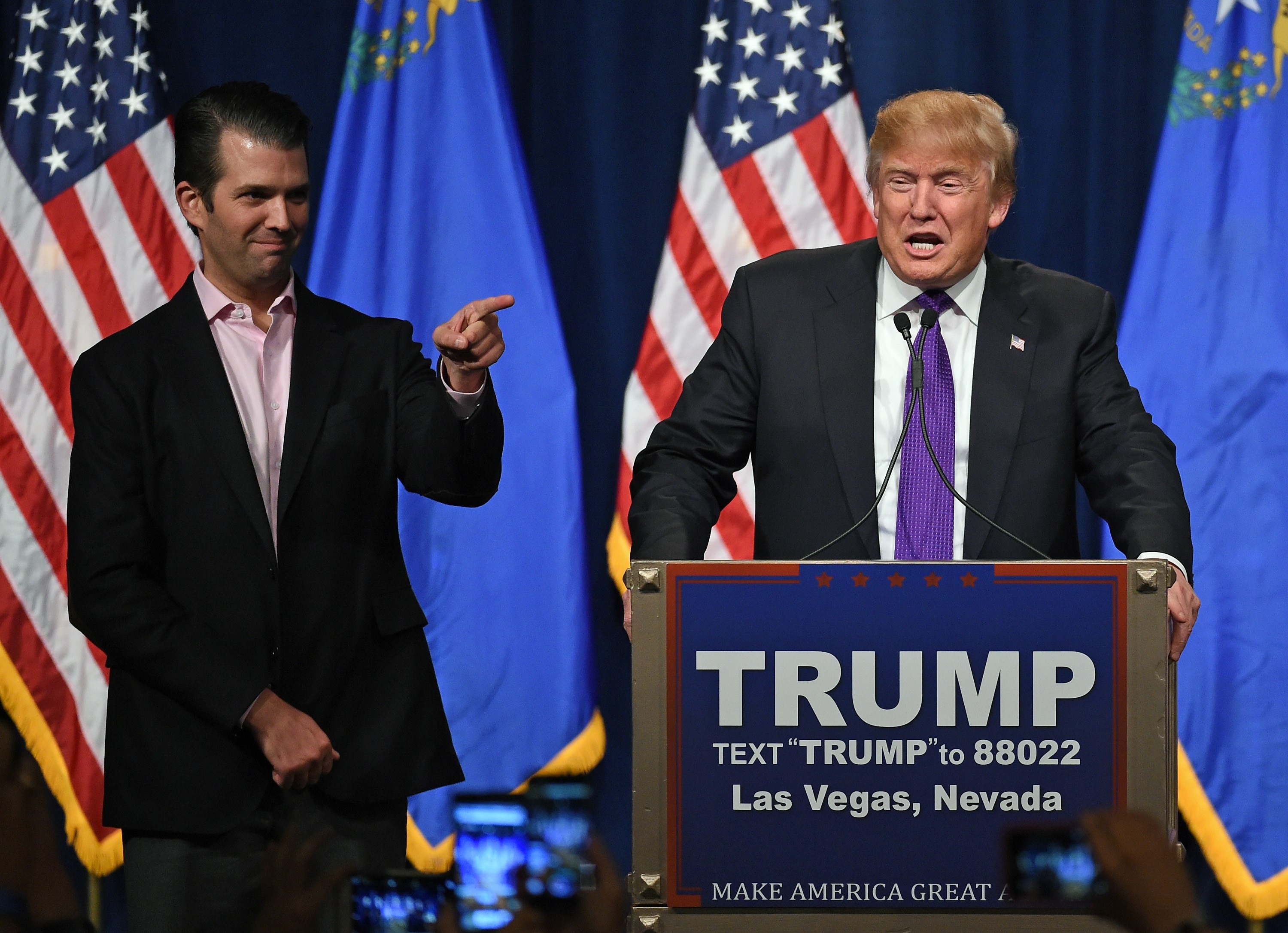
Trump’s comments came just one day after a similar question was asked by the Daily Mail to his son, Donald Trump Jr.

“I’ve got boys, and I’ve got girls. And when I see what’s going on right now, it’s scary,” he told the outlet. When pressed on who he was more frightened for, he replied, “Right now, I’d say my sons.”

“For the people who are real victims of these things, when it is so obviously political in cases like this, it really diminishes the real claims.”

It should be noted that false reports count for between 2 and 10 percent of sexual assault allegations, according to the National Sexual Violence Resource Center. A sexual assault occurs every 98 seconds, and 90 percent of adult rape victims are female. In total, one out of every six American women has been the victim of sexual assault or rape in her lifetime.

It shouldn’t be surprising that Trump and his son would side with the accused, especially when you consider that 20 women have come forward with allegations that the president engaged in sexual misconduct.

But, it doesn’t make it any less shocking, especially when the numbers prove them wrong.

Related Content:

Donald Trump Just Told White House Reporter Cecilia Vega She ‘Never’ Thinks

Donald Trump Takes Aim at the ‘Me Too Generation’ at Montana Rally


Source link

Categories
Health

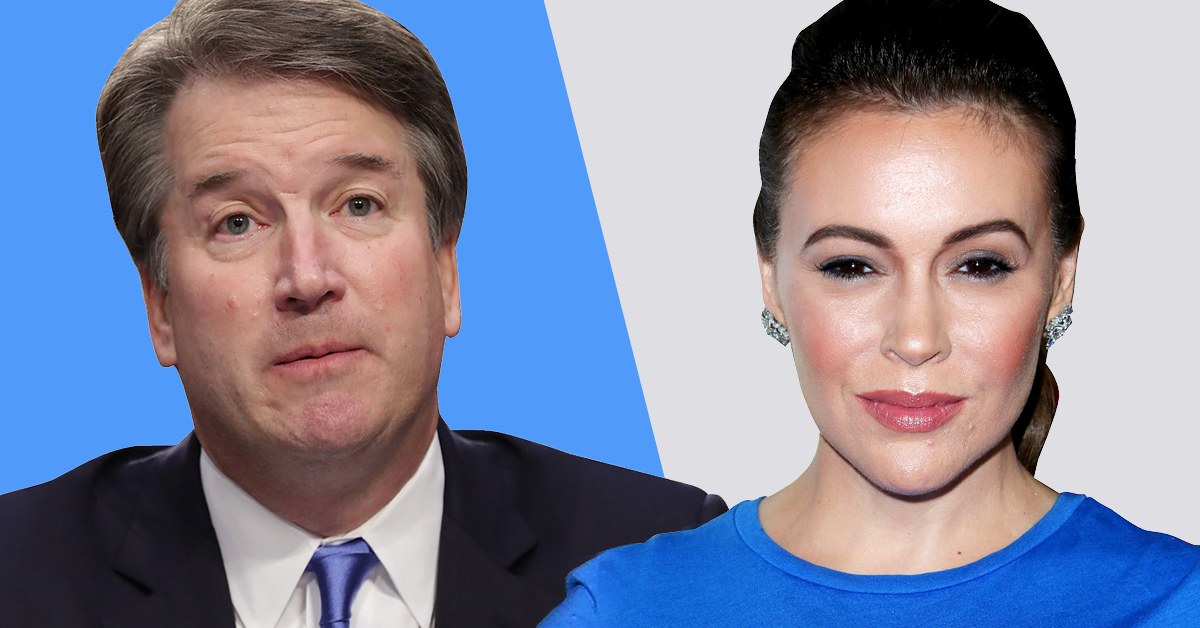
MeToo Advocate Alyssa Milano: Christine Blasey Ford Has 'Zero Reason to Lie' About Brett Kavanaugh


On the surface, they might seem to have little in common. One is an actress and activist who’s been in the public eye since she was eight. The other, a professor and research scientist who has spent most of her life out of the limelight.

But Alyssa Milano and Christine Blasey Ford share a bond: Both stand with the ranks of women who identify as sexual assault survivors.

Ford’s decision to come forward with claims that Supreme Court nominee Brett Kavanaugh attacked her at a high school party in the 1980’s has thrown America—and her own life—into an uproar. As a result of her reluctant choice to voice the allegations, which Kavanaugh categorically and emphatically denies, she’s been besieged by doubters and death threats.

But Ford has also generated a groundswell of emotional support, and in this case, of the financial variety as well: “We have to support Dr. Ford in any way we possibly can, and to me, part of that means assisting in her legal bills,” Milano told Glamour by phone Friday, marking the official rollout of a new GoFundMe campaign,“We Believe Dr. Christine Blasey Ford.”

The campaign includes groups like #VoteProChoice—whose founder, Heidi Sieck, was among those recently arrested for protesting Kavanaugh’s Senate Judiciary Committee confirmation hearings. The current GoFundMe goal: To raise $100,000 to underwrite Ford’s “legal and communications strategy.”

Milano is known not only for her acting or anti-poverty missions as a UNICEF ambassador: She has used her celebrity to champion the #MeToo movement and has detailed her own experiences with harassment and misconduct. The activist said she has not yet spoken directly with Ford, who first publicly identified herself as Kavanaugh’s accuser to the Washington Post, but has been in contact with her attorney’s office.

To the professor, whose Senate testimony plans have not yet been set, “I hope she feels the love and support and the heartache that women feel in standing in solidarity with her,” Milano says. “I want her to know that if she needs anything at all, that I’m here and I want to thank her for her bravery in doing the right thing for the country, even though it’s the harder thing for her personally.”

And, she adds, “For every woman that has been triggered by this, you’re not alone. We stand with you. I’m right next to you. I understand. I see you. I hear you. I feel you.”

President Donald Trump’s Friday Twitter weigh-in to defend Kavanaugh and question why Ford hadn’t gone public earlier sat poorly with Milano, who calls herself “appalled” and “angry” with the process and the cultural and political climate that could foster it.

“Does he just have no idea how this works? Or is he trying to fool the American people? The majority of sexual assaults go unreported. That is a fact,” Milano says.

“Her credibility is being questioned. This woman has zero reason to lie,” she says of Ford. “She is not on trial. Christine Blasey Ford is not on trial.”

Milano took some of her outrage to Twitter, using the platform to confront the president directly: “Hey, @realDonaldTrump, Listen the fuck up. I was sexually assaulted twice. Once when I was a teenager. I never filed a police report and it took me 30 years to tell me parents,” she wrote, using the #MeToo hashtag and inviting others to respond.

The coalition Milano is working with to raise money for Ford includes Lady Parts Justice League and Lizz Winstead; SisterSong: National Women of Color Reproductive Justice Collective; Trans United Fund; Ultraviolet and Shaunna Thomas; Democrats.com; Humanity for Progress; and others.

Not lost on these activists: The imperfect parallels between Ford’s case and that of Anita Hill, the law professor who was vilified after she accused then-Supreme Court nominee Clarence Thomas of past sexual harassment amid his 1991 confirmation hearings.

“Black women know all too well the pain and degradation that Dr. Christine Blasey Ford is facing now that she has come forward and that Anita Hill endured nearly 30 years ago,” SisterSong said in a statement provided to Glamour. “We are speaking out with Dr. Ford. We believe her. We support her. We stand with Anita and with every woman and girl of color told to stay silent or bullied into silence by a culture and a system does not value our voices, our bodies, or our lives.”

Karla Gonzales Garcia of the Colorado Organization for Latina Opportunity and Reproductive Rights, also saluted Ford: “We know all too well the risk she is taking [because] she understands how important it is to halt the nomination of Brett Kavanaugh. The women of this country cannot afford to have another sexual predator on the highest court in the land and the women in our community will not stand by silently and allow this to happen.”

Neither the White House nor Ford’s attorney immediately responded Friday to Glamour requests for comment about the fundraising initiative.

Milano, for her part, is up front about having bone-deep political disagreements with both Trump and Kavanaugh that go way beyond the current turmoil surrounding Ford’s allegations. But no matter what ultimately happens with the SCOTUS confirmation, she says what America is watching play out right now is cause for another grave concern.

“We are certainly not making it easier for young women to come forward and report their sexual assault or abuses. What that prevents is the capacity for healing and growth and change of the systemic social issues that we face within the country,” she says.

“We’re witnessing exactly all of Dr. Ford’s worst fears realized.”


Celeste Katz is senior politics reporter for Glamour. Send news tips, questions, and comments to celeste_katz@condenast.com.

MORE: Death Threats and Discrediting: The Treatment of Christine Blasey Ford Is a Reminder of What’s at Stake for Sexual Assault Survivors


Source link

Categories
Health

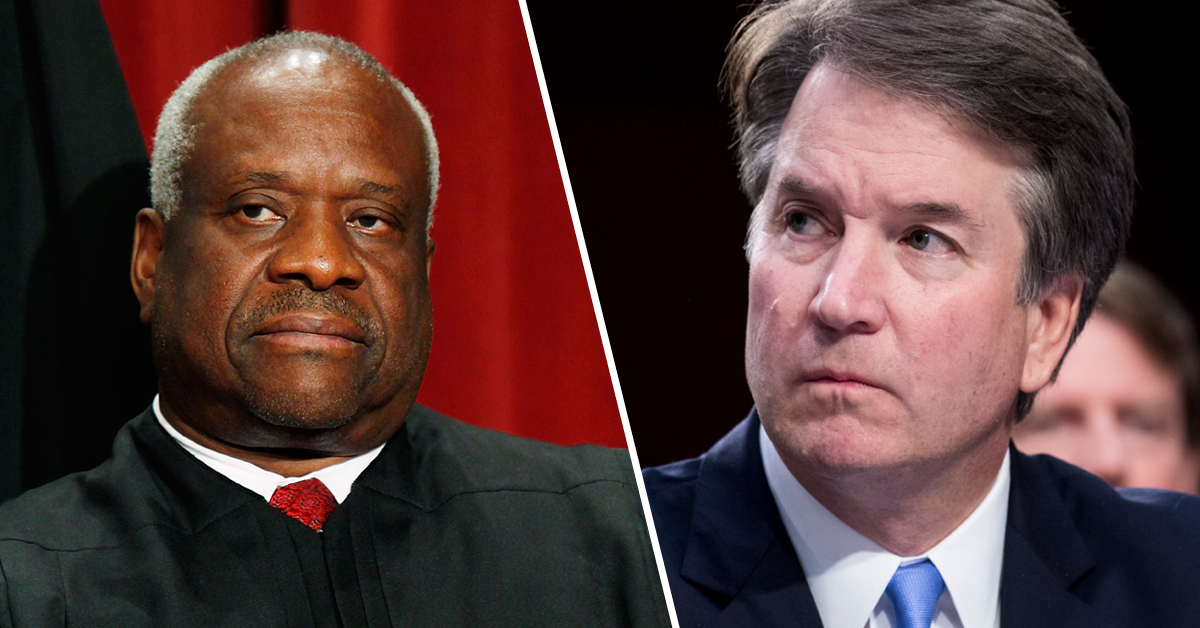
In the Age of #MeToo, Will Christine Blasey Ford’s Experience Be the Same as Anita Hill’s?


A judge lauded by conservatives gets picked by the president to become the next Supreme Court justice. As he travels the path to Senate confirmation, he unexpectedly confronts graphic allegations of sexual misconduct put forth by a respected female academic. The process is thrown into an uproar—as is the nation.

Brett Kavanaugh and Christine Blasey Ford in 2018? Or Clarence Thomas and Anita Hill in 1991?

On Monday, once again, a woman will go before members of the U.S. Senate to accuse a SCOTUS nominee of wrongdoing.

And it’s hard to ignore that the cases have similarities even though they are playing out nearly 30 years apart.

First a refresher: Republican President George H.W. Bush made Thomas a SCOTUS nominee in July 1991 after Justice Thurgood Marshall announced his retirement. Similarly, Republican President Donald Trump this July nominated Kavanaugh to replace retiring Justice Anthony Kennedy. Anita Hill stepped forward to testify and accuse Thomas of a pattern of harassment when they worked together that included graphic porn references and other inappropriate behavior. At the time, Hill was a law professor; the head of the all-white-male Judiciary committee was a Democratic Delaware senator named Joe Biden.

Now, Kavanaugh is in the hot seat. Christina Blasey Ford, a professor of psychology, had initially asked her identity to be kept confidential when she wrote to Senator Dianne Feinstein (D-Calif.) alleging that Kavanaugh drunkenly assaulted her at at party when they were both in high school. Ford says she’s willing to testify to what happened before Senate Judiciary committee, which is now controlled by Republicans (but is more diverse in terms of gender and race, including four women members).

Republican Sen. John Kennedy, a member of the Judiciary Committee, says both the accuser and accused will have their chance to be heard next week, according to multiple news reports Monday evening.

Kavanaugh denied Ford’s claims in a statement issued through the White House earlier Monday: “I have never done anything like what the accuser describes—to her or to anyone,” the judge said, adding that he’d be glad to talk to the committee “to refute this false allegation, from 36 years ago, and defend my integrity.” Decades earlier, Thomas had emphatically denied engaging in the crude behavior Hill described.

Of course there are serious differences in the cases. Ford’s story recounts attempted rape, not harassment. She’s also coming forward in the #MeToo era, when there is an active conversation about believing women. (Listen to Hill’s questioning by the all-male panel, and you’ll instantly see that wasn’t top of anyone’s mind.)

Duke Professor Emerita Karla Holloway suspects that this time will be different with a Judiciary Committee whose female members include the ranking Democrat, Dianne Feinstein of California, as well as Sens. Mazie Hirono of Hawaii, Kamala Harris of California, and Amy Klobuchar of Minnesota.

“The powerfully present women on the judiciary will temper the aggressive hyper-masculinity we saw in play during the Thomas/Hill moment,” Holloway says: “[They] are clearly positioned and comfortable with challenging and naming that kind of aggression, and I think the men on the committee are aware enough of that potential to worry over how they publicly exercise their privilege. In this case, the political divide will be more telling than gender.”

FiveThirtyEight, in a look back at polling surrounding the Thomas confirmation, notes that his nomination was popular with the public. Not so with Kavanaugh: Recent surveys show Americans totally split on whether he should be confirmed.

In many ways, Hill arguably helped spark the change we are seeing today. Around the time of her testimony and after, polls found many more Americans considered workplace harassment a “very serious” issue. But Hill certainly paid a price for going public. Critics didn’t believe her; some were angry at her for upending the confirmation process for an African-American judge. Biden himself told Teen Vogue last year that he owed Hill an apology for what happened in the Thomas hearings, at which witnesses who backed her up weren’t allowed to testify.

By comparison, Ford, has gotten much more support—fairly understandable given the #MeToo movement, a fast-approaching midterm election focused heavily on women, and a social media-rich environment that didn’t exist when Hill took the stand. (Social media also means more opportunities for people to troll Ford—notably including the president’s son, Donald Trump, Jr., who mocked Ford and Feinstein on Instagram.

Monday afternoon, President Trump defended Kavanaugh as having a spotless record—but, as Jeff Mason of Reuters reported, “signaled he would approve of a ‘little delay’ in the confirmation process” if necessary so as to go through a “complete process.”

Asked by reporters if Kavanaugh had volunteered to withdraw his name in light of the allegations, President Trump replied, “What a ridiculous question.” Decades earlier, then-President Bush had also come to the defense of his nominee, declaring his “total confidence” in Thomas.

Holloway thinks it’s not the allegation that will trouble Kavanaugh’s confirmation. Instead, she says, “His poorly advised ‘categorical denial’ will shift the question from past conduct to present truthfulness before the committee.”

Back when she confronted Thomas, Anita Hill was attacked for her character. She was denigrated as a “a bit nutty and a little bit slutty.” So far, the GOP has not resorted that precise kind of tactic to try to defend Kavanaugh. Instead, they are turning to political process. For example, the head of the Republican National Committee, Ronna Romney McDaniel, chose late Monday not to go after Kavanaugh’s accuser, but Sen. Feinstein, the top Democrat on Senate Judiciary, for doing “a disservice to everyone involved” with how she’s handled the allegations.

If Kavanaugh’s path to confirmation will mirror Thomas’ is still a looming question. Questioning got rough for Anita Hill when she spoke publicly about Justice Thomas, and it’s reasonable to expect some of the same if Christine Blasey Ford testifies before the Senate about Brett Kavanaugh.

When she does, America will have a front-row seat to see how much times have really changed. Or how much they haven’t.

Celeste Katz is senior political reporter for Glamour. Send news tips, questions, and comments to celeste_katz@condenast.com.


Source link
Categories
Health

People Are Not OK With Louis C.K.'s Return to Comedy After #MeToo Allegations


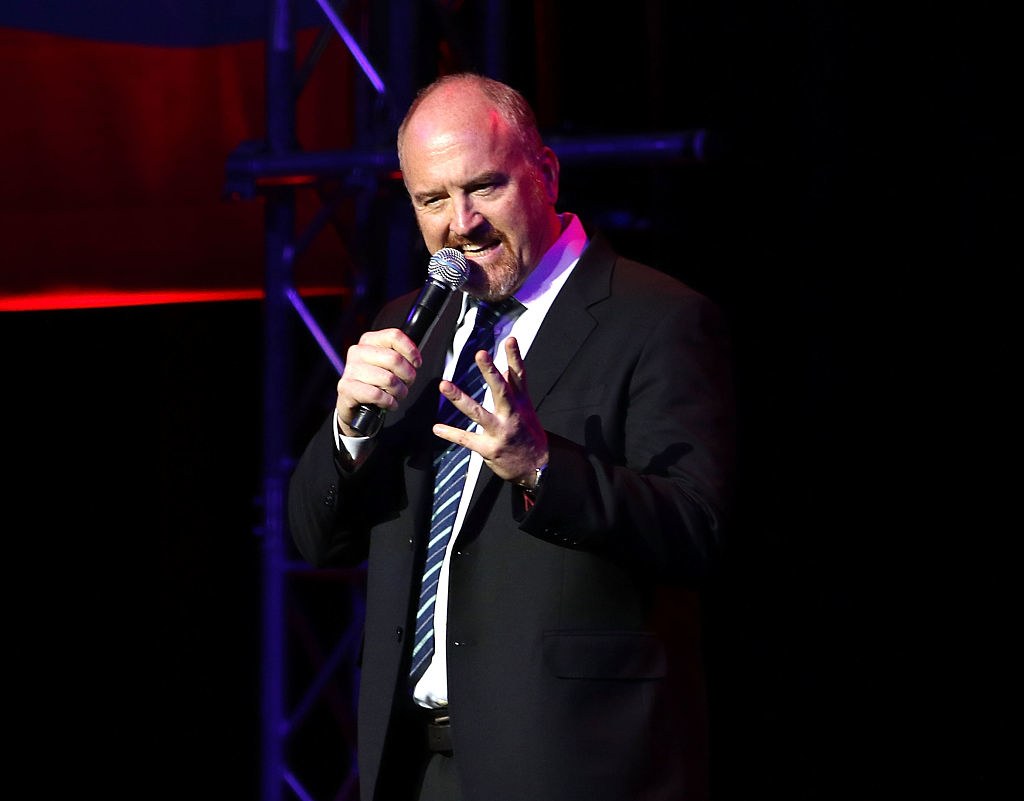
Less than one year after he was accused of sexual misconduct by multiple women, comedian Louis C.K. returned to stand-up during an unannounced set at New York City’s Comedy Cellar on Sunday night.

The comedian is far from the first man accused of misconduct to return to work in the months following the rise of the #MeToo movement, but his reemergence is provoking some strong opinions from Twitter users. After news of his performance circulated the Internet, many people—including comedians and comedy writers—quickly pointed out that not enough time had passed since the allegations against him first came to light. Others questioned what work C.K. had done to recognize the full impact of his actions. As comedian Melinda Hill put it, “Louis CK is spearheading the #MeTooSoon movement.”

According to The New York Times, the audience had a different reaction. C.K. was welcomed with an ovation before his surprise set. He was “very relaxed” before launching into a 15-minute set full of “typical Louis C.K. stuff,” Cellar owner Noam Dworman told the Times. (At least one audience member called the club to object the set, Dworman told the paper.)

“It sounded just like he was trying to work out some new material, almost like any time of the last 10 years he would come in at the beginning of a new act,” Dworman said.

C.K., who is among dozens of high-profile men accused of misconduct since October, acknowledged that stories of his lewd behavior were true last November. Several accusations had been made public in The New York Times, including an alleged incident in which C.K. exposed himself and masturbated in front of women without their consent.

He eventually lost a production deal with FX Networks and canceled a film he’d written called I Love You, Daddy. He has remained largely away from the spotlight and had not performed since issuing his apology.

“These stories are true,” he wrote in a statement, which ended with a promise to take time off to reflect. “I have spent my long and lucky career talking and saying anything I want. I will now step back and take a long time to listen.”

That break, Twitter reveals, wasn’t long enough.

The conversation around C.K. also comes at a time when several of the men accused of sexual assault or misconduct have started to make their way back into the public eye.

Earlier this week Page Six reported that Matt Lauer told fans he’ll “be back on TV,” and comedian Aziz Ansari, who one woman accused of escalating a sexual exchange, also quietly returned to the scene. These scenarios have ignited a conversation about how men atone for inappropriate behavior.

For some, C.K. is a particularly complex figure due to his leadership position in the comedy world. He has been hailed as someone who helped propel female comedians to fame, but many of the women who accused him of inappropriate behavior told the Times that it was this same reputation that kept them from speaking up for fear of career repercussions.

“Louis C.K. being ‘banished’ from stand-up comedy wasn’t some kind of petty punishment, it was a fucking workplace safety issue,” comedian Bris Farley wrote on Twitter.

“One of my fondest memories is singing my song about loving Louis CK right before he did a drop-in. The idea of him doing a drop-in now feels awful,” comedian Allie Goertz shared. “I believe people can grow and change, but this urgency to bring him (and others) back SO soon just sends such a bad message.”

MORE: If We Want Men to Be a Part of #MeToo, We Have to Stop Gendering the Movement


Source link

Categories
Health

If We Want Men to Be a Part of #MeToo, We Have to Stop Gendering the Movement


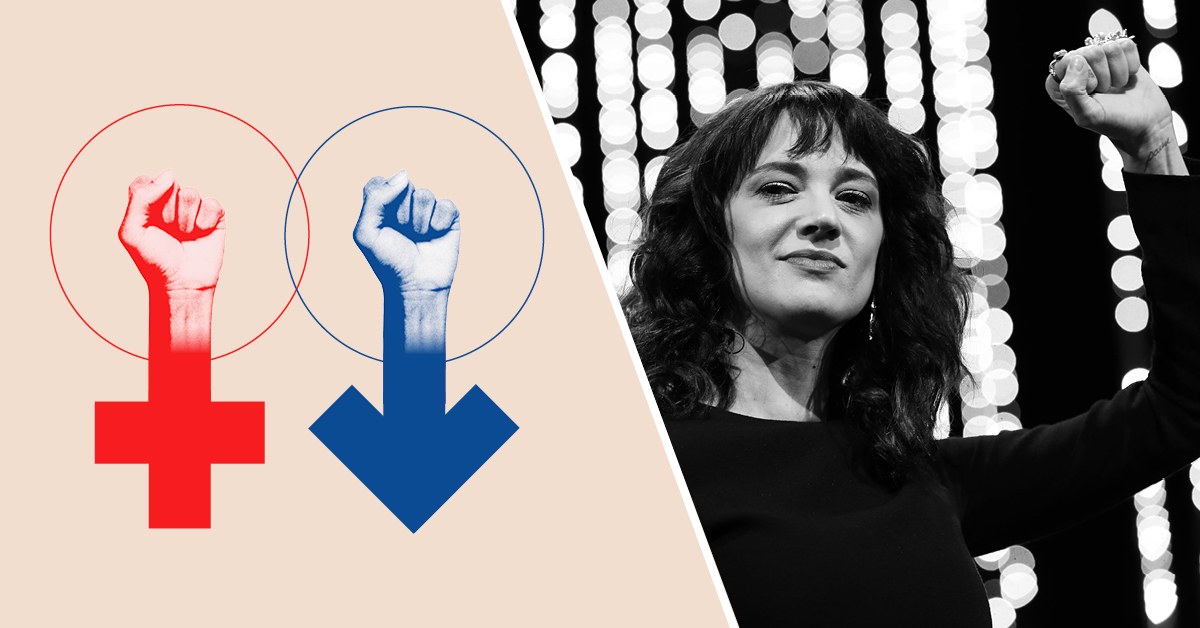
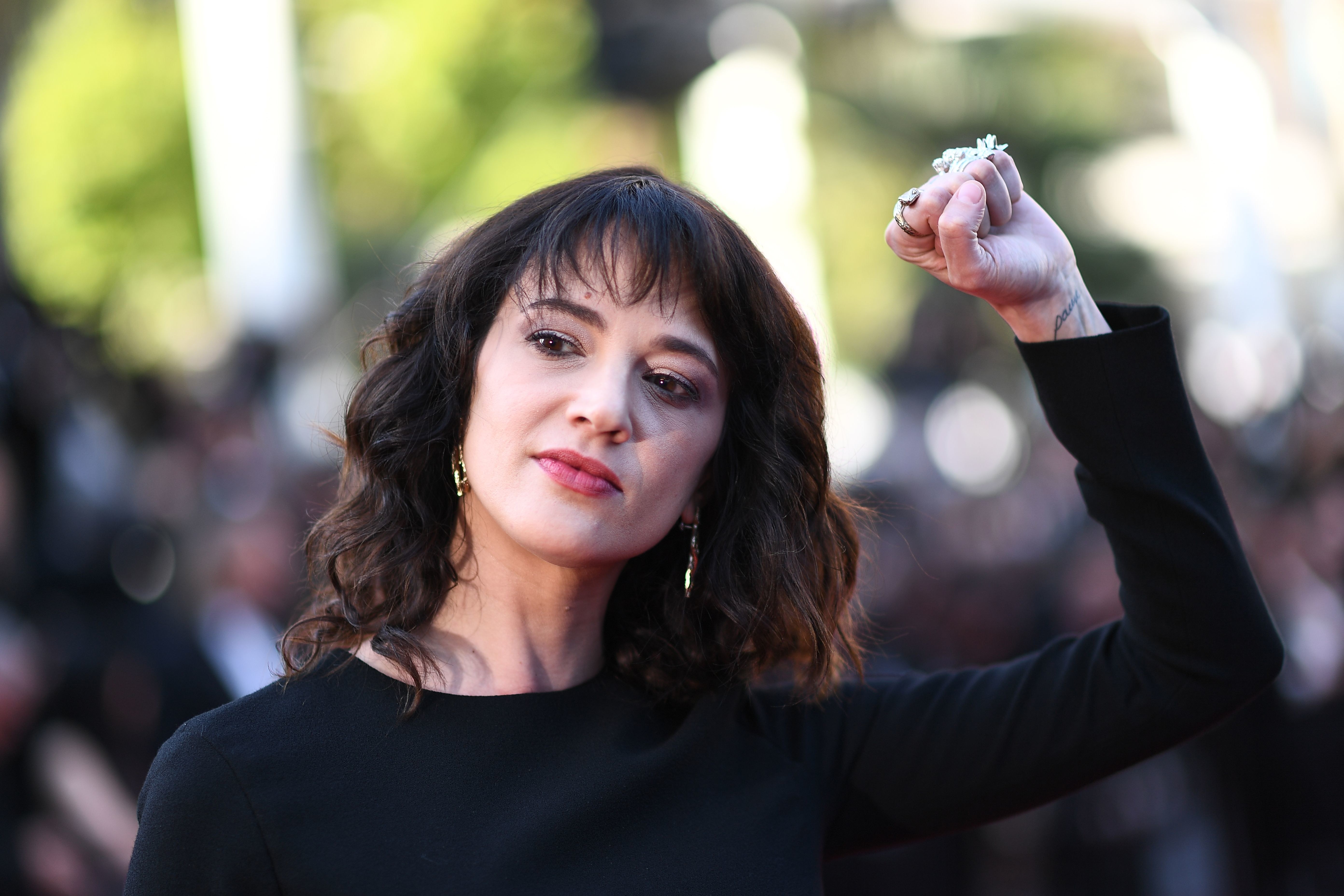
In May, director and actress Asia Argento took the podium at the 71st Cannes Film Festival to shake the table. “In 1997, I was raped by Harvey Weinstein here at Cannes. I was 21 years old. This festival was his hunting ground,” she explained. To anyone in attendance who had mistreated women, Argento declared, “You know who you are, but, most importantly, we know who you are, and we are not going to allow you to get away with it any longer.”

Argento, who six month’s earlier had detailed her experience with Weinstein in a bombshell story in The New Yorker, was a well-established voice in the #MeToo movement. But now she’s joined the list of the accused; The New York Times reported that the actress “quietly arranged to pay $380,000 to her own accuser: Jimmy Bennett” and quoted documents that alleged that Argento sexually assaulted Bennett, an actor and musician, in a California hotel years ago. Bennett was only two months past his 17th birthday at the time; Argento was 37. (The age of consent in the state of California is 18.)

Bennett declined to be interviewed by the Times, but in a statement to CNN afterward, he acknowledged that he delayed speaking out about the incident in hopes to handle it privately. The truth is, most men are forced to handle assault or harassment “privately”—men are not allowed to be victims. In fact, men praise boys when they are sexually assaulted by older women. It’s embedded in our slang (cougar, MILF), and our pop culture influencers. It’s why Chris Brown, in a 2013 interview with The Guardian, proudly declared that he lost his virginity at age 8. (“It’s different in the country,” the Virginia-native said to justify the actions of the teen girl. “So, at 8, being able to do it, it kind of preps you for the long run, so you can be a beast at it. You can be the best at it.”)

If we want men to be a part of the #MeToo movement, we need to acknowledge that they, too, can be victims.

It’s why Terry Crews, who came forward in October and publicly accused a Hollywood executive of groping him, was mercilessly mocked by rapper 50 Cent on Instagram. (In front of a Senate Judiciary Committee hearing for the Sexual Assault Survivors’ Bill of Rights in June, Crews discussed this toxic masculinity, saying manhood “tends to be cultish,” and denouncing the “complicit system” that encourages men to protect one another and shame those who speak out.)

Bennett’s statement echoes that idea: “At the time I believed there was still a stigma to being in the situation as a male in our society,” he said.

And Argento, in her response, did was the accused so often do—she sought to discredit, disparage, and censure the survivor.

“I have never had any sexual relationship with Bennett,” Argento said in a statement sent to journalist Yashar Ali. “Bennett — who was then undergoing severe economic problems and who had previously undertaken legal actions against his own family requesting millions in damages — unexpectedly made an exorbitant request of money from me.”

Argento went on to say that her then-boyfriend, Anthony Bourdain, “decided to deal compassionately with Bennett’s demand for help and give it to him.”

The actress was immediately, and rightly in my view, criticized. Argento’s decision to portray her accuser as a grifter or gold digger is a familiar trope employed by powerful men when women accuse them of sexual assault and misconduct. The kind that makes other victims not want to speak out over fears of their character or their work will be slandered. Considering Argento’s role in the #MeToo movement, she knows better than anyone why such a line of defense is troubling. It’s one thing to defend yourself, but why do so in a manner that mirrors the kind of men who have caused so many women pain?

Thankfully, leaders like #MeToo creator Tarana Burke reiterated what I felt had long been made clear: men have a space in the movement, too.

Taking to Twitter, Burke wrote: “I’ve said repeatedly that the #metooMVMT is for all of us, including these brave young men who are now coming forward. It will continue to be jarring when we hear the names of some of our faves connected to sexual violence unless we shift from talking about individuals and begin to talk about power.”

We all need to absorb this truth: Although men commit most acts of sexual assault and rape, men are sexually assaulted and raped, too. Their assailants can be men or women. #MeToo is not about gender, it’s about power.

Our culture, and the toxicities of masculinity and patriarchy, lead some men to believe they are entitled to do what they want with women’s bodies. To leer, grope, force, no matter what age, profession, protestation. Some women end up repeating the mistakes of these men. If we truly want to move forward together, we have to recognize—I’ll say it again—that sexual assault and rape are about power, and that this despicable behavior impacts all of us.


Michael Arceneaux is a writer in New York City and author of the New York Times best seller, “I Can’t Date Jesus.”

MORE: New Sexual Misconduct Allegations Against Asia Argento Shouldn’t Negate the #MeToo Movement


Source link

Categories
Health

New Sexual Misconduct Allegations Against Asia Argento Shouldn't Negate the #MeToo Movement


A new report from the New York Times claims Asia Argento, the Italian actress who was among one of the first women to accuse producer Harvey Weinstein of sexual assault, secretly agreed to pay a young male actor who accused her of sexual misconduct following her own admissions about Weinstein.

The Times reported that it obtained documents containing allegations that the actor, identified as Jimmy Bennett, was sexually assaulted by Argento in 2013 when he was 17. (The age of consent in California is 18.) The two had acted together in a 2004 movie, The Heart Is Deceitful Above All Things, playing mother and son.

The paper reports that seeing Argento emerge publicly as a sexual assault victim brought back memories for Bennett, citing an intent to sue document in which his lawyer wrote, “His feelings about that day were brought to the forefront recently when Ms. Argento took the spotlight as one of the many victims of Harvey Weinstein.”

Argento was one of the first women to publicly accuse Weinstein of assault, and subsequently became one of the movement’s most vocal voices. She described an incident to the New Yorker where she said she was led to Weinstein’s hotel believing it to be a studio party, but instead found the movie mogul alone in the room. She says he asked her for a massage, which she reluctantly agreed to do. According to Argento, Weinstein “pulled her skirt up, forced her legs apart, and performed oral sex on her as she repeatedly told him to stop.”

Argento also gave a rousing speech at this year’s Cannes Film Festival where she described the event as “hunting grounds” for Weinstein. (While Weinstein has pleaded not guilty to six felony sexual assault counts in New York, including first-degree rape, none are related to Argento. He has denied all of her claims about their encounters.)

According to the intent to sue document cited by the Times, the two were “intermittently” in contact afterward starring in the 2004 film together. “Jimmy’s impression of this situation was that a mother-son relationship had blossomed from their experience on set together,” his lawyer wrote. According to Bennett’s account of what occurred in May of 2013, the young actor met up with Argento in her Ritz-Carlton hotel room in Marina del Rey, California with a family member.

The Times reports that the account states that Argento asked the family member to leave and that she then served Bennett alcohol and kissed him before performing oral sex and engaging in intercourse with him. Argento also reportedly took a number of photos with Bennett, some with the two semi-clothed, which were included in the intent to sue document.

According to the paper, Argento eventually agreed to pay Bennett $380,000.

Following the report, many Twitter users starting criticizing #MeToo, seemingly conflating the allegations against Argento with the movement at large.

But others, including #MeToo leaders, are taking to Twitter to sort out their feelings amidst these new allegations. It’s a complex and nuanced discussion, to say the least.

These are incredibly serious allegations and should be treated as such. But what they should not do is take down or negate all the work that the #MeToo movement has done over the past year. It’s almost becoming cliche to say, but two things can be true at the same time. Argento’s alleged behavior does not mean that what happened to her and many other women at the hands of predatory men like Weinstein didn’t occur or that the issues surrounding women in the workplace are not still valid and important.

Argento and her team have yet to respond to the Times‘ repeated requests for comment.

Related Stories:

Brock Turner Loses Appeal to Overturn Sexual Assault Conviction

#MeToo Forced Me to Reevaluate My Own Sexual History—and I’ve Taken Advantage of Women


Source link