Categories
Health

Anita Hill Has Some Advice for the Senate Judiciary Committee on How to Handle the Kavanaugh Hearings


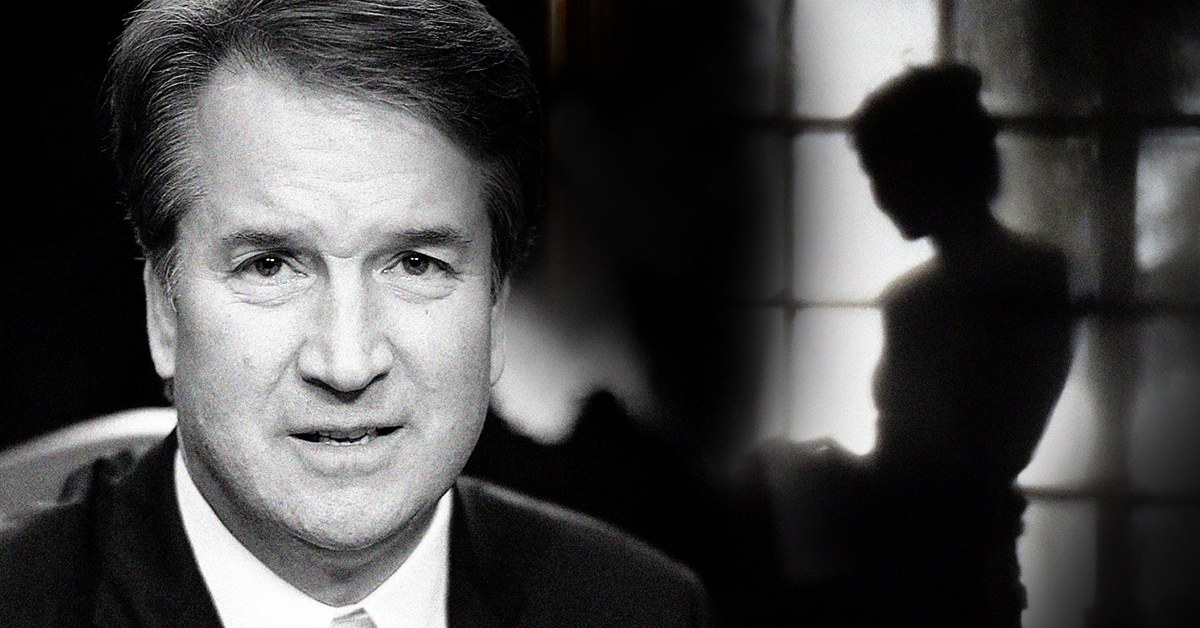
There is, perhaps, no person in America better suited to weigh in on the current state of Brett Kavanaugh’s Supreme Court nomination hearings than Anita Hill.

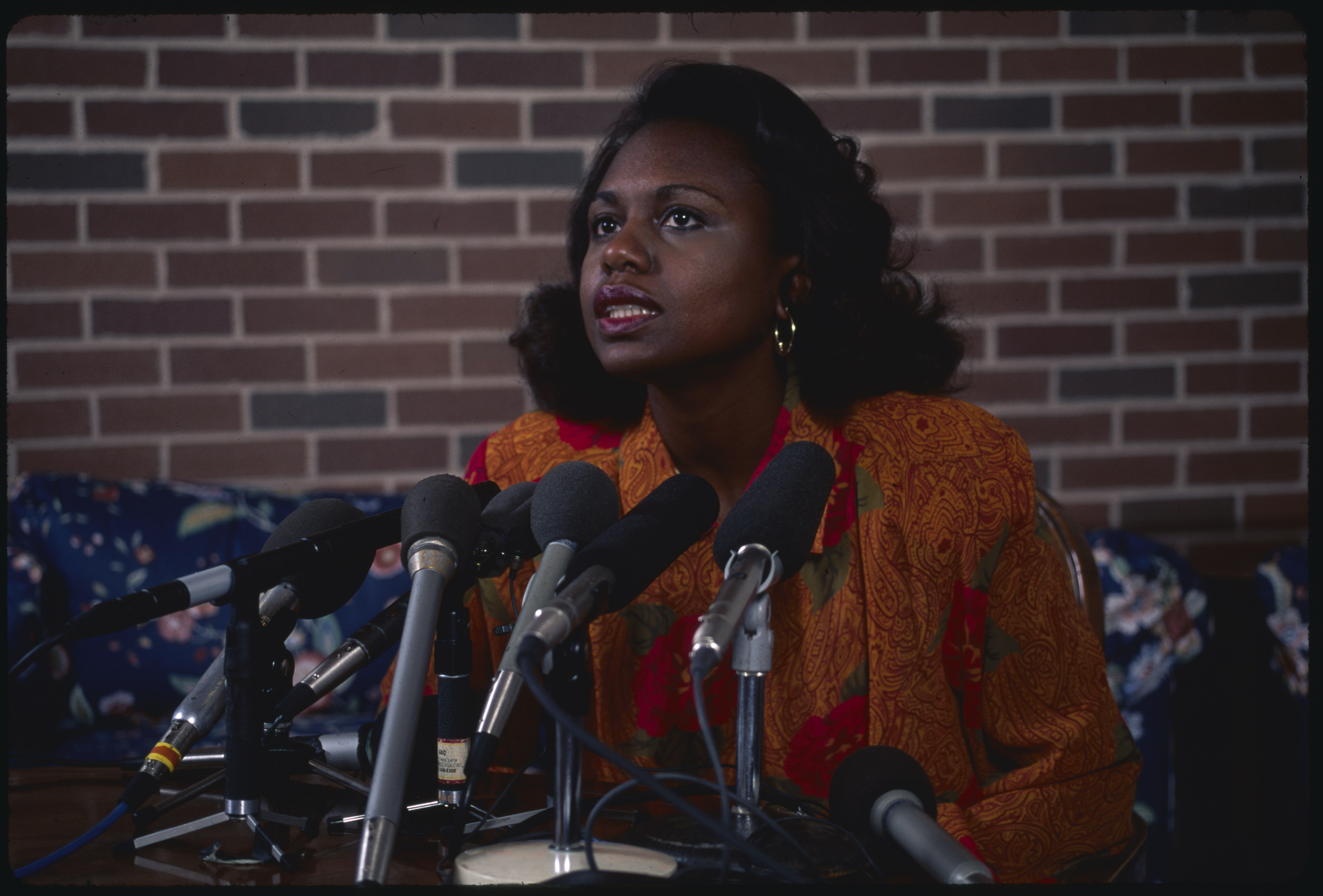
In 1991, the law professor found herself in a position similar to that of Dr. Christine Blasey Ford in that both had come forward to accuse a Supreme Court nominee of sexual misconduct. Hill testified about a pattern of sexual harassment during her time working with now-Justice Clarence Thomas, while Ford alleges that Kavanaugh drunkenly assaulted her during a party while they were in high school. (He has denied her allegations, just as Justice Thomas denied ever harassing Hill.)

Ford is reportedly considering testifying at the Kavanaugh confirmation hearings about the matter, pending an FBI investigation requested Tuesday by Ford’s lawyer to “ensure that the crucial facts and witnesses in this matter are assessed in a non-partisan manner.” Hill, having had some experience in this area, is offering some words of wisdom to the Senate Judiciary Committee to get it right this time around.

“Today, the public expects better from our government than we got in 1991, when our representatives performed in ways that gave employers permission to mishandle workplace harassment complaints throughout the following decades,” Hill writes in the New York Times. “That the Senate Judiciary Committee still lacks a protocol for vetting sexual harassment and assault claims that surface during a confirmation hearing suggests that the committee has learned little from the Thomas hearing, much less the more recent #MeToo movement.”

Here are some takeaways from Hill’s powerful op-ed:

Don’t mix messages.

Hill says that confronting sexual harassment and ensuring the integrity of the Supreme Court are not things that are at odds with each other. “Both are aimed at making sure that our judicial system operates with legitimacy,” she writes.

Neutrality is key.

Hill suggests that a neutral body with experience in the subject of sexual misconduct should lead an investigation into Ford’s claims so as not to be tainted by the rampant partisanship we see on almost every current political matter. And after that, senators must rely on the results and act as fact-finders when asking their own questions. “The investigators’ report should frame the hearing,” says Hill. “Not politics or myths about sexual assault.”

Slow down.

Rushing the hearings is a mistake, according to Hill. She says it sends the message that these types of allegations are not important. “Simply put, a week’s preparation is not enough time for meaningful inquiry into very serious charges,” she says.

Say her name.

“Finally, refer to Christine Blasey Ford by her name. She was once anonymous, but no longer is. Dr. Blasey is not simply ‘Judge Kavanaugh’s accuser.’ Dr. Blasey is a human being with a life of her own. She deserves the respect of being addressed and treated as a whole person.”

Hill also wisely points out that Kavanaugh has the benefit of organized support for his side while Christine Blasey Ford will be “outresourced” and that “imbalance may not seem fair.”

While it may be too late to heed all of Hill’s warnings, we can only hope that the process is not as problematic as it was for her in 1991. I remember watching the coverage of those hearings as an almost 16-year-old and taking away the unfortunate message that it was extremely hard to be believed as a woman, no matter how credible your claims.

In the media run-up to Monday’s hearing, it would seem that not a lot has changed. I hope I’m proven wrong.

You can read the rest of Hill’s op-ed, here.

Related Stories:

Read This Before Asking Why Christine Blasey Ford Waited to Tell Her Brett Kavanaugh Story

In the Age of #MeToo, Will Christine Blasey Ford’s Experience Be the Same as Anita Hill’s?


Source link

Categories
Health

Read This Before Asking Why Christine Blasey Ford Waited to Tell Her Brett Kavanaugh Story


On Monday, the #MeToo movement will get its highest wattage moment yet when psychology professor Christine Blasey Ford and Supreme Court nominee Brett Kavanaugh testify in front of Congress about one night in Maryland over 36 years ago.

Ford’s lawyer calls what happened an “attempted rape,” involving Kavanaugh shutting her in a bedroom, pinning her down while pawing at her bathing suit, and clapping a hand over her mouth when she screamed; Kavanaugh says he “categorically and unequivocally” never did anything of this sort to Ford or anyone else.

Monday’s hearing is being touted by lawmakers as a chance to find out the truth. But it’s also going to be, in many ways, a public trial for the woman who accused Kavanaugh. With rape culture and victim shaming working overtime, as it so often does in our society, a familiar question will be on the table: Why did she wait so long to come forward?

Conservatives are already teeing up the argument that jumping on a girl and pawing at her is the type of every day occurrence that shouldn’t make headlines. “Sorry, but having a drunk 17 year old BOY grope you at a teenage party is not newsworthy!” one Twitter user posted this week. And by the standards of 1982, when the alleged incident occurred, they’re right. That adds context when considering Ford’s decision to keep the experience to herself. Back then, the phrase “date rape” was newly minted in the lexicon and not widely used. Boys did whatever they wanted to girls. And girls mostly accepted this as the natural order of the species. “Boys will be boys,” explained a lawyer for three high school football players in Glen Ridge, N.J. who sexually assaulted a mentally disabled 17-year-old girl with a baseball bat and a broom handle in 1993.

Back then, as I chronicled in my book Blurred Lines: Rethinking Sex, Power, and Consent on Campus, Americans didn’t consider anything that wasn’t a violent assault by a stranger to be rape. Even intellectuals in the 1980s and 1990s didn’t take sexual assault all that seriously—they treated it more as a philosophical koan of sex relations than an important social issue. In David Mamet’s Oleanna, a play about a feminist college student who accuses her professor of rape, he calls her “frightened, repressed, confused . . . abandoned young thing of some doubtful sexuality who wants power and revenge.” Controversial academic Camille Paglia, extremely popular in those decades, argued that masculine sexual aggression was normal, and a woman’s only choice was to protect herself; to say otherwise, she declared later, was to join a brigade of “fanatical sex phobes.”

In our era of #MeToo reckoning, these voices have become quieter and things have finally started to change. But things haven’t changed enough for one woman’s word to be believed simply on its own without corroborating evidence. Or without the argument that her experience has timed-out—that statue of limitations exist when it comes to trauma.

If history is any indication (or Justice Clarence Thomas’ defense when accused of sexual harassment during his Supreme Court confirmation hearings in 1991) Kavanaugh is going to use the usual playbook to defend himself: calling himself a standup fellow—or, as Kellyanne Conway said, “a man of character and integrity”—and explaining he’s shocked, simply shocked, by this character assassination. He’ll talk about being raised right by his parents and point out that he’s a “carpool dad” for his two daughters, hoping that their mere existence will act as a shield against accusations against a member of their sex. But most importantly, he’ll talk about whether Ford told anyone at the time what happened that night.

No one who understands the nature of trauma and sexual assault thinks that it’s a big deal when women don’t tell an authority for months or years about an assault. Not every woman wants to upend her life in the pursuit of justice, or even deal with criticism about “playing the victim” from their peers or institutions. Couple that with an era where women, if something bad happened with a guy, would likely keep it to themselves due to the blasé attitude surrounding sexual violence and the permission boys and men had to engage in it. A cool Gen-X girl brushed off anything untoward, knowing there was no percentage in calling a boy out because even if a few of her friends believed her, the rest of the school would not. And how could they? In the 1980s, there were no tools and very little language to identify or corroborate assault.

As a friend who went to high school in the 1980s posted on Facebook this week, what might have happened to Ford “happened all the time when I was growing up and no doubt still does.”

“This is such a common story,” she wrote. “This happened ALL THE TIME. What also happened all the time was that women who this happened to didn’t really talk about it much because, see above.” Whether Kavanaugh is confirmed to the Supreme Court or sent off to play endless rounds of golf, one thing we know is that women aren’t being quiet about this any longer. But in addressing sexual misconduct, we must also grapple with our past and understand that the experiences of women of a certain age group cannot be examined without historical context. We cannot dismiss claims with the lazy excuse that “that’s how it was then.”

In fact, in cases like Ford’s, there’s no excuse to resort to old victim-shaming tropes. We have the tools, now. We must use them.


Vanessa Grigoriadis is the author of Blurred Lines: Rethinking Sex, Power, and Consent on Campus, out October 2018, and a contributing writer at The New York Times magazine and Vanity Fair.


Source link

Categories
Health

As a Parkland Shooting Survivor, This Is What I Want Brett Kavanaugh to Know About Gun Violence


A stark image stood out in a tumultuous week of Supreme Court confirmation hearings for Trump nominee Brett Kavanaugh: The judge declining to shake hands with a man who lost a child in the tragic Parkland, Florida school shooting in February.

Kavanaugh walked away from the father of Jaime Guttenberg, who was among 17 people murdered in the Valentine’s Day rampage at Marjory Stoneman Douglas High School. The encounter sparked a range of responses from Twitter users, with many suggesting that it was a visual representation of where conservatives stand on gun control reform.

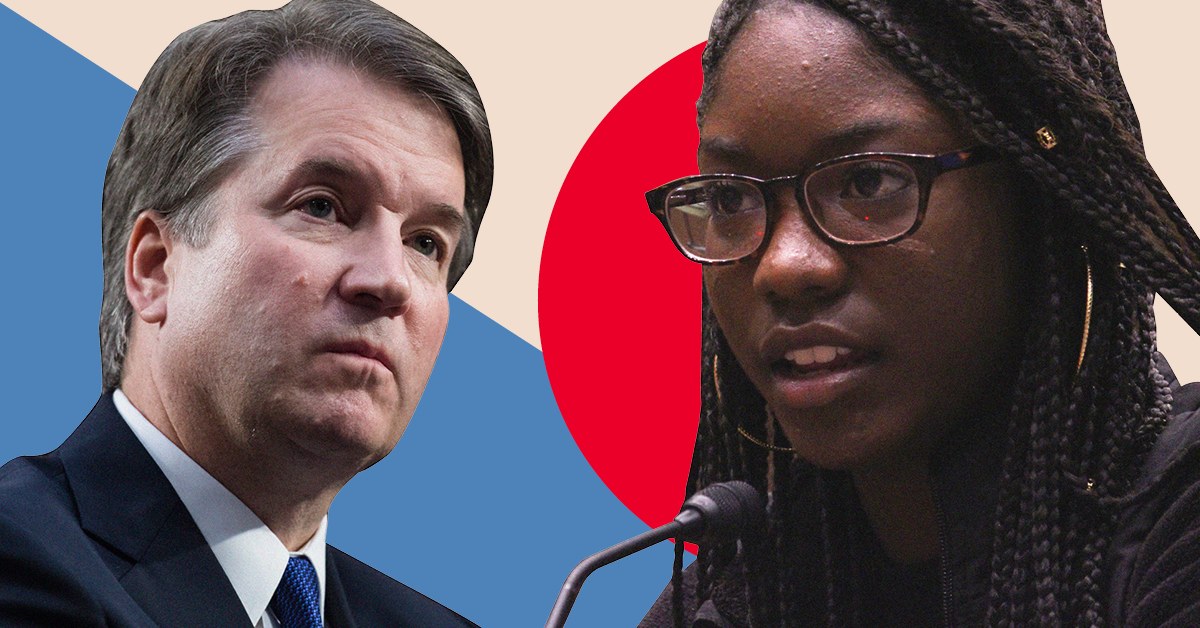
But on Friday, the issue of gun violence was upon Kavanaugh again when the Senate Judiciary Committee heard an emotional testimony from Stoneman Douglas survivor Aalayah Eastmond.

Kavanaugh has defended his dissent in a case related to a ban on semi-automatic rifles—the weapon of choice in the Parkland slayings. Still, the judge, whose two daughters joined him (for a time) at the hearings, says he knows the U.S. must address gun violence.

Not convinced: Eastmond, who spoke at the March For Our Lives rally and became a youth advocate with the Brady Campaign to Prevent Gun Violence and student-led Team ENOUGH.

Eastmond was appalled by the judge’s refusal to engage with Jaime’s dad at the hearing: “The amount of disrespect is unimaginable, and this is who, ‘so-called President’ nominated,” tweeted the Parkland senior. “See you Friday Kavanaugh.”

At the hearing, she used the horror she had seen at her own school (she hid under the body of a dead classmate to survive the shooting), and also the loss of an uncle to a shooting in Brooklyn, New York, to raise questions about Kavanaugh’s views on gun control: “As you make your final decision, think about it as if you had to justify and defend your choice to those who we lost to gun violence,” she urged the committee in her prepared remarks.

On the eve of her Senate testimony, Eastmond talked to Glamour about her decision to speak against Kavanaugh’s confirmation. Here are the highlights, in her own words.


I’m here to testify at Kavanaugh’s hearing [so] people can understand that gun violence is an everyday problem… Lives are being taken every day. And not only that, but lives in urban communities, every day.

I was there on February 14th. And I was in Room 1214, which was the third classroom the shooter shot into, and I had to hide underneath one of my deceased classmate’s bodies to survive. That is the story that I’m sharing [so] people can understand that it’s not, you know, normal. And it shouldn’t be normalized.

I saw things that nobody should have seen and that nobody should have to see in their lifetime. Being in school, [a] place where you should feel safe and you’re learning—in fact, I was in Holocaust History [class], learning about hate and terror. And just to experience that right after going over [a] hate groups project was just unimaginable, and a coincidence.

Hearing gunshots and not knowing what gunshots sound like. Not knowing what to do and then just thinking in a survival-mode type of way to do what I did, which was hide underneath a body. Smelling the gunpowder and seeing the smoke, and seeing the red on the floor and having flesh and body matter in my hair. At the age of 17 in school — [well] I was 16 at the time — that shouldn’t be.

I shouldn’t have to be talking about this, and I’m not the only one that has this story. There’s people all over the country that share similar stories.

It’s something that nobody wants to talk about — and it’s something that I am forced to talk about every day. [It’s] not only just what I experienced, but the fact that black and brown youth are disproportionately impacted by gun violence every day.

I don’t think [Kavanaugh] should be [a] Supreme Court judge. Period. [If] we’re gonna have a judge on the highest court of the land, they need to be a judge that recognizes the issue of gun violence and the epidemic that the youth is experiencing every day, and he doesn’t recognize that it’s a problem, so I don’t think he should be getting that seat.

[Based on] his comments towards the Second Amendment, he doesn’t believe it should be altered or changed at all because it’s “a well-regulated militia” and everybody deserves the right to own a gun. But I disagree, because your freedom to own a gun is not more important than my freedom to live.

If he doesn’t have the decency to shake a hand of a father of a victim, he definitely will not have the decency to make changes and decisions that will impact the lives of people every day… I honestly just think we need a different nominee. I think we’ve seen enough of Kavanaugh, and I don’t think we should wait any longer for him to say anything else, because we clearly know what his stance is on the Second Amendment and other things as well.

I’m sure Fred Guttenberg [father of Parkland student Jaime Guttenberg] would have loved to bring his daughter.

Fred had a daughter, too, that lost her life on February 14. And I don’t appreciate Kavanaugh not addressing that. I feel like he will [not] recognize that it’s an issue until he loses one of his kids, or until he loses a family member, so he understands the pain and the way that it impacts you and that it’s senseless.

So that’s how I look at it: [Kavanaugh] can bring his kids wherever, but don’t wait until your kids are gone for you to care.

I have faith that he will not [be confirmed]. I hope he doesn’t, but I can’t tell the future. All I know is that we’re [going] to share our stories and our views and opinions on him, and hopefully they hear us out and they take action.

At times, it’s frustrating, because I shouldn’t have this story and I shouldn’t have had to experienced that. But it is important that I share my story, so people can again get a different perspective and understand that it is an issue that impacts everybody — no matter the color of their skin or where they live. It is a problem in America, and it needs to be fixed.

Right now, I’m okay, because I have my fellow Team ENOUGH members supporting me here. So I’m not worried, and I know that we are stronger than Kavanaugh and any of his views, and I know that we can take him down, no matter what.

You can watch Eastmond’s full testimony, here.


Celeste Katz is senior politics reporter for Glamour. Send news tips, questions, and comments to celeste_katz@condenast.com.

MORE: Piper Perabo: ‘It Was a Privilege’ to Get Arrested for Protesting Brett Kavanaugh Hearings


Source link

Categories
Health

Brett Kavanaugh Called Birth Control "Abortion-Inducing Drugs" At Supreme Court Confirmation Hearing


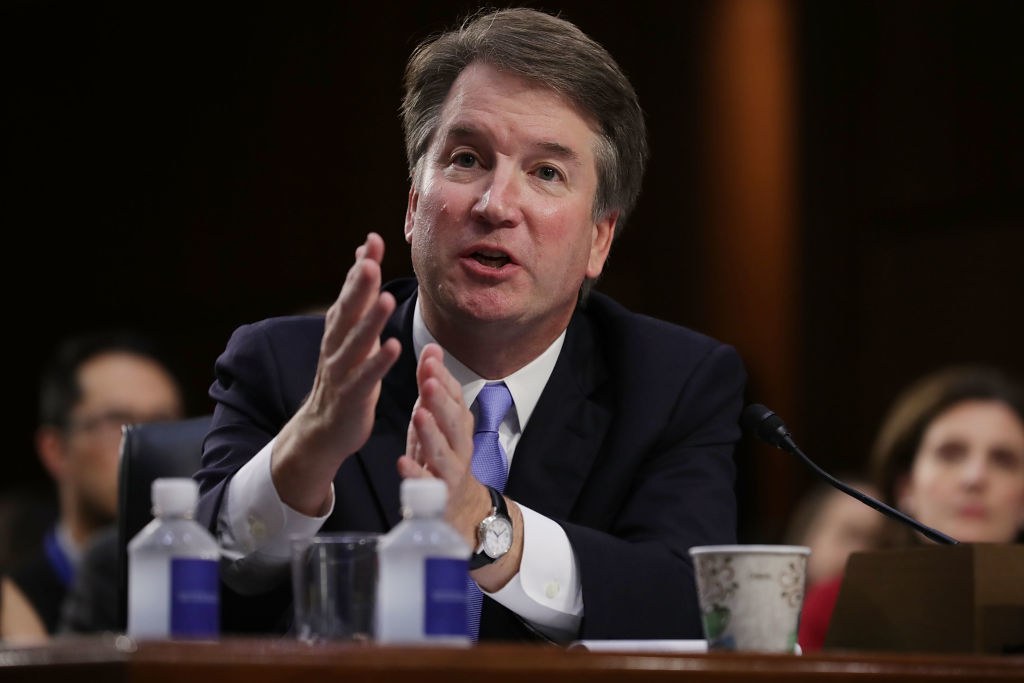
On the third day of confirmation hearings for Supreme Court nominee Brett Kavanaugh, Democratic senators continued their probe to get the conservative judge’s stance on women’s reproductive rights—and a clue in one of his answers may say it all.

In an exchange with Senator Ted Cruz (D-Tex.), Kavanaugh referred to birth control as “abortion-inducing drugs,” a term many women’s rights advocates say is dog-whistle politics and a clear nod to pro-lifers who oppose abortion.

Kavanaugh’s calculated answer came when Cruz asked the judge about his dissent in the case Priests for Life v. the U.S. Department of Health and Human Services, which involved an Affordable Care Act mandate that required employers to cover contraception for workers. Kavanaugh explained why he ultimately sided with the plaintiffs, who are an anti-abortion Catholic group.

“The question was first, was this a substantial burden on their religious exercise? And it seemed to me, quite clearly, it was,” Kavanaugh said. “They said filling out the form would make them complicit in the abortion-inducing drugs that they were, as a religious matter, objected to.”

For pro-choice supporters, the phrase “abortion-inducing drugs” is an alarm bell. Organizations such as the Center for Reproductive Rights pointed out that the verbiage is what many anti-abortion groups use to talk about contraception. “Saying ‘abortion-inducing drugs’ to describe contraception is straight out of the anti-choice, anti-science phrase book used to restrict women’s access to essential health care,” the Center for Reproductive Rights wrote on Twitter.

The wording is also just plain wrong. Contraception, which includes birth control and Plan B, does not cause abortions, despite the assertion of some organizations. Using contraceptive methods like birth control and IUDs can prevent fertilization from occurring, but it does not end existing pregnancies. But despite the facts, the concepts are often conflated among anti-abortion groups. Senator Elizabeth Warren (D-Mass) reminded the public of the misconception by tweeting, “Newsflash, Brett Kavanaugh: Contraception is NOT abortion. Anyone who says so is peddling extremist ideology – not science –and has no business sitting on the Supreme Court.”

Kavanaugh’s stance on reproductive rights has been questioned by many pro-choice supporters since President Donald Trump announced his nomination. Although Kavanaugh has stated he will abide by precedent set in Roe v. Wade, his record suggests anti-choice leanings. In addition to his defense in Priests for Life v. the U.S. Department of Health and Human Services, Kavanaugh also dissented in Garza v. Hargan and argued that an undocumented minor in U.S. detention could not receive an abortion. More evidence mounted late Wednesday, when leaked emails showed that while serving as a lawyer in the Bush administration, Kavanaugh had offered advice about changing a description that said Roe v. Wade was “the settled law of the land.”

On Thursday, Kavanaugh was also grilled by Senator Kamala Harris (D–Calif.), who asked him about the reproductive freedom of men compared to women. Kavanaugh stumbled while answering some of the questions—marking just another example of why Kavanaugh may be a threat to Roe v. Wade and other important principles of women’s rights.

MORE: Watch Kamala Harris Expertly Question Supreme Court Nominee Brett Kavanaugh on Reproductive Rights


Source link

Categories
Health

Watch Kamala Harris Expertly Question Supreme Court Nominee Brett Kavanaugh on Reproductive Rights


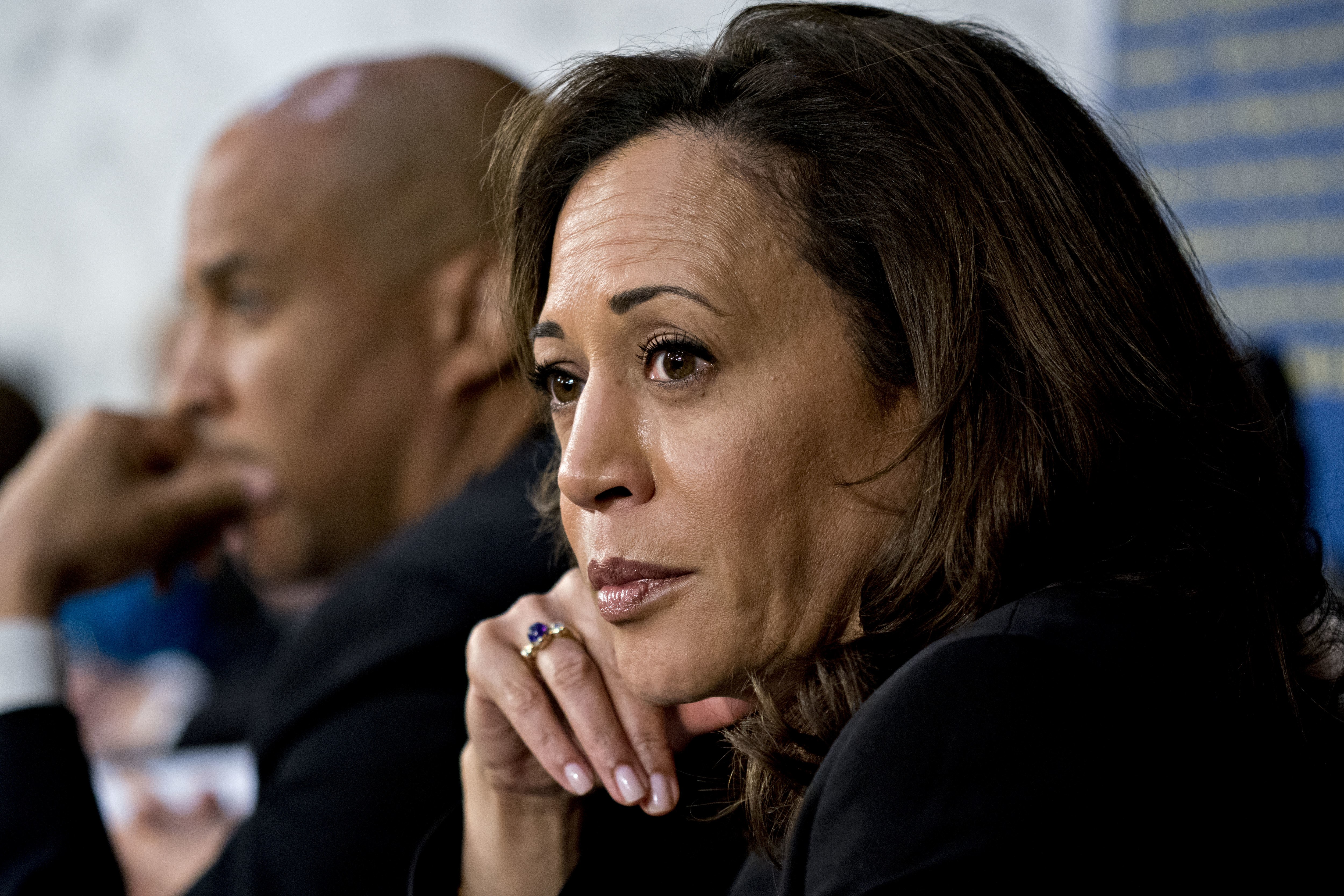
The second day of the Brett Kavanaugh Supreme Court confirmation hearings went late into the night Wednesday, but Senator Kamala Harris (D–Calif.) was ready when it was her time to question President Trump’s nominee for the highest court in the land.

As a former prosecutor (and former attorney general of California), Harris has perfected her cross-examination technique, and it is quite a sight to behold. Watching her line of questioning in Senate hearings has become a thing to watch. But there was one question in particular that had many women across the country cheering from their living rooms.

“Can you think of any laws that give the government the power to make decisions about the male body?” Harris asked Kavanaugh. When he offered to answer a more specific question, she clarified, “Male versus female.” Then she repeated the question.

Kavanaugh stumbled over his words and finally responded: “I’m not thinking of any right now, Senator.”

There it is, right there—the crux of the frustration for women (and men) who believe in reproductive freedom. There is no comparable situation where the government gets to make bodily decisions for men in this country.

His answer is one of concern for those watching to see how Kavanaugh handles questions about women’s reproductive freedom. In an interview with Glamour shortly after Trump announced his nomination, New York Senator Kirsten Gillibrand expressed her fears that women would seek illegal abortions if the conservative judge was confirmed.

“We are at the brink of not having reproductive freedom in this country, not having the ability to decide when and how many children we’re going to have,” Gillibrand told Glamour. “This nominee believes that a boss should decide whether I get access to birth control…. We should fight back with everything we have—because everything’s at stake.” And Washington Senator Patty Murray told Glamour that a Kavanaugh confirmation would create “a court [with] five men on it who will overturn Roe v. Wade.

Kavanaugh continued to evade discussion of his views on Roe v. Wade when asked by Harris whether he believed that a woman’s right to privacy included her right to terminate a pregnancy. He danced around the issue of nominee precedent, saying that he should not comment on specific cases and the importance of judicial independence. (While Kavanaugh has been quoted as saying Roe v. Wade is “settled law,” a 2003 leaked email provided to The New York Times and published Thursday shows the judge challenging whether the case was “settled law of the land.”)

Harris didn’t just grill Kavanaugh on women’s rights; she also spent eight minutes on the Mueller investigation of possible collusion with Russia and asked Kavanaugh if he believed there was blame on both sides (referencing Trump’s response for the violence in Charlottesville, Virginia, last year during a white supremacist rally). He evaded concrete answers on both issues. “I am not here to assess comments made in the political arena, because the risk is I’ll be drawn into the political arena,” Kavanaugh said regarding Charlottesville.

Twitter was very much here for Harris’ tough questions and no-nonsense approach to the hearings.

The hearings continue today with more questioning from the members of the Senate Judiciary Committee.

Related Stories:

Here’s Where Supreme Court Nominee Brett Kavanaugh Stands on Key Women’s Issues

The Kavanaugh Hearings, Day 2: If He Doesn’t Make the Supreme Court, He’d Make a Great Real Housewife


Source link

Categories
Health

Cancel Kavanaugh: Black Women Stand to Lose the Most Without 'Roe v. Wade'


As a young adult, my grandmother told me horror stories about what life was like for black women before Roe v. Wade, the 1973 case that made abortion legal in the U.S. If you had money, you had access to the services you needed. But for many of our grandmothers, aunts, and mothers, that was not their reality. These women were forced to back alleys and shady doctors to receive the care they so desperately needed. They could not afford much else.

From 1972 to 1974, the mortality rate for women of color due to illegal abortion was 12 times that of white women in New York City alone. The coat hanger was our gory reality, the DIY spirit of which lives on today for many women facing financial hardships.

Things are slightly better today, but we are still in a crisis. As a black woman in 2018’s America, getting pregnant could literally kill me: Numerous studies point to a reproductive health crisis for black women. We’re dying during pregnancy and birth at higher rates than anyone else in America—numbers that mirror mortality rates in developing countries around the world.

Now, with the prospect that Brett Kavanaugh could be confirmed to the Supreme Court, it is possible that Roe v. Wade could be overturned, abortion could be outlawed, and life could become much, much worse for black women. Simply put: Black women have the most to lose if Kavanaugh is confirmed, and we will pay with our health and our lives.

As reported by Linda Villarosa in the New York Times, Zoë Carpenter in The Nation, and Renee Montagne at NPR, experts believe pregnancy is more dangerous for black women because of the stress of enduring racism in America. Other factors include having less access to resources because of that racism, as well as healthcare providers that take our symptoms and pain less seriously because of their unconscious bias against black women.

Regardless of why pregnancy is more dangerous for black women, the facts remain that it is more dangerous. Forcing us to bear pregnancies we don’t want—as would happen if Kavanaugh is confirmed—would likely exacerbate what has become a life or death situation for us.

In this way, exceptional wealth means nothing. Even billionaire Beyoncé recently shared a story about her difficulties during childbirth, following a similar story from rockstar athlete Serena Williams. Black women, no matter what their income level, are struggling to get access to high-quality care under our current system.

The Supreme Court is expected to function as a way to ensure and preserve justice for all Americans, but black women have never been able to count on our nation’s highest judges to defend and protect us. Brett Kavanaugh would shamefully worsen this problem. (Donald Trump vowed to tap only pro-life judges to the Supreme Court.) Our society still fails to recognize the abuse of black and brown bodies on which this nation was founded—and even more so, the violent control and degradation of black women’s bodies and lives. Throughout the 20th century, government agencies were targeting women of color for sterilization. From 1929 to 1974, North Carolina’s eugenics program aimed to stop poor people or people with mental illness from reproducing, but a disproportionate amount of the women ultimately targeted were black women.

For generations, the women who came before us have fought back and resisted this anti-black and anti-woman state violence in any way they could. We owe it to them—and to the women who will come after us—to do the same.

Collective liberation requires reproductive justice, defined by the National Black Women’s Reproductive Agenda as the human right to control our bodies, our sexuality, our gender, our work, and our reproduction—something we’ve historically been denied. Attaining these rights involve real access to preventative services, cultural competency training for health providers to address the bias that is killing black women, and allowing all women, especially women of color, to have a voice on policies that affect our ability to thrive.

It’s time for a reset. My organization, Women’s March, spent all of August calling on women to show up at their senators’ offices in their home states and remind them who voted them into office. We’ve continued to collect signatures and hand-deliver wire hangers to senators as a reminder of what women have been forced to do when denied the right to choose, and what women who never had any choice because of their race and economic status are still forced to do. On August 26, Women’s Equality Day, we worked with a coalition of progressive groups to organize rallies across the nation where women could echo our shared demand that the Senate keep this anti-woman candidate off our nation’s highest court.

On September 4, when SCOTUS confirmation hearings for Kavanaugh begin, a coalition of 20 women’s organizations will take this resistance from district offices to Washington, D.C. We will look our senators in the eyes as they prepare to vote and leave them with no doubt that women across America are watching. We’re taking action to #CancelKavanaugh, because we can’t afford to roll back rights women have worked for a generation to secure.

If the Senate puts Kavanaugh on the Supreme Court, they’re giving him free rein to gut Roe v. Wade, criminalize abortion, and punish women for making choices about our own bodies. And they’re leaving us with no other choice than to disobey.

Black women have never shied away from taking action when our lives and those of our loved ones are on the line. We show up for everyone, and now we need members of the Senate—and women everywhere—to show up for us. Whether you feel you’ll be personally affected or not, it’s time to raise our voices until it is a rousing cry echoing in every corner, every neighborhood, every city in our nation.


Tamika D. Mallory is a nationally recognized activist well known as one of four co-chairs for the 2017 Women’s March on Washington and currently serves as co-President of the Women’s March organization. President of Mallory Consulting, a strategic planning firm, and board member of The Gathering for Justice, Tamika has landed on the 2017 Time 100 Pioneers list and Fortune’s 2017 list of the World’s Greatest Leaders.

Related Stories:

Serena Williams’ Childbirth Experience Should Be a Wake-up Call About the Medical Treatment New Moms Are Getting—Especially Women of Color

What Brett Kavanaugh’s Supreme Court Nomination Could Mean for Your Abortion Rights


Source link