Categories
Health

Anita Hill Has Some Advice for the Senate Judiciary Committee on How to Handle the Kavanaugh Hearings


There is, perhaps, no person in America better suited to weigh in on the current state of Brett Kavanaugh’s Supreme Court nomination hearings than Anita Hill.

In 1991, the law professor found herself in a position similar to that of Dr. Christine Blasey Ford in that both had come forward to accuse a Supreme Court nominee of sexual misconduct. Hill testified about a pattern of sexual harassment during her time working with now-Justice Clarence Thomas, while Ford alleges that Kavanaugh drunkenly assaulted her during a party while they were in high school. (He has denied her allegations, just as Justice Thomas denied ever harassing Hill.)

Ford is reportedly considering testifying at the Kavanaugh confirmation hearings about the matter, pending an FBI investigation requested Tuesday by Ford’s lawyer to “ensure that the crucial facts and witnesses in this matter are assessed in a non-partisan manner.” Hill, having had some experience in this area, is offering some words of wisdom to the Senate Judiciary Committee to get it right this time around.

“Today, the public expects better from our government than we got in 1991, when our representatives performed in ways that gave employers permission to mishandle workplace harassment complaints throughout the following decades,” Hill writes in the New York Times. “That the Senate Judiciary Committee still lacks a protocol for vetting sexual harassment and assault claims that surface during a confirmation hearing suggests that the committee has learned little from the Thomas hearing, much less the more recent #MeToo movement.”

Here are some takeaways from Hill’s powerful op-ed:

Don’t mix messages.

Hill says that confronting sexual harassment and ensuring the integrity of the Supreme Court are not things that are at odds with each other. “Both are aimed at making sure that our judicial system operates with legitimacy,” she writes.

Neutrality is key.

Hill suggests that a neutral body with experience in the subject of sexual misconduct should lead an investigation into Ford’s claims so as not to be tainted by the rampant partisanship we see on almost every current political matter. And after that, senators must rely on the results and act as fact-finders when asking their own questions. “The investigators’ report should frame the hearing,” says Hill. “Not politics or myths about sexual assault.”

Slow down.

Rushing the hearings is a mistake, according to Hill. She says it sends the message that these types of allegations are not important. “Simply put, a week’s preparation is not enough time for meaningful inquiry into very serious charges,” she says.

Say her name.

“Finally, refer to Christine Blasey Ford by her name. She was once anonymous, but no longer is. Dr. Blasey is not simply ‘Judge Kavanaugh’s accuser.’ Dr. Blasey is a human being with a life of her own. She deserves the respect of being addressed and treated as a whole person.”

Hill also wisely points out that Kavanaugh has the benefit of organized support for his side while Christine Blasey Ford will be “outresourced” and that “imbalance may not seem fair.”

While it may be too late to heed all of Hill’s warnings, we can only hope that the process is not as problematic as it was for her in 1991. I remember watching the coverage of those hearings as an almost 16-year-old and taking away the unfortunate message that it was extremely hard to be believed as a woman, no matter how credible your claims.

In the media run-up to Monday’s hearing, it would seem that not a lot has changed. I hope I’m proven wrong.

You can read the rest of Hill’s op-ed, here.

Related Stories:

Read This Before Asking Why Christine Blasey Ford Waited to Tell Her Brett Kavanaugh Story

In the Age of #MeToo, Will Christine Blasey Ford’s Experience Be the Same as Anita Hill’s?


Source link

Categories
Health

In the Age of #MeToo, Will Christine Blasey Ford’s Experience Be the Same as Anita Hill’s?
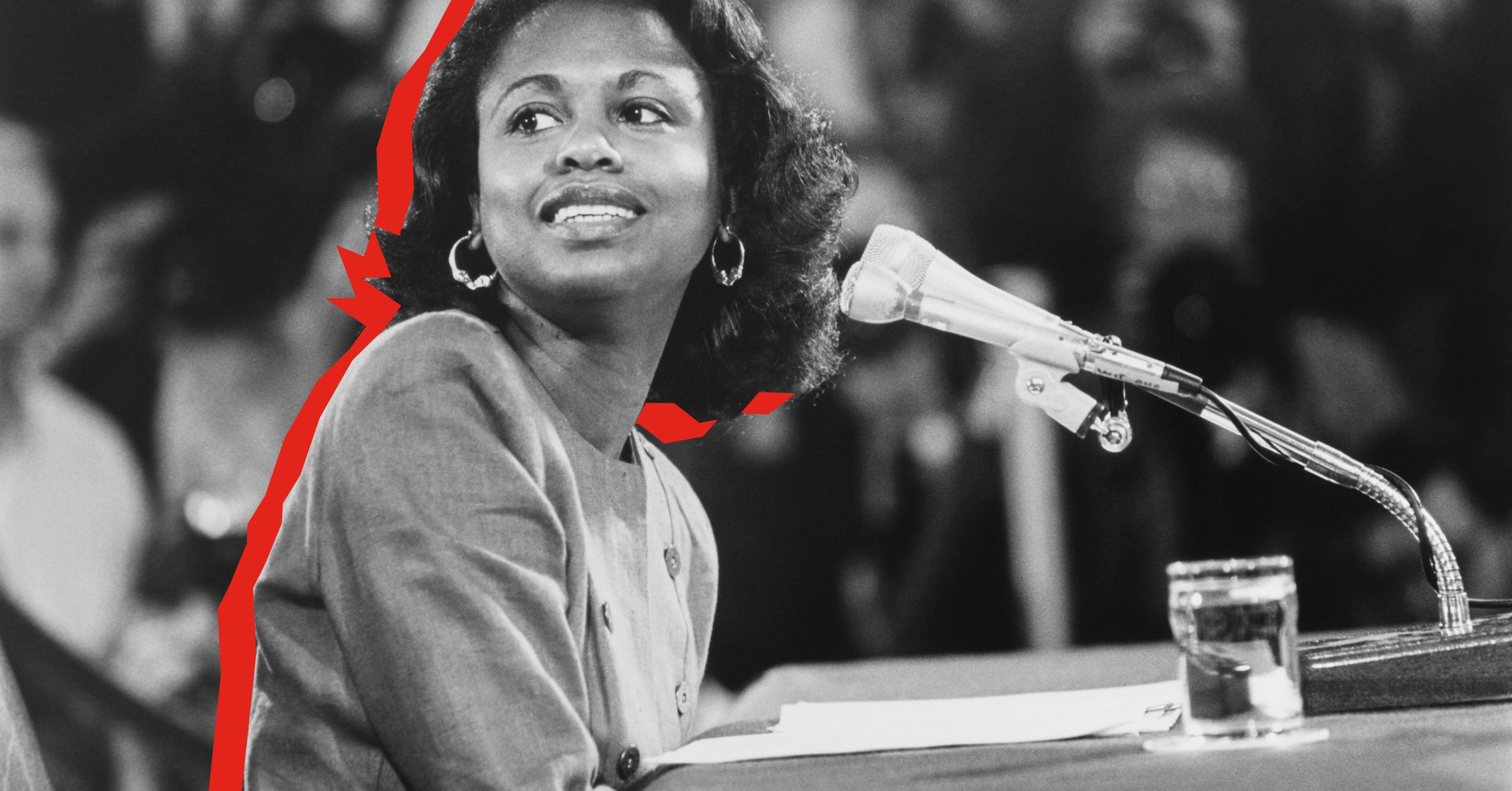

A judge lauded by conservatives gets picked by the president to become the next Supreme Court justice. As he travels the path to Senate confirmation, he unexpectedly confronts graphic allegations of sexual misconduct put forth by a respected female academic. The process is thrown into an uproar—as is the nation.

Brett Kavanaugh and Christine Blasey Ford in 2018? Or Clarence Thomas and Anita Hill in 1991?

On Monday, once again, a woman will go before members of the U.S. Senate to accuse a SCOTUS nominee of wrongdoing.

And it’s hard to ignore that the cases have similarities even though they are playing out nearly 30 years apart.

First a refresher: Republican President George H.W. Bush made Thomas a SCOTUS nominee in July 1991 after Justice Thurgood Marshall announced his retirement. Similarly, Republican President Donald Trump this July nominated Kavanaugh to replace retiring Justice Anthony Kennedy. Anita Hill stepped forward to testify and accuse Thomas of a pattern of harassment when they worked together that included graphic porn references and other inappropriate behavior. At the time, Hill was a law professor; the head of the all-white-male Judiciary committee was a Democratic Delaware senator named Joe Biden.

Now, Kavanaugh is in the hot seat. Christina Blasey Ford, a professor of psychology, had initially asked her identity to be kept confidential when she wrote to Senator Dianne Feinstein (D-Calif.) alleging that Kavanaugh drunkenly assaulted her at at party when they were both in high school. Ford says she’s willing to testify to what happened before Senate Judiciary committee, which is now controlled by Republicans (but is more diverse in terms of gender and race, including four women members).

Republican Sen. John Kennedy, a member of the Judiciary Committee, says both the accuser and accused will have their chance to be heard next week, according to multiple news reports Monday evening.

Kavanaugh denied Ford’s claims in a statement issued through the White House earlier Monday: “I have never done anything like what the accuser describes—to her or to anyone,” the judge said, adding that he’d be glad to talk to the committee “to refute this false allegation, from 36 years ago, and defend my integrity.” Decades earlier, Thomas had emphatically denied engaging in the crude behavior Hill described.

Of course there are serious differences in the cases. Ford’s story recounts attempted rape, not harassment. She’s also coming forward in the #MeToo era, when there is an active conversation about believing women. (Listen to Hill’s questioning by the all-male panel, and you’ll instantly see that wasn’t top of anyone’s mind.)

Duke Professor Emerita Karla Holloway suspects that this time will be different with a Judiciary Committee whose female members include the ranking Democrat, Dianne Feinstein of California, as well as Sens. Mazie Hirono of Hawaii, Kamala Harris of California, and Amy Klobuchar of Minnesota.

“The powerfully present women on the judiciary will temper the aggressive hyper-masculinity we saw in play during the Thomas/Hill moment,” Holloway says: “[They] are clearly positioned and comfortable with challenging and naming that kind of aggression, and I think the men on the committee are aware enough of that potential to worry over how they publicly exercise their privilege. In this case, the political divide will be more telling than gender.”

FiveThirtyEight, in a look back at polling surrounding the Thomas confirmation, notes that his nomination was popular with the public. Not so with Kavanaugh: Recent surveys show Americans totally split on whether he should be confirmed.

In many ways, Hill arguably helped spark the change we are seeing today. Around the time of her testimony and after, polls found many more Americans considered workplace harassment a “very serious” issue. But Hill certainly paid a price for going public. Critics didn’t believe her; some were angry at her for upending the confirmation process for an African-American judge. Biden himself told Teen Vogue last year that he owed Hill an apology for what happened in the Thomas hearings, at which witnesses who backed her up weren’t allowed to testify.

By comparison, Ford, has gotten much more support—fairly understandable given the #MeToo movement, a fast-approaching midterm election focused heavily on women, and a social media-rich environment that didn’t exist when Hill took the stand. (Social media also means more opportunities for people to troll Ford—notably including the president’s son, Donald Trump, Jr., who mocked Ford and Feinstein on Instagram.

Monday afternoon, President Trump defended Kavanaugh as having a spotless record—but, as Jeff Mason of Reuters reported, “signaled he would approve of a ‘little delay’ in the confirmation process” if necessary so as to go through a “complete process.”

Asked by reporters if Kavanaugh had volunteered to withdraw his name in light of the allegations, President Trump replied, “What a ridiculous question.” Decades earlier, then-President Bush had also come to the defense of his nominee, declaring his “total confidence” in Thomas.

Holloway thinks it’s not the allegation that will trouble Kavanaugh’s confirmation. Instead, she says, “His poorly advised ‘categorical denial’ will shift the question from past conduct to present truthfulness before the committee.”

Back when she confronted Thomas, Anita Hill was attacked for her character. She was denigrated as a “a bit nutty and a little bit slutty.” So far, the GOP has not resorted that precise kind of tactic to try to defend Kavanaugh. Instead, they are turning to political process. For example, the head of the Republican National Committee, Ronna Romney McDaniel, chose late Monday not to go after Kavanaugh’s accuser, but Sen. Feinstein, the top Democrat on Senate Judiciary, for doing “a disservice to everyone involved” with how she’s handled the allegations.

If Kavanaugh’s path to confirmation will mirror Thomas’ is still a looming question. Questioning got rough for Anita Hill when she spoke publicly about Justice Thomas, and it’s reasonable to expect some of the same if Christine Blasey Ford testifies before the Senate about Brett Kavanaugh.

When she does, America will have a front-row seat to see how much times have really changed. Or how much they haven’t.

Celeste Katz is senior political reporter for Glamour. Send news tips, questions, and comments to celeste_katz@condenast.com.


Source link

Categories
Health

Anita Hill Rutgers Commencement Speech: We Will Never Be The Same After #MeToo


Before there was #MeToo, there was Anita Hill.

Nearly three decades after her historic testimony against then-Supreme Court nominee Clarence Thomas, Hill stepped up to a podium Thursday to say the world has irrevocably changed after the scandals that have engulfed powerful men from Washington to Hollywood.

“What happens now? I would say we will never be the same after the Me Too movement — after such revelations of sexual violence. We can never, as a society, ignore it and pretend it doesn’t exist,” Hill told law graduates at Rutgers University, where she delivered the 2018 commencement speech.

“We can’t be the same as we were before, and we certainly can’t go backwards when we know that so many people are hurting and suffering.”

Hill’s 1991 testimony against Thomas, who had been her supervisor at the Equal Employment Opportunity Commission, was a watershed moment in how Americans discussed and viewed allegations of sexual harassment.

In televised hearings stunning for their day, Hill, a black woman, reported to a 14-member Senate panel of white men that Thomas, a black man, had come on to her while they worked together. She detailed how he talked to her crudely, and at length, about porn, sex and body parts.

In one case, she reported, per transcripts published by NPR, “The incident involved his going to his desk — getting up from a work table, going to his desk, looking at this can and saying, ‘Who put pubic hair on my Coke?'”

Thomas, in turn, defended himself, saying, in part, “From my standpoint, as a black American, as far as I’m concerned, it is a high-tech lynching for uppity blacks who in any way deign to think for themselves, to do for themselves, to have different ideas.”

In the end, of course, Thomas was confirmed to the position on the nation’s high court, which he still holds today.

Hill wrote in a 2017 New York Daily News op-ed following the Harvey Weinstein scandal that “since 1991, when I testified about my own experience with sexual misconduct at Judge Clarence Thomas’ confirmation hearing, I regularly hear from individuals who have attempted to stop the abuse they face.”

She also said during a panel discussion that year that she felt her experience had made an impact: “In today’s atmosphere, there would be more people who would understand my story, who would believe my story, and I think the numbers have changed over the year in terms of people who believe me and support me.”

In the time since she questioned — and was questioned about — Thomas’ behavior, Hill said it’s clear some change has come.

“There are movements across the country that have let the world know that campuses should be safe for all,” she told her listeners, pushing them to declare “that we will not be silent again about sexual predation… You, too, fight sexual assault and violence by being an ally.”

Hill, now a law professor at Brandeis, added, “Uncertainty prevails only if it can make cowards of us all, and we can defeat uncertainty if we boldly stand for justice and fairness.”

Despite her personal case and its outcome, Hill told the Rutgers graduates, “Students of all genders have claimed something very basic — so basic, it’s hard to believe it’s even debatable, but the right to have an education free from sexual violence. We all deserve that.”

Yet, she said, “In age of harsh and sometimes immediate backlash that can be delivered nearly instantly and anonymously online with a click of a mouse, challenging the status quo is still risky.”

Hill said some believe society got to “the Me Too” point through the forces of social media: “Trust me, this is a profound moment in our time. But I don’t believe we got here because of social networks or the platforms,” she argued. “I believe we got here because of our enduring longing for community, especially in uncertain times.”

With nods to Dr. Martin Luther King, Jr.’s writings on the pursuit and defense of justice, Hill also urged the class to work toward removing barriers created by race and gender “to make sure that more capable and competent people are in our ranks [and] receive the education that they can and would use if they had the opportunity.”

Movements are important, but so is the quest to keep their driving ideas alive, she said.

She told the newly trained lawyers seated before her that they were equipped to go on to shepherd through legislation to protect “the right to live and work and be educated in safe environments.”

Hill, who will also speak at the City College of New York commencement on June 1, asked her Rutgers audience to make a pact with her, no matter where the law might take them.

“I want you to promise me, and your classmates, that you will make a commitment to social justice part of whatever work or careers you enter,” she said. “And you can do that.”


Source link

Categories
Health

Anita Hill Responded to Joe Biden's Apology About Her Sexual Harassment Hearing


As more women come forward and the number of sexual assault allegations against powerful men grow, we can look back to 1991 and thank Anita Hill for opening the conversation on sexual harassment in the workplace. She appeared in front of the Senate Judiciary Committee to assert that Clarence Thomas, who she’d worked with in Department of Education and the Equal Employment Opportunity Commission, was not fit to sit on U.S. Supreme Court because in years prior, he repeatedly sexually harassed her. In the end, Thomas was confirmed and Hill’s claims proved ineffective at keeping him away from the Supreme Court, but they did pave a way for women to speak up about their experiences.

At this year’s Glamour Women of the Year Awards, Hill shared this #MeToo story on stage alongside other women who have raised their voices against harassment and assault. She also spoke of her pride in her experience’s ability to help other women speak up against their harassers. “The outcome of my testimony was not what I’d hoped, but in no way was it the final word,” Hill said. “In the five years after I testified, sexual harassment complaints filed with the EEOC more than doubled. Legislation against harassment slowly but surely started to pass. And I saw that we had a chance to shift this narrative.”

One of the most outspoken advocates for women in the government recently has been former Vice President Joe Biden, who in 1991 was the senator serving as chair of the Senate Judiciary Committee during Hill’s hearing. But his actions during the hearing, which included pressing Hill about her charge that Thomas had complained to her about pubic hair on a soda can, have come under criticism recently, with some saying he didn’t do enough to support Hill—who was asked to testify to an all-white, all-male committee about her experiences.

Biden apologized during the Women of the Year Awards to Hill as he talked to Glamour editor-in-chief Cindi Leive about his actions on the Senate Judiciary Committee. “I’m so sorry that she had to go through what she went through,” he said. “I’m confident he did what she asserted. I believed in Anita. I voted against Clarence Thomas.”

However, Hill doesn’t feel that he’s taken enough responsibility for his part in her unsuccessful hearing. A few days after his apology, Hill spoke with the Washington Post about Biden’s apology. When asked if she accepted it, Hill replied, “Some part of it. But I still don’t think it takes ownership of his role in what happened. And he also doesn’t understand that it wasn’t just that I felt it was not fair. It was that women were looking to the Senate Judiciary Committee and his leadership to really open the way to have these kinds of hearings.”

“They should have been using best practices to show leadership on this issue on behalf of women’s equality,” she explained to the Post. “And they did just the opposite.”

She acknowledges that things have evolved since the ’90s—but also that we’re far from solving the problem. “Just having somebody come forward is not enough. You’ve got to be able to come into a system that respects and values our experiences and our work and our integrity. And we’re not there yet,” Hill said.

Related Stories:
Post-Weinstein, These Are the Powerful Men Facing Sexual Harassment Allegations
State Senator Gayle Goldin: Why Speaking Out Against Sexual Harassment Backfires for Women in Office
Ashley Judd Just Shared Her Go-To Way to Respond to Sexual Harassment


Source link

Categories
Health

Joe Biden on Anita Hill: 'Think of the Courage It Took For Her to Come Forward'


When former Vice President Joe Biden speaks, we listen. His appearance at the 2017 Glamour Women of the Year Summit was no exception. In a surprise conversation with Glamour editor-in-chief Cindi Leive and Dr. Jill Biden, Biden shared deeply moving stories about his family, discussed ways women can make positive cultural changes in the years ahead, and yes, looked back on those famous Joe Biden and Barack Obama memes. When the conversation turned to Biden’s role as a Senator during Anita Hill’s 1991 sexual harassment trial, Biden made his most noteworthy statement: He voiced his unwavering support for Hill, and an issued an apology to her.

In the context of changing the culture around sexual harassment, an audience member asked Biden if he would have done anything differently in Anita Hill’s case. His response: “I’m so sorry that she had to go through what she went through,” Biden said. “Think of the courage it took for her to come forward. [S]he got put through hell during [the testimony].” He then added that, “I feel really badly that she didn’t feel like the process worked. But I tell you what, I said something at the time that proved to be right, I said this is going to be the start of a fundamental change in what constitutes harassment in the workplace and people are going to begin to change.”

Biden is a vocal advocate for women’s rights and eliminating sexual harassment; he’s spent much of his time since leaving office speaking about consent on college campuses across the country. And in keeping with his statements on consent, Biden backed up Hill’s 1991 testimony against Justice Clarence Thomas. “I’m confident he did what she asserted,” Biden stated. “I believed in Anita. I voted against Clarence Thomas.”

Aside from affirming Hill’s story, Biden went on to defend women’s right to choose if and when they share their experiences of sexual harassment. “Some argued that I should have made her come and testify. The truth of the matter is you don’t want a witness who’s going to come and testify, and be weak in the testimony, and undercut the testimony,” he said.

Biden used his platform to amplify Hill’s story, and those of all women whose cases of assault and harassment weren’t believed in the process. “Anita Hill was victimized, there is no question in my mind,” he said. “Maybe I could have handled it better from the beginning, but I made her case on the floor and I made her case in the committee.”


Source link