Categories
Health

Jessie James Decker Doesn't Care What Critics Think About Her Drinking While Breastfeeding


Singer, designer, reality TV star, and mother of three Jessie James Decker caused a stir last month when she posted an Instagram photo of herself sipping on a glass of wine while breastfeeding her youngest child. Critics flooded her comments section with statements like, “Why are you drinking while feeding your child? Disgusting.” Another person wrote, “Drinking alcohol & nursing ur baby. Real smart.”

But given the ‘gram’s DGAF caption—”Cheers bitches”—Decker may have suspected there’d be critics before she even posted the photo. Either way, she’s standing by her choice now. “I have three children. I know what I’m doing now. And it’s totally OK to toast to a celebration and have a drink while you’re breastfeeding,” she told US Weekly in a recent interview. “After three children I’ve learned about what things to worry about and what things not to worry about and a sip of wine isn’t one of them!”

Still, it’s worth noting that the Centers for Disease Control and Prevention says, per its website, “Not drinking alcohol is the safest option for breastfeeding mothers.” Although, “Generally, moderate alcohol consumption by a breastfeeding mother (up to 1 standard drink per day) is not known to be harmful to the infant, especially if the mother waits at least 2 hours after a single drink before nursing.”

“However,” the post continues, “exposure to alcohol above moderate levels through breast milk could be damaging to an infant’s development, growth, and sleep patterns. Alcohol consumption above moderate levels may also impair a mother’s judgment and ability to safely care for her child. Drinking alcoholic beverages is not an indication to stop breastfeeding; however, consuming more than one drink per day is not recommended.”

While the issue is divisive for sure, some moms did defend Decker and urged naysayers to steer clear of mommy shaming. “Got to love these mommy haters. They so ‘disgusted’ with your posts yet they still follow you and use their time and energy to comment,” one person wrote. Another encouraged Decker, writing, “From one breastfeeding mama to another, you do you!” Sounds like that’s exactly Decker’s plan.

Related: See Jessie James Decker’s Vintage Sports-Themed Nursery


Source link

Categories
Health

America Ferrera Is Breastfeeding in Public—and Doesn't Care What You Think


There’s nothing stigmatized about this. Not one bit.

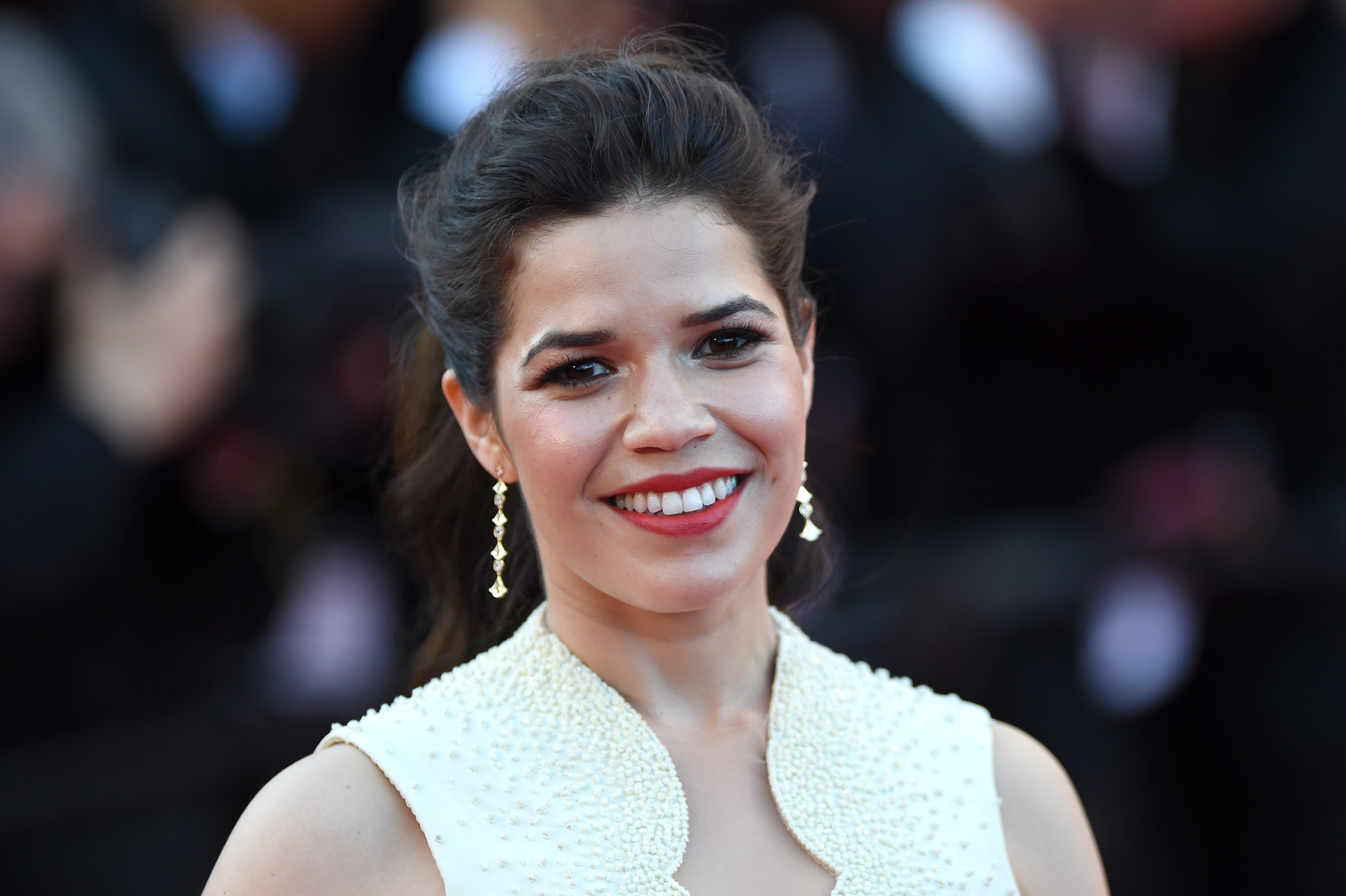
In support of World Breastfeeding Week, America Ferrera just posted a cute photo to Instagram to stand with mothers choosing to breastfeed their children. In the photo, which blurs out her newborn son Sebastian’s face with a Phineas and Ferb character, Ferrera is smiling as her son feeds. “They’re my boobies, and I’ll feed where I want to – feed where I want to – feeeeed where I want to,” she wrote as the accompanying caption, adding “#worldbreastfeedingweek.” The week, coordinated by the World Breastfeeding Action, aims to protect, promote, and support mothers who wish to breastfeed in public or private. “In a world filled with inequality, crises and poverty, breastfeeding is the foundation of lifelong good health for babies and mothers,” the official website reads. Similar to Ferrera, singer-songwriter Alanis Morissette also posted an Instagram photo that showed her breastfeeding her child in support of the initiative.

While breastfeeding doesn’t suit all mothers—and that’s totally okay, formula is just as popular with nursing newborns—the issue of whether a woman should breastfeed in public has been divisive as of late. However, public spaces have been making increasingly great strides to accommodate mothers and their post-natal needs, especially involving breastfeeding. Amtrak, for instance, plans to build “lactation suites” in five stations across the country for mothers who want to pump or feed on the go, while more and more airports are creating special rooms for mothers to do their business in peace.

Perhaps most importantly, though, every single state in America has made it legal for mothers to breastfeed in public without fear of retribution or discrimination as of last month. In fact, the Pope is very pro-breastfeeding in public, calling it a “language of love.” Hard to argue against that … or U.S. laws.

Related Stories:

America Ferrera Just Welcomed Her First Child—and the Pic Is So Cute


Source link

Categories
Health

The Black Women's Wage Gap Is Systemic, but That Doesn't Mean It Can't Change


What would you do with an additional $20,000 dollars? It’s a question that might seem rhetorical, but to many women of color, it’s one that’s perfectly logical due to an overwhelming wage gap; a disparity that’s acknowledged yearly with Black Women’s Equal Pay Day, which is today.

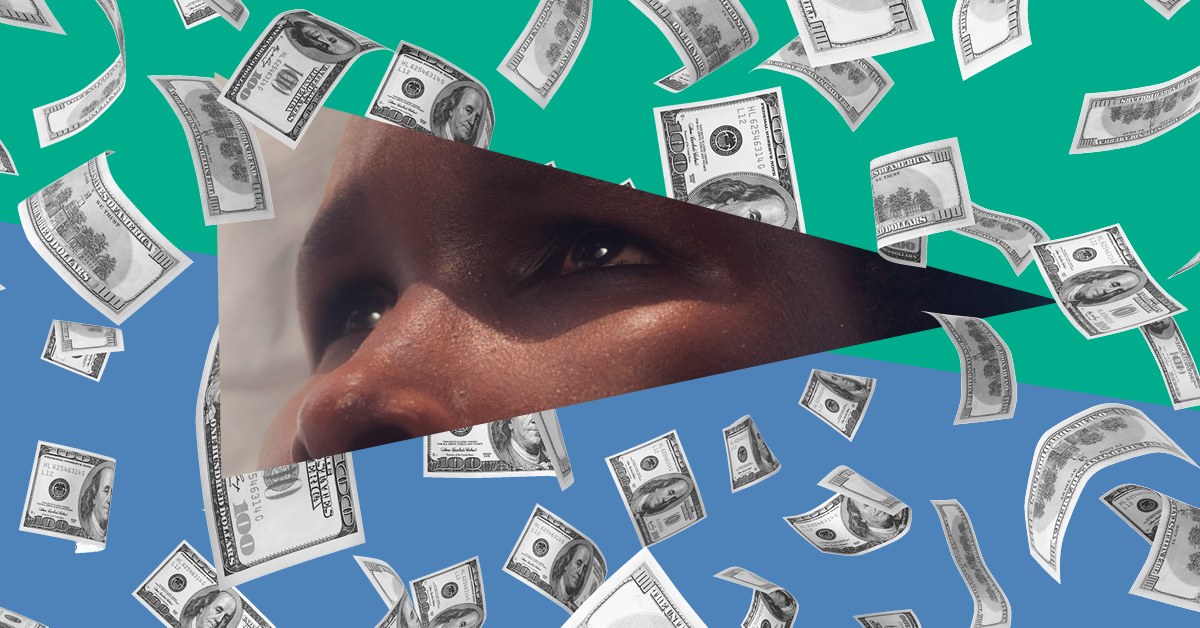
Recent data from the National Women’s Law Center shows that while women in the U.S. make 80 cents to every dollar white men make, black women working the same number of hours typically make just 63 cents for every dollar paid to their white, non-Hispanic male counterparts. And with median wages for black women in the United States at $35,382 per year, compared to $56,386 for white, non-Hispanic men, this amounts to a loss of about $21,698 each year for African American women and their families.

Considering the high-profile strides black women have made in various industries during the past few years, it’s hard to fathom the gap exists so broadly. Black women—who, according to the National Center for Education Statistics, are attaining college degrees at higher rates than before—are leading politically (and campaigning to make history), are changing the Hollywood landscape with nuanced storytelling (and unprecedented deals), crushing the sports world and even maintaining the top spot as the fastest growing group of entrepreneurs.

And the gap isn’t unique to black women in lower and middle wage jobs who are facing discrimination: According to a new joint study by Leanin.org, the National Urban League, and SurveyMonkey, “the [wage] gap actually widens for black women with more education.” In fact, for black women, it takes 200 days to “catch up.”

In 1996, the National Committee on Pay Equity decided to bring awareness to this disparity by creating Equal Pay Day. The day signifies how long it takes for a woman to make the same amount of money a white man makes for the prior year. Each year, Equal Pay Day for All is held in April to acknowledge that it takes an average woman about 16 months to make what a typical white man makes in a year.

But when we look at the wage gap for Black women, this day of “catching up” falls later in the year on August 7. Black women have to work more than 200 additional days to make the same amount of money a white man makes in a year. And these numbers matter, especially as the gap widens. It’s not clear when black women will be able to catch up. But there are things we can do to inch closer. On Black Women’s Equal Pay Day, we take a look:

Why Does the Black Women’s Wage Gap Matter?

For the millions of black women, who are working hard and still struggling to make ends meet, it’s obvious that losing out on thousands of dollars in income each year is detrimental for their well-being. But there are additional reasons why closing the black women’s wage gap is so important. Aside from obvious discrimination, black women, perhaps more than any other demographic, need higher wages.

According to 2013 data from the Center for American Progress, nearly 75 percent of black breadwinning mothers are unmarried (compared to 29 percent of white women). In other words, they are paying the rent or mortgage, feeding the family, procuring healthcare, and more on their own. This also impacts black women’s ability to build wealth. Wealth, defined as what you own minus what you owe, is the ultimate measure of economic security and black women have far too little of it. According to the Asset Funders Network, median wealth for single black women in the U.S. is $200. Raising wages, will provide black women with more money to save and invest.

What Can We Do About It?

The good news is that there are policy proposals to increase black women’s wages and close the wage gap. Below are just a few key proposals.

Raise the minimum wage:

According to Bare Minimum: Why we Need to Raise Wages for America’s Lowest Paid Families, a new report by the Leadership Conference Education Fund and Georgetown Center on Poverty and Inequality, black women are more likely than any other group to benefit from a $15 minimum wage. (Black women are disproportionately working in low wage jobs.)

And, while there is very little action at the federal level to increase the minimum wage, many state legislators know that raising wages is good for both families and the local economy. And they are acting.

In fact, according to the National Conference of State Legislatures, “eighteen states began the new year with higher minimum wages. Eight states (Alaska, Florida, Minnesota, Missouri, Montana, New Jersey, Ohio, and South Dakota) automatically increased their rates based on the cost of living, while 10 states (Arizona, California, Colorado, Hawaii, Maine, Michigan, New York, Rhode Island, Vermont, and Washington) increased their rates due to previously approved legislation or ballot initiatives.”

Economic justice advocates are also working hard locally to advance a $15 hour minimum wage that increases with inflation over time. As a result, New York City, Seattle, Los Angeles, and San Francisco have passed $15 hour minimum wage ordinances.

Go to Raise the Minimum Wage to learn more about how you can get involved. In addition, be sure to check out Fight For $15.

Revitalize unions:

According to Economic Policy Institute, union membership is key to helping to close the black women’s wage gap:

“Black women have traditionally faced a double pay gap—a gender pay gap and a racial wage gap. EPI (Economic Policy Institute’s) research has shown that… unions help reduce these pay gaps. Working black women in unions are paid 94.9 percent of what their black male counterparts make, while nonunion black women are paid just 91 percent of their counterparts.”

Unfortunately, the recent Supreme Court decision in Janus v. AFSCME will weaken unions. The new ruling creates a situation where workers like Janus—a white man—are no longer required to pay their “fair share” in union dues, even though they benefit from union organizing and collective bargaining agreements.

To learn more the importance of advancing collective bargaining initiatives and fair labor practices, check out inequality.org.

Pass the Paycheck Fairness Act:

At the end of the day, it’s employers, not the government, that set wages. And the Equal Pay Act, which was signed into law 50 years ago, was designed to regulate the behavior of corporations by outlawing wage discrimination based on sex. Unfortunately, it’s clear from the persistence of the wage gap that the Equal Pay Act hasn’t worked.

We need to strengthen the Equal Pay Act and ensure that it protects black women from wage gaps based on race and gender. That’s where the Paycheck Fairness Act comes in. According to the National Partnership for Women & Families, the Paycheck Fairness Act will add teeth to the Equal Pay Act by helping to “ensure the Department of Labor (DOL) uses the full range of investigatory tools to uncover wage discrimination.”

For example, the Paycheck Fairness Act would make employers accountable for proving that wage differences are a result of legitimate, job-related issues. It would also protect women and men who share their salaries with each other from retaliation by employers. Finally, the Act would provide women and girls with training in negotiating skills.

Make no mistake. Wage discrimination has a direct impact on the balance sheets of black women. The wage gap hurts both families and the economy. Addressing this damage is key to improving our personal and communal financial health. By learning more about the policies above and advocating with our legislators and corporate leaders, we can ensure that we achieve wage equality and are finally paid what we deserve.

Jessicah Pierre is a media specialist at Inequality.org and founder of Queens Company, an organization dedicated to empowering women of color.

Jocelyn Harmon is the co-founder of BlackHer, an online platform dedicated to educating and inspiring Black women to take action for progressive change.

Related Stories:

Despite Major Wins, Women Are Still Losing When It Comes to Equal Pay

Starbucks Says It’s Achieved Pay Equity For Women and Minorities


Source link
Categories
Health

If Betty Gilpin Doesn't Get an Emmy for *GLOW*, It's a Crime


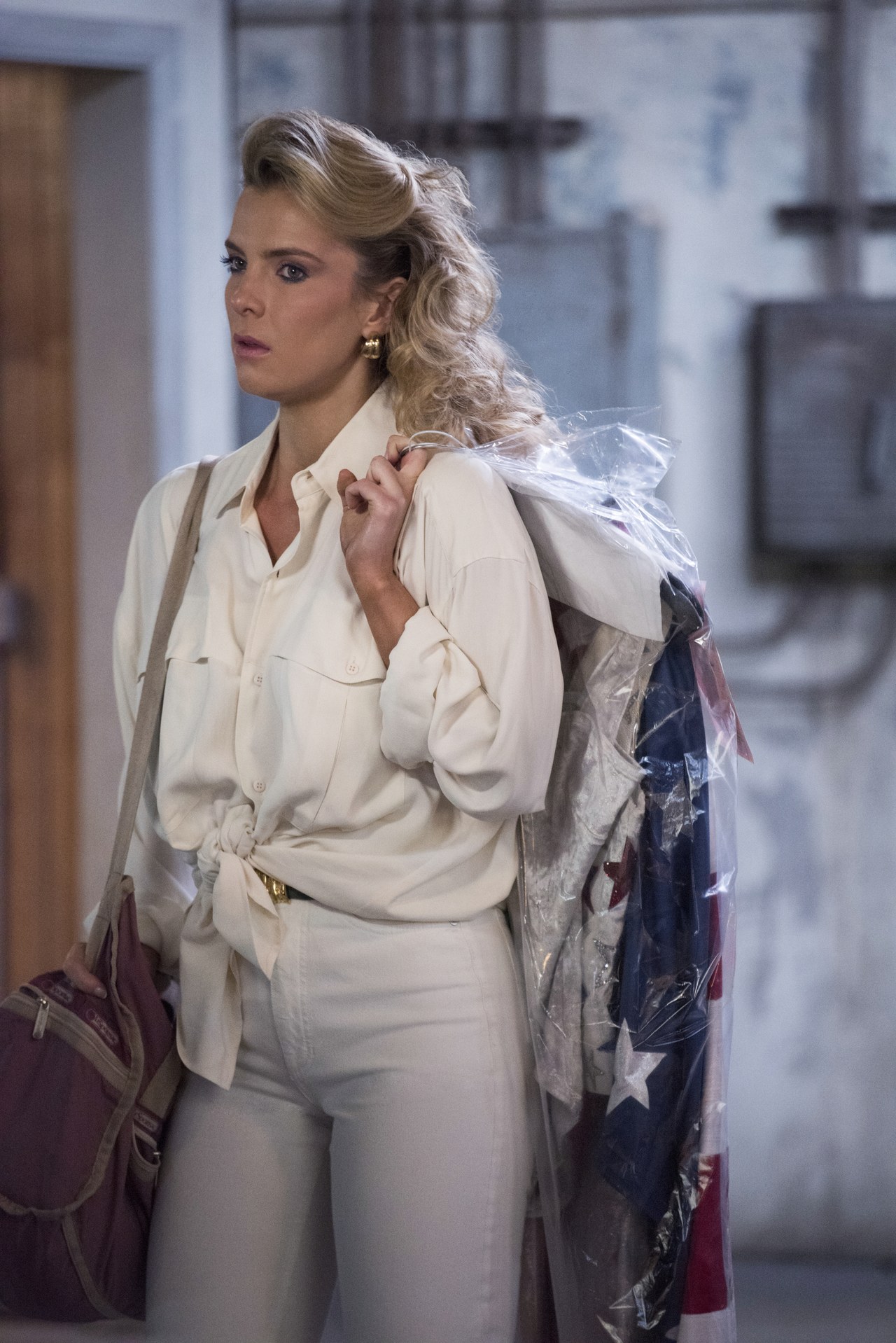
Betty Gilpin pulls a lot of faces as Debbie “Liberty Belle” Eagan, a former soap star turned campy stars-and-stripes-clad wrestling heroine on GLOW, Netflix’s comedy about a ’80s female wrestling league that’s back for a second season. (Caution: Spoilers for the season ahead.) There’s one in particular that pops up most frequently: a manic beauty-pageant smile so big you can see her molars that teeters on the edge for a few seconds before fading into a grimace.

Sometimes it’s obvious, like in the season two show-within-a-show episode “The Good Twin,” when Liberty Belle, in mourning over her kidnapped daughter Savannah Rose, hosts a “Griefercize” class to “sweat those sorrows away.” She ends the segment by bending over, positioning her head in between her legs, and turning that crazed grin into a silent scream.

Other times it’s more subtle—if you can call anything a pro wrestler with a pound and a half of eye makeup and a costume Gilpin describes as a “glitter diaper” does “subtle”—like when she alternates between a plastered-on smile and a wince while singing the group’s “We Are the World”-style song “Don’t Kidnap.”

Liberty Belle is obviously played for laughs; Gilpin’s unafraid to go as big as possible with her, to the point where you start to feel for her cheek muscles. But she also employs a more toned-down version of the smile/frown twofer out of the ring as Debbie throughout season two. When Debbie runs into her ex-husband, Mark, and his new girlfriend, Susan, she’s all passive-aggressive smiles as she says, “I just would love the pleasure of knowing the name of the woman you have spending time with our son.”

Once she realizes Susan is also Mark’s secretary, you can see in her eyes that she’s thrown and her grin gets a little tighter. She presses on, though, cracking a joke before excusing herself and leaving. The second her back is to them, she drops the smile with the same speed and efficiency she uses to lay out opponents in the ring—only this time, she’s the one who looks like she’s just been clotheslined.

PHOTO: Erica Parise/Netflix

That forced smile is a testament to Gilpin’s skill as an actor. And when this year’s Emmy nominations are announced on July 12, there’s a strong chance her name could be read. The potential nod would actually be honoring her work in season one (because of the eligibility period), which was excellent, but it’s the show’s second season that really showcases her outstanding work. Gilpin excels as both Liberty Belle and Debbie, as the character grows more self-assured professionally despite her personal life unraveling.

Part of Debbie-as-Liberty Belle’s confidence is the result of more wrestling experience, and season two gives us even more difficult moves and matches. Liberty Belle, as GLOW’s most popular face, is in the ring more than anyone else, even going toe-to-toe with Chavo Guerrero Jr. of the legendary Guerrero wrestling family (in character as Chico Guapo). The tragedy of Debbie and the comedy of Liberty Belle—who, after hip-tossing Chico Guapo, lets out a triumphant growl and tells the crowd in her Southern drawl, “I’ve been baking pies at home. PIES OF RAGE!!!”—have always been front-and-center, but this season it’s obvious Gilpin is pulling triple-duty with the character as her stunts (which she and the rest of her costars do themselves) get more elaborate.

Her character wears multiple hats this season, too. Debbie leverages her star power in the ring into a producer role on the show. She’s the only cast member who even attempts to negotiate the terms of her contract, and she does so in the most Debbie way possible: in her wrestling costume, with her ex-husband—who is an agent but not, as she’s careful to point out, her agent—in tow to go over the terms of the deal.

She knows the games she has to play as a woman in Hollywood in the ’80s, but she still goes out of her way to bring a copy of the contract for the network head’s wife, smiling as she says, “I’m sure you don’t expect your wife to sit here looking pretty while we do business. She might have some great ideas.” She doesn’t bother with that cheery facade later when she presents the contract to Sam (Marc Maron). When he incredulously asks, “You want to be a producer?” she corrects him: “Oh, no. I am a producer.”

PHOTO: Netflix

In many ways, Debbie and her friend turned enemy Ruth (Alison Brie) are two sides of the same coin. They’re both highly ambitious women in an era when being one was difficult. Their fractured friendship, the result of Ruth sleeping with Mark in the show’s first season, is the heart of this second batch of episodes. When Ruth tells Debbie about the head of the network coming on to her in his hotel room—a “Me Too” moment that feels ripped from the headlines until you remember stuff like that has been happening since the beginning of time—she’s shocked when she doesn’t get sympathy.

Instead, Debbie blames their show’s cancellation on Ruth’s decision to flee. “You’re supposed to make him think that you might fuck him. Or that you desperately want to fuck him if only you didn’t have your fiancé or your period or an extra set of teeth where your vagina should be,” she says. “That’s how this business works. Men try shit, you have to pretend to like it until you don’t have to anymore.”

It’s a complex reaction, but Gilpin plays on that, making it apparent Debbie doesn’t fully believe what she’s saying and growing increasingly upset until she reveals the more personal motivation behind her feelings, spitting, “The one time you keep your legs shut, we all get fucked.”

Debbie loses her shit and take things too far lot this season, like when she impulsively sells all the furniture in her home after finding out Mark wants to buy the same bed they used to share. But it’s most affecting when it’s directed at Ruth, and all of the moments of Debbie falling apart come to a head when, coked up and upset about her divorce, she intentionally breaks Ruth’s ankle in the ring. Because she goes so big as Liberty Belle, the quietness that Gilpin brings to Debbie in the moments after the injury—the dead-eyed calm as she washes away her sins in the shower while the rest of her castmates rush to the hospital with Ruth—is stunning.

It all builds to the season’s climax, an emotional, ugly fight between Ruth and Debbie in the hospital that features some of the best work from both Gilpin and Brie. Debbie enters timidly but unwilling to admit her faults; when Ruth doesn’t buy that the broken ankle was an accident, Gilpin masterfully shifts gears, calmly and quietly stating “It was an accident, Ruth” before looking over her shoulder, pausing for dramatic effect, and yelling “…unlike the time when you accidentally fucked my husband twice!”

But this side of Debbie disappears as the fight goes on and she realizes she was in the wrong. She storms out crying before returning later with a peace offering: a change of clothes so Ruth doesn’t have to leave the hospital in costume. She can’t bring herself to actually say the words, but she writes “Sorry I broke your ankle” on Ruth’s cast. In this moment, Gilpin executes a subtle version of her signature move: a tiny smile that eventually curves downward and disappears as she wipes away a tear.

It’s a moment so tender it will break your heart—and it confirms what we’ve known since this show premiered: We’ll be baking our own pies of rage if that’s not enough to earn her an Emmy.

Bonnie Stiernberg is a writer and editor based in Brooklyn, New York.


Source link

Categories
Health

Sarah Huckabee Sanders Doesn't Deserve to Eat Dinner


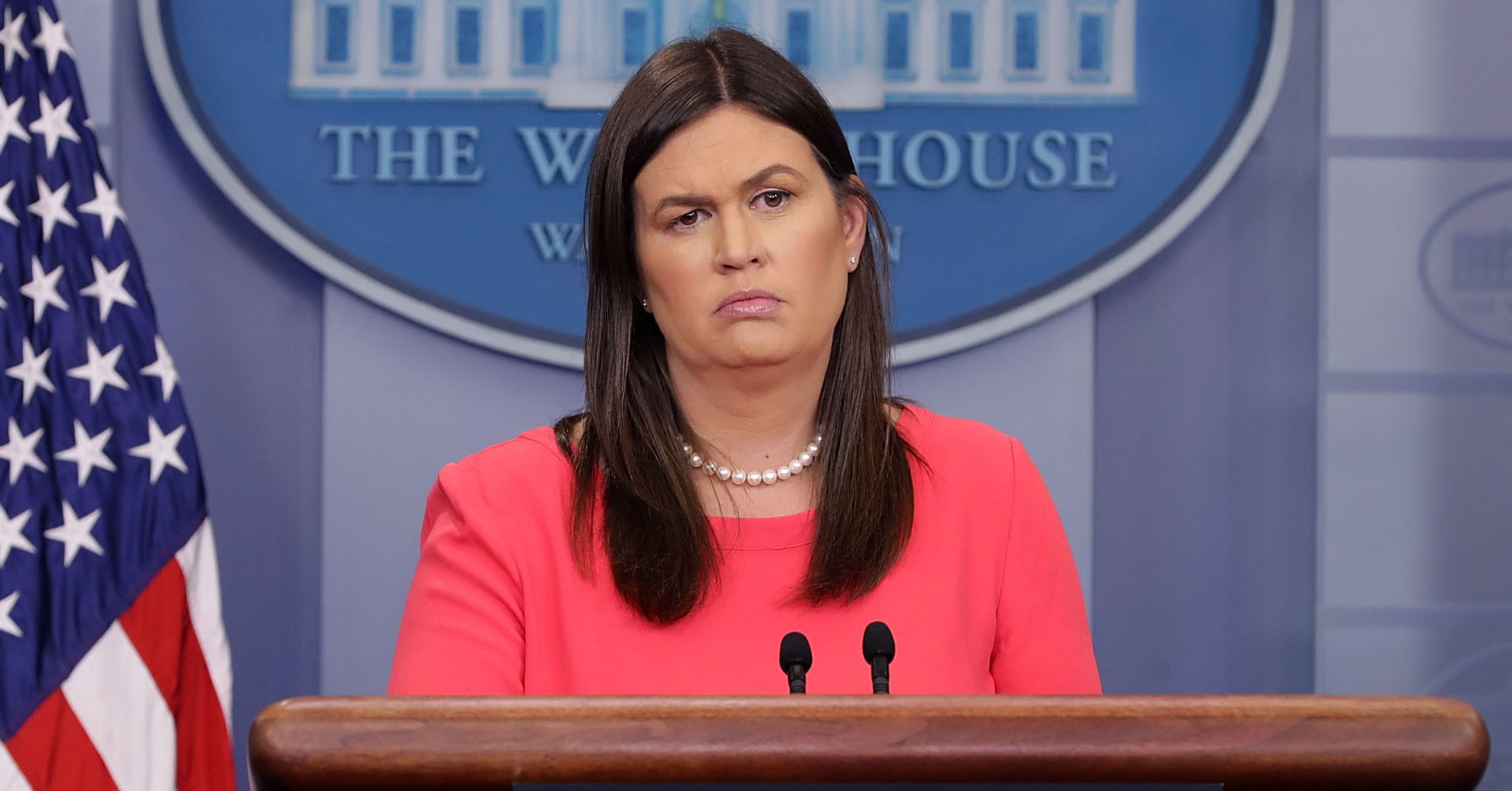
Last Friday White House press secretary Sarah Huckabee Sanders tried to eat dinner at the Red Hen, a small restaurant in Virginia. But after a consultation with her staff, Stephanie Wilkinson, the establishment’s co-owner, requested that Sanders leave. She did, and then appeared, to some, to violate ethics standards when she used her official social media channels to publicize the incident. But forget protocol, which this administration has flouted on countless occasions. Let’s discuss manners.

A debate exploded over the weekend, with Republicans and even some Democrats determined to make the case that Sanders is a civilian who doesn’t deserve to be booted from a restaurant. “Let the Trump Team Eat in Peace,” ran a headline in The Washington Post. “Politics on both sides so tribal it reaches dining, entertainment & sports,” Sen. Marco Rubio tweeted. Even David Axelrod, a Democratic commentator, chimed in, “amazed and appalled” at the number of people who’d “applauded” what he deemed an “expulsion.” He went on to declare it a “triumph” for Donald Trump’s America—that we had been divided into red and blue dinner plates.

The pundit class is up in arms because it believes Sanders is entitled to eat at a farm-to-table restaurant, off the clock. But that’s not true. It’s 2018, and we don’t live in the realm of the rational. We live in the realities of our current hell, for which Sanders serves as the administration’s public face. The lies that she’s helped perpetuate don’t have a 9-to-5 schedule. Even so, I know some will insist that if we chase Sanders out of public spaces, we cede critical ground. How can we claim that what we want is bipartisan action, if we can’t stand to sit at the same table?

But to share a meal with someone is, in a sense, to settle on a set of facts: This is a plate, this is a fork, this is a human. To be kind or even civil to Sanders wouldn’t be the rare show of bipartisanship. Bipartisanship lies in consensus laws, which Republicans have not attempted to pass for most of a decade. Bipartisanship would be a clean DREAM Act, but no such luck.

Some would have us believe that the preservation of our national ideals depends on whether or not the people who are determined to undermine them can pick at a cheese plate in a nice restaurant. I don’t think so. It doesn’t make progressives “better than them” to swallow our values so that people like Sanders and Stephen Miller can eat.

Don’t pretend Sarah Huckabee Sanders is a normal customer or this was a normal meal.

Wilkinson said in an interview with The Washington Post that she serves private customers with whom she disagrees all the time. What she didn’t want to do was wait on a public person whose boss counts on us to be nice while he dismantles our democratic institutions. The crusaders for “civil” discourse support our resistance, but not outside a certain line. Well, we’ve drawn it—not between parties or policies but between the humane and the depraved.

All of us have made a terrible barter. While Trump honors no norms, we’re expected to uphold them. He mocks civil liberties and shows contempt for a free press, and we’ve been convinced that the true test of this historical moment isn’t a measure of what we will do to support the most disenfranchised. It’s how well we’ll maintain our decorum. That Trump notches this win even as he refines his politics of dominance and narcissism is an added insult.

People like Axelrod and perhaps even Rubio will tell us that the Trump era will come to an end, and when it does, the depths to which we’ve all sunk will be hard to crawl out of. It will be harder still for the children who’ve been separated from their parents and for the women who’ve survived domestic violence only to be rebuffed, told that the harm done to them no longer meets our standards for asylum.

There will be those who invoke the homophobic bakeries that refuse to make cakes for LGBTQ couples and people who warn that the slope on which the Red Hen sits is the most slippery of all. Former secretary of education Arne Duncan, who served under Obama, seemed to recall Jim Crow when he tweeted that our nation has denied “people access to restaurants, to water fountains, and even bathrooms,” a record which he said is “too raw, too real” to perpetuate. I feel the same, that it is “too real.” But unlike Duncan, I know better than to use an example of such stark oppression to claim that oppressors deserve to break bread with us. Some eateries require a shirt and shoes. Perhaps most don’t realize that in the Trump era, a kitchen needs policies to keep out those who make the President’s lies more palatable.

The editorial board of The Washington Post maintains that the Red Hen’s decision is just the latest evidence that politics has “spilled into what used to be considered the private sphere” and that the bleed into such uncivil behavior serves no one. If we approve of what happened to Sanders, we could find ourselves kicked out of establishments whose owners don’t like what we stand for too. But not all positions are a matter of opinion. Some are about the nature of who we are, what is fine and what is intolerable.

Politics is not a game. No one scores “points” when Sarah Huckabee Sanders leaves a restaurant. No one believes we’ve won some prize because she had to find her meal elsewhere. But instances like this remind us is that politeness for its own sake has never led to justice. In its conclusion, the Post cautions that people “who believe that abortion is murder” could use the same tactics the Red Hen co-owner did this weekend. What if those activists decided that reproductive health care providers “should not be able to live…with their families”?

What if. I think I know.

Between 1993 and 2015, when three people were shot and killed at a Planned Parenthood health center in Colorado, at least 11 people have been murdered at abortion clinics. In the civil rights era, black Americans lost their lives to inch closer to freedom. Discrimination is fatal—not when the people who perpetuate it sit down to dinner but when “nice” people don’t interrupt.

Since the election, some of us have have wanted to know whether we’re in the middle of one of those times we read about in textbooks. And if we are, who will tell us? Week after week, we watch The Bachelorette and make appointments and shop for groceries. With all the terrible news, we wonder whether our routines should feel different.

But here’s what the fortunate never remember—moments likes this one do not announce themselves to us. No one comes to whisper in our ears: Now! Go! (And the people who are under the deepest and most immediate threat don’t get to choose whether or not to act.) Good people, nice people, civilized people have to start to make the hard choices. There is no simple calculus. There is just a government-backed machine that believes it can commit atrocities because Americans are too polite or numb to stop it, and some people who will seize whatever opportunities available to them muck up the works.

Don’t pretend Sarah Huckabee Sanders is a normal customer or this was a normal meal.

When people in the future want to know what we did, I don’t want to tell them that we cleared Sarah Huckabee Sanders’ dessert plate and thanked her for the tip. I want to tell say we threw sand in the wheels whenever we could. Confrontation isn’t violence, and we can’t draw little boxes around our politics as if to claim that it’s civil disobedience when it’s in the streets, but just plain rude when it happens at dinnertime.

Mattie Kahn is a senior editor at Glamour.


Source link

Categories
Health

Hawaii's Sunscreen Ban Doesn't Hit Until 2021, But the Reason For It Is Scary


Sunscreen is the best it’s ever been. It’s lightweight, fast-absorbing, beautifully fragranced, and at long last a pleasure to use. There’s just one problem: Despite 2014’s Sunscreen Innovation Act, the FDA hasn’t okayed any new sunscreen ingredients in 10 years. And now, researchers are finding evidence that some commonly used chemicals pose a huge threat to our marine environments and may have unintended consequences on human health. This month, Hawaii became the first place in the U.S. to turn these findings into something concrete, a first-of-its-kind legislation to outlaw the sale of sunscreens that contain the ingredients oxybenzone and octinoxate starting in 2021. For context, those two actives are in more than 3,500 sunscreens on the market.

Talking to scientists and lawmakers about these two chemicals, it becomes clear that this may be a somewhat dire situation for the environment. Some background on sunscreen: It’s technically a drug, so the FDA has full control over which ingredients we get to use. That’d be fine, except of the 17 sunscreen ingredients on the market, almost all of them were approved back in the ’70s. And according to Craig Downs, Ph.D and executive director of the Haereticus Environmental Laboratory, a non-profit dedicated to the conservation of natural habitats, almost no toxicity testing was done back then, and there certainly weren’t the stringent standards in place that there are today. So oxybenzone and octinoxate, among other chemicals, have been grandfathered in since then.

That doesn’t sound good, but it wouldn’t necessarily be cause for concern. Yet, the legislation is happening now because over the past two years, numerous studies have found evidence that these two chemicals (but especially oxybenzone) may be doing harm to marine life and possibly people. They’re what researchers call “endocrine disruptors.” So when we slather on sunscreen, the chemicals can then make their way into our bloodstream. There, according to recent studies, they may mess with our hormones in various ways. Downs says that several studies have found that oxybenzone in particular can significantly decrease testosterone levels. Hawaiian state Senator Mike Gabbard, (D) who introduced the bill, along with five other Democratic state senators, recounts a laundry list of evidence-supported consequences. In the ocean, it causes deformed coral larvae; in people, he says the chemicals may be associated with breast cancer becoming more aggressive, polluted breast milk, deformities in newborns, women’s uterine diseases, threatened male sexual health, and damaged DNA.

David Andrews, Ph.D. and a senior scientist at the Environmental Working Group, says that in the water off the beaches of Hawaii, where tourists flock and sunscreen flows, the coral reefs are unable to recover from bleaching events, which are like a hit to the reefs’ ecosystem. And oxybenzone is everywhere: Downs describes the chemicals as similar to a virus, with oxybenzone showing up everywhere from the drinking water in Honolulu, to Alaska, to inside the fish we eat. And according to a 2008 study by the Centers for Disease Control and Prevention, it’s found in the blood of 97 percent of Americans.

This is big news, and it’s been a long time coming. “It really points to what’s become a failure of both the sunscreen industry and the FDA to bring new, safer and more effective ingredients to the market,” Andrews says. While new sunscreen formulas have been available for over a decade in other countries, Andrews says that the FDA has left the public with a catch-22. Even outside of oxybenzone and octinoxate, Downs says there’s no firm data to prove whether or not other sunscreen ingredients, like avobenzone, are safe.

“If the toxicity requirements by the FDA were applied now to the 17 chemicals, only non-nanosized zinc oxide and non-nanosized titanium dioxide would be left standing,” Downs says. Knowing how much sunscreen people now expose themselves to, the FDA needs detailed safety information to approve new formulas—but because there’s nothing to stop companies from doing so, Downs says that most have continued to use the same old ingredients, in the same old ways.

On the plus side, the FDA has recently initiated a study testing absorption of ingredients in sunscreens currently on the U.S. market. A spokesperson told Glamour that the study will “measure and evaluate the levels of active ingredients found in the blood of human subjects after exposure when applied under maximal use conditions.” For now, Dr. Andrew Alexis, the Chair of Dermatology at Mount Sinai hospital in New York City, warns against jumping to conclusions. While studies using extremely high doses of oxybenzone show some hormonal side effects, Alexis says we don’t typically encounter those levels in the everyday world. To put the doses into perspective, he explains that using a sunscreen containing 6 percent oxybenzone, it would take 277 years of daily application to reach exposure comparable to what the rats in the studies get. So while oxybenzone can be detected in the blood and urine of sunscreen users and the population at large, Alexis says that doesn’t necessarily mean oxybenzone is causing negative, systemic health effects.

Speaking to the ban, the Personal Care Products Council, which represents the global cosmetic and personal care products industry, released a statement acknowledging the importance of combating coral reef degradation, but arguing that fighting the prevalence of skin cancer is as important. And with the sunscreen ban waiting for Hawaii’s governor to sign it into law, enforced change is at best in the distant future. According to lawmakers, the bill will only take effect in 2021, so at least legally, nothing has to happen until then—and even after 2021, there will be no legal way to keep sunscreens with the chemicals from coming into Hawaii.

Nicole Lowen, vice chair of Hawaii’s House Committee on Energy and Environment, says that’s fine. While they’re giving the sunscreen industry the next few years to come up with formulas that comply (and Gabbard says tons of sunscreens out there already do), a major aim of the legislation was raising public awareness about these toxic chemicals, and sending a message to companies and the FDA that, yes, change is something people care about, and we want it now.

In that respect, women in Hawaii agree that the bill is making them think twice about their sunscreen. Since the legislation came into the spotlight, Hawaii resident Emma Wo says that she’s gone through her medicine cabinet and tossed the sunscreens with controversial ingredients. Longtime Oahu resident Kathy Croman says she used to not be choosy about the sunscreen she used, but “when you grow up here and see the actual damage it’s causing, you become more aware.” It’s likewise struck Oahu newcomer Kait Hanson: “Before I moved to Hawaii, I used sunscreens with [oxybenzone and octinoxate] a lot. That was mostly due to being misinformed, unaware or trusting the labels of products.” After the conversation started around the ingredients, she says she switched to reef-safe sunscreens like Stream2Sea and Badger (Stream2Sea relies on non-nanosized titanium dioxide, and Badger on non-nanosized zinc oxide. Both are confirmed eco-friendly ingredients).

Marine conservationist Lauren Kitayama seconds it: Once you know the effect of these ingredients, you steer clear. “Most of our cosmetics do end up in the ocean, and they wreak havoc. If making small changes in my daily routine can protect the oceans and animals in them, I do what I can,” she says. To that end, Wo’s not waiting for 2021. “Even before the sunscreen ban goes into full effect, I think it’s a matter of social responsibility. One of my favorite quotes by Maya Angelou applies here: ‘Do the best you can until you know better. Then when you know better, do better,’” Wo says. According to Lowen, it’s going to take more of the same attitude to fuel change.

“We have to create a consumer demand for safer products. We’re obviously facing many environmental crises with climate change, so there’s a lot coming that we’re going to have to deal with. And it’s all true—all those things weigh in,” Lowen says.

Related Stories:
–How to Cover Sunburn the Right Way—And Actually Make It Heal Faster
–Sunscreens That Don’t Suck, According to ‘Glamour’ Staffers
–Your Sunscreen Might Not Actually Be Working—Here’s Why


Source link