Categories
Health

Blake Lively Shares Her Favorite Drugstore Beauty Products, Including a $15 Sunscreen


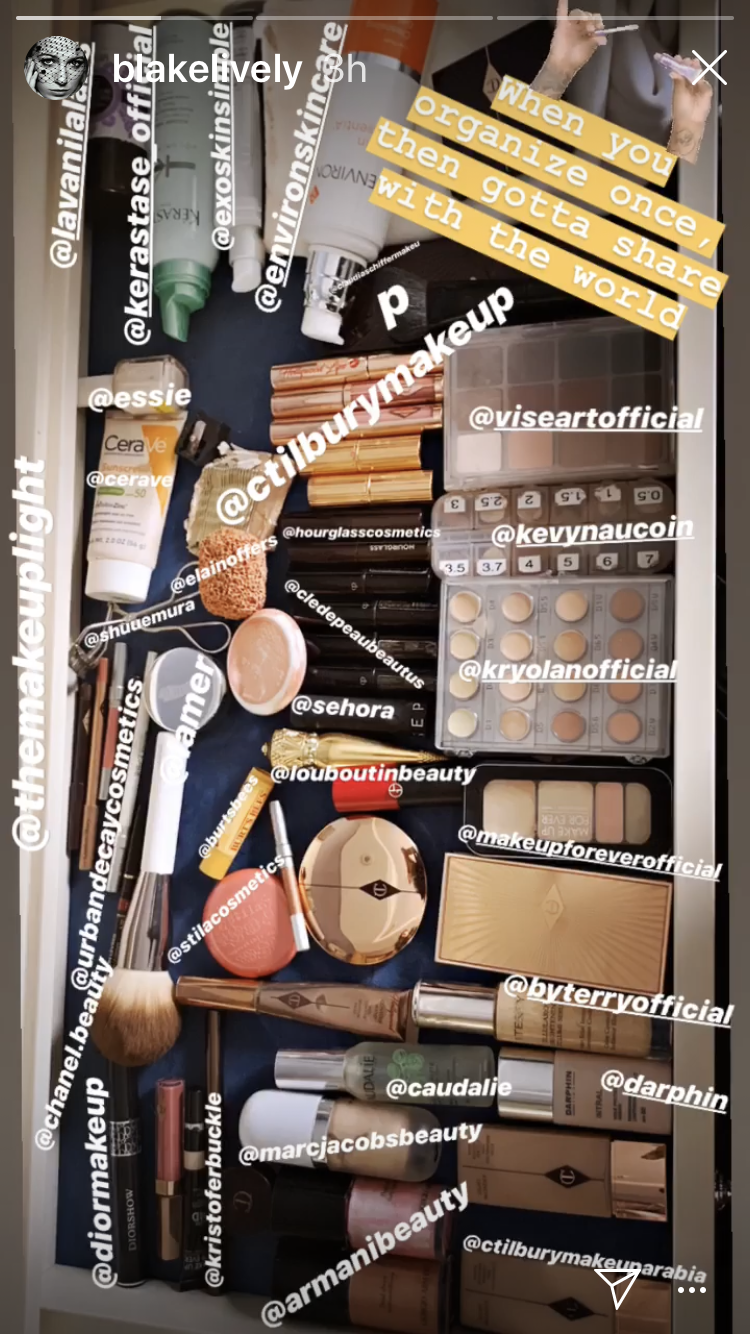
For someone as glam as Blake Lively, spring cleaning means purging your makeup drawer. The actress did just that recently and used the clean-out as an opportunity to share her favorite beauty products with fans via Instagram Story.

Lively’s collection includes a mix of red-carpet classics (like Charlotte Tilbury Hollywood Lips Liquid Lipstick) and prestige pieces (like Diorshow Mascara). But a few drugstore buys were also nestled in her collection. When it comes to her skin, Lively almost certainly has a celebrity dermatologist, a regular facialist, and the occasional team of air-brushers. But for the most important product in anyone’s skin-care routine—sunscreen—she spends only $15 at her local drugstore.

Lively’s go-to sun protection is CeraVe Sunscreen Face Lotion SPF 50 with Zinc Oxide, a best-selling simple formula that works well for daily use.

Blake Lively

For her lips, Lively shared that one of her go-to lipsticks is Christian Louboutin Velvet Matte Lip Colour, one of the most expensive in the world at $90. But before she layers on a few dollars worth of color, she preps with classic Burt’s Bees lip balm.

While there’s nothing more relatable than scattered lip balms rolling around a makeup drawer, Lively also shared a couple of more indulgent skin care picks. She’s a fan of By Terry Cellularose Brightening CC Lumi-Serum ($91) and Darphin Environmental Lightweight Shield ($48).

Whether you go prestige or grab whatever’s cheapest at the drugstore, let’s take two lessons from Lively this spring: Wear sunscreen and don’t forget to clean out your makeup drawer.


More celebrity skin-care picks:


Now, take a tour of Anastasia Soare’s luxurious bathroom:


Source link

Categories
Health

Supergoop! Superscreen Daily Moisturizer Is the Only Sunscreen I Wear


Forgive me Father for I have sinned. I’ve broken the biggest beauty rule in the book—one that has been drilled into my head since I was a fledgling beauty addict stealing my mom’s fashion magazines. I never wear sunscreen (pause for shock and horror). I know I’m supposed to wear it everyday, but my reality is closer to once every few months, when I know I’m going to be out in the sun for an extended amount of time. I’ve heard it said that if you’re not wearing sun protection, the rest of your skin care is essentially useless, but I still can’t bring myself to change my ways.

My aversion to sunscreen comes down to two major factors, the first being that I am simply very lazy. As someone who’s chronically running 15 minutes behind at all times, my morning skin care routine has to be as quick as possible. Adding a sunscreen and then giving it time to sink in before moving on to my makeup frankly just takes too long.

The second factor is the majority of sunscreens don’t work for me. I’ve experimented with texture, brands, mineral and physical forms, and hadn’t found the right fit. They either pilled up, were too matte or too shiny, or disrupted my makeup. Most sunscreens also break my out or irritate my sensitive eyes, and I was starting to think SPF just wasn’t for me. Sure, I’d be wrinkly later on, and not wearing sunscreen isn’t doing any favors for my hyperpigmentation, but at least I don’t have to deal with all the drama now.

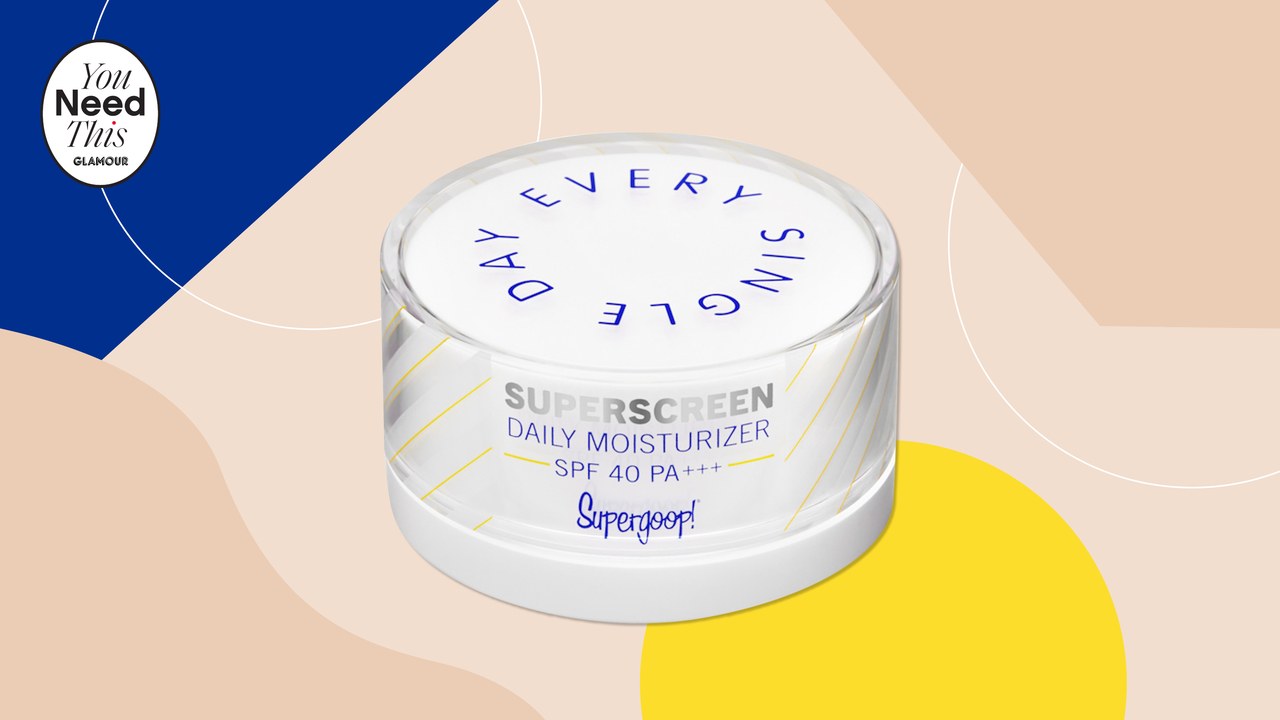
I’d dabbled in moisturizers with SPF (as opposed to layering a separate sunscreen over my moisturizer), but I found most were too low in SPF to really make a difference, and I was too married to my favorite moisturizer to make the swap. Time was on my side though, and right as I ran out of my beloved Embryolisse the Supergoop Superscreen Daily Moisturizer SPF 40 arrived at my desk.

The Superscreen is a daily moisturizer with SPF 40. It comes in a very Instagrammable pot and has a bouncy, whipped texture that I can only describe as pudding-like. There’s a light floral fragrance with a hint of Play-Doh that I actually kind of like.

I’d tried Supergoop before and had unfortunately broken out shortly after, but I was sucked in by Instagram hype yet again and decided to give the Superscreen a try. I’m pleased to report not only did I not break out, but my skin looked amazing. It soaks right in, and my skin feels immediately plump and bouncy, which could be attributed to the formula’s inclusion of blue-green algae, an ingredient with nourishing benefits and antioxidants. The cream is rich enough to hydrate my dry skin and leave a pretty glow, but doesn’t leave an oily residue. And most importantly, it creates a perfect canvas for makeup, with no flashback or pilling.

The formula also contains Cerium, an element that protects from blue light damage. The jury is still out on if blue light has an affect our skin, and it personally feels a little gimmicky to me, but it’s nice to know I’ll be protected if it does turn out to be dangerous. The other thing to note is that this is a chemical sunscreen with avobenzone, homosalate, and octisalate as the active sun protection ingredients. According to a new FDA proposal, there are only two guaranteed safe ingredients to use, Zinc Oxide and Titanium Dioxide, because they sit on top of your skin. These actives are currently being reviewed for human safety by the FDA, but haven’t been deemed unsafe. They are reef safe though and won’t cause damage to the oceans.

I’ve turned a new leaf, and since I tried Superscreen about two months ago, I’ve worn sunscreen everyday—my all-time record. And that’s nothing to scoff at.


Source link

Categories
Health

The Best Mineral Sunscreen That Keeps Me From Getting Sunburned


There are packers who are planners and then there’s me: the person who throws everything together in a suitcase hours before I have to leave for the airport. It’s not that I’m disorganized. Rather, because I’m often traveling for work, I’ve got my pack-and-dash routine down to a science. But recently, I found myself in unfamiliar territory: packing for an entire week in Maui with four of my best friends and my boyfriend.

To put it in better perspective: I, like, too many other American women, have never really taken advantage of my vacation days. I’ll use one sparingly here or there or put them toward flying back home for weddings, graduations, and holidays. Oh, and the last time I’d worn a swimsuit? I think it’d been a solid four years. Not having any of the classic “vacation” stuff I needed, I slowly checked off a shopping list. But in the days leading up to my departure, I found myself worrying about what some might think of as an afterthought: sunscreen.

If you missed the news earlier this summer, Hawaii lawmakers voted to pass a ban on sunscreens that contain the ingredients oxybenzone and octinoxate due to the damage they inflict on coral reefs. The ban doesn’t officially go into effect until 2021, but after editing a piece on the issue, I didn’t want to go to Maui with sunscreen that wasn’t eco-conscious. And when you start doing your research, you realize these ingredients are in a lot of common sunscreens—more than 3,500 of them to be exact. So I did as any good beauty editor would do and ransacked Glamour‘s beauty closet for the best mineral sunscreens (which include reef-safe ingredients that physically block UVA and UVB rays), checked a bag, and brought them all.

People rave about mineral sunscreen. Plus, after making up for years of tanning, I now know my shit about sun care and I’m stickler for the rules: put it everywhere (that includes armpits, under straps and sleeves that might possibly move, the back of your neck, the tops of your ears, and your hair part); re-apply like clockwork (no sunscreen keeps its efficacy all day, so derms recommend re-applying every two hours or immediately after swimming or sweating); and use at least a shot-glass worth of sunscreen whenever I put it on. I figured I was covered.

Now picture me on the first day of vacation, living my best life in a pool float, sipping a local craft beer, and having deep discussions about Garrett Yrigoyen with my friends. All day long I was religiously slathering myself in a fairly expensive, high-end brand’s mineral sunscreen. By the time we went in for dinner, I was red—fried! A lobster! WTF!

But it wasn’t just me—the rest of the crew, too, who are all as pale and type-A as me about sunscreen were also pink. For two more days, we kept cycling through batches of sunscreens that couldn’t hold up to their claims. And lots of aloe. So much aloe.

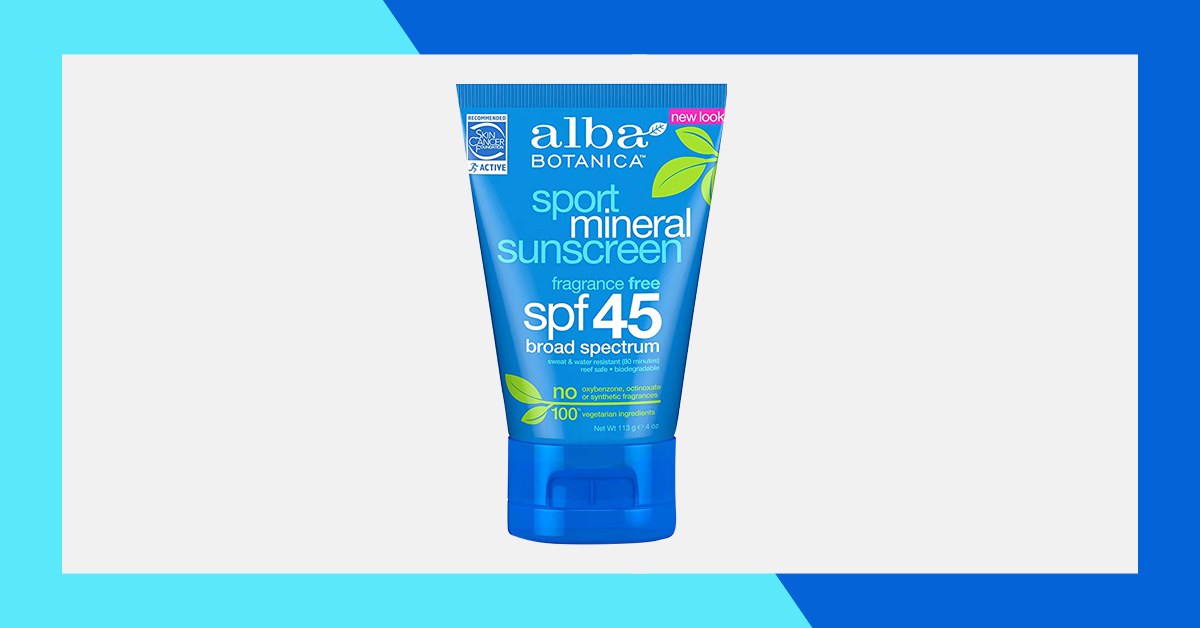
Then, just as I was about to swear mineral sunscreen off as a con, I pulled Alba Botanica’s Sport Mineral Sunscreen out of my bag. It checked every requirement of what I needed: an SPF higher than 30 (which is the minimum recommendation of derms), an easy-to-rub-in formula that doesn’t feel sticky or tacky, and—the most important criterion—an ability to actually keep me from getting sunburned.

The more I used it, the more I loved it. Not only was it keeping me from crying in pain every night before bed, the formula is fragrance-free, cruelty-free, and paraben-free. It held up through a hike in the rainforest, a submarine ride, a luau, and a day in the ocean. If I had to say a downside, it’s got somewhat of a chalky cast when you first rub it in. So if your skin tone is anything deeper than a light-to-medium beige, it might not be a great fit. (Which in that case, I’ve heard excellent things about this brand). That said, it blends in pretty quickly.

I ended up bringing a billion things home from Maui: a shot glass, a T-shirt from the Lana’i Cat Sanctuary (yes, the same place from the viral video where you can play with 500 cats—it’s everything), an iPhone with no more photo storage, but I’ve got to say, this might be the best. At least right behind the photos of the cats.

Alba Botanica Sport Mineral Sunscreen SPF 45, $12, target.com

Related Stories:
13 Sunscreens That Don’t Suck (We Know Because We Tested Hundreds)
Hawaii’s Sunscreen Ban Doesn’t Hit Until 2021, but the Reason for It Is Scary
Sneaky Skin Cancer Risks to Know Now


Source link

Categories
Health

Hawaii's Sunscreen Ban Doesn't Hit Until 2021, But the Reason For It Is Scary


Sunscreen is the best it’s ever been. It’s lightweight, fast-absorbing, beautifully fragranced, and at long last a pleasure to use. There’s just one problem: Despite 2014’s Sunscreen Innovation Act, the FDA hasn’t okayed any new sunscreen ingredients in 10 years. And now, researchers are finding evidence that some commonly used chemicals pose a huge threat to our marine environments and may have unintended consequences on human health. This month, Hawaii became the first place in the U.S. to turn these findings into something concrete, a first-of-its-kind legislation to outlaw the sale of sunscreens that contain the ingredients oxybenzone and octinoxate starting in 2021. For context, those two actives are in more than 3,500 sunscreens on the market.

Talking to scientists and lawmakers about these two chemicals, it becomes clear that this may be a somewhat dire situation for the environment. Some background on sunscreen: It’s technically a drug, so the FDA has full control over which ingredients we get to use. That’d be fine, except of the 17 sunscreen ingredients on the market, almost all of them were approved back in the ’70s. And according to Craig Downs, Ph.D and executive director of the Haereticus Environmental Laboratory, a non-profit dedicated to the conservation of natural habitats, almost no toxicity testing was done back then, and there certainly weren’t the stringent standards in place that there are today. So oxybenzone and octinoxate, among other chemicals, have been grandfathered in since then.

That doesn’t sound good, but it wouldn’t necessarily be cause for concern. Yet, the legislation is happening now because over the past two years, numerous studies have found evidence that these two chemicals (but especially oxybenzone) may be doing harm to marine life and possibly people. They’re what researchers call “endocrine disruptors.” So when we slather on sunscreen, the chemicals can then make their way into our bloodstream. There, according to recent studies, they may mess with our hormones in various ways. Downs says that several studies have found that oxybenzone in particular can significantly decrease testosterone levels. Hawaiian state Senator Mike Gabbard, (D) who introduced the bill, along with five other Democratic state senators, recounts a laundry list of evidence-supported consequences. In the ocean, it causes deformed coral larvae; in people, he says the chemicals may be associated with breast cancer becoming more aggressive, polluted breast milk, deformities in newborns, women’s uterine diseases, threatened male sexual health, and damaged DNA.

David Andrews, Ph.D. and a senior scientist at the Environmental Working Group, says that in the water off the beaches of Hawaii, where tourists flock and sunscreen flows, the coral reefs are unable to recover from bleaching events, which are like a hit to the reefs’ ecosystem. And oxybenzone is everywhere: Downs describes the chemicals as similar to a virus, with oxybenzone showing up everywhere from the drinking water in Honolulu, to Alaska, to inside the fish we eat. And according to a 2008 study by the Centers for Disease Control and Prevention, it’s found in the blood of 97 percent of Americans.

This is big news, and it’s been a long time coming. “It really points to what’s become a failure of both the sunscreen industry and the FDA to bring new, safer and more effective ingredients to the market,” Andrews says. While new sunscreen formulas have been available for over a decade in other countries, Andrews says that the FDA has left the public with a catch-22. Even outside of oxybenzone and octinoxate, Downs says there’s no firm data to prove whether or not other sunscreen ingredients, like avobenzone, are safe.

“If the toxicity requirements by the FDA were applied now to the 17 chemicals, only non-nanosized zinc oxide and non-nanosized titanium dioxide would be left standing,” Downs says. Knowing how much sunscreen people now expose themselves to, the FDA needs detailed safety information to approve new formulas—but because there’s nothing to stop companies from doing so, Downs says that most have continued to use the same old ingredients, in the same old ways.

On the plus side, the FDA has recently initiated a study testing absorption of ingredients in sunscreens currently on the U.S. market. A spokesperson told Glamour that the study will “measure and evaluate the levels of active ingredients found in the blood of human subjects after exposure when applied under maximal use conditions.” For now, Dr. Andrew Alexis, the Chair of Dermatology at Mount Sinai hospital in New York City, warns against jumping to conclusions. While studies using extremely high doses of oxybenzone show some hormonal side effects, Alexis says we don’t typically encounter those levels in the everyday world. To put the doses into perspective, he explains that using a sunscreen containing 6 percent oxybenzone, it would take 277 years of daily application to reach exposure comparable to what the rats in the studies get. So while oxybenzone can be detected in the blood and urine of sunscreen users and the population at large, Alexis says that doesn’t necessarily mean oxybenzone is causing negative, systemic health effects.

Speaking to the ban, the Personal Care Products Council, which represents the global cosmetic and personal care products industry, released a statement acknowledging the importance of combating coral reef degradation, but arguing that fighting the prevalence of skin cancer is as important. And with the sunscreen ban waiting for Hawaii’s governor to sign it into law, enforced change is at best in the distant future. According to lawmakers, the bill will only take effect in 2021, so at least legally, nothing has to happen until then—and even after 2021, there will be no legal way to keep sunscreens with the chemicals from coming into Hawaii.

Nicole Lowen, vice chair of Hawaii’s House Committee on Energy and Environment, says that’s fine. While they’re giving the sunscreen industry the next few years to come up with formulas that comply (and Gabbard says tons of sunscreens out there already do), a major aim of the legislation was raising public awareness about these toxic chemicals, and sending a message to companies and the FDA that, yes, change is something people care about, and we want it now.

In that respect, women in Hawaii agree that the bill is making them think twice about their sunscreen. Since the legislation came into the spotlight, Hawaii resident Emma Wo says that she’s gone through her medicine cabinet and tossed the sunscreens with controversial ingredients. Longtime Oahu resident Kathy Croman says she used to not be choosy about the sunscreen she used, but “when you grow up here and see the actual damage it’s causing, you become more aware.” It’s likewise struck Oahu newcomer Kait Hanson: “Before I moved to Hawaii, I used sunscreens with [oxybenzone and octinoxate] a lot. That was mostly due to being misinformed, unaware or trusting the labels of products.” After the conversation started around the ingredients, she says she switched to reef-safe sunscreens like Stream2Sea and Badger (Stream2Sea relies on non-nanosized titanium dioxide, and Badger on non-nanosized zinc oxide. Both are confirmed eco-friendly ingredients).

Marine conservationist Lauren Kitayama seconds it: Once you know the effect of these ingredients, you steer clear. “Most of our cosmetics do end up in the ocean, and they wreak havoc. If making small changes in my daily routine can protect the oceans and animals in them, I do what I can,” she says. To that end, Wo’s not waiting for 2021. “Even before the sunscreen ban goes into full effect, I think it’s a matter of social responsibility. One of my favorite quotes by Maya Angelou applies here: ‘Do the best you can until you know better. Then when you know better, do better,’” Wo says. According to Lowen, it’s going to take more of the same attitude to fuel change.

“We have to create a consumer demand for safer products. We’re obviously facing many environmental crises with climate change, so there’s a lot coming that we’re going to have to deal with. And it’s all true—all those things weigh in,” Lowen says.

Related Stories:
How to Cover Sunburn the Right Way—And Actually Make It Heal Faster
Sunscreens That Don’t Suck, According to ‘Glamour’ Staffers
Your Sunscreen Might Not Actually Be Working—Here’s Why


Source link