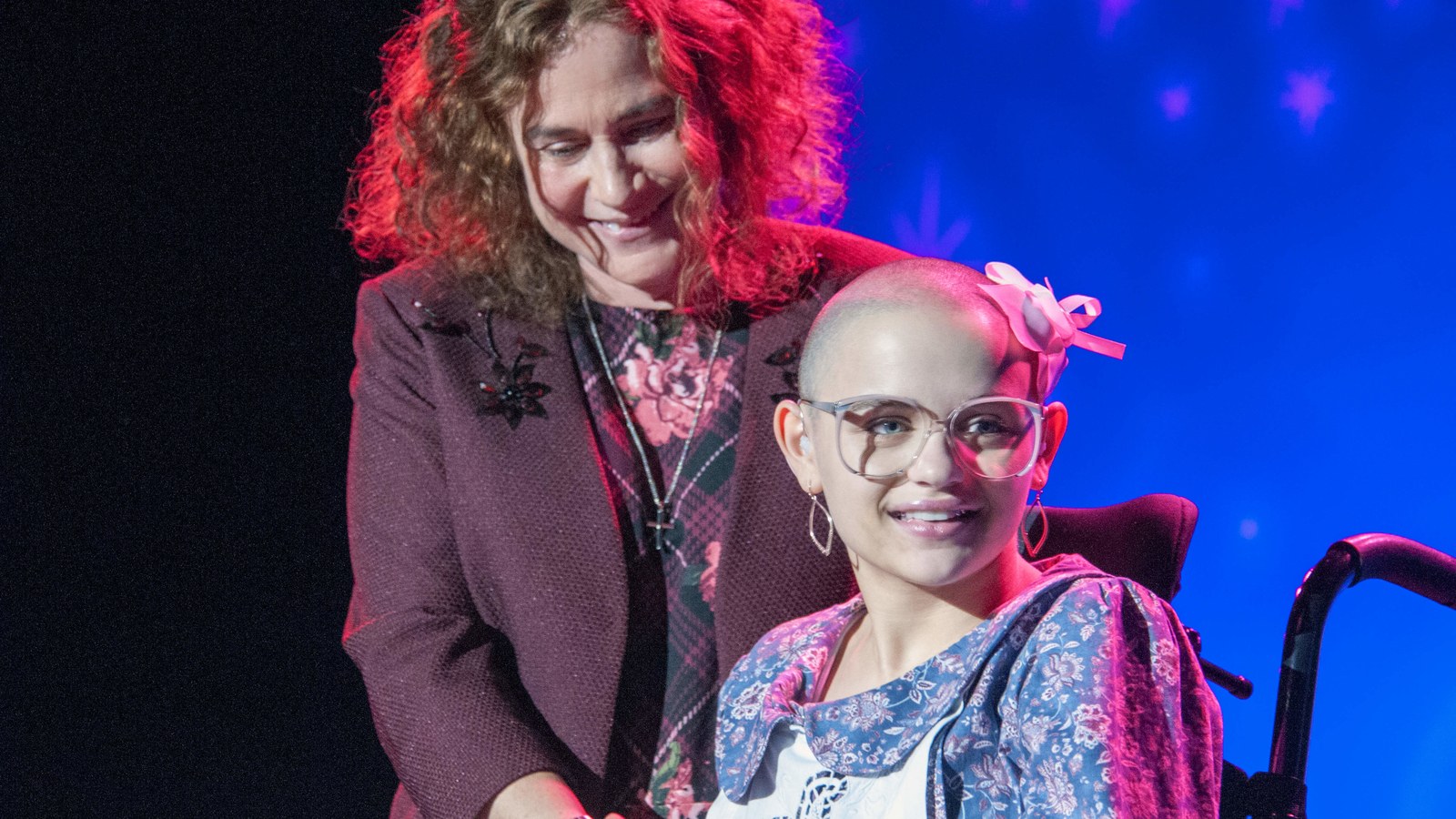
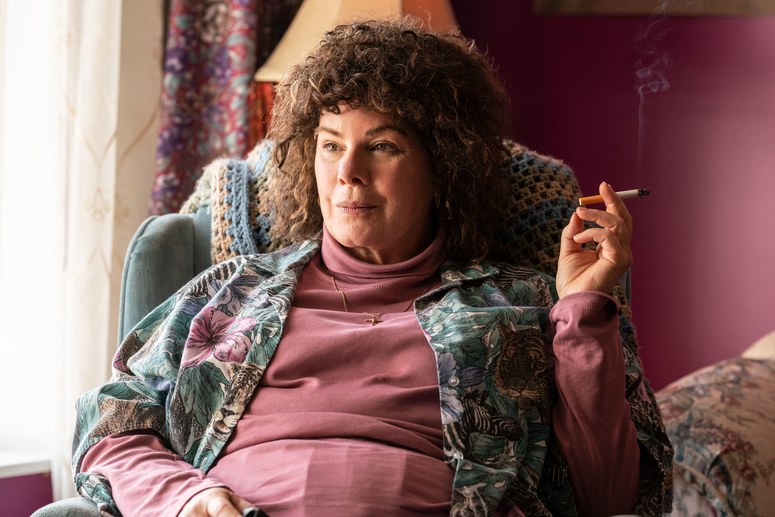
Hulu’s The Act is the latest true crime show to come out, and people are hooked. The miniseries centers on the real-life murder of Dee Dee Blanchard, a mother with Munchausen by Proxy Syndrome who intentionally made her daughter, Gypsy, sick. After enduring years of abuse, Gypsy retaliated by conspiring with her Internet boyfriend to kill her mother and run away together. It’s a fascinating tale that demonstrates, in a horrifying way, what human beings are capable of.
Beyond The Act, though, it seems the world can’t get enough of true crime TV shows in general. The genre is a full-blown phenomenon that spans all different types of media. Podcasts like Serial and Crime Junkie are always in the top slots on iTunes. Documentaries like Fyre quickly go viral on social media and birth hundreds of memes. Why true crime is so popular remains a mystery. Maybe we love it because it helps put our own lives in perspective. Perhaps it’s the car-crash mentality—we just can’t look away. Either way, our culture’s appetite for true crime has reached critical mass, which is why there’s a new movie, TV show, or documentary release seemingly every week.
So while you’re waiting for the next episode of The Act to premiere on Hulu, check out these titles, below. I suggest breaking them up with some comedies, though. It’s all about the balance.
Lifetime has never shied away from dark, twisted, real-life stories, and this Saturday’s Love You to Death is no exception. The film—which stars Oscar winner Marcia Gay Harden and Emily Skeggs—tells the disturbing events that led to the murder of a seemingly perfect mother caring for her sick daughter. Harden plays Camile, a single mom suffering from Munchausen Syndrome by Proxy, a mental illness in which a person acts as if an individual they’re taking care of has a physical or mental illness when the person is not really sick.
Harden had never heard of the syndrome but was totally captivated by the story, comparing it to a car wreck you can’t look away from. In fact, neither could Hulu, which airs a similar telling of the story later this spring with their limited series, The Act.
Whichever story you watch though, Harden and Skeggs hope the focus remains on mental health. “We can make assumptions about people with mental illness, we can make assumptions about other people’s families, but we don’t know,” Harden says. Here, she and Skeggs explain what it was like to immerse themselves into their respective roles, and the lessons they took away from it.
Glamour: How did you both get involved with this film?
Marcia Gay Harden: Emily’s friends were casting her before this even started shooting.
Emily Skeggs: Yeah, I’m a true crime junkie, so I had friends who said, ‘You need to watch this documentary, and also, you need to play this girl when it’s a movie.’ I had one friend who messaged me while I was in negotiations, and I was like, ‘Just hang tight, just wait two weeks and I’ll tell you something!’ So I was excited to dive into it.
MGH: For me it was a no brainer. I love Lifetime and the direction that Lifetime is going. I had never heard of Munchausen Syndrome by Proxy or this story, but when I read it, it was like a car wrecks—you couldn’t look away. It was liberating to play this character. It’s fun to transform, but it was a lower, darker place to go, and a place that was full of so much sadness and darkness and pain. It’s the juice of being an actor, for sure.
ED ARAQUEL/Lifetime
ES: It made me think about perspective and love in a really different way and question a lot of things. You see these kinds of cases and think, I know what’s going on here, or I know exactly what I would have done if I was in their shoes. It made me really question things.
How much research did you do into what actually happened?
ES: And happens. And I really believe the only reason we really know about this case is because it ended in a murder and ended in violence. I think there are a lot of people living with this syndrome and doctors don’t know how to deal with it. There’s no protocol for it and no system in place to help people with this syndrome or to help doctors help people. It’s really fascinating.
MGH: Emily said this earlier, and it’s true: people who are sick like this don’t think they’re sick. People who are racist don’t think they’re racist. People who do crimes against humanity usually don’t think they are. So there’s not this awareness. I would love to have read a journal of Camille’s, but she wasn’t the type of person who would do that. That doesn’t exist. So she’s doing what she thinks she needs to do for her survival. And she would have taken it further. That’s what is scary. I think she would have taken it to the point of mentally incapacitating her so that all the world would know she’s mentally disabled and now I need to care for her for the rest of her life. It’s such an interesting story because in a terrible way, [Esme] breaks free. But I’m subjugating all of the person to a life to never knowing who she is as a human being. But I love that it’s a very current story.
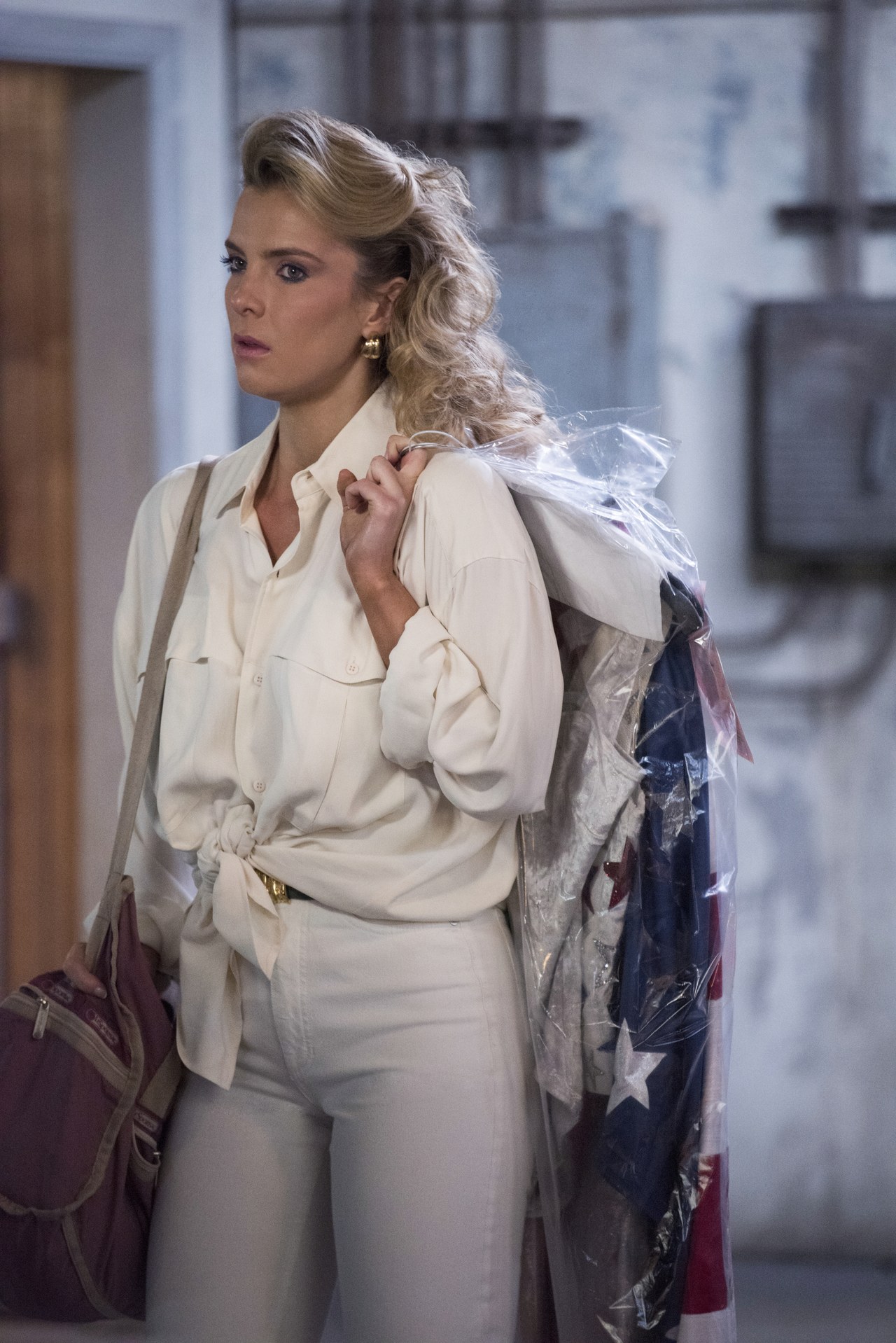
Betty Gilpin pulls a lot of faces as Debbie “Liberty Belle” Eagan, a former soap star turned campy stars-and-stripes-clad wrestling heroine on GLOW, Netflix’s comedy about a ’80s female wrestling league that’s back for a second season. (Caution: Spoilers for the season ahead.) There’s one in particular that pops up most frequently: a manic beauty-pageant smile so big you can see her molars that teeters on the edge for a few seconds before fading into a grimace.
Sometimes it’s obvious, like in the season two show-within-a-show episode “The Good Twin,” when Liberty Belle, in mourning over her kidnapped daughter Savannah Rose, hosts a “Griefercize” class to “sweat those sorrows away.” She ends the segment by bending over, positioning her head in between her legs, and turning that crazed grin into a silent scream.
Other times it’s more subtle—if you can call anything a pro wrestler with a pound and a half of eye makeup and a costume Gilpin describes as a “glitter diaper” does “subtle”—like when she alternates between a plastered-on smile and a wince while singing the group’s “We Are the World”-style song “Don’t Kidnap.”
Liberty Belle is obviously played for laughs; Gilpin’s unafraid to go as big as possible with her, to the point where you start to feel for her cheek muscles. But she also employs a more toned-down version of the smile/frown twofer out of the ring as Debbie throughout season two. When Debbie runs into her ex-husband, Mark, and his new girlfriend, Susan, she’s all passive-aggressive smiles as she says, “I just would love the pleasure of knowing the name of the woman you have spending time with our son.”
Once she realizes Susan is also Mark’s secretary, you can see in her eyes that she’s thrown and her grin gets a little tighter. She presses on, though, cracking a joke before excusing herself and leaving. The second her back is to them, she drops the smile with the same speed and efficiency she uses to lay out opponents in the ring—only this time, she’s the one who looks like she’s just been clotheslined.
PHOTO: Erica Parise/Netflix
That forced smile is a testament to Gilpin’s skill as an actor. And when this year’s Emmy nominations are announced on July 12, there’s a strong chance her name could be read. The potential nod would actually be honoring her work in season one (because of the eligibility period), which was excellent, but it’s the show’s second season that really showcases her outstanding work. Gilpin excels as both Liberty Belle and Debbie, as the character grows more self-assured professionally despite her personal life unraveling.
Part of Debbie-as-Liberty Belle’s confidence is the result of more wrestling experience, and season two gives us even more difficult moves and matches. Liberty Belle, as GLOW’s most popular face, is in the ring more than anyone else, even going toe-to-toe with Chavo Guerrero Jr. of the legendary Guerrero wrestling family (in character as Chico Guapo). The tragedy of Debbie and the comedy of Liberty Belle—who, after hip-tossing Chico Guapo, lets out a triumphant growl and tells the crowd in her Southern drawl, “I’ve been baking pies at home. PIES OF RAGE!!!”—have always been front-and-center, but this season it’s obvious Gilpin is pulling triple-duty with the character as her stunts (which she and the rest of her costars do themselves) get more elaborate.
Her character wears multiple hats this season, too. Debbie leverages her star power in the ring into a producer role on the show. She’s the only cast member who even attempts to negotiate the terms of her contract, and she does so in the most Debbie way possible: in her wrestling costume, with her ex-husband—who is an agent but not, as she’s careful to point out, her agent—in tow to go over the terms of the deal.
She knows the games she has to play as a woman in Hollywood in the ’80s, but she still goes out of her way to bring a copy of the contract for the network head’s wife, smiling as she says, “I’m sure you don’t expect your wife to sit here looking pretty while we do business. She might have some great ideas.” She doesn’t bother with that cheery facade later when she presents the contract to Sam (Marc Maron). When he incredulously asks, “You want to be a producer?” she corrects him: “Oh, no. I am a producer.”
PHOTO: Netflix
In many ways, Debbie and her friend turned enemy Ruth (Alison Brie) are two sides of the same coin. They’re both highly ambitious women in an era when being one was difficult. Their fractured friendship, the result of Ruth sleeping with Mark in the show’s first season, is the heart of this second batch of episodes. When Ruth tells Debbie about the head of the network coming on to her in his hotel room—a “Me Too” moment that feels ripped from the headlines until you remember stuff like that has been happening since the beginning of time—she’s shocked when she doesn’t get sympathy.
Instead, Debbie blames their show’s cancellation on Ruth’s decision to flee. “You’re supposed to make him think that you might fuck him. Or that you desperately want to fuck him if only you didn’t have your fiancé or your period or an extra set of teeth where your vagina should be,” she says. “That’s how this business works. Men try shit, you have to pretend to like it until you don’t have to anymore.”
It’s a complex reaction, but Gilpin plays on that, making it apparent Debbie doesn’t fully believe what she’s saying and growing increasingly upset until she reveals the more personal motivation behind her feelings, spitting, “The one time you keep your legs shut, we all get fucked.”
Debbie loses her shit and take things too far lot this season, like when she impulsively sells all the furniture in her home after finding out Mark wants to buy the same bed they used to share. But it’s most affecting when it’s directed at Ruth, and all of the moments of Debbie falling apart come to a head when, coked up and upset about her divorce, she intentionally breaks Ruth’s ankle in the ring. Because she goes so big as Liberty Belle, the quietness that Gilpin brings to Debbie in the moments after the injury—the dead-eyed calm as she washes away her sins in the shower while the rest of her castmates rush to the hospital with Ruth—is stunning.
It all builds to the season’s climax, an emotional, ugly fight between Ruth and Debbie in the hospital that features some of the best work from both Gilpin and Brie. Debbie enters timidly but unwilling to admit her faults; when Ruth doesn’t buy that the broken ankle was an accident, Gilpin masterfully shifts gears, calmly and quietly stating “It was an accident, Ruth” before looking over her shoulder, pausing for dramatic effect, and yelling “…unlike the time when you accidentally fucked my husband twice!”
But this side of Debbie disappears as the fight goes on and she realizes she was in the wrong. She storms out crying before returning later with a peace offering: a change of clothes so Ruth doesn’t have to leave the hospital in costume. She can’t bring herself to actually say the words, but she writes “Sorry I broke your ankle” on Ruth’s cast. In this moment, Gilpin executes a subtle version of her signature move: a tiny smile that eventually curves downward and disappears as she wipes away a tear.
It’s a moment so tender it will break your heart—and it confirms what we’ve known since this show premiered: We’ll be baking our own pies of rage if that’s not enough to earn her an Emmy.
Bonnie Stiernberg is a writer and editor based in Brooklyn, New York.
“Serial” and “My Favorite Murder” fans, buckle up: Reese Witherspoon has just teamed up with Apple to executive produce the true crime series of your dreams, according to The Hollywood Reporter.
Titled Are You Sleeping, the series—currently in production and based on Kathleen Barber’s novel of the same name—follows a murder case that regains national interest after a podcast surrounding the case goes viral. And while it can be said that, at first glance, the storyline seemingly mimics a more dramatized version of investigative journalist Sarah Koenig’s hit 2014 podcast, “Serial,” on a closer look, it appears to also poignantly expose American society’s deep-seated obsession with podcasts about serial killers and unsolved murders—and the consequences that arise as a result.
Already—and unsurprisingly—the show has big names attached to the project, including Oscar winner Octavia Spencer, who’s set to star in the series, and The Good Wife writer Nichelle Tramble Spellman, who’s working on the script. What’s more, the mastermind behind “Serial” herself, Sarah Koenig, has signed on to be a consultant for the project.
As of yet, the release date for the series has not been announced—but once it has, we’re positive this one’s going to be a hit. Just don’t watch this one before bed.