Categories
Health

‘Giving Birth Left Me With PTSD’


Once I was released from my own hospital stay, I rushed to the NICU. Despite the nurses and doctors suggesting I go home and rest, my trauma refused to let me go. We spent the next two months watching my son grow stronger and healthier in the hospital.

But when we finally came home, I found PTSD hit me in new ways. The beeping noise from a machine at a restaurant drive-through window dragged me back through memories of being surrounded by beeping NICU monitors. The smell of hospital soap in a public restroom put me right back in the NICU’s hand washing stations. Every time, I felt paralyzed. Panicked.

My baby was now home and growing stronger but the fear that he would suddenly die wouldn’t go away. In fact, it was getting stronger too. Without the constant monitoring of his vitals, I spent every anxious moment making sure he was still breathing. The stream of intrusive thoughts telling me I was a bad mother, or that my son would die from a million and one different causes, was relentless. When he began eating solid foods, I held my breath with each bite, believing he would inevitably choke to death. When he began walking, I followed him as closely as possible to ensure he wouldn’t get hurt from a fall. Beautiful moments were tarnished with the residue of trauma.

It took me two years before I finally sought help in managing my PTSD. “It can take people a long time to come in for help. They often wait until the fog starts to lift for them, but this can mean many months have gone by,” says Heidi McBain, a Perinatal Mental Health Certified Counselor in Flower Mound, Texas.

For Nikki, a mother of three based in Clermont, Florida, it took even longer. She experienced two traumatic c-sections which she describes as feeling “violent.” “I could feel my insides being shoved back in me, and the nurses and doctors spoke to each other as if I wasn’t there…It made me feel like a slab of meat,” Nikki says. She also feels she lacked support after her traumatic experiences. “No one asked about my actual birth experience,” she says of her first two births. After her third, she received a mental health diagnostic test at her midwife’s office. But despite scoring low, no one followed up.

Nikki is pregnant again, and this time she’s being proactive about receiving help by way of therapy.“I feel like the quality of mothering my children were getting was slipping, and that was my real motivation for getting help,” she says.

When women do get support though these traumatic experiences, it’s powerful. “My OB is a godsend. She referred me to a therapist who specializes in loss—it was just the person I needed to listen to me,” says 34-year-old photographer Alexandria Mooney, whose stillborn son Clark had to be delivered via c-section just shy of 22 weeks.The mother of five sometimes visits the hospital where she birthed Clark in order to photograph clients, and says she still feels transported to the day she lost her son whenever she enters her former OR and recovery room. “Grief will stay with you forever, but I am determined to not let it consume me,” she says. “I try and turn it into something good.”

It’s now been seven years since I lost my daughter, and six since my son was born. PTSD continues to exist in some form or other inside me, but these days I have tools that help me deal. Jackson says many individuals with this type of trauma respond amazingly to EMDR (Eye Movement Desensitization and Reprocessing) therapy, and I am definitely one of them. General talk therapy and finding community with other loss moms are other things that have also helped me.

Infant loss and traumatic births happen more often than we realize, and the scars they leave are huge and can last a lifetime. But like Mooney, I refuse to let them beat me. PTSD is my diagnosis, but resilient is who I am despite it.

Priscilla Blossom is a freelance journalist specializing in arts & culture, parenting, travel, and health & wellness.
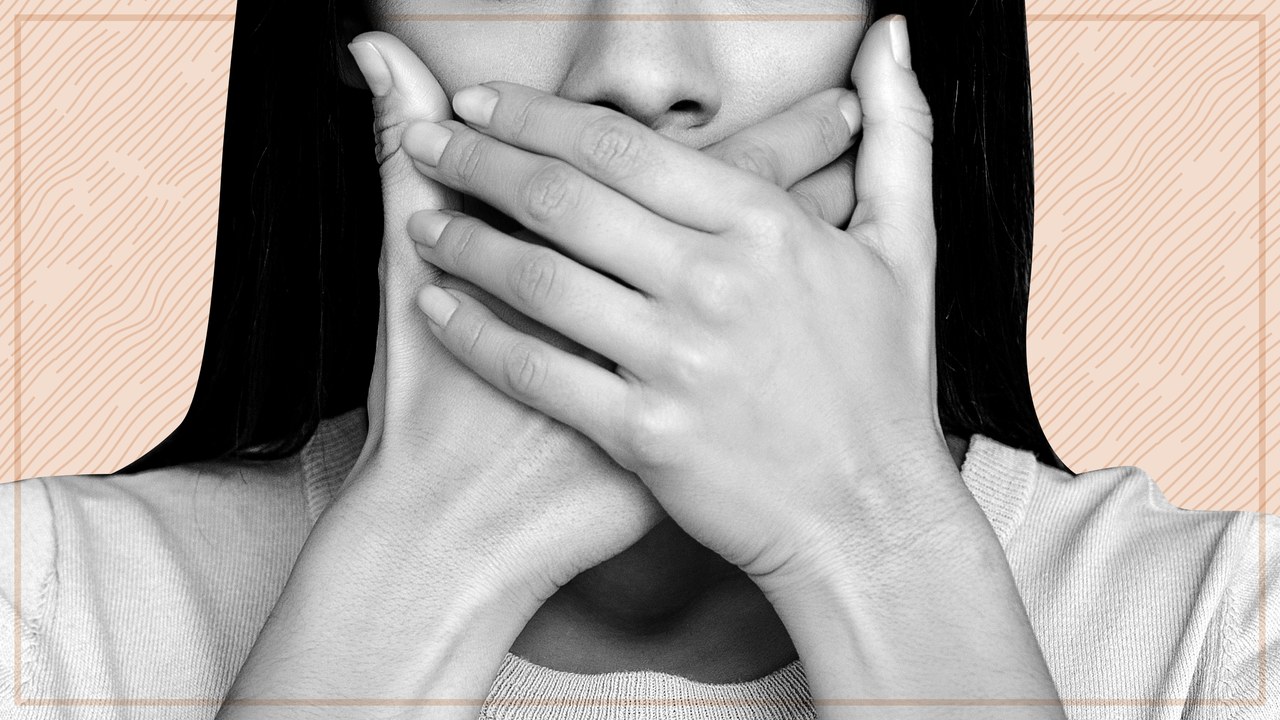


Source link

Categories
Health

PTSD After Sexual Assault: ‘I Had to Practice Saying I was Raped. Now I Have to Practice Saying I Have PTSD’


Trigger warning: This post contains descriptions of sexual trauma.

I got a UTI two to three times a month when I was being repeatedly raped. I went to a doctor, and they asked if I was bathing enough, and then prescribed a preventative antibiotic to take before I had sex. Though my body was clearly rebelling against what was happening, no one listened to it—including me. The doctor didn’t ask if my sexually active relationship was consensual or not, and I didn’t have the language to tell them otherwise.

In the years since, I’ve practiced saying the word rape. It happened to me more than once and by someone I know—details I haven’t quite worked out how to relay in one sentence. Again, saying I was raped at all took practice.

Now, years later, I’m physically far away from my abuser but my body still doesn’t feel safe, which often results in panic attacks during or after sex. Without warning, I can’t breathe, think, or override my physical reactions of crying and hyperventilation. My skin crawls until I wrap it up tight, usually in a sweatshirt or blanket. Sometimes my vision goes, or my ears ring. The worst of the episode can last anywhere from three to five minutes; the residual feelings of urgency and shame usually continue all night, often into the following day.

Sometimes I avoid sex for weeks or even months afterward. Other times I seek it out, subconsciously hoping, I’m sure, for a way to release the trauma my body still holds. I wear heavier clothes. The assaults are a constant, aching presence in the back of my mind, as if I’ve forgotten to lock my front door, turn off the oven, or set my alarm. I think about rape when I drink. Sometimes I drink too much because of it. When I’m feeling up to the challenge, I practice looking at my body in the mirror and naming each part—arm, leg, torso—as something that belongs to me, a technique some therapists recommend.

Three months ago, I sat in my therapist’s office recapping an almost idyllic Fourth of July weekend: a trip to upstate New York, farm-to-table meals—oh, and a panic attack that left me sick and hyperventilating in the bathroom for an hour. “I think EMDR could really help you,” she said.

EMDR stands for eye movement desensitization and reprocessing therapy. What it looked like in my case was holding a buzzer in each hand, their alternating vibrations ping-ponging between my palms as my therapist prompted me to close my eyes and conjure certain memories. She asked me to notice how I felt—physically and emotionally—when remembering those moments.

The session lasted 90 minutes. Afterward I was disoriented and raw. I couldn’t bring myself to do it again.

A few weeks later, I had lunch with a friend who told me, without so much as a flinch or a nervous blink, that she had PTSD, or post-traumatic stress disorder. She too was in the midst of EMDR therapy—a treatment that’s shown promise for those living with PTSD. When I thought of the condition, I thought of veterans and the survivors of violent crime, people who’d had knives held to their throats, guns to their backs. People who certainly weren’t me.

“Do I have PTSD?” I asked my therapist in our next session. She pulled out her DSM-5, a manual that defines and classifies mental disorders, with the caveat that diagnosis is an inexact science; then she read off the criteria for PTSD. There are eight, five of which have between two and seven subcriteria. I met each of the main criteria and all of the subs except for three.

In that moment, I realized I’ve had imposter syndrome about my own mental health; somehow the years I spent in a body that at any moment might betray me didn’t feel like enough evidence to warrant a serious diagnosis. In a twisted way, my panic attacks and struggling for intimacy with myself and partners for years didn’t feel significant enough to qualify for PTSD. Why did I need the DSM-5 to tell me what my body had known all along?


Source link

Categories
Alberta Ft Mac Health

PTSD, Counseling, and Wildfire Recovery

During the wildfire recovery in the Wood Buffalo area many people may need counseling, and some will experience at least minor symptoms of PTSD. This is a normal reaction to recent events and is nothing to be ashamed of. The entire Wood Buffalo community is under an incredible amount of stress. Many people have lost everything to close to it, residents were forced to evacuate for an extended time, and the cleanup effort is an ongoing process. It is normal to see a decline in mental health as a result, and counseling can be very effective. A professional therapist can help with the recovery process, allowing the person to work through their thoughts and emotions in a safe way. Post traumatic stress disorder can occur any time there is a traumatic event, and the wildfire and forced evacuation definitely fits that description.

There are organizations and agencies in Wood Buffalo that can provide counseling for anyone who needs it. Those who show symptoms of PTSD should seek out help and treatment. If left untreated the symptoms of PTSD can worsen and become more severe, and if this happens then effective treatment can be more difficult and take longer to achieve. There are counseling programs offered at discounted rates or even at no charge, and any costs incurred may be covered by insurance. Seeking out counseling does not make you weak, and there is no shame in it. Everyone needs a sympathetic ear at times, and advice from someone who is impartial.