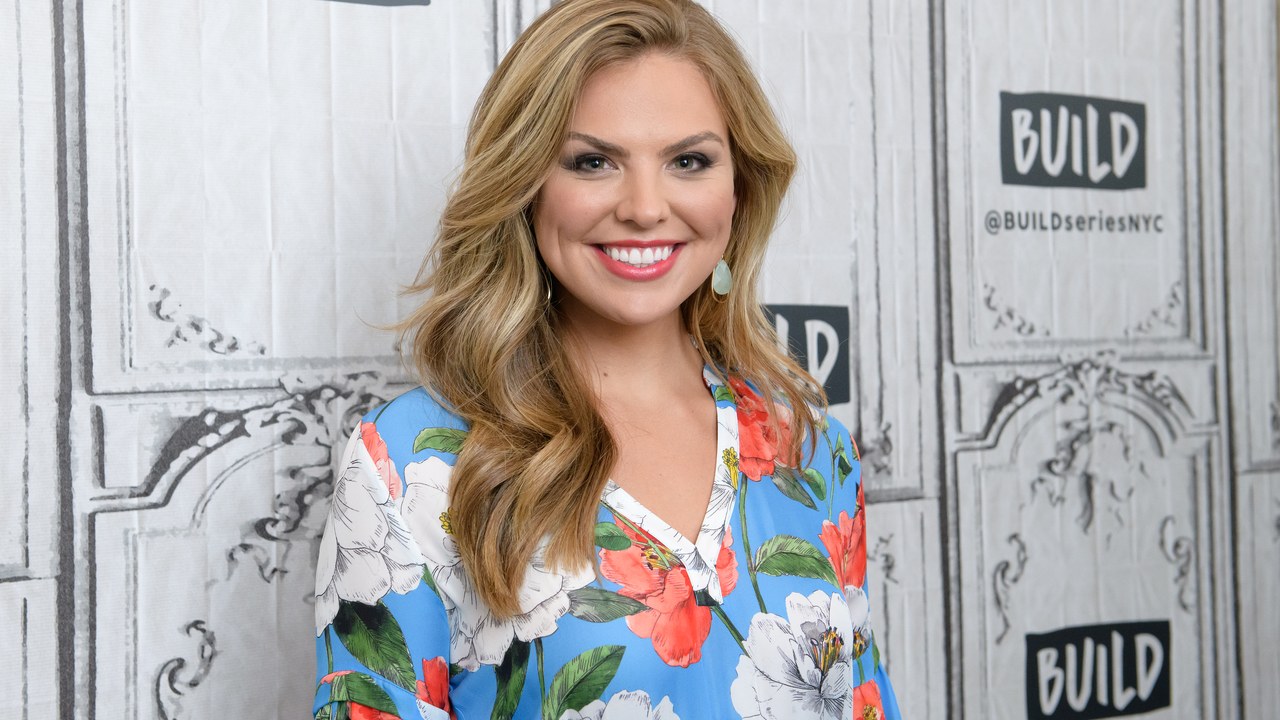
To say Hannah Brown has been put through the ringer on The Bachelorette this season would be an understatement. She’s had to deal with several guys who maybe-probably-definitely had girlfriends when they signed on to the show, lame fights between the contestants, and, of course, Luke P.
Things hit a fever pitch for Brown on last night’s Bachelorette episode, when she and Luke had a tension-filled conversation about sex and religion that ended with her flipping him off as he was sent packing. Before he left, Brown said this season’s most-teased quote: “I have had sex, and Jesus still loves me.”
As truly fantastic as that line is, it’s caused slut-shamers to come for Brown on social media. Thankfully, the Alabama beauty queen says she has a “thick skin” to deal with the hate—and everything else The Bachelorette has thrown her way. Below, she opens up about trolls, her season finale, and finally finding clarity (a word she used frequently) with the men.
Glamour: OK, how sick are you of the word clarity?
Hannah Brown: It’s funny because the first thing I said to the guys was, “I want you to be bold,” and it would latch on and they would say it a zillion times. Then it was, “stay in your lane,” and we would hear them say, “stay in your lane.” Then I would say “clarity,” and you’d hear “clarity” a zillion times. It was like I had a theme for every week. It was so funny.
Glamour: You wrote an amazing Instagram post about the shaming you’ve experienced from viewers and how hurtful it was. What’s the response been like since you posted that? Or has it not improved?
Hannah: That post definitely did get a lot of response. Ultimately, I have pretty thick skin. I don’t really let that stuff get to me, but I felt like I had to say something because people are looking at my social and seeing those things. These people don’t know me or the experience, but what I don’t tolerate is hate and shaming for something that I’m not. I refuse to allow my page to be that.
I just felt like it was really important to make sure that I fought hate with love. I think that, yes, it’s gotten a little better, but there’s still people out there that have hate in their heart and are going to have something to say because they have their own issues and have been hurt. They’re hurting and don’t know how to deal with that so they look for outlets, and I’m in a position where I’m an easy target for that. That’s OK, I can handle it. But there’s some people that can’t handle it. I’m in a position that can be a voice for that.
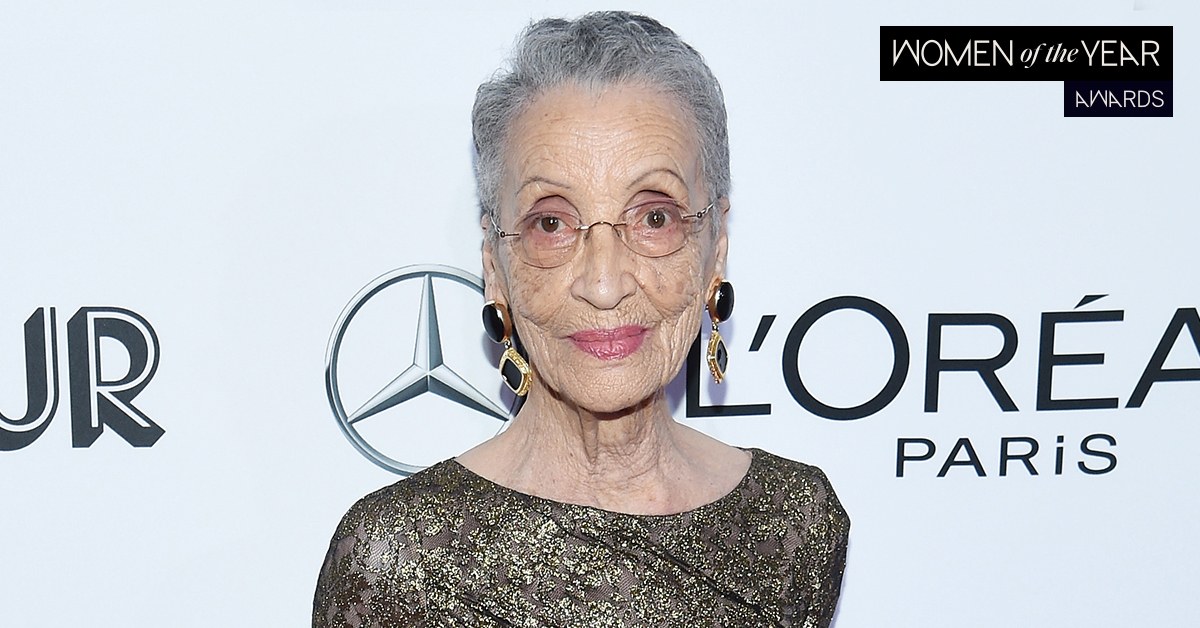
At 97 years old, Glamour 2018 Woman of the Year honoree Betty Reid Soskin is full of stories that feel more relevant than ever. The oldest serving National Park Service ranger has worked in union halls under Jim Crow segregation, established the first black household in a discriminating California suburb, fought for black history to be represented in the park system, and recorded it all in her memoir, Sign My Name to Freedom.
“Democracy has been experiencing these periods of chaos since 1776. They come and go,” she told Glamour in her Women of the Year profile. “And it’s in those periods that democracy is redefined.” When everything seems to be crumbling, we can remold and reset, she believes: “History has been written by people who got it wrong, but the people who are always trying to get it right have prevailed. If that were not true, I would still be a slave like my great-grandmother.”
And tonight, November 12, at Glamour‘s Women of the Year awards, Soskin shared even more wisdom. Actor Andie MacDowell introduced Soskin. “I have the great privilege of serving on the board of the National Forest Foundation, and I love our national parks,” MacDowell said. “In both you can find some of America’s greatest treasures. One of the standouts is not a tall tree or a grand river, but a woman who encompasses strength and grace we all aspire to: 97-year-old National Park Service ranger Betty Reid Saskin. Betty is posted at the Rosie the Riveter/World War Two Home Front National Historical Park in Richmond, California, where she reminds audiences that ‘what gets remembered depends on who in the room is doing the remembering.’ So Betty remembers and educates on behalf of generations of women of color and other marginalized communities, sharing forgotten stories that span from Dread Scott to Black Lives Matter.”
“Betty has served in many roles: military administrator, civil rights freedom fighter, California field rep, DNC delegate, record shop owner, songwriter, author, daughter, wife, mother, and ranger,” she continued. “But the greatest part she has played in history—so far—is serving as our American conscience.”
Read Soskin’s speech, below:
Thank you very much. You have no idea what it means to me to be here. Thank you very much Glamour, but thanks to all women who are finally stepping up and making their voices heard bc that voice has been missing throughout my life.
That voice is so needed. I was so elated at this election where women took their places in leadership.
I am so aware that I am living in my final decade, that every single, minute, hour has meaning to me. The truth that Kamala was talking about has been the life force for me. Because I don’t have time. If I don’t get it right, I don’t have time to do it over. That’s true for the nation and also true for us.
I know these periods of chaos have been with us since 1776. The period that I have been most marked by was that of the 60s where I was an activist in the black revolution. Along with millions of others in this country, I helped to create the future I’m privileged to now be living in. You can’t imagine what that’s like. You can’t imagine.
Thank you Glamour. And thank you all.
Get more inspiring moments from Glamour‘s Women of the Year awards here.
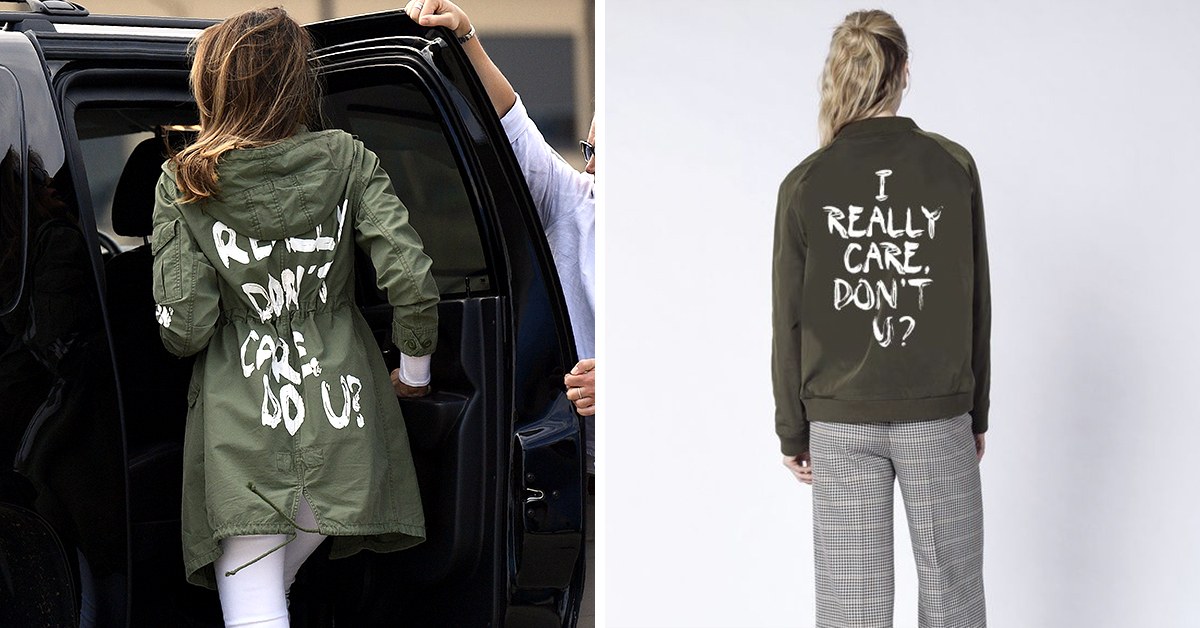
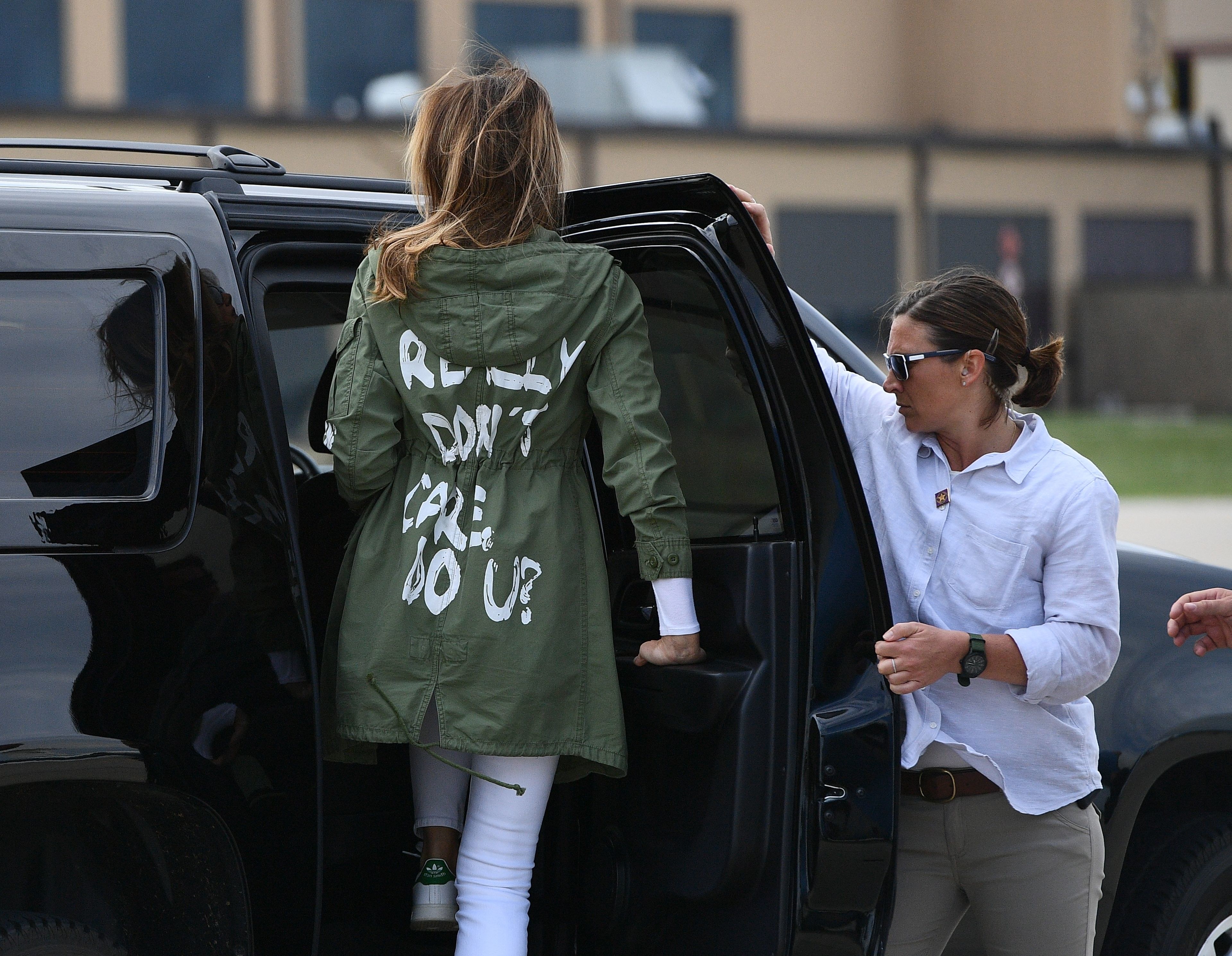
Melania Trump is described as a “mysterious First Lady” weathering a chaotic White House in an in-depth New York Times profile published on Friday. The piece examines her role in the administration and references the “I REALLY DON’T CARE, DO U?” jacket that created a lot of controversy during her visit to the border in June—which, according to a source in the story, she wore as a statement toward anyone “outside and inside the White House” critical of her decision to visit a shelter for migrant children.
If you remember, Trump was photographed stepping out of her car at the Andrews Air Force Base in Maryland before boarding a jet to the Texas Upbring New Hope Children’s Shelter. The images captured her green jacket, made by Zara, emblazoned with the words, “I really don’t care, do u?” Many instantly took issue with the First Lady’s choice of fashion, calling it tone-deaf and insensitive in the context of her visit to a children’s shelter during the family separation crisis.
Already, there have been myriad excuses made for the jacket: Donald Trump said his wife was addressing the news media, while Melania’s camp wrote in an email to White House pool reporters, “It’s a jacket. There was no hidden message.” This new explanation from the Times‘ anonymous source suggests that the jacket was a calculated move aimed at detractors who took issue with the First Lady visiting the children’s shelter—a move that would seem to conflict with her husband’s hard-line stances on immigration.
Per the article, “a person close to Mrs. Trump said the jacket was actually directed at anyone—both outside and inside the White House—who wanted to criticize her decision to visit the children in light of the administration’s aggressive immigration policies.”
Despite the reframing of the situation, the East Wing insisted to the New York Times that the jacket “had no underlying message.”
“No one tells the first lady what to do,” Trump’s communications director Stephanie Grisham says in the piece. “Our office has nothing to do with what clothing choices she makes, and this situation was no different.”
Melania has made headlines for occasionally seeming to contradict the President—most recently, she released a statement applauding basketball player Lebron James’ charitable work after her husband bashed him on Twitter. However, many people have accused her of being disengaged, since she rarely appears in public. She’s also faced backlash for her frequent silence amid the administration’s more controversial moments and for her “Be Best” campaign against cyberbullying, which has been called ironic, given the President’s tendency to lambast people online. (It’s also had some trouble taking off).
That’s about it on the jacket front, but the Times‘ profile makes for a good read—click on over to it here.
Two months ago ABC canceled its reboot of the nineties sitcom Roseanne, following a racist Twitter rant from the show’s star, Roseanne Barr, that compared former Obama administration aide Valerie Jarrett to an ape.
Barr eventually apologized for her comments on the podcast Stand Up NY, but in a new video making its internet rounds, the comedian appears unhinged as she spews an expletive-heavy commentary on Jarrett yet again. The video surfaced late Thursday when Barr posted it to her YouTube account.
“I thought the bitch was white!,” she screams, referencing her racist tweet about Jarrett. “Goddamnit! I thought the bitch was white! Fuck!”
In the video Barr is seen smoking a cigarette and appears agitated as someone off-camera tells her to imagine a presidential address after a sex scandal. It’s unclear who shot the footage. But Barr isn’t interested in the commentary, shouting into the camera about Jarrett and Iran.
“I’m trying to talk about Iran, I’m trying to talk about Valerie Jarrett wrote the Iran deal! That’s what my tweet was about!”
The clip offers no other context, other than a caption that reads, “Roseanne, like always, cuts through the bullshit and gets the heart of the matter.”
Barr has offered a series of baffling explanations to justify her jabs at Jarrett, which have ranged from claims that she was commenting on anti-Semitism to an assertion that she was “Ambien tweeting.” However, the tweets weren’t the first time her feed has been mired in controversy; she has a history of peddling conspiracy theories and racist ideas on Twitter.
Jarrett addressed Barr’s comments publicly in May. “First of all, I think we have to turn it into a teaching moment,” Jarrett said. “I’m fine. I’m worried about all the people out there who don’t have a circle of friends and followers coming to their defense.”
When ABC first announcing it was firing Barr and killing the reboot, president Channing Dungey wrote in a statement, “Roseanne’s Twitter statement is abhorrent, repugnant, and inconsistent with our values, and we have decided to cancel her show.”
Since then, ABC has ordered a spin-off of the reboot called The Conners, which would continue with 10 episodes starring Roseanne original cast members John Goodman, Laurie Metcalf, Sara Gilbert, and Michael Fishman. Barr will not be a part of the program.
To travel to Texas for an unannounced visit to a Texas shelter housing children separated from their parents at the U.S. border on Thursday, First Lady Melania Trump wore a Zara jacket with an eye-catching message written across the back: “I Really Don’t Dare, Do U?,” it read. Many were disturbed by the optics of the situation, and the style—which FLOTUS wore to both board and disembark her plane at Andrews Air Force Base in Maryland yesterday—has ignited a fierce debate online. It has also inspired a handful of fashion brands to take action and release their own versions of the olive-green jacket to benefit the communities affected by the ongoing border crisis.
Overnight, Portland-based brand Wildfang released a limited capsule collection titled “I REALLY CARE,” with 100% of proceeds going to RAICES Texas, which offers legal services and resources to immigrants.
The product description reads: “Hey Melania. WE REALLY DO CARE! That’s why we made this jacket. To say we stand with immigrants. To say WE CARE.” An original launch sold out within an hour, according to the brand, but has since beenrestocked.
“Within a few hours, we decided as a team we wanted to do something,” Emma Mcilroy, CEO of Wildfang, tells Glamour via e-mail. “This could not go unnoticed, so we put our heads together and went with impact.”
“We started with a limited edition run and it sold out, twice,” she continues. “Because we now make the majority of our products, we are able to turn things around like this so when we’re passionate about something, we take control of the situation. Our customers have gone bananas over this—the support is overwhelming, and we couldn’t be more proud to align with them in support of these families.”
PSA (or Public Service Apparel), the brand co-run by Upworthy and GOOD, also launched its own take on the graphic, as part of its Rapid Response/Limited Edition line. The “I Really Do Care” T-shirt is currently available for pre-order, and will benefit the immigrant youth network United We Dream.
Lingua Franca, the ethical luxury knitwear label that has become known for its politically–aligned pieces, made its own hand-stitched sweater. It’ll donate $100 of each sale to a charity of the customer’s choice.
Stephanie Grisham, FLOTUS’ Communications Director, said of Trump’s much-discussed Texas wardrobe: “It’s a jacket. There was no hidden message. After today’s important visit to Texas, I hope the media isn’t going to choose to focus on her wardrobe.”
President Donald Trump later tweeted about the incident, seemingly contradicting the spokesperson’s claim that there was no meaning behind the jacket.
He wrote: ““I REALLY DON’T CARE, DO U?” written on the back of Melania’s jacket, refers to the Fake News Media. Melania has learned how dishonest they are, and she truly no longer cares!”
As to what they hope to achieve with these reactionary capsule collections, McIlroy explains: “We hope to see kids reunited with their parents, that is the goal here. We want to spread awareness, we want people to take action we want you to give all your money to RAICES—they do amazing work!”
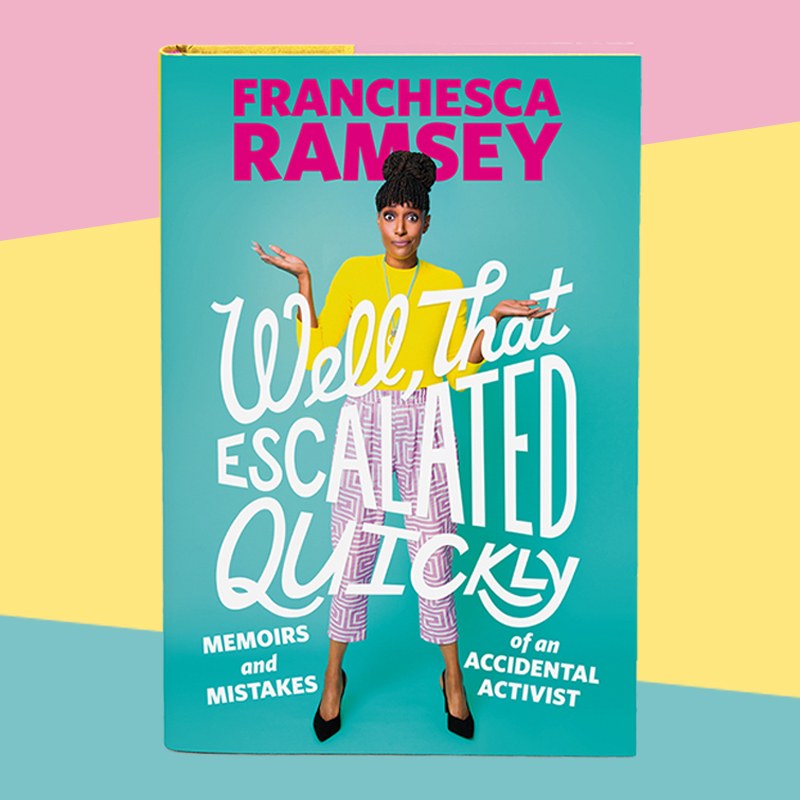
Franchesca Ramsey is an actress and comedian, best known for her YouTube channel, chescaleigh, and for hosting MTV’s Decoded. In this exclusive excerpt from her upcoming book, Well, that Escalated Quickly: Memoirs and Mistakes of an Accidental Activist, she shares her best comebacks observations too offensive to ignore .
We are gathered here today to say goodbye to seven unbearably irksome comments that just won’t accept that their time has come. If you’ve been on the receiving end of oppression, racism, sexism, homophobia, transphobia and plain old ignorance, you’ll recognize these lines. Let’s bury them, shall we?
1. Comment: “Sorry if you’re offended.” This is a non-apology masquerading as a real apology. The word “if” corrupts the entire thing. Much like the “RE: URGENT DEAR SIR OR MADAM” email that manages to slip past your spam folder, “sorry if” is highly suspicious. We’re proud creatures by nature—we hate to admit wrongdoing—so some of us try to have our cake and eat it too by adding that pesky “if.”
Comeback: “There’s no need for ‘if’—I am offended. So are you sorry?”
2. Comment: “Why are you so angry?” See also: “You’re making a scene,” “You’re being hysterical,” and “You need to calm down. ” These responses are all part of a broader phenomenon known as tone policing, whereby someone provides unsolicited advice on how to express your feelings. They may claim expertise on topics they observed on The Wire, and they are likely to question the intensity of others’ reactions to these topics. The Tone Police tend to move the conversation away from the systemic wrong you were discussing and toward the validity of your particular response to that wrong. They don’t understand that anger is a valid emotion, or that emotional distance isn’t an option for many marginalized people.
Comeback: “I think people should be treated fairly. When they’re not, it makes me angry. Why aren’t you angry at all?”
3. Comment: “Stop playing the victim.” Unless you’ve been cast in a community theater production of Law & Order: SVU, I’m not sure why anyone would choose to play victim. The word “play” implies fun; and what’s fun about being mistreated? This command is yet another example of someone feeling threatened by feelings. Just as you’re allowed to be angry about injustice, it’s natural to express feelings of sadness or fear, especially if you’re exhausted by the prospect of trying to keep a brave face.
Comeback: “Victimhood is not a game. I don’t get a prize for talking about my experience.”
4. Comment: “It’s just a joke.” People feel like using the word “joke” removes responsibility for the hurt their words may cause. It doesn’t; in fact, it may make things worse. A Western Carolina University study found that when prejudiced attitudes around a marginalized group are shifting, negative jokes about that group can suggest discrimination is justified to people who may be on the fence. “Ironic” stereotyping—where the joker says something designed, allegedly, to mock sexists or racists or transphobes or homophobes—counts, too, so if anyone ever serves you with, “Political correctness is ruining comedy,” the same stuff applies. It’s just not funny to disrespect other people’s beliefs, backgrounds, cultures, or identities when those are deeply rooted in longstanding oppression. Jokes that punch down on marginalized people require no creativity because they’ve existed since the beginning of time. It’s like telling a knock-knock joke and believing you’re Richard Pryor.
Comeback: [crickets] “Then why wasn’t it funny? Maybe you can explain the joke.”
5. Comment: “I don’t see color.” People who say this usually mean well—they want you to know they’re sooo not racist that they can’t even conceive of a reality in which racism exists! But what they’re actually saying is that racial identity is bad—not that racial oppression is bad. If someone is talking about their experiences as a person of color, “I don’t see color” suggests their experiences aren’t valid—or flat-out aren’t real. If you wear glasses and I say, “I don’t even see your glasses,” that doesn’t mean you suddenly have twenty-twenty vision—it just means I’m in denial. Or maybe that I need glasses myself.
Comeback: “Well, even in black and white, I’m still a person of color.”
6. Comment: “Why don’t they just come here legally?” If this question is being asked in earnest, the person you’re talking to clearly has no idea how immigration works. It’s expensive, confusing, and prohibitive even for people who speak English as their native language, and who aren’t dealing with the trauma of repressive governments and persecution. Besides, do you remember how this country was founded? Did Christopher Columbus come here legally? Did the Pilgrims have to make sure they had their passports open to the photo page so the line would move quickly at Plymouth Rock? Yes, there are immigration laws in place, but laws aren’t perfect. Part of our work is to determine what laws need to be refined and what new laws need to be created, and then to pressure our elected officials to act.
Comeback: “Why don’t we just fix our broken immigration system so the people who want to come here legally can do so?”
7. Comment: “All lives matter.” I’ve saved the best (by which I mean worst) for last. “All lives matter” is the racist version of “I know you are but what am I.”The Black Lives Matter movement was created in 2013 by Alicia Garza, Patrisse Cullors, and Opal Tometi in response to the acquittal of Trayvon Martin’s killer, George Zimmerman. The movement is about creating a world where all lives—including black lives—matter equally. That’s not the world we live in now, especially when we look at police violence and how it disproportionately affects black people. “All lives matter” is an empty retort designed to shut down conversations about black people and the issues they face. I think the “all lives matter” folks know that—they just refuse to admit it.
Comeback: “It’s okay for a movement to be focused on a specific group or cause. ‘Save the rainforest’ doesn’t mean ‘Fuck all the other trees.”
.jpg)