Categories
Health

Khloé Kardashian Shouldn't Have to 'Block Out' Racist Remarks About True


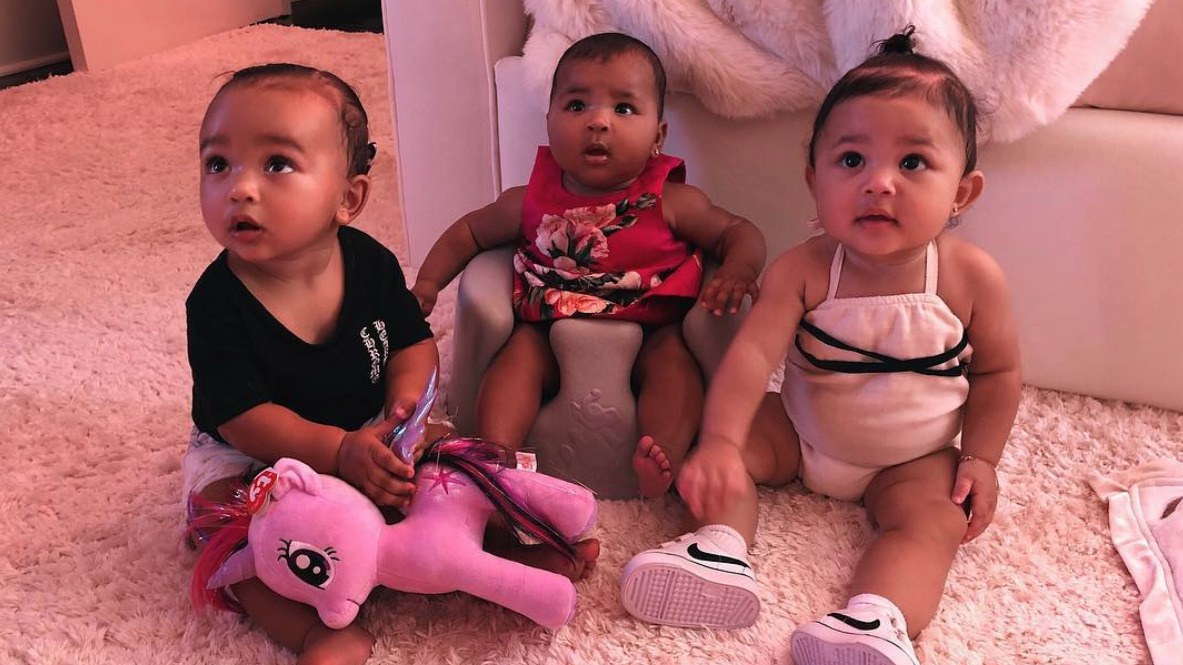
If you’ve spent any time on the Internet in the past week, you’ve likely seen the photo Kim Kardashian West shared of she and her sisters’ “triplets”: infant cousins Stormi Webster, True Thompson, and Chicago West. What should have been a sweet family moment—it was the first time all three infants have been pictured together—immediately derailed into a conversation about the toxic effects of colorism.

Not even minutes after the photo went up, commenters flocked to the image to critique and rate how the babies—babies!—looked. Or, more specifically, to share their discontent over the fact that True lacks the stereotypical biracial characteristics her cousins possess. The consistent underlying thread: She’s cute but “too dark.”

Khloé eventually closed comments on the photo to block her family from the racist abuse. And this morning, she took to Twitter to respond, assuring fans and haters that she was “blocking out the white noise.”

Although vile, the issue here is not solely about sexualizing, projecting and critiquing the desirability of a five-month-old baby, but the perpetuation of colorism. Even though Khloé’s wealth will insulate True, the fact is that her darker skin tone will be a factor in most of her interactions for the rest of her life—with school, with jobs, with dating, and with the value society places on her.

Colorism is nothing new; the 300-plus year experiences of darker-hued people around the world didn’t have a name until author Alice Walker coined the term in her 1983 book of essays, In Search of Our Mothers’ Gardens. In the book, she explicitly defines colorism as “prejudicial or preferential treatment of same-race people based solely on their color.” (Historically speaking, lighter skin was a currency used to gain social status and class progression, and in times of enslavement, freedom.) In layman’s terms: the lighter a person of a non-white race is, the better they’re perceived and treated.

Today, colorism is still particularly insidious in film, fashion, and beauty—industries predicated on appearances. From pay disparities between models and actresses to being completely cast aside for possessing broad African features, women of color who fall on the lighter end of the spectrum are afforded more opportunities.

As a model, I’ve been on countless sets where I’m the only black person, yet the shoot is supposed to be about diversity. I’ve been told that I don’t fall within the borders of an “all-American aesthetic.” And I’ve been interrogated multiple times about my race at castings. Even still, I’m a fair-skinned black woman with freckles and looser curls. So I understand how my privilege allows me to move and show up in spaces where models that look like Duckie Thot and Leomie Anderson have not been able to access. (Both the Fenty Beauty star and Victoria’s Secret model have talked at length about the fact that light-skinned women of color get more work than dark-skinned models.)

In Hollywood, lighter actresses such as Amandla Stenberg, Yara Shahidi, and Tessa Thompson usually fare better with role diversity than women like Viola Davis or Octavia Spencer. Spencer, an Oscar winner, just recently shared that she had to have her contract tied to actress Jessica Chastain’s in order to make five times her normal salary.

Even in outside industries, studies show that white employers are more likely to view lighter candidates as more qualified than their darker peers, creating a wage gap that goes deeper that just race and/or gender. Darker women of color lack wealth just from skin color alone regardless of educational background or achievement.

This, of course, in no way dismisses the ways white people themselves fall victim to their own beauty standards. Khloe Kardashian, who’s faced public vitriol for being the “ugly one” because never held the softer, whiter features of her sisters, has augmented her appearance to ascend to the level of mainstream beauty her sisters have attained—like getting fillers, for example. Even still, it seems fans fans neglected to consider both she and Tristan Thompson’s features and assumed True would be born in the likeness of her older cousins.

What people need to understand is that black people, multiracial or otherwise, come in a gradient of shades and tones. Mixed-race children are not always born with lighter skin, hazel eyes, or loose, sprightly curls. They should be loved and protected—period—and allowed the ability to embrace their full selves without being socialized into resenting a part of themselves that is rich in history and culture.

Related Stories:
Meghan Markle Reveals What It’s Like to Be a Biracial Woman in Hollywood
Makeup for Melanin Girls Isn’t Just Making Products for Women of Color. It’s Listening to Them.
Khoudia Diop: I Want to Show Women It’s Not ‘Bad’ to Be Dark


Source link

Categories
Health

How to Respond When Someone Says, 'I Don't See Color'—And 6 Other Cringe-Worthy Remarks


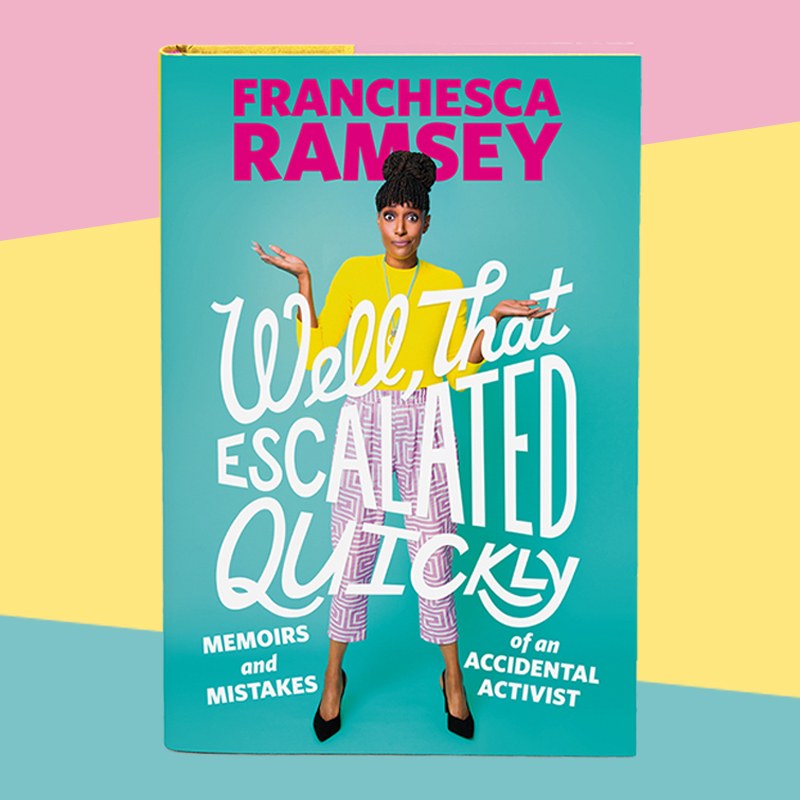
Franchesca Ramsey is an actress and comedian, best known for her YouTube channel, chescaleigh, and for hosting MTV’s Decoded. In this exclusive excerpt from her upcoming book, Well, that Escalated Quickly: Memoirs and Mistakes of an Accidental Activist, she shares her best comebacks observations too offensive to ignore .

We are gathered here today to say goodbye to seven unbearably irksome comments that just won’t accept that their time has come. If you’ve been on the receiving end of oppression, racism, sexism, homophobia, transphobia and plain old ignorance, you’ll recognize these lines. Let’s bury them, shall we?

1. Comment: “Sorry if you’re offended.” This is a non-apology masquerading as a real apology. The word “if” corrupts the entire thing. Much like the “RE: URGENT DEAR SIR OR MADAM” email that manages to slip past your spam folder, “sorry if” is highly suspicious. We’re proud creatures by nature—we hate to admit wrongdoing—so some of us try to have our cake and eat it too by adding that pesky “if.”

Comeback: “There’s no need for ‘if’—I am offended. So are you sorry?”

2. Comment: “Why are you so angry?” See also: “You’re making a scene,” “You’re being hysterical,” and “You need to calm down. ” These responses are all part of a broader phenomenon known as tone policing, whereby someone provides unsolicited advice on how to express your feelings. They may claim expertise on topics they observed on The Wire, and they are likely to question the intensity of others’ reactions to these topics. The Tone Police tend to move the conversation away from the systemic wrong you were discussing and toward the validity of your particular response to that wrong. They don’t understand that anger is a valid emotion, or that emotional distance isn’t an option for many marginalized people.

Comeback: “I think people should be treated fairly. When they’re not, it makes me angry. Why aren’t you angry at all?”

3. Comment: “Stop playing the victim.” Unless you’ve been cast in a community theater production of Law & Order: SVU, I’m not sure why anyone would choose to play victim. The word “play” implies fun; and what’s fun about being mistreated? This command is yet another example of someone feeling threatened by feelings. Just as you’re allowed to be angry about injustice, it’s natural to express feelings of sadness or fear, especially if you’re exhausted by the prospect of trying to keep a brave face.

Comeback: “Victimhood is not a game. I don’t get a prize for talking about my experience.”

4. Comment: “It’s just a joke.” People feel like using the word “joke” removes responsibility for the hurt their words may cause. It doesn’t; in fact, it may make things worse. A Western Carolina University study found that when prejudiced attitudes around a marginalized group are shifting, negative jokes about that group can suggest discrimination is justified to people who may be on the fence. “Ironic” stereotyping—where the joker says something designed, allegedly, to mock sexists or racists or transphobes or homophobes—counts, too, so if anyone ever serves you with, “Political correctness is ruining comedy,” the same stuff applies. It’s just not funny to disrespect other people’s beliefs, backgrounds, cultures, or identities when those are deeply rooted in longstanding oppression. Jokes that punch down on marginalized people require no creativity because they’ve existed since the beginning of time. It’s like telling a knock-knock joke and believing you’re Richard Pryor.

Comeback: [crickets] “Then why wasn’t it funny? Maybe you can explain the joke.”

5. Comment: “I don’t see color.” People who say this usually mean well—they want you to know they’re sooo not racist that they can’t even conceive of a reality in which racism exists! But what they’re actually saying is that racial identity is bad—not that racial oppression is bad. If someone is talking about their experiences as a person of color, “I don’t see color” suggests their experiences aren’t valid—or flat-out aren’t real. If you wear glasses and I say, “I don’t even see your glasses,” that doesn’t mean you suddenly have twenty-twenty vision—it just means I’m in denial. Or maybe that I need glasses myself.

Comeback: “Well, even in black and white, I’m still a person of color.”

6. Comment: “Why don’t they just come here legally?” If this question is being asked in earnest, the person you’re talking to clearly has no idea how immigration works. It’s expensive, confusing, and prohibitive even for people who speak English as their native language, and who aren’t dealing with the trauma of repressive governments and persecution. Besides, do you remember how this country was founded? Did Christopher Columbus come here legally? Did the Pilgrims have to make sure they had their passports open to the photo page so the line would move quickly at Plymouth Rock? Yes, there are immigration laws in place, but laws aren’t perfect. Part of our work is to determine what laws need to be refined and what new laws need to be created, and then to pressure our elected officials to act.

Comeback: “Why don’t we just fix our broken immigration system so the people who want to come here legally can do so?”

7. Comment: “All lives matter.” I’ve saved the best (by which I mean worst) for last. “All lives matter” is the racist version of “I know you are but what am I.”The Black Lives Matter movement was created in 2013 by Alicia Garza, Patrisse Cullors, and Opal Tometi in response to the acquittal of Trayvon Martin’s killer, George Zimmerman. The movement is about creating a world where all lives—including black lives—matter equally. That’s not the world we live in now, especially when we look at police violence and how it disproportionately affects black people. “All lives matter” is an empty retort designed to shut down conversations about black people and the issues they face. I think the “all lives matter” folks know that—they just refuse to admit it.

Comeback: “It’s okay for a movement to be focused on a specific group or cause. ‘Save the rainforest’ doesn’t mean ‘Fuck all the other trees.”

Excerpted from Well, that Escalated Quickly: Memoirs and Mistakes of an Accidental Activist. Copyright © 2018 by Franchesca Ramsey. Reprinted with permission of Grand Central Publishing. All rights reserved.


Source link