Categories
Health

The 9 Best Walking Sandals For Women 2019, According to Reviews


There is a very special place in hell for any and all walking shoes that give you blisters—which, unfortunately, is most of them. There’s nothing more frustrating than getting overly excited about the first really nice day, throwing on a pair of innocent-looking sandals, and going outside… only to have your outing cut short by your incredibly uncomfortable footwear. You’ve waited so long to bask in the good weather and be free from the constraints of boots. You can’t have your sandals holding you back.

Designers get it. Phoebe Philo got it when she helped bring back Birkenstocks. Sandy Liang, Marni, Louis Vuitton, Prada, and Gucci all got it when they sent Teva-esque sandals down their runways. And Glamour editors definitely get it: We love a good trend, but we also love to be comfortable—and because most of us are based in New York, we walk most places, which makes walking sandals an absolute essential.

In the spirit of sharing knowledge (and comfort) this season, we had nine staffers reveal their picks for the absolute best walking sandals, from brands like Camper, Clarks, YSL, and more.


Source link

Categories
Health

Male Bosses Are Ignoring Women Colleagues After #MeToo. This Is a Problem.


One of my first jobs out of college had me assisting a publisher who frequently shared sensitive company information with me as I drafted memos and reports, which meant we often had to close the door to his office. He’d dictate what he needed to, and we’d move on with our day. Occasionally we’d do it over lunch. I never once felt uncomfortable and I’m pretty sure he didn’t either. Because I was good at my job, the publisher eventually promoted me.

This was almost two decades ago and much has changed for women—and men—at work. The most pervasive shift, of course, has been spurred by the #MeToo movement, which not only has managed to hold power-abusing men accountable for their actions but has also changed the norms so many women have silently faced in workplaces that range from farming to fashion.

But with any movement—especially one that exists to empower women—there has been a backlash and one particular facet is the idea that #MeToo has scared some men away from interacting with junior-level female colleagues.

According to new research released today by LeanIn.Org and SurveyMonkey, 60 percent of male managers say they’re uncomfortable participating in common workplace activities with a woman—a 32 percent increase from research done last year on the topic. The data found that senior-level men are 12 times more likely to hesitate before having one-on-one meetings, nine times more likely to hesitate to travel with a junior woman for business, and six times more likely to hesitate to go to a work dinner with a junior woman. Thirty-six percent of men also say they’ve avoided mentoring or socializing with a female co-worker because they were nervous about how it might look.

The problem: Most managers are male and their fear is prohibiting women from proving themselves and moving up at work.

“I don’t know of anyone who’s been promoted who hasn’t had one-on-one conversations [with a superior]” LeanIn.org founder and Facebook chief operating officer Sheryl Sandberg told me by phone. “Women need that one-on-one time to get the mentorship and sponsorship they need to succeed.”

Sandberg knows this well. “[Facebook CEO] Mark Zuckerberg and I spend an enormous amount of time together and we spend an enormous amount of time one-on-one,” she said. “That one-on-one time has been where he’s given me the feedback that helps me do my job, [has] told me what I need to do better, [and] I’ve been able to give him feedback. That is not happening in a group setting.”

Sandberg also said her first meeting of the week Monday morning and the last meeting of the week [on] Friday afternoon is with Zuckerberg and nobody else. “That is our partnership and without that, I don’t know where we’d be.”

As far as a solution goes, LeanIn.Org is encouraging men to do more to actively support women at work, from increasing amounts of informal one-on-one time to participating in more official initiatives like sponsorships and mentoring—something Sandberg thinks will benefit men just as much as women.
“[It isn’t] just the right thing to do to mentor and sponsor women It’s actually a good thing to do for your career [as a man] because if you’re the most senior CEO or most junior person, if you can work better with half the population, you are going to outperform.”

Being more or less invisible to a male superior is better than being uncomfortable, right? In theory, sure, but considering the vast majority of managers and leaders are men across most fields, the fact that women aren’t getting the attention they need to succeed because men are afraid isn’t doing anyone any favors, “Ultimately, this is about closing the gender gap at work, from the entry-level all the way to the top,” said Rachel Thomas, president of LeanIn.Org, in a statement. “When companies employ more women, sexual harassment is less prevalent. And when women hold more leadership roles, company profits are higher and workplace policies are more generous. Supporting women makes companies stronger and safer. To get there, we need men to be part of the solution.”


Source link

Categories
Health

Here's How You Can Help Women in States With Extreme Abortion Bans


On Tuesday, the Alabama Senate approved a bill that would outlaw almost all abortions in the state. The new legislation would ban abortions at every stage of pregnancy—with only an exception for when the mother’s life is at serious risk, but not in instances of rape or incest. It’s not just women who would be penalized under the ban. Doctors who perform the procedure would be charged with felonies, and could face up to 99 years in prison.

Alabama’s abortion ban comes just after four other statesGeorgia and Ohio, included—passed so-called “heartbeat” laws, which ban abortions at about six weeks gestation. But this bill is the most extreme measure we’ve seen so far.

While none of these bills have been enacted—and all are likely be blocked in the lower courts—they’re indicative of a larger fight to control women’s bodies and potentially to overturn Roe v. Wade. Here, we’ve outlined how to help fight against these bans—and the overall effort to limit women’s reproductive rights.

Donate to organizations on the front lines

In addition to supporting national organizations leading the fight to protect women’s reproductive rights—like Planned Parenthood—there are many grassroots organizations helping women on the ground. Here are a few organizations to consider that are providing resources and access to local women looking to obtain abortions:

  • The Yellowhammer Fund: Located in Alabama, the Yellowhammer Fund offers funding for women seeking treatment at one of Alabama’s three remaining abortion clinics. The fund will also help with other barriers to access, such as travel or lodging.

  • National Network of Abortion Funds: NNAF is a network of funds—including the Yellowhammer Fund—across 38 states that helps eliminate economic for low-income women looking to obtain an abortion. They work with funds everywhere from Georgia to Texas to Ohio.

  • Magnolia Fund: A Georgia-based organization that provides resources to support the reproductive choices of women in the South, as well as to help defray the cost of abortion fees for women in Georgia.

  • Access Reproductive Care—Southeast: ARC helps people in the South—in states like Alabama, Florida, Georgia, South Carolina, or Tennessee—receive access to safe and affordable reproductive care by offering financial and logistical support.

Work to elect progressive local leaders

25 men voted to pass Alabama’s abortion ban. And the other extreme abortion bans in states like Georgia have also succeeded in local legislature, thanks to conservative, mostly male politicians. In other words, one of the most effective ways to put a stop the bans is by ousting these men from office. To do that, we have to support—and help elect—their progressive opponents. Here’s a few places determined to do just that:

  • She Should Run: A nonpartisan nonprofit working across the country to get more women elected to office, at all levels.

  • Emerge America: An organization that trains progressive women to run for elected office in 25 states, such as Georgia, Alabama, Wisconsin, Virginia, and more.

  • Higher Heights for America: A national membership-based organization dedicated to electing black women to office across the country.

  • EMILY’s List: An organization dedicated to electing pro-choice Democratic women to office by guiding women through their campaigns from start to finish, with trainings, webinars, and volunteer support.

  • Run for Something: An organization that recruits young progressives to run in down-ballot races.

Volunteer on the ground

If you live in a state with an extreme abortion ban, or close enough to one to travel there, you can volunteer to be a clinic escort. As an escort you’ll accompany women as they enter an abortion clinic, and oftentimes have to walk past protesters. Connect with Planned Parenthood to look for opportunities, or use their Health Center guide to get in touch with local clinics to see how you can best be of service.


Source link

Categories
Health

With the Alabama Abortion Ban, Republicans Push to Challenge Roe v. Wade and Strip Women of Their Rights


“If we are arguing personhood,” said Eric Johnston, the president of the Alabama Pro-Life Coalition, “then it does not matter how a child is conceived.” Late last night, Alabama passed a total abortion ban passed in the state after an amendment that would have made an exemption to the law in cases of rape or incest failed. (The ban does have an exemption for cases in which a woman’s life is in danger.) Johnston had helped draft the bill. If it’s signed into law and allowed to take effect, doctors who perform abortions on women at any stage of pregnancy could face 99 years in prison.

In the lead up to the vote, Republican Rep. Terri Collins was even clearer, arguing that “[o]ur bill says that a baby in the womb is a person.” Collins is a cosponsor on the bill, which she hopes will help overturn Roe v. Wade. In Alabama, as in Georgia and Ohio, which both passed extreme abortion bills earlier this month, a clump of cells now has more rights than an adult woman—or, as CBS News pointed out, an sixth grader. Under the Ohio law, for example, a pregnant 11-year-old rape victim would no longer be allowed to have an abortion.

Yes, ICYMI: Republicans want to overturn Roe. They want to take away the right to have a safe abortion. They want to send us right back to America pre-1973. But it’s not just about Roe. Under Donald Trump, a man who’s had a lot of sexual relationships with a lot of women who aren’t his wife, the GOP has declared an open war on women’s reproductive health. It seems we can’t reach the end of a week without a new crisis, some gruesome legislative nightmare explicitly crafted to rein in our rights. It’s 2019, and Republicans have an unquenchable thirst for the Handmaid’s Tale agenda.

Lately, the crusade has taken the form of “heartbeat bills,” which ban abortion before most women even know they’re pregnant at around six weeks. (That’s a little after one late period, although presumably most of the men who wrote these bills are unfamiliar with how menstruation works.) Other efforts have attempted to defund Planned Parenthood, which provides life-saving mammograms and pap smears to millions of people, using a sneaky Title X “Gag Rule.” But inevitably, there’s more to come. The GOP has one goal when it comes to women—strip us of our rights to reproductive health care and the freedom to live the lives we choose.

Since the appointment of Supreme Court Justices Brett Kavanaugh and Neil Gorsuch, state and local Republicans have doubled down on their plan to regulate women’s bodies. And why not? For the first time since Roe v. Wade was decided in 1973, the makeup of the court is so conservative that it’s entirely possible the decision will soon be struck from the books.

We could scream ourselves hoarse, calling out how highly strange and deeply hypocritical it is that the supposed party of small government wants to squeeze itself inside women’s uteruses. Or we could acknowledge what’s really going on here: It’s not a set of ideological principles that motivates the Republican Party. It’s a desire to control women, to limit our possibilities and our potential, to beat back the gains of feminism and civil rights, and to do all that on a platform of coercion, intimidation, and misinformation. Of course, there are some good actors in the Republican Party (likely Catholics) who truly believe that life begins at conception. I don’t believe that, but at least I understand where those people are coming from. Most anti-choice sentiment isn’t that.


Source link

Categories
Health

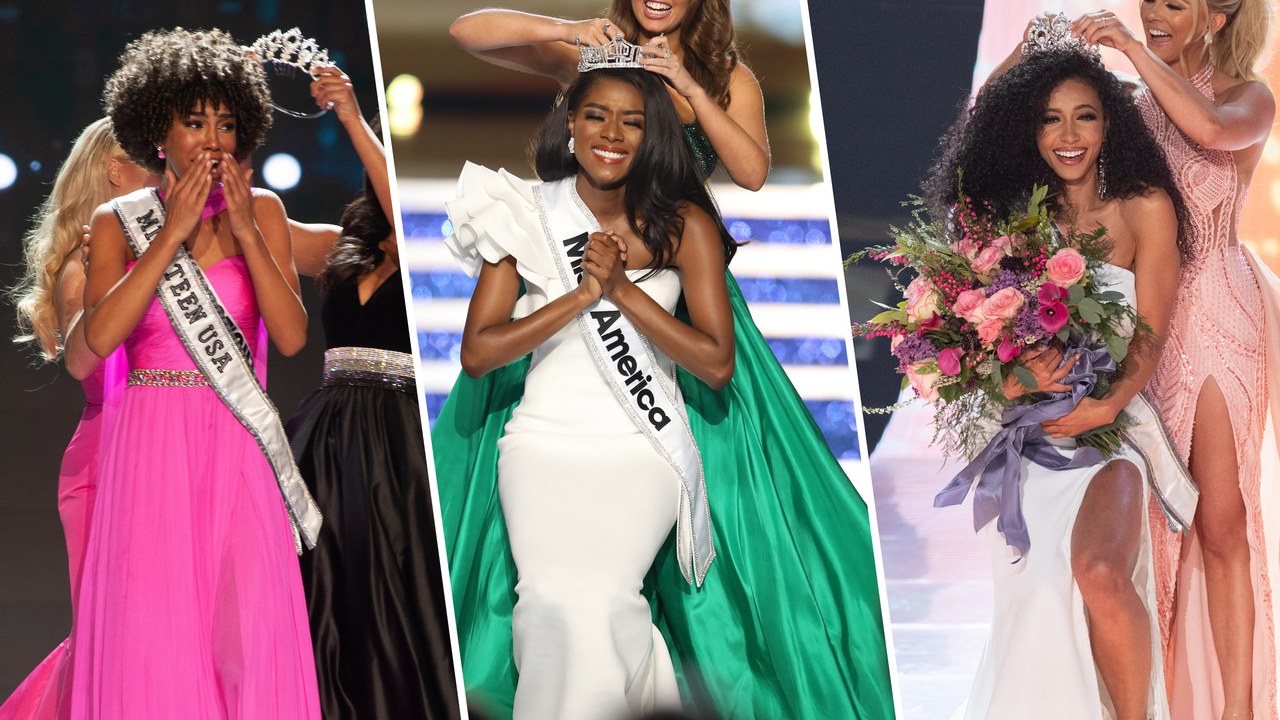
Miss America, Miss Teen USA, and Miss USA Are All Black Women for the First Time Ever


For the 14 years I spent competing in pageants, the preparation leading up to a competition weekend was always the same: Go to the hairdresser to get my sewn-in weave uninstalled, my hairline relaxed, and then the weave sewn right back in. The routine took anywhere from six to eight hours and cost hundreds of dollars.

After, I would fret with my mom and aunt about how limited I was with the hairstyles I could do because I had a full weave; if I could just wear my natural hair, this wouldn’t be so complicated. But the idea that I would walk out with my own hair for competition was ludicrous: Years of weaves, relaxers, and just simply not caring for my hair properly left it breaking and my edges thin. But more than that, what was really stopping me from embracing my natural kinks and curls was a truth over which I had no control: I had never seen a Black girl with my hair texture wear her natural hair for competition, let alone win or place with it.

There’s a rule in pageantry that most competitors and coaches know about but never speak out loud: The default beauty standard is white. Although Miss America, Miss USA, Miss Teen USA, and Miss Universe have crowned a handful non-white women, most of these women wear “pageant hair”—flowing weaves and extensions with bouncy waves and curls. As a competitor, I wasn’t one to rock the boat. Even with an “acceptable” look, I had to listen to photographers and hairstylists make backhanded comments about my hair, how difficult it was to style and blend with extensions. Pageants did help me feel empowered, but they could also make me feel dejected, especially when it came to my hair.

When a Black girl wins, comments on Instagram and message boards show the darker side of our experience. “The pageant is no longer about beauty,” one person wrote on Instagram after Kaleigh Garris—an 18-year-old who wore her natural curly hair for competition—won Miss Teen USA last week. “It’s all about political correctness.” In other words, Garris didn’t win because she deserved the crown, the user felt, but because she’s Black. I saw dozens of similar comments when Cheslie Kyrst, a 27-year-old attorney from North Carolina, won Miss USA over apparent fan favorite, Alejandra Gonzalez of New Mexico. Like Garris, Kyrst is Black and wore her natural hair. (The current Miss America, Nia Franklin, is also a Black woman, marking the first time all three title-holders are Black, but chose to wear a more traditional pageant look for competition.) When you’re a Black woman in pageants—or just a Black woman who succeeds, period—the dominant culture will do its best to communicate to you that your win was not earned, but handed to you to fulfill a quota. Your achievements are not your own; they’re a box for someone else to check.

Former Miss USA Deshauna Barber, who won in 2016, has spoken about the racism she faced during her reign and her decision to wear her 4c hair for her final walk. She’s also addressed how hard it can be to push an institution like this one into the future when pockets of it seem stuck determinedly in the past. “When you’re crowned with a look, then that’s the look you’re expected to maintain. A lot of people in the pageant world are still very old school. They believe in a traditional look, a traditional Miss USA. [The organization] is trying to, in my opinion, open up that world,” Barber wrote in an essay for Refinery29 in 2017. “So, when I said I wanted to wear my natural hair, they were jumping for joy. I appreciate them for that—[but] I didn’t want to stretch it too much. I wanted to take baby steps. If I take a small one by showing my natural 4c hair, the next girl will take one, and then we’ll ease our natural hairstyles into the pageant community.”


Source link

Categories
Health

The Women of Game of Thrones Crushed the Battle of Winterfell Last Night


This post contains spoilers for the final season of Game of Thrones. Consider yourself warned.

After weeks—well, years actually—of anticipation the Battle of Winterfell is finally over and the Army of the Dead is no more. And you know who seriously crushed it on the battlefield? The women. From Brienne of Tarth to little Lady Lyanna Mormont and Arya Stark, the female characters on Game of Thrones had some truly heroic moments during the most recent episode, and fans were here for it.

Nobody needed to be saved by the “prince who was promised” and instead took matters into their own hands. (Well, Dany did need an assist from Jorah, but then she got her battle on as well.)

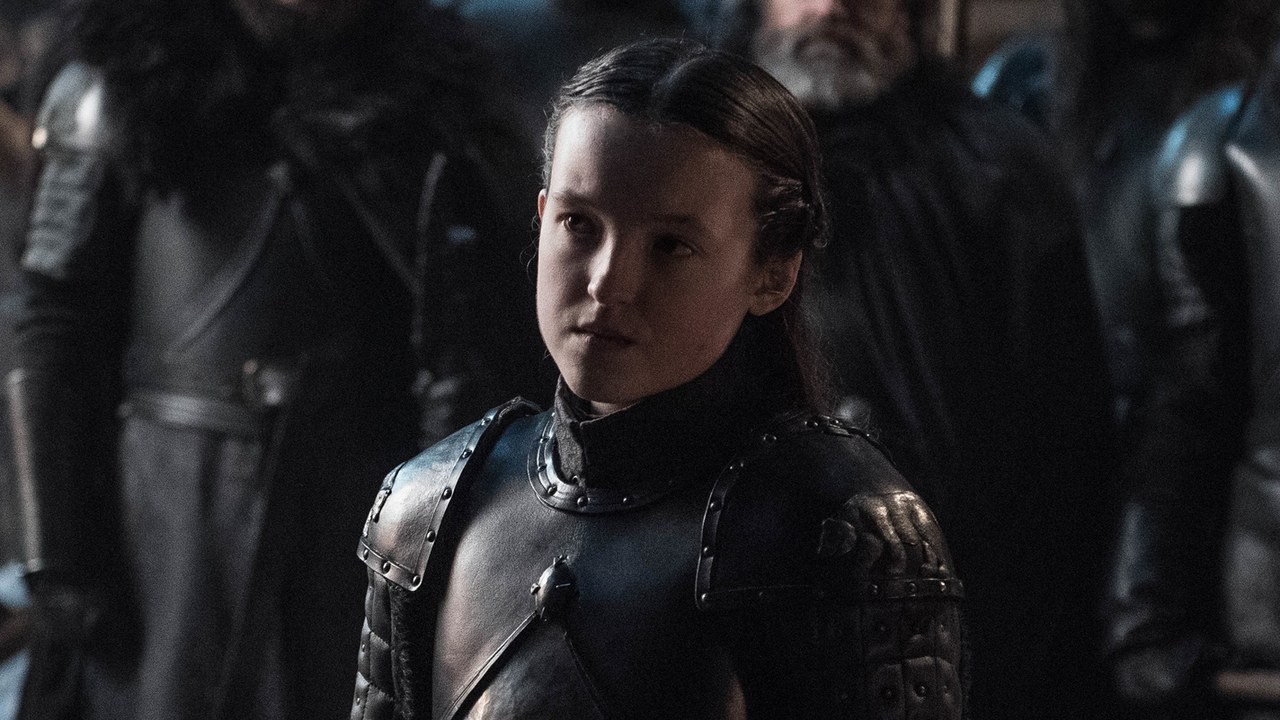
Lady Lyanna Mormont

RIP to this tiny hero, who went out in an iconic death scene to rival some of the show’s best. From the moment we met her in season five, the character (played by actress Bella Ramsey) has been a major fan favorite, so her loss is heartbreaking. But she never stopped fighting, even until her last breath where she killed the (literal) giant wight by stabbing him in the eye before succumbing to her injuries.

Lyanna wasn’t intended to be such a beloved character, though. “Lyanna Mormont was just supposed to be in one scene, but Bella is such an incredible actress that we kept bringing her back because we wanted more Bella,” showrunner David Benioff says in an episode extra. Ramsey tells Entertainment Weekly that she was pleasantly surprised by the love her for Lyanna. “I didn’t think it was going to be anything. I just thought that I turned up and did it. When [the fan reaction] kicked up it was mad. I didn’t expect it,” she said.

Her death brought a strong wave of reaction on social media, naturally.

Arya Stark

Oh yeah, the girl we’ve watched grow up on screen DID THAT. And by that we mean killed the Night King and saved Winterfell.

Her years of training kept her alive until that big moment when she stabbed the Night King, destroying him and his Army of the Dead instantly. It was amazing, and her family better be throwing her the largest celebration banquet Winterfell has ever seen.

Brienne of Tarth

While the newly knighted Ser Brienne may not have had a battle moment as singular as Lady Lyanna or Arya, she continued to be a key to victory on the battlefield next to the Kingslayer Jaime Lannister—taking out wights and White Walkers with incredible strength, skill, and endurance. And, lest we forget, she helped train Arya.

Daenerys Targaryen

So I definitely have some questions for Dany‘s deployment of the dragons during the Battle of Winterfell, but I must give props to the Mother of Dragons for picking up a sword to help save herself (with literal ride-or-die Jorah Mormont by her side) while Jon Snow decided to just scream in the face of a zombie dragon.

Melisandre, a.k.a. The Red Woman

Ah, Melisandre, you are a tricky one that fans love and love to hate. You killed Shireen, but revived Jon Snow—and last night, she brought her magical fire to Winterfell in aide of defeating the Night King before removing her necklace and walking out into the snow to die.

With the Night King vanquished, it would seem that Queen Cersei is next up for the ladies—and we can’t wait to watch it all go down.


Source link