Categories
Health

Ayesha Curry Shut Down an Instagram User Who Commented on 10-Month-Old Son's Weight


Ayesha Curry is a cookbook author, cooking show host, restaurant owner, Covergirl spokesperson, and a mom to three kids—Riley, Ryan, and Canon—with her husband, NBA superstar Steph Curry. In other words, this is a woman who does not have time for rude people on Instagram.

But this being the Internet, there will always be some troll waiting in the wings with less-than-kind commentary. And when someone recently made a comment about her 10-month-old son’s weight, Ayesha was having none of it.

But let’s back up a bit before we get to her response: Earlier this week, the entire Curry extended family was together to watch Steph’s Golden State Warriors play for a chance to make the NBA Finals against his younger brother, Seth Curry, who is on the Portland Trailblazers. After the Warriors’ victory, the Curry clan posed for a big group photo that included Steph and Ayesha and their three children.

Noah Graham/Getty Images

“Infinitely proud of these guys. Gods grace and mercy continues to cover our family and we are so grateful. Not about wins and losses, it’s all about family. Moments like this simply put it all into perspective,” she wrote in the caption. “‘But seek first his kingdom and his righteousness, and all these things will be given to you as well.’ – Matthew 6:33” Most of the comments were positive; the feed was filled with fans congratulating the family on the team’s victory and remarking on how adorable (and grown up) the kids look.

It’d be nice if the story just ended there, but one commenter decided to chime in and ask if Ayesha is pregnant again. (Sigh, how many times do we have to tell people that is not a question that needs to be asked?) Anyway, Ayesha took it in stride and replied, “Absolutely not LOL. My 30 lb son is just breaking my back in every Photo.”

To this, another commenter said, “If that kid is 30 lbs he’s got some serious health issues going on.”

Ayesha quickly shut that down, though, with a succinct, “Excuse you? No. Just no.” Soon after, more fans joined in the conversation to support her. “F her! ‘Just NO’ is right! You & your family look fantastic. Your husband is gorgeous & best in NBA. Congratulations to y’all & your fam,” one wrote. Another said, “People are so rude!!! You look beautiful and your kids are adorable!!!!!”

We wholeheartedly agree. Nice shot, Ayesha.


Source link

Categories
Health

Sophie Turner Says She Felt Pressure to Lose Weight While Filming ‘Game of Thrones’


In a new interview with Marie Claire Australia, Sophie Turner opens up about how therapy helped her navigate some tough moments while filming Game of Thrones.

“I have experienced mental illness firsthand, and I’ve seen what it can do to the people around [the sufferers] as well,” the actor who plays Sansa on GoT tells Marie Claire. “[In my teen years] my metabolism suddenly decided to fall to the depths of the ocean and I started to get spotty and gain weight, and all of this was happening to me on camera.”

Unfortunately, people weren’t so kind to Turner as she was growing up in the public eye. In a podcast from two weeks ago, she talked about the comments she would receive from fans about her appearance. “People used to say, ‘Damn, Sansa gained 10 pounds,’ or ‘Damn, Sansa needs to lose 10 pounds,’ or ‘Sansa got fat,’” Turner revealed. “It was just a lot of weight comments, or I would have spotty skin because I was a teenager and that’s normal, and I used to get a lot of comments about my skin and my weight and how I wasn’t a good actress.”

Turner says therapy helped her deal with this pressure. “Everyone needs a therapist, especially when people are constantly telling you you’re not good enough and you don’t look good enough,” she also told the magazine. “I think it’s necessary to have someone to talk to, and to help you through that.”

Sophie Turner has often been transparent about her mental health journey. Just last month she told Dr. Phil on his podcast that she experienced depression in her late teen years—in part, she thinks, because she was living at home filming GoT while her friends were at college. She frequently turned to her onscreen sister, Maisie Williams, for support but admitted at one point their friendship had a “destructive side” because they spent time only together.

“Maisie and I used to [stay inside] together,” she told Dr. Phil. “I think being friends with each other was quite destructive because we were going through the same thing. We used to get home from set, go to a Tesco across the road, a little supermarket, and just buy food. We’d go back to our room and eat it in bed. We never socialized for a couple of years. We didn’t socialize with anyone but ourselves.”


Source link

Categories
Health

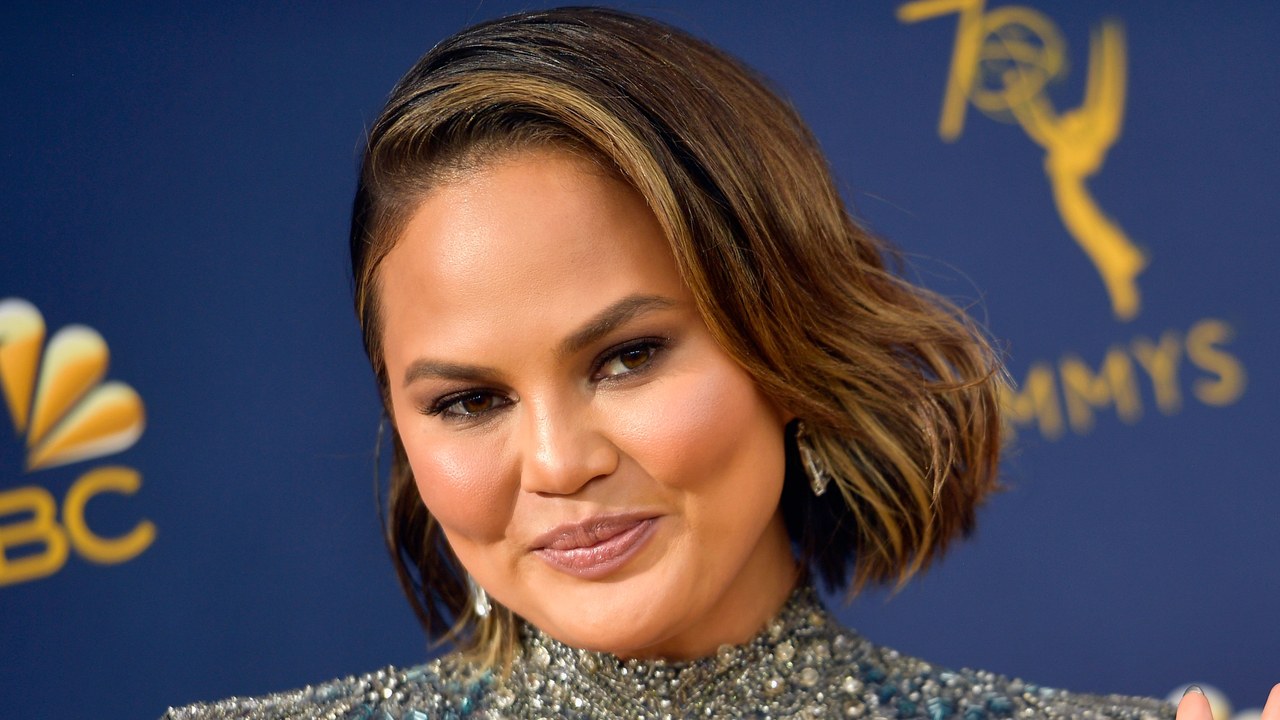
Chrissy Teigen Got Real About Post-Pregnancy Weight Gain, and It's Pretty Inspiring


Chrissy Teigen continues to be the best at social media—and getting real about her own life. She’ll hilariously take on any troll in her path while also showing off her mad cooking skills and letting us in on little pieces of her private life with husband John Legend and their two children, Luna and Miles.

Heck, she’ll even interview herself, like in a recent Twitter thread in which she opened up about her body and her post-pregnancy weight gain. “How do you eat like this?” Teigen asked herself, likely referencing all of her incredible food posts. (Of course, she’s also the author of two best-selling Cravings cookbooks.)

“Basically I am 20 pounds heavier than I was before miles,” she answered. “He’s 10 months old, I never lost the last bit because I just love food too much. Just coming to terms with my new normal, when I had this certain number for so long!”

Teigen, who has been wonderfully outspoken about the postpartum depression she had after daughter Luna was born, says she’s much happier than when she was thinner—weight loss that she seemed to attribute to the depression. (Which, yep, sounds terrible.) “The thinnest I’ve ever been was right after Luna. Postpartum depression,” she wrote. “I’LL TAKE THESE POUNDS AND THIS FEELING!” Hear, hear.

She first opened up about her depression in an essay for Glamour in 2017. “When I wasn’t in the studio, I never left the house. I mean, never. Not even a tiptoe outside. I’d ask people who came inside why they were wet. Was it raining? How would I know—I had every shade closed,” she said. “Most days were spent on the exact same spot on the couch and rarely would I muster up the energy to make it upstairs for bed. John would sleep on the couch with me, sometimes four nights in a row. I started keeping robes and comfy clothes in the pantry so I wouldn’t have to go upstairs when John went to work. There was a lot of spontaneous crying.”

Social media users offered their thanks for Teigen’s honesty. “You are so brave and transparent, I love you so much! Thank you for being you and a PHENOM role model for girls ?,” one wrote.

“Girl, same. After my second child, I was walking 4 miles a day after a long day, crying over laundry and barely eating,” another tweeted. “Post partum depression is a beast, and while I was the thinnest ever, I was the unhappiest ever. You’re awesome for embracing the healthier you!”

Never change, Chrissy.


Source link

Categories
Health

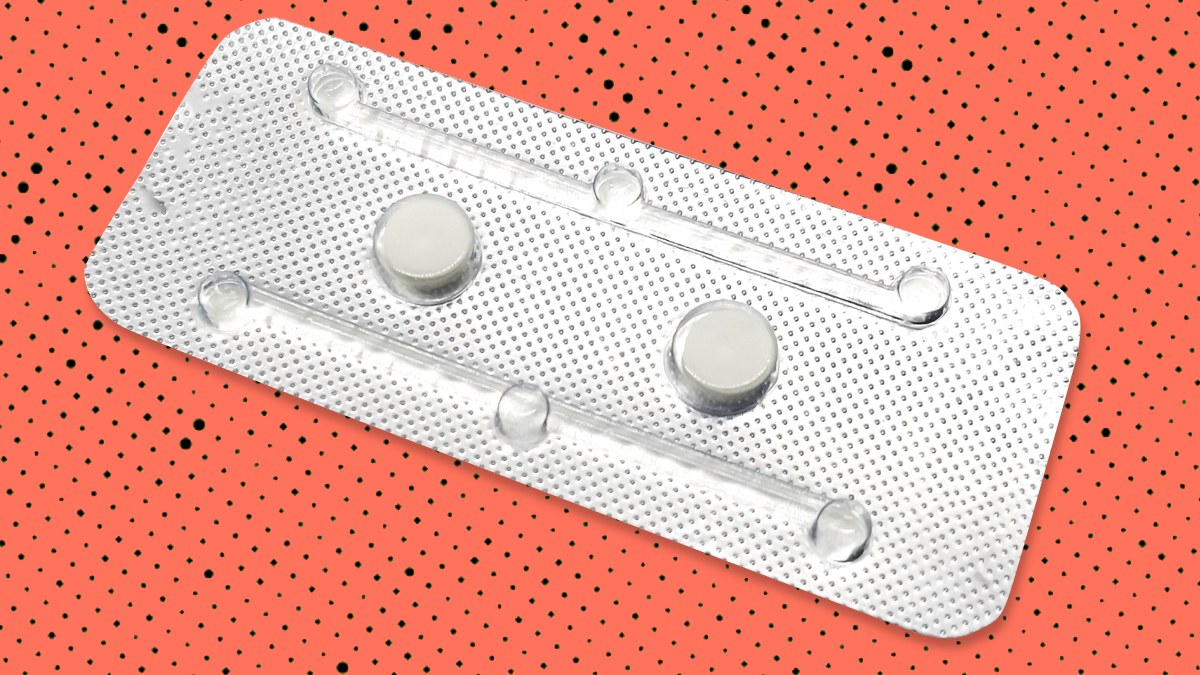
What ‘Shrill’ Gets Right—and Wrong—About the Morning-After Pill Weight Limit


Shrill, a new show starring Aidy Bryant and cowritten by Bryant and author Lindy West, drops a casual bomb in its first episode, which premieres on Hulu today: There’s a morning-after pill weight limit.

Annie, the main character based on West in her hilarious memoir, realizes her period is late after an unprotected hookup with her shady nonboyfriend. Standing at the pharmacy counter, positive pregnancy test in hand, she asks how on earth she could be pregnant after taking the morning-after pill. “Do you weigh over 175 pounds?” the pharmacist asks coolly. “The morning-after pill is only dosed for women 175 pounds and under.”

The idea that the morning-after pill might not be effective for heavier women isn’t fiction. There are no warnings about efficacy and weight on the package of the emergency contraception Plan B, even though evidence suggests that the morning-after pill might be less effective for heavier women. “Women who are heavier are going to have a higher failure rate [with emergency contraception] than women who are of normal weight,” says Lauren Streicher, M.D., a clinical professor of obstetrics and gynecology at the Feinberg School of Medicine in Chicago. “Basically women who are obese have between a two- and fourfold higher risk of pregnancy than a woman of normal weight.”

Several studies back this up. A 2016 review of research on emergency contraception (EC) using levonorgestrel (like Plan B) and ulipristal acetate (like Ella) to prevent pregnancy found evidence that women over 175 pounds do indeed have a higher chance of getting pregnant after taking the morning-after pill—about 6 percent, which is about the same odds of getting pregnant without using any contraception.

Cue the collective What?! Why are women not warned about the morning-after pill weight limit?

The short answer is that there’s not quite enough data to warrant an FDA warning label detailing that the birth control method might not actually be an effective safety net for heavier women. Since pregnancies after taking EC are still rare, the data set is small and there are still woefully few studies on the effectiveness of birth control in larger-bodied women. In 2016 the Food and Drug Administration reviewed the available research and ruled the data was still “too limited to make a definitive conclusion.”

The higher risk of getting pregnant doesn’t mean larger-bodied women should forgo taking EC. “It doesn’t mean it’s ineffective—that would be completely the wrong word to use,” Dr. Streicher says. Officials in the EU actually did add a warning to the box of the European version of Plan B back in 2013, stating it became less effective for women weighing 165 pounds and totally ineffective for women weighing over 175, but the following year they reversed that decision, concluding that women of all weights should continue to take EC, since the “benefits are considered to outweigh the risks.”

“I tell patients anytime they use emergency contraception, there’s always a possibility of failure,” Dr. Streicher says, “and that if they’re overweight, that possibility of failure is more common. It doesn’t mean it’s ineffective—it means it’s less effective.”

The morning-after pill is never a 100 percent guarantee—everything from how soon you take it, to where you are in your cycle, to yes, weight, can impact how effective it is at preventing pregnancy. But if you’ve had unprotected sex, it’s still better than nothing, Dr. Streicher says.

That’s not exactly the most comforting thought. But heavier women do have another, more effective option: a copper IUD. The nonhormonal IUD works by creating a sperm-killing inflammatory response in your uterus, which starts working immediately (and can be inserted up to five days after unprotected sex). For most women a trip to the gyno for an IUD insertion is less preferable to popping a pill, but if you’re really worried about getting pregnant, it’s “the most effective method of emergency contraception,” for women at any weight, Dr. Streicher says. And you can of course leave it in for long-term birth control.

The important thing is that women are educated about the effectiveness of the morning-after pill—before they end up brandishing a positive pregnancy test at the pharmacist.


Source link

Categories
Health

Weight Stigma Is the Deadly Problem Keeping Patients from Getting the Care They Need


Ellen Maud Bennett, 64, a Canadian costume designer with a penchant for fresh lobster, peonies, and the “perfect shrimp-wonton soup,” spent years feeling unwell. But when she sought medical intervention, no one offered suggestions beyond weight loss treatments. When her cancer was finally discovered, she had only days to live. “Ellen’s dying wish was that women of size make her death matter by advocating strongly for their health and not accepting that fat is the only relevant health issue,” her obituary read.

Bennett’s case may be extreme, but when it comes to weight, doctors often have a big blind spot. When a heavier patient comes in with symptoms but a doctor sees only fat, it can mean treatment will fail to help her get healthier—or worse, add to her health issues. Weight stigma may even be part of what causes the laundry list of risks we typically hear linked to being heavier. Studies show weight shaming can cause spikes in levels of cortisol, the stress hormone which can contribute to high blood pressure, diabetes, and heart disease—“the very conditions that doctors blame on an individual’s weight,” says Louise Metz, M.D., a board-certified internal medicine physician. And the stress of constantly being judged for your size? Ironically, it’s been linked to weight gain—a 2018 academic opinion paper that examined nearly 70 studies on weight stigma found that it lead people to eat more.

Making matters more complicated, the stigmas and biases associated with being fat are almost impossible to escape: “Weight stigma affects so many life experiences—from the size of chairs, to the pace of exercise classes, to the availability of good medical care,” says Deb Burgard, Ph.D., a fellow of the Academy for Eating Disorders. Even the terminology used to describe larger bodies can be shaming. “Overweight” reinforces the idea that larger bodies are somehow wrong, and “obese” pathologizes the ratio of weight to height, even though it’s not always a great indicator of health. (That’s why fat advocates like me prefer terms like larger, heavier, and plus-size.)

Jessica, a 31-year-old who works in retail, had a history of eating disorders that started when she was 10 and was bullied about her weight at school. As an adult, she started to get a foothold on healthier habits, but fat shaming encounters with a doctor can still trigger destructive behaviors around food. “Recently, I went to a gastroenterologist who insisted I [must have] a fatty liver due to my size,” she says. Blood work and an ultrasound revealed her liver was perfectly healthy, but the episode triggered a relapse of her eating disorder. Even though her liver was healthy, her doctor didn’t look beyond her size.

“I was left with the feeling that I was fat, it was my fault due to a lack of character, and I only had one option: permanent life-altering surgery.”

Stories like Jessica’s aren’t uncommon—women dealing with weight stigma are actually at a greater risk for eating disorders, says Chevese Turner, chief policy and strategy officer at the National Eating Disorders Association (NEDA). “Often, the same behaviors that would be considered red flags in thin people”—obsessively counting calories, going overboard at the gym, developing a preoccupation with the scale or with food—“are seen as positive behaviors for ‘weight management’ in plus-size people,” Turner says. “In some cases, they’re even celebrated by doctors.”

But that’s not the only way weight stigma can affect patient care. After injuring herself in a fall, Gretchen, a woman in her 40s, made an appointment with an orthopedist. Instead of discussing her options for hip surgery, she was told it was “too dangerous” given her weight and her diabetes. When she pressed for further evaluation, it was suggested she wouldn’t be able to fit into an MRI machine. (She had an MRI a few weeks before and fit in the machine just fine.) Instead, another risky procedure was recommended: weight loss surgery. “I was left with the feeling that I was fat, it was my fault due to a lack of character, and I only had one option: permanent life-altering surgery that came with not only gigantic physical trauma but more than likely emotional distress,” she says.

Some weight shaming leads women to stop seeing a doctor at all. “I have many patients who come to our practice who have avoided medical care for years due to the weight stigma,” Dr. Metz says. Sophie, a 34-year-old teacher, knows exactly how that feels. She wanted help from a psychiatrist for her ADHD, but he weighed her at the beginning of every session before quizzing her on her eating habits. “At my last session, he asked me if I could eat less, and when I said I listen to the cues my body gives me, he put his head in his hands in a dramatic way and said ‘Oh, no no,’” she says. The appointments finally became too much. Sophie hasn’t gone back, even though missing her medication affects her sleep, focus, and concentration. She is trying to find another psychiatrist but she says it hasn’t been easy.

The good news is, some doctors are finding a way to treat patients—and even health issues related to weight—without the shaming. Health at Every Size (HAES), an approach developed by the Association for Size Diversity and Heath, shifts the focus from weight management to health promotion. Instead of directly targeting weight loss to help an overweight or obese patient feel better, HAES doctors prioritize positive health behaviors, like healthy sleep habits, movement that brings joy, and nourishing food. Whether a patient actually loses weight isn’t how her doctors measure success. “It is essential that we, as health care providers, begin to eliminate weight stigma from medical care,” Dr. Metz says. That means recognizing diversity of body size, eliminating the focus on weight as an indicator of health, and making treatment decisions informed by evidence-based medicine—not size, says Metz.

Health care providers who are using these practices are seeing all kinds of benefits. “You can connect and partner better and quicker with your client when you’ve eliminated this significant risk factor that creates shame and stress,” says Anna M. Lutz, R.D., a HAES dietician based in Raleigh, North Carolina.

“My current doctor is the first doctor to see me as a patient, instead of as a fat woman wasting her time.”

If you’re feeling judged by your doctor for your weight, push for weight-neutral care. Before you make an appointment, call the office ask if they have experience with weight-neutral care. (Try saying something like, “For my health, I need a practitioner who will work from a weight-neutral perspective, meaning focusing on my health and not my body size—is that something you can do?” To find a weight-neutral practitioner, check review sites like Ample, which helps people with marginalized bodies find non-judgmental care.) If you are given weight loss as a treatment plan, ask if thin people get the same health condition and what their treatment would be. If a thin patient would get a different intervention and you’re being prescribed a diet, ask why.

Regardless of your size (or your health) you have a right to care that respects your body and your choices for how you want to approach your overall wellness. When that happens, the results are powerful. It took Rachel King, a 30-year-old teacher, 12 years to find a doctor who would look beyond her size to diagnose and treat her Polycystic Ovary Syndrome (PCOS). When she finally found a doctor who would treat her from a HAES perspective, she got not only the treatment that she needed to manage her PCOS, but also finally felt she had the support to make a full-recovery from the eating disorder she’d battled for years. “My current doctor not only understood my diagnosis of atypical anorexia nervosa in a fat body, she asked me what I need in a doctor to help me be successful in recovery,” King says. “She’s the first doctor to see me as a patient, instead of as a fat woman wasting her time.”

Ragen Chastain is a speaker and writer in Los Angeles training for her first IRONMAN Triathlon. She’s also the current Guinness World Record Holder for heaviest woman to complete a marathon.


Source link

Categories
Health

What Khloé Kardashian Just Said About Losing Weight Is Upsetting People


Khloé Kardashian has caught some heat in the past for her comments about weight. Last March, she published an article to her app about how to look “thin AF” in photos, which didn’t go over well with people. Then, a few months later, both she and Kendall Jenner faced backlash for raving about how “skinny” their sister Kim looked at an event. “She’s anorexic here,” Khloé said, referring to Kim’s waist, completely meaning it as a compliment. Oof.

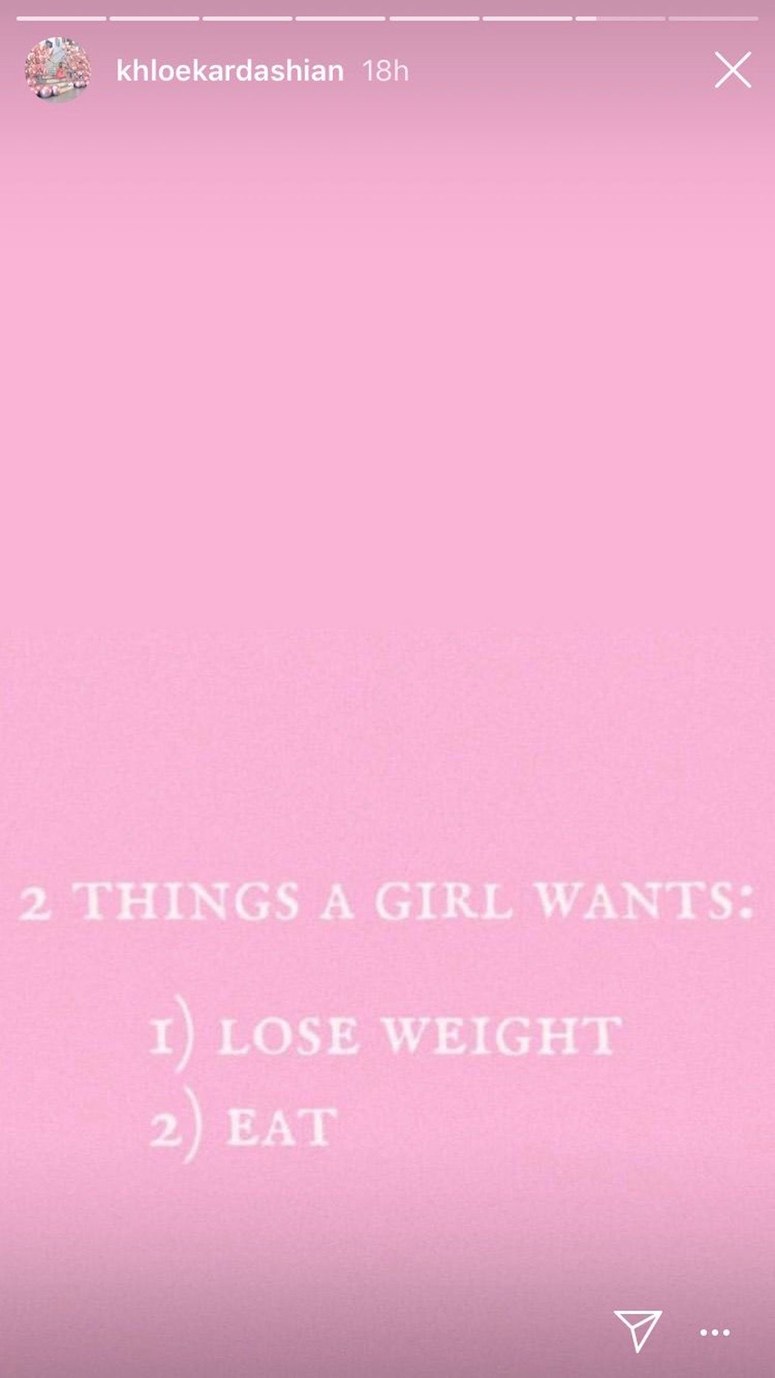
Now social media users are taking Khloé to task for a recent post about losing weight. Earlier this week, the reality star wrote on Instagram Stories two things she thinks girls want: to “lose weight” and to “eat.”

Instagram

Naturally, it didn’t take long for the criticism to pour in. The Good Place actress Jameela Jamil, who has spoken out repeatedly about the need to stop talking about weight in the media, took a screen shot of Khloé’s post and tweeted late Wednesday night, “This makes me sad.”

She later clarified that she wasn’t critiquing Khloé specifically but “the fat-shaming media” in general.

But Jamil wasn’t the only one upset by the problematic post. On Twitter, fed up users called out Khloé for sending a potentially toxic message to her millions of followers. “It’s actually really sad that so many girls follow Khloe and they’re all being told that it is normal for all of them to want to lose weight, rather than it being normal for all of them to be happy with their bodies,” one person wrote on Twitter. “Eating and losing weight are not mutually exclusive. Thinking they are is eating disorder behavior,” tweeted another.

Check out some more reactions to Khloé’s comment, below. (A few come to her defense.)

Khloé hasn’t responded to the backlash yet, but we’ll update this post when and if she does.

If you or someone you know is struggling with disordered eating, please call the NEDA helpline at 800-931-2237 or visit its website.

Related Stories:

Khloé Kardashian Gave Tips for Looking “Thin AF,” and I Kind of Expected More From Her

Kim Kardashian’s Sisters Praised Her for Looking “Skinny,” and People Aren’t Happy

Khloé Kardashian Producing a New Show About Killer Sisters Just Feels Right


Source link