Categories
Health

Alison Pill: ‘I Thought Mom Brain Would Be the End of Me—It Became My Super Power.’


It started with crosswords. Or rather, the lack of them. Or rather, the lack of me doing them. My brain was a little muddled, and names were not coming to me as easily as they once had, so suddenly crosswords weren’t as fun. Also books. And scary movies. And talking to people. I blamed the baby who’d suddenly taken up residence in my body.

I had complicated feelings about becoming a mom. As a feminist, I wondered how this new person would affect my work and how my work would affect this new person. How would I make sure I still had interesting things to talk about and not turn into a mom person who only wanted to chat about her kid? How would I keep my identity clear to myself, my husband, and this human?

I was between acting jobs when I got pregnant, and therefore was forced to a very luxuriously long (and very frustratingly unpaid) maternity leave. (Shockingly, no one was looking to hire a pregnant actress for non-pregnant parts.) It was the longest break I’d taken from working since I was 12. And surprisingly? I was into it. I was obsessed with the creature inside me, and what kind of curtains that person might enjoy as I decorated our nursery. I’ve never cared about curtains so much in my life.

Alison Pill in The Newsroom. 

Courtesy of HBO

Then I hit my third trimester and discovered that one of the great tragedies in the life of a pregnant lady is being unable to sleep. The little monster inside of me had taken my body’s stillness at night as an invitation to perform their own dances and yoga routines. It was wonderful…and annoying.

As a result of only sleeping from 3 a.m. to 7:30 a.m. most days (feeling thankful for every precious minute) and dealing with wave after wave of hormone changes, my brain was feeling…different. Less rested, more volatile. As the months passed, I gave up on crosswords past Thursday. I gave up on books that weren’t hilariously addictive crime fiction (Carl Hiassen in particular gave me joy in those very uncomfortable months). I gave up on movies that couldn’t guarantee a happy ending. And conversations about anything other than puppies and rainbows.

I hadn’t even given birth yet and already I had “mom brain”—I couldn’t have the same conversations or read the same books. I felt less and less recognizable to myself.

Eventually, the creature keeping me up all night from inside my body began keeping me up all night while outside of my body. It was a thrilling change becoming a mom, but did nothing for my sleep habits or my emotional consistency. I was a human puddle of hormones, thrilled when I got to have a shower, let alone a conversation with my husband that didn’t revolve around feeding schedules. I started to feel lonely, as so many new moms do—understandable given the person you spend the most time with sees you as a pair of nipples and a warm body. That person doesn’t share your love of Russian literature, or your interest in great plays. That person wants milk, sleep, cuddles, and to figure out how to make their eyes work. Fascinating and inspiring and beautiful though they are, infants are terrible conversationalists.

Deep into the disorienting haze of mom brain, I came upon a study outlining how pregnancy literally reduces the gray matter of your brain. The gist is that through “synaptic pruning,” a pregnant woman’s brain goes through a change similar to adolescence in its restructuring—some aspects of your cognition become weaker while others become sharper in an effort to better tailor your brain to the challenges of motherhood.

The idea that my brain was redefining what it could and would do was terrifying. I’d spent nine months surrendering so many things I thought were essential to my being—my body, my job, my irresponsibility. No one mentioned I’d also be giving up my brain as I knew it. But reading the study made me feel like someone had reached out to say, “It’s okay. Your brain is normal. You’ll be alright.” My lizard brain desire to protect my kid and lack of patience for social interactions that felt inauthentic suddenly made sense. Evolution is cool like that.

Motherhood did change my identity, right down to my gray matter, but not in the scary ways I’d feared. I used to have hours in a day to learn lines, to dream up character ideas, to wallow in self-indulgent actor stuff. Now I only have nap time to do all that but I find my brain can shift into different modes so much more swiftly. Mom brain isn’t such a bad thing.

Mother and child in black and white.

Alison Pill and Wilder. 

Joshua Leonard

More than anything, I’ve learned it’s impossible to get it right as parents, and yet, we do it anyway. Accepting the less-than-perfect scenario is my new cognitive superpower, and momhood lets me practice it every single day.

My kid is three now and my mom brain has continued evolving—mostly thanks to the fact that I now cohabitate with a little Question Machine. I try to limit myself to one “just because” answer per day, which means I have to do a lot of research. It’s exciting and humbling to realize just how little you know when grilled by a three-year-old.

My mom brain has become a time management expert, a more humble and patient servant, and a curious challenger—and I’ve never been more grateful for the work it does. Even if it means I don’t do crosswords all that often anymore. After all, I’ve got to use my mom brain to explain optical physics (AKA rainbows) to my three-year-old.

Alison Pill is mom to Wilder and also an actor. She can be seen in Star Trek: Picard and in the upcoming DEVS and Them.


Source link

Categories
Health

What ‘Shrill’ Gets Right—and Wrong—About the Morning-After Pill Weight Limit


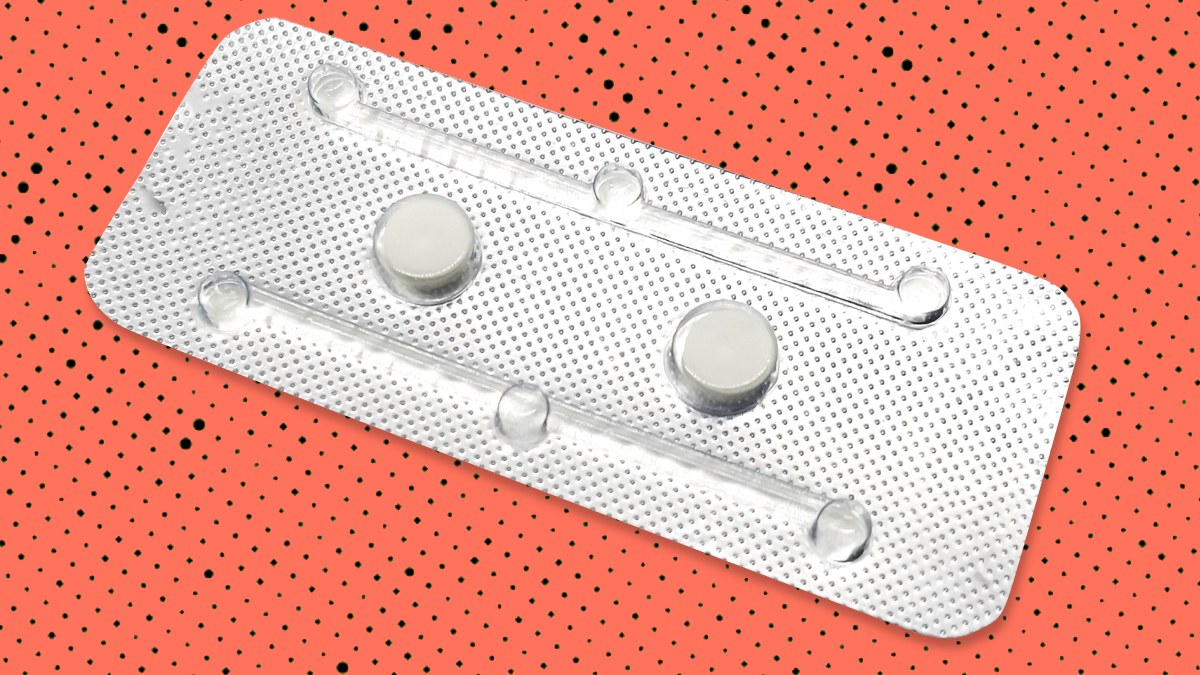
Shrill, a new show starring Aidy Bryant and cowritten by Bryant and author Lindy West, drops a casual bomb in its first episode, which premieres on Hulu today: There’s a morning-after pill weight limit.

Annie, the main character based on West in her hilarious memoir, realizes her period is late after an unprotected hookup with her shady nonboyfriend. Standing at the pharmacy counter, positive pregnancy test in hand, she asks how on earth she could be pregnant after taking the morning-after pill. “Do you weigh over 175 pounds?” the pharmacist asks coolly. “The morning-after pill is only dosed for women 175 pounds and under.”

The idea that the morning-after pill might not be effective for heavier women isn’t fiction. There are no warnings about efficacy and weight on the package of the emergency contraception Plan B, even though evidence suggests that the morning-after pill might be less effective for heavier women. “Women who are heavier are going to have a higher failure rate [with emergency contraception] than women who are of normal weight,” says Lauren Streicher, M.D., a clinical professor of obstetrics and gynecology at the Feinberg School of Medicine in Chicago. “Basically women who are obese have between a two- and fourfold higher risk of pregnancy than a woman of normal weight.”

Several studies back this up. A 2016 review of research on emergency contraception (EC) using levonorgestrel (like Plan B) and ulipristal acetate (like Ella) to prevent pregnancy found evidence that women over 175 pounds do indeed have a higher chance of getting pregnant after taking the morning-after pill—about 6 percent, which is about the same odds of getting pregnant without using any contraception.

Cue the collective What?! Why are women not warned about the morning-after pill weight limit?

The short answer is that there’s not quite enough data to warrant an FDA warning label detailing that the birth control method might not actually be an effective safety net for heavier women. Since pregnancies after taking EC are still rare, the data set is small and there are still woefully few studies on the effectiveness of birth control in larger-bodied women. In 2016 the Food and Drug Administration reviewed the available research and ruled the data was still “too limited to make a definitive conclusion.”

The higher risk of getting pregnant doesn’t mean larger-bodied women should forgo taking EC. “It doesn’t mean it’s ineffective—that would be completely the wrong word to use,” Dr. Streicher says. Officials in the EU actually did add a warning to the box of the European version of Plan B back in 2013, stating it became less effective for women weighing 165 pounds and totally ineffective for women weighing over 175, but the following year they reversed that decision, concluding that women of all weights should continue to take EC, since the “benefits are considered to outweigh the risks.”

“I tell patients anytime they use emergency contraception, there’s always a possibility of failure,” Dr. Streicher says, “and that if they’re overweight, that possibility of failure is more common. It doesn’t mean it’s ineffective—it means it’s less effective.”

The morning-after pill is never a 100 percent guarantee—everything from how soon you take it, to where you are in your cycle, to yes, weight, can impact how effective it is at preventing pregnancy. But if you’ve had unprotected sex, it’s still better than nothing, Dr. Streicher says.

That’s not exactly the most comforting thought. But heavier women do have another, more effective option: a copper IUD. The nonhormonal IUD works by creating a sperm-killing inflammatory response in your uterus, which starts working immediately (and can be inserted up to five days after unprotected sex). For most women a trip to the gyno for an IUD insertion is less preferable to popping a pill, but if you’re really worried about getting pregnant, it’s “the most effective method of emergency contraception,” for women at any weight, Dr. Streicher says. And you can of course leave it in for long-term birth control.

The important thing is that women are educated about the effectiveness of the morning-after pill—before they end up brandishing a positive pregnancy test at the pharmacist.


Source link

Categories
Health

The Inventor of the Birth Control Pill Designed It to Please the Pope—Not Women


Since the birth control pill was invented in the 1960s, doctors have known a dirty little secret: medically speaking, periods aren’t necessary. If you’re on the pill, you can safely skip your period—and the anxiety-ridden mood swings, acne and debilitating pain that can sometimes come with them—entirely. So, why have women been taking week after week of placebo pills to keep their period coming every month? You can blame the Pope.

Earlier this week, the Faculty of Sexual and Reproductive Healthcare (the official organization setting reproductive health standards for the NHS in the U.K.) made a update to their guidelines, officially stating there’s no health benefit to taking those monthly seven-day breaks from the pill. This has been typical pill protocol for decades, so why the reversal? According to John Guillebaud, a professor of family planning and reproductive health, it all goes back to John Rock, one of the gynecologists who invented the pill. A devout Catholic, Dr. Rock built in the break in order to please the Catholic Church and, he hoped, earn the endorsement of the Pope, Guillebaud told The Telegraph.

“In the Catholic Church, the Rhythm Method is an accepted form of birth control, so his thought was that if he could make women’s periods rock solid and regular, it would make this method easier to practice [and more appealing to the Pope],” says Sophia Yen, M.D., a gynecologist in California and founder of Pandia Health. Dr. Rock’s plan didn’t work—the Pope didn’t go for it and ultimately decided the Church wouldn’t support Catholics using birth control—but nevertheless, the built-in breaks to allow for a monthly period stuck.

In other words, the reason women on the pill have been having regular periods month after month, for the past 60 years, is all because a man was trying to please another man. Seriously.

This is of course much to the annoyance of many women, who, stats show, would gladly skip over that week of placebo pills (and the period that comes with them) if they could. In a 2018 survey conducted by Pandia Health, 57 percent of women ages 18 to 30 said they would “turn off” their period if they knew it was safe. But despite this, nearly two thirds of women said their doctor had never talked about this as an option with birth control. Part of the reason may be that doctors have been afraid to rock the boat, says Dr. Yen. “Doctors have only recently been more accepting of this idea. Now that we have other methods of birth control that suppress menses like the IUD, implant, and depo provera shot,” she says, doctors are able to collect more data on safely skipping your period.

And having fewer periods may actually be better for your health. Taking the pill daily without breaking for a period every month can help reduce acne, headaches (which can be triggered by a drop in estrogen levels when you take the sugar pills), and fewer painful periods, Dr. Yen says. Even bigger deal: It could lower your risk of ovarian cancer—studies have shown that the more you ovulate (aka the more periods you have over a lifetime) the higher your risk of ovarian cancer.

Armed with more and more data to face the crumbling decades-old misconceptions, “doctors are finally getting on board,” Dr. Yen says. After 60 years of following a plan meant to please the Pope, it’s about time.


Source link