Categories
Health

A Second Woman Accuses Supreme Court Nominee Brett Kavanaugh of Sexual Misconduct


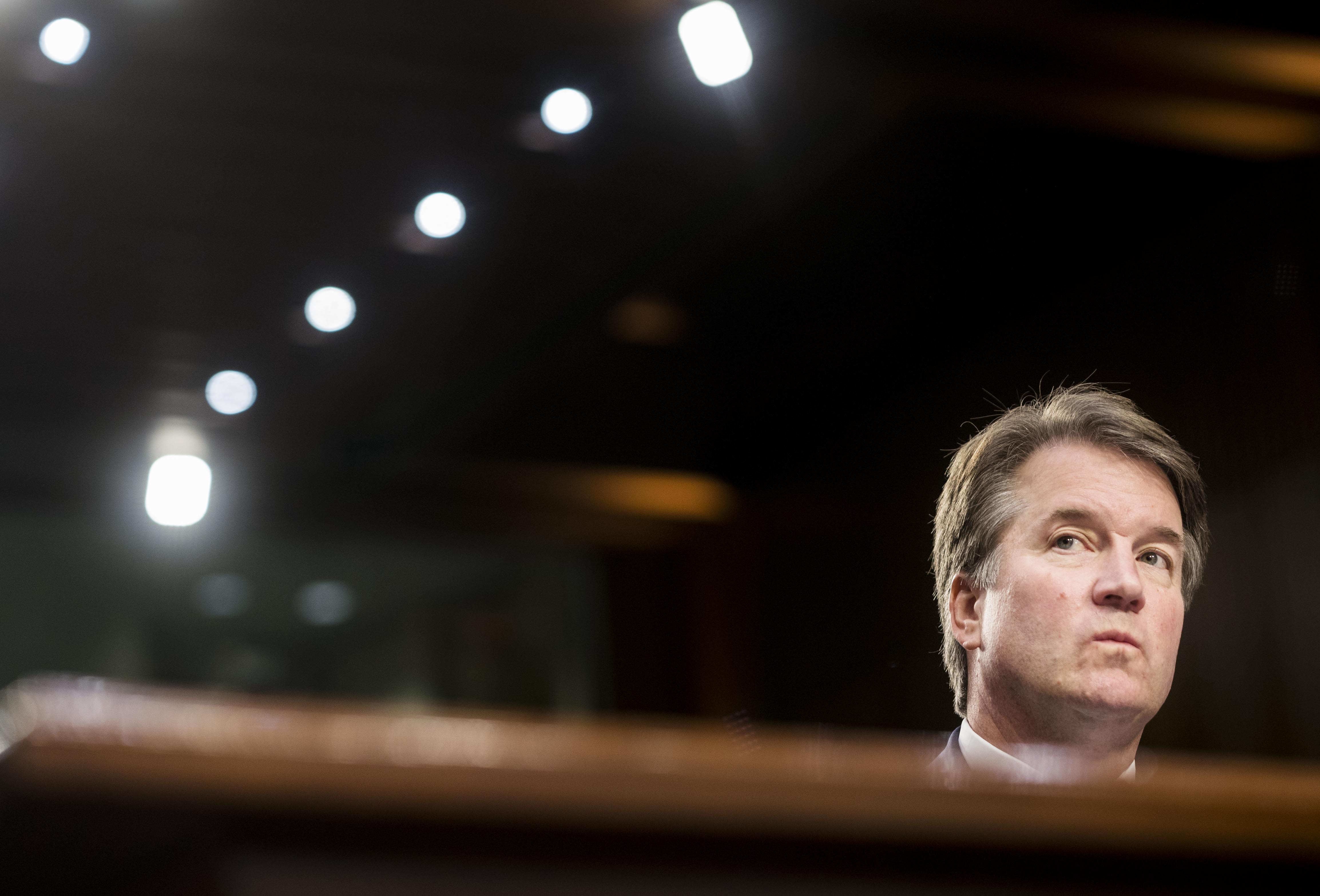
If you’re finding it difficult to keep up with the fast-moving news cycle around Supreme Court nominee Brett Kavanaugh, you are not alone. Sunday night brought a new allegation of sexual misconduct from a second woman via a piece by Ronan Farrow and Jane Mayer in The New Yorker. And now Thursday’s scheduled hearings—which were to feature testimony by Kavanaugh and his first accuser, Christine Blasey Ford—may be in jeopardy of being canceled.

So let’s break down the latest updates in Kavanaugh’s nomination hearings.

A second woman, Deborah Ramirez, has accused Kavanaugh of sexual misconduct.

Ramirez claims that the incident occurred during she and Kavanaugh’s freshman year at Yale University. She told The New Yorker that she was initially hesitant to speak publicly (partly because of gaps in her recollection due to the consumption of alcohol) but later told Farrow and Mayer that “she remembers Kavanaugh had exposed himself at a drunken dormitory party, thrust his penis in her face, and caused her to touch it without her consent as she pushed him away.”

Like Ford before her, she is asking the FBI to investigate the incident and Kavanaugh.

Kavanaugh denied the allegations in a statement to the magazine. “This alleged event from 35 years ago did not happen. The people who knew me then know that this did not happen, and have said so,” it reads. “This is a smear, plain and simple. I look forward to testifying on Thursday about the truth, and defending my good name—and the reputation for character and integrity I have spent a lifetime building—against these last-minute allegations.”

But according to an unnamed former classmate, who told the New Yorker he is “one-hundred-per-cent sure,” Kavanaugh was the student who exposed himself to Ramirez. “I’ve known this all along,” he told the magazine. “It’s been on my mind all these years when his name came up. It was a big deal.”

Others, including the wife of one of the male students she says was involved in the incident, disputes Ramirez’s claims.

“We were the people closest to Brett Kavanaugh during his first year at Yale. He was a roommate to some of us, and we spent a great deal of time with him, including in the dorm where this incident allegedly took place,” a statement given to the New Yorker from the wife and three other classmates—identified as Dino Ewing, Louisa Garry, and Dan Murphy—reads. “Some of us were also friends with Debbie Ramirez during and after her time at Yale. We can say with confidence that if the incident Debbie alleges ever occurred, we would have seen or heard about it—and we did not.”

Christine Blasey Ford agreed to publicly testify about her allegations.

On Sunday, the New York Times reported that Ford had reached an agreement with the Senate Judiciary Committee to appear before them on Thursday. This was after much back and forth that saw Republican leadership pushing for a quick date while Ford and her legal team worked to ensure she was treated fairly.

“Despite actual threats to her safety and her life, Dr. Ford believes it is important for senators to hear directly from her about the sexual assault committed against her they will not impede the hearing taking place,” her lawyers said in a statement.

However, Sen. Dianne Fienstein (D-Calif.) is calling for Thursday’s hearings to be canceled.

In a letter to Senate Judiciary Committee chairman Chuck Grassley (R-Iowa), Feinstein cited the second allegation against Kavanaugh as reason to postpone the hearings. She called for both Ramirez and Blasey Ford’s claims to be investigated by the FBI.

“We need a fair, independent process that will gather all the facts, interview all the relevant witnesses, and ensure the Committee receives a full and impartial report,” she writes. “Should the White House continue to refuse to direct the FBI to do its job, the Committee must subpoena all relevant witnesses.”

“It’s time to set politics aside,” she continues. “We must ensure that a thorough and fair investigation is conducted moving forward.”

The White House and leading Republicans are standing by Kavanaugh—for now.

White House spokesperson Kerri Kupec said in a statement to CNN, “This 35-year-old, uncorroborated claim is the latest in a coordinated smear campaign by the Democrats designed to tear down a good man. This claim is denied by all who were said to be present and is wholly inconsistent with what many women and men who knew Judge Kavanaugh at the time in college say. The White House stands firmly behind Judge Kavanaugh.”

Just this morning President Donald Trump called the allegations “totally political” and says “I am with him [Kavanaugh] all the way.”

Sen. Lindsey Graham (R-S.C.), a member of the Senate Judiciary Committee went on Fox News Sunday to deride Ford’s claims. “What am I supposed to do? Go ahead and ruin this guy’s life based on an accusation?” he said. “I don’t know when it happened, I don’t know where it happened, and everybody named in regard to being there said it didn’t happen.”

Women are mobilizing in support of Blasey Ford and Ramirez.

A number of women’s groups have organized a walkout scheduled for 1 PM ET Monday. The National #BelieveSurvivors Walkout will call attention to the plight of survivors of sexual assault and misconduct everywhere, while also asking the Senate to vote against Kavanaugh’s nomination.

“The groundswell of support for Dr. Ford is exactly what the me too. movement is about. So often, survivors struggle to disclose their assault or abuse and when they do, the response is similar to what we’re seeing now,” says #MeToo founder, Tarana Burke. “It’s been almost 30 years since Anita Hill’s testimony and we want to ensure that the Senate Judiciary Committee does the right thing this time.”

We will continue to update this story as it evolves.
MORE: Death Threats and Discrediting: The Treatment of Christine Blasey Ford Is a Reminder of What’s at Stake for Sexual Assault Survivors


Source link

Categories
Health

Betsy DeVos' New Campus Sexual Misconduct Rules Protect The Accused


New policies that activists against sexual misconduct say will make it easier for colleges and universities to protect themselves in cases of campus sexual assault are set to be proposed by Secretary of Education Betsy DeVos, according to a New York Times report.

Most alarming, critics point out, the changes to federal policy on campus sexual misconduct will bolster the rights of the accused. The rules, obtained by the Times, would also encourage schools to provide more support for victims, but considering DeVos’ track record with education policy—especially when it comes to rolling back protections for victims of sexual assault and harassment—that’s not exactly confidence-inspiring.

This isn’t DeVos’ first go at tackling sexual assault on campus—the new Trump administration rules are a continuation of changes she announced last September that ended Obama-era Title IX guidelines that protected survivors. And while the new proposals will keep much of Title IX—the 1972 federal law banning sex-based discrimination at schools receiving federal funding—intact, it will redefine sexual harassment in schools and how institutions address incidents and allegations, the Times reports.

Here’s a quick breakdown of how DeVos and her team have addressed sexual assault on campuses so far.

DeVos quickly got rid of Obama-era rules and guideline:

In September of 2017, DeVos threw out a number of policies put into place by President Barack Obama’s administration. One key piece was the 2011 “Dear Colleagues Letter,” a comprehensive directive on how schools receiving federal funding should handle sexual violence on campus—everything from evidence-gathering protocol to how quickly cases should be investigated.

Many on the left—including California Senator Kamala Harris— argued that the decision would make it harder for assault victims to come forward.

“Every day on campus I see hundreds of women who have been sexually assaulted at least once, and 63 percent of sexual assaults are not reported to the police, according to the National Sexual Violence Resource Center,” Missouri State University student Hope Burnette told Glamour in September after the announcement.

“This is only going to weaken what little voice we already feel we have against those who have assaulted us, and give strength to those who still believe that ‘boys will be boys’ is a valid argument for groping a woman without her permission.”

The Department of Education has been criticized for valuing the accused over victims:

Some DeVos staffers are on the record saying some pretty problematic things about sexual misconduct. Candice Jackson, in her role as head of the Education Department’s Office for Civil Rights told the New York Times last July that investigative processes are not “fairly balanced between the accusing victim and the accused student.”

“Rather, the accusations — 90 percent of them — fall into the category of ‘we were both drunk,’ ‘we broke up, and six months later I found myself under a Title IX investigation because she just decided that our last sleeping together was not quite right,'” she said, according to the Times.

She later issued a statement in an attempt to clarify, saying that her opinion was based on feedback from cases involving accused students, and even if complaints don’t allege violence, “all sexual harassment and sexual assault must be taken seriously.”

Democratic attorneys general have long taken issue with DeVos’ possible policy changes:

Twenty Democratic attorneys general were so concerned about DeVos rolling back Obama-era Title IX guidelines that they sent the education secretary a letter outlining what they saw as major issues with her plan. “While we recognize that there is a great deal more that can be done to protect students and agree on the importance of ensuring that investigations are conducted fairly, a rushed, poorly-considered effort to roll back current policies sends precisely the wrong message to all students,” they wrote.

“Yet there is every indication that is exactly the approach your Department is taking.”

DeVos wants to narrow the definition of “sexual harassment:”

This latest round of proposed rules would adjust the definition of sexual harassment and only hold the schools accountable for formal complaints made to the proper authorities. (For example, a resident advisor would not count as a proper authority.) According to the Times, sexual harassment would be defined as “unwelcome conduct on the basis of sex that is so severe, pervasive and objectively offensive that it denies a person access to the school’s education program or activity.”

By comparison, Obama-era guidelines (which she killed in 2017) used a more broad definition of “unwelcome conduct of a sexual nature,” that includes “unwelcome sexual advances, requests for sexual favors, and other verbal, nonverbal, or physical conduct of a sexual nature.”

There will also be changes to how investigations are conducted—and that will impact victims:

There are also new proposed guidelines about how investigations are to be conducted.

“And, for the first time, the administration explicitly says that just as an institution’s treatment of a complainant could constitute sex discrimination, so would the treatment of the accused,” the Times writes. This is where the accused stand to hold more power.

“The 2011 and 2014 guidance documents may have been well-intentioned, but those documents have led to the deprivation of rights for many students—both accused students denied fair process and victims denied an adequate resolution of their complaints,” Candice Jackson, the Department of Education’s acting assistant secretary for civil rights, wrote at the time of the rollbacks.

In addition, the rules will still employ DeVos’ policy of using mediation to reach resolutions, meaning the accused can cross-examine the victim. These latest changes as outlined in the Times would appear to be one of the final steps in a year-long endeavor by DeVos’ Education Department to do away with Obama-era guidelines.

However, Liz Hill, an Education Department spokeswoman, says the Times‘ report “is premature and speculative, and therefore, we have no comment.”

Response on social media was still swift and damning—with many remarking on the fact that President Donald Trump himself has been accused of sexual misconduct by a number of women.

Sen. Kirsten Gillibrand (D-N.Y.) offered perhaps the harshest critique.

“When has @BetsyDeVosED ever stood with anyone but the powerful? She sides with for-profit colleges over students, lenders over borrowers and predators over survivors,” she tweeted.

“At every turn, she betrays her responsibility to the students she’s meant to serve. It’s sickening.”

MORE: 9 College Women Speak Out Against Betsy DeVos’ New Campus Sexual Assault Rules


Source link

Categories
Health

Asia Argento Responds to Sexual Misconduct Allegations


The Internet exploded with takes on the future of the #MeToo movement Sunday after a New York Times report claimed Italian actress Asia Argento—a vocal leader for survivors of sexual violence—secretly paid off a young male actor who accused her of sexual assault. Now Argento is speaking out herself, saying she strongly denies the “contents” of the article and clarifying her relationship with actor Jimmy Bennett.

An intent-to-sue document obtained by the Times states that Argento engaged in a sexual encounter in May of 2013 with the then 17-year-old actor and musician, with whom she had costarred in the 2004 film The Heart Is Deceitful Above All Things. According to the document, the incident occurred in Argento’s Ritz-Carlton hotel room in Marina del Rey, California. Argento, per the account in the Times report, asked a family member who arrived with Bennett to leave before serving him alcohol and engaging in intercourse with him. Argento eventually agreed to pay Bennett $380,000, the Times reports.

At the time of publication, the actress and her team had not responded to the Times‘ repeated attempts for comment, but on Tuesday, she released a statement to journalist Yashar Ali in which she denies the account.

“I strongly deny and oppose the contents of the New York Times article dated 20 August 2018, as circulated also in national and international news,” Argento writes. “I am deeply shocked and hurt by having read news that is absolutely false. I have never had any sexual relationship with Bennett.”

She goes on to describe her account of how the payment came to be, alleging that she had a “friendship” with Bennett that ended when he “unexpectedly made an exorbitant request of money from me.” Argento says that Bennett was having economic problems at the time and references him taking legal action against members of his own family over finances.

“Bennett knew my boyfriend, Anthony Bourdain, was a man of great perceived wealth and had his own reputation as a beloved public figure to protect,” the statement reads.

She continues by claiming that Bourdain (and Bennett) wanted the matter handled privately and that Bourdain, also worried about the negative publicity, considered him “dangerous.” Argento says that Bourdain “personally undertook to [sic] help Bennett economically, upon the condition that we would no longer suffer any further intrusions in our life.” (Bourdain died by suicide in June of this year.)

The actress says that she will “oppose such false allegations” and seek out “all necessary initiatives for my protection before all competent venues.”

Argento herself has come forward with allegations of sexual misconduct at the hands of disgraced Hollywood executive Harvey Weinstein. While Weinstein has pleaded not guilty to six felony sexual assault counts in New York, including first-degree rape, he has denied all of her claims about their encounters.

The Times‘ report sparked online conversation about the legitimacy of #MeToo, prompting leaders and supporters to respond with statements that urged the public not to let allegations against Argento negate the movement at large.

Related Stories:

New Sexual Misconduct Allegations Against Asia Argento Shouldn’t Negate the #MeToo Movement

Asia Argento: Cannes Was Harvey Weinstein’s ‘Hunting Grounds’


Source link

Categories
Health

New Sexual Misconduct Allegations Against Asia Argento Shouldn't Negate the #MeToo Movement


A new report from the New York Times claims Asia Argento, the Italian actress who was among one of the first women to accuse producer Harvey Weinstein of sexual assault, secretly agreed to pay a young male actor who accused her of sexual misconduct following her own admissions about Weinstein.

The Times reported that it obtained documents containing allegations that the actor, identified as Jimmy Bennett, was sexually assaulted by Argento in 2013 when he was 17. (The age of consent in California is 18.) The two had acted together in a 2004 movie, The Heart Is Deceitful Above All Things, playing mother and son.

The paper reports that seeing Argento emerge publicly as a sexual assault victim brought back memories for Bennett, citing an intent to sue document in which his lawyer wrote, “His feelings about that day were brought to the forefront recently when Ms. Argento took the spotlight as one of the many victims of Harvey Weinstein.”

Argento was one of the first women to publicly accuse Weinstein of assault, and subsequently became one of the movement’s most vocal voices. She described an incident to the New Yorker where she said she was led to Weinstein’s hotel believing it to be a studio party, but instead found the movie mogul alone in the room. She says he asked her for a massage, which she reluctantly agreed to do. According to Argento, Weinstein “pulled her skirt up, forced her legs apart, and performed oral sex on her as she repeatedly told him to stop.”

Argento also gave a rousing speech at this year’s Cannes Film Festival where she described the event as “hunting grounds” for Weinstein. (While Weinstein has pleaded not guilty to six felony sexual assault counts in New York, including first-degree rape, none are related to Argento. He has denied all of her claims about their encounters.)

According to the intent to sue document cited by the Times, the two were “intermittently” in contact afterward starring in the 2004 film together. “Jimmy’s impression of this situation was that a mother-son relationship had blossomed from their experience on set together,” his lawyer wrote. According to Bennett’s account of what occurred in May of 2013, the young actor met up with Argento in her Ritz-Carlton hotel room in Marina del Rey, California with a family member.

The Times reports that the account states that Argento asked the family member to leave and that she then served Bennett alcohol and kissed him before performing oral sex and engaging in intercourse with him. Argento also reportedly took a number of photos with Bennett, some with the two semi-clothed, which were included in the intent to sue document.

According to the paper, Argento eventually agreed to pay Bennett $380,000.

Following the report, many Twitter users starting criticizing #MeToo, seemingly conflating the allegations against Argento with the movement at large.

But others, including #MeToo leaders, are taking to Twitter to sort out their feelings amidst these new allegations. It’s a complex and nuanced discussion, to say the least.

These are incredibly serious allegations and should be treated as such. But what they should not do is take down or negate all the work that the #MeToo movement has done over the past year. It’s almost becoming cliche to say, but two things can be true at the same time. Argento’s alleged behavior does not mean that what happened to her and many other women at the hands of predatory men like Weinstein didn’t occur or that the issues surrounding women in the workplace are not still valid and important.

Argento and her team have yet to respond to the Times‘ repeated requests for comment.

Related Stories:

Brock Turner Loses Appeal to Overturn Sexual Assault Conviction

#MeToo Forced Me to Reevaluate My Own Sexual History—and I’ve Taken Advantage of Women


Source link

Categories
Health

Halle Berry Speaks Up About Sexual Misconduct Accusations Against Her Former Manager Vincent Cirrincione


News broke on Friday that Halle Berry’s former manager and Taraji P. Henson’s current manager, Vincent Cirrincione, has been accused of sexual misconduct by nine women in a story published by The Washington Post. Berry, who ended her business relationship with Cirrincione three years ago after hearing rumors of sexual misconduct, opened up about her anger on Friday night.

Cirrincione had become known for helping women of color break into the entertainment industry after he helped raise Berry to stardom. But when eight African American women and one Asian American woman sought his representation, they allege he met them with sexually inappropriate behavior. According to The Washington Post, he allegedly asked some women for sex as a condition for working with them and when they refused, he would not take them on. One woman alleges he masturbated in front of her during the time he managed her.

“Yesterday I was saddened by the allegations against my former manager, Vincent Cirrincione, but today I’m sick after reading the horrifying detailed accounts of his abuse towards 9 women,” the actress said in an Instagram post.

“I’m livid that used me, and the role model he helped me become, to lure and manipulate innocent, vulnerable women of color for his predatory actions. I’m deeply hurt and I want these woman and countless others to know I see you. I hear you. You matter. I will fight for you,” she said.

This message comes after a statement that Berry issued earlier in the day, saying, “Over three years ago, a woman was on the radio saying that Halle Berry’s manager was her worst casting couch experience ever. That news literally stopped me in my tracks. I immediately confronted Vince about it, and he denied it completely,” she said. “But even with his denial, something didn’t feel right in my spirit, and with the possibility that it could be true, I immediately ended our over-25-year relationship.”

Berry, who has been a supporter for the Women’s March and Times Up Movement, said that while she never had any inappropriate experiences with Cirrincione, she has a “no tolerance policy” when it comes to allegations of misconduct.

Henson, however, said she never heard any kind of accusations. “I’ve never had any issue with this on any level,” she told The Washington Post. “He totally respected me.”

Cirrincione admitted to having affairs during his career, but maintains that they were all consensual and that he did not ask for sexual favors in return for representation.

Related Stories:
Post-Weinstein, These Are the Powerful Men Facing Sexual Harassment Allegations
Halle Berry Opens Up About the Lack of Diversity in Hollywood
Shonda Rhimes Wants to Ban the Phrase ‘Strong Female Leads’—and She’s Not Wrong


Source link

Categories
Health

Hillary Clinton Allegedly Protected Campaign Adviser Accused of Sexual Misconduct: Report


The New York Times published a story on Friday that claims Hillary Clinton ignored complaints about sexual harassment against a senior campaign adviser, Burns Strider.

According to the report, Strider, who worked closely with Clinton on her 2008 White House run, was accused of “repeatedly sexually harassing a young subordinate.” The young woman ultimately made a complaint against Strider after he allegedly “rubbed her shoulders inappropriately, kissed her on the forehead and sent her a string of suggestive emails,” the outlet alleges.

After it had been filed, the complaint was escalated to the campaign manager, who reportedly urged Clinton to release Strider from his duties. But, per the Times, despite this recommendation to cut him loose, Strider remained on the team at Clinton’s request.

As a result of the allegations against him, Strider was reportedly docked several weeks of pay and ordered to undergo counseling. The young woman who made the accusations was moved to a new job within the campaign, the Times reports.

As with most political staffers, the signing of a nondisclosure agreement during the campaign that barred employees from publicly discussing campaign ongoings prevented the young woman from coming forward with the story on her own. When reached by a reporter from the Times, she declined to comment.

Following Clinton’s failed White House run in 2008, Strider went on to lead a group, Correct the Record, that backed Clinton’s 2016 candidacy. According to the Times, Strider was fired several months later, however, with “workplace issues” as the catalyst for his release. It was noted by the Times that these “issues” included allegations that he “harassed a young female aide” at the organization.

The New York Times reached out repeatedly to Strider for comment, but has yet to receive a reply. You can read the whole story here.

Clinton responded to the story via Twitter on Friday: “A story appeared today about something that happened in 2008,” she wrote in a series of two tweets. “I was dismayed when it occurred, but was heartened the young woman came forward, was heard, and had her concerns taken seriously and addressed. I called her today to tell her how proud I am of her and to make sure she knows what all women should: we deserve to be heard.”


Source link