Categories
Health

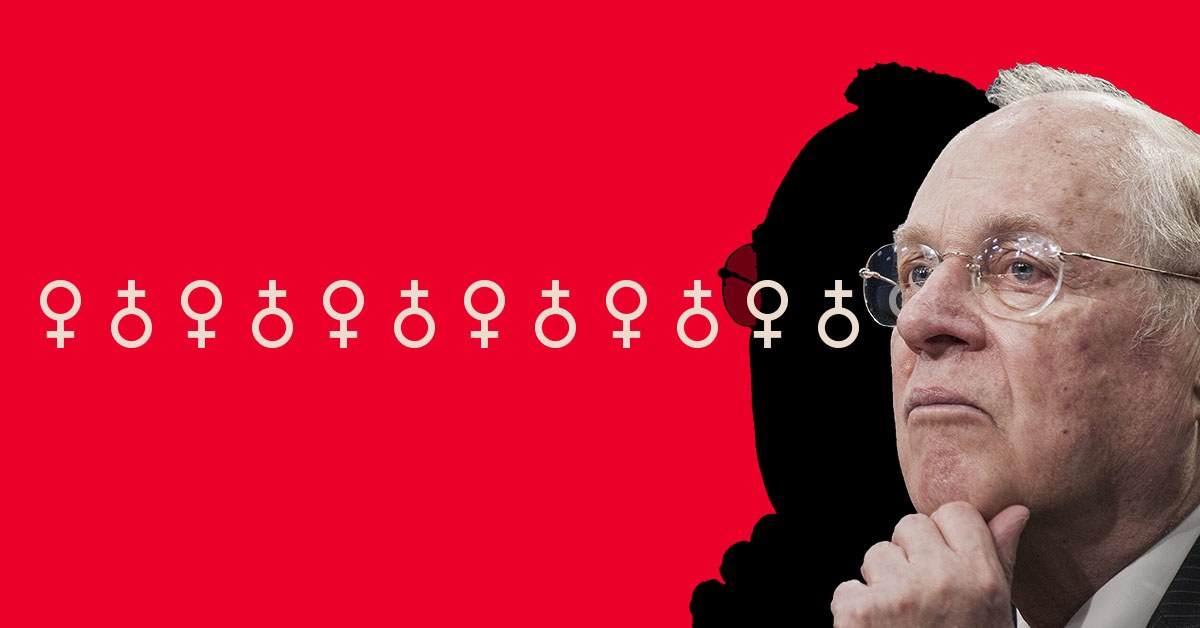
Pro-Choice Organizations Launch the #OneInFour Campaign Ahead of President Trump's Supreme Court Nomination


Ahead of Donald Trump’s announcement of his choice for a nominee to replace Justice Anthony Kennedy on the Supreme Court, pro-choice groups like Planned Parenthood, NARAL, Shout Your Abortion, and Advocates for Youth are gearing up for a fight over one of the nation’s most divisive issues—a woman’s right to choose and the possible overturning of the landmark Roe v. Wade, the court case that ostensibly legalized abortion in the United States.

Today, they are launching a social media campaign called #OneInFour where they are asking women to share their own abortion stories (if possible) or to stand with those who are. Participants can also tag their senator and ask them to oppose any SCOTUS nominee who does not voice explicit support for Roe v. Wade. (You can find your senator’s Twitter handle here.)

The name #OneInFour comes from the statistic that nearly one in four women in the United States will have had an abortion by the age of 45.

That’s almost a quarter of the female population and yet there is still an incredible amount of stigma attached to women talking about their own abortions. Not to mention the online trolls. But as the Shout Your Abortion website states: “Abortion is normal. Our stories are ours to tell. This is not a debate.”

When women share their abortion stories, we see that there is not one type of woman who makes the choice to end her pregnancy. And that there are also legions of women standing behind her, supporting her right to do so.

And that’s just the beginning as women keep talking and keep sharing.

We will know more about the battle ahead for the pro-choice movement Monday night after the president names his SCOTUS nominee, but the future of access to safe and legal abortion is most certainly in jeopardy.


Source link

Categories
Health

How Justice Anthony Kennedy's Retirement From the Supreme Court Could Erode Women's Rights


Presidents come and go, but Supreme Court justices last a lifetime—and their rulings can affect women for generations to come.

The privilege of nominating a high court judge now falls to President Donald Trump for the second time with the coming retirement of Justice Anthony Kennedy.

Trump has vowed to put conservative judges on the bench, and he kept that promise when he chose Neil Gorsuch to replace the late Antonin Scalia last year. In choosing Kennedy’s replacement, Trump could shift the court further to the right, changing the landscape on issues affecting American women—including abortion rights—and could fire up both sides of the aisle in an already tumultuous election year.

Here’s a look at what’s ahead for the court—and the the country.

What’s at stake?

Trump’s next nominee may matter even more than his last. Replacing Scalia with Gorsuch didn’t change the court’s partisan balance; it was a case of one conservative justice succeeding another.

That’s about to change, according to Melissa Murray, the Alexander F. and May T. Morrison Professor of Law at the University of California, Berkeley.

“Over the last 20 years, Justice Kennedy emerged as the sort of prototypical swing justice on the court, the person whose vote was pivotal in securing and upholding such policies as affirmative action,” Murray, who clerked for Justice Sonia Sotomayor before her SCOTUS appointment, told Glamour. “He often was on the progressive side [of issues], though not all. And he of course was famously the architect [of] basically the whole process of getting to same-sex marriage… His retirement is actually a huge void, and it sort of disrupts the equilibrium of the court.”

Murray said a rightward SCOTUS lurch could deeply influence women’s lives on issues ranging from abortion rights to voting protections to unionized labor.

What will happen with abortion law if a hard-right conservative gets the seat?

A huge amount of the attention surrounding Trump’s Supreme Court pick centers on how it might affect abortion—and more specifically the landmark 1973 case of Roe v. Wade, which effectively made abortion legal in the U.S. The departing Kennedy was the swing vote, siding with the liberals, in later cases seen as a direct threat to Roe.

A number of states already have their own legal restrictions on the termination of pregnancies. Abortion-rights proponents fear that cases now making their way through the lower courts could ultimately lead to the overturning of Roe and the end of legal abortions in America—something deeply conservative Vice President Mike Pence has openly said will happen this lifetime.

Pro-choice and anti-abortion advocates are mobilizing their bases ahead of Trump’s pick.

“The idea of Trump having his choice to fill another vacancy is terrifying for not only abortion rights, but for our ability to live free from discrimination in this country,” said Dawn Laguens, executive vice president of Planned Parenthood Federation of America in a press release issued in response to Kennedy’s retirement announcement. The group said its “11 million supporters call on the Senate to reject any nominee who would strip people’s individual rights and freedoms.”

“The most important commitment that President Trump has made to the pro-life movement has been his promise to nominate only pro-life judges to the Supreme Court, a commitment he honored by swiftly nominating Judge Neil Gorsuch,” said Marjorie Dannenfelser, president of the pro-life Susan B. Anthony List, in a press release issued by the group. “President Trump now has another crucial opportunity to restore respect for life and the Constitution. We trust him to follow through on his promise.”

So what does it mean if Roe v. Wade is overturned?

If the case is actually overturned, the landscape of where and what women can choose to do with their own bodies could change drastically.

In four states (Illinois, Kentucky, Louisiana, South Dakota), there are so-called “trigger laws” so abortion would be automatically banned if Roe is overturned.

According to the Guttmacher Institute, only eight states currently have legislation protecting the right to an abortion. Though it would be safe to assume that blue states without such laws would work to enact them quickly.

Red states and rural areas would likely see access to legal abortions disappear locally, meaning there would be an added financial burden in trying to travel to a state where they are still legal. This would disproportionately affect lower income women. CNN’s Jeffrey Toobin predicted that abortion would be illegal in 20 states within 18 months.

What does this mean for Trump’s base?

As Amy L. Howe noted in a piece for SCOTUS blog, “Anti-abortion voters had played a key role in [Ronald] Reagan’s election, and Kennedy initially provided both the president who appointed him and those voters with reason to be optimistic.”

Trump’s unfavorable ratings remain higher than his approvals in the runup to a midterm election that could make or break his party’s control of Congress.

“Without a doubt, the court appointment is a huge boost for Trump and Republicans, who were facing serious headwinds going into midterms. They still are—SCOTUS will drive significant [Democratic] and female turnout,” CNN commentator S.E. Cupp told Glamour.

At the same time, warned the conservative Cupp, “Don’t underestimate how much it will also motivate conservatives and evangelicals. If they were contemplating staying home, they now have reason to get out and vote. SCOTUS is the only—and I mean only—thing around which the fractured right can rally.”

Related Stories:

The NRA’s Most Wanted Customer: Women

Democratic Voters Wanted Something Different. They Got Alexandria Ocasio-Cortez.


Source link

Categories
Health

These Celebrities Have a Lot of Thoughts About the Supreme Court Shakeup


Yesterday, the already-frenzied news cycle amped up to a new level with Justice Anthony Kennedy’s announcement that he will be retiring from the Supreme Court. That means that President Donald Trump will now have the chance to nominate a second judge, after already placing Justice Neil Gorsuch on the highest court in the land not long after his inauguration.

Justice Kennedy is one of the conservative members of the court, but he has been a swing vote (siding with the liberals) on a number of key issues like abortion rights and gay marriage. His Trump-nominated replacement is expected to make the court much more conservative—and many are concerned about what that means for the future of Roe v. Wade and other cases.

Which is why some of Hollywood’s most famous, and outspoken, celebrities are taking to social media to make their opinions known and calling on their followers to take action.

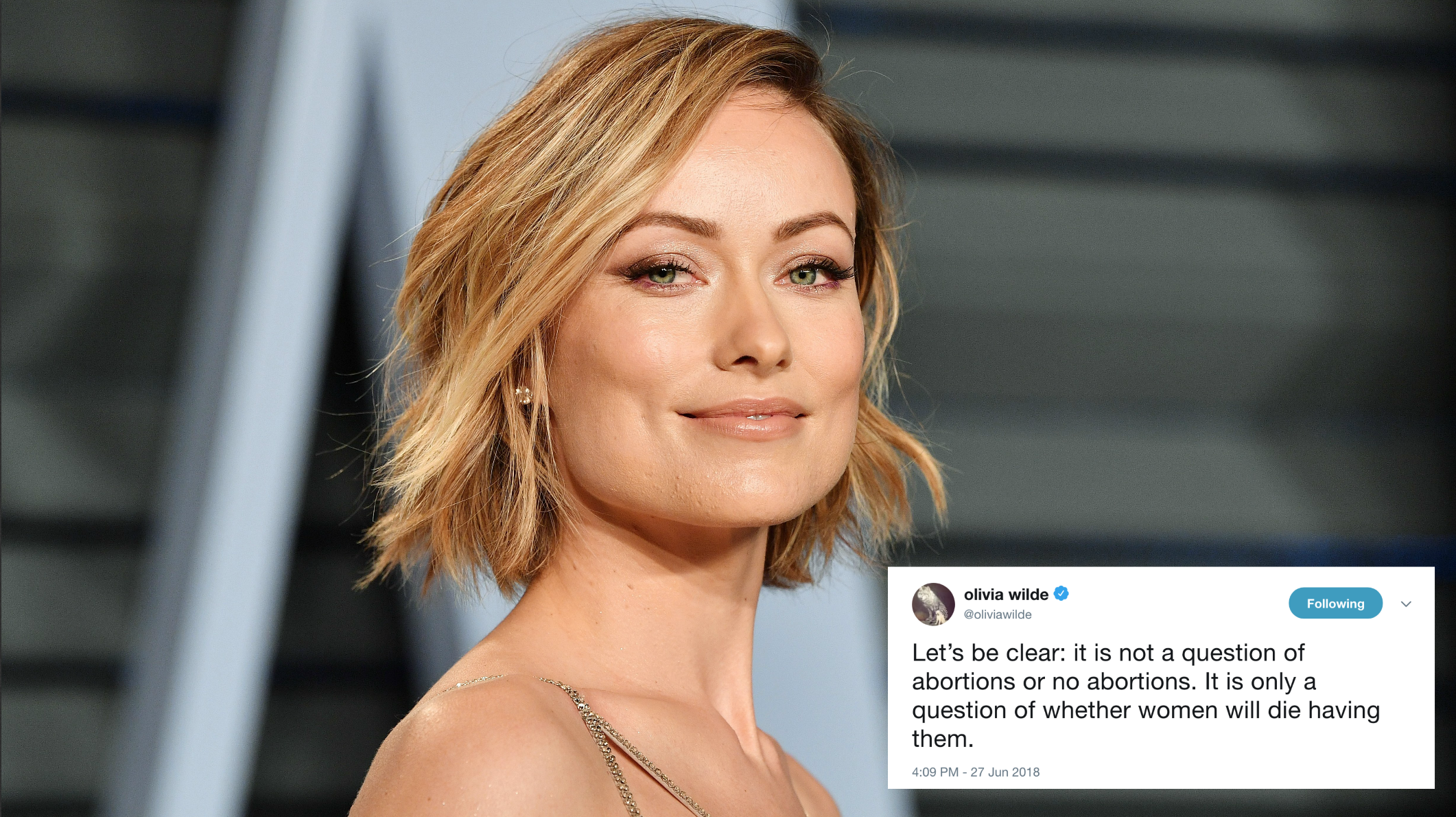
Olivia Wilde, never one to shy away from speaking her mind, was very blunt in tweeting, “Let’s be clear: it is not a question of abortions or no abortions. It is only a question of whether women will die having them.”

Debra Messing posted an Instagram video—wearing a “Badass Feminist” shirt—pledging that she is ready to dig in and fight. “If Trump gets one of his nominees in we are looking at Roe v Wade being overturned,” she wrote. “Gay marriage overturned. It would be terrible for Union members, and everyone who needs affordable health care. Civil Rights as we know them will be chipped away. PLEASE commit to fighting this.”

Some, like comedian Billy Eichner, were just sad—while Cher was her usual fired up (and all caps) self.

Queer Eye‘s Jonathan Van Ness tweeted, “Omg can we do that cute unconstitutional thing again where we stall on nominees until the next election?” (He’s referring to the time Senate Majority Leader Mitch McConnell refused to hold hearings on then-President Barack Obama’s Supreme Court nominee, Merrick Garland, in 2016 because it was an election year.)

Of course, there was a Handmaid’s Tale reference.

Kathy Griffin is depending on Justice Ruth Bader Ginsburg.

Alyssa Milano and Chelsea Handler want people to keep hope—and also VOTE.

Wherever you stand on the issue, be prepared to see your social media feeds jammed with talk of SCOTUS and judicial nominees for the foreseeable future.


Source link

Categories
Health

The Supreme Court Backed Trump's Travel Ban. But Judges Sotomayor and Ginsburg Aren't Having It.


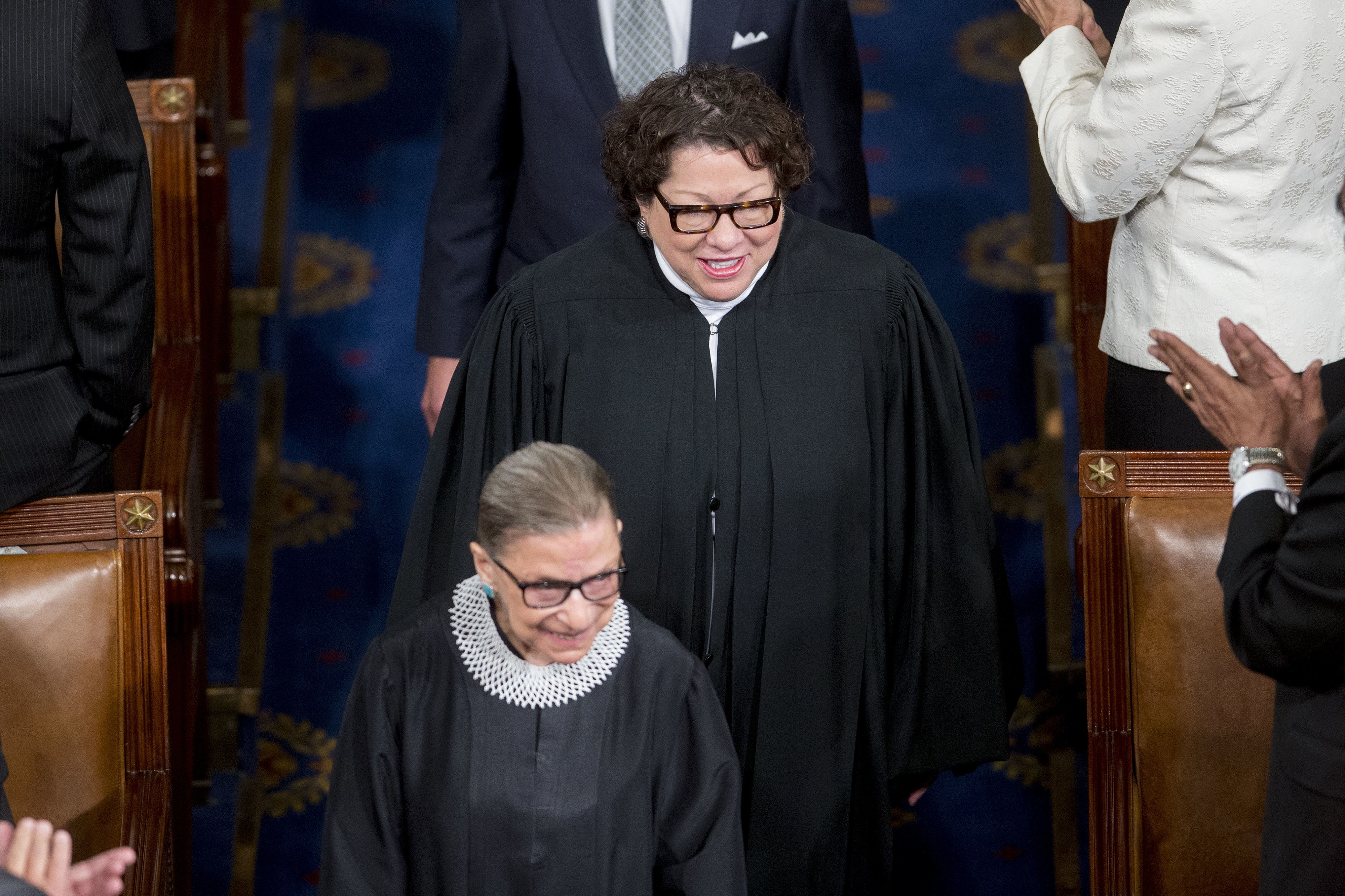
As the Supreme Court upheld President Donald Trump’s travel ban by a margin of 5-4 on Tuesday, it was two of its female justices—Sonia Sotomayor and Ruth Bader Ginsburg—who provided the harshest critiques of both the ruling and the policy itself.

As a refresher, this version of the travel ban (the administration’s third) restricts entry into the United States from seven countries, many of which have majority Muslim populations: Iran, North Korea, Syria, Libya, Yemen, Somalia, and Venezuela. The rules for entry vary by country. For example, immigrants (even those seeking asylum) and non-immigrants from Syria are barred from entering the country, but most Venezuelans will be unaffected. (Per CNN, the ban will mostly affect government officials from that country.)

Citizens from banned countries are able to apply for waivers on a case-by-case basis, like traveling to the US for medical treatment, or to visit a close family member. But The Guardian reports that there are a very limited number of waivers actually being granted.

Sotomayor, who was joined by Ginsburg in her dissent, boldly stated that the court failed to uphold the fundamental right of freedom of religion in her opening remarks. “The United States of America is a Nation built upon the promise of religious liberty,” she wrote. “Our Founders honored that core promise by embedding the principle of religious neutrality in the First Amendment. The Court’s decision today fails to safeguard that fundamental principle.”

She continues by calling the ban one that is designed to keep Muslims out of the country and calls out attempts to repackage it. “It leaves undisturbed a policy first advertised openly and unequivocally as a ‘total and complete shutdown of Muslims entering the United States’ because the policy now masquerades behind a façade of national-security concerns.”

Sotomayor calls out fellow justices in the majority saying they are “turning a blind eye to the pain and suffering the Proclamation inflicts upon countless families and individuals, many of whom are United States citizens.”

And the justices were not afraid to mention the president directly in their formal dissent.

“Ultimately, what began as a policy explicitly ‘calling for a total and complete shutdown of Muslims entering the United States’ has since morphed into a ‘Proclamation’ putatively based on national-security concerns,” the dissent reads. “But this new window dressing cannot conceal an unassailable fact: the words of the President and his advisers create the strong perception that the Proclamation is contaminated by impermissible discriminatory animus against Islam and its followers.”

Sotomayor did not shy away from noting the instances of Trump calling the policy a “travel ban” and his negative remarks about Islam and Muslims. “Despite several opportunities to do so, President Trump has never disavowed any of his prior statements about Islam. Instead, he has continued to make remarks that a reasonable observer would view as an unrelenting attack on the Muslim religion and its followers.”

“History will not look kindly on the court’s decision today—nor should it,” Sotomayor concluded.

While many applauded the justices’ passion in calling out the bigotry in the policy and ruling, the New York Times classified Sotomayor as having “lashed out” against President Trump in a tweet—and Twitter users were not happy about it.

You can read the full dissent here.

Related Stories:

The Hypocrisy in the Supreme Court’s Backing of California’s Anti-Abortion Pregnancy Centers

What Does That Supreme Court ‘Narrow Ruling’ on the Same-Sex Wedding Cake Case Really Mean?


Source link

Categories
Health

The Hypocrisy in the Supreme Court's Backing of California's Anti-Abortion Pregnancy Centers


If you’re a woman considering an abortion—a legal procedure in the United States—your doctor may be required by law to present you with alternatives to abortion (like adoption) depending on the informed consent laws in the state you live in.

In fact, according to the Guttmacher Institute, 29 states require that written material on the topic of adoption and abortion be developed by the state. Eighteen states require that those materials be offered to the patient to present options and 11 states say those materials must be given to women. But now, based on the 5-4 ruling by the Supreme Court on Tuesday, crisis pregnancy centers—faith-based non-profit organizations that counsel women against having abortions—in California will no longer be required to provide the same level of information.

In short, while the law requires hospital or health center staffers to tell women seeking abortions about adoptions, it does not require counselors at crisis pregnancy centers to give information about free or low-cost abortions, prenatal care or contraceptives to women. And that hypocrisy has prompted strong responses online, where Twitter users were quick to call out the different standards being applied.

The debate began when anti-abortion centers argued that a California law—the Reproductive Freedom, Accountability, Comprehensive Care, and Transparency (FACT) Act—which required them to disclose information about abortions, went against their beliefs and violated their First Amendment rights.

The law had mandated that these crisis pregnancy centers disclose whether they have a medical license or have medically licensed professionals available. They also had to post a notice in a conspicuous space with the following statement: “California has public programs that provide immediate free or low-cost access to comprehensive family planning services (including all FDA-approved methods of contraception) prenatal care, and abortion.”

The court ruled that the law probably does violate the First Amendment and kicked the case back to lower courts for further proceedings, which is seen as a victory for anti-abortion groups.

Justice Clarence Thomas delivered the Court’s majority opinion writing that the law “targets speakers, not speech, and imposes an unduly burdensome disclosure requirement that will chill their protected speech.”

However, Justice Stephen Breyer called out what appears to be hypocrisy in his dissent: “If a State can lawfully require a doctor to tell a woman seeking an abortion about adoption services, why should it not be able, as here, to require a medical counselor to tell a woman seeking prenatal care or other reproductive healthcare about childbirth and abortion services?”

If informed consent, while not encroaching on constitutional rights, is the goal, it’s hard to see how this ruling accomplishes that. The reason the law came about in the first place was based on the belief that crisis pregnancy centers were willfully misleading patients.

According to the Los Angeles Times, state lawmakers concluded that “as many as 200 pregnancy centers in the state sometimes used ‘intentionally deceptive advertising and counseling practices that often confuse, misinform, and even intimidate women’ about their options for medical care.”

Tuesday’s ruling will likely impact cases regarding similar laws currently making their way through the courts.

While the abortion debate may never come to an end, the Supreme Court’s ruling today has certainly changed the landscape for many women, and at the very least, highlighted a hypocritical standard and a slippery slope.


Source link

Categories
Health

Supreme Court Sides With Baker In Narrow Ruling on Same-Sex Wedding Cake Case


The Supreme Court on Monday issued a ruling in the Masterpiece Cakeshop v. Colorado Civil Rights Commission case, siding with the baker who refused to make a wedding cake for a same-sex couple.

While LGBTQ+ groups pointed out that the Court acknowledged their rights, they also noted something that was noticeably missing—Monday’s ruling was neither a hit or an advance for our current civil rights laws, as many expected it would be.

“In today’s narrow ruling against the Colorado Civil Rights Commission, the Supreme Court acknowledged that LGBTQ people are equal and have a right to live free from the indignity of discrimination,” Human Rights Campaign (HRC) President Chad Griffin said in an emailed statement. “Anti-LGBTQ extremists did not win the sweeping ‘license to discriminate’ they have been hoping for—and today’s ruling does not change our nation’s longstanding civil rights laws. Yet, the fact remains that LGBTQ people face alarming levels of discrimination all across the country and HRC’s efforts to advance equality are as urgent as ever.”

But what exactly does it mean for the LGBTQ community and religious freedom going forward? And what does it mean that the decision was “narrow?”

The case stems from a 2012 incident where David Mullins and Charlie Craig visited Masterpiece Cakeshop looking for a cake for their wedding reception. The baker, Jack Phillips, refused to make the custom cake, claiming that support for same-sex marriage went against his religious beliefs. The couple then filed a discrimination complaint with Colorado’s civil rights commission. They won with the commission and the state courts, where Philips asserted that his First Amendment rights had been violated.

The Colorado Court of Appeals held that they had not. That’s when the case made its way to the Supreme Court.

Monday’s “narrow” decision refers to the legal definitions and not to the actual vote of 7-2 in favor. In writing the majority opinion, Justice Anthony Kennedy said, “The outcome of cases like this in other circumstances must await further elaboration in the courts, all in the context of recognizing that these disputes must be resolved with tolerance, without undue disrespect to sincere religious beliefs, and without subjecting gay persons to indignities when they seek goods and services in an open market.”

The majority opinion focused less on the issue of free speech and more on problems with the way the case was initially handle by the civil rights commission in Colorado. According to Kennedy, one commissioner “crossed the line” with the following statement: “Freedom of religion and religion has been used to justify all kinds of discrimination throughout history, whether it be slavery, whether it be the Holocaust.” Kennedy called the sentiment “inappropriate for a commission charged with the solemn responsibility of fair and neutral enforcement of Colorado’s anti-discrimination law.”

But in dissent, Judge Ruth Bader Ginsburg wrote: “When a couple contacts a bakery for a wedding cake, the product they are seeking is a cake celebrating their wedding ― not a cake celebrating heterosexual weddings or same-sex weddings ― and that is the service [the couple] were denied.”

For some perspective on what cultural impact this decision might have, Glamour spoke to Rachel Tiven, CEO of Lamda Legal—a national organization that works ”to achieve full recognition of the civil rights of lesbians, gay men, bisexuals, transgender people through litigation, education, and public policy,” according to their website.

“This should have been an open and shut case for the Supreme Court,” she says. “Every single case like this that has appeared in court so far, courts have resoundingly said it’s not okay to discriminate just because your religion tells you to.”

“Under our laws, federal law and the law in many, many, many states, you can say, ‘No Shirt. No Shoes. No Service.’ but you cannot say, ‘No Shirt. No Shoes. No Lesbians.’ This is dangerously much closer to that than any decision has been.”

Tiven fears that this case now provides a roadmap for other people and businesses who are looking to discriminate. She notes that it is important to remember “that nothing in this decision changes existing non-discrimination law.”

On the other side, Senior Counsel Kristen Waggoner of the Alliance Defending Freedom (ADF) who represented Philips released this statement following the court’s ruling: “Creative professionals who serve all people should be free to create art consistent with their convictions without the threat of government punishment. Government hostility toward people of faith has no place in our society, yet the state of Colorado was openly antagonistic toward Jack’s religious beliefs about marriage.”

“The court was right to condemn that,” Waggoner wrote. “Tolerance and respect for good-faith differences of opinion are essential in a society like ours. This decision makes clear that the government must respect Jack’s beliefs about marriage.”

While they may have exhausted all of their legal options, Craig and Mullins have vowed to keep fighting discrimination.

The couple issued a statement on the court’s ruling. “Today’s decision means our fight against discrimination and unfair treatment will continue,” they said. “We have always believed that in America, you should not be turned away from a business open to the public because of who you are. We brought this case because no one should have to face the shame, embarrassment, and humiliation of being told ‘we don’t serve your kind here’ that we faced, and we will continue fighting until no one does.”

The two are not without a fair amount of political support, as well.

In a statement, Democratic congressional leader Nancy Pelosi said: “The Masterpiece Cakeshop case is about the most fundamental right of all Americans: to be free from persecution and discrimination because of who they are or whom they love. While narrowly framed to apply to the decision-making process undertaken by the state commission, today’s wrongheaded decision fails to uphold equality in this case.”

“No business or organization open to the public should hide their discriminatory practices behind the guise of religious liberty.”


Source link