Categories
Health

In Spite of Everything, Awards Season Is Packed With Stories About—and for—Women


This Sunday, the 75th Golden Globe Awards will take place in Los Angeles and this year’s leading narratives have one exceedingly timely theme: female renegades. Groundbreaking films and shows like SMILF, Three Billboards Outside Ebbing, Missouri, and I, Tonya all secured nominations, sending a clear message: Stories about rebellious women aren’t just craved by viewers, they’re also valued by the industry.

2017 was a catastrophic year for women, given the post-Weinstein climate and the Trump administration’s attack on the female body, but in this mess female-fronted films and shows with character types we’ve never seen before rose up. Finally, we saw crass, powerful women who were cathartic and invigorating to watch. Of course, the Golden Globe nominations aren’t perfect—their lack of acknowledgement for female directors and women of color is insulting—but nonetheless, the nominations set the tone for an awards season that’s shaping up to be exceedingly female.

Just look at last year’s nominees to see how steeply different things are: In 2017, all five Best Picture (Drama) nominees were male-led films, as were the nominees for Best Screenplay in a Motion Picture. This year, however, three out of the five nominees for Best Picture (Drama) are female-led, and all five of the nominees for Best Screenplay are female-led. (While we’re at it—so are all five nominees for Limited Series or Motion Picture Made for Television.) Women are finally being given their long-deserved leading roles, but what sticks out the most are the types of roles.

Molly’s Game, I, Tonya, and Three Billboards all feature female protagonists who aren’t just crude and bullheaded: They’re criminals. It was refreshing to watch women sit comfortably in their own imperfections, rather than being lionized as flawless heroes. Criminals aside, SMILF, Lady Bird, The Post, and The Shape of Water also told stories about female rebellion. Whether it be a good decision, like Kay Graham’s historic resolution to publish the Pentagon Papers (The Post), or a terrible one, like Bridgette having sex while her toddler slept next to her (SMILF), these women were untamable. They were flawed and wholly and unapologetically themselves.

The nominated shows and films are also filled with stories of bold trailblazers, like Queen Elizabeth in The Crown, Billie Jean King in *Battle of the Sexes, and Midge, a female stand-up in the 1950s in Amy Sherman-Palladino’s The Marvelous Mrs. Maisel. Some tell stories about female bravery, like Margaret Atwood’s dystopian The Handmaid’s Tale or the Reese Witherspoon-fronted Big Little Lies. Even Stranger Things, which is led primarily by male protagonists, features a breadth of courageous women who, most times, overpower and usurp their male counterparts.

“Women are no longer being defined just by tender sexuality by men,
they’re being defined in all of their dimensionality.”

Understandably, many women of Hollywood are relieved that this year is glaringly different. “Women are no longer being defined just by tender sexuality by men, they’re being defined in all of their dimensionality,” Sarah Finn, the casting director behind Three Billboards, tells us. She continues, “Men have been allowed to have characters on screen in every range and spectrum, but women haven’t had the range that they’re being able to exhibit this year. It’s really thrilling.” Finn suggests that these “intensely flawed and intensely human” characters are being celebrated because they resonate with current audiences, especially women. With Big Little Lies and Feud: Bette and Joan leading in Golden Globe nominations for television, and The Shape of Water, Three Billboards, and The Post leading in film, clearly the demand for these movies is being met with deserved praise. “These movies are being seen and appreciated now, given the climate in this country and given women’s desires to be seen and acknowledged.”

Still, we can do better: Most of these shows and films are written and directed by men. Which is why Frankie Shaw, the star and creator of Showtime’s SMILF, wants to create more female representation, both on-screen and behind the camera. On her decision to hire only female directors for both the first and second seasons of her show, Shaw says, “I worked in TV as an actor for awhile before I started writing and directing, and only once in 10 years had I been directed by a woman. So I was like, let’s just even the playing field.”

Like Sarah Finn, Shaw sees the importance of portraying imperfect women on-screen—and having women tell their own stories is important to her. “I just feel like the more women who are telling their stories, we see more three-dimensional characters represented by women too,” she explains. “When you have a very messy and flawed and struggling young woman as a mom, I think it’s something that people weren’t used to seeing.” She admits this fight isn’t over, but the television landscape is still undeniably better than it’s ever been. “It’s a time where our show can exist, and it could not have existed any other time.”

“It just so happens that there are a lot of other people who are fed
up right now.”

Outside of the Golden Globes, the upcoming awards season looks just as promising: Three Billboards won the audience award, the top honor at the Toronto International Film Festival, which created some serious Oscar buzz for the film. Lady Bird, The Post, The Shape of Water, and Three Billboards are all nominated for Best Picture at the Critics’ Choice Awards. Three Billboards and Lady Bird led the nominations in film at the Screen Actors Guild Awards, while Big Little Lies and GLOW led in television. Lady Bird, I, Tonya, The Shape of Water, Molly’s Game also scored nominations at the Writers Guild of America Awards.

And while it’s incredible to see Greta Gerwig’s film Lady Bird accrue all the attention it deserves, Frankie Shaw is right: Behind the scenes, women need more seats at the table, especially women of color. Hopefully, that change is happening now, as we’ve seen some recent wins: At the 2017 Emmy Awards, Lena Waithe, a queer woman of color, won the award for Outstanding Writing for a Comedy Series on Master of None; Reed Morano won in the Outstanding Directing for a Drama Series category for her work on The Handmaid’s Tale.

The future definitely looks female, and the trauma of 2017 will hopefully bring about a new beginning for women. “It’s in the air, it’s in the zeitgeist,” Shaw says of this moment in history. “You get to a boiling point, and that’s where I was—these are my experiences. These are the experiences and the stories that I’m interested in talking about in this world, and it just so happens that there are a lot of other people who are fed up right now.”


Source link

Categories
Health

Lena Waithe: 'Why We Can't Keep Telling Stories About a Singular Black Experience'


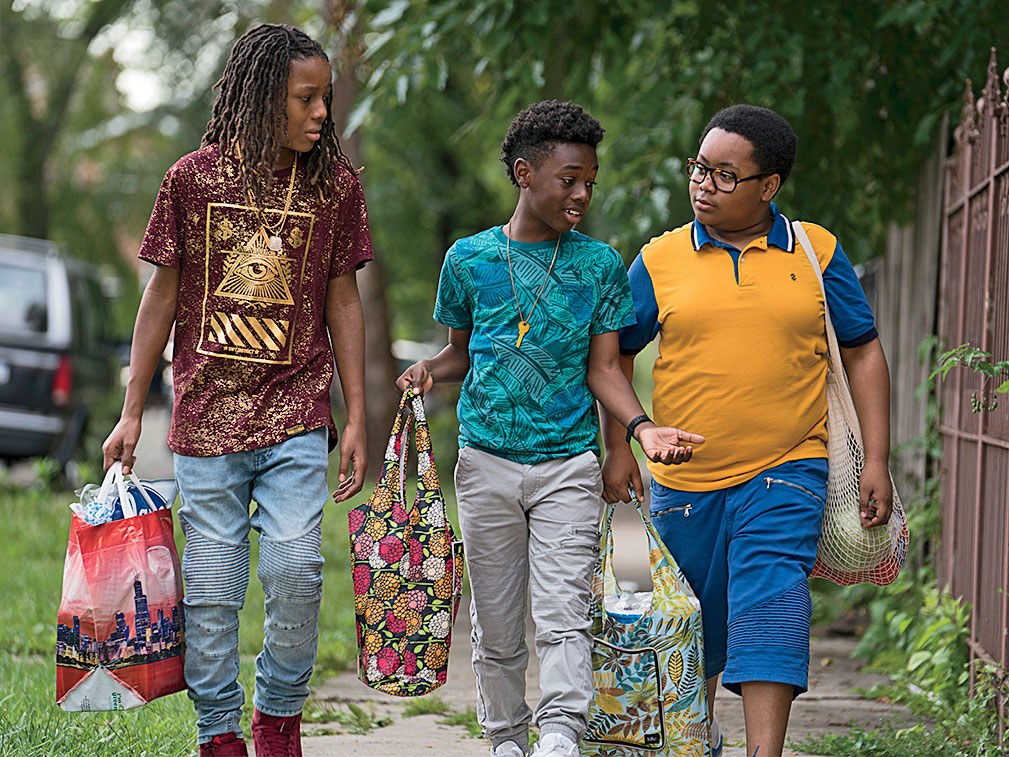
Writer and actor Lena Waithe believes in honest storytelling. (See her deeply personal coming out episode on Netflix’s Master of None—yeah, she won an Emmy for it). Now, with The Chi she’s turning the camera towards her hometown, Chicago.

Back in 2015 I was seeing all these news reports and profiles coming out about the gun violence and the shootings in my city, Chicago—and many were by journalists who have never broken bread with the people who live there. I remember thinking, I know these stories, and not all black people in Chicago are a monolith. We don’t all walk the same, talk the same, or think the same. We have different dreams and goals and hopes. I’m a black writer who was born in Chicago.

If it’s not my responsibility to tell our story, whose is it? I felt the same way about the “Thanksgiving” episode of Master of None, which was based on my own personal coming-out experience. I wanted to be honest to my memory of what happened: the humor and the missteps. For people to embrace a queer black girl’s story the way they did says a lot about where we are in society. We’re a lot further than we think. But for that reason, we can’t keep telling stories about a single black experience.

PHOTO: Parrish Lewis

The Chi, my new series for Showtime, is about being black and human and trying to survive on the South Side of Chicago. For me, growing up was all about hustle, grind, and fighting for what you want. There weren’t drive-by shootings and sirens every night. I know that might have been some people’s experience, but that wasn’t my perception at all. My grandmother was part of the Great Migration. She left the South and came to this city looking for a better way of life. I have that history in my blood and in my bones. My sister and I grew up in the same house that my mother grew up in. Mom always had two jobs. We earned everything we had. These are the people I had in mind when I created my characters. I named them after people in my family and kids I grew up with.

I wanted these characters to be three-dimensional and shown in an honest light—sometimes negative, sometimes positive. I wanted to explore why people, particularly young black people, make the decisions they make and what their lives look like before they step out the door and onto the street corner. I’m from Chicago, but so are Chance the Rapper, Sam Cooke, Donny Hathaway, Kanye West, and Jennifer Hudson. It’s where Oprah found her voice and where Barack Obama decided to start his political career. Where I’m from is something I never want to forget—whether that means wearing Jordans or my Bulls T-shirt or sticking my chest out and holding my head high like my grandmother taught me. It’s a legacy I carry with me like a backpack. —as told to Simone Kitchens

Lena Waithe, 33, is an Emmy-winning writer and actor. Her new series The Chi premieres on Showtime this month.


Source link

Categories
Health

Chrissy Teigen Calls Out 'Sh-tty' Friends Who Sell Stories About Her


Chrissy Teigen, model, mother, host, and cookbook author, is never one to mince words on Twitter, and she just used her platform to call out a tactic used by many celebrity gossip writers: taking quotes from unnamed sources. As in, “this thing happened to this celebrity, according to a friend of the celebrity.”

Quote-retweeting an article from E! News about her supposed pregnancy cravings, Teigen wrote, “You guys should do a service to all the celebs who give you hourly content and say who your sources are so we can get rid of the shitty ‘friends’ in our lives who sell you stories.” Damn Chrissy, go off.

It’s not 100% clear if she’s calling out E! News, the “friend” who leaked the information, or both. It’s understandable that she’d want to get people who would sell anonymous quotes about her out of her life. Or maybe she’s insinuating that the quotes are fabricated or from people who don’t really know Chrissy very well. She’s totally correct to point out that “the celebs who give you hourly content” deserve better than to be used as clickbait, especially if the story isn’t true, but it’s also worth mentioning that the relationship between celebrities and the press is symbiotic. The reason people know about Teigen’s many projects is because they, and her life, are well-covered in the media. She might also be mostly joking. (This is Chrissy Teigen we’re talking about, after all.)

As for the article itself, the “source” basically says that Chrissy is eating a ton of junk food and excited about being pregnant. Hmm.

One Twitter user, though, suggested a pretty genius way to find out who the leaker in Chrissy’s circle is:

Unfortunately, she doesn’t have the poker face to pull it off:

Get a solid squad, Chrissy!

Related: Chrissy Teigen Shuts Down Rumors That Her Marriage Is on the Rocks


Source link

Categories
Health

Four Powerful #MeToo Stories Take Center Stage at Glamour Women of the Year Awards


One of the most powerful moments from Glamour‘s Women of the Year Awards undoubtedly came from Jodi Cantor and Megan Twohey, the New York Times journalists who, six weeks ago, broke a story that can only be described as world-changing: The decades of sexual harassment and abuse by Hollywood producer Harvey Weinstein. Since, their story has furiously opened floodgates beyond Hollywood, and hundreds of powerful men across several industries are starting to be held accountable for their actions.

“When we stood with our bosses in the investigative unit of the Times and pushed the “publish” button, we had no idea what would happen: the women who spoke to us feared criticism and retaliation,” said Twohey on Glamour‘s stage, adding that when she’d previously documented allegations of sexual misconduct by Donald Trump, he snapped back with personal attacks and litigation threats. “Instead, every day of the last six weeks has brought new stories as women have come forward with accusations against abusers in every field,” she said. “Female farmworkers, restaurant workers, and athletes have shared their stories. To date, the hashtag #MeToo has been Tweeted over 2.3 million times in 85 countries.”

From there, four women took the stage—attorney and academic Anita Hill, gold-medal gymnast Aly Raisman, New York City police officer Ann Cardenas, and model and activist Cameron Russell—to share their own #MeToo moments. Here are their stories.

Anita Hill: In 1991 I testified before the Senate Judiciary Committee that Clarence Thomas, who had repeatedly harassed me when he was my boss, was unsuitable to sit on the U.S. Supreme Court.
 
The outcome of my testimony was not what I’d hoped, but in no way was it the final word. In the five years after I testified, sexual harassment complaints filed with the EEOC more than doubled. Legislation against harassment slowly but surely started to pass. And I saw that we had a chance to shift this narrative.
 
Ann Cardenas: A quarter of a century later, in 2016, I settled a sexual harassment lawsuit against my supervisor, who pinned me down while I was eating, called me crude names and sent me lewd photos.
 
I was terrified to speak up—afraid of losing my job, or being physically harmed. But I got up my courage and did it. I wasn’t going to let this guy keep me from doing the job I love. 
 
Cameron Russell: Last month a friend and fellow model sent me her story of being sexual abused on set. She asked me to share her experience anonymously on Instagram. In less than 48 hours hundreds of individuals, inspired by her act of bravery, came forward too.
 
For too long, sexual harassment has been a norm in our profession. If we complain, the response is, “Well, that’s part of the job.” But our jobs should NOT include abuse.
 
Aly Raisman: Most people know me as a gymnast, but I am also a survivor: I am among a huge number of young gymnasts abused by U.S. Olympic and USA Gymnastics team doctor, Larry Nassar. This man held a position of influence and power in the sport for more than 20 years, and the extent of the harm he caused is beyond comprehension. More than 130 young women have filed lawsuits alleging abuse by Nassar, and we may never know how many others may be suffering in silence.

I stand here for all of them. I am beyond disgusted that a decorated Olympic and USA Gymnastics doctor was able to prey upon so many over such a long period of time; and until we fully understand the flaws in the system that allowed this to happen in the first place—and enabled it to continue for decades—we can’t be confident it won’t happen again.  We need more than optimistic assurances; we need answers.  We need to take a hard, honest look at the sport’s culture, governance, and leadership, so we can understand the problem, and come up with solutions that will make the sport safer for the next generations. I am determined to work towards real and meaningful change.
 
Hill: After years of not trusting our own inner voices we need to say this out loud: Women are entitled to work, and girls are entitled go to school and compete like Aly does, in places free of sexual harassment. 
 
Cardenas: This is not a fashion or a Hollywood problem; this is a power problem that exists in every profession, whether you’re a famous name, or a cop like me.
 
Russell: After hearing all these stories it would be easy to believe that power is a boss in a back room. But his power isn’t the kind that can heal, or love, or make the world more just and free.

Power looks like the thousands of individuals, who, inspired by one another’s bravery, are coming forward with their stories. Like Anita, Anna, and Aly, we are challenging the status quo — how we work, how we treat each other, and what we accept.
 
Raisman: Even if you’re not a survivor of any kind of abuse, it’s still important to show concern and compassion. We are all in this together. Sharing our stories can make it easier to talk about such an uncomfortable subject, which makes it harder for monsters to take advantage. If this is something you have experienced and want to take this time to stand up, we invite you to join us NOW.

Cardenas: If it’s happened to your co-worker, friend, girlfriend, sister, mother, daughter, son, anyone you care about…we ask you to stand with us now.

Hill: If you’re willing to commit making things better where you work or go to school, no longer looking the other way, but actively calling and pushing for change—then please, we ask you to stand with us now.
 
Russell: Look around you! Thousands of people are here, ready to unite in this moment. We are the majority. We have the power to make a more livable world. And to those who continue to speak out, we hear you.
 
Hill: For committing to a more equitable and just world for everyone, thank you.


Source link

Categories
Health

This Model Is Giving Women in the Fashion Industry a Platform to Share Their Sexual Harassment Stories


The Harvey Weinstein sexual harassment and sexual assault scandal has taken down one of Hollywood’s most powerful power players and producers, and in the days that have followed the New York Times‘ bombshell report sharing women’s accounts of his misconduct, more women have stepped forward with their own accounts of business meetings or auditions that Weinstein allegedly set up to get women alone with him. For these women, the power dynamic was an undeniable factor in their encounters: pissing off Weinstein could essentially shutter their (often aspiring or beginning) careers in Hollywood, while to give in to his coercive alleged demands for a massage or more would compromise the person they were (not to mention leaving emotional scars).

Sadly, it’s not an usual dynamic: men in power across many industries have, not infrequently, taken advantage of women who had something to gain from a positive, professional relationship with them. The world of fashion isn’t immune to this, either—and one model, Cameron Russell, is taking a stand in Weinstein’s wake to give her colleagues, friends, and fellow models a platform to share their own accounts of abuse while on the job.

Her social media movement began when a friend reached out to Russell, and it has since spawned its own Twitter hashtag, #MyJobShouldNotIncludeAbuse, which has been buzzing with accounts from women or their experiences.

“We need a way to begin breaking the silence while remaining protected. We are not talking about one, five, or even twenty men,” wrote Russell in her initial post. “We are talking about a culture of exploitation and it must stop.”

The accounts don’t make for easy reading. Even more heartbreaking is the fact that many models begin working in the industry when they’re still underage. The fashion industry is also notorious for not setting up adequate protections for models—in the accounts below, more than one mentions being sent on a shoot alone to a photographer’s apartment or studio.

“We talked about how hard it is to share stories of assault. When they are the norm, calling them out can feel disruptive and unprofessional…” she continued. “And because the response has always been ‘are you surprised?’ or ‘that’s part of the job’ I tolerated them. When the offenses were bigger, calling them out is terrifying, and demands a level of exposure and backlash to what is already painful and sometimes shameful.”

Since this initial post, she’s shared the stories of dozens of others in the industry. Note: most of the accounts come with trigger warnings.

Russell also pointed out a telling sentence in one email: “It’s just the way he is.”

It’s also not only women who are the targets.

Russell’s work is opening up a new platform for women to band together—let’s hope that some real, effective change comes out of it. Some in the industry, like casting director James Scully, are actively working to make it a safer place for models, but there’s still a long, long way to go.

Related Stories:
An Explosive Report Alleges Decades of Sexual Harassment by Harvey Weinstein
Harvey Weinstein Was Just Fired From His Own Company Over Sexual Harassment Allegations
These Are All the Women Who Have Accused Harvey Weinstein of Sexual Harassment and Assault


Source link

Categories
Health

3 Women Who Quit Their Jobs at Google Share Stories of Workplace Racism and Sexism


Google has had a lot going on lately, and some of its most high-profile news doesn’t look great for women—especially those of color. There’s the fallout of a former engineer’s 10-page anti-diversity manifesto, the threat of a class-action lawsuit by 60 women alleging workplace sexism, and a Department of Labor investigation alleging “extreme” pay discrimination based on gender. Now, a Guardian report has detailed the day-to-day experiences of three women who quit their jobs at Google due to racial and gender discrimination.

In the Guardian article, which was published on Friday, former technical specialist Qichen Zhang; a black female former specialist who spoke out under anonymity; and former engineer Lashmi Parthasarthy shared their harrowing accounts of racial and gender discrimination at the tech giant. All three were in the minority at Google: the company is predominantly white and male, at 56 percent and 69 percent respectively, according to its website.

“I didn’t see a lot of women, especially Asian women, black women or other women of color in the executive ranks,” Zhang told the Guardian.

One pivotal moment Zhang recalled during her one year at Google was a conversation with a white male colleague. “He said, ‘It must’ve been really easy for you to get your job because you’re an Asian woman, and people assume you’re good at math,'” Zhang, a Harvard graduate, said. “It was absolutely stunning. I remember me just emotionally shutting down.”

Zhang ultimately chose to left in 2014 after more incidents that left her feeling isolated—and like there was no future for her at the company. “It’s just these little daily aggressions that really add up over time,” she said. “Having a lack of people who look like you in general is demoralizing.”

“People had this broad concept of ‘racism doesn’t exist at Google and sexism doesn’t exist at Google,'” she added*. “Just because your officemates aren’t saying racial slurs out loud doesn’t mean they’re not racist.”

The former specialist, who is black and asked to remain anonymous, experienced similar moments of discrimination. She told the Guardian that she was frequently asked for her ID on campus when coworkers weren’t; that she overheard racist jokes; and that she was negatively judged for trying to be an advocate for people of color, despite Google’s official interest in the positive PR that diversity initiatives bring to the company.

“They didn’t like the way you’re prioritizing diversity, because that’s not your role,” she said about the company. Like Zhang, she left the company for the sake of her mental health, adding that “there were times I cried at my desk.”

Zhang and the anonymous specialist quit due to their experiences with racism at work—but gender-based discrimination was a factor in another woman leaving her job. Parthasarthy, a former solutions engineer, left was because she lacked a supportive female mentor and manager. Comparing Google to a boys club, she said “it’s difficult for women to see paths for themselves at Google in tech.”

Responding in the Guardian article to these women’s experiences, Google’s director of global diversity and inclusion, Yolanda Mangolini, told the newspaper that she’s “always disappointed” hearing these stories. “We know that it’s not just about recruiting a diverse workforce. It’s about creating an environment where they want to stay.” She added: “Change takes time.”

Of course, racism and sexism are hardly limited to Google, and these experiences—as indicative of a larger problem as they might be—belong to these individual women. But when Google regularly tops the lists of best places to work, and when complimentary articles are devoted to recreating its “great” workplace culture, hearing stories like should prompt Google and other tech companies to do some deep soul-searching—and take swift, effective action.

Related Stories:
Dozens of Women Are Considering Suing Google Over Workplace Sexism
Google Fires Engineer Who Wrote Antidiversity Memo, Internet Rejoices
This Viral Antidiversity Memo by a Google Employee Just Got Shut Down


Source link