Categories
Health

Bombshell Review: The Fox News Drama Gives a Revealing Look at the Toxic Sexism of Roger Ailes


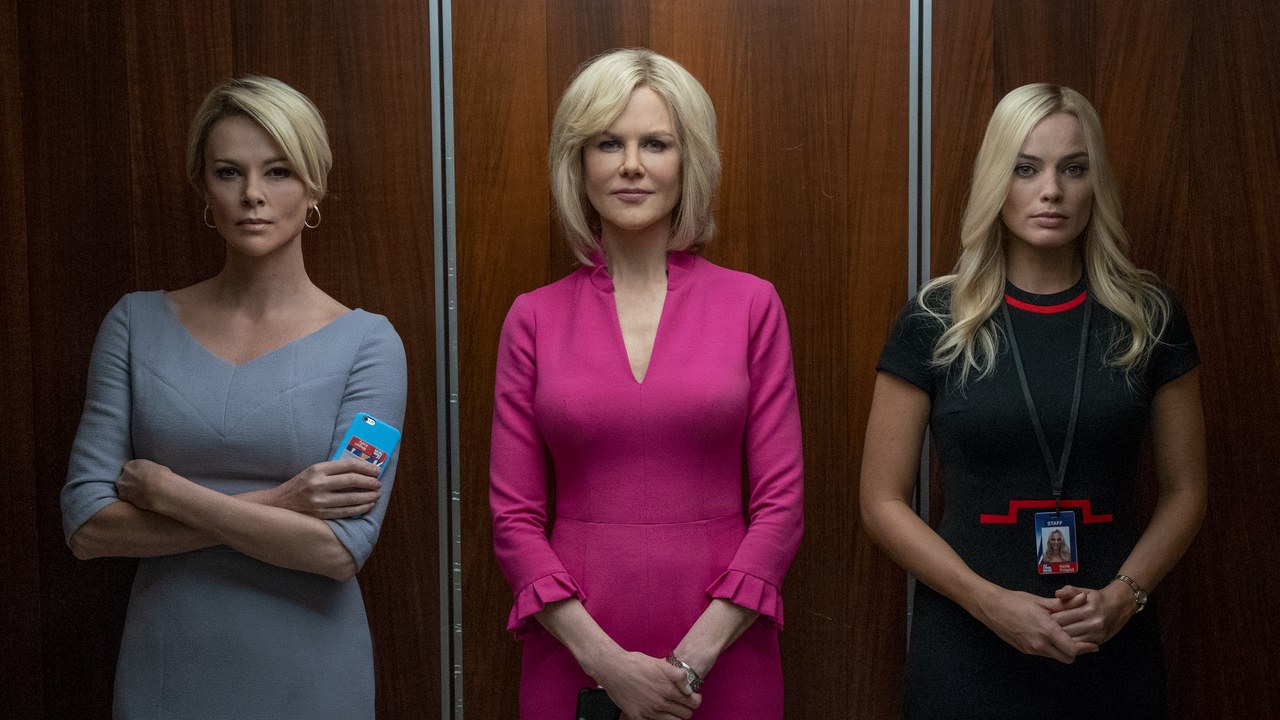
With Kelly as narrator, Bombshell breaks the fourth wall with asides to the audience (of a colleague who lasciviously compliments her dress as she walks through the Fox newsroom, Kelly says he’s not a creep, he’s just “ambitious”). That, along with the brusque, overly-explanatory style—a signature of writer Charles Randolph—falls flat. The device works in Randolph’s explanation of the 2008 financial crisis, The Big Short, because of the complexity of the financial system, but here, the asides are unnecessary and distracting.

Margot Robbie’s terrific Kayla, an “evangelical millennial” and aspiring anchor, is the most heartrending part of the film. While her character isn’t strictly true, she’s an amalgam of all the women Ailes subjected to his lechery, the ones who, unlike Carlson or Kelly, didn’t have enough star power or leverage to share publicly what had happened to them. One of the most crushing scenes in Bombshell is when Kayla breaks down telling her co-worker—the fantastic Kate McKinnon, who plays a (fictional) closeted lesbian producer—she “gave in” to Ailes.

More than anything, that’s what Bombshell gets right: the agonizing position workplace harassment puts women in. Carlson, in the movie and in reality, eventually settles the suit for $20 million, with the caveat that she’s forbidden from discussing what happened. (The real-life Carlson is now campaigning to end the use of nondisclosure agreements and forced arbitration that prevent women from speaking up.)

Near the end of the movie, Kayla ticks off the list of never-ending questions for women who’ve been harassed. What did I do to bring this on? Will I always be seen as a victim? If I come forward, will this define me? As in real life, the film leaves them unanswered.

Rebecca Nelson is a magazine writer based in Brooklyn. Her work regularly appears in The Washington Post, ELLE, GQ and many other publications.


Source link

Categories
Health

Taylor Swift Says She Didn't Really See Sexism in the Music Industry Until Red's Success


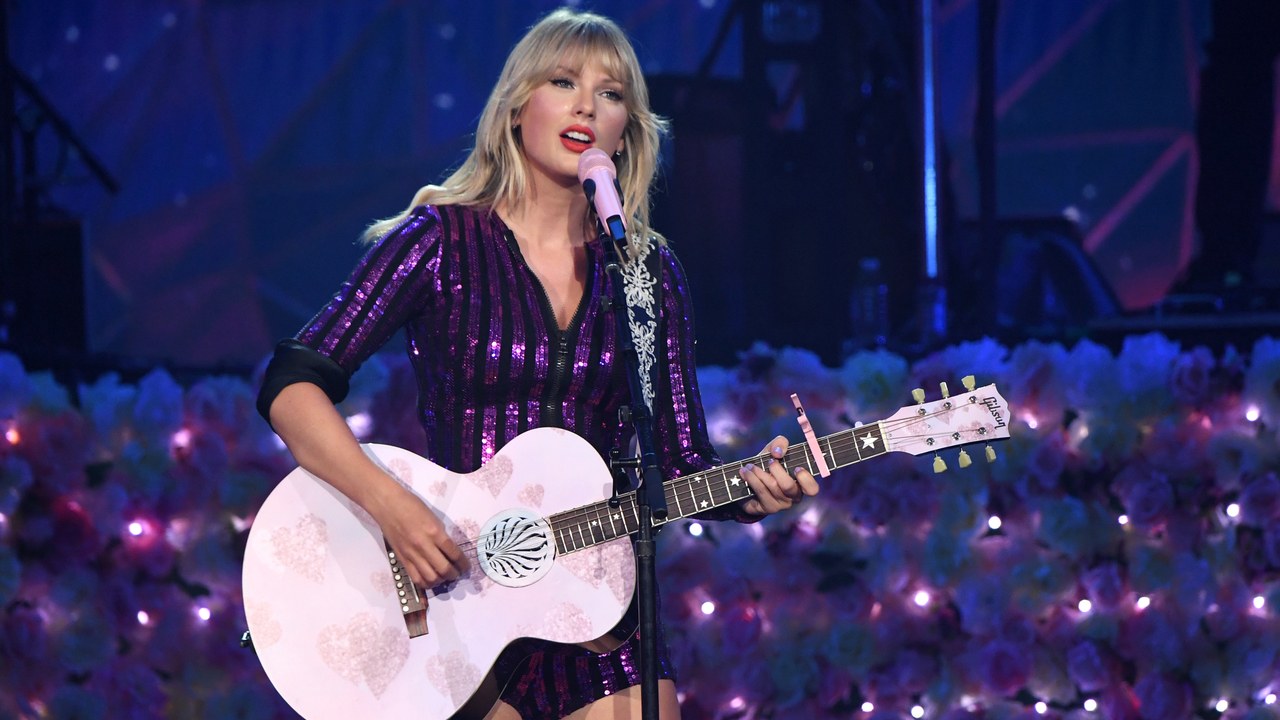
We’re just a couple weeks away from the release of Taylor Swift‘s latest album, Lover, on August 23. And in the lead-up to its release, we’re learning more and more about where Swift is at in her life—through Easter eggs left in her videos and commercials and in interviews, like her latest one for Vogue. (She graces the cover of the magazine’s September issue.)

In the interview, Swift opens up about various aspects of her career, including the shift she saw once she transitioned from a rising star in the industry to a powerful woman. When asked if she was always aware of sexism around her, Swift gives this thoughtful answer: “When I was a teenager, I would hear people talk about sexism in the music industry, and I’d be like, I don’t see it. I don’t understand,” she tells Vogue. “Then I realized that was because I was a kid. Men in the industry saw me as a kid. I was a lanky, scrawny, overexcited young girl who reminded them more of their little niece or their daughter than a successful woman in business or a colleague. The second I became a woman, in people’s perception, was when I started seeing it.”

“It’s fine to infantilize a girl’s success and say, How cute that she’s having some hit songs,” she continues. “How cute that she’s writing songs. But the second it becomes formidable? As soon as I started playing stadiums—when I started to look like a woman—that wasn’t as cool anymore. It was when I started to have songs from Red come out and cross over, like ‘I Knew You Were Trouble’ and ‘We Are Never Ever Getting Back Together.’”

In the interview, she also reveals a moment where she realized she wanted to be more vocal about her stance on LGBTQ+ issues. Swift describes driving in a car with her friend and collaborator, Todrick Hall, when he asked her what she would do if her son was gay. “The fact that he had to ask me…shocked me and made me realize that I had not made my position clear enough or loud enough,” she says. “If my son was gay, he’d be gay. I don’t understand the question.

“If he was thinking that, I can’t imagine what my fans in the LGBTQ community might be thinking,” she continued. “It was kind of devastating to realize that I hadn’t been publicly clear about that.” Since then, she has spoken out publicly against certain political candidates and stood up for the Equality Act, along with more overt lyrics (and cameos) in her latest singles in support of the community, as well as a surprise appearance at the Stonewall Inn during Pride.

Swift explains why she wasn’t more vocal sooner, too. “Rights are being stripped from basically everyone who isn’t a straight white cisgender male,” she says. “I didn’t realize until recently that I could advocate for a community that I’m not a part of. It’s hard to know how to do that without being so fearful of making a mistake that you just freeze. Because my mistakes are very loud. When I make a mistake, it echoes through the canyons of the world. It’s clickbait, and it’s a part of my life story, and it’s a part of my career arc.”

You can read the full Vogue interview here.


Source link

Categories
Health

What Would a World Without Sexism Look Like? 25 Women Sound Off.


It doesn’t have to be like this. The discrimination and sexism. The catcalls and violence and harassment. We could live in a world where women have access to all the rooms where it happens. We could make a future that’s better and fairer and more equitable than the present. Of course, to be a woman alive now is to know that there’s still so much work to do—in politics and business, in factories and plants, on movie sets.

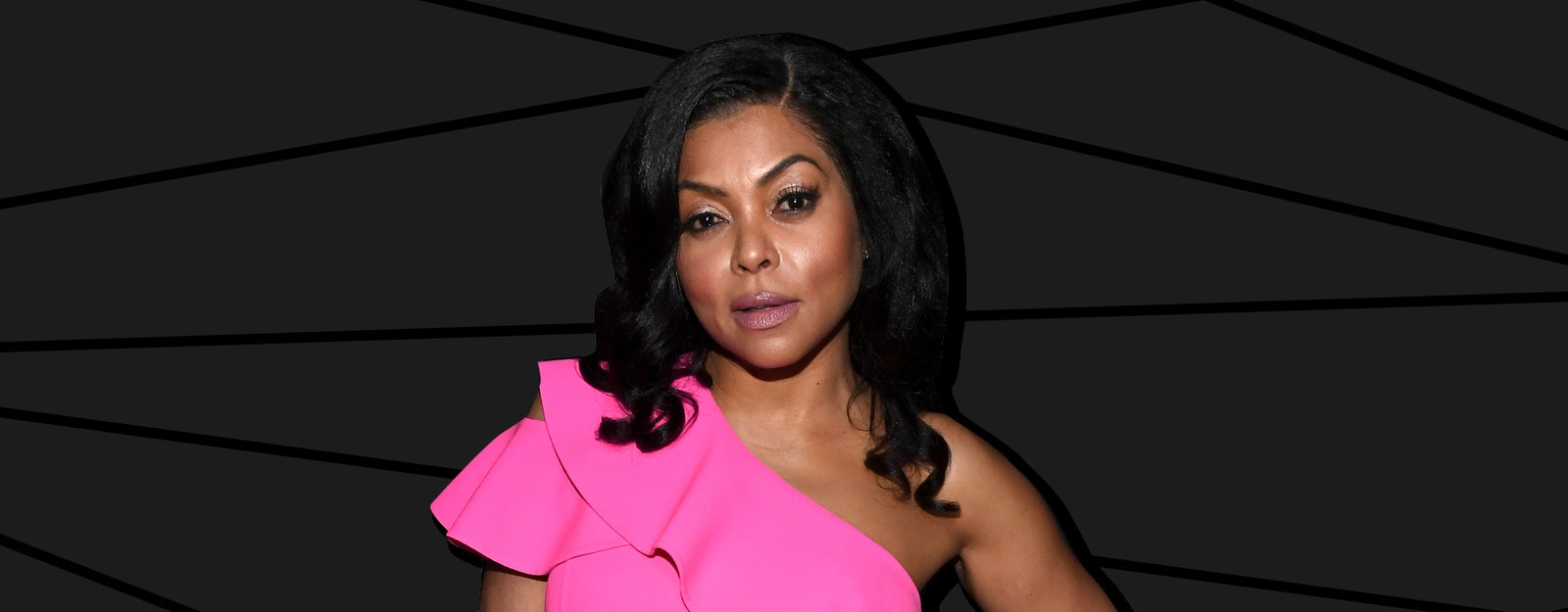
Still, it’s never been clearer that the leaders we waited for are here. Women have flooded the House of Representatives and the Senate, stepped into top jobs at hallowed companies, tried to save the literal planet, and protested and organized to make sure we know about it. These women are realistic about the uphill climb, but true visionaries know it takes a dream to create a better world. Glamour asked 25 women to imagine what would happen if the sexism that’s held us back for centuries just…disappeared. What if it evaporated? What would our lives be like then? From Melinda Gates to Taraji P. Henson to Kate Upton to three 2020 presidential candidates, here’s what they came up with.


Source link

Categories
Health

You Have to Watch This Video of 11-Year-Old Meghan Markle on 'Nick News' Fighting Sexism


Long before she starred in Suits or got engaged to Prince Harry, Meghan Markle was just an average kid—one who just so happened to appear on Nick News as part of her fight for gender equality.

If you didn’t catch Markle’s appearance at the 2015 UN Women conference detailing this very experience, allow us to get you up to date. When 11-year-old Markle was watching TV advertisements in class as part of a social studies assignment, she was alarmed when a commercial for dishwashing soap proudly asserted that “women all over America are fighting greasy pots and pans.” She was especially horrified when two boys in her class loudly proclaimed that women “belong” in the kitchen.

Not wanting kids to grow up thinking that “just mom does everything” Markle took up a letter-writing campaign to protest the ad. She wrote to Hillary Clinton, who was First Lady at the time. She wrote to Gloria Allred, the noted civil rights attorney Gloria Allred. She wrote to Procter & Gamble, the manufacturer of the soap. And she wrote to Linda Ellerbee, the host of Nick News.

“If you see something that you don’t like or offended by on television or any other place, write letters and send them to the right people and you can really make a difference, not just for yourself but for lots of other people,” Markle said at the time. And her advocacy work paid off—P&G ultimately changed the slogan for their soap to say “people over America are fighting greasy pots and pans.”

Inside Edition recently obtained footage of Markle’s appearance on the Nickelodeon news show from none other than Linda Ellerbee herself—and even in the ’90s, Ellerbee could tell that Markle would go on to do great things.

“It was absolutely clear that this young woman was strong in her beliefs,” she told the nightly news program. “It didn’t matter that she was 11 years old. She believed in women and she believed in her own power and wasn’t afraid to reach out and say, ‘I want my power. I want my rights.'”

Watch Meghan’s Nick News appearance below.


Source link

Categories
Health

Natalie Portman Says She's Still Reckoning With the Sexism She's Experienced on Almost Every Project


As women continue to speak out about the sexual misconduct they’ve had to deal with at the hands of powerful men in Hollywood, Natalie Portman says she’s only just now realizing that she’s a survivor of the entertainment industry’s toxic sexism, too. During a discussion at the Vulture Festival in Los Angeles on Sunday, the actress said that, at first, upon hearing other people’s stories about their encounters with power players like Harvey Weinstein, she counted herself among the few unscathed by sexual abuse or harassment in the workplace. But now, Portman said she’s since realized that she, too, has experienced sexual harassment and discrimination on a disturbingly regular basis since she started acting.

“When I heard everything coming out, I was like, wow, I’m so lucky that I haven’t had this. And then, on reflection, I was like, okay, definitely never been assaulted, definitely not, but I’ve had discrimination or harassment on almost everything I’ve ever worked on in some way,” she said, according to Vulture. “I went from thinking I don’t have a story to thinking, oh wait, I have 100 stories. And I think a lot of people are having these reckonings with themselves, of things that we just took for granted as like, this is part of the process.”

The Oscar winner offered as an example the time a producer offered her a seemingly innocent ride on his private jet. “I showed up and it was just the two of us, and one bed was made on the plane. Nothing happened, I was not assaulted. I said, ‘This doesn’t make me feel comfortable,’ and that was respected,” Portman recalled. “But that was super not okay, you know? That was really unacceptable and manipulative and could have been—I was scared, you know? But just the fact of any woman, if you’re walking down the street alone at night, you feel scared, and I’m not sure guys know what that [feels like].”

She also suggested that the fact that women are still struggling to achieve parity with men in both cast and crew roles in the industry could be a reason that it took so long for men like Weinstein and Louis C.K.‘s long histories of sexual misconduct and harassment to come to light. “Usually, you walk into a movie as the only woman, and you’re often the only woman on set. It’s very rare to have female crew members apart from hair, makeup, and wardrobe—the very stereotypical departments for women to be in—and I think women experience this in a lot of industries,” the Annihilation star said. “If you do get the opportunity to work, you’re often the only woman in the room. I hear this from friends of mine who are lawyers, business people, writers on shows.”

Portman continued, “The surprising thing is, it almost feels strategic to keep you away from other women, because you don’t have the opportunity to share stories. All these accusations are like, ‘Oh yeah, everyone was isolated from each other.’ People didn’t share. They didn’t realize that there were hundreds of people with similar stories…It prevents mentorship of women by other women because you’re just not exposed to it. You have to work hard to find and actually connect to people doing the same thing, because we’re often that one seat at the table.”

Related Stories:

Natalie Portman Reveals Ashton Kutcher Was Paid Three Times More Than Her for ‘No Strings Attached’

Here’s the Problem With Privilege and Divulging Sexual Assault

Every Woman on Earth Should Read and Memorize This Viral Tweet


Source link

Categories
Health

3 Women Who Quit Their Jobs at Google Share Stories of Workplace Racism and Sexism


Google has had a lot going on lately, and some of its most high-profile news doesn’t look great for women—especially those of color. There’s the fallout of a former engineer’s 10-page anti-diversity manifesto, the threat of a class-action lawsuit by 60 women alleging workplace sexism, and a Department of Labor investigation alleging “extreme” pay discrimination based on gender. Now, a Guardian report has detailed the day-to-day experiences of three women who quit their jobs at Google due to racial and gender discrimination.

In the Guardian article, which was published on Friday, former technical specialist Qichen Zhang; a black female former specialist who spoke out under anonymity; and former engineer Lashmi Parthasarthy shared their harrowing accounts of racial and gender discrimination at the tech giant. All three were in the minority at Google: the company is predominantly white and male, at 56 percent and 69 percent respectively, according to its website.

“I didn’t see a lot of women, especially Asian women, black women or other women of color in the executive ranks,” Zhang told the Guardian.

One pivotal moment Zhang recalled during her one year at Google was a conversation with a white male colleague. “He said, ‘It must’ve been really easy for you to get your job because you’re an Asian woman, and people assume you’re good at math,'” Zhang, a Harvard graduate, said. “It was absolutely stunning. I remember me just emotionally shutting down.”

Zhang ultimately chose to left in 2014 after more incidents that left her feeling isolated—and like there was no future for her at the company. “It’s just these little daily aggressions that really add up over time,” she said. “Having a lack of people who look like you in general is demoralizing.”

“People had this broad concept of ‘racism doesn’t exist at Google and sexism doesn’t exist at Google,'” she added*. “Just because your officemates aren’t saying racial slurs out loud doesn’t mean they’re not racist.”

The former specialist, who is black and asked to remain anonymous, experienced similar moments of discrimination. She told the Guardian that she was frequently asked for her ID on campus when coworkers weren’t; that she overheard racist jokes; and that she was negatively judged for trying to be an advocate for people of color, despite Google’s official interest in the positive PR that diversity initiatives bring to the company.

“They didn’t like the way you’re prioritizing diversity, because that’s not your role,” she said about the company. Like Zhang, she left the company for the sake of her mental health, adding that “there were times I cried at my desk.”

Zhang and the anonymous specialist quit due to their experiences with racism at work—but gender-based discrimination was a factor in another woman leaving her job. Parthasarthy, a former solutions engineer, left was because she lacked a supportive female mentor and manager. Comparing Google to a boys club, she said “it’s difficult for women to see paths for themselves at Google in tech.”

Responding in the Guardian article to these women’s experiences, Google’s director of global diversity and inclusion, Yolanda Mangolini, told the newspaper that she’s “always disappointed” hearing these stories. “We know that it’s not just about recruiting a diverse workforce. It’s about creating an environment where they want to stay.” She added: “Change takes time.”

Of course, racism and sexism are hardly limited to Google, and these experiences—as indicative of a larger problem as they might be—belong to these individual women. But when Google regularly tops the lists of best places to work, and when complimentary articles are devoted to recreating its “great” workplace culture, hearing stories like should prompt Google and other tech companies to do some deep soul-searching—and take swift, effective action.

Related Stories:
Dozens of Women Are Considering Suing Google Over Workplace Sexism
Google Fires Engineer Who Wrote Antidiversity Memo, Internet Rejoices
This Viral Antidiversity Memo by a Google Employee Just Got Shut Down


Source link