Categories
Health

Ask Emily: How Do I Ask My Partner for Kinkier Sex?


Hi Emily—

I’ve been dating my current boyfriend for just about a year now, and he’s amazing! We have great sex, but it’s not always the most exciting. He regularly asks me what I’m interested in, but I don’t know how to approach the topic. We recently took a sex questionnaire (where you compare answers at the end) and it really helped me to get some of my wants out on the table—which he’s been very responsive to—but I’d still like to try some more exciting things, like temperature play and being tied down.

How do I bring these up without A, scaring the pants off him, and B, making him feel bad? Because I love our sex, I just think it could be more intense and sensual.

Thank you in advance,

Amelia, 26, France

Hi Amelia—

Your partner certainly seems like he’s open to discussing your wants and needs in the bedroom, which isn’t something many people can say about their significant other. While talking about having kinkier sex can be a hard conversation to have, his pants won’t be coming off out of fear. So instead of worrying about scaring him, it’s time to focus on blowing his mind (and yours!) with these tips:

Don’t wait until you’re already doing the deed to talk about it.

Rather than springing what you want to try on him mid-sex, try bringing it up in a more neutral setting, like during a car ride or at dinner. Casually bring up the questionnaire you two took and tell him it really got you thinking about new and exciting things you want to try.

Do reassure him about your current sex life.

Be sensitive to his feelings. If you say you want to switch things up and don’t give him a reason why, his thoughts can go from, This is cool, to, Oh no, what’s wrong? real quick. Reassure him that you love your sex life, and that you’re just curious about what else you two can experience together.

Don’t make it all about you.

Asking him what he’s always fantasized about in the bedroom can have a positive effect on how the conversation goes. For one, it can loosen you up to hear about his fantasies, making it easier to talk about yours. Two, it lets him know that his fantasies matter, too.

Do focus on your tone.

How you say something can make or break how it’s perceived. Keeping your tone curious and upbeat lets your partner know that you’re genuinely excited about exploring how far your pleasure can go.

When in doubt, fall back on that questionnaire the two of you took and use it as a blueprint for your conversation about having kinkier sex. And remember, your guy wants to please you, so I’m sure he’ll be nothing but thrilled for what’s to come.

xx,
Emily

More:

How Do I Stop My Partner From Slipping Out During Sex?

Which Sex Toys Are Best for Sex With My Girlfriend?

Why Do I Keep Falling for Toxic Relationships?


Source link

Categories
Health

The Best New Sex Toy Is an Oscillating Vibrator


When you use a lot of sex toys, they can all start to blend together—in part because they all seem to vibrate in slight variations of the same way. Some toys may be more powerful than others, but they all pretty much make a basic rumbling motion. Or so I thought—until I learned about Hot Octopuss‘s new clitoral stimulator, which uses an oscillator to create movement.

Up until this month, Hot Octopuss was best-known for the Pulse, a male sex toy that also uses oscillations instead of the typical vibrations in sex toys. But now, this unique technology is also reaching vulva-owners with the Queen Bee. This unique vibrator uses Hot Octopuss’s special “Pulse Plate” technology to create extremely powerful, high-amplitude oscillations.

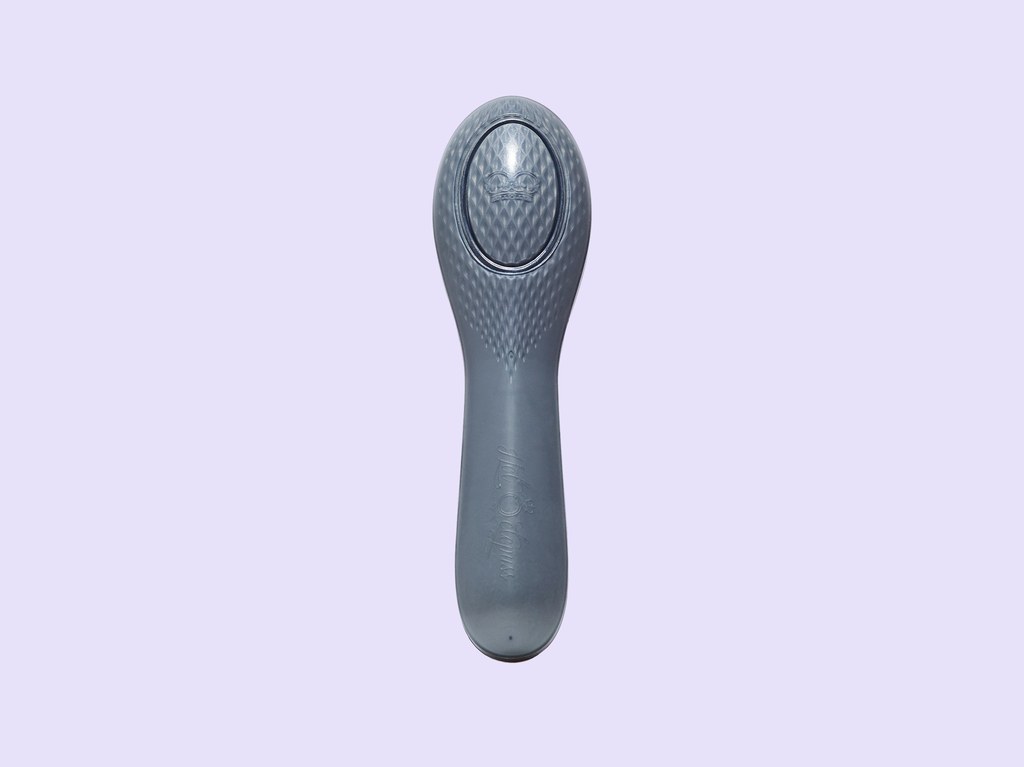
Confused about what that means? Yeah, so was I—so I asked a Hot Octopuss rep to explain this new technology. She told me that a piston-like device inside the product moves the surface of the head, so while it may feel a bit like a typical vibrator’s buzzing, it’s really just moving up and down very quickly. Though Queen Bee isn’t the first oscillating sex toy, it’s different from many of the other ones on the market in that it doesn’t look like a slightly scary medical device, but like a sleek hairbrush:

When I first turned on the toy, I had the urge to hold it against my hand, my leg, and pretty much every part of me. The vibrations felt relaxing, almost like leaning against a jacuzzi jet. Using it as a sex toy, I felt no need to take off my pants, even on a low setting. I just held it down there, feeling an unusual sense of relaxation wash over me. It was as if the cloth of my pants was absorbing the vibrations and distributing them throughout my body.

Without clothes, though, the sensation just wasn’t the same. Instead of feeling it throughout my body, the vibration stopped at the surface, and it was way too intense to put directly over my clitoris. The most I could do was hold it over my outer labia and let the waves travel through, but even then it didn’t feel as strong as it did with my pants on.

So I got dressed again, and within two or three minutes, it was giving me a powerful orgasm that felt almost like it was happening in slow motion. Everything clenched up and froze for a few seconds before release, which felt more full-bodied than what most vibrators deliver. After recovering, I placed it back over my pants to see if this was one of the few magical toys that can give me a second orgasm. Sure enough, it passed that test—although afterward, it left me numb, tingly, and a bit uncomfortable.

The verdict? The Queen Bee’s oscillations really do provide a different feeling from your standard vibration. They stimulate the entire external vulva, not just the clitoris which, at least for me, lead to orgasms that feel more diffuse and drawn-out. This toy is perfect for those days when you just want to take a couple minutes from what you’re doing and rub one out with very little effort. Literally, all you have to do is turn it on and put it between your legs, and the oscillator will do all the work—no hands necessary.

And if you’re like me and hate closing your windows, you can use this thing covertly and while fully-clothed: Nobody looking in will have any idea what you’re doing.

More:

The Best Sex Toys for When Antidepressants Make It Hard to Orgasm

It’s Suprisingly Hard to Ban Toxic Sex Toys, But Here’s How to Protect Yourself

Glamour’s 2017 Sex Toy Awards


Source link

Categories
Health

I’m Tired of Feeling Bad About Genuinely Liking Anal Sex


I was in high school when Sex and the City premiered and, like many women of my generation and the generations that followed, that show taught me a lot about sex. Like, a lot: Things I didn’t even know existed were introduced to me every Sunday night—and one of those things was anal sex.

At the time, anal between straight couples wasn’t even on my radar. I knew that gay men engaged in it, but I held on to some pretty old-school notions when it came to why straight women would do it. Namely, as Charlotte put it so eloquently in Sex and the City’s “Valley of the Twenty-Something Guys” episode, “Men don’t marry Up-The-Butt Girl. Whoever heard of Mrs. Up-The-Butt?” Back in 1998, I agreed—and that statement was the first thing that came to mind when my college boyfriend suggested we do the deed a few years later.

Even though I was determined never to become Up-The-Butt Girl, I was in love for the first time and figured one encounter with anal wouldn’t put me in whatever category a future Mrs. Up-The-Butt might reside. The experience was, for lack of a better word, awful. It was painful, uncomfortable, and as I would tell my boyfriend afterward, it felt like I was “taking a backward shit,” if that were even anatomically possible. But on top of the physical discomfort, I also felt ashamed. It was humiliating that this was what he wanted and humiliating that I consented. What did this say about me? What other so-called “deviant” things would I consent to in the name of love? I didn’t even want to imagine.

Even throughout my 20s, when I stopped taking such a hard line on what sex said about my character, I still didn’t really enjoy the few times I had anal sex and figured it just wasn’t really my scene. But then something happened in my early 30s. Perhaps it was the confidence that came with age and sexual experience, but I found myself having anal sex with someone I was dating and loving it. Really loving it. Though there was still shame—this time about enjoying it, rather than just engaging in it. It went back to what liking anal sex said about me as a woman. Was I dirty? Deranged? Had I been dropped on my head as a child and this was the outcome of it, manifested decades later? It didn’t matter how many times I watched that Sex and the City episode in which Samantha praised anal—I couldn’t come to terms with it.

Though up to 25 percent of heterosexual men and women have tried anal sex, the taboo around it is often louder than the praise. It doesn’t matter how many stats come out on the topic, like how women who have anal sex have more orgasms (it comes with an orgasm rate of 94 percent, compared to the 65 percent from vaginal sex). It also doesn’t seem to matter that the majority of women who do engage in anal sex are well-educated with higher levels of income—information one might think would nix some of the negative stereotypes associated with women who enjoy anal sex. But, sadly, it does not.

There are plenty of reasons a woman might feel guilty about enjoying it. Just this summer, when Teen Vogue published a piece titled “Anal Sex: What You Need To Know,” the backlash was swift. Although writer and NYC-based sex educator, Gigi Engle (who, full disclosure, is a Glamour contributor), wasn’t suggesting girls run out and have anal sex—merely introducing it as an option, with information on how to do it safely—there were some alarmingly conservative, potentially homophobia-tinged responses. It didn’t take long for the hashtag #pullteenvogue to make its way onto Twitter, or for articles and videos to pop up condemning the magazine for what ultimately should have been a conversation-starter and a healthy eye-opener.

Despite the alarmism, women who have anal sex are making their way into mainstream narratives.

“Much stigma exists around anal sex, but for some women it is their arousal and favored erogenous zone,” explains Clarissa Silva, behavioral scientist and author of relationship blog You’re Just A Dumbass. “For women who know that they like anal and express it, we should [remind her] why she shouldn’t be shamed. She is simply making a decision for herself that she is interested in having better sex.”

And despite the alarmism, women who have anal are slowly but surely making their way into mainstream narratives. Lars von Trier’s 2012 film Nymphomaniac was the rare theatrical release that included anal sex (actually, there wasn’t much it didn’t include, sexually speaking), which seemed like a small but important step. Then, in 2014, both The Mindy Project and Broad City had episodes about the act. In 2015’s I Smile Back, Sarah Silverman’s character has anal while cheating on her husband. This kind of exposure just solidifies that this is a sex move that people are engaging in, even if it’s still hard to talk about it sometimes.

With this in mind, I have been suggesting it more on my own accord to get more comfortable with the fact that I like it. My partner and I did it the third time we slept together, in fact, because it was important to me that I fully embrace my sexuality—especially the parts I was once ashamed of, and which still remain taboo by society’s standards. I wanted to be the one who initiated it, thereby owning it and the fact that I enjoyed it. I’m starting to understand now that I shouldn’t allow archaic thoughts about how a woman should have sex (which typically means vaginal only), or the narrow-minded thinking of people who condemn it to take up space in my mind.

While I don’t need other people or pop culture to validate my feelings on the matter, it does help in some ways to feel a sense of solidarity. It forces us to realize that human sexuality is complicated and there’s no “right” way to be aroused or to get off. Similarly, not being into anal sex doesn’t make you a prude or somehow less sexually adventurous.

It’s definitely not for everyone, but for those of us who do enjoy it, for far too long, it felt like it needed to be a secret. Now I know how ridiculous a notion that is. A woman’s sexual proclivities don’t define her—knowing what you want is all that really matters.

More:

Glamour’s 2017 Sex Toy Awards

How Do I Help My Partner Understand What Gets Me Off?

Fidget Spinner Butt Plugs Are Here for Some Seriously Twisted Anal Play


Source link

Categories
Health

Blake Lively Spills on Filming Sex Scenes While Being Married to Ryan Reynolds


PHOTO: Ron Sachs-Pool/Getty Images

It may seem like being in the same industry as your spouse could create unnecessary tension and competition. But according to Blake Lively, the pros of being married to another actor far outweigh the potential cons. While appearing on Good Morning America on Monday to promote her new film All I See Is You, the actress opened up about how being married to Ryan Reynolds has impacted her work.

“In general, it’s nice to have somebody who understands what you’re doing. Especially because our job is so weird—you have to be married to other people, it’s all so strange. It’s never normal, even when we’re both doing it,” she said. “But it’s helpful to know when you’re acting that you’re in a relationship with someone, that that’s not what’s actually happening. Because I have friends who aren’t married to someone who’s in the business, so they’re like, ‘Oh, so you’re not actually making love in that scene?!’ And I’m like, ‘No, no, no, no, definitely not.'”

And speaking of vulnerable scenes, earlier this month, the 30-year-old shared that she decided to break her no-nudity rule for All I See Is You, in which she plays a blind woman who regains her sight in her late 20s and soon realizes that her extremely codependent marriage isn’t what it seems. Lively told Vanity Fair that before reading the script for the psychological drama, she had always found onscreen nudity “distracting.” “I’m very in love with my husband, but if there’s a pair of boobs out, I’m a human being! You’re like, ‘boobs!’ It doesn’t mean I’m lusting for them, but when there’s naked boobies, you look at them,” she said.

[embedded content]

The actress opened up about her easygoing relationship with Reynolds in an interview with Glamour earlier this year. “In other relationships, if something came up, I would call my girlfriends or my sister, and say, ‘Hey, this is what he did—what should I do?'” she said. “Where with him, we were friends for two years before we were ever dating. And I treat him like my girlfriend. I’m like, ‘Hey, this happened. It upset me. This is how I feel. What do I do?’ And he does the same for me. He treats me like his best buddy.”

Related: Blake Lively: ‘It’s Important That Women Are Furious Right Now’


Source link

Categories
Health

Pink Reveals She Once Went a Year Without Having Sex With Her Husband


Pink has been married to her husband, motocross racer Carey Hart, for 10 years, but it hasn’t been an easy road. In February 2008, the couple announced they were separating, but thanks to couple’s counseling they reconciled two years later. Glimmers of their love story appear all over Pink’s discography, from her music video “So What”—in which Hart appears—to her songs “Just Give Me a Reason” and “True Love.”

And the singer reveals even more about her relationship in a new interview with The Guardian. Pink openly admits that being in a monogamous relationship is difficult. Somedays, she doesn’t even like Hart.

“There are moments where I look at [Hart] and he is the most thoughtful, logical, constant … he’s like a rock,” she told the publication. “He’s a good man. He’s a good dad. He’s just the kind of dad I thought he’d be and then some. And then I’ll look at him and go: I’ve never liked you. There’s nothing I like about you. We have nothing in common. I don’t like any of the shit you like. I don’t ever wanna see you again. Then two weeks later I’m like, things are going so good, you guys.”

She delves even deeper during this chat, as well, revealing there was a period when she and Hart didn’t have sex for an entire year.

“When you’ll go through times when you haven’t had sex in a year,” she said. “Is this bed death? Is this the end of it? Do I want him? Does he want me? Monogamy is work! But you do the work and it’s good again.”

It’s refreshing to see a celebrity be this candid and transparent about their personal struggles. Thanks, Pink, for showing all of us that maintaining a solid relationship isn’t easy—even when you’re rich and famous.

Related Stories:

Pink Is Being Mommy-Shamed Over This Photo of Her Kids

Pink Regrets Saying She Was ‘Team Taylor’


Source link

Categories
Health

It's Surprisingly Hard to Ban Toxic Sex Toys, But Here's How to Protect Yourself


These days, most of us will carefully check ingredients lists for gluten and trans fats, demand that our water bottles be made without BPA, and seek out paraben-free, body-safe cosmetics. But the average person can’t tell you what a toxic sex toy is—or even that they exist. Unfortunately, in the unregulated sex toy industry, plenty of sex toys are potentially rife with products that can hurt you (and not even in the fun, kinky way).

Perhaps the most well-known offender vis à vis toy toxicity is a group of chemicals known as phthalates, a plasticizer that can be blended with other substances to make them softer and more flexible. A spotlight’s been shone on phthalates in recent years, as publications like Bustle and Bitch, and via feminist-oriented sex shops like Good Vibes and Babeland have spoken out against them.

So why all the hullabaloo? It turns out that phthalates may have side-effects when they come into contact with your body that not only aren’t disclosed by most sex toy manufacturers, but could potentially be terrible for you. According to Dr. Amanda Morgan, a faculty member at the School of Community Health Sciences at the University of Nevada, Las Vegas, who wrote her Master’s thesis on harmful sex toy materials, phthalates are known endocrine disruptors that can cause health problems. “[Phthalates] mess with your hormones; they can cause birth defects, or other things related to liver or kidney functioning,” Morgan told me, referencing a studies which have linked phthalates to irregular fetal development, early-onset puberty, and lower sperm counts, among other issues. “They can really mess you up, because they pretend to be your hormones, and so your body’s hormonal cycle gets knocked out of whack from exposure to these things.”

With the short-term effects of chlorine and the long-term effects of phthalates, PVC is, Morgan says, “definitely one of the worst sex toy materials we’ve seen.”

When you hear horror stories about sex toys, though, it’s not necessarily phthalates that are to blame. One of the most common anecdotal complaints about toxic toys is that they cause skin irritation: “I first thought [it] was a yeast infection or BV, because of extreme itching and burning on my inner labia,” reports one reader who wrote in to sex toy review blog Dangerous Lilly. “My ass suddenly felt like it was on fire. A burning sensation spread throughout my butt,” recalls sex educator Tristan Taormino about a questionable dildo she used. One Playboy story describes a dildo that caused a woman “such severe pain that she could barely speak.”

I asked Dr. Emily S. Barrett, a professor at the Rutgers University School of Public Health who has done extensive research on the prenatal effects of endocrine disruptors like phthalates, whether these reported burning sensations fit with her understanding of the chemicals. She told me she hasn’t seen evidence that phthalates irritate the skin in this way, and that they tend to “act on a much more subtle level most of the time.”

So what is causing these health problems? According to Amanda Morgan, phthalates aren’t the only sketchy ingredient still getting into our sex toys. As part of her thesis research, Morgan tested 32 sex toys to determine their chemical makeup. What she found was pretty scary: The toys she tested typically contained 30-35 percent chlorine. She said PVC, a material commonly used to make inexpensive sex toys, always contains chlorine (hence the chemical name “polyvinyl chloride.”) Even scarier, in 2006 BadVibes.org—an organization which, full disclosure, is linked to pro-toy-safety sex shop The Smitten Kitten—ran lab tests on four popular sex toys. They found that two of them were made of PVC and contained “very high levels of phthalate plasticizer.”
 
“We use chlorine to kill bacteria in things,” she said. “If you are being exposed to this high level of chlorine, especially in a sensitive membrane area [like the vagina or rectum], we could definitely chalk that up to causing irritation, burning, or messing up the environment by exposing it to something that is, as we know, a sterilization product.” So with the short-term burning effects of chlorine and the long-term endocrine effects of phthalates, PVC is, Morgan says, “definitely one of the worst sex toy materials we’ve seen.”
 
Now, you might be thinking, “OK, great to know! I’ll just only buy safe toys from now on!” Well, it’s not so simple. Since the sex toy industry is unregulated, it doesn’t fall under the current purview of the Food and Drug Administration. According to FDA press officer Angela Stark, that’s because the agency “does not regulate devices meant purely for sexual pleasure. It does, however, regulate genital devices that have a medical purpose such as vibrators intended for therapeutic use to treat sexual dysfunction or to supplement Kegel exercises.” Of course, the vast majority of sex toys don’t fall under this “health aid” umbrella.+++large

The current Congress likely wouldn’t rush to make a bold, sex-positive statement like mandating sex toy safety.

The responsibility of regulating sex toys could potentially fall to the Consumer Product Safety Commission, but Morgan told me the understaffed CPSC is already in charge of regulating over 15,000 types of products—not to mention the products themselves. The complex issue of sex toy regulation would be a big ask on top of all that.

Add to all of this the fact that the current Congress likely wouldn’t rush to make a bold, sex-positive statement by mandating sex toy safety, and there are plenty of reasons your sex toy might not meet body-safe standards. “Our government doesn’t generally like to talk about people pleasuring themselves,” Morgan pointed out.

Beyond that, though, Morgan adds that regulating the sex toy industry might not even be the best solution to getting rid of toxic toys anyway. “If something is federally regulated, that means that the federal government—depending on where they are in their political leanings at that time—could potentially make it illegal to have these products, by saying they are ‘dangerous’ and then regulating them out of existence,” she reasoned. “You get certain types of people in power and they may not believe in sexual health, wellness, [or] self-pleasuring. It might go against their core values and therefore they [might] use their political agenda and the federal regulation system to regulate these products out of people’s hands.”

It’s a conclusion that Zach Biesanz, a legal assistant in the office of New York’s Attorney General, came to in his 2007 paper in the journal Law & Inequality: “Special regulation of the sex toy industry would be unreasonably burdensome from a regulatory standpoint,” he wrote. “Only banning these toxins outright will suffice to protect consumers from phthalates’ harmful and even lethal effects.”

“Sniff your sex toy. That’s the easiest thing you can do [to protect yourself].”

In the meantime, how do you tell if a toy is safe? Sex toy experts like Morgan, the Smitten Kitten’s founder Jennifer Pritchett, and seasoned sex toy reviewer Epiphora all recommend buying toys made of phthalate-free, body-safe materials like pure silicone, stainless steel, glass, and hard plastic. Still, it’s difficult to know what’s what in an industry that mislabels its products so frequently. “Sniff your sex toy,” said Morgan. “That’s the easiest thing you can do. If you smell these products and they don’t smell like anything, then it most likely is a stable chemical compound like silicone.” Phthalates and PVC, however, smell “like chemicals,” according to Morgan, “like a new shower curtain,” according to Epiphora, and “like a headache,” according to Pritchett. The sex toy smell test might sound a little weird, but it’s a pretty good first line of defense.

Morgan also recommends buying toys made by “companies that take a lot of pride in making good-quality, body-safe toys,” citing Tantus and Jimmyjane as examples. Other companies that proudly declare their products body-safe include We-Vibe, Fun Factory, Vixen Creations, and Funkit Toys.

And when in doubt, find a reviewer you can trust. Sex toy review blogs abound on the internet —Epiphora, Dangerous Lilly, and Formidable Femme, to name just a few—and while you’d be wise to take claims about sex toys with a grain of salt in this unregulated industry, sometimes the preponderance of good or bad reviews about a particular company or toy can suggest conclusions about its safety (or lack thereof).

Most importantly though, demand body-safe sex toys buy only buying from companies you can trust. “Consumers vote with their pocketbook,” said Tantus founder Metis Black. “Support the businesses that make safe toys a priority, that use their resources to educate, that take a stand and advocate for consumers.” She added that while pure silicone toys are expensive now—especially in comparison to PVC toys, which can often be under $30 a pop, versus $100+ for silicone—more consumer demand for body-safe toys will create more supply at lower prices, as bigger companies with more resources start making non-toxic toys in larger quantities. That’s just sex toy economics.

Bloggers, consumers, and ethical toymakers alike all dream of a future in which no sex toys will burn your junk, give you infections, or cause long-term bodily harm. It seems reasonable enough. And if we keep fighting for it, maybe one day it’ll be reality.


Source link