Categories
Health

Cow Nails Are the Most Surprisingly Cool Trend for Spring


Spring is finally here—which means it’s finally time to break out lighter and brighter manicures and pedicures. And although there are plenty of great polish shades for spring, plus a whole season’s worth of cute nail art ideas (gotta love those rainbow nails), there’s one big trend that took even us by surprise: cow print. But hear us out: The finished black and white look is actually really chic. And, much like leopard print, it acts kind of like a neutral with a little extra oomph.

Need proof? Kendall Jenner and Ariana Grande got out in front of the trend early. In its March cover interview, Allure asked Jenner which manicure she wanted to try next. “So there’s one that’s like cow print,” she said. “I know that sounds really weird but it’s actually really cool.”

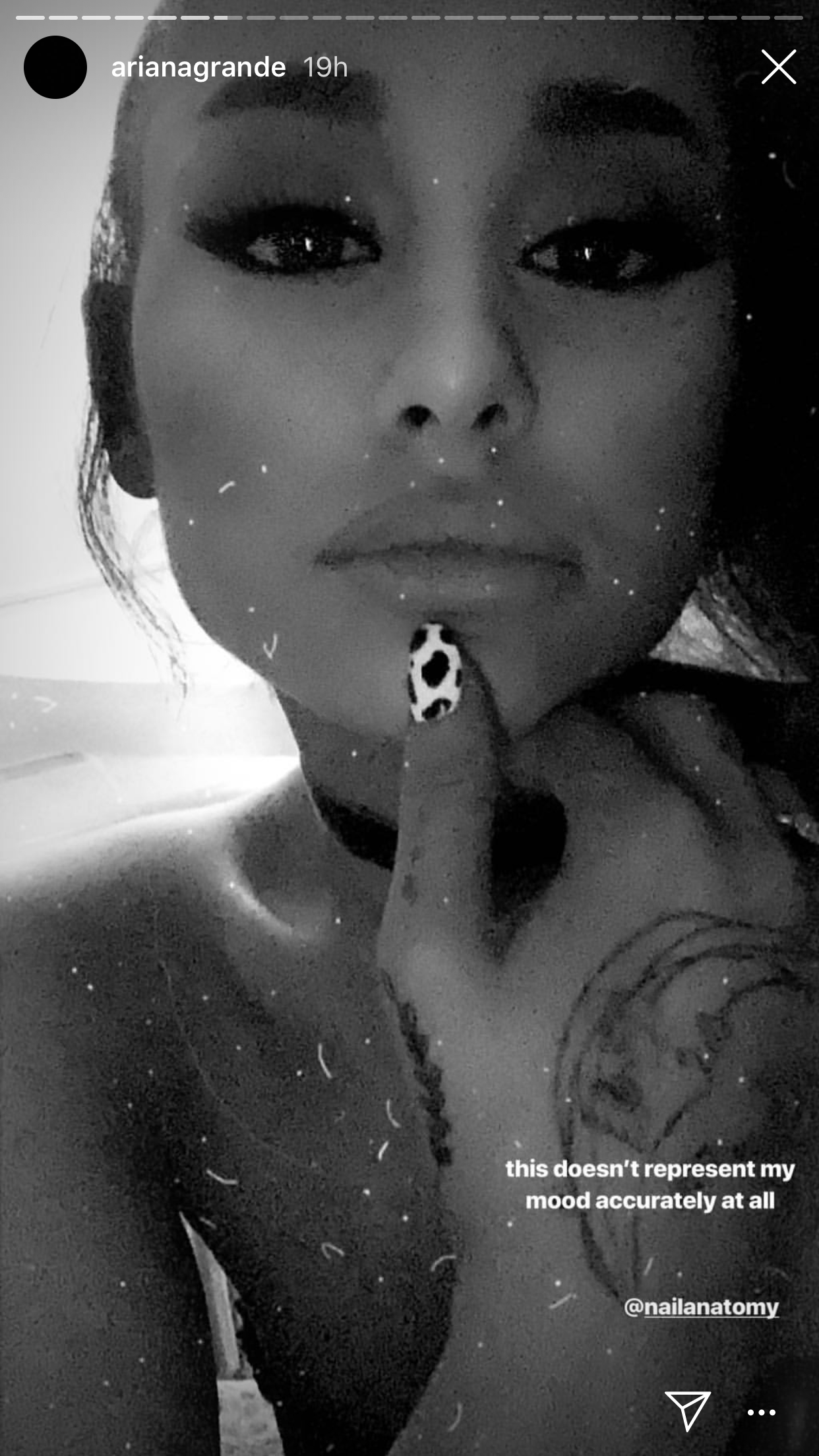
Grande, on her end, has already embraced the look: She recently showed off her cow-print mani in her Instagram Stories.

Instagram/@arianagrande

Animal prints are having a major moment in fashion right now in general, but we love that cow print has hit our manis, too. (Plus, if you’re unsure about embracing the print with a statement dress right off the bat, a mani offers an easy way in.)

Want some inspiration? Check out some of these cool takes on the trend.

Keep it classic…

…or play around with the size of the black spots.

You can mix and match the print with solids…

…or add a contrasting color on one of your tips.

You can even try a cow-print over clear nails…

…and it also looks fantastic as an accent on just the tips of your nails.

Best of all, the look is great for all sorts of nail lengths and shapes.

You can absolutely take a photo of your favorite version of cow print to your nail salon, but it also isn’t terribly difficult to re-create at home. The simplest way? Decals. You can get a set of 18 for $6.99 at Amazon, or, if you want to free-hand your own pattern, try NARS Nail Polish in Ecume plus Marc Jacobs Enamored Hi-Shine Polish in Blacquer.


Source link

Categories
Health

AOL Instant Messenger Was a Surprisingly Safe Space for Girls to Talk About Sex


My screenname was WyldChica9. I tell you this because if we’re going to talk about what teen girls were doing on AOL Instant Messenger circa 1999, we should probably get the humiliation out of the way up front. When I think about using the messaging service, I think about being 13—a deeply embarrassing age, and AIM was, spiritually-speaking, the most 13-year-old app of all time.

In its heyday, it was beloved by the middle- and high-schoolers who came of age in the narrow gap between widespread middle-class home internet access and the omnipresence of what we now call social media. But when AOL announced in October that the service would be shutting down December 15, after 20 years, no one seemed particularly surprised. And why should they be? We have a million ways to conduct digital conversations now, most of which are tethered to services like Google or Facebook—companies that have gained a foothold in broader American life in a way AIM never quite did. We don’t need AIM now, but we did back then, and some of us more than others.

I was not wild, let alone wyld, but if you were a teenager between roughly 1995 and 2005, you already knew that. In 1999, I played the viola in the middle school orchestra and I included the “9” at the end of my AIM handle because that was the number I wore on my youth soccer team. I was a “chica” in that I was a girl, but I was definitely not Latina, and I’m not sure it ever crossed my mind that using the word might lead internet strangers to assume I was. The wide berth between my actual identity and my delusionally optimistic self-portrayal didn’t matter, though, because I was born in 1985, which means I didn’t really learn how to be embarrassed by my behavior on the internet until college.

At that point in digital history, you could be anonymous in ways that now seem unthinkable.

The halcyon days of AIM were a time before easily disseminated screenshots, so unless someone you knew in real life was mad enough to print out what you said in an IM and bring it to school, it was a receipt-free existence. And when teenagers are given communication tools, relative anonymity, and the opportunity to self-identify as cool, no parental controls on earth will stop them from immediately finding willing partners with whom to talk about boning.

When I was spending unsupervised afternoons and late weekend nights glued to AIM, Jason Biggs was famously copulating with desserts in American Pie. Though boyhood horniness is enshrined in cultural narratives so well-worn that it has its own cinematic lineage, when it comes to teen girls, sex is almost always characterized as something that happens to us. It’s either through pressure, force, or the type of perceived parental failure that didn’t instill the ways in which sex is something we should deny exists until we receive third-party approval. According to the stories we tell ourselves about how sex functions socially, teenage girls are never horny; they are merely horned upon by others.

In reality, my hormones were off the charts—and I was very much logged on, where I sensed these curiosities might be more satisfyingly explored than in real life, among my virginal peers and the older men I had no actual drive to be touched by just yet. At that point in digital history, it was possible to be anonymous in a way that’s pretty much unthinkable now. Google wasn’t even a company until late 1998, Facebook was years away, and the iPhone was still just a gleam in Steve Jobs’s eye. No one had the binding, cross-platform identities we all have now, and it was generally considered normal and safe to keep your full name, face, and personal details a secret. It would have been difficult to show anyone my face anyway; digital cameras were rare and very expensive, and messaging services didn’t support photo-sharing.

Teenage girls rarely get to be the narrators of their sexualities.

Plus, I didn’t want anyone to see my face because I knew I wasn’t supposed to be doing what I was doing: Searching out random people with whom I could potentially talk about sex over AIM, both in AOL chatrooms and via searching user profiles for the two horniest keywords my 13-year-old brain could think of, “sex” and “cyber.” (I told you this would be deeply embarrassing.)

Teenage girls rarely get the opportunity to be the narrators of their sexualities. In these conversations, though, my total anonymity and physical safety gave me the cover I needed to venture my best first guesses at what I might be into. Looking back, I very obviously had no idea how sex worked, despite regularly trying to get pornographic image galleries to load on my very slow internet connection and reading the entirety of Columbia University’s Go Ask Alice! archive. I wanted to understand how people thought about sex and, by extension, how I might think about it. I also wanted to masturbate, which I had learned how to do only recently. It seemed like I could kill these two birds with one stone.

I did most of the searching and chatting alone, but occasionally it took on the form of a group activity, often during a sleepover or lazy summer day in the finished-basement of my most-unsupervised childhood friend. We’d huddle around a single desktop computer and see if we could rile up anyone in an AOL chat room, taking turns at the keyboard. The results only veered sexual sometimes and, as a group, we never made it past giggling hysterically over tricking a grown man into wasting his time being gross with a room of kids. We didn’t acknowledge that finding and flirting with these people (or, to use the ignominious term of the era, “cybering”) was a pastime we never had to teach each other how to pursue, even though we all knew to feign shock at the results. Of course, this was only a silly party trick.

The sexualities of minors is always a tricky subject, even when you were the minor in question. But much to the relief of my current self—a woman in her 30s who worries about the safety of children—I found that not many of the men I contacted as a young teen would talk to me if I told them my real age. I tried that at first, of course, because I didn’t quite realize there was some big social gap between me and the people I wanted to talk to. By my reasoning, we weren’t doing anything mattered; back then, the internet seemed like one big video game, and the interactions we were having just about as real as blasting someone apart in Duke Nukem. But usually, only other admitted teens would talk to me when I told them I was 13, maybe because the adults had better instincts about the situation’s stakes. In any case, getting anyone calling themselves a grown man to flirt with a 13-year-old girl online was a little bit tougher than To Catch a Predator would later make it out to be. By the time I was 16 or 17, old enough probably to have seemed worth the attention to a wider variety of internet randos, boys in my own range seemed like the better objects of my internet overtures.

It never occurred to me that the people I talked with were also reinventing themselves on the internet.

And so, because I was also watching plenty of Cinemax After Dark during this era and knew the tropes pretty well, I became other people: A divorcée looking to have some fun for the first time in years, a curious college girl, a bored wife, or someone with no backstory at all beyond a fibbed A/S/L. It took no effort, because my account wasn’t a traceable part of my real-life existence.

In hindsight, a lot of the conversations I had about sex didn’t exactly track with how I now know it to work—and not just on my end. I was reinventing myself daily, but it never occurred to me that the people I was talking with were doing the same, or that, for instance, AIM generally couldn’t be installed or used on the computers at people’s workplaces. After all, I had never had a workplace. While some of the people I spoke with were undoubtedly adults, it seems likely that a generous portion of them were my fellow minors, bored and horny and intensely curious during summer vacation or before mom got home from work, looking to play-act their burgeoning sexualities at a safe distance and with people who had to know more than they did.

Whether this was an ultimately successful pursuit is beside the point; AIM was an open door to an internet that felt like an opportunity, or at least a place that we didn’t fully inhabit quite yet, or maybe somewhere we weren’t so trapped in the purgatory of adolescence. That internet is gone now, for both better and worse. And so is the messaging service that first gave my generation an entry point to it.

Any eulogy for AIM is really just an In Memoriam of the internet as a separate place, one which didn’t overlap and intersect with real life enough to become it. Now online and offline are the same thing, which was probably already inevitable by the time men were lying to me about how big their dicks were on AIM. But still, I can’t shake the feeling that I was lucky as a teen girl to have an internet that felt like an escape instead of just more of the same.

More:

I Went on a Month-Long Quest to Achieve Multiple Orgasms

My Disability Made Me Dread Going to Weddings Alone. It Shouldn’t Have.

The Best Sexy Gift Ideas for Someone You Love—Like Yourself


Source link
Categories
Health

Demi Lovato's MTV EMAs Style Looks Surprisingly Kardashian-Like


It was only last week that Kim Kardashian vowed to never let a shirt distract from her Gucci suit. She went topless and braless under an open blazer, and the fashion gods smiled upon her stylist and double-stick tape. Demi Lovato has done a similar look before, too, though it was—literally—a bit more buttoned up: Her Baja East suit was reminiscent of fancy pajamas, done in beautiful sapphire satin with a narrow shawl lapel.

Lovato’s latest look combines the two, and honestly, she could pass for Kim’s doppelgänger with the result. On Sunday, the singer stepped out onto the red carpet at the MTV Europe Music Awards in London, where she was slated to perform. Styled by Law Roach, Lovato’s Styland wide-lapeled white plaid suit was more tailored than her satin suit, though wide-legged, paperbag waist trousers kept the look comfortable. She, like Kim, wore the jacket open, foregoing a bra or top.

PHOTO: Ian West/PA Images via Getty Images

But what really capped off the resemblance was her beauty look: long, monotone, dark brown hair—worn sleek, straight, center-parted, and all the way down to her waist. Even if the hot pink eyeshadow was a bit of a departure from what we’d see on Kim, the feathery, fluttery lashes and nude lipstick is a signature combo of the reality star’s.

Of course, we’ve got to give credit where credit is due. It’s worth noting that neither “Cher hair“—as the name implies—nor suiting worn without a top were invented by Kim. The Rapunzel-long length has become something of a status symbol on the red carpet lately. It’s popped up on everyone from Nicki Minaj (who’s been wearing hair down to her ankles) to Vanessa Hudgens to Rihanna. The same can be said for the pajama dressing trend.

But repetition is nothing if not noticeable. And it’s impossible to miss either of these women’s looks. How could you? They look incredible.

Related Stories:
Kim Kardashian Isn’t Going to Let a Pesky Shirt Distract From Her Gucci Suit
Demi Lovato Just Made a Case For the Blazer-With-No-Bra Look
Kim Kardashian Isn’t Even Trying to Wear Pants Anymore


Source link

Categories
Health

It's Surprisingly Hard to Ban Toxic Sex Toys, But Here's How to Protect Yourself


These days, most of us will carefully check ingredients lists for gluten and trans fats, demand that our water bottles be made without BPA, and seek out paraben-free, body-safe cosmetics. But the average person can’t tell you what a toxic sex toy is—or even that they exist. Unfortunately, in the unregulated sex toy industry, plenty of sex toys are potentially rife with products that can hurt you (and not even in the fun, kinky way).

Perhaps the most well-known offender vis à vis toy toxicity is a group of chemicals known as phthalates, a plasticizer that can be blended with other substances to make them softer and more flexible. A spotlight’s been shone on phthalates in recent years, as publications like Bustle and Bitch, and via feminist-oriented sex shops like Good Vibes and Babeland have spoken out against them.

So why all the hullabaloo? It turns out that phthalates may have side-effects when they come into contact with your body that not only aren’t disclosed by most sex toy manufacturers, but could potentially be terrible for you. According to Dr. Amanda Morgan, a faculty member at the School of Community Health Sciences at the University of Nevada, Las Vegas, who wrote her Master’s thesis on harmful sex toy materials, phthalates are known endocrine disruptors that can cause health problems. “[Phthalates] mess with your hormones; they can cause birth defects, or other things related to liver or kidney functioning,” Morgan told me, referencing a studies which have linked phthalates to irregular fetal development, early-onset puberty, and lower sperm counts, among other issues. “They can really mess you up, because they pretend to be your hormones, and so your body’s hormonal cycle gets knocked out of whack from exposure to these things.”

With the short-term effects of chlorine and the long-term effects of phthalates, PVC is, Morgan says, “definitely one of the worst sex toy materials we’ve seen.”

When you hear horror stories about sex toys, though, it’s not necessarily phthalates that are to blame. One of the most common anecdotal complaints about toxic toys is that they cause skin irritation: “I first thought [it] was a yeast infection or BV, because of extreme itching and burning on my inner labia,” reports one reader who wrote in to sex toy review blog Dangerous Lilly. “My ass suddenly felt like it was on fire. A burning sensation spread throughout my butt,” recalls sex educator Tristan Taormino about a questionable dildo she used. One Playboy story describes a dildo that caused a woman “such severe pain that she could barely speak.”

I asked Dr. Emily S. Barrett, a professor at the Rutgers University School of Public Health who has done extensive research on the prenatal effects of endocrine disruptors like phthalates, whether these reported burning sensations fit with her understanding of the chemicals. She told me she hasn’t seen evidence that phthalates irritate the skin in this way, and that they tend to “act on a much more subtle level most of the time.”

So what is causing these health problems? According to Amanda Morgan, phthalates aren’t the only sketchy ingredient still getting into our sex toys. As part of her thesis research, Morgan tested 32 sex toys to determine their chemical makeup. What she found was pretty scary: The toys she tested typically contained 30-35 percent chlorine. She said PVC, a material commonly used to make inexpensive sex toys, always contains chlorine (hence the chemical name “polyvinyl chloride.”) Even scarier, in 2006 BadVibes.org—an organization which, full disclosure, is linked to pro-toy-safety sex shop The Smitten Kitten—ran lab tests on four popular sex toys. They found that two of them were made of PVC and contained “very high levels of phthalate plasticizer.”
 
“We use chlorine to kill bacteria in things,” she said. “If you are being exposed to this high level of chlorine, especially in a sensitive membrane area [like the vagina or rectum], we could definitely chalk that up to causing irritation, burning, or messing up the environment by exposing it to something that is, as we know, a sterilization product.” So with the short-term burning effects of chlorine and the long-term endocrine effects of phthalates, PVC is, Morgan says, “definitely one of the worst sex toy materials we’ve seen.”
 
Now, you might be thinking, “OK, great to know! I’ll just only buy safe toys from now on!” Well, it’s not so simple. Since the sex toy industry is unregulated, it doesn’t fall under the current purview of the Food and Drug Administration. According to FDA press officer Angela Stark, that’s because the agency “does not regulate devices meant purely for sexual pleasure. It does, however, regulate genital devices that have a medical purpose such as vibrators intended for therapeutic use to treat sexual dysfunction or to supplement Kegel exercises.” Of course, the vast majority of sex toys don’t fall under this “health aid” umbrella.+++large

The current Congress likely wouldn’t rush to make a bold, sex-positive statement like mandating sex toy safety.

The responsibility of regulating sex toys could potentially fall to the Consumer Product Safety Commission, but Morgan told me the understaffed CPSC is already in charge of regulating over 15,000 types of products—not to mention the products themselves. The complex issue of sex toy regulation would be a big ask on top of all that.

Add to all of this the fact that the current Congress likely wouldn’t rush to make a bold, sex-positive statement by mandating sex toy safety, and there are plenty of reasons your sex toy might not meet body-safe standards. “Our government doesn’t generally like to talk about people pleasuring themselves,” Morgan pointed out.

Beyond that, though, Morgan adds that regulating the sex toy industry might not even be the best solution to getting rid of toxic toys anyway. “If something is federally regulated, that means that the federal government—depending on where they are in their political leanings at that time—could potentially make it illegal to have these products, by saying they are ‘dangerous’ and then regulating them out of existence,” she reasoned. “You get certain types of people in power and they may not believe in sexual health, wellness, [or] self-pleasuring. It might go against their core values and therefore they [might] use their political agenda and the federal regulation system to regulate these products out of people’s hands.”

It’s a conclusion that Zach Biesanz, a legal assistant in the office of New York’s Attorney General, came to in his 2007 paper in the journal Law & Inequality: “Special regulation of the sex toy industry would be unreasonably burdensome from a regulatory standpoint,” he wrote. “Only banning these toxins outright will suffice to protect consumers from phthalates’ harmful and even lethal effects.”

“Sniff your sex toy. That’s the easiest thing you can do [to protect yourself].”

In the meantime, how do you tell if a toy is safe? Sex toy experts like Morgan, the Smitten Kitten’s founder Jennifer Pritchett, and seasoned sex toy reviewer Epiphora all recommend buying toys made of phthalate-free, body-safe materials like pure silicone, stainless steel, glass, and hard plastic. Still, it’s difficult to know what’s what in an industry that mislabels its products so frequently. “Sniff your sex toy,” said Morgan. “That’s the easiest thing you can do. If you smell these products and they don’t smell like anything, then it most likely is a stable chemical compound like silicone.” Phthalates and PVC, however, smell “like chemicals,” according to Morgan, “like a new shower curtain,” according to Epiphora, and “like a headache,” according to Pritchett. The sex toy smell test might sound a little weird, but it’s a pretty good first line of defense.

Morgan also recommends buying toys made by “companies that take a lot of pride in making good-quality, body-safe toys,” citing Tantus and Jimmyjane as examples. Other companies that proudly declare their products body-safe include We-Vibe, Fun Factory, Vixen Creations, and Funkit Toys.

And when in doubt, find a reviewer you can trust. Sex toy review blogs abound on the internet —Epiphora, Dangerous Lilly, and Formidable Femme, to name just a few—and while you’d be wise to take claims about sex toys with a grain of salt in this unregulated industry, sometimes the preponderance of good or bad reviews about a particular company or toy can suggest conclusions about its safety (or lack thereof).

Most importantly though, demand body-safe sex toys buy only buying from companies you can trust. “Consumers vote with their pocketbook,” said Tantus founder Metis Black. “Support the businesses that make safe toys a priority, that use their resources to educate, that take a stand and advocate for consumers.” She added that while pure silicone toys are expensive now—especially in comparison to PVC toys, which can often be under $30 a pop, versus $100+ for silicone—more consumer demand for body-safe toys will create more supply at lower prices, as bigger companies with more resources start making non-toxic toys in larger quantities. That’s just sex toy economics.

Bloggers, consumers, and ethical toymakers alike all dream of a future in which no sex toys will burn your junk, give you infections, or cause long-term bodily harm. It seems reasonable enough. And if we keep fighting for it, maybe one day it’ll be reality.


Source link