Categories
Health

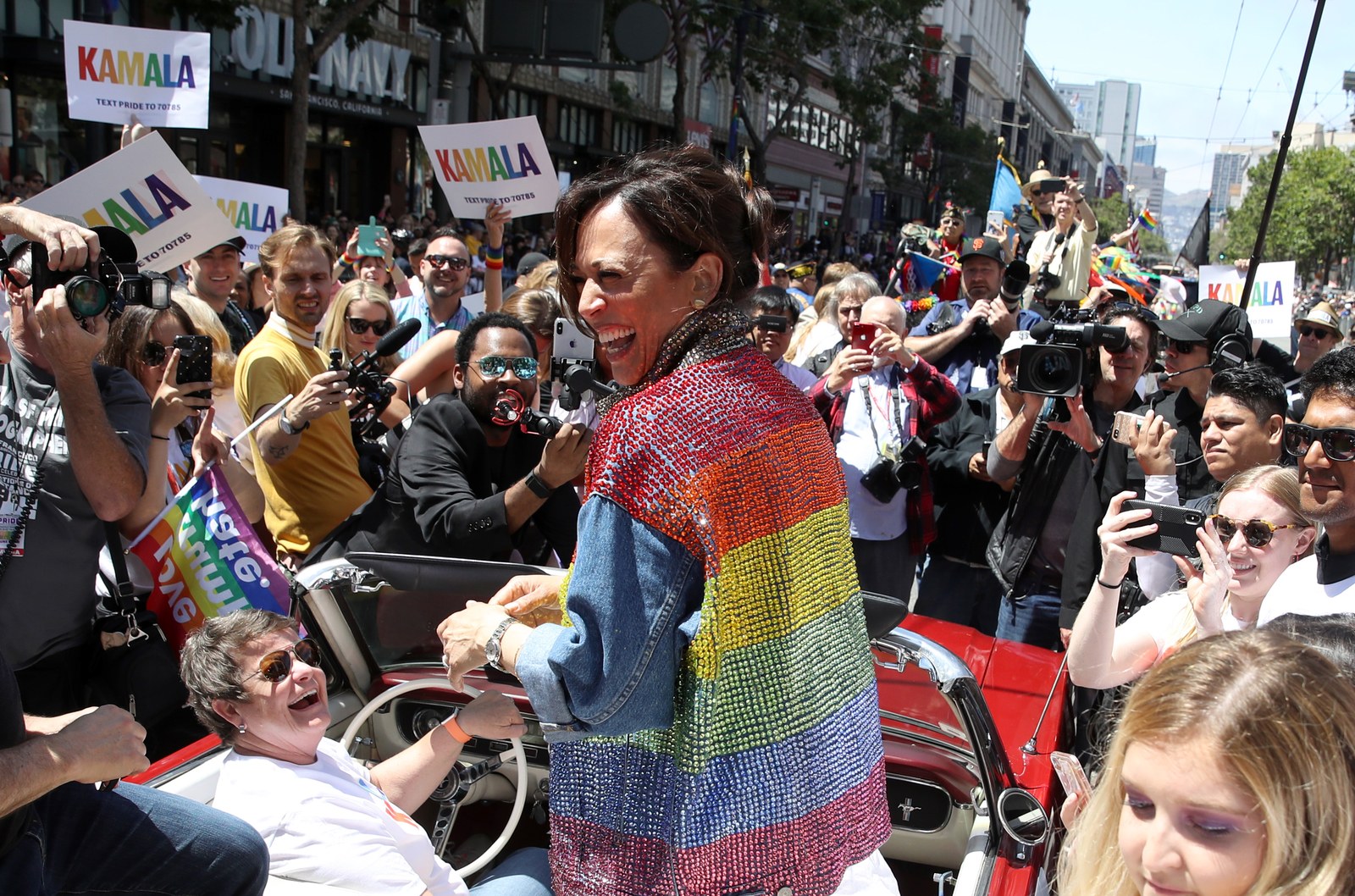
Senator Kamala Harris Wore a Bedazzled Rainbow Jacket to Pride and It Was a *Moment*


Over the weekend cities around the world celebrated World Pride. Plenty of celebrities and politicians showed their support, attending parades and parties across the country. Bay Area native Senator Kamala Harris was in San Francisco—along with California governor Gavin Newsom and Speaker of the House Nancy Pelosi—for the occasion. And her outfit, an oversize denim jacket bedazzled with rainbow rhinestones, has gotten people talking.

Justin Sullivan

The presidential hopeful spoke at SF Pride and rode along the parade route with husband Doug Emhoff, as well as Proposition 8 plaintiffs Kris Perry and Sandy Tier, according to SF Gate. (Harris married Perry and Tier in 2013, when she was attorney general.)

Senator Harris wore a sparkling denim jacket over a black T-shirt—with matching bedazzled text—and white jeans.

Kate Waters, traveling press secretary for the Senator’s presidential campaign, tweeted that it was from Levi’s—fitting, as the company is based in San Francisco.

Reporters on the scene shared their own snapshots of Senator Harris and her jacket from a breakfast held ahead of the parade.

Meena Harris, the Congresswoman’s sister, posted a video of the jacket, complete with a sparkling effect.

Naturally, the statement piece got people talking on social media.

On her campaign website, Senator Harris does have a special Pride collection—though the bedazzled jacket isn’t a part of it. Similarly, Levi’s released a special capsule for Pride Month, with all proceeds going to OutRight Action International, but the Congresswoman’s exact Pride outfit is nowhere to be found. You can, however, buy a special-edition version of the brand’s signature Trucker Jacket with a rainbow collar for $120.98, which will benefit charity. (Glamour has reached out to Levi’s for more information on Senator Harris’s jacket and will update this story when we hear back.)

Meanwhile in New York, another public figure was photographed wearing a glittery Pride-inspired look.


Source link

Categories
Health

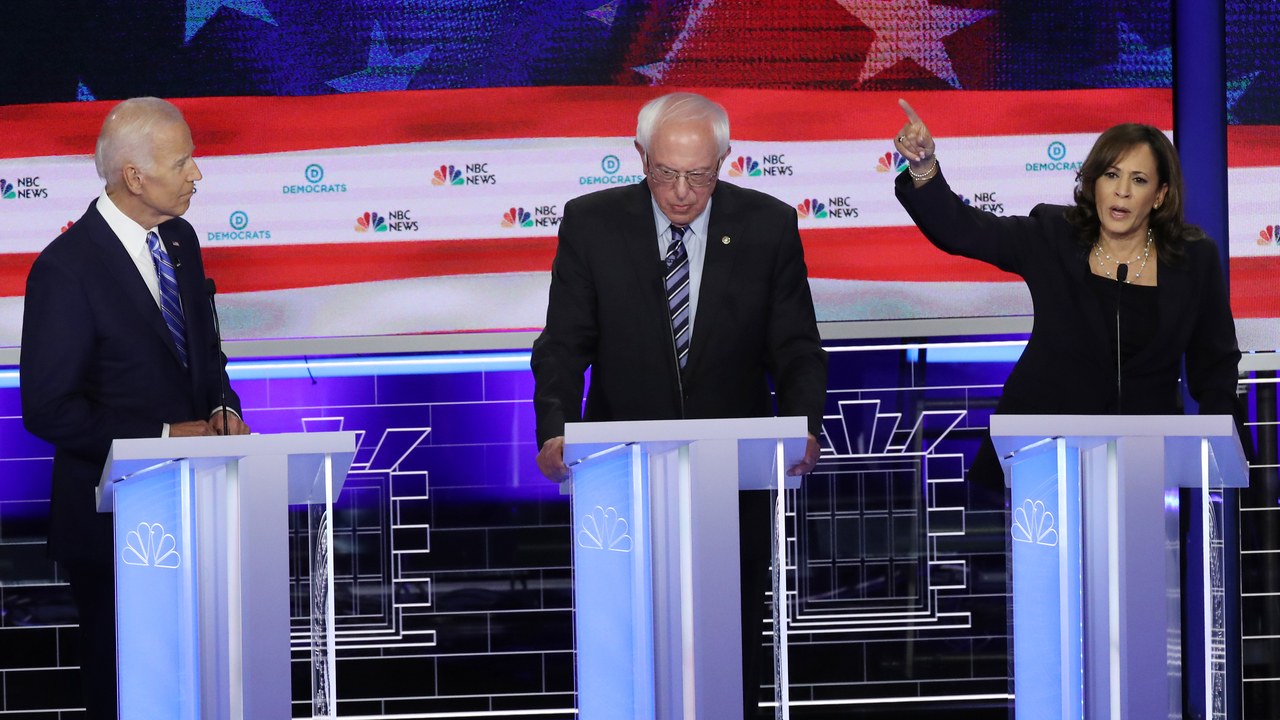
Watch Kamala Harris Confront Joe Biden About Race at the Democratic Debate


Last night (June 27), the second group of Democratic presidential candidates—including Joe Biden, Kamala Harris, Kirsten Gillibrand, Bernie Sanders, and Pete Buttigieg—took the stage to debate issues like immigration, health care, and climate change.

But it was a tense exchange about race between Harris and Biden that has everyone talking, both online and off. Harris brought up the subject of race and talked generally about the fact that discrimination is still very much an issue in the U.S. before directing her comments at the former vice president.

“I do not believe you are a racist and I agree with you when you commit yourself to the importance of finding common ground. But I also believe — and it’s personal and it was hurtful to hear you talk about the reputations of two United States senators who built their reputations and career on the segregation of race in this country,” she said. “It was not only that, but you also worked with them to oppose busing. There was a little girl in California who was part of the second class to integrate her public schools, and she was bused to school every day. That little girl was me. So I will tell you that on this subject, it cannot be an intellectual debate among Democrats. We have to take it seriously. We have to act swiftly.”

She was referring to controversial comments Biden made earlier this month where he talked about his abilities to get things done with people across the aisle during a bygone time of “civility,” mentioning two notable segregationist senators, James Eastland and Herman Talmadge. During his time as a senator, Biden also opposed a federal mandate on busing as a means of integrating public schools.

Biden looked visibly shocked to hear Harris reference herself as a young student who was bussed to school and went on to respond to her other claims. “It’s a mischaracterization of my position across the board. I did not praise racists. The fact is that, in terms of busing, the busing, I never — you would have been able to go to school the same exact way because it was a local decision made by your city council,” he said.

He reiterated his record on other matters related to civil rights and commented on his choice to become a public defender, not a prosecutor like Harris, before shutting down his own argument due to time. “I supported the ERA from the very beginning. I’m the guy that extended the Voting Rights Act for 25 years … I’ve also argued very strongly that we, in fact, deal with the notion of denying people access to the ballot box. I agree that everybody, once they, in fact — anyway, my time is up. I’m sorry.”


Source link

Categories
Health

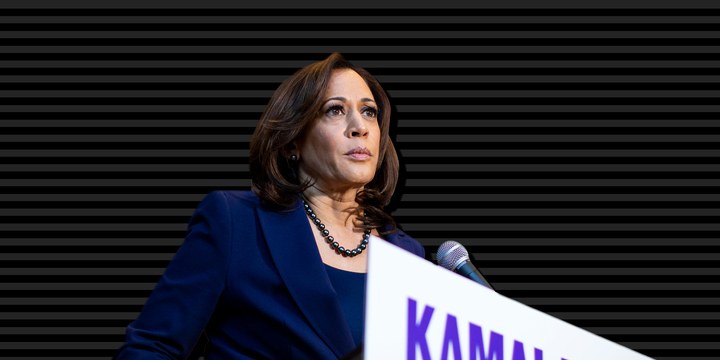
Black Women Want to Be Excited about Kamala Harris. The Truth Is More Complicated.


When Senator Kamala Harris announced her presidential run on Martin Luther King Jr. Day—47 years to the week after Shirley Chisholm announced her historic run in 1972—I should have been thrilled.

Harris is, after all, California’s first black woman and first Indian American to be elected to the Senate. Her decision to declare on a holiday constructed to commemorate the fight for racial equality was a good omen, as was the banner under which she announced: “Kamala Harris, for the People.”

The slogan is meant to communicate Harris’ commitment to justice. It’s also an oblique nod to a prosecutorial record that progressives and black women in particular have taken issue with. By putting it at the center of her campaign, Harris seems to have a message for us: I can explain this. Well, I’m one of those women who needs a further explanation, and I’m listening.

When I first read almost two weeks ago the rumors that Harris would run, I tweeted that I needed to do more research on her prosecutor background because I did not want our black womanhood to be the one attribute we have in common. The hesitation echoes an old African American proverb, “All skinfolk ain’t kinfolk.” When I went online to see how other black women felt, I found emotions that ranged from exultant to vitriolic.

Harris and President Donald Trump were both voted into office in 2016. Ever since, Harris has emerged as one of his most formidable critics. She’s advocated for Medicare for all and free college tuition for families who make under $140,000 a year. She’s expressed determination to end the wage gap for black women and has gone after big corporations that have benefited from tax loopholes. (Within an hour of her announcement, her campaign said she’d raised small-dollar donations from people in all 50 states.) And she’s shined in congressional hearings, a setting in which her intellect, rigor, and facial expressions have earned headlines and fans—myself included. It’s no wonder the speculation escalated over the past few months: With 2020 around the corner, would she run? In text threads and DMs, black women had questions too: Yes, a black female president would be historic. Yes, she has the credentials. Yes, we need to beat Trump. But is Harris the representation we’ve waited for?

For some, support of Harris was obvious. When T. Campbell of Los Angeles heard Harris might run, she breathed a “sigh of relief.” Harris is a Howard-educated AKA (Alpha Kappa Alpha) who tweets with pride about her fellow sorors and her favorite jams, from Salt-n-Pepa to Aretha Franklin. “I feel that…her running means I will have proper representation again,” Campbell says to Glamour. It’s a sentiment that Victoria Johnson of Ridgeland, Mississippi, shares: “As I’ve watched her over the years, I see a very strong leader, not just a strong woman.” And Tina-Rose Brown, who lives in Brooklyn, is excited not just about Harris’ public persona but about her commitment to marijuana legalization and restorative justice practices. “I believe if elected she’ll have a broad coalition and cabinet to help make the necessary changes to stop the cradle-to-prison pipeline,” Brown said.

Her time in the Senate suggests as much. But her earlier work has turned this into the issue I’m most worried about. Prosecutors have upheld laws and a criminal justice system that disenfranchises people who look like me. The prison system with its relation to black and brown people and the hyper-surveillance of our communities are subjects that need to be addressed head on. Can I trust Harris, who served as district attorney in San Francisco and then attorney general of California, to do this?

Harris has of course accomplished much in her career that would relieve some initial concerns. The Guardian and The New York Times have dug into the era of Harris’ political career that predates her reputation as a progressive leader. She opposed a proposition that would have made it harder to invoke the “three strikes rule,” which can trigger an automatic life sentence for someone convicted of multiple crimes and pushed legislation that would jail parents of truant children. But at the same time, as a district attorney in San Francisco, Harris created the Back on Track program for young first-time offenders that reduced the recidivism rate from 54 percent to an incredible 10 percent in just six years. Later, in her statewide office, she helped expedite the processing of rape kits and made police across the state undergo implicit bias training. In other words: It’s complicated.

What kind of voice would Harris be for us in the White House? And what would it take for us to back Harris’ historic bid?

But what sticks out to me is the fact that while she has said she’s committed to such progressive goals as weed legalization and restorative justice, she’s only just begun to reckon with and apologize for the part she played in strengthening systemic disparities among communities of color. She’s earned the nickname Top Cop for a reason. In the era of the Black Lives Matter movement and countless articles and books that document police surveillance and brutality toward black and brown people, for some black women the question is, What kind of voice would Harris be for us in the White House? And what would it take for us to back Harris’ historic bid?

Odds are Harris won’t be the most conservative candidate on criminal justice reform in the Democratic primary. But for some black women, that’s not quite the point. The issue is personal. Mass incarceration as a weapon of the state has disproportionately affected black families. Black people are imprisoned at a rate five times higher than that of white people, and 15 percent of African American men have gone to prison (as opposed to 6 percent of all adult men). “I’m surrounded by black men—uncles, nephews, grandparents—[who] have some kind of connection with the prison system,” says Courtney Humphrey, a media consultant based in Bowie, Maryland. Like Harris, Humphrey is an AKA, but their shared past makes her more disappointed in Harris’ mixed record. “I don’t feel like any of the things I identify with her [about] is enough to get me to completely ignore her politics,” she says. Humphrey isn’t sure who she’ll support in the primary, but she’s interested in Senator Elizabeth Warren, who has called American criminal justice policies racist.

“Most of [Harris’] policies are good, but what most people are shaky about is her stance on prison reform,” adds Josie Deese, a student at Texas Southern University. “I’m personally on the fence because she hasn’t made any statements about [the criticisms against her]. I feel torn.”

Even so, Niah Tobarri, a student in Boston, thinks Harris can win the support of black women, who turned out in historic numbers for Barack Obama. And Simone Mitchell (her name has been changed) perhaps best speaks to the ambivalence that some black women feel. “I would love to support her, but I want direct answers about her past policies,” Mitchell, an attorney based in New York, explains. “People are allowed to change. She can be remorseful…and be transparent.” If she is, Mitchell is prepared to move on: “I would be super happy and rally behind her.”

Still the more I dug into Kamala Harris’ background, the worse I started to feel. I wondered whether I was being too hard on her or even holding her to a higher standard than I would a white male Democrat. Former Vice President Joe Biden admitted that he hasn’t been “always right” on issues of criminal justice. No candidate is perfect, and the idea that I might not support a black woman who is qualified for the job is excruciating. My life’s work is centered on black women and their stories, no matter how complicated those narratives might be. Was my hesitation premature and unfair? But the alternative is almost as painful—giving someone who looks like me a pass on actions that have hurt our communities. I want a black female president. But I want an end to mass incarceration for all black women, for all black families, even more. Who can deliver that? Could it be Harris? Maybe, but I need her to make that case.

Despite our near-unified support for Democrats, black women will have to weigh their priorities in this race, which means that no one candidate commands our vote as a bloc. In the next few months, we’ll need the media to illuminate these differences and pay attention to black women’s concerns about all of the candidates. While there’s no lack of stories about white working-class voters, newsrooms seem reluctant to hire the diverse staff this election demands.

Over the next few months, Harris will have to defend her record on criminal justice just as other candidates have to defend their own votes and positions. And black women know that for a black female presidential candidate, the stakes will be far higher than for her white male peers. Criticism of her character and policies is bound to be influenced by a lethal combination of racism, sexism, and cultural ignorance. (Look no further than a reporter who mistook AKA’s trademark “skee wee” sound as screeches.) When the media missteps, I’ll be the first to call it out. But black women shouldn’t have to do a job for free on social media that newsrooms could do with a diverse staff, and people shouldn’t expect that because we won’t tolerate sexism and racism, it means we won’t examine how Harris’ policies have affected people who look like us.

There needs to be space for black women to have honest conversations about Harris’ record—and not just in our DMs. The fact that Harris will in all likelihood face unfair critiques doesn’t invalidate that. Black women are one of the most important bases for progressive candidates to cultivate. More than 90 percent of black women voted for Hillary Clinton in the 2018 election. The next presidential candidate will need our help too. But no matter who he or she is, that person will have to earn our votes.

Morgan Jerkins is the author of This Will Be My Undoing.


Source link
Categories
Health

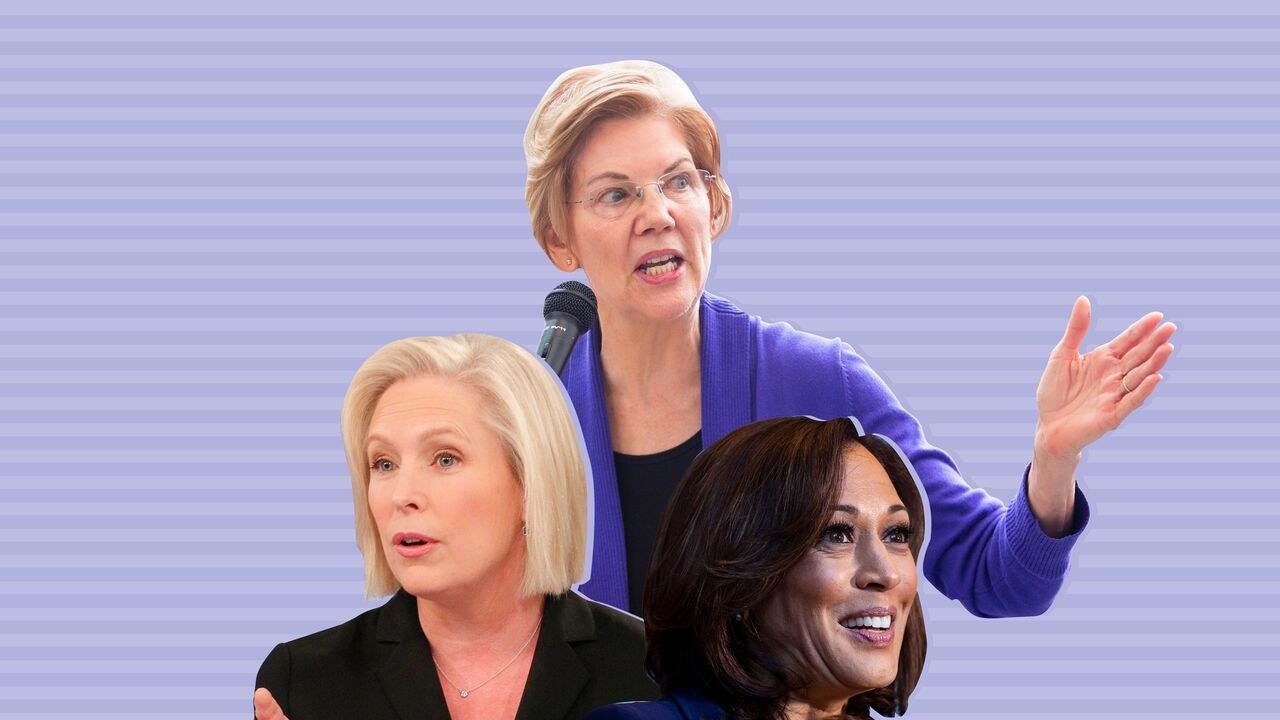
With Kamala Harris, Elizabeth Warren, and Kirsten Gillibrand in the Race, Watching Women Run for President Has Become Our New Normal


Earlier this week Kamala Harris entered the 2020 presidential race. Her announcement was the expected conclusion to the will-she-won’t-she conversation that has surrounded her since she was elected to the Senate in 2016, announced her well-timed memoir in 2018, and raised millions to support progressive candidates in the midterm elections in November. As was true for Elizabeth Warren and Kirsten Gillibrand, who also formalized their candidacies in recent weeks, the fact that Harris has decided to join this raucous, crowded campaign season had started to feel inevitable. Of course she would run.

Kamala Harris is qualified, popular, and charismatic. Sure she has her flaws, but she polls well. Her sharp critiques of the Trump administration have raised her national profile. Even her facial expressions have gone viral.

Warren had a similar reception. When she announced in late December, news outlets blared that she’d done what we all knew she would and made it “official.” The noted wonk was a committed populist before some Bernie Bros were born. She’s an ardent progressive, a vanquisher of corporate influence! Of course she would run.

Gillibrand, too: She launched her own initiative to inspire women to run for office in 2012 called “Off the Sidelines.” She’s been a vocal advocate for survivors of sexual assault and pushed lawmakers to pass bills on the issue months before the Me Too movement exploded. It was a no-brainer. If not her, then who? Of course, of course, of course she would run.

With Warren, Gillibrand, and now Harris in the contest, the top three frontrunner candidates in the Democratic race for president are women. Count Tulsi Gabbard, and just under 50 percent of all the candidates who’ve jumped in so far are female. (As for their male counterparts—who can even name them?) Read this sentence twice. Read it six times. Shout it from an open window. The women are in.

For more than two centuries, men have occupied the Oval Office. In that time we’ve seen one woman sit atop either of the two main parties’ tickets and just a handful of women run for president at all. Harris nodded at one example when she made her announcement 47 years to the week after Shirley Chisholm became the first black woman ever to seek the position.

After Hillary Clinton’s loss and the historic midterms, the presidential race, too, should feel like a revolution. Instead what’s remarkable is how the 2020 battle feels so obvious. Routine. Sublime, spectacular, triumphant—but also, normal. When I saw that Harris had announced, as predicted, on live television I didn’t drop a coffee mug or break a plate or scream. I smiled for a second and then went back to breakfast. It was just another 8:00 A.M. in America, with just one more ambitious woman in contention for the White House. As we were! This is our life now.

What’s remarkable is how the 2020 battle feels so obvious. Routine. Sublime, spectacular, triumphant—but also, normal.

“This field of wildly qualified, incredibly impressive women is making the most consequential political race of our lifetime look and feel more like the reality we all aspire to—basic equality—and that is such a positive thing for the American public to be witnessing,” writes Ilyse Hogue, president of NARAL Pro-Choice America, in an email to Glamour. Despite eons of entrenched sexism, four women have decided to throw their hats into what will be a wild, intense race. At least one other woman seems poised to join them. For those of us who refused to take part in the class POTUS unit in third grade because no woman had ever served, the future looks bright.

It was just a few months ago that pundits wanted to know whether the millions of women who’d marched in 2017 would vote, let alone win. It was two dozen or so months before that some worried Clinton’s defeat in 2016 would put a generation of women off elected office. It turns out women do vote and women can win. Who else but us delivered the most diverse class of lawmakers ever to take their seats in the House of Representatives, with 102 women elected to the chamber (and three dozen brand new members)? More than 20 were first-time women candidates, a record.


Source link

Categories
Health

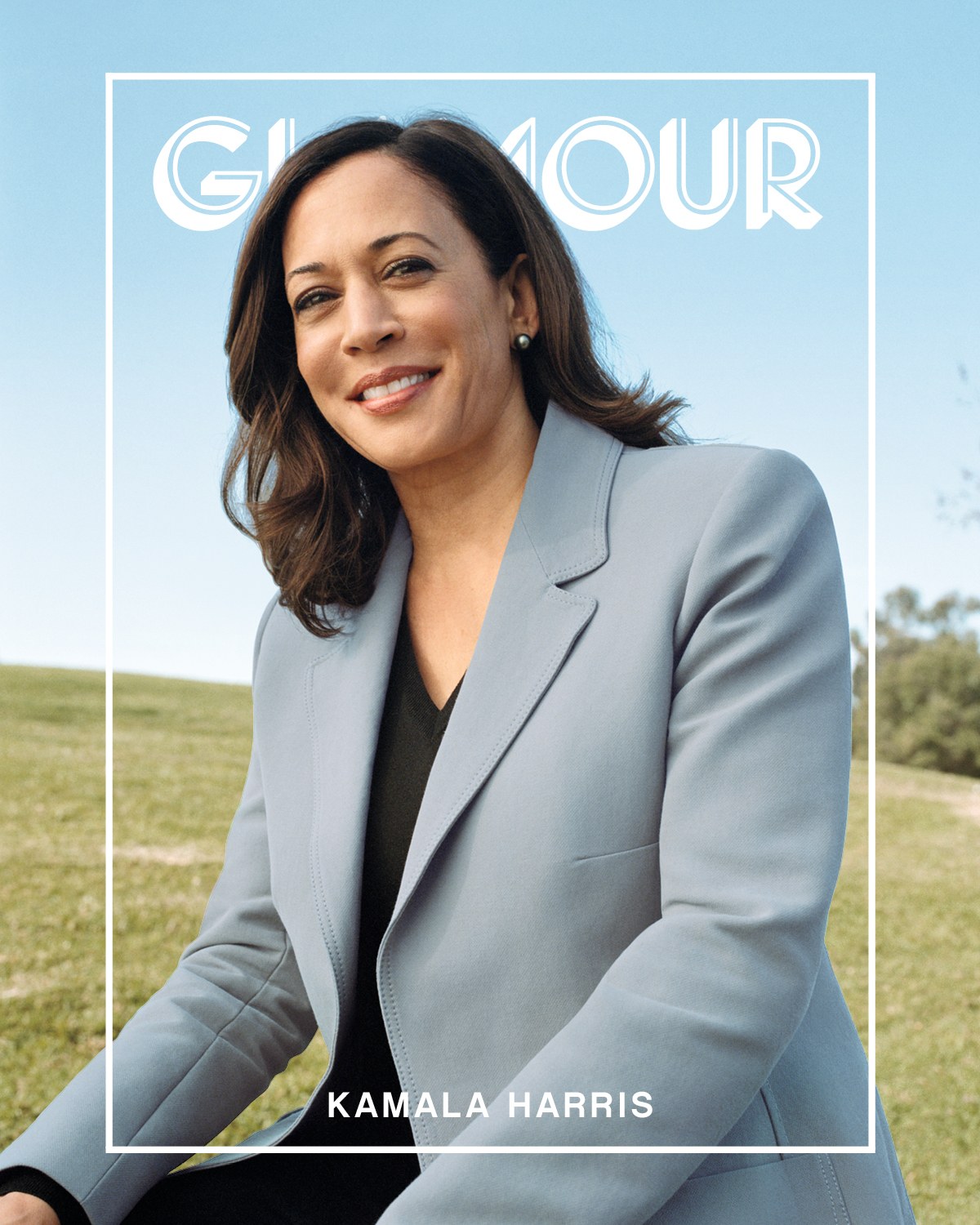
Kamala Harris Is the Politician America Needs Right Now


If you want to ask Senator Kamala Harris whether she’s planning to run for president, keep in mind her favorite Cardi B track: “Be Careful.”

The California Democrat will answer with polite exasperation because to discuss the race with her now, she believes, implies that political ambition motivates her work in the Senate. Instead it’s a deep sense of justice that drives her. “I’m just trying to get at the truth,” says Harris, 54. “I don’t believe my time is to sit here and spew poetry. It’s not for some kind of performance art. It’s not about grand gestures.”

Still, the narrative of her rise is the stuff great political careers are built on. Elected in November 2016, Harris is the lone African American woman in the Senate and its first ever Indian American. She was appointed by Democratic leadership to a seat on the powerful Senate Judiciary Committee and has pushed legislation centered around national security, civil rights, and bail reform (an issue on which she has found common ground with Senator Rand Paul, a Republican from Kentucky).

PHOTO: Zoe Ghertner/Art Partner/Courtesy of Vogue

Outside Washington she’s gained fans and critics for her well-documented blunt talk. She’s been on the front lines of every major issue in 2018, and the viral clips add up: Harris grilling Secretary of Homeland Security Kirstjen Nielsen about the Trump administration’s controversial child-separation policy; staring down Attorney General Jeff Sessions over his contacts with Russian nationals; pressing then Supreme Court justice nominee Brett Kavanaugh to name laws that govern the bodies of men (as abortion laws govern the bodies of women). After that exchange left Kavanaugh flustered, Trevor Noah, host of The Daily Show, tallied the scorecard: “Goddamn, Kamala Harris brings it.”

Harris credits her childhood as a daughter of immigrants for her confidence—even swagger. Her mother, Shyamala Gopalan Harris, a student from India, and her father, Donald Harris, an economics student from Jamaica, met as activists in the civil rights movement. As children, Kamala and her sister, Maya, followed them to marches. “It was the sixties and seventies, a charged time where everyone in my life was very actively involved,” Harris says. “One of the soundtracks of my childhood is ‘Young, Gifted and Black.’ It was about being told you can do anything you want to do.”

“My mother always told me, ‘You may be the first to do many things,’” she says. “‘Make sure you’re not the last.’”

But Harris absorbed another message too: You’re accountable. After her parents divorced when she was seven, her mother emphasized it. Harris remembers coming home and complaining about some mishap at school. “Other kids’ parents would give them a big hug, ‘Oh, what happened, I’ll handle that,’” she recalls. “My mother would look at me: ‘Well, what did you do?’ ” Harris learned to make her peace with it: “I was like, ‘You never took my side.’ I realized she was teaching us that you’ve got to identify your position of power in a dynamic and not let things just happen to you.” At Howard University, Harris joined the debate team and became a member of Alpha Kappa Alpha, the country’s first African American sorority. Jill B. Louis, who pledged in spring 1986 with Harris, remembers a calm about her even then. “She was always a model of stability and composure,” Louis says. “Night or day, she was never rattled.”

Harris went on to law school at University of California Hastings College of the Law and became a prosecutor, determined to enact criminal justice reform from within. “There is certainly a very important role to be played being on the outside,” she says. “But there is also a role to be played being on the inside at the table where the decisions are being made.” After, she served as district attorney of San Francisco and then was elected attorney general of California. There she worked in the trenches with now Senator Catherine Cortez Masto (D–Nev.). “When you’re the top law enforcement officer of the state, you are going to be surrounded mainly by men,” says Cortez Masto, who was attorney general of Nevada at the time. “Some, but not all men, are going to be dismissive. You don’t let that slow you down. The Kamala Harris that I know is not going to be forestalled by anybody trying to get in the way of her doing her job.”

Sitting on a couch in her Senate office, across from a bust of Thurgood Marshall, the first African American Supreme Court Justice, Harris connects her time as a prosecutor to her responsibilities now. It’s the last week of September, and a vote on Kavanaugh looms. She knew the nation was overdue for a public conversation about sexual assault, she says. When she’d overseen jury selection for such cases as an attorney, men and women would often ask to be excused. Behind closed doors, they’d say, stricken, “I don’t want to share this in the open courtroom because I’ve never told anybody, but I cannot sit on this jury because that happened to me.” Not long ago, after a black-tie event, an acquaintance’s wife sent her a note. “When she was 14, she was raped by an 18-year-old student,” Harris says. The woman had kept it a secret for years, but now she implored: “Please fight for women everywhere whose stories may not have been told.

“Leaders need to do is speak truth, even if it’s an uncomfortable truth. I think it is really important that we are fighting for the best of who we are as a country, and I do believe we are better than this.”

Such stories are her motivation now, despite attacks from all sides. Both conservatives and even some progressives have taken up the hashtag #neverkamala to voice their concern that she’s either too liberal or not progressive enough. The White House Twitter account took aim at her in July, tweeting “@SenKamalaHarris, why are you supporting the animals of MS-13? You must not know what ICE really does,” after Harris called for Immigration and Customs Enforcement to be rebuilt “starting from scratch.” (Harris tweeted back: “As a career prosecutor, I actually went after gangs and transnational criminal organizations. That’s being a leader on public safety. What is not, is ripping babies from their mothers.”)

In the meantime, Harris has raised over $5 million to help elect Democrats in the midterms, proof she’s a bankable leader. Her second book, The Truths We Hold: An American Journey, is set for release in January 2019, well-timed for the unofficial kickoff for the 2020 race. About President Trump, she pulls no punches: He “has decided to, I think, spew hate and division,” she says. She’d like to take a different path. “One of the things that all leaders need to do is speak truth, even if it’s an uncomfortable truth. I think it is really important that we are fighting for the best of who we are as a country, and I do believe we are better than this.”

Yamiche Alcindor is the White House correspondent for PBS NewsHour and a political contributor for NBC News and MSNBC.


Source link

Categories
Health

Watch Kamala Harris Expertly Question Supreme Court Nominee Brett Kavanaugh on Reproductive Rights


The second day of the Brett Kavanaugh Supreme Court confirmation hearings went late into the night Wednesday, but Senator Kamala Harris (D–Calif.) was ready when it was her time to question President Trump’s nominee for the highest court in the land.

As a former prosecutor (and former attorney general of California), Harris has perfected her cross-examination technique, and it is quite a sight to behold. Watching her line of questioning in Senate hearings has become a thing to watch. But there was one question in particular that had many women across the country cheering from their living rooms.

“Can you think of any laws that give the government the power to make decisions about the male body?” Harris asked Kavanaugh. When he offered to answer a more specific question, she clarified, “Male versus female.” Then she repeated the question.

Kavanaugh stumbled over his words and finally responded: “I’m not thinking of any right now, Senator.”

There it is, right there—the crux of the frustration for women (and men) who believe in reproductive freedom. There is no comparable situation where the government gets to make bodily decisions for men in this country.

His answer is one of concern for those watching to see how Kavanaugh handles questions about women’s reproductive freedom. In an interview with Glamour shortly after Trump announced his nomination, New York Senator Kirsten Gillibrand expressed her fears that women would seek illegal abortions if the conservative judge was confirmed.

“We are at the brink of not having reproductive freedom in this country, not having the ability to decide when and how many children we’re going to have,” Gillibrand told Glamour. “This nominee believes that a boss should decide whether I get access to birth control…. We should fight back with everything we have—because everything’s at stake.” And Washington Senator Patty Murray told Glamour that a Kavanaugh confirmation would create “a court [with] five men on it who will overturn Roe v. Wade.”

Kavanaugh continued to evade discussion of his views on Roe v. Wade when asked by Harris whether he believed that a woman’s right to privacy included her right to terminate a pregnancy. He danced around the issue of nominee precedent, saying that he should not comment on specific cases and the importance of judicial independence. (While Kavanaugh has been quoted as saying Roe v. Wade is “settled law,” a 2003 leaked email provided to The New York Times and published Thursday shows the judge challenging whether the case was “settled law of the land.”)

Harris didn’t just grill Kavanaugh on women’s rights; she also spent eight minutes on the Mueller investigation of possible collusion with Russia and asked Kavanaugh if he believed there was blame on both sides (referencing Trump’s response for the violence in Charlottesville, Virginia, last year during a white supremacist rally). He evaded concrete answers on both issues. “I am not here to assess comments made in the political arena, because the risk is I’ll be drawn into the political arena,” Kavanaugh said regarding Charlottesville.

Twitter was very much here for Harris’ tough questions and no-nonsense approach to the hearings.

The hearings continue today with more questioning from the members of the Senate Judiciary Committee.

Related Stories:

Here’s Where Supreme Court Nominee Brett Kavanaugh Stands on Key Women’s Issues

The Kavanaugh Hearings, Day 2: If He Doesn’t Make the Supreme Court, He’d Make a Great Real Housewife


Source link