Categories
Health

Netflix's The Politician Review: It's a Hilarious Mix of Glee, Scream Queens, and, The Act


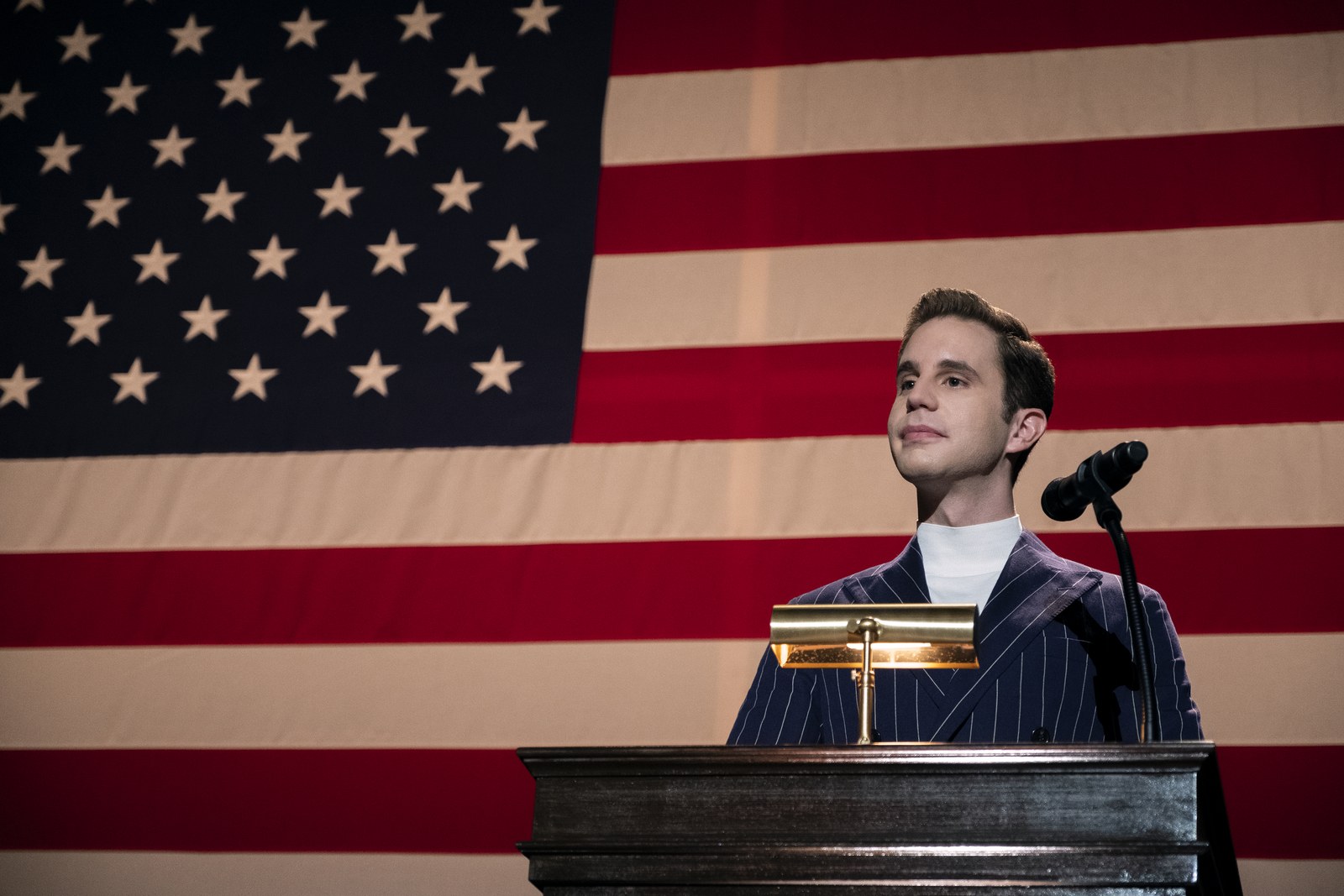
“I love to take bites out of the very confrontational nature of Payton and the over-confidence and the sort of lack of empathy and lack of regard for anyone else’s motives and feelings, because I’m very much not like that,” Platt tells Glamour about his character, who, at one point in the pilot, literally ponders whether or not he’s a sociopath. “It was delicious to play someone who is so headstrong and walks into a room and believes he’s the best person in the room.”

Boynton has similar feelings about playing the antagonistic Astrid. “She can be such a powerhouse and power presence, and I love those moments,” she says. “That happens mostly at her worst, and I love that part of her. I love playing Astrid at her most aggressive. She has such a presence and is not in the slightest afraid to take up space in the room.”

That aspect of The Politician is definitely refreshing. The female characters on the show—whether that’s Astrid, Dusty, or Georgina—aren’t concerned with being “likable.” They have elections to win, scams to execute, or mansions to iconically glide around. These women aren’t necessarily realistic, but they’re not idealized, either. They’re self-indulgent, over-the-top, occasionally villainous, and always entertaining. Think Chanel Oberlin from Scream Queens after 15 espresso shots.

Which, again, isn’t everyone’s cup of tea. The Politician paints its characters boldly and with broad strokes. It’s satirical and cynical and, at times, a bit dark. That aforementioned tragic event is truly devastating—and while it’s given the reverence it deserves, the pilot moves quickly back to Payton and Astrid’s win-at-all-costs antics. There’s not a ton of emotional nuance and sensitivity in The Politician. Know that before going in.

Ben Platt as Payton in The Politician.

Netflix

There are, however, several parallels to another Murphy classic: Glee. Payton could easily be the younger brother of Rachel Berry, McKinley High School’s show-choir all-star who was determined to make it on Broadway. “Payton definitely has that blind Rachel Berry, I will get it by all means necessary [motto],” Platt says.

That being said, Glee was a polarizing show, and The Politician will undoubtedly be too. It currently has a 55 percent rating on Rotten Tomatoes, so critics are pretty much down the middle. What ultimately will determine your taste for The Politician is your opinion on Ryan Murphy content. This isn’t one of his made-for-the-masses productions, like American Crime Story. His humor and brand are written all over this, in its most extreme forms. Personally, I loved it. Some will hate it. Regardless, I think you should give at least the pilot a whirl—if anything to see Gwyneth Paltrow prune flowers in full glam. I could watch nine hours of that alone.

Source link

Categories
Health

Maine Politician Argues Against Guaranteeing Tampons And Pads For Incarcerated Women


Earlier this month, legislators in Maine voted on a bill amendment that would guarantee incarcerated people access to menstrual products. It’s a good idea: While a federal law ensures that federal prisons offer free pads and tampons, that’s not the case at state and local facilities, where supplies are often limited and women are forced to either devise their own solutions or scrounge together funds to purchase the items at commissary.

However, four Republicans balked at the proposal and voted against it. Here’s how State Representative and Dixfield Police Chief Richard Pickett put it, according to a reporter who was on the scene: incarcerated women shouldn’t get more access to menstrual products because “the jail system and the correctional system was never meant to be a country club.”

Alex Acquisto, a statehouse reporter for The Bangor Daily News, quoted Pickett in a tweet. Per his account, Pickett argued that women already have all the menstrual products they need.

“Quite frankly, and I don’t mean this in any disrespect, the jail system and the correctional system was never meant to be a country club…. [T]hey have a right to have these and they have them. If that wasn’t the case, then I would be supporting the motion, but they do,” Pickett said, as cited in a tweet from Acquisto.

Unless the tampons and pads are gold-plated, we have no idea what would compel Pickett to reference a “country club” in the same context as comprehensive access to menstrual products. Tampons and pads are medical supplies, and women deserve to receive adequate care while they’re incarcerated, plain and simple. The harder these products are to access, the more common it will be for women in prisons to face serious health issues. This has been an ongoing fight, with one recent report uncovering instances in New York in which women resorted to trading sexual favors for pads.

According to the Press Herald, several jails in Maine already provide free menstrual products, but incarcerated women have to request them. The proposed legislation would make the pads and tampons more freely available, and there would be no limit on the number that women could have at one time.

Whitney Parrish, a director at the Maine Women’s Lobby, broke it down for critics, according to the Maine Beacon.

“You’re given a limited supply of menstrual products per month, often of low quality due to cost saving, and when you run out, you’re out…. You may have no money to go to commissary, and if you do, you may have to weigh that purchase against other necessities, like making phone calls to your children or attorney. You are forced to make the impossible decision of constructing your own menstrual products, using anything from clothing or notebook paper in place of a tampon,” she said.

Luckily, most saw it as Parrish does. A 6-4 vote allowed the bill amendment to advance, proving that most people understand that basic women’s health care isn’t a luxe perk. It’s a human right.


Source link

Categories
Health

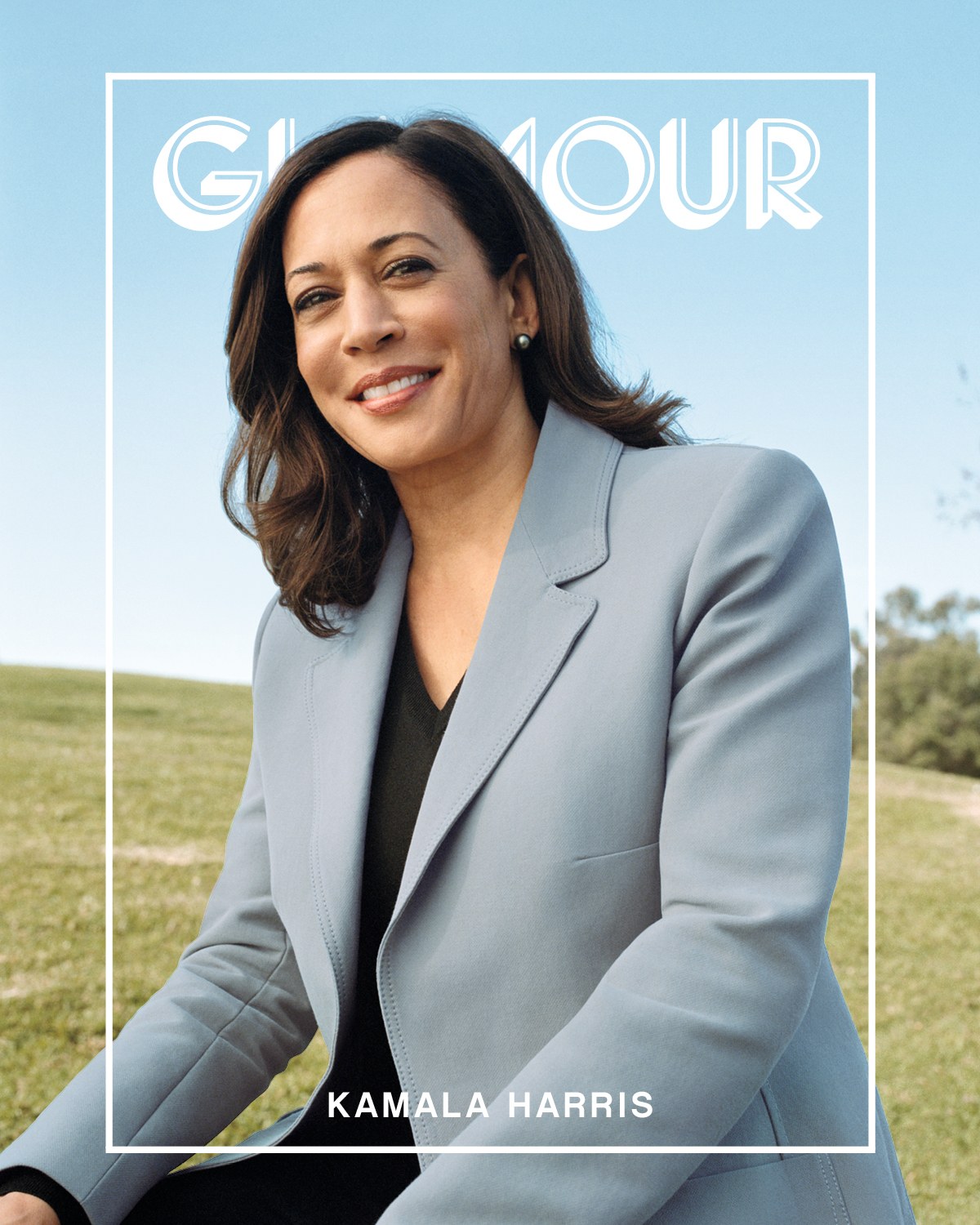
Kamala Harris Is the Politician America Needs Right Now


If you want to ask Senator Kamala Harris whether she’s planning to run for president, keep in mind her favorite Cardi B track: “Be Careful.”

The California Democrat will answer with polite exasperation because to discuss the race with her now, she believes, implies that political ambition motivates her work in the Senate. Instead it’s a deep sense of justice that drives her. “I’m just trying to get at the truth,” says Harris, 54. “I don’t believe my time is to sit here and spew poetry. It’s not for some kind of performance art. It’s not about grand gestures.”

Still, the narrative of her rise is the stuff great political careers are built on. Elected in November 2016, Harris is the lone African American woman in the Senate and its first ever Indian American. She was appointed by Democratic leadership to a seat on the powerful Senate Judiciary Committee and has pushed legislation centered around national security, civil rights, and bail reform (an issue on which she has found common ground with Senator Rand Paul, a Republican from Kentucky).

PHOTO: Zoe Ghertner/Art Partner/Courtesy of Vogue

Outside Washington she’s gained fans and critics for her well-documented blunt talk. She’s been on the front lines of every major issue in 2018, and the viral clips add up: Harris grilling Secretary of Homeland Security Kirstjen Nielsen about the Trump administration’s controversial child-separation policy; staring down Attorney General Jeff Sessions over his contacts with Russian nationals; pressing then Supreme Court justice nominee Brett Kavanaugh to name laws that govern the bodies of men (as abortion laws govern the bodies of women). After that exchange left Kavanaugh flustered, Trevor Noah, host of The Daily Show, tallied the scorecard: “Goddamn, Kamala Harris brings it.”

Harris credits her childhood as a daughter of immigrants for her confidence—even swagger. Her mother, Shyamala Gopalan Harris, a student from India, and her father, Donald Harris, an economics student from Jamaica, met as activists in the civil rights movement. As children, Kamala and her sister, Maya, followed them to marches. “It was the sixties and seventies, a charged time where everyone in my life was very actively involved,” Harris says. “One of the soundtracks of my childhood is ‘Young, Gifted and Black.’ It was about being told you can do anything you want to do.”

“My mother always told me, ‘You may be the first to do many things,’” she says. “‘Make sure you’re not the last.’”

But Harris absorbed another message too: You’re accountable. After her parents divorced when she was seven, her mother emphasized it. Harris remembers coming home and complaining about some mishap at school. “Other kids’ parents would give them a big hug, ‘Oh, what happened, I’ll handle that,’” she recalls. “My mother would look at me: ‘Well, what did you do?’ ” Harris learned to make her peace with it: “I was like, ‘You never took my side.’ I realized she was teaching us that you’ve got to identify your position of power in a dynamic and not let things just happen to you.” At Howard University, Harris joined the debate team and became a member of Alpha Kappa Alpha, the country’s first African American sorority. Jill B. Louis, who pledged in spring 1986 with Harris, remembers a calm about her even then. “She was always a model of stability and composure,” Louis says. “Night or day, she was never rattled.”

Harris went on to law school at University of California Hastings College of the Law and became a prosecutor, determined to enact criminal justice reform from within. “There is certainly a very important role to be played being on the outside,” she says. “But there is also a role to be played being on the inside at the table where the decisions are being made.” After, she served as district attorney of San Francisco and then was elected attorney general of California. There she worked in the trenches with now Senator Catherine Cortez Masto (D–Nev.). “When you’re the top law enforcement officer of the state, you are going to be surrounded mainly by men,” says Cortez Masto, who was attorney general of Nevada at the time. “Some, but not all men, are going to be dismissive. You don’t let that slow you down. The Kamala Harris that I know is not going to be forestalled by anybody trying to get in the way of her doing her job.”

Sitting on a couch in her Senate office, across from a bust of Thurgood Marshall, the first African American Supreme Court Justice, Harris connects her time as a prosecutor to her responsibilities now. It’s the last week of September, and a vote on Kavanaugh looms. She knew the nation was overdue for a public conversation about sexual assault, she says. When she’d overseen jury selection for such cases as an attorney, men and women would often ask to be excused. Behind closed doors, they’d say, stricken, “I don’t want to share this in the open courtroom because I’ve never told anybody, but I cannot sit on this jury because that happened to me.” Not long ago, after a black-tie event, an acquaintance’s wife sent her a note. “When she was 14, she was raped by an 18-year-old student,” Harris says. The woman had kept it a secret for years, but now she implored: “Please fight for women everywhere whose stories may not have been told.

“Leaders need to do is speak truth, even if it’s an uncomfortable truth. I think it is really important that we are fighting for the best of who we are as a country, and I do believe we are better than this.”

Such stories are her motivation now, despite attacks from all sides. Both conservatives and even some progressives have taken up the hashtag #neverkamala to voice their concern that she’s either too liberal or not progressive enough. The White House Twitter account took aim at her in July, tweeting “@SenKamalaHarris, why are you supporting the animals of MS-13? You must not know what ICE really does,” after Harris called for Immigration and Customs Enforcement to be rebuilt “starting from scratch.” (Harris tweeted back: “As a career prosecutor, I actually went after gangs and transnational criminal organizations. That’s being a leader on public safety. What is not, is ripping babies from their mothers.”)

In the meantime, Harris has raised over $5 million to help elect Democrats in the midterms, proof she’s a bankable leader. Her second book, The Truths We Hold: An American Journey, is set for release in January 2019, well-timed for the unofficial kickoff for the 2020 race. About President Trump, she pulls no punches: He “has decided to, I think, spew hate and division,” she says. She’d like to take a different path. “One of the things that all leaders need to do is speak truth, even if it’s an uncomfortable truth. I think it is really important that we are fighting for the best of who we are as a country, and I do believe we are better than this.”

Yamiche Alcindor is the White House correspondent for PBS NewsHour and a political contributor for NBC News and MSNBC.


Source link

Categories
Health

Politician Wears Burqa for Anti-Islam Stunt in the Australian Senate, Horrifies Colleagues


A right-wing politician in Australia is being condemned for wearing a burqa in the country’s Senate chamber as part of an anti-Islam stunt. Pauline Hanson, the leader of the One Nation party, wore the garment to the Senate on Thursday to call attention to her proposed ban on wearing burqas.

The move immediately drew sharp criticism from other political leaders. George Brandis, who leads the Senate, was adamant that there will be no burqa ban in the country. “Senator Hanson, I’m not going to pretend to ignore the stunt that you have tried to pull today by arriving in the chamber dressed in a burqa when we all know you are not an adherent of the Islamic faith,” he said. “I would caution you and counsel you, Senator Hanson, with respect, to be very very careful of the offense you may do to the religious sensibilities of other Australians.”

Another member of the Senate, Penny Wong, called out Hanson for insulting Islam and making a mockery of religious practice. “It is one thing to wear religious dress as a sincere act of faith and another to wear it here as a stunt in the Senate chamber,” she said.

According to The Guardian, Hanson seemed “visibly delighted with the commotion caused by her intervention” and left after she asked Brandis if Australia would ban the garment—a request he refused to allow.

Some countries have already passed laws that prevent women from wearing burqas in public. The German parliament passed a partial ban on burqas in April, and France became the first country to outlaw wearing burqas in public in 2011. Last summer saw conflict in France over burkini swimsuits, which cover more of the body than most suits but are completely unlike actual burqas. A French court suspended a ban on burkinis last August.

Hanson’s party is anti-immigration and anti-Muslim, and she has called for a Trump-style ban on Muslim’s entering Australia.


Source link