Categories
Health

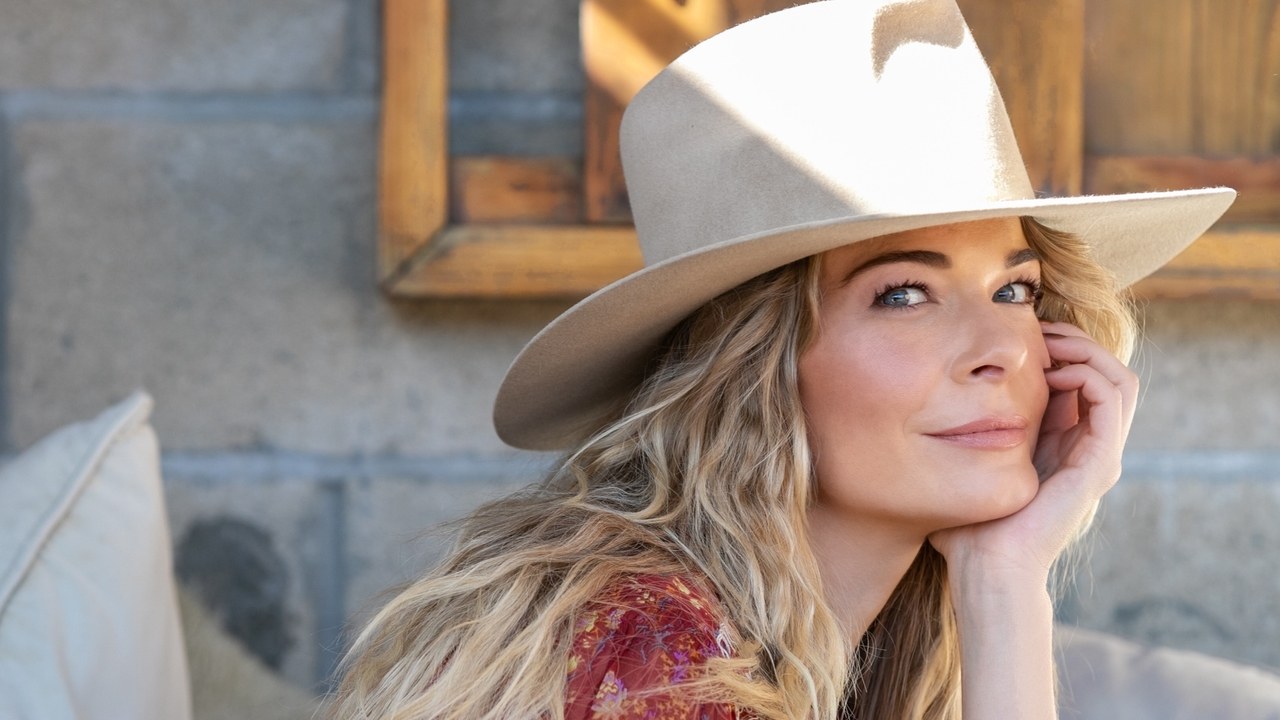
LeAnn Rimes on How Music Helps Her Mental Health


Music has always played such an important role in your life. How does it factor into your mental health?

LeAnn: Creating is the most joyous thing in my book. Creativity gives me a place to express my depth and complexity. I’ve learned that creative energy, left untapped, shows up in my body as anxiety and anger, and I have a lot of creativity that needs to move through me somehow on a daily basis. Music has been my go to outlet since I can remember. It has been the space where I feel I can be the fullest expression of myself. These days, along with music, I am exploring other ways to create with my voice. Everything from writing for my blog, “Soul Of EverLe,” to public speaking, acting, leading chanting and meditation, and candle making. My whole life is one big creation, at least that is the way I view it. Every moment can be art if we treat it as such.

Selena Gomez is another singer in the public eye who’s been open about her mental health. I know you covered her song “Lose You to Love Me.” Have the two of you ever connected on this topic?

LeAnn: I mean, the two of us are two of many who have experienced challenges with mental health in the music industry. One of the reasons why I covered “Lose You To Love Me” for the LovE Sessions is how painfully honest and raw the lyrics are. What beautiful art was made, out of a heart, being broken open. It takes dredging through a certain amount of darkness to create something that authentic and true. Thank God for art and courage.

You’re open about how important self-care is in your life. Do you have any self-care tips?

LeAnn: Find what brings you joy and make it non-negotiable. Do at least one thing that brings you joy every day. It can be as simple as a piece of dark chocolate, taking a walk in nature, taking the time to cook a meal or lighting candles throughout your house… which is my personal favorite and I create my own!

Any self-care products you swear by?

LeAnn: I carry Doterra Siberian Fir oil with me wherever I go. It helps me stay grounded and come back into my body. I also really love the Insight Timer app for on-the-go, guided meditations. I am a contributor and a teacher on the app too. I create and share meditation and chanting. It’s been a very cathartic way of using my voice to help others relax and heal.

What would you say are the most important things to you right now?

LeAnn: My husband [Eddie Cibrian], stepsons, our dog Fleetwood, my own spirit and bringing its authentic expression out into the world, my connection to the divine, growth, being a conduit for creation to flow through, music, wholeness, connection, space, rest, joy, nature, quiet.

Christopher Rosa is the staff entertainment writer at Glamour. Follow him on Instagram @chris.rosa92.


Source link

Categories
Health

Zoey Deutch on the One Product That Truly Helps Her Chronic Hormonal Acne


If you’ve had even one angry, uncover-up-able pimple, you might know what it’s like to be a slave to a “bad” skin day: For me, it looks something like hiding under the covers and avoiding all contact with humans (or mirrors) for 48 hours, minimum.

On the first episode of Glamour’s What I Wore When podcast, Zoey Deutch talked about her almost-decade-long battle with acne, and how she eventually decided to stop hiding. The Politician actor isn’t just struggling with an occasional, pre-period zit; she has chronic hormonal acne that she’s been trying to tackle for eight years.

“There’s not one thing that fixes it all,” she said. “You have to come at it from every angle. And I’ve seen every fancy dermatologist and every person that claims to know, and I’ve tried every product and tried every antibiotic and done everything, and I can’t fix it.”

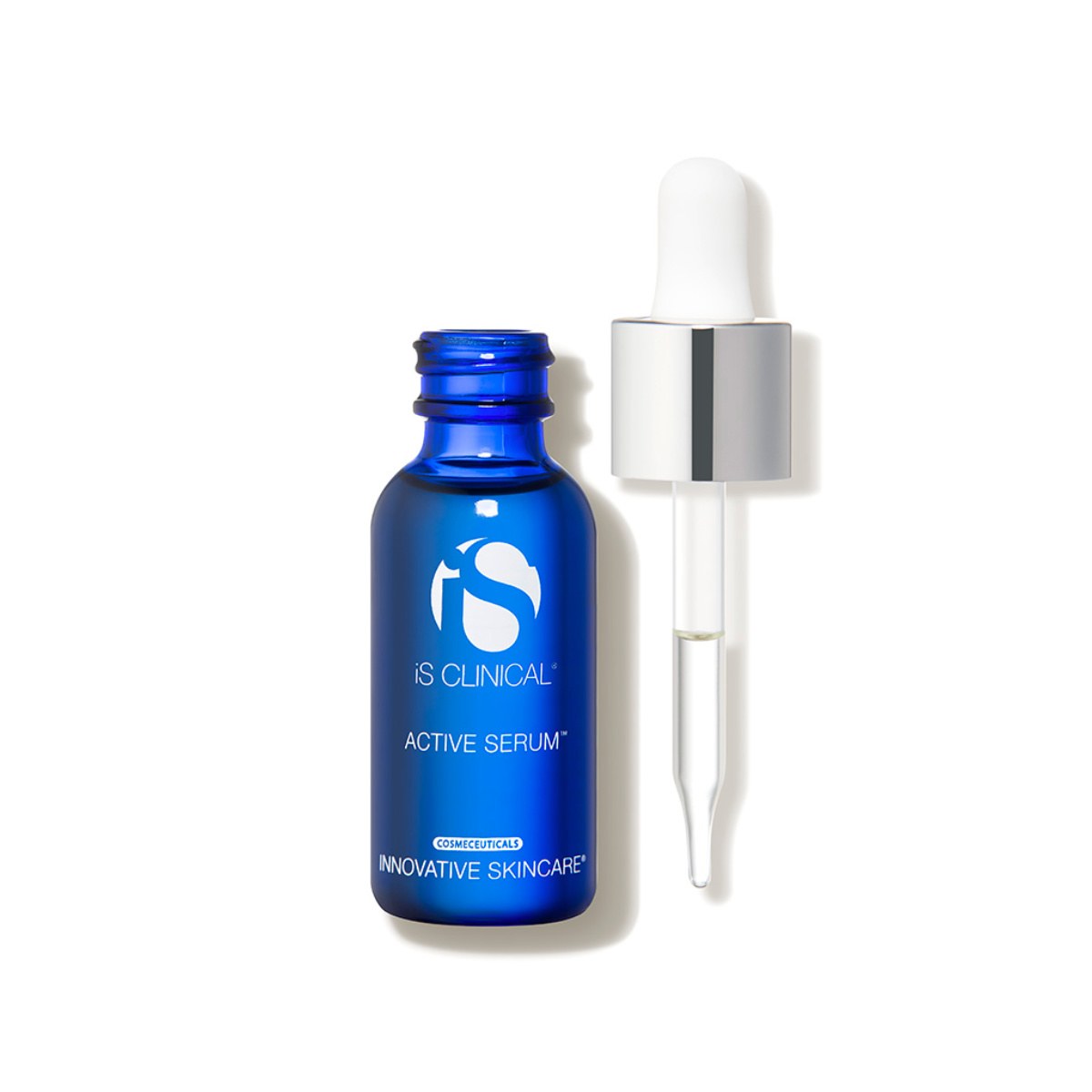
She’s currently taking a “less is more” approach to skin-care, but there’s one thing she swears by: “The one product that I cannot travel without it because I do think my skin goes completely bonkers without is, iS Clinical Active Serum,” she says. “It’s very drying and it’s very intense and stingy, but I think it’s the best product.”


All products featured on Glamour are independently selected by our editors. However, when you buy something through our retail links, we may earn an affiliate commission.


iS Clinical Active Serum from Dermstore, $135.

Courtesy of brand

But while she is trying to get rid of her pimples, she also said she’s no longer letting acne dictate when she leaves the house. In fact, she’s come to a place in her life where she’s grateful for it. “I have a thyroid problem,” she said. “I keep trying to fix [my acne] from the outside in, but it’s inside out, which is mostly what it is with hormonal acne. And I have had a ‘come to Jesus’ moment with it, which is actually have gratitude for it because if that’s like, I don’t know. It’s not that bad. And also who cares? I’ve made it such a big thing. You hear about it but it’s like I won’t go out or I won’t do certain things [but now I just need to be, like], who cares?”

For more from Zoey, listen to the first episode of What I Wore When.


Source link

Categories
Health

Twitter Thinks This Chart Helps Explain Why You Didn't Love 'Game of Thrones' Last Season


It’s officially been one week since HBO aired its final episode of Game of Thrones, and if you’re like other disappointed fans out there, you’re probably still trying to make sense of that unexpected ending. Though some aren’t pleased with showrunners David Benioff and D.B. Weiss (and even started a petition begging HBO to remake the last season), there’s some interesting data that might hold some explanation for why viewers were far more interested in the earlier seasons of the hit series.

Vanity Fair writer Joanna Robinson shared a chart on Twitter that tracks the average number of words the characters spoke per minute in each Game of Thrones episode, starting from Season 1. Based on the data, measured by OpenSubtitles.org and charted by Github user mrquart, the number of words in each episode declined throughout the show’s seasons.

You can see the graph fall from approximately 60 in the first season to less than 40 in the last. Meanwhile, season eight’s “The Long Night” episode, which contained the longest and most expensive battle scene in TV history, had the least dialogue with an average of just 15 words per spoken per minute.

As Robinson clarified in a reply to her original tweet with the chart, the data itself isn’t a reflection of quality. “… This isn’t INHERENTLY bad, obviously. I just like the earlier dialogue-heavy stuff so much personally,” she wrote. “… You don’t really need to see this lovely graph if you’ve looked at the scripts themselves—the difference is stunning.”

So if you think that the chattier scenes of earlier seasons were a little better, this might help support that. One user pointed out that the writers ran out of material after season five from author George R. R. Martin’s original books, so things shifted from “being conveyed via words” to, on its own, a more visual approach. Also, as some fans brought up, the show’s average word count could have also decreased in part because of all the battle scenes in later seasons, where there’s not a ton of talking going on.

Of course, fans were quick to chime in about it:

Despite the Game of Thrones‘ lack of dialogue, fans clearly still kept tuning in: In fact, more than 13.8 million viewers watched the final episode live, making season eight’s finale the most-watched of any of the show’s seasons.


Source link

Categories
Health

Barry's Sarah Goldberg: I'll Never Get Used to the Red Carpet, But This Trick Helps


“What’s your name, honey?” someone yells.

“This way!”

“Over here.”

“Full frontal!”

“Over the shoulder. Smile!!!!!

My retinas are burnt—I hope not permanently—but I can make out a wall of people, mainly men, screaming at me from behind the aggressive flashing of their bulbs. I know I’m not supposed to blink or smile too hard, but I can’t keep the face I rehearsed in the mirror in place. In fact, I think I’ve developed a facial twitch. My hands seem to have traveled up to my hips, where they are clutching tightly at my body in a vain search for some kind of eject button. I am confident I have the lip outline of the mother of the groom and my tit tape is threatening early retirement. I pray my sudden paralysis will read as composure. Then, suddenly, the conveyor belt moves and I’m chucked out the end, where a beautiful girl in blue hands me a Fiji water. I detect an ounce of pity on her face as she scratches in between her teeth, urgently suggesting I do the same.

When I decided to become an actor, I didn’t know I was going to have to “do carpets.” (“She’ll go. She’ll do the carpet.”) My concerns were much more immediate. Would I find work? Would I be able to pay my rent? Would I ever meet Dianne Wiest?

I went to drama school in London, where we rolled around like animals, found our inner clowns, laughed and cried into actual walls, climbed over imaginary ones, and played characters forty years older than us in accents we simply couldn’t do. The humiliation was bottomless. I have a degree in it. But no amount of roaming on all fours and no cacophony of faux Liverpudlian accents could have prepared me for the specific experience of the red carpet. Actually, they are rarely red these days. They come in an array of colors: blue, green, taupe….shame.

This past award season was my first. There were many surprises. (Failed tit tape was sadly not one of them.) There were the protestors with signs telling me to burn in hell, the vehicle bomb checks carried out by men with large machine guns, and the port-a-loos! (Big award season takeaway is that if you tell actors there’s a trophy we will queue in a parking lot and pee in a port-a-loo. Is Nicole Kidman really using the port-a-loo?) I don’t know what I was expecting when it came to the actual carpets, but the scale and volume of them were dizzying.

I felt vulnerable, anxious, and totally exposed. I resented the expectation of women to show up looking perfect after hours of preparation, while the men could simply throw on a suit. (An imbalance not unique to my profession, but the carpet acts like an exaggerated microcosm of the scrutiny women face on a daily basis.) Not to mention the sadomasochistic next day Google of cruel captions about a dress I can’t actually afford in real life.

I am one of the luckiest people alive to be able to pay my rent from a job I actually love doing, so if walking down a burnt orange rug in shoes designed by Beelzebub is the worst of it, I can’t complain. Nonetheless, the anxiety is real and I had to find a way to navigate—even enjoy—the whole circus. At one particularly intimidating event (after my eye sight returned and the shot of tequila I drank en route set in) I realized that the only way forward was to embrace the chaos and tie it to my real job as an actor: telling stories. So I started coming up with characters to match the evening’s attire. Now I let whoever I am playing that night “do” the carpet for me.

Below, a few of the women who got me through.


Source link

Categories
Health

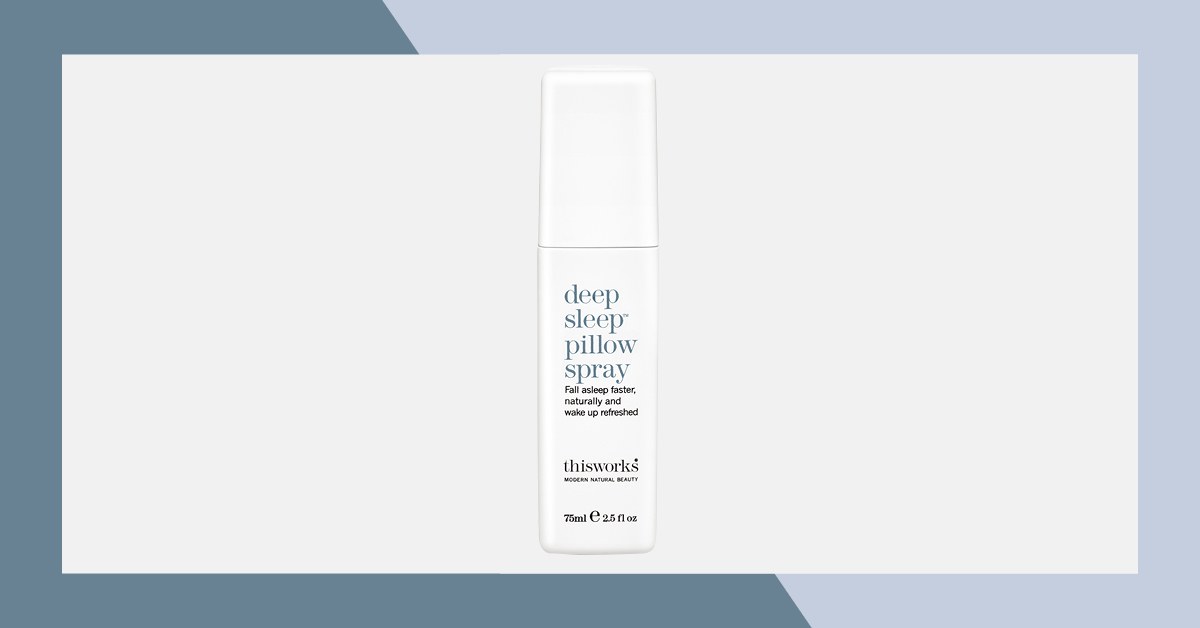
This Deep Sleep Pillow Spray Actually Helps Me Fall Asleep


In my dream world I’d be a morning person who wakes up at 5:00 A.M. with a matcha latte in one hand and a lemon water in the other, about to check a gym or yoga session off my list. The real me feels like I’ve been hit by a truck when my alarm goes off, and I have to fight an inner battle to get up out of bed.

It seems silly for someone to say they’re terrible at sleep, but every night I face the uncertainty of not knowing how long it will take me to fall into a slumber or if I’ll even doze off at all. I’ve tried everything short of a prescription at the recommendation of doctors, friends, and—of course—Instagram: no electronics before bed, no napping, yoga, reading, meditation, tea, melatonin, magnesium, essential oils, ear plugs, a sleep app that tracks your sleep and wakes you up at the best time, an eye mask, and even a new mattress.

It’s not that they’re all entirely worthless. Most of the time any combination of these methods do help me fall asleep faster and stay asleep, but some nights I’m so lazy I don’t feel like getting up to take my magnesium supplement or plug in my diffuser. The one thing I can always muster up the energy to do, however, is pick up my bottle of This Works Deep Sleep Pillow Spray and spritz a few drops on my pillow and all over my bed.

I first heard about it a year ago during a work event and was immediately drawn to it because of how simple it sounded. It wasn’t a concoction I had to pre-make, a pill I had to swallow, or anything I had to assemble or put thought into. I literally just had to pick it up. So I took home a bottle and made note to try out the next time I was tossing and turning in bed. Spoiler: They didn’t overhype this spray. After my first time using it, I fell asleep quickly and woke up the next morning pleasantly surprised at how refreshed I felt.

The spray contains a blend of lavender, vetiver, and camomile and smells like a warm, soothing, calming hug. Lest that sounds like B.S., there are actually studies that show both lavender and camomile are scientifically proven to aid with insomnia. The fact that it takes almost no effort to use before bedtime makes it a no-brainer in my routine. The bottle never leaves my bedside, and the use of scent to aid in sleep is one of the most effective methods I’ve personally tried. Even though it’s not always a guarantee, I find that I’m able to knock out faster and stay asleep longer than when I don’t use it, and my sleep quality is noticeably better.

Also, because it’s relatively affordable (only $29) and under 3 fluid ounces, I can take it with me whenever I travel—which is especially key when it’s for work and there’s a time difference. Case in point: When I traveled to Paris for Fashion Week last September, it helped me wind down after 15-hour days of shows, showroom appointments, and meetings.

I might never be that girl up and ready to go at dawn, but at least I feel functional by the time I roll into the office. And that seems like a win enough.

This Works Deep Sleep Pillow Spray, $29, dermstore.com

Related Stories:
I’m Hooked on ‘Sleep Water’
Even If You Aren’t Expecting, You Should Try Sleeping With This Pregnancy Pillow
I Can Sleep in This $8 Lipstick, and It Looks Exactly the Same in the Morning


Source link

Categories
Health

Queen Latifah's Stress Reliever Also Helps Kids in Need


The life of a Grammy-nominated artist, award-winning actress, singer, songwriter, and producer may seem charmed, but it’s also a little hectic. When some people are stressed, they might pick up yoga, or begin to cook, or maybe even meditate. But when you’re Queen Latifah and you’re stressed out after a long day on the set of your latest hit movie, you bang those frustrations out on a drum set.

At VH1’s Save the Music event, Queen Latifah was honored for her contributions to music as well as her commitment to providing music education opportunities to students in low-income communities. Latifah, who grew up in a poor neighborhood in Newark, New Jersey, believes that music and the arts were her ticket out of poverty and wants to make sure that kids from her neighborhood have that opportunity too. That’s why every time she buys a drum set during a movie, she also donates that set to a local high-need school in a low-income community.

Historically, when budgets are tight, school administrators prioritize math and reading over programs in the arts. “To strip schools of music and art is like to strip your own soul”, Latifah said. “So many people find their way to who they want to be and what they want to be in life through music and art… so when you take that from children, you’re taking a piece of what they’re supposed to be. You’re taking a piece of their dreams.”

At Monday’s event, the VH1 Save the Music Foundation celebrated 20 years of providing funding to help jumpstart music programs underfunded school districts. Since its start, the foundation has given over 2,000 schools the tools they need to re-instate their music programs – from providing musical instruments to music teacher development programs and their impact has been huge. In 2017 alone, DJ Khaled’s ‘Get Schooled: Khaled Keys campaign’ reached over one million young people with tools for success in the music industry.

So the next time you’re stressed consider being like Queen Latifah and helping someone in need. Who knows, community service may be just the cure.


Source link