Categories
Health

Giving Birth During Coronavirus Is Every Woman's Nightmare


“The thought of my husband dropping me off at the hospital, me getting checked in alone, getting the epidural shot alone, and not having his hand to hold terrifies me,” says Morgan Pederson, a 32-year-old woman from Queens, New York, who is planning to deliver her second child in June.

Last week two New York hospitals, New York Presbyterian and Mount Sinai, announced that in the face of the coronavirus pandemic they would not allow partners or spouses in the labor and delivery ward or on the postpartum floors. It sparked a flood of concern from around the country. Was this the new norm?

Days later, on March 28, New York governor Andrew Cuomo stepped in, issuing an executive order overruling the decision of private hospital systems and mandating that one support person—without a fever—must be allowed to be present while women are in labor.

Giving birth is a beautiful experience—it’s also one of the most vulnerable times in a woman’s life. Exposed, incapacitated, and in excruciating pain, laboring moms rely on other people—doctors, nurses, midwives, doulas, and especially their partners—for help and support. It’s a marathon that can take hours (or days) and expecting moms aren’t monitored continuously by staff during the entire journey. Throughout the process, nurses only rotate through and check in every few hours unless they are requested. Doctors are typically not present until the patient is already pushing. Often, the delivery floor gets busy, and the time it takes to access medical staff becomes further delayed. And that’s during the best of times.

Giving birth during the coronavirus is an entirely different ballgame. With the realities of the pandemic intensifying every day, maternity wards have a serious challenge: keep pregnant women, their babies, their families, and healthcare workers safe in the face of COVID-19. “It is time to put all of our faith in our health care professionals,” says Xana Miguelez, M.D., an ob-gyn and attending physician at Mount Sinai Medical Center in Miami. “Have the certainty that we are all taking care of our patients, your loved ones, with all the care and dedication that you would.”

Still, that can mean hard-to-swallow changes to pregnant women’s birthing plans—and a new reality of social distancing during labor.

Rebecca Garay, 35, who will be giving birth in Miami, is hoping for a vaginal birth after two C-sections. She’s relying on the help of a doula for a challenging delivery so she can stay out of the operating room. Garay was initially hoping to have both her husband and her doula in the delivery room with her. But coronavirus concerns complicated childcare plans for her two older girls, ages 4 and 6. Her husband’s family in Miami are elderly and at high-risk for coronavirus, while her family in New England is unable to travel because of the pandemic. That means her husband will not be present at the birth—he will stay at home with her two girls, while she labors with her doula.

“It feels numbing. Not real. I do not have a choice so I am staying strong, chugging onwards,” says Garay. “I’m just going to do what I can do within my control so I can have the best success of having a vaginal birth and staying out of the OR and getting back to my family ASAP.”

Birthing partners are a crucial part of medical care during labor and delivery, says Jesse Pournaras, a doula serving New York. “Partners are imperative—not only for love, physical, and emotional support—but they bear witness. They can alert medical teams when something is amiss, when there is a medical emergency, or when the patient cannot reach staff themselves,” she says.

The uncertainty over how hospital policies may change in the coming days is prompting some women to consider alternatives. “For my husband and I, laboring alone is not an option,” says Sierra Lawe, a 36 year old who was planning to have her first child at a birthing center in Berkeley, California. Midwives have warned her and her husband that if a medical situation arises—if the providers or the couple are sick or if there is an emergency—Lawe and her husband need to prepare for a possible solo birth at a hospital. “It seems like any sense of autonomy that expectant parents may have had at one time has vanished,” Lawe says. “I can’t even begin to imagine how I would get through labor without my husband there.”
Source link

Categories
Health

Here's How Celebrities, Athletes, and Regular People Are Giving Back During the Coronavirus Pandemic


Across the globe, people are grappling with the growing COVID-19 pandemic. Deaths due to the coronavirus have soared in Italy as hospitals try to manage high demands and lack of supplies. In the U.S., panic levels are high, with health officials advising “social distancing” and taking extra precautions to protect your health. Most major live events, TV productions, and movie releases have been canceled while citizens grapple with postponing their own important gatherings to protect vulnerable, immune-compromised individuals.

Thankfully, fear hasn’t stopped people from giving back to their communities and inspiring us all in these scary times. From acts of kindness to major donations that will help those who are sick and/or out of work, here are just a few of the ways celebrities and regular people, alike, are doing good in the midst of the coronavirus outbreak:

Zion Williamson will cover the salaries of Smoothie King Center staff

The NBA announced that all games have been canceled for the rest of the season, which means stadium workers and employees could lose serious wages. However, New Orleans Pelicans forward Zion Williamson wants to do his part: He announced on Instagram that he’ll help cover the salaries of those who work at the Smoothie King Center.

“My mother has always set an example for me about being respectful for others and being grateful for what we have, and so today I am pledging to cover the salaries for all of those Smoothie King Center workers for the next 30 days,” he said.

Kevin Love donates $100,000 for the staff at the Rocket Mortgage FieldHouse

Cleveland Cavaliers player Kevin Love was one of the first athletes who stepped in to help stadium staff that will struggle over canceled games. He promised $100,000 to benefit workers at Cleveland’s Rocket Mortgage FieldHouse.


Source link

Categories
Health

13 Brands Giving Back on International Women's Day 2020: Shop Outdoor Voices, L’occitane, & More


The weekend is best time to fall into a leisurely online shopping hole with little-to-no shame. But this Sunday isn’t just any old Sunday. It’s International Women’s Day 2020—a day dedicated to celebrating the social, economic, cultural, and political achievements of women worldwide. International Women’s Day was recognized for the first time in 1911—and now, over a century later, brands worldwide are using their platforms to give back to organizations that uplift the women who need it most.

From the Malala Fund to the ACLU Women’s Rights Project, the brands on this list are partnering with organizations making a major impact—and so can you, by simply supporting their efforts through a little retail therapy. Whether you’re looking to fill out your beauty bag or upgrade your workout wardrobe, you’re bound to find something worth shopping on this list. Discover all the best beauty, style, and home buys for International Women’s Day, ahead.

All products featured on Glamour are independently selected by our editors. However, when you buy something through our retail links, we may earn an affiliate commission.


Source link

Categories
Health

Beyoncé: Giving Zero Effs Is ‘the Most Liberating Place to Be’


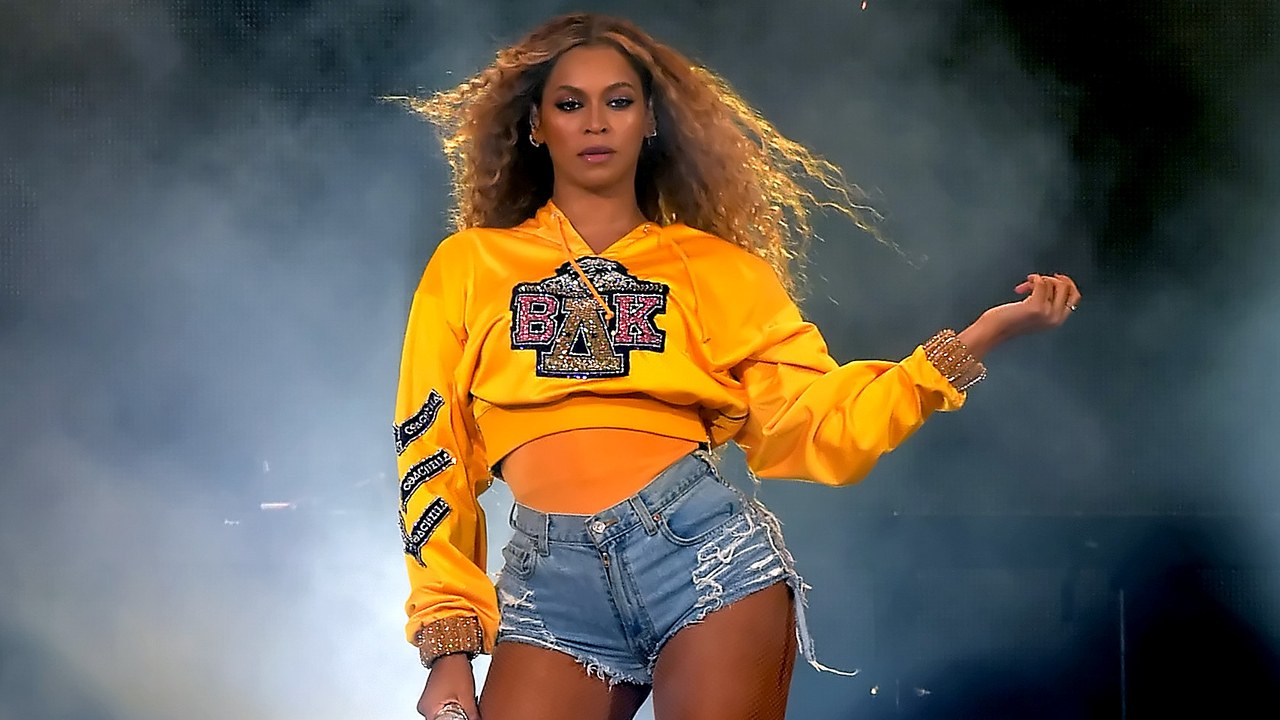
Beyoncé is one of the world’s most private celebrities. Case in point: She rarely gives interviews anymore. Instead, she chooses to express herself through her projects, such as emotional albums like Lemonade and her Netflix documentary Homecoming. Hell, even her Instagram posts are often without captions.

But recently she talked to Elle (via fan-sourced questions) about topics as varied as her latest Ivy Park collection, her work process, motherhood, and body image. One highlight of the Q&A comes when a fan asked Queen Bey how she feels about unnecessary scrutiny around her body. “Everybody’s weight fluctuates,” the fan wrote. “How does it make you feel when people are constantly commenting on your appearance?”

Beyoncé’s reply: “If someone told me 15 years ago that my body would go through so many changes and fluctuations, and that I would feel more womanly and secure with my curves, I would not have believed them. But children and maturity have taught me to value myself beyond my physical appearance and really understand that I am more than enough no matter what stage I’m at in life.”

She continued, “Giving zero effs is the most liberating place to be. Also knowing true beauty is something you cannot see. I wish more people focused on discovering the beauty within themselves rather than critiquing other folks’ grills.”

Amen to that.

But Beyoncé also admitted that negative comments can get to her sometimes. “Yes, I’m human,” she said. “In moments of vulnerability, I try to remind myself I’m strong and I’m built for this. Thank God most of the noise bounces off of me after all of these years.”

We also learned her karaoke go-to songs are “Escape (The Piña Colada Song)” and “Hotel California.” She doesn’t know her Snapchat handle, but she is aware of Keke Palmer’s “I’m sorry to that man” meme because she answered, “Sorry to that Snapchat. ???.” And her least favorite question to be asked is actually relatable to a lot of women: “‘Are you pregnant?’ Get off my ovaries!”

The queen has spoken.


Source link

Categories
Health

Sex After C-Section: Sex After My C-Section Helped Me Stop Feeling Like I’d Failed Giving Birth


It turns out that tiny strips of silicone can help reduce the appearance of scars. You place them on top of the wound at night, and over time the scar fades. I wasn’t home a few hours from the ob-gyn before ordering a jumbo pack online. The sooner it came, the sooner I could start getting rid of This Thing.

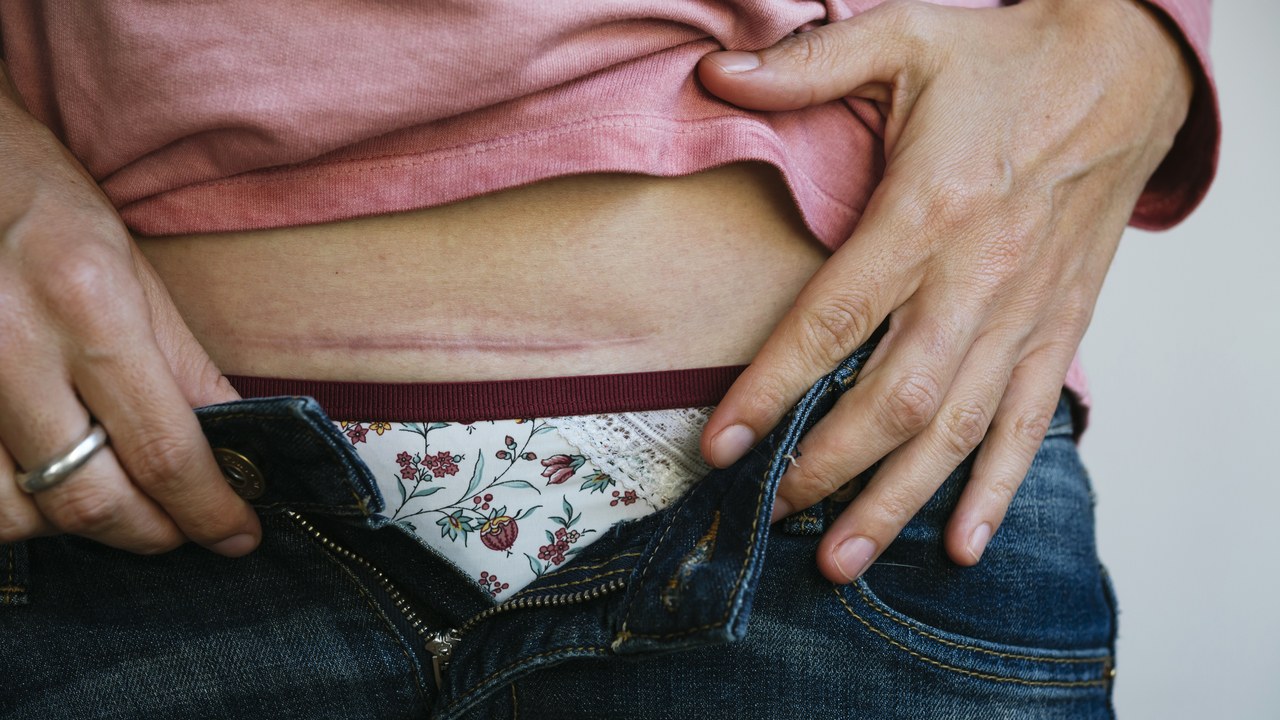
Before the scar, stretch marks, and baby, my marital sex life was hot. We were the kind of couple who often wouldn’t make it to the bedroom, christening the couch or a beach blanket in our desire. I felt confident as I figured what my husband saw in me was what I saw in the mirror: a former collegiate swimmer with small perky breasts and firm thighs. After my C-section, with grayish purple lines dancing around my nipples and lower abdomen, and a scar cutting through my pubic region, I’m not so seamless, the physical changes a reminder of what my body has been through.

When we were cleared to have sex after five weeks, I was excited to be close to my husband again but apprehensive about how it’d go. I wasn’t feeling particularly seductive—with breast milk leaking out of my nipples and my hair in an unwashed bun, I wasn’t exactly turning myself on. My body and mind had been through a transformation, one that felt far from anything bedroom-related.

But something changed when we had sex, my angry scar on full display. Naked again with my husband, I not only felt worthy; I felt hot. I felt reminded that my body is powerful, feminine. After all, it brought our baby safely into this world, vaginal birth or not.

“Pin me down,” I commanded, hardly believing how confident I felt. My husband grinned, never more willing to oblige. I finally felt like the strong, beautiful woman my husband had been telling me I was. His excitement for me—scar and all—reminds me to embrace myself more fully.

Our scars are difficult to accept. They remind us of something in our lives that didn’t go quite as we expected. But they are also a part of our journey, our story, our beauty. My C-section brought me my giggling babe. It brought me closer to my partner. Perhaps most important, it brought me closer to loving myself even when things don’t go to plan.

When I think about it that way, I don’t hate my scar at all. In fact, I don’t need those silicone strips. I never even opened the box.

Jenna Jonaitis is a writer in Michigan covering lifestyle, wellness, and parenting. Follow her on Instagram and see her other work here.


Source link

Categories
Health

Shay Mitchell Hit Back at People Mommy-Shaming Her for Going Out After Giving Birth


It hasn’t even been a month since Shay Mitchell gave birth to her daughter and already she’s facing the wrath of mommy-shamers. This week, people left her a series of critical comments about how she went to Drake’s birthday party with her boyfriend, Matte Babel, shortly after having her baby. But she defended herself on Tuesday, October 29, in an Instagram Story, standing by her decision to have at least one night out as new mom.

In the Instagram Story, Mitchell explained that she hadn’t initially seen a lot of the remarks people left her. “I haven’t been really checking my comments that often, but apparently people are really upset that I left three days after having a kid to go out and party,” she said, adding, “It wasn’t three days, and she was with [my dog] Angel, so…”

She then went on to read a few of the pointed things some of the mommy-shamers had said to her. “Wait. So you literally just had her and you’re more worried about clubbing with Drake? Wooow,” one person wrote. Another one read, “Mother of the year award right here!!!! As if you seriously could leave your baby to go party?!!! I hope the child’s aid look into this and your abilities to be a good parent cause damn!!! Lacking some serious skills there sweety! #selfish.”

Mitchell handled the unfair skepticism in stride, which makes sense given she’s been pretty open about the entire pregnancy and motherhood process. Once she announced she was expecting, she made most of her journey public by creating a YouTube series with Babel called Almost Ready. There, she candidly tackled everything from the possibility of a C-section to her 33-hour labor and delivery. We’ll have to see if Shay Mitchell continues the series. If she does, an episode about mommy-shaming seems appropriate.

[embedded content]


Source link