Categories
Health

This Is Us Season Three Finale Details: Executive Producers Isaac Aptaker and Elizabeth Berger Answer the Biggest Questions


Caution: Spoilers for the This Is Us season three finale ahead.

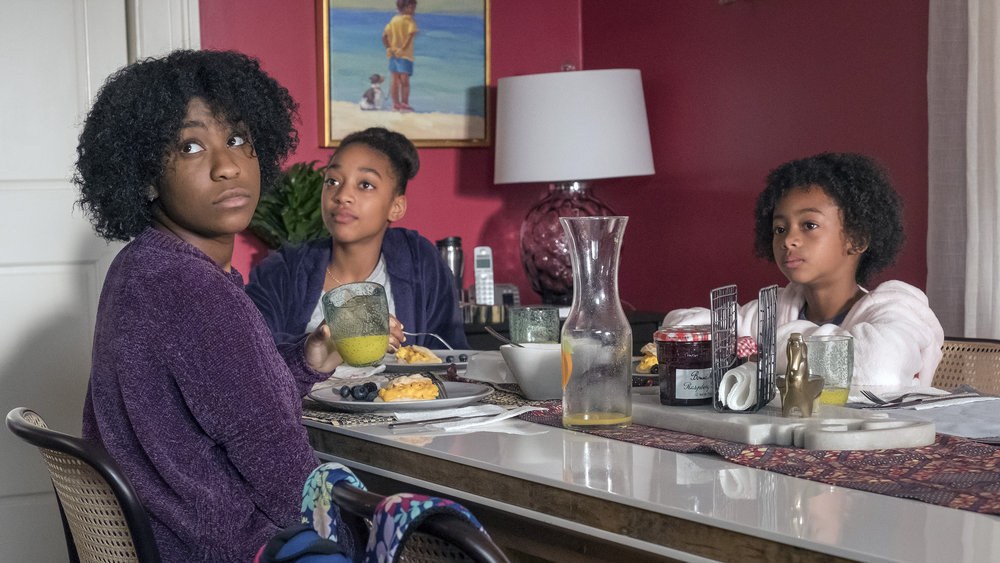
This Is Us creator Dan Fogelman was spot-on when told us the last five minutes of the season three finale are as “big and sprawling and epic as we get.” After much back and forth, Randall and Beth finally were on the same page with plans to move to Philadelphia, where Beth will open a dance studio and Randall will continue his political career. Kate and Toby brought baby Jack home from the NICU. Rebecca and Miguel were preparing to move to Los Angeles. And Zoe and Kevin broke up when it became obvious they’ll never be on the same page about having kids.

Then things got really interesting. In the future, we learned that Beth and Randall are still together (thanks for the season-long anxiety about that, writers!) and Kevin has a pre-teen son. Kevin’s also seemed to be doing well for himself, as evidenced by that sprawling house the Pearsons gathered at to visit an ailing Rebecca.

Speaking of Rebecca, she looked like a fraction of her 60-something self, complete with long white hair and an emotionless expression. When Randall entered her room, he heartbreakingly had to remind her who he is. (Does this mean she’s suffering from a form of Alzheimer’s disease?) At her bedside wasn’t her husband, Miguel, but Jack’s estranged brother, Nicky. (Who, by the way, was looking much better in this future timeline.)

Oh, and future Kate? She was nowhere to be found. When Toby mentioned Jack, he said “they’re on their way.” But that doesn’t mean he was talking about his wife. And, if Kate is alive, it doesn’t sound like Katoby are an item still. (Anyone else notice that Toby wasn’t wearing a wedding ring?)

With our heads spinning and our hearts racing, we called up executive producers and co-showrunners Isaac Aptaker and Elizabeth Berger to fill us in on exactly what’s going on in the future. Read on.

NBC

Glamour: Let’s start with the basics: How many years in the future are we when we see Rebecca lying in bed?

Elizabeth Berger: We haven’t decided exactly how many years in the future we’re at, but we’ve imagined it as roughly 12-15 years.

Yes or no, Rebecca has a form of Alzheimer’s or dementia?

Isaac Aptaker: Possibly. Or possibly this is someone near the end of their life experiencing a lack of awareness and confusion that comes with extreme old age.

EB: We can’t say exactly what’s going on with her, but we will be learning exactly what’s going on with her as we move forward in our story.

How close to death is she? Is it a matter of hours, where everyone is gathering to say goodbye?

IA: I think it definitely feels like she’s very near the end of her life and that her passing is imminent and that’s why everyone has decided to descend upon Kevin’s house.

We see Nicky sitting at her bedside. Does Rebecca think Nicky is Jack? If she does have a form of Alzheimer’s, a lot of people remember the past better than the present day.

EB: It’s a totally cool theory and totally possible. Obviously we can’t say what’s going on until we learn more of what is going on with Rebecca, but it’s a very interesting take on it.

Nicky has also aged better than anyone else.

IA: That wasn’t an accident. We wanted the read to be on Nicky that though he is older, we’re seeing a guy in a better place than when we last left him. The fact that he aged really well shows he’s in a much better place mentally and physically than when we left him in that trailer.


Source link

Categories
Health

All Your Questions About Trump's Executive Order on Family Separation, Answered


In the weeks leading up to summer, it appears as though the entire country has turned its attention to America’s border cities. There, a crisis emerged when the Trump administration ordered a “zero tolerance policy” calling for the prosecution of migrants attempting to enter the country via asylum or otherwise.

The policy change mandated that border agents detain anyone attempting to cross—which is typically treated as a civil misdemeanor offense—and try it as a criminal case. In turn, parents traveling with children were separated at the border and sent to different detention facilities.

Since the practice began, stories have emerged of infants being ripped out of their mother’s arms, fathers who died from suicide after being separated from their families, and the guttural, heartbreaking cries of children begging for their parents.

The pure, unadulterated outrage that followed from the American public, churches and advocacy groups reached a fever pitch before the president signed an executive order that ended the separation of families on Wednesday. However, while signing the order, President Donald Trump made it abundantly clear that his administration’s “zero tolerance policy” toward migrants will remain, which has left followers of this humanitarian and political catastrophe with more questions than answers.

Will families actually stay together?

According to the executive order, which was posted to the White House website, families will remain together “where appropriate and consistent with law and available resources.” However, it additionally noted that children and parents may be separated if the government determines keeping them together “would pose a risk to the child’s welfare,” which gives the government room for interpretation of the law.

Is it actually legal to detain families, even if they are together?

This is where things get very murky. According to a 1997 court ruling known as the “Flores Settlement,” children who are detained at the border with parents must be placed with a family friend or immediate relative “without unnecessary delay,” Vox explained. But, as the ruling states, immigrant children who must remain in custody must be placed in the “least restrictive conditions” possible. Those conditions include food, running water, medical care and separate living quarters from unrelated adults.

The last part—separate living spaces—is what likely will cause major issues in the near future.

In 2014, the Obama administration attempted to keep families together in detention centers following a massive uptick in asylum-seekers from Central America. However, immigration advocates found the practice inhumane. So, a 2015 court set a general standard stating the government could only hold children in custody for up to 20 days, NPR reports. And though the court never specified how long parents could be held, the Obama administration made it practice to release the entire family together, with certain restrictions, such as placing ankle monitoring bracelets on parents to ensure they’d return to court.

There is no word yet if Trump’s administration will do the same, however, he has time and time again ridiculed the practice of releasing the families, often referring to it as “catch and release.” Trump has also instructed Attorney General Jeff Sessions to ask the federal court to modify that agreement so there will be no limit on how long children (and thus their families) can remain in detention, NPR explained.

Where will the families be housed?

Again, this is another question in the air (are you sensing a pattern in this crisis?).

As part of Trump’s instruction to Sessions, the president also called on different branches of his administration to find facilities that could be available for detaining families with children, NPR reports. Trump also asked the Defense Department, to build new facilities “if necessary.”

What will happen to the families already separated?

According to Immigration and Customs Enforcement (ICE), who provided a statement to NPR, it is indeed working side-by-side with the Office of Refugee Resettlement (ORR) to reunite families. “ICE and ORR will work together to locate separated children, verify the parent/child relationship, and set up regular communication and removal coordination, if necessary.”

“ICE will make every effort to reunite the child with the parent once the parent’s immigration case has been adjudicated,” the spokesperson added. However, according to multiple reports, this just isn’t happening.

According to PRI, the process of unification is difficult because the adults and children fall into different legal paths at the border, and are thus the responsibility of different government agencies. The parents and children are often given different case numbers, so it’s hard to track one another down.

“If they don’t reunite these kids and their parents right away, what can happen is the kids will be stuck in the US for years, guardians will be appointed, and their parents will be down in Honduras or Guatemala with no idea where their child is and no meaningful way to reunite,”John Sandweg, former acting director of Immigration and Customs Enforcement under the Obama administration, told MSNBC.

Furthermore, several lawyers and advocates explained to the New Yorker, that the process of finding a child within the system after a parent has been released or deported is nearly impossible. The experts who spoke with the New Yorker explained, in great detail, how the parent is forced to track his or her own child down using a system of non-profits, a 1-800 number set up by ORR, and simply having a bit of luck with finding their loved one.

“I have a master’s degree, and I’m fluent in English,” Emily Kephart, a program coordinator at an immigrant-rights group known as Kids in Need of Defense, told the New Yorker. “And it takes me days to figure one of these cases out.”

Related Stories:

At the Border, Parents Seeking Asylum Are Willing to Risk Separation Rather Than Go Back to Danger

Trump’s Executive Order Means He Won’t Separate Families at the Border, but He’s Still Detaining Children


Source link

Categories
Health

Trump's Executive Order Means He Won't Separate Families at the Border, but He's Still Detaining Children


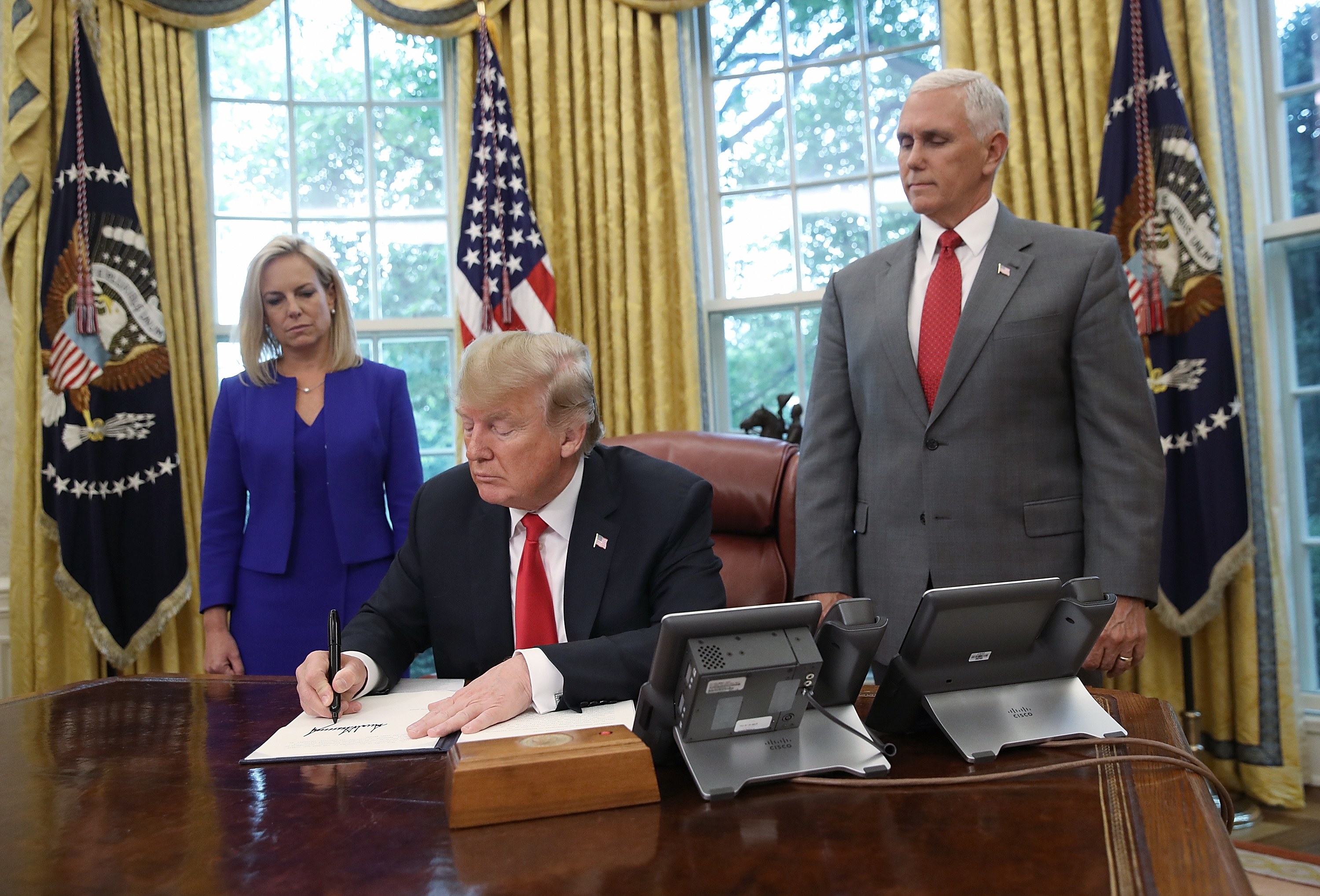
After days of public outcry around the Trump administration’s “zero-tolerance” policy that allowed for the separation of immigrant children from their parents at the border, President Trump signed an executive order that ends that separation.

However, the “zero-tolerance” policy that created the recent crisis remains.

“We are keeping families together and this will solve that problem. At the same time we are keeping a very powerful border and it continues to be a zero tolerance, we have zero tolerance for people that enter our country illegally,” Trump told the White House pool reporters present in the Oval Office, per CBS News.

“I didn’t like sight or the feeling of families being separated,” Trump said.

The executive order notes that it is “the policy of this Administration to rigorously enforce our immigration laws” and that they will initiate proceedings to enforce laws about “improper entry.” But this section also allows for families to be held together during the prosecution process: “It is also the policy of this Administration to maintain family unity, including by detaining alien families together where appropriate and consistent with law and available resources.”

The order further stated, “It is unfortunate that Congress’s failure to act and court orders have put the Administration in the position of separating alien families to effectively enforce the law.”

It is important to note, that according to experts who spoke with Glamour, the separation policy is not a law. It was also up to Trump himself to make the call on ending the family separations.

Earlier today, the New York Times reported that sources close to the president said he believes his immigration policies are “appropriate and necessary,” but that he was frustrated by the criticism he’d been receiving.

Many news outlets report that there could be legal battles ahead for this order due to a 1997 consent decree from a federal court, called the Flores settlement, that says children can be detained for only 20 days, even if they are with their parents.

It is unclear at this time what will happen to the families that are currently separated and being held in detention facilities—or how long detained families can be held.

Trump spoke earlier this morning about the possibility of an executive order. “We’re meeting right now on immigration and we are very strong at the border, we’re very strong on security. We want security for our country,” he said at the White House. “The Republicans want security and insist on security for our country, and we will have that.”

ABC News reports that First Lady Melania Trump may have played a part in the president’s decision to sign the order. She has been pressuring her husband to end the child separation policy, according to a White House official. Their source also claims that Ivanka Trump has shown the president images of children in detention centers and urged him to end the policy.

As of Wednesday afternoon, she had not made any public statements on the issue, although she did tweet after the signing of the executive order.

We will update this story as new details around the policy and executive order emerge.

Related Stories:

Here Are the Facts About Trump’s ‘Zero Tolerance’ Immigration Policy

Here’s How to Help Immigrant Families Who Have Been Separated at the Border


Source link

Categories
Health

'Stranger Things' Executive Producer Confirms Barb Isn't Alive


If you’ve noticed an unusually high number of people calling in “sick” from your office today, we know why: They’re all staying home to binge-watch season two of Netflix’s Stranger Things. No, really, it’s a whole thing. But it’s actually worth the risk of annoying the boss because the show’s return does answer lots of lingering questions fans have been speculating about since finishing season one last summer.

People are still wondering about one particular storyline, though: The fate of beloved character Barb, played by Shannon Purser. Many theorized she was—spoiler alert—still alive and would make it out of the Upside Down, and they had pretty convincing evidence to back the idea up. But unfortunately, Justice for Barb isn’t going to happen. Ever.

“The theory that Barb was alive got annoying,” the show’s executive producer Shawn Levy told us at the Stranger Things premiere in Los Angeles Thursday night. “That seemed a little delusional. I love Barb, I’m the one that killed her in the swimming pool, but that was never going to happen.” In fact, Levy said he wants to finally, once and for all, make it clear that Barb will not be returning in future seasons. Sorry, Barb!

That’s not the only fan theory that’s turned out to be wrong, though. “People were really obsessed with what that black car was that Hopper got in,” he said. “I’m hopeful that season two gives some clarity to the fact that he basically did a deal with the Hawkins feds to keep his mouth shut, cover their tracks, and basically keep Eleven safe. Hopefully, that’s been answered.”

But what about the idea that this could all be a dream of Eleven’s? “Oh, that’s madness and completely untrue,” he said. “I mean it. When I was a fan of Lost, people guessed at the purgatory outcome and then they said, ‘No, no, no.’ But then it kind of was! So, we’re not bullshitting here. This is not a dream of any character’s. This is for real.”

Related Stories:

This ‘Stranger Things’ Star Looks So Different Now

The Moms of ‘Stranger Things’ Are So Important, but Nobody Ever Talks About It

Shannon Purser Says She Had to Quit Her Movie Theater Job Because of Stranger Things


Source link