Categories
Health

Getting Married During the Coronavirus Outbreak Means Getting Amazingly Creative


Something old, something new, something borrowed, something six feet away from you—the coronavirus public health emergency has forced countless couples who planned on getting married this spring to make the difficult decision to cancel or postpone their wedding ceremonies. Sure, rescheduling a ceremony isn’t a tragedy compared with the health and safety crisis currently facing the United States, but for couples who dreamed of their weddings for years, spent their savings, or even hoped to honor aging parents and grandparents while they could, shelving a wedding is a wrenching decision.

For some couples, canceling or postponing was clearly the right choice. But for other couples, seizing the moment and getting married now—even if friends and family can’t be present, even if there’s no time for a dress or a corsage, even if the threat of death looms over everything—just feels right. Getting married during coronavirus is nobody’s dream, but it’s been some couples’ lovely, fragile reality.

On balconies, through windows, in the produce aisles of halogen-lit supermarkets—couples have consecrated their love and bound themselves to each other in the face of the especially dark unknown. Here are a few of our favorite stories of couples getting married during coronavirus:

The couple who got married on the street

Reilly Jennings and Amanda Wheeler were married on the street, out a window, in under five minutes, by a friend who also happened to be an ordained Universal Life Minister. After four years together, the Manhattan couple had planned to marry in the fall, they told The Cut, but realizing that one of them might lose her job and insurance, they decided to marry quickly. Wheeler, a fitness instructor at a boutique gym, finished teaching a virtual class from her apartment and showered, and they were ready to go. One bride wore a borrowed jumpsuit; the other wore a jacket. Their officiant read a passage from Love in the Time of Cholera out a fourth story window. The neighbors cheered.

The couple who kept their wedding kosher—by having it in a supermarket

On March 14, the Israeli government banned gatherings of more than 10 people at a time to limit the spread of the virus. The exception was grocery stores, where up to 100 people were allowed to gather. In keeping with that rule, at least one couple got married in a local supermarket, inviting guests and a full band to celebrate on the brightly lit linoleum. Meanwhile, in a city in southern Israel, guests maintained appropriate social-distancing standards at an outdoor wedding by dancing from covered balconies.

The couple who had a virtual father of the bride

It’s a stiff competition, but Joel Young may have had one of the weirdest months of any of us. Young spent a month quarantined with 1,000 other people on the infamous Grand Princess cruise ship. He was released from his tiny cabin just in time to make it to his daughter’s wedding in Arizona—only to be quarantined on a military base in California. “When I called her and talked to her, and told her that I was pretty sure I wasn’t going to be able to make it, there were a lot of tears there,” he told Voice of America. The couple was not deterred. They located a remote-controlled robot, popped a tie on it, and dubbed it “Popabot.” Young attended the wedding from miles away through the robot, whose movement and vision he controlled. “You meet a challenge, you find the best solution you can. And you accept what it is, and you move on,” he said.

The couple whose neighbors rallied in support

Anastasija and Josh Davis canceled the DJ. They canceled the venue. They canceled on all the guests who hadn’t yet canceled on them. In deference to social-distancing rules, the Canadian couple got married in Josh’s parents’ living room in front of family and one friend, surrounded by white roses, Insider reports. Then, taking what they thought would be a short ride in their prepaid limo (to be fair, limos literally create a lot of social distance), they saw it—separated by their cars, their neighbors had formed a parade to celebrate the new couple. Friends and well-wishers waved pompoms and held signs with messages like “Nothing stops love.”

The couples who gave their weddings away

A couple in Yorkshire, England, fed their 400-person wedding feast of “hog-roasted sandwiches” and puddings to the hardworking staff of a local hospital. A couple in Miami donated their wedding meal, which they had planned to feed to 170 guests, to a local food bank. A couple in Austin donated their flowers to the senior living center nearby, where the bride’s grandmother and all other residents are in lockdown. A couple in Mississippi did the same. And one in Alabama. And one in South Carolina. And in Arizona.

No one dreams of getting married in a pandemic, but it is nice to know that there are still creative solutions, and generosity, and lots and lots of flowers.

Jenny Singer is a staff writer for Glamour. You can follow her on Twitter.


Source link

Categories
Health

Beanie Feldstein, MJ Rodriguez, and Britney Young Are Redefining What It Means to Be Leading Ladies


Actors Beanie Feldstein, Britney Young, and MJ Rodriguez rocked the big and small screens this year in awe-inspiring ways. You probably recognize Feldstein best from the summer movie Booksmart. Meanwhile, Rodriguez brought tears to your eyes as Blanca on FX’s Pose. And Young has been killing it on GLOW for three seasons now.

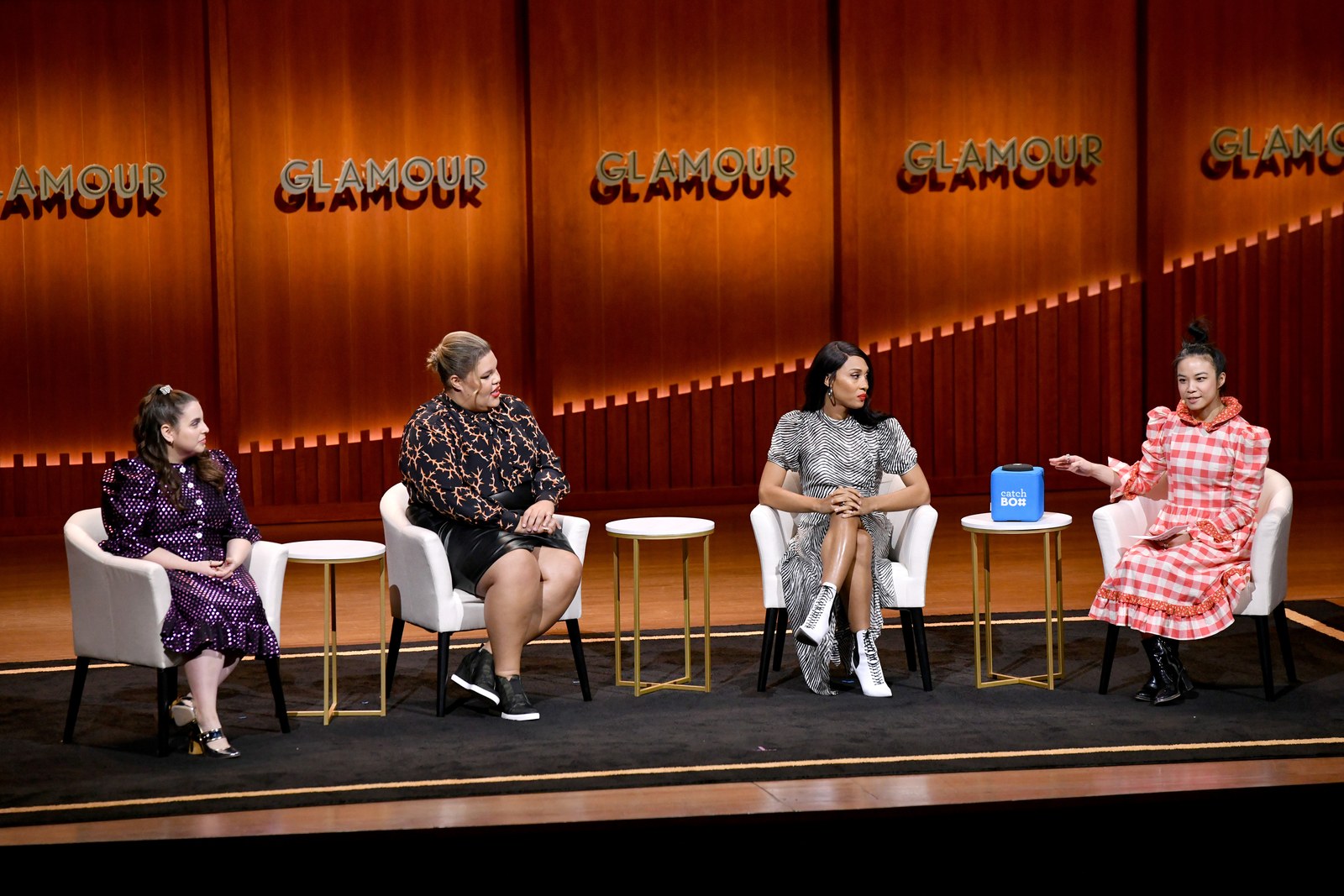
These performances couldn’t be more different, but they’ve all had similar effects on viewers: We were captivated and transformed by them. Credit for that goes to Feldstein, Rodriguez, and Young, who have changed the landscape for women in Hollywood just by being themselves. They’ve each pushed the needle forward for representation in various ways—be it race, gender, sexual orientation, size. At Glamour’s Women of the Year Summit, these three women got together and talked about how they’re disrupting the system.

Growing up, Rodriguez, Feldstein, and Young didn’t really see themselves reflected on screen. “There wasn’t a lot of representation for young African American trans women,” Rodriguez told Vogue senior culture editor Estelle Tang, who was moderating their panel at the summit. “But I found comfort in watching shows like Will & Grace and Noah’s Arc. It made me feel included at a young age.”

Young, meanwhile, didn’t see good representation for either plus-size women or bi-racial people. “There were larger people on film and TV, but they were never shown in a positive light” she said. “They were always the bully, the prison guard. I never saw a nice plus-size girl who wasn’t being mean to people. [Bi-racial representation] was never shown in a positive light, as well.”

Feldstein had a similar experience growing up. People constantly told her she’d grow up to play Tracy Turnblad on Hairspray, but that role never interested in her. She wanted to be seen for all her complexities and nuances. , “[Tracy] is not who I am. I’m so many other things, let me show you all the other roles I can play,” she said. “Thank God things changed as I got older, and we have so much room for growth.”

We do have room for growth, but these three women are playing a huge part in moving things along. They’re using their positions of fame and power to impact the sets and projects they work on. Feldstein says she learned a lot from her Lady Bird co-star Saoirse Ronan on how to set the tone of a set. “Stepping into slightly bigger roles [like Monica Lewinsky in American Crime Story, her next project] at the center of a story, I think, ‘What would Saoirse do?’ To be the center of a story and hold that space is intimidating, but watching her do it was [inspirational].”

Beanie Feldstein, Britney Young, and MJ Rodriguez at Glamour‘s 2019 Women of the Year Summit.  

Getty Images 


Source link

Categories
Health

This Breast Cancer Ribbon Has a Different Take on Pink. Here’s What It Means


As a nurse, Jessica Moore knew her injury should be healing more quickly. A varsity girls’ basketball coach, she’d gotten elbowed in the breast while playing the game one day, and the resulting pain kept lingering. After she visited doctors to get checked out, she found out she had metastatic breast cancer (MBC)—meaning the disease had already progressed and spread to her bones, despite her having no other symptoms. She was only 32.

Moore’s family and friends are among many who choose to embrace a different type of breast-cancer awareness ribbon, one with stripes of green, pink, and teal. While the instantly recognizable pink ribbon—originally created by Self in 1992—is often associated with early detection and celebrating survivors, there’s no surviving or “beating” MBC. Also known as stage IV or advanced breast cancer, MBC means breast cancer has spread to other organs, typically the liver, lungs, brain or bones. Although some people live for a long time while undergoing treatments, average life expectancy is just 24 to 36 months; Moore fought the disease for four years, passing away at age 36. The reason MBC has its own ribbon: While 30 percent of early-stage breast cancer patients will eventually see their disease return as metastatic and 114 people a day die from MBC—the only kind of breast cancer that kills—only two to five percent of all breast cancer funds raised go toward researching treatments for MBC. The tri-color ribbon aims to make people aware of the need for more research for MBC, its green representing spring and the triumph of life over death, pink indicating that the cancer originated in the breast, and teal representing healing and spirituality.

Metastatic Breast Cancer Ribbon Charm from Metavivor, $5.Courtesy of Metavivor.

It’s a color combination more people are beginning to recognize thanks to Moore’s best friend, Laura Inahara, who along with other friends and family (via an organization they named Moore Fight Moore Strong) has been working tirelessly to shine light on MBC and its symbolic colors—quite literally. Later this week, more than 70 monuments around the world will be illuminated in the three colors of the MBC ribbon, in time for Metastatic Breast Cancer Awareness Day (Oct. 13). Those who know someone fighting the disease are encouraged to find your local Light Up MBC site, snap a picture, and post it on social media along with the hashtags #LightUPMBC #METAvivor. (Be sure to make it a public post.) “You can use Google Earth to post a screenshot of the lighting if you can’t get there in person—just don’t forget the hashtags,” says Inahara.

Metastatic Breast Cancer Awareness Day Memorial Bridge in Portsmouth N.H. lighted in the colors of the metastatic...
Memorial Bridge in Portsmouth, N.H., lighted in the colors of the metastatic breast-cancer awareness ribbon.Shawn Pierce Photography

It’s an idea sparked by Moore, who never stopped hoping and fighting. “Prior to Jessica’s passing she said she thought it would be amazing to light a landmark for MBC as a way to raise awareness,” Inahara says. In October 2017, five months after Moore died, the group had their first landmark—the Memorial Bridge in Portsmouth, N.H.—lit up near her hometown. A busy mom who works in finance by day, Inahara sits down each night around 9 p.m. to work on #LightUpMBC and add to the impressive list of locations now participating, and more and more people have been offering their help approaching landmarks around the world. The ultimate goal: More donations, via Metavivor, going to researching treatments that could turn stage IV breast cancer into a chronic disease vs. a deadly one. “[Metavivor remains] the only U.S. organization dedicated to solely awarding annual, peer-reviewed stage-IV breast cancer research grants,” Inahara explains. “That is what it will take to find a cure and stop losing more than 42,000 lives to breast cancer each year. We feel certain that we can get more research funding so no more of our friends have to die from this disease. There is often a misconception there is a cure for breast cancer and we want to share with anyone that will listen that there is not.”


Source link

Categories
Health

Planned Parenthood Withdraws From Title X Federal Funds. Here’s What That Means


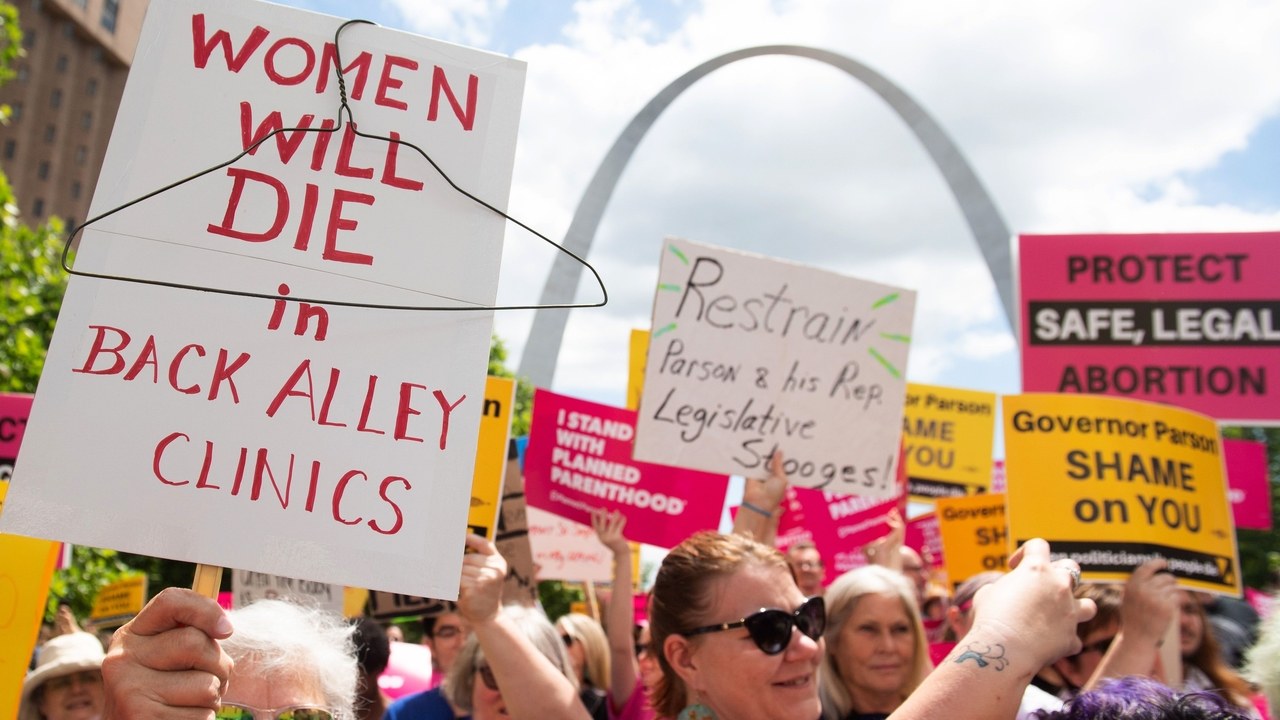
Planned Parenthood has announced that it will withdraw from Title X, a federal program that helps make birth control, pregnancy tests, and screenings for sexually transmitted diseases accessible and affordable. The decision is due to the Trump administration’s new “gag rule,” which restricts what health providers can tell patients about abortion. Under this rule, if Planned Parenthood wanted to continue to receive funds through the program, it would no longer be able to offer abortion referrals or even suggest where a patient could get an abortion.

The Trump administration first introduced the new Title X rules in May, but it wasn’t until last week, when a federal court failed to halt them, that Planned Parenthood decided to pull out of the program.

Planned Parenthood has received Title X funds since the 1970s, but these federal dollars have never been used to fund abortions. And according to the New York Times, “Planned Parenthood receives about $60 million of the $286 million given annually by Title X to about 4,000 health centers providing reproductive health care, as well as screenings for breast cancer and cervical cancer, to about 4 million patients.” Without these resources, more than 1.5 million low-income women who rely on Planned Parenthood for pregnancy tests, birth control, STI screenings, and other services through Title X support could be affected. The organization has shared that one of their programs, a mobile health center in Cleveland, will have to close and that other clinics will feel similar pressure from the cuts.

“By forcing Planned Parenthood out of the Title X program, Trump is fulfilling his debt to the anti-choice movement—a vocal, extreme minority in this country—for their work to put him in the White House,” NARAL Pro-Choice America president Ilyse Hogue shared in a statement. “Millions of women and families who rely on Planned Parenthood for a full range of reproductive health care will be forced to pay the price for political payback by the Trump administration and their reckless Title X gag rule. The decision about when and with whom to have a family is one of the most personal and important decisions a person will ever make, and it’s definitely one that should be free from political interference.”

Christina Reynolds, vice president of communications at Emily’s List, echoed Hogue’s sentiments. “Since day one, Trump and his Republican cronies have tried to defund Planned Parenthood and strip valuable reproductive care from millions of women. Today, those efforts have real and dangerous consequences for too many women in America. The Trump administration is using one of the largest and most valuable programs for providing affordable birth control and reproductive health care to bully providers, like Planned Parenthood, into withholding information on abortion. As the gag rule takes effect, millions of women will be left with nowhere to turn for essential health care like affordable birth control, cancer screenings, maternal care, and more,” she wrote in a statement.

Supporters of Planned Parenthood have also taken to Twitter to share their outrage. Presidential candidate Beto O’Rourke wrote, “Trump is taking tens of millions of dollars away from Planned Parenthood—jeopardizing the health of more than a million people across our country. Please donate to @PPFA today, so Trump can’t stop patients from receiving the care they need.”

Rep. Ilhan Omar tweeted, “Trump’s gag rule is forcing Planned Parenthood to withdraw from Title X. Last year alone 53,000 Minnesotans relied on Title X-funded clinics for cancer screenings, well person visits, birth control, and more. Losing access to this care puts lives at risk. Period.”


Source link

Categories
Health

These Women Are Redefining What It Means to Have ‘Parisian Style’


How many times can a fantasy be recycled and repurposed until it feels attainable? In the canon of women’s self-improvement, the French-girl ideal—the most persistent and prescriptive of the fantasies—is always just one pouty red lip, marinière, and pair of skinny jeans away from becoming real.

A quick Google image search for French girl reveals a host of eminently familiar faces, each more calculated in its composition of faux effortlessness than the one before it. Model and actress Jeanne Damas, our generation’s Jane Birkin, figures among the first twenty results, alongside equally as slender, tousled-hair brunettes. The sole non-white exception is a woman from this story about defying beauty tropes. Never mind that French girl is used as a stand-in for Parisian—a conflation we likely owe to the framing of the 1950s and 1960s mavens of popular culture like Françoise Hardy and Brigitte Bardot as French icons, but who remain eminently tied to Parisian mythology—their reverence to a billion-dollar archetype is as reductive to the real women of Paris as it is to the women aspiring to be them.

There’s a plurality of Parisian styles and personalities—that’s obvious from walking the streets of Paris. But with more and more women using social media to access and share a more diverse sample of images, experiences, lifestyles and opinions, the disconnect between fantasy and reality is growing deeper and more glaring. If author and journalist Sophie Fontanel has given the middle finger to the notion that there is a codified set of rules for fashion and beauty over fifty, the women highlighted below are proudly showing the way for a younger generation of women who are ready to express themselves free from the grips of a generations-old myth.

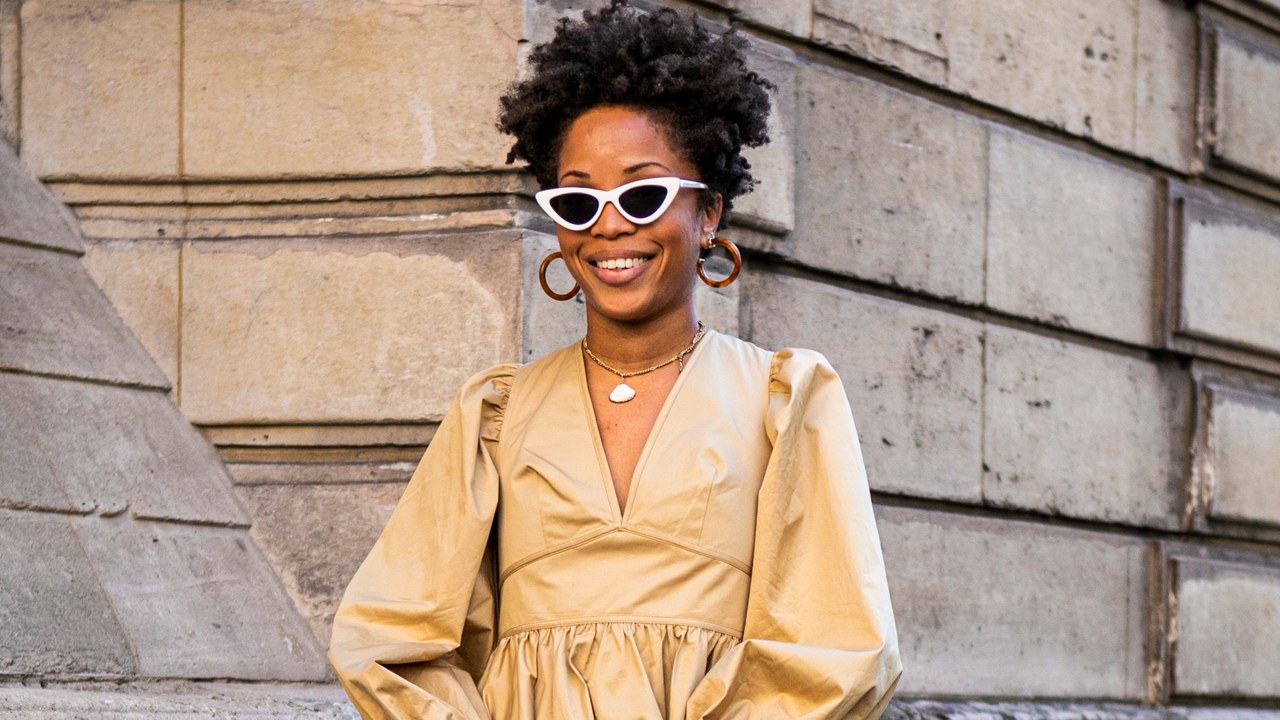
Anlya Mustapha, 27

“The mainstream, accepted image of the Parisian woman is embodied by sophistication and elegance on slender, tall, white women. If something stands out as Parisian in style, it’s in their simplicity—not necessarily in color or print but in the total look. Yet on the ground, the style leans ultra-casual. There’s streetwear and minimalism. The dolled-up look we see time and again isn’t actually the norm.

“Women of color generally don’t find themselves in the classic representations of Parisian women, in terms of fashion or makeup. A red lip might be common on a white woman, but we might go for something entirely different. We can’t all be reduced to a few images or to one archetype. Luckily, there’s been a democratisation of makeup and beauty, which now leans very American (think: contouring, highlighting). That has been a step toward liberating Parisian women to express themselves as they wish. That’s a good start.

“I discovered modest fashion as a style through Dina Torkia when I was studying in London. It’s far more present in the U.K. than in Paris. But I’d also say my style is Parisian insofar as it is meant to be elegant, simple, minimalist. I like oversized and androgynous pieces—that’s Parisian, too.

“Modest fashion allows me to express my femininity and the plurality of my identities, as a woman and practicing Muslim. It’s not an attempt to respond to or address the systemic Islamophobia that continues to plague France—the idea that Muslim women may not be ‘French enough’—because that message, told through fashion, wouldn’t be heard by the people and populations who espouse such beliefs. The photos I share of my style, rather, are targeted to other women like me: women who may not have the confidence to seize the legitimate place they deserve in society. And it’s not only Muslim women—it’s anyone who may not feel accepted or legitimate.

Anlya’s favorite places to shop: “The Frankie Shop for a more traditionally Parisian esthetic and Kenza B, which specializes in modest fashions.”

Ellie Nesmon, 32

“Parisian style has always been synonymous with elegance, effortless chic and with an antiquated image that no longer matches reality. Parisian women aren’t always in ballet flats, sporting a marinière or a beret—thank goodness!

“I’m from Martinique. and I’ve lived in Paris for several years. I express the dualities of my identity through fashion. One day, I’ll wear a lot of prints and colors and very feminine cuts that remind me of the island. Another, I’ll embrace neutral colors and classic, more masculine cuts that convey a more traditional Parisian chic. I don’t need to choose between Paris and the Caribbean. Fashion allows me to be a chameleon. That’s why I love it so much.

“I hope women see that, through my style, the parisienne isn’t necessarily a blonde with poker-straight bangs, but rather a cosmopolitan woman who isn’t necessarily born in Paris, but is well-traveled and draws inspiration from other cultures. She defines her own style, which is modern and fun.”


Source link

Categories
Health

Fans Think Rihanna's Red Hair at the BET Awards Means Her Album Is Coming Soon


Last night’s BET Awards, hosted by Regina Hall, were packed with must-see moments. There was an epic Mary J. Blige medley (featuring Lil Kim!), a tribute to rapper Nipsey Hussle, yet another incredible Lizzo performance, and an inspiring speech from Tyler Perry, to name just a few.

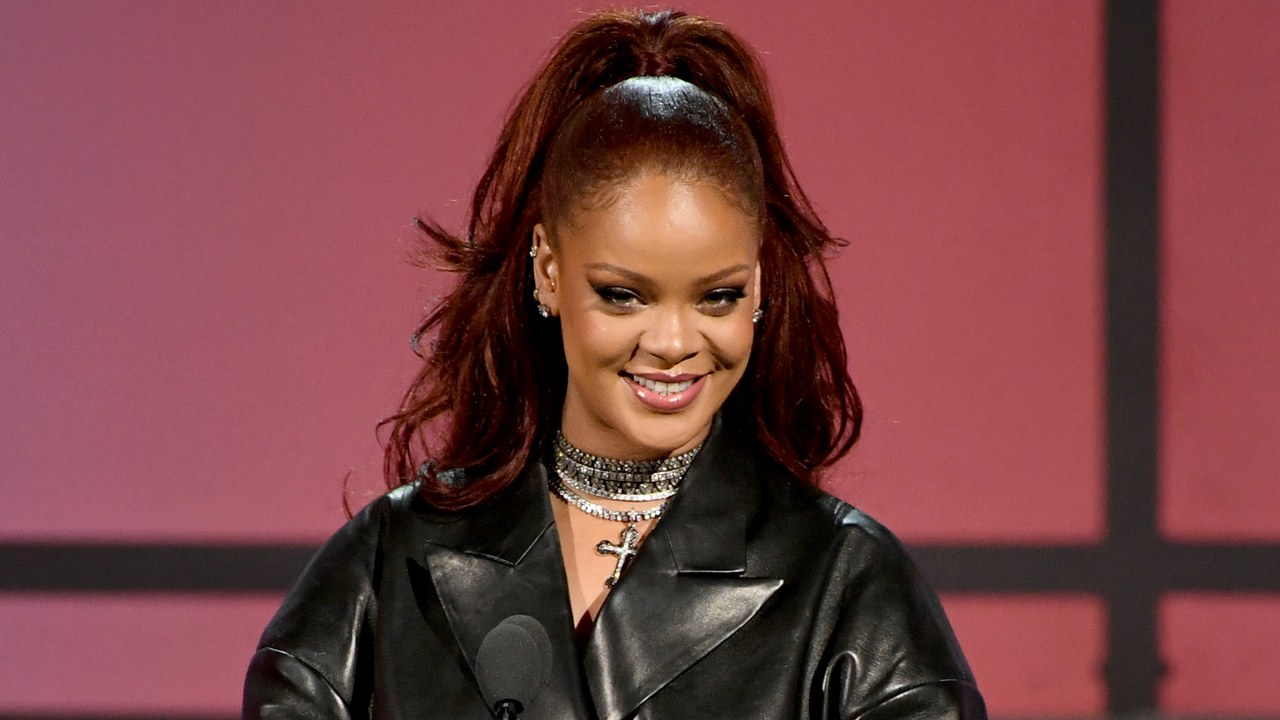
But for many Rihanna fans, the fact that the singer and Fenty beauty founder was in the house was the biggest news of all. The singer was on hand to present the Lifetime Achievement Award to Blige. “Ladies and gentlemen, get on your feet right now, c’mon now,” she said from the stage. “The recipient of the 2019 BET Lifetime Achievement Award, the undeniable queen of hip-hop and R&B, Mary J. Blige.”

Rihanna’s fans, a.k.a. her “Navy,” quickly noticed that the singer was sporting newly red hair (although, her braids were a red hue when she went day drinking with Seth Meyers earlier in the week); that alone might not sound too noteworthy, but some of those fans think it’s a sign she’ll soon be releasing new music. “Rihanna changes her hair color when she’s about to drop an album,” one wrote on Twitter. “Rihanna has red hair again . music gonna be ????,” another tweeted.

“Rihanna singing w red hair… we are that much closer to R9,” one social media user said, referring to Rihanna’s highly-anticipated ninth album.

Others simply loved the look and think it’s RiRi’s best color.

“It really does suck that it can’t just come out, because I’m working on a really fun one right now,” Rihanna recently told Sarah Paulson in Interview magazine about the new album. “I’m really happy with a lot of the material we have so far, but I am not going to put it out until it’s complete. It makes no sense to rush it, but I want it out. I’ve gotten to the point where I’m like, ‘Even if I don’t have the time to shoot videos, I’m going to put an album out.'”


Source link